

Introduction
Soil plays an important role in the ecosystem and is the home for human survival, and it is important to protect its safety and health. However, in the process of industrialization, the pursuit of economic growth has led to serious soil pollution problems, resulting in environmental degradation on a global scale [1].
Soil pollution is an environmental problem in which the substances present in the soil exceed the levels required by the natural environment and human activities, leading to a deterioration in the quality of the soil and affecting its functioning and the ecosystem [2]. Soil pollution is categorized according to the nature of the pollutants, which can be divided into heavy metal pollution, organic matter pollution, biological pollution, and radioactive pollution. Global assessment of soil pollution: A report published by the Food and Agriculture Organization of the United Nations (FAO) and others pointed out that global pesticide use increased by 75% between 2000 and 2017, global synthetic nitrogen fertilizers were used up to 109 million tons in 2018, and waste generation has increased to 2 billion tons year by year - all types of pollutants compounded and co-existing. The global soil pollution situation is very serious. Soil pollution not only affects the quality of the soil environment but also threatens food production, human health, and the ecological environment [3].
As a large agricultural country, China’s soil environment is not optimistic. According to China’s latest national soil pollution survey bulletin, the soil environmental quality of arable land in some areas of China is worrying, and soil economic problems are prominent in industrial and mining wastelands. 16.1% of the soils exceed the secondary requirements of the Soil Environment Quality Standard (GB15618-1995). Cultivated land accounts for 19.4% of the total and the type of pollution is dominated by inorganic types. Soil pollution has become a hot topic, with media reports of pollution incidents such as high levels of the heavy metal cadmium (Cd) found in paddy [4]. To improve soil conditions, the Chinese government has made many efforts to introduce laws to address soil pollution, such as the Environmental Protection Law and the Agricultural Law. However, most Chinese laws focus mostly on water and air pollution and lack regulations for soil pollution prevention and control [5]. And because some of the provisions are ambiguous and fines are insufficient, local governments have no incentive to enforce the law, so it is less effective [6].
In order to prevent and control soil pollution in a targeted manner, on May 31, 2016, China’s State Council issued the Action Plan for Soil Pollution Prevention and Control (namely, APSPPC) and planned to organize the treatment and remediation of contaminated arable land on a priority basis in eight provinces, including Jiangxi, Hubei, Hunan, Guangdong, Guangxi, Sichuan, Guizhou, and Yunnan.
Therefore, based on panel data from 30 Chinese provinces (excluding Hong Kong, Macao, Taiwan, and Tibet) from 2011 to 2021, this study assesses the effectiveness of centralized management of contaminated arable land in China using a difference-in-differences model (DID model) and explores the role of green agro-technology innovations in it.
The marginal contribution of this paper lies in the following three points; First, this study provides empirical evidence on the effectiveness of centralized management of polluted cropland in China. It has been documented that APSPPC stimulates economic development and leads to more jobs [7], and APSPPC promotes sustainable business development [8]. However, fewer studies have been conducted on the impact of soil programs on green agriculture development, and this study will fill the research gap in this area. Secondly, this study explores the role played by green agricultural technology innovation in managing polluted cropland and promoting green agricultural development. While Porter’s hypothesis, which proposes that appropriate environmental regulation will stimulate technological innovation, has been demonstrated in studies related to corporate pollution [9], this paper provides evidence for its validity in the context of agri-environmental protection. Finally, based on the findings, this study proposes a series of specific policy recommendations for promoting agricultural environmental protection and green development, which can help promote sustainable agricultural development in large agricultural countries, including China.
Policy Background and Research Hypotheses
Policy Background
Over the past decade or so, a number of scholars have investigated the health of agricultural soils in China. Studies have shown that the soil in many areas, including the northern plains and the Pearl River Delta, is suffering from heavy metal pollution [10]. Heavy metal pollution can impair soil function and groundwater quality, thereby seriously affecting food safety and health [11]. At the same time, declining soil quality and shrinking cropland will seriously hamper China’s agricultural development [12]. The causes of pollution of arable land have also been analyzed by scholars and are mainly caused by human activities, such as farmers’ activities, industrialization, and urbanization. Mining, the use of pesticides and fertilizers by farmers, etc. can lead to heavy metal pollution of soil [13]. The deposition of industrial pollutants resulting from industrialization and vehicle emissions stemming from urbanization are also contributors to soil pollution [14].
In response to environmental degradation, China has enacted several laws, such as the Environmental Protection Law of the People’s Republic of China, but has focused mainly on the prevention and control of air pollution [15] and water pollution [5]. Although there are preventive and control measures related to soil pollution in a number of laws, such as the Agricultural Law of the People’s Republic of China, which stipulates that farmers and agricultural organizations should prevent the pollution and deterioration of cropland, these laws are general and lack specificity for the prevention and control of soil pollution, and as a result, China’s soil-polluted environment has not been under better control.
In order to manage soil pollution in a targeted manner, the State Council of China has issued APSPPC. The action plan sets out two main objectives: Firstly, by 2020, about 90 percent of the polluted cropland can be utilized safely, while over 90 percent of the contaminated land will be able to be used safely. Secondly, by 2030, over 95 percent of both the polluted cropland and the contaminated land can be utilized safely, and plans to prioritize the organization of treatment and remediation of contaminated arable land in eight provinces, including Jiangxi, Hubei, Hunan, Guangdong, Guangxi, Sichuan, Guizhou, and Yunnan. This indicates that the government expects to initially curb worsening soil pollution by 2020 and ensure that the soil is completely clean and safe by 2030.
To achieve these goals, the plan proposes a 10 - step strategy: (1) conducting soil pollution surveys to learn about the quality of the soil environment, (2) advancing legislation on soil pollution prevention and control and introducing a sound system of laws, regulations and standards, (3) managing agricultural land by category to ensure a safe agricultural production environment, (4) controlling market access to land used for construction to prevent threats to the living environment, (5) protecting clean soil and strictly preventing more soil from being polluted, (6) monitoring pollution sources to prevent more soil pollution, (7) restoring contaminated land to improve the quality of the soil environment in relevant areas, (8) promoting technological research and development to boost eco-friendly industries, (9) giving full play to government leadership in building a soil environment improvement system, (10) reinforcing scrutiny of the fulfillment of relevant targets and strengthening accountability.
Research Hypotheses
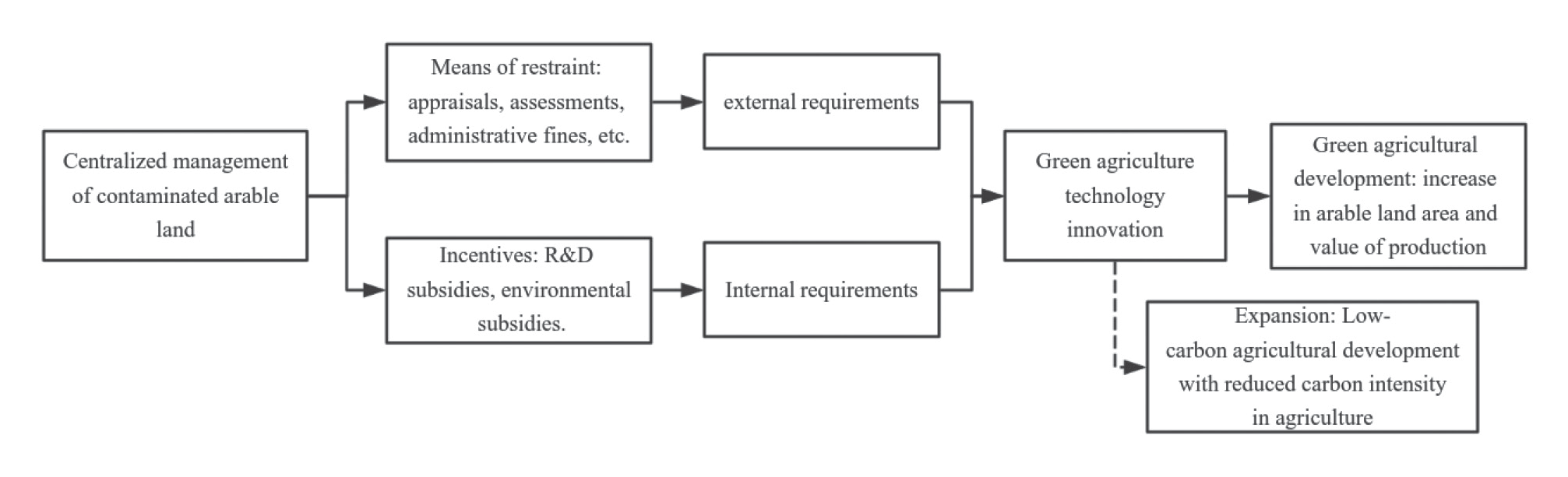
The hypothesis and logic of this study are shown in Fig. 1. Centralized management of polluted arable land will directly affect the agricultural sowing area and output value and promote the development of green agriculture. The implementation of APSPPC can raise the environmental awareness of agricultural production operators and urge them to carry out arable land restoration [16], thus improving the arable area and the quality of farm products and thereby realizing the increase in agricultural output value.
According to neoclassical economics, agricultural operators, as “rational persons”, tend to have “opportunistic behaviors” in order to obtain more crop outputs, that is, to take advantage of the situation to enrich themselves, disregarding the rules and damaging the environment. This implies that controlling and solving rural pollution problems is not only a technological issue and cannot be solved by relying solely on market-based mechanisms. Therefore, rationally designed environmental regulation is considered an important tool for environmental protection and governance. China’s current environmental regulation consists of two types: command-and-control policies and market-based policies [17]. The characteristics of both types of policies are covered in APSPPC with good implementation results. On the one hand, the command and restrictive policies in APSPPC create a strict monitoring environment, and policies such as assessment and evaluation, strict accountability, and legal controls can limit the polluting behavior of agricultural production operators. On the other hand, market-based policies in APSPPC give agricultural operators incentives to protect the environment and innovate technologically, such as government purchases, green finance, capital subsidies, and other measures [18].
Specifically, in terms of constraints, local governments have enacted strict pollution control regulations to control pollution at the source. If agricultural operators violate the relevant regulations, they will face administrative penalties such as fines. Therefore, agricultural operators with a strong awareness of environmental regulations tend to weigh the cost of violating the regulations before committing the act, and through their economic rationality, they are driven by loss avoidance to adopt green production and living behaviors. In terms of incentives, new classical economics suggests that agricultural operators are “economic men” who seek to maximize profits. The adoption of green agricultural practices by agricultural production operators depends on the cost of agricultural production as well as the expected returns. Local governments are promoting the greening of agricultural inputs and the resourceful use of agricultural production and household waste by shifting the direction of the use of financial subsidies from price subsidies, which are mainly used for the purchase and sale of fertilizers, pesticides, and other inputs, to subsidies for the research and development of green agricultural production technologies and incentive subsidies for farmers for green and ecological agricultural activities. At the same time, the use of economic incentives such as “awards to promote treatment” and “awards instead of subsidies” has guided agricultural production operators towards a more environmentally friendly mode of production.
Agricultural operators’ environmental behavior promotes land restoration, thereby expanding the area of usable cropland and increasing the area sown for agriculture. At the same time, remediation of pollution can improve the quality of the soil, increase the productivity of the land, increase the yield and quality of crops, and realize an increase in agricultural output. Effective implementation of the restoration can promote a “win-win” situation in terms of agricultural environmental performance and economic performance and promote the development of green agriculture. Based on this, the following hypotheses are proposed in this study:
Hypothesis 1: Centralized management of contaminated arable land in China is effective and would significantly increase agricultural sown area and output.
The centralized management of polluted cropland can promote green agricultural technology innovation, which in turn promotes the development of green agriculture. According to Porter’s hypothesis, rational environmental regulatory policies can improve technological innovation [19]. Porter’s hypothesis has been demonstrated in many empirical studies; for example, Xie et al. (2017) [20] used provincial panel data from China to demonstrate that rational environmental regulations promote green technological innovations, which in turn improve industrial competitiveness. In the case of agriculture, environmental regulations are likely to have the same path of influence, thus promoting green agriculture.
The impact of environmental regulation on the development of green innovation is mainly reflected in the influence of two factors, internal and external, where the internal factor refers to the incentives to pursue green development, and the external factor is the realistic requirements of external stakeholders to reduce pollution [21]. Because of the special characteristics of agricultural production, the government’s environmental management begins with the physical reduction of production inputs, such as the promulgation of policies to implement measures for the reduction of fertilizers and pesticides, which are supervised by the Ministry of Ecology and the Environment. According to the dynamic capabilities perspective, to adapt to the complex external environment, the innovator combines known information to innovate the combined and allocated resources. On the one hand, against the background of the government’s increased efforts to combat environmental pollution, the demand for green technologies from agricultural production operators will greatly increase to reduce pollution emissions and resource consumption. On the other hand, the Porter hypothesis suggests that strict but flexible environmental regulations are conducive to green technological innovation [22]. As a result, agricultural operators will tend to green their production processes to reduce pollution emissions and resource consumption, increase production efficiency, and protect the environment.
Specifically, on the one hand, the centralized management of contaminated cropland provides intrinsic incentives for the development of green technological innovations through economic and technical support. It has been shown that financial subsidies from the state can incentivize companies to contribute to the protection of the environment and to increase research and development and investment in green technologies [23]. On the other hand, the centralized management of contaminated arable land establishes strict laws and regulations and regulatory penalties, and externally forces farmers and agribusinesses to strengthen technological innovation.
Green technology innovation has a significant role in promoting green agricultural development [24], which can improve the soil environment and increase the yield and quality of crops. Based on this, the following hypotheses are proposed in this study:
Hypothesis 2: The centralized management of contaminated cropland in China will promote green technological innovation in agriculture, which in turn will increase the area sown to agriculture and the value of production.
Research Design
Model Design
Basic Regression Model
In order to verify Hypothesis 1, this study constructed a DID model to assess the net effect of centralized management of polluted cropland in China [25, 26], and the model is as follows:
Where Acreage and Agrigrp represent the study’s explained variables of cropland area and regional gross agricultural production, respectively, Time × Treat represents the study’s explanatory variables of centralized management of contaminated cropland in China, and X represents a series of control variables chosen for the study. δ represents the individual fixed effect in the regional dimension, and μ represents the time-fixed effect in the year dimension. ε represents the interference term.
If the centralized management of contaminated cropland in China is effective and significantly increases agricultural sown area and output value, the coefficient β should be significantly positive.
Mechanism Test Model
To verify Hypothesis 2, the study constructed the model as follows:
Where GATI represents the level of green agricultural technology innovation in the region, and the other variables are the same as above. If Hypothesis 2 holds, coefficient β in the model (2) and coefficient φ in the model (3), this should be significant. Meanwhile, the absolute value of the coefficient β in model (3) should be significantly lower compared to model (1).
It is important to explain that, firstly, since GATI is measured through patent data, model (2) is designed as a Poisson estimation with multidimensional fixed effects [27]. Secondly, model (3) was designed as an OLS regression model, so it is necessary to add 1 to take the logarithm when using GATI as a control variable.
Table 1.
Variable Definition Table
Design
Explained Variables
Acreage: The study first tests the effect of centralized management of polluted cropland in China, that is, whether it significantly increases the area of cropland. The study measures the arable land area metric by the total sown area of crops in each province and takes the logarithm of it to get Acreage.
Agrigrp: The study further examined the effect of centralized management of contaminated cropland in China, that is, whether it significantly increased the regional gross agricultural production (GAP). The study measures it in terms of the total agricultural output value of each province and takes the logarithm to obtain Agrigrp.
Explanatory Variables
Treat×Time: Centralized management of contaminated cropland. This study represents the centralized management of contaminated cropland in China through a DID model, that is, through the interaction term between the time variable Time and the grouping variable Treat.
Time is a virtual variable to describe the time period before and after the centralized treatment of contaminated cropland in China. In 2016, China introduced APSPPC and opened the centralized treatment of contaminated cropland. Therefore, Time is 1 if the year of the observation is 2016 and after, and 0 if it is the other way around.
Treat is a virtual variable to describe the experimental and control groups of centralized management of contaminated arable land in China. The experimental group includes Jiangxi, Hubei, Hunan, Guangdong, Guangxi, Sichuan, Guizhou, and Yunnan, and the others are control groups. Treat is 1 if the province is in the experimental group and 0 otherwise.
Mechanism Variables
GATI: Green agricultural technology innovation. This study measures technological innovation through patent data [25, 28]. Specifically, GATI is measured in terms of the number of green agriculture patents granted, as the grant of patents provides a more accurate reflection of innovation output compared to the mere filing of applications.
Green agriculture patents are identified based on the International Patent Classification (IPC) issued by the World Intellectual Property Office (WIPO) and are matched according to the code in China’s State Intellectual Property Office.
Table 2.
Descriptive Statistics
Control Variables
The study selected a series of control variables, which are defined as shown in Table 1.
Samples and Data
The study selects panel data from 30 Chinese provinces (excluding Hong Kong, Macao, Taiwan, and Tibet) spanning the period from 2011 to 2021 as the initial research sample, totaling 330 observations. To mitigate the impact of extreme values, all continuous variables in this study were Winsorized at the 1% and 99% levels.
The data on green patents in agriculture in this study are from the State Intellectual Property Office of China, and other required data are from the China Statistical Yearbook and the China Rural Statistical Yearbook.
Empirical Analysis
Descriptive Statistics
The study conducted descriptive statistics on the core variables as shown in Table 2. The mean value of Acreage is 8.176 with a standard deviation of 1.164, and the mean value of Agrigrp is 7.209 with a standard deviation of 1.03, suggesting that there is not much difference in arable land area and agricultural output among China’s provinces and that agriculture is crucial to China’s development. The mean value of Treat×Time is 0.145, indicating that provinces implementing centralized management of contaminated cropland accounted for 14.5% of the overall observations after 2016. The median value of GATI is 210.127, with a standard deviation of 275.783, indicating that the level of green agricultural technology innovation varies widely across Chinese provinces, obeying a Poisson distribution. Other variables are not described.
Dynamic Effect Test of Validity
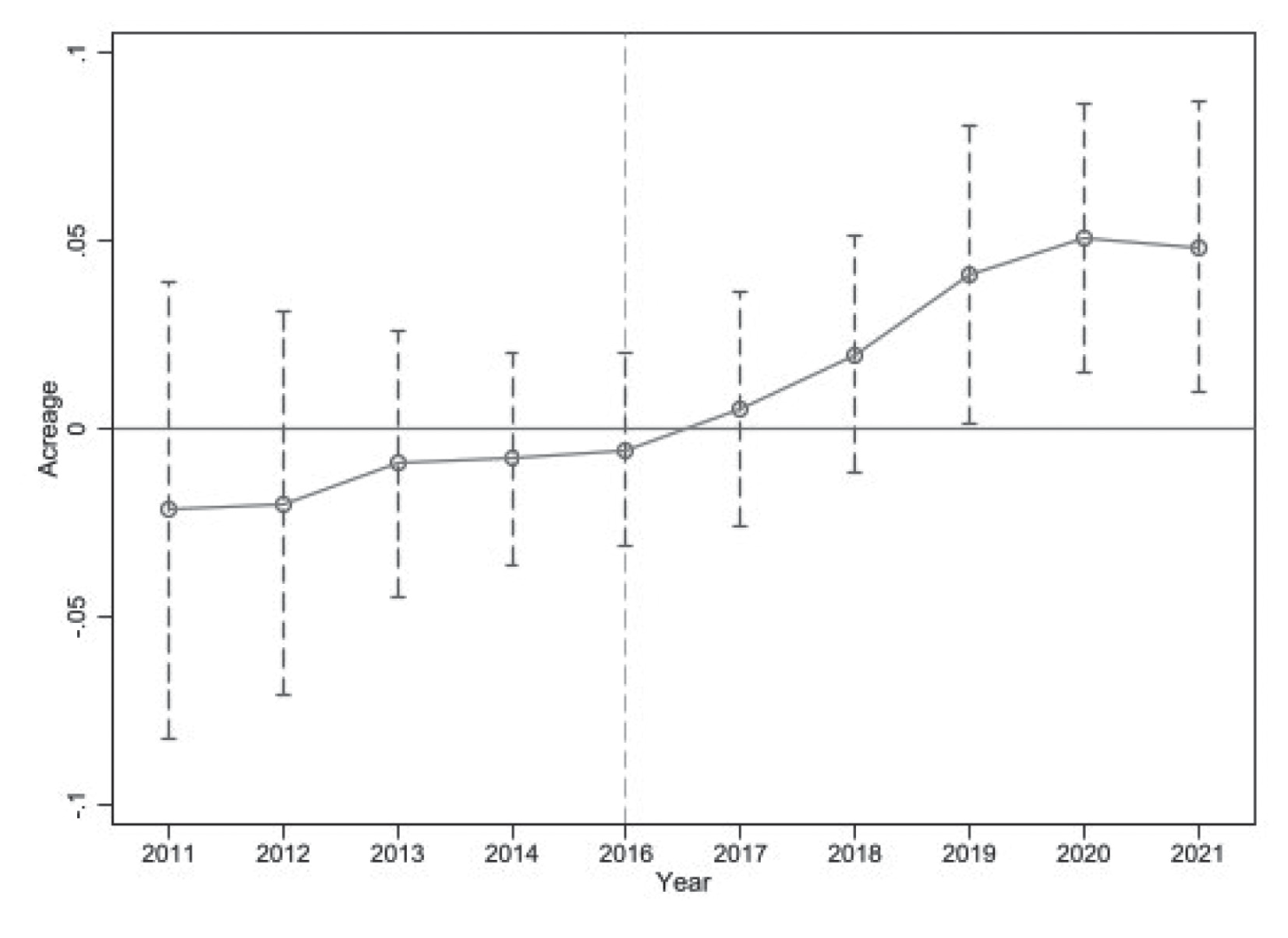
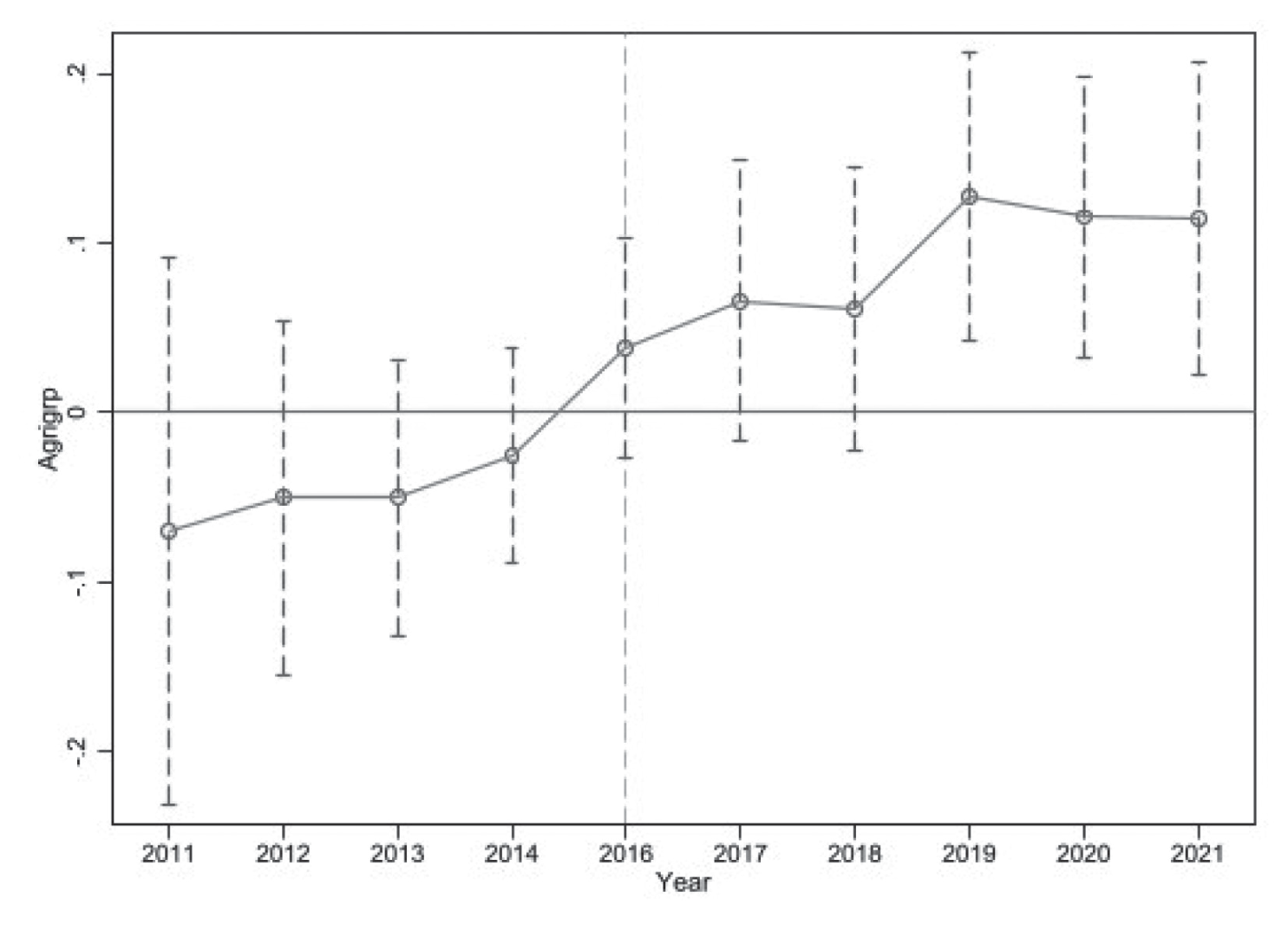
Based on the event study method, the study tested whether the parallel regression assumption was satisfied through dynamic effects [29]. As shown in Fig. 2 – Fig. 4, this study plots the regression results of the dynamic effects using the year before the intensive treatment of contaminated cropland (2015) as the base period, the hollow points are the values of the regression coefficients of the interaction terms, and the dashed segments indicate the 95% confidence intervals [30].
As can be seen from the figures, firstly, before the centralized treatment of contaminated cropland (2016), the coefficient value of the interaction term is not significantly non-zero, indicating that there is no significant difference between the experimental group and the control group and that the study conforms to the parallel regression assumption.
Secondly, after the centralized treatment, the coefficient value of the interaction term is gradually and significantly above 0, indicating that the effect of the treatment begins to appear, that is, the area of cultivated land, the agricultural output value, and the authorization of green agriculture patents in the centralized treatment area increase.
Regression Analysis
Basic Regression Analysis
Table 3 reports the results of the basic regression analysis. To test Hypothesis 1, as shown in columns (1) and (3), the coefficient values for Time × Treat are 0.061 and 0.220, respectively, both significant at the 0.01 level, controlling for individual fixed effects and time fixed effects. Further, as shown in columns (2) and (4), the coefficient values of Time × Treat are 0.040 and 0.119, respectively, which are still significant at the 0.01 level when control variables are added to the basic regression model.
The above results indicate that the centralized treatment of contaminated cropland in China has achieved significant results, and both the area of cropland and agricultural production value in the centralized treatment areas have increased significantly, and Hypothesis 1 has been proven.
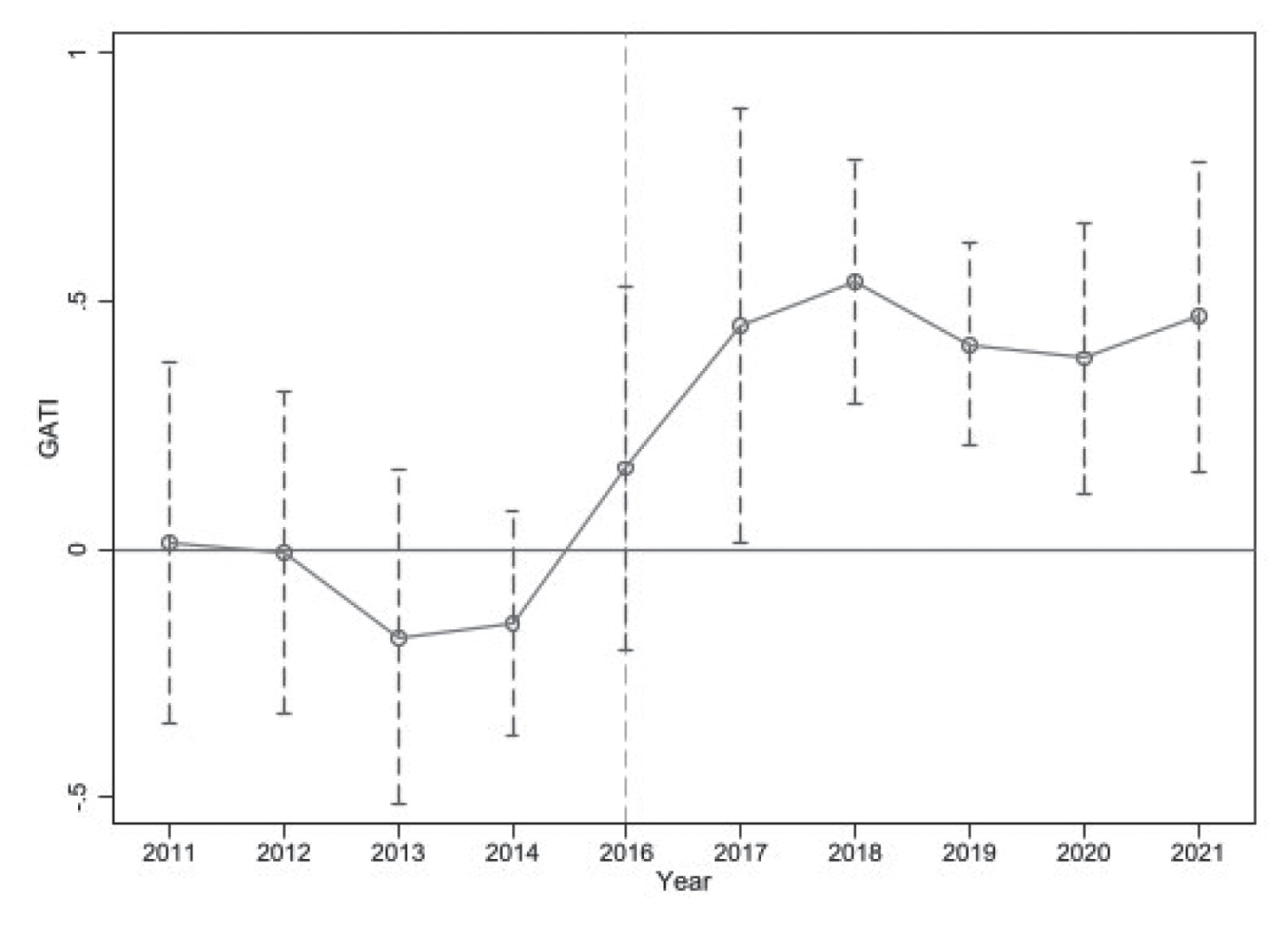
Table 3.
Basic Regression Analysis
Table 4.
Mechanism Test
Mechanism Test
Table 4 reports the results of the mechanism test. In order to test Hypothesis 2, the study first examined the relationship between centralized management of contaminated cropland and green agricultural technology innovation. As shown in columns (1) and (2) of Table 4, the coefficient values of Time × Treat are 0.631 and 0.504, respectively, which are significant at the 0.01 level, indicating that the centralized treatment of contaminated arable land significantly promotes green agricultural technology innovation in the treated areas.
In addition, as shown in columns (3) and (4), the coefficients of Ln(GATI+1) are significantly positive, which indicates that the promotion of green agricultural technology innovation can significantly increase the cultivated area and agricultural output. Meanwhile, the coefficient values of Time×Treat are 0.030 and 0.108, respectively, which are significantly lower than those in columns (2) and (4) of Table 3, which indicates that green agricultural technology innovation plays a mechanism role in the process of producing the effect of centralized management of polluted cropland, and Hypothesis 2 is proved.
Further Analysis
Robustness Tests
PSM-DID Test
To further eliminate the differences between the experimental and control groups and to control for confounding factors that may affect the selection of provinces as pilots, the study conducted a PSM-DID regression analysis [31]. The study selected all control variables as covariates, calculated propensity score values, and matched the experimental and control groups using nearest neighbor matching.
As shown in Table 5, there are 101 observations after PSM matching. The coefficient values of Time × Treat are all significantly positive, thus the results of this study are robust.
Reduce the Samples
This time, the areas where China’s contaminated cropland was concentrated were all in the south, which created natural differences between the experimental group and the control group, and these differences may have led to biased conclusions in this study. Therefore, in this study, all the northern regions were excluded from the sample; that is, both the experimental and control groups were from the southern regions of China.
As shown in Table 6, there are 165 observations in the reduced sample. The coefficient values of Time × Treat are all significantly positive, thereby confirming the results of this study are robust.
Control the Impact of Other Policies
The effectiveness of APSPPC may have been interfered with by other agricultural policies during the same period. From 2014 to 2018, China carried out the “Three Rights Separation” reform of rural contracted land in 29 provinces, including Sichuan, Anhui, and Shandong, which has significantly contributed to the green development of agriculture [32]. To control for the confounding effect of this reform, the study generated the variable TRS through a multi-period DID model and added it as a control variable to the basic regression model.
As shown in Table 7, all the coefficient values of Time × Treat are significantly positive, so the results of this study are robust. Meanwhile, TRS does significantly increase the area of cultivated land and agricultural output, which echoes the conclusion that the “three rights transfer” policy can promote the development of green agriculture.
Table 5.
PSM-DID Test
Table 6.
Reduce the Samples
Hysteresis Effect
To further mitigate the endogeneity problem, the study conducted a hysteresis effect analysis, that is, Treat × Time, and all control variables are hysteresis for one period prior to the regression. As shown in Table 8, all coefficient values of Time × Treat are significantly positive, so the results of this study are robust.
Extensibility Analysis: Green Agriculture
This study further extends to analyze the effects of centralized management of contaminated cropland in China. The issue of carbon emissions has become one of China’s biggest concerns, with all industries focusing on reducing carbon emissions [33], and agriculture is no exception. This study confirms that centralized management of contaminated cropland in China promotes green agricultural technology innovation, which means it can further promote low-carbon development in agriculture. To verify this, this study measured the agricultural carbon emissions of each province in China through the IPCC carbon emission coefficient method [34] and divided it by the total agricultural output value to obtain the variable Agri_carbon to measure the intensity of agricultural carbon emissions.
As shown in column (1) of Table 9, the coefficient value of Time × Treat is significantly negative, which indicates that the centralized management of polluted cropland in China significantly reduces the intensity of agricultural carbon emissions. Further, as shown in column (2), the coefficient value of Ln (GATI+1) is significantly negative, which indicates that green agricultural technology innovation can reduce the intensity of agricultural carbon emissions. At the same time, the absolute value of the coefficient value of Time × Treat in column (2) is significantly lower compared to that in (1), indicating that green agricultural technology innovation plays a role as a mechanism in the carbon reduction effect of centralized management of contaminated cropland.
Table 8.
Hysteresis Effect
Conclusions and Suggestions
In order to improve the quality of cropland and develop green agriculture, China released APSPPC in 2016, which launched a centralized treatment of contaminated cropland. This study treats it as a quasi-natural experiment and examines its policy effects through DID modeling. The study found that, first, China’s centralized treatment of contaminated cropland has significant effects, increasing the area of cropland and the value of agricultural output in the treated areas. Second, the mechanism test found that China’s centralized treatment of contaminated cropland promoted green agricultural technology innovation in the treated areas, which in turn increased the area of cropland and agricultural output. The above conclusions are invariant to a series of robustness tests, including the PSM-DID test, Reduce the Samples, Control the Impact of Other Policies, and Hysteresis Effect. Finally, the Extensibility Analysis finds that China’s centralized management of polluted cropland also further reduces the intensity of agricultural carbon emissions and promotes the low-carbon development of agriculture through green agricultural technology innovation.
Based on the above conclusions, this study puts forward the following recommendations: first, China should deeply promote the centralized management of contaminated arable land, summarize previous successful experiences, and focus on promoting the development of green, healthy, and low-carbon agriculture. Second, the Chinese government should support agricultural enterprises and farmers through financial subsidies, technical support, information sharing, and other measures to encourage them to research and develop patents for green agricultural technology innovation, so as to provide a sustainable innovation impetus for the development of green agriculture. Finally, China should combine the centralized management of contaminated cropland with other environmental management policies to form a set of measures to promote the overall improvement of ecosystems. Soil is a crucial part of the ecosystem, and the treatment of air, water, and soil pollution must be promoted simultaneously to truly achieve sustainable development.

