

Introduction
The increasing complexity and dynamism of the global economy is a great challenge for manufacturing enterprises in emerging markets like China as they need to ensure both short-term survival and long-term development in turbulent environments [1]. Previous studies have established that exploitation and exploration play crucial roles in achieving short-term benefits and long-term prosperity, respectively [2]. Exploitative innovation involves refining or modifying existing technologies or products, while exploratory innovation entails developing new technologies or products [3]. As such, dual innovation, the simultaneous implementation of both exploitation and exploration innovation, appears to be a viable solution for achieving both short- and long-term goals [4]. However, internal conflicts or competitions can arise due to resource limitations and different mindsets or routines needed for the two modes [5, 6], resulting in lower innovation efficiency. Manufacturing enterprises in emerging markets are often positioned at the lower levels of the global value chain and often rely on original equipment manufacturer (OEM) or original design manufacturer (ODM) arrangements [7]. As a result, these enterprises face challenges such as a lack of flexible resources and access to new knowledge that is essential for exploring innovative solutions. Specifically, relying on OEM or ODM relationships may result in technological rigidity, making companies dependent on their consignors’ technologies and limiting their ability to innovate [8]. Nevertheless, the principle of dual innovation synergy suggests that effective allocation of resources can lead to the complementarity and balance of the two innovative approaches [9, 10], which ultimately improves overall innovation performance for emerging market manufacturing enterprises.
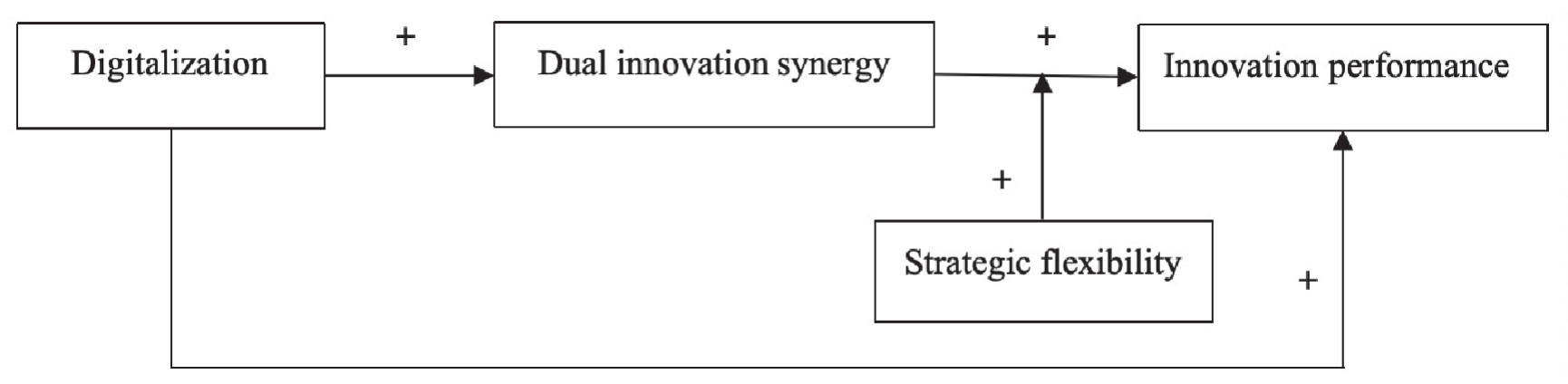
While previous literature has extensively investigated the determinants of dual innovation synergy, such as top management teams’ integration ability [11, 12], supportive atmospheres [1] and supportive leaderships [13], there has been limited focus on the role of digitalization. Digitalization is defined as the application of digital technologies [14], which can facilitate better collaboration and coordination within firms or with external partners [15] and promote more effective allocation of resources across various activities [16]. Although digitalization has the potential to enhance synergy between different types of innovation [4], there is a notable absence of empirical research assessing the impact of digitalization on dual innovation synergy. Despite the recognized link between enhanced dual innovation synergy and improved innovation performance, the lack of exploration into digitalization’s influence on dual innovation synergy makes it difficult to determine whether digitalization affects innovation performance through dual innovation synergy. Thus, this study aims to investigate whether digitalization can enhance innovation performance through the mediation of dual innovation synergy. Moreover, we propose that strategic flexibility, the organization’s ability to flexibly allocate resources and adjust strategies [17], can serve as a boundary condition that influences the extent to which dual innovation increases innovation performance. Besides innovation strategy, manufacturing enterprises in emerging countries need to take up other strategies, such as internatioanl market entry and domestic competition, which requires the alignement among different strategies. Interestingly, strategic flexibility, which stresses resource and ability flexibility, is highly beneficial for the manufacturing enterprises to keep a balance of resources allocation and reduce coordination costs between innovation and other different strategies, ultimately enhancing innovation performance.
This study contributes to the existing research on the impact of digitalization on innovation performance by exploring the mediating role of dual innovation synergy in the relationship between digitalization and innovation performance in manufacturing enterprises located in emerging countries that face limited resources and relatively weak innovation capabilities. Although previous studies have produced inconclusive results regarding the effect of digitalization on innovation performance [18, 19], this study adopts a different approach by investigating whether dual innovation synergy can act as a mediator between digitalization and innovation performance in the context of constrained resources and innovation capabilities. In doing so, we establish a mediation pathway that clarifies how digitalization influences innovation performance in manufacturing enterprises of emerging countries. Moreover, this study advances the understanding of strategic flexibility in coordinating various strategies, primarily examining how it enhances the positive impact of dual innovation synergy on innovation performance and thus amplifies the positive effect of digitalization on innovation performance through dual innovation synergy.
The rest part of this study is organized as below. Firstly, we introduce theoretical background about dual innovation and a dillema about innovation faced by manufacturing enterprises in emerging countries. Secondly, we put forward our hypotheses about how digitalization influences innovation performance via the mediation of dual innovation and how strategic flexibility moderates the relationship between digitalization and innovation performance. Thirdly, we describe how we chose sample and collected data. Fourthly, we do our analyses and draw results. Finally, we present our conclusion with contributions, limitations, and future directions.
Theoretical Framework
Dual Innovation and a Dillema about Innovation Faced by Manufacturing Enterprises in Emerging Countries
Dual innovation encompasses both exploitative and exploratory innovation. Exploitative innovation focuses on utilizing existing knowledge and technology to enhance product performance, processes, and efficiency [20], in order to meet the demands of current customers and the existing market. This involves strengthening, expanding, and upgrading existing knowledge and technology. On the other hand, exploratory innovation involves searching for, integrating, and utilizing new resources and opportunities to develop new products, services, and channels in order to meet new or potential market demands. This entails seeking, acquiring, and integrating novel or distant knowledge [21]. Some studies have pointed out a potential contradiction between exploratory and exploitative innovation, as these two modes of innovation compete for organizational resources and require different mindsets or routines [22]. Other studies suggest that they can be compatible and complement each other [23]. The “exploration-exploitation innovation dilemma” [6] highlights the importance of achieving a balance between exploitation and exploration innovation, and making them mutually complementary.
However, manufacturing enterprises in emerging countries, such as China, encounter a dilemma when it comes to implementing dual innovation. Typically, these enterprises occupy a low position in the global value chain and often engage in practices such as Original Equipment Manufacturing (OEM) or Original Design Manufacturing (ODM), which results in a lack of resources and new knowledge for exploratory innovation. The power dynamics between different actors in the global value chain lead to these manufacturing enterprises relying on cheap labor to participate in international divisions [24, 25]. This, in turn, leads to low profitability or heavy dependence on the technologies provided by consignors [26]. As a result, these enterprises lack the necessary surplus resources and accumulated knowledge or technologies for exploration, which reduces their motivation to pursue dual innovation. Particularly, OEM manufacturing enterprises face potential consequences like order cancellations and restrictions or suppression of technology from their consignors when they attempt to engage in exploratory efforts for technological advancement [24]. To avoid significant cost uncertainties and potential retaliation from consignors [27], manufacturing enterprises in emerging countries are less inclined to undertake high-risk exploration for radical innovation, thus reducing their capacity for effective dual innovation activities.
Digitalization and Innovation Performance in Manufacturing Enterprises
Digitalization has a significant impact on the innovation practices of enterprises in emerging countries [28-30]. Digital technology is characterized by its availability, expansibility, openness, relevance, and editability, making it a universal technology with high compatibility and intense penetration [31]. Specifically, digital technology has three key impacts on innovation performance. Firstly, digital technology can overcome the limitations of time and space, linking internal and external resources through a shared and open digital platform, and injecting new life into the enterprise innovation system [32]. This promotes the openness of enterprise innovation and improves the connectivity of the innovation network [33-35]. Secondly, digital technology has strong penetration into and compatibility with other technologies, increasing knowledge recombination between digital technologies and other technologies [36]. Thirdly, the application of digital technologies can enhance the efficiency of new product development processes by improving coordination and knowledge exchange among different participants, thus reducing R&D cost and time and improving the quality of new product development [37, 38].
While the benefits of implementing digitalization in enterprises are widely recognized, some studies have shown that it may also harm innovation and create uncertainty within the organization. The use of digital technology often requires higher skills from employees, leading to psychological exclusion and hindering innovation [19]. Moreover, excessive digitalization that does not match the enterprise’s capabilities and resource base may lead to the consumption of more operating costs, imbalance of resource allocation, and complexity in the value creation process, ultimately inhibiting innovation performance [19, 39, 40]. Despite these potential drawbacks, studies generally agree that the positive effects of digitalization often outweigh the negative impacts, making it an essential tool for enhancing production technology and improving enterprise performance. Thus, this paper proposes the following research hypotheses:
Hypothesis 1: Digitalization positively affects innovation performance of manufacturing enterprises in emerging countries.
The Mediation of Dual Innovation Synergy
Dual innovation synergy refers to the balanced and complementary dual innovation activities that have short and long-term benefits in the industry [21]. Manufacturing enterprises in emerging countries are increasingly using digitalization to reconstruct their capabilities and achieve a balance between exploitation and exploration innovation [41, 42]. By breaking the limitations of time and space [43, 44, 45], digitalization realizes seamless real-time interaction and communication between different units specializing in different innovation modes [46- 48]. This improves the allocation and utilization efficiency of innovation resources between exploitation and exploration innovation. Additionally, digital technology enhances enterprises’ ability to search for and integrate external knowledge, thus facilitating the acquisition and integration of diverse resources. This increase in knowledge and technologies mitigate the lack of new knowledge or technologies needed by exploration in manufacutring enterprises in emerging countries, thereby improving the effective allocation of resources in dual innovation activities and enables their coordinated development in the enterprises. For example, according to a study by Alhassan and Adam (2021), access to communication technology effectively enhances enterprises’ ability to obtain information resources, which supports the collaborative development of dual innovation activities [49]. Felin and Zeng (2014) suggested that the platforming of digital innovation, enabled by the application of digital technology, breaks down geographical barriers, encourages the participation of cross-regional and cross-industry entities in innovation, and reduces the costs associated with information search, sharing, communication, and coordination [50]. With the improvement of the efficiency of the allocation and coordination of innovation resources between the two innovation modes, manufacturing enterprises in emerging countries can overcome the technological path dependence caused by OEM and thus improve exploration innovation.
Furthermore, digitalization can enhance the synergy between exploitative and exploratory innovation in manufacturing enterprises in emerging countries by leveraging its universal characteristics such as strong technological penetration and compatibility. On one hand, digital technology can be employed for both minor modifications (exploitation) and significant changes (exploration) to existing technologies or products. When a digital technology supports both exploitation and exploration innovation, they can be harmoniously compatible as the technology acts as a conduit between the two. On the other hand, digital technologies enable the flexible use of the same talents or devices required for exploitation in exploration, and vice versa. This indicates that digitalization resolves the internal conflict of talent or resource allocation between exploitation and exploration innovation. In summary, manufacturing enterprises with advanced digital technology capabilities can effectively mobilize, deploy, and utilize digital technology and existing resources to achieve a balance and synergy between the two types of innovation activities. Based on this, this paper proposes the following research hypotheses:
Hypothesis 2: Digitalization positively affects dual innovation synergy of manufacturing enterprises in emerging countries.
Various studies have shown that both exploratory innovation and exploitative innovation positively contribute to innovation performance [51]. However, the duality of yin-yang balance suggests that focusing solely on either exploration or utilization is insufficient [52]. Effective coordination between the two is necessary to promote innovation performance [53]. Knowledge-based theories indicate that new innovations often emerge during the critical process of knowledge reorganization, which involves both exploratory and exploitative learning [54]. Atuahene-Gima and Murray found that a strong mixed state of exploitation and exploration does not achieve an effective balance between them and even destroy their internal compatibility, leading to resource competition and subsequent decline in innovation performance [55, 56].
However, dual innovation synergy emphasizes the importance of balancing exploitative and exploratory innovation, effectively addressing their respective deficiencies and enhancing overall efficiency [57]. This approach enables enterprises to fully utilize idle resources, mitigate competition for resources between exploratory and exploitative innovation, and optimize resource allocation, resulting in greater resource utilization. The balance between exploitative and exploratory innovations can be defined as the coexistence of both innovation modes with equal emphasis or significance. The optimal balance between exploratory and exploitative innovation is achieved when both activities are moderate [58], promoting knowledge reorganization and thus high innovation performance. Studies demonstrate that an effective combination of exploration and exploitation which emphasizes the balance of the two innovation modes can strengthen an organization’s learning and innovation capabilities [59]. The complementarity of exploitative and exploratory innovations, which means the compatibility or coordination of exploitation and exploration, leads to enhanced innovation performance [41, 60] and Pareto optimality of resources [10]. These imply that through keeping the balance and complementarity of the two innovation modes, dual innovation synergy has a vital impact on lasting innovation capabilities and enables companies to develop more valuable innovations. Thus, this paper proposes:
Hypothesis 3: Dual innovation synergy positively affects innovation performance of manufacturing enterprises in emerging countries.
As aforementioned, digitalization promotes dual innovation synergy of manufacturing enterprises of emerging countries (Hypothesis 2). Moreover, the synergistic effect of dual innovation consequently improve the innovation performance (Hypothesis 3). Thus, this paper proposes the following research hypotheses:
Hypothesis 4: Digitalization influences innovation performance via the mediation of dual innovation synergy in manufacturing enterprises in emerging countries.
Moderating Effect of Strategic Flexibility
The extent to which a firm utilizes dual innovation synergy to improve innovation performance partially depends on its ability to allocate resources and capabilities between innovation and non-innovation strategic activities. However, manufacturing enterprises in emerging countries face challenges in implementing a dual innovation strategy alongside other strategies, as the multi-strategy approach can lead to a threat in aligning different strategies due to limited resources and underdeveloped capabilities. Furthermore, sudden changes in uncertain environments can divert the enterprises’ focus away from innovation and have a negative impact on innovation performance. Nonetheless, strategic flexibility, involving the flexible allocation of resources and capabilities to support both innovation and other strategies, can help these enterprises quickly adapt to environmental changes [17] and improve their innovation performance [61, 62].
We argue that strategic flexibility, consisting of resource and capability flexibility [17], can promote the positive effects of dual innovation synergy on innovation performance in two ways. Firstly, resource flexibility allows for the flexible allocation of existing resources for different strategic activities, overcoming the challenge of limited resources in manufacturing enterprises in emerging countries. By effectively allocating and utilizing their limited resources to support dual innovation and other strategies, enterprises can ensure the availability of resources necessary for dual innovation synergy [63] and thus achieve a high level of innovation performance. Additionally, resource flexibility acts as a buffer against the impact of dynamic environmental changes on dual innovation synergy [64]. Secondly, capability flexibility refers to the ability of enterprises to schedule and coordinate activities flexibly, helping them avoid operational rigidity [17]. By possessing strategic flexibility, organizations can effectively coordinate dual innovation with other activities in terms of time, space, content, and speed, helping the enterprises address the competition for resources and capabilities between innovation and other strategies and utilize dual innovation synergy to improve innovation performance in dynamic environment.
In summary, strategic flexibility, through resource and capability flexibility, can mitigate the challenges faced by manufacturing enterprises with limited resources and underdeveloped capabilities. It allows for the compatibility of various strategic goals, buffers the impact of environmental changes on dual innovation synergy, and promotes the coordinated development of dual innovation and other activities. Thus, this paper proposes:
Hypothesis 5: Strategic flexibility plays a positive moderating role between dual innovation synergy and innovation performance.
Based on Hypothesis 4 and Hypothesis 5, we further propose:
Hypothesis 6: Strategic flexibility positively moderates the mediating role of dual innovation synergy between digitalization and innovation performance.
Sample Selection and Data Collection
Research Sample
This study employed a questionnaire survey method to collect research data, targeting middle and senior managers of manufacturing enterprises to enhance the scientific veracity of the data. A total of 310 questionnaires were collected through MBA classes and the Chinese online survey firm, Wjx. cn [15], and 236 valid questionnaires were obtained after screening. The study focused on manufacturing enterprises that had been established for at least three years and had implemented internal digital technology applications. The sample enterprises were primarily located in the Yangtze River Delta region of China, including Hangzhou, Ningbo, Wenzhou, Jiaxing, Taizhou, Jinhua, and Jiangsu. In terms of establishment years, 166 enterprises had been operating for five or more years, comprising 70.3% of the sample. The most common industries included textile/clothing, food/wine/ beverage/cigarette, daily consumer goods, computer, and software, accounting for 23.7%, 17.0%, 14.0%, and 10.6%, respectively. The middle-tier industries encompassed daily electronic and communication products, electronic and communication equipment, machinery and equipment manufacturing, and medical equipment, accounting for 8.9%, 5.5%, 5.1%, and 5.1% of the sample, respectively. The least common industries were chemical/plastic, transportation equipment, and furniture, accounting for 4.2%, 3.4%, and 2.5%, respectively.
Variable Measurement
In this study, a Five-point Likert scale is used to measure relevant variables. The numbers “1-5” indicate that respondents gradually increase their recognition of a question; here, “1” signifies complete disagreement, “5” shows complete agreement, and “3” indicates basic agreement.
The digitalization evaluation scale utilized in this study is based on the research of Yoo et al. (2010, 2012) [65, 66], which consists of nine items that assess two dimensions: the range and level of digital technology application. The scale for measuring innovation performance is adapted from Alegre et al. (2008) [67] and Jiao et al. (2015) [68], containing five items. Following the research by Atuhene-Gima (2005) [51] and Jansen (2005) [69], exploratory and exploitative innovation consists of four items each. The assessment of dual innovation synergy uses the formula 1-|X-Y|/|X+Y|, where X and Y represent the measured values of exploitative and exploratory innovation, respectively. Complementarity is represented by the product of exploitative and exploratory innovation divided by 25, following the approach of He and Wong (2004) [70]. The synergy of dual innovation is the average of both the balance and complementarity values, with equal weight assigned to each. Additionally, the scale for measuring strategic flexibility is primarily adapted from Sanchez (1997) [71], including six items assessing resource and capability flexibility.
Control Variables
As for control variables, firm age, firm size, and industry type are included in the study. That is because these variables have potential impacts on enterprise innovation activities and innovation performance. An enterprise’s age is measured since the time of its establishment (2022 minus the year of its establishment), and its scale is measured by the number of employees [72].
Data Analysis and Results
Common Method Deviation Test
This paper uses Harman’s single-factor test for examining common method deviation of large-sample data. Given both digitalization and strategic flexibility have two dimensions, we should use 7 constructs to do factor analysis. The 7 constructs include digital technology application level, digital technology application range, exploitative innovation, exploratory innovation, resource flexibility, capability flexibility, and innovation performance. According to EFA (exploratory factor analysis), its largest Eigenvalue is 39.232%, which is less than 40%, indicating no serious common method bias in data. Likewise, CFA (confirmatory factor analysis) is used for conducting further common method deviation tests, indicating that the single factor model (χ2 = 2909.165, df = 350, IFI = 0.503, TLI = 0.460, CFI = 0.500, RMSEA = 0.176, and SRMR = 0.136) can not meet the criteria (see Table 1). Additionally, based on the study of Podsakoff et al. (2003) [73], we create a model with a latent variable (i.e., a method factor) and the above-mentioned 7 trait factors and allow all measured variables to be loaded to the method factor. Compared to the fit indices of the model with only 7 trait factors, those of the model with a method factor are relatively poor (CFI decreased by 0.008, TLI decreased by 0.01, RMSEA increased by 0.005, SRMR increased by 0.104), indicating that there is no common method bias in the data.
Reliability and Validity Test
This study used a confirmatory factor analysis (CFA) to assess the fit of the 7-construct model and the discriminant validity of each construct. Results from the 7-factor model indicated a good fit. However, we also evaluated this model against six competing models, ranging from a 6-factor to a single-factor model. The 6-factor model combines the application level of digital technology and the application range of digital technology into one factor. The 5-factor model combines the application level of digital technology and its application range into one factor, and combines exploitative and exploratory innovation into one factor. The 4-factor model combines the application level of digital technology and its application range into one factor, combines the exploitative and exploratory innovation into one factor, and combines resources and capabilities flexibility into one factor. The 3-factor model combines the digital technology application level, digital technology application range, exploitative innovation and exploratory innovation into one factor, and combines resource flexibility and capability flexibility into one factor. The 2-factor model combines the application level of digital technology, the application range of digital technology, exploitative innovation and exploratory innovation into one factor, and combines resource flexibility, capability flexibility and innovation performance into one factor. The single-factor model combines seven constructs into one factor. The 7-factor model demonstrated a better fit than the other models and thus was deemed the best model. We observed loadings of measurement items between 0.63 to 0.92, most of which were above 0.70. Furthermore, all Cronbach’s α values were greater than 0.7, and all CITC values exceeded 0.35, indicating good reliability across all scales. The combined reliability (CR) values ranged from 0.868 to 0.922, while the average variance extraction (AVE) values were over 0.5, indicating a satisfactory level of internal consistency for all constructs.
Table 1.
Common method deviation analysis.
Descriptive Statistical Analysis and Correlation Coefficient Analysis
In this study, we employ Pearson’s correlation analysis for analyzing correlation between variables. Before correlation analysis, we mean the two dimensions of digitalization for representing the value of digitalization. Similarly, we mean the two dimensions of strategic flexibility for representing the value of strategic flexibility. Table 2 shows that digitalization is significantly correlated with both dual innovation synergy (r = 0.430, p<0.01) and innovation performance (r = 0.701, p<0.01). Moreover, dual innovation synergy (r = 0.401, p<0.01) has a positive relationship with innovation performance. This indicates that there is a correlation between the key variables involved in this study.
Main Effect Test
We employ hierarchical regression analysis to examine research hypotheses. Tables 3 and 4 show the results of our analyses. As depicted in M2 in Table 3, digitalization positively affects enterprise innovation performance (β = 0.696, p<0.001). Thus, Hypothesis 1 is supported.
Mediating Effect Test
Based on mediating effect test method recommended by Baron and Kenny (1986) [74], this paper tests mediating effect of dual innovation synergy through the following steps: first, as shown in M2, digitalization had a significant positive effect on enterprises’ innovation performance (β = 0.696, P<0.001). Second, as depicted in M7 in Table 4, digitalization positively affects dual innovation synergy (β = 0.415, p<0.001). Therefore, Hypothesis 2 is supported. Third, as shown in M3, dual innovation synergy positively affects innovation performance (β = 0.393, p<0.001), indicating that Hypothesis 3 is supported. Fourth, comparing M9 and M2, we found that, after introducing dual innovation synergy, the effect of digitalization on innovation performance has decreased from 0.696 (see M2) to 0.641 (see M9) but is still significant. This indicates that dual innovation synergy partially mediates the relationship between digitalization and innovation performance. Therefore, Hypothesis 4 is supported.
Moderating Effect Test
As shown by M5 in Table 3, the interaction term between dual innovation synergy and strategic flexibility (β = 0.289 , p<0.001) has a significant positive impact on innovation performance, indicating that strategic flexibility has a positive moderating effect on the impact of dual innovation synergy on innovation performance. Therefore, it is assumed that Hypothesis 5 is supported.
Moderated Mediating Effect Test
To test whether strategic flexibility increases the positive effect of digitalization on innovation performance through the mediation of dual innovation synergy, this study uses Model 14 of PROCESS v3.3 and bootstrap analysis with 5,000 replicates. Table 5 depicts the results of research. In the case that strategic flexibility is low (Mean-1 SD), the indirect effect is negative but not significant (effect = -0.044; 95% CI [-0.123, 0.043]), and in the case that strategic flexibility is high (Mean+1 SD), the indirect effect is significant and positive (effect = 0.197; 95% CI [0.096, 0.338]). Therefore, strategic flexibility can positively moderate the mediation effect of dual innovation synergy between digitalization and innovation performance, thus supporting Hypothesis 6.
Table 2.
Mean, standard deviation, and correlation coefficient of variables.
Table 3.
Hierarchical regression analysis outcome (1) (N = 236).
Table 4.
Hierarchical regression analysis outcome (2) (N = 236).
Research Conclusions and Contributions
Research Conclusions
Based on the theories of dual innovation synergy and strategic flexibility, this study developed a moderated mediation model to investigate the impact of digitalization on enterprise innovation performance. The model was empirically tested using 236 valid samples, leading to the following conclusions: Firstly, digitalization has a positive influence on enterprise innovation performance. Secondly, digitalization has a positive effect on dual innovation synergy. Thirdly, dual innovation synergy has a significant positive impact on enterprise innovation performance. Finally, dual innovation synergy partially mediates the relationship between digitalization and innovation performance. Moreover, strategic flexibility plays a positive moderating role in enhancing the impact of dual innovation synergy on enterprise innovation performance. Additionally, strategic flexibility positively moderates the mediating effect of dual innovation synergy in the relationship between digitalization and innovation performance. These findings provide important insights into the role of digitalization, dual innovation synergy, and strategic flexibility in improving enterprise innovation performance, and have significant implications for practitioners.
Theoretical Contributions
This study makes two important theoretical contributions. Firstly, it sheds new light on the ongoing stream of research on the impact of digitalization on innovation performance by revealing the mediation mechanism of dual innovation synergy through which digitalization influences innovation performance in manufacturing enterprises in emerging countries. Previous research has been inconsistent in determining whether the application of digital technology positively influences innovation in enterprises. While some scholars suggest a “digital paradox” and argue that digital investment may not necessarily enhance enterprise innovation [19, 75], others contend that it is beneficial for improving innovation performance [18, 76]. However, the literature has paid little attention to the mediation mechanism. Rather than engaging in this debate, this study explores how digitalization can influence innovation performance through dual innovation synergy in manufacturing enterprises in emerging countries. Innovation activities in such enterprises often face a challenge in implementing exploitation and exploration innovation simultaneously due to a lack of synergy capacity [77]. However, digitalization can help these firms achieve a balance and effective complementarity between the two types of innovation, thus enabling the realization of dual innovation synergy and ultimately enhancing innovation performance. The findings of this study demonstrate that digitalization positively impacts innovation performance by mediating dual innovation synergy. Therefore, this study uncovers the mediating role of dual innovation synergy in the relationship between digitalization and innovation performance and indirectly supports the argument that digitalization improves firms’ innovation abilities [78-80].
Secondly, this study adds to the existing research on strategic flexibility by investigating its role in moderating the relationship between dual innovation synergy and innovation performance in manufacturing companies in emerging economies. Previous studies have mainly focused on the direct effects of strategic flexibility on outcomes such as financial performance [63, 81, 82], innovation performance [83,84], competitive advantage [85], and firm sustainability [86]. However, little is known about its moderating effect on innovation performance. Since manufacturing firms in emerging economies face resource constraints and uncertain external environments, it is challenging for them to simultaneously implement dual innovation and other strategies. Nevertheless, this study suggests that strategic flexibility can help these firms optimize resource allocation and enhance coordination between innovation and other strategies, leading to improved innovation performance. The findings demonstrate that strategic flexibility not only positively moderates the relationship between dual innovation synergy and innovation performance but also positively moderates the mediating effect of dual innovation synergy on the relationship between digitalization and innovation performance. Therefore, this study not only reveals the moderating role of strategic flexibility in the relationship between dual innovation synergy and innovation performance but also establishes the link between digitalization, dual innovation synergy, strategic flexibility, and innovation performance in the context of manufacturing enterprises in emerging economies.
Managerial Implications
This study has significant practical implications. First, considering that digitalization can effectively enhance innovation performance in emerging market manufacturing enterprises, it is crucial to nurture managers’ digital thinking and awareness within these enterprises. This can be achieved by increasing investment in digital technology and striving to improve the overall digital capabilities of the enterprises. In the era of the digital economy, digitalization is an inevitable trend for enterprises to achieve sustainable development. Therefore, it is essential for enterprises to actively implement digital transformation and leverage the innovative potential of digital technology for improved innovation performance.
Second, as dual innovation synergy contributes to the enhancement of innovation performance in emerging market manufacturing enterprises, it is important for these enterprises to strengthen their capabilities in dual innovation synergy. Additionally, given that dual innovation synergy relies on the balance and complementarity between exploitation and exploration activities, enterprises should pay attention to achieving a simultaneous balance and complementarity in their dual innovation practices.
Third, as strategic flexibility helps in balancing innovation with other strategies in the face of uncertain external environments, it is crucial for manufacturing enterprises in emerging markets to actively enhance their strategic flexibility. Efforts should be made to overcome organizational inertia and rigidity and improve strategic flexibility to enable enterprises to quickly identify and dynamically adapt to changing environments. By focusing on the development of strategic flexibility, the effectiveness of dual innovation synergy on innovation performance can be promoted, and enterprises can enhance their adaptability to changing environments, leading to improved innovation performance.
Research Limitations and Prospects
Despite its contributions, this study has several limitations. Firstly, the data used in this study are mainly cross-sectional, which may not fully capture the effect of digitalization on innovation performance due to its lagging effect. Therefore, future research could consider collecting longitudinal data or conducting case studies to analyze the effect of digitalization on enterprise innovation performance. Secondly, the sample enterprises used in this study mainly come from the Yangtze River Delta region in China, which may limit the generalizability of the research conclusions to other economic regions in China. Therefore, future research could consider expanding the geographical scope of the study to include other regions such as the Pearl River Delta and Beijing-Tianjin-Hebei to improve the universality of the research conclusions. Thirdly, different industries may experience a varying effect of dual innovation synergy on innovation performance. Future research could explore the effects of industry type on the relationship between dual innovation synergy and innovation performance to provide more specific guidance for enterprises in different industries. These limitations suggest that further research is needed to develop a deeper understanding of the relationship between digitalization, dual innovation synergy, strategic flexibility, and innovation performance in emerging market manufacturing enterprises.

