

Introduction
The Significance of Environmental Education
“Environmental education” is marked by the 1972 United Nations Conference on the Environment held in Stockholm, which is the first environmental conference with epoch-making significance in human history. The conference designated June 5 every year as “World Environment Day”, and formally put forward the concept of “environmental education”. Then, in 1977, the Declaration of the Tbilisi Intergovernmental Conference on Environmental Education defined the concept of environmental education as “a comprehensive, lifelong education that responds to changes in a rapidly changing world. Its aim is to directly solve environmental problems and protect the local environment. It involves all forms of educational process, both popular and professional, in-school and out-of-school” [1, 2]. It can be concluded that environmental education itself is closely connected with the natural environment, and environmental education should not be limited to the traditional classroom education mode. With the deterioration of environmental pollution and human attention to environmental problems, environmental education has received more and more attention. Agenda 21, adopted by the United Nations Conference on Environment and Development, states that “it is also the common responsibility of the world to make environmental education a necessary general knowledge for world citizens” [3]. The United Nations’ emphasis on environmental issues has promoted the development of environmental issues in all countries. During this period, environmental education was valued as a means of environmental protection. Therefore, environmental education is to achieve environmental protection. For the purpose of education, environmental education is to teach students about the environment, and develop their skills and understanding of the environment, including the prevention of environmental pollution, environmental protection scientific knowledge and skills, environmental legal knowledge, and environmental ethics [4, 5].
Research Hotspots
Over the past few years, ecological advancement and environmental safeguarding have been prioritized at an unparalleled strategic level by the international community. Consequently, new demands and regulations regarding environmental education curricula in colleges and universities have emerged. Under the requirements and publicity of various documents at all levels, many scholars have elaborated on the development and construction of the environmental education curriculum system from an academic point of view. Sidiropoulos [6] believes that in order to develop the curriculum system of environmental education in colleges and universities, it is necessary to solve the source problems such as planning, design, and decision-making, popularize permeable environmental education courses in the independent curriculum mode, and adopt flexible and diverse teaching methods. Chen et al. [7] believe that a complete environmental education curriculum system should contain four aspects: public compulsory courses or limited elective courses, self-selected courses or lectures, hidden courses, and practical inquiry activities. Adanali and Mete [8] believed that environmental knowledge should be popularized through public courses or lectures on environmental education and proposed that environmental literacy should be used as an indicator for future talent assessment. Yin [9] believes that general environmental courses and compulsory environmental courses should be set up in colleges and universities, and teachers should be improved to solve the problems existing in environmental education in Chinese colleges and universities. McBeath et al. [10] believe that universities should not only set up environmental education as a professional course, but also integrate environmental education into engineering disciplines and put forward the suggestion of establishing environmental protection associations in universities. To sum up, the establishment of scientific environmental education courses in colleges and universities has become the consensus of the academic community. Although the forms and modes are different, they basically agree that only by establishing a scientific and effective environmental education curriculum system can the implementation and development of environmental courses be guaranteed, and the effect of environmental education on college students will be truly and significantly improved.
Emerging Environmental Education for Higher Education
With the rapid improvement of the comprehensive national strength of many countries, higher education has also entered the fast lane; therefore, it is very important to improve the environmental awareness of college students. In recent years, more and more scholars have studied environmental education in colleges and universities. For example, Liu et. al. [11] conducted a randomized controlled experiment for sophomore students majoring in administrative management at Jiangsu University to test the influence of environmental education on college students’ garbage classification knowledge, awareness, and behavior. It is found that the value awareness and potential awareness of garbage classification among college students are not obvious. Therefore, it is proposed to strengthen environmental education, establish a “three-in-one” environmental education system, and strengthen environmental education within and outside the school. Park et al. [12], based on norm activation theory, analyzed the mechanism of the influence of dual environmental education and social norms on college students’ PM2.5 emission reduction behavior by questionnaire survey and structural equation model. The results show that both school and family environmental education can promote college students’ willingness and behavior to reduce PM2.5 emissions. The former can enhance college students’ environmental consequence awareness and environmental responsibility, while the latter can influence college students’ subjective norms and willingness to reduce emissions with the help of parents’ subjective norms and descriptive norms. Wu et. al. [13] start with the connotation of ideological and political education in environmental education courses and take the main problems existing in current ideological and political teaching as a breakthrough point. This paper expounds the ways to further improve the effectiveness of ideological and political education from the aspects of the construction of teachers, the primary problems of ideological and political education in the curriculum, the elements of ideological and political education contained in teaching, the development of practical activities, and the establishment of the evaluation system, and finally realizes the synergy of “knowledge teaching” and “value guidance”. These studies mainly focus on the impact of environmental education on college students.
Focusing on the Difference
Although considerable achievements have been made in the field of traditional environmental education, research on emerging environmental education in universities is still limited [14–16]. Environmental education in colleges and universities is the key to environmental protection. Environmental education in colleges and universities can cultivate a large number of young builders with environmental protection knowledge, environmental awareness, environmental protection technology, and the concept of social sustainable development, and provide a good atmosphere and public opinion for environmental protection, so as to promote the long-term, stable, and healthy development of the national economy [17–19]. In order to avoid environmental damage due to individual behaviors, it is necessary to attach great importance to the environmental education of college students, so as to improve their level of environmental awareness and practice environmental protection behavior [20–23]. Therefore, in future research, the field of environmental education in universities will be very important.
This paper aims to conduct a bibliometric analysis of journal articles published over the past decade in three prominent journals within the field of environmental education. The primary goal is to explore and delineate the similarities and differences between journals focused on environmental education in higher education settings and those dedicated to traditional environmental education. Given the burgeoning nature of environmental education within higher education, this study seeks to offer a scientometric perspective that can inform and guide future environmental education endeavors, particularly in engineering education contexts.
This research is crucial as it aims to bridge the gap between environmental education and engineering education. By understanding the evolution and current trends in environmental education, especially in higher education, this study will provide insights into how environmental principles and practices can be more effectively integrated into engineering curricula. The objective is to identify unique aspects of environmental education in higher education and how these can complement and enhance engineering education. This approach is vital for preparing future engineers with a robust environmental consciousness and the capability to devise sustainable and responsible engineering solutions. Ultimately, this study seeks to clarify how the latest trends in environmental education research can be aligned with and contribute to the evolving field of engineering education.
Material and Methods
This paper presents a bibliometric analysis of journal literature, utilizing the CiteSpace software system for scientometric visualization. Developed by Dr. Chaomei Chen at Drexel University and based on the JAVA language, this system effectively measures and visualizes downloaded documents to reveal the structure, patterns, and distribution within the subject area. The data was sourced through the analysis functions available on the WOS platform.
The study of research hotspots is crucial as they indicate the primary focus and significant research directions within a field over a specific period. Such analysis is invaluable for understanding and deeply examining the field’s research content. In this paper, we employed keyword clustering analysis to identify the research hotspots in three leading environmental education journals. This method has allowed us to extract the core research themes in environmental education since 2007. The Modularity value in clustering analysis serves as a benchmark for network modularization, with higher values indicating more effective clustering. The value, ranging between 0 and 1, is used to assess the clarity of clustering. A value above 0.4 usually signifies a clear and reliable clustering effect. The computation of the value is detailed in Equation (1).
In this equation, aij denotes the adjacency matrix of the network, which represents the connections between nodes. pij refers to the expected number of links between the nodes i and j. The terms Ci and Cj are the clusters that nodes i and j belong to within the network. When both nodes are part of the same cluster, σ is set to 1; if they are in different clusters, σ is set to 0.
The Silhouette value in clustering analysis, a key metric for assessing network homogeneity, is also employed. This value, denoted as S, indicates the degree to which nodes in the network are similar to each other. The closer the Silhouette value is to 1, the more homogenous the network. A Silhouette value above 0.7 suggests a high level of clustering reliability, while a value above 0.5 indicates that the clustering results are reasonable. The calculation method for the Silhouette value is detailed in Equation (2).
In the formula, a(i) represents the average distance between node i and other nodes in the network; b(i) is the average distance from node i to the nodes of the nearest cluster. This metric helps to understand how well a node i is assimilated into its own cluster compared to other clusters.
Expanding upon this, after selecting effective sample data from the literature, we utilized the CiteSpace V6.1 software to analyze and create a knowledge network map of keyword clusters for environmental education research. This process involves the visualization of key terms and their interconnections within the field of environmental education. It enables the identification of major themes, trends, and gaps in the research. By mapping these keywords and their relationships, researchers can gain insights into the structure and evolution of topics within environmental education, thus aiding in the understanding of the field’s development over time.
Results and Discussion
Journal Publication Trend
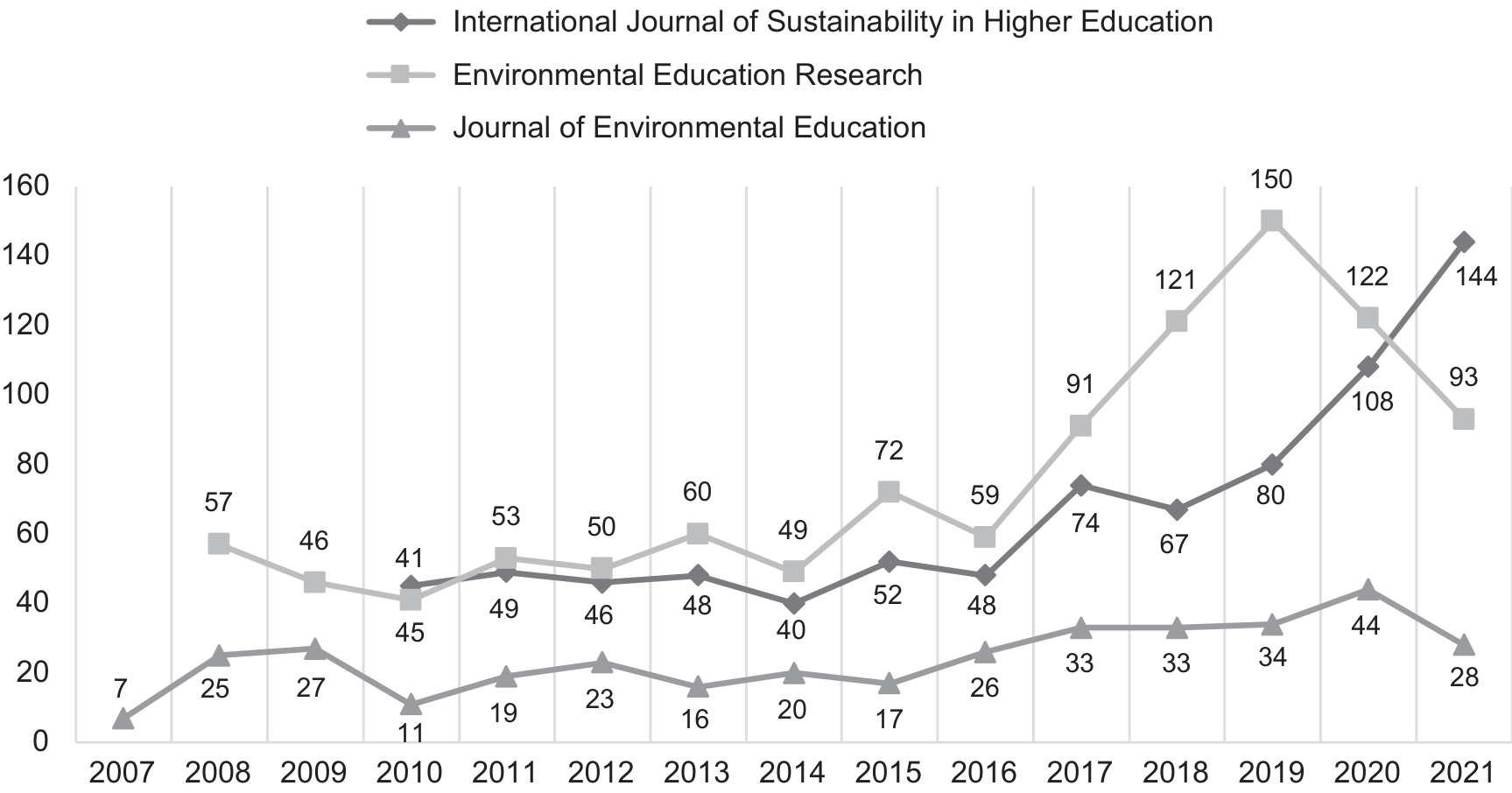
In the WOS database, the International Journal of Sustainability in Higher Education, Environmental Education Research, and Journal of Environmental Education were respectively retrieved related literature published in three journals of Environmental Education. The search found that the International Journal of Sustainability in Higher Education began to be indexed by the WOS database in 2010, Environmental Education Research began to be indexed by the WOS database in 2008, and the Journal of Environmental Education began to be indexed by the database in 2007 (Fig. 1). From the perspective of the overall literature output trend, the literature of the International Journal of Sustainability in Higher Education shows an increasing trend, and the growth has become faster in recent years. Environmental Education Research and Journal of Environmental Education showed a trend of first increase and then decrease. In these three journals, the amount of Environmental Education Research literature before 2020 is significantly higher than the other two journals. In 2021, the number of International Journals of Sustainability in Higher Education exceeded that of Environmental Education Research. In order to facilitate the comparison of the research hotpots of different journals, the data from three journals from 2010 to 2021 was selected for comparative analysis in the follow-up analysis.
Research Hotspots
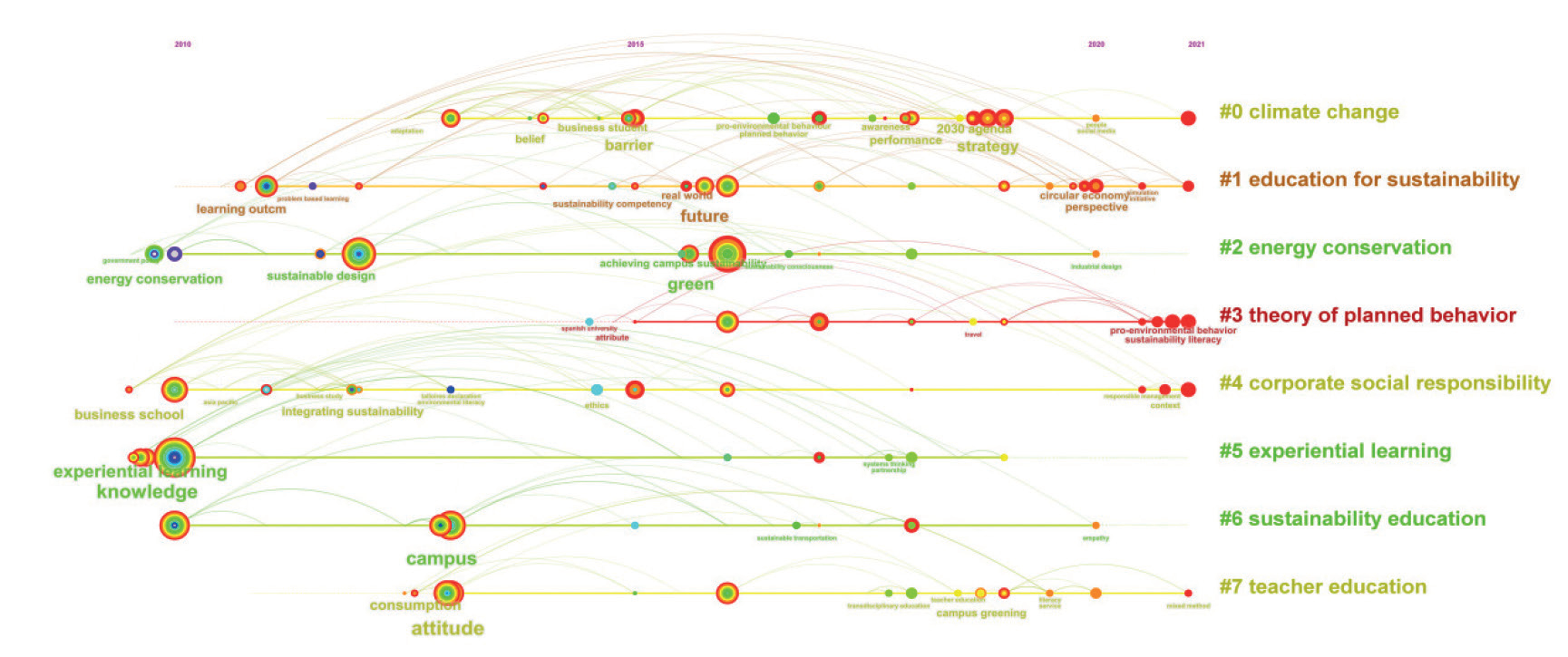
CiteSpace software has been used to analyze publications in the International Journal of Sustainability in Higher Education, Environmental Education Research, and the Journal of Environmental Education. A keyword cooccurrence cluster analysis was performed on the literature data in the WOS core collection of three journals from 2010 to 2021. The purpose of this cluster analysis is to reveal the similarities and differences between the main hot issues of the three journals from 2010 to 2021. By co-occurrence clustering the network for keywords in the International Journal of Sustainability in Higher Education, it can be found that there are N= 546 nodes in the network, E= 6064 connections, and the network density is 0.0082.
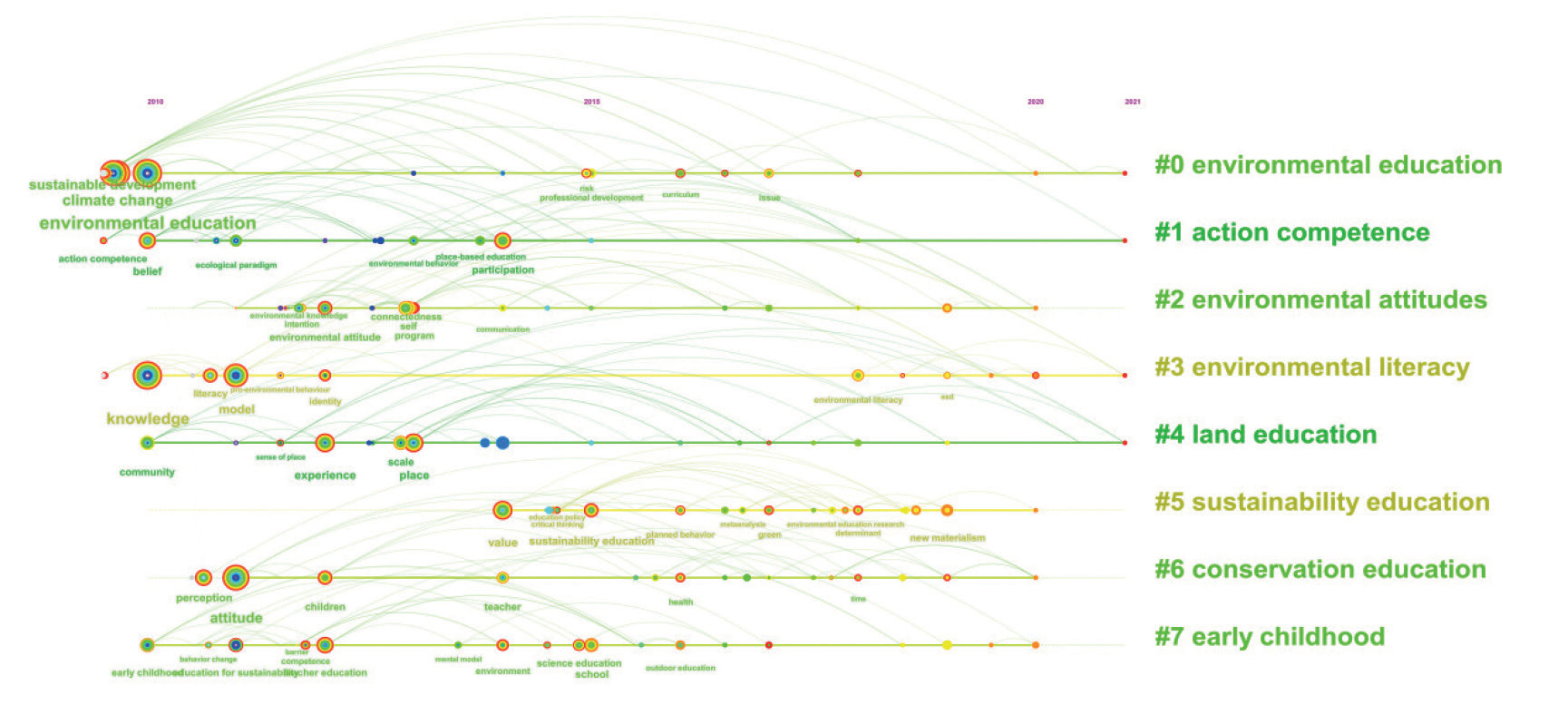
As can be seen from Fig. 2, the research hotspots in the International Journal of Sustainability in Higher Education from 2010 to 2021 mainly include “climate change”, “education for sustainability”, “energy conservation”, “theory of planned behavior”, “corporate social responsibility”, “experiential learning”, “sustainability education” and “teacher education”. In the keyword co-occurrence cluster network of Environmental Education Research, there are N = 405 nodes in the network, E = 671 connections, and the network density is 0.0076. As can be seen from Fig. 3, research hotspots in the journal Environmental Education Research from 2010 to 2021 are mainly “environmental education”, “action competence”, “environmental attitudes”, “environmental literacy”, “land education”, “sustainability education”, “conservation education”, and “early childhood”.
For the keywords co-occurrence cluster network in the Journal of Environmental Education, there are N = 315 nodes in the network, E = 586 connections, and the network density is 0.0118. As can be seen from Fig. 4, the research hotspots in the Journal of Environmental Education during 2010–2021 are mainly “environmental concerns”, “energy education”, “environmental education”, “political ecology”, “collaborative research”, “action competence”, and “environmental attitudes”.
On the basis of identifying the research hotspots of the three journals from 2010 to 2021, in order to further compare the differences in the research keywords of the three journals, this study compared the top 20 hot keywords in different journals (Table 1). It was found that the three journals mainly focused on the hot keywords “sustainable development”, “education”, and “education for sustainable development”, “sustainability education”, “attitude”, “behavior”, “science”, “knowledge”, “student”, etc. However, the keyword with the highest frequency in the three journals is not consistent. The keyword with the highest frequency in the International Journal of Sustainability in Higher Education is “higher education”. The most frequent keyword in Environmental Education Research is “connectedness”; “environmental education” is the most frequently used keyword in the Journal of Environmental Education. It can be seen that there are some differences in the concerns of the three journals.
Research Frontiers
Utilizing the Burst Detection feature in CiteSpace software, this study conducted a detailed analysis of keywords from articles published in three journals between 2010 and 2021. This method helped identify terms or topics that garnered significant scholarly attention during each period. To grasp the evolving research trends, the identified keywords were organized by their emergence time and intensity.
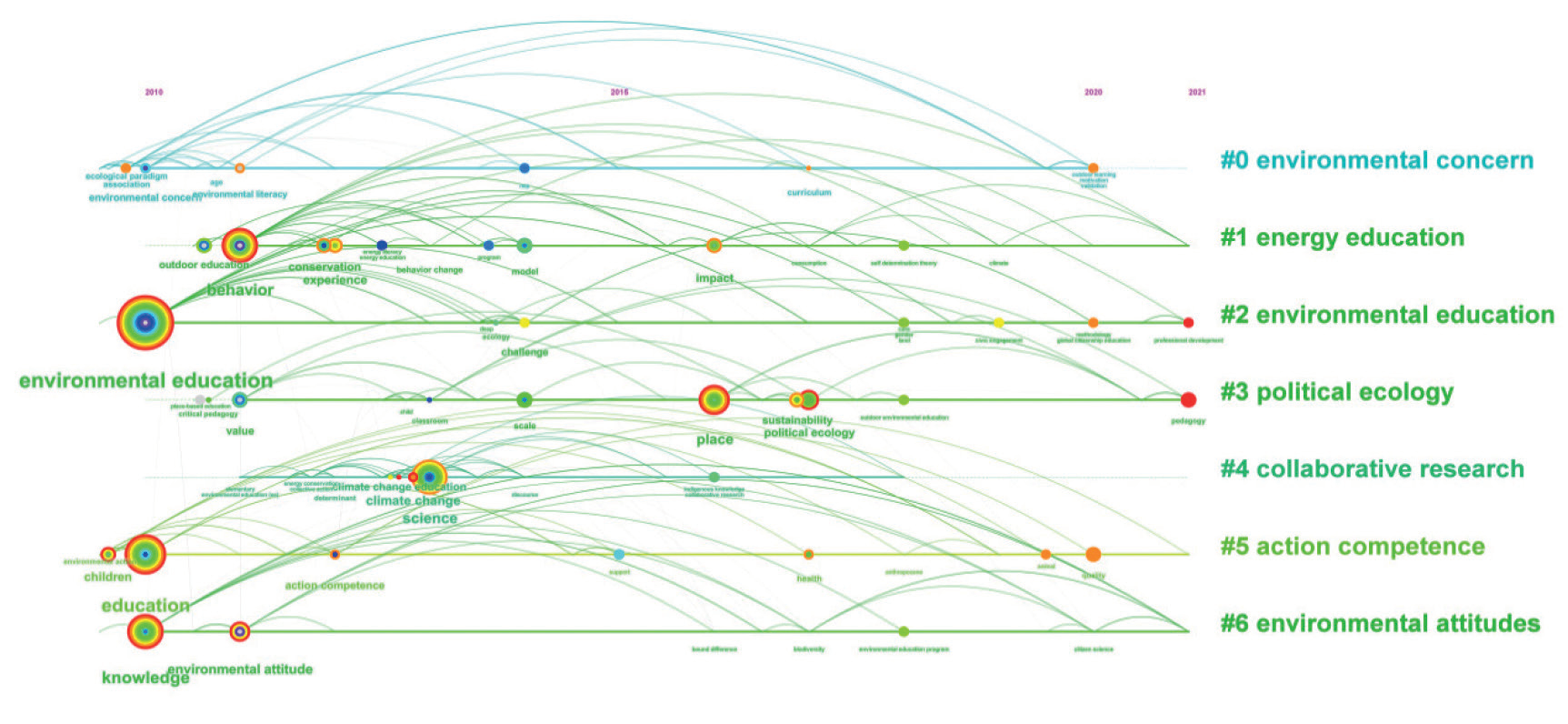
Table 1.
Key information with the highest co-occurrence frequency.
The analysis for the “International Journal of Sustainability in Higher Education” during this period revealed a strong focus on ‘sustainable development’. This indicates a shift towards integrating sustainability concepts into higher education curricula. Terms like ‘environmental management’ and ‘education for sustainability’ suggest a growing emphasis on practical approaches for embedding sustainable practices within academic settings (Table 2). Additionally, keywords such as ‘behavior’, ‘framework’, ‘science’, ‘knowledge’, and ‘sustainable development goal’ underscore a multidisciplinary approach, blending theoretical frameworks with practical applications in sustainability education. In “Environmental Education Research,” the key themes from 2010 to 2021 were diverse (Table 3). The prominence of ‘education for sustainable development’ and ‘environmental education’ highlights the pedagogical focus, while terms like ‘consequence’ and ‘discourse’ indicate a critical examination of the outcomes and narratives in environmental education. ‘Place-based education’, ‘new materialism’, ‘engagement’, ‘esd’ (Education for Sustainable Development), and ‘youth’ emphasize context-specific, philosophical, participatory, and youth-centric aspects in the field. Similarly, the “Journal of Environmental Education” displayed a wide array of themes (Table 4). ‘Environmental concern’, ‘ecological paradigm’, and ‘environmental action’ suggest a focus on how individual attitudes and beliefs influence ecological behavior. Keywords such as ‘environmental attitude’, ‘value’, ‘model’, ‘scale’, ‘politics’, ‘political ecology’, ‘school’, ‘experience’, and ‘family’ point to a comprehensive approach, acknowledging the influence of personal, social, and political factors on environmental education.
Table 2.
Main keywords with the strongest citation bursts – International Journal of Sustainability in Higher Education.
Table 3.
Main keywords with the strongest citation bursts – Environmental Education Research.
This in-depth analysis underscores the complexity and dynamic nature of research in environmental and sustainability education over the last decade. It reflects a notable shift from traditional educational methods to more inclusive, interdisciplinary, and action-oriented approaches. The research themes demonstrate the broad range of factors considered, from individual behaviors and societal structures to policies and educational practices.
Table 4.
Main keywords with the strongest citation bursts – Journal of Environmental Education.
Composition of the Knowledge Ase
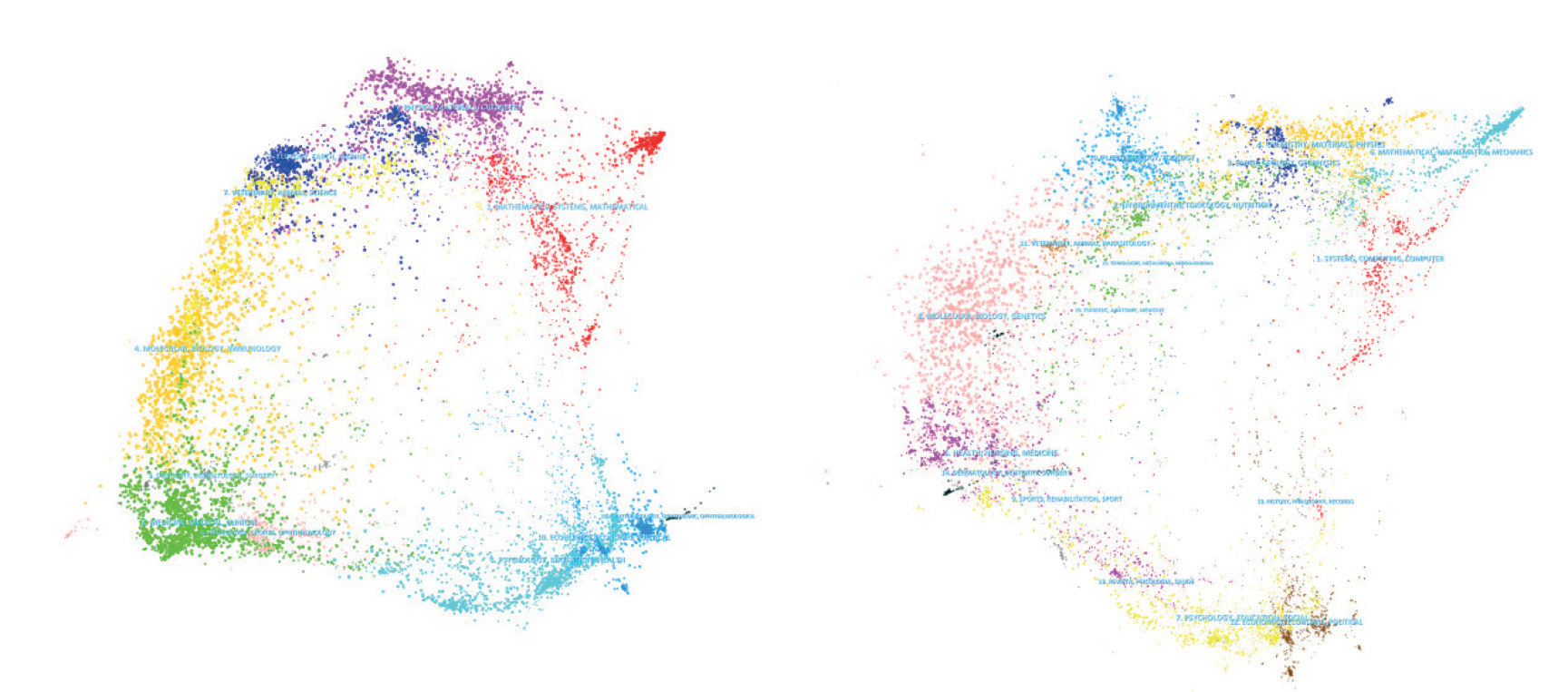
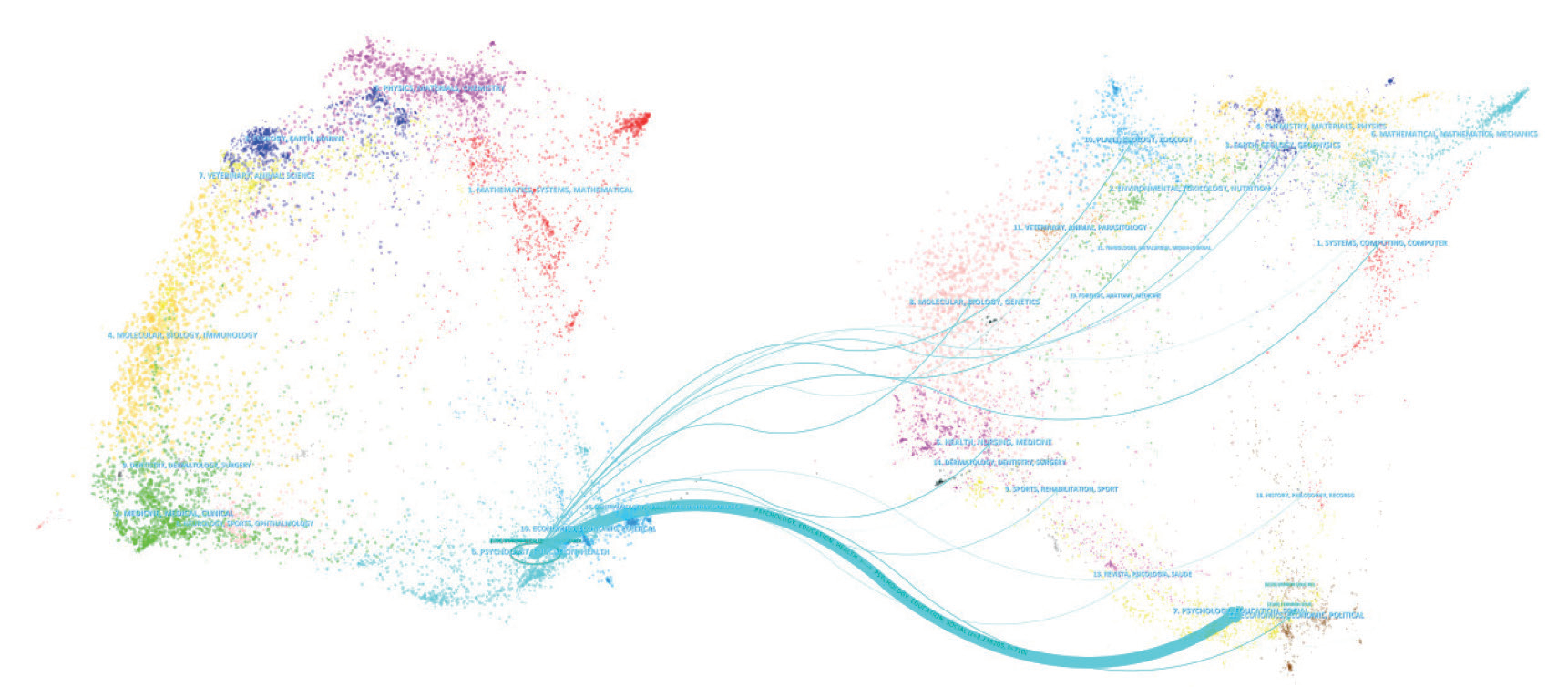
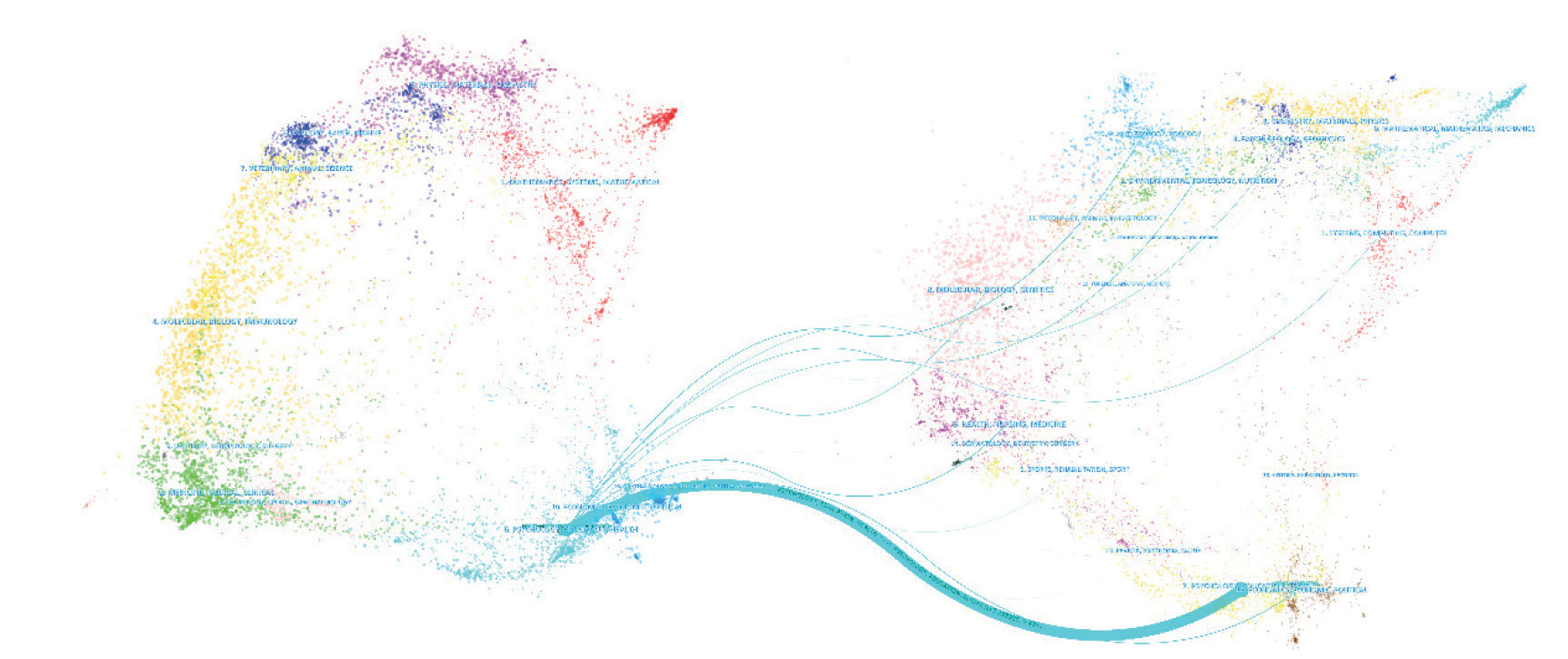
The domain of a journal typically encompasses fundamental concepts, basic principles, and diverse elements of scientific knowledge. Effectively harnessing this subject knowledge base can elucidate the relationships and developmental patterns among different knowledge systems within the field. The JCR-based classification map in CiteSpace software serves as a valuable tool for illustrating the knowledge foundations across various stages. It is noteworthy that the map is bifurcated into two sections: the left side delineates the existing research field of the target document set, while the right side portrays the reference subject field, termed the knowledge base field. Analyzing the subject domain of the reference set provides insights into the evolution of the knowledge foundation while scrutinizing the subject domain of the target data set reveals the dissemination of knowledge.
In the examination of the subject area within the International Journal of Sustainability in Higher Education, spanning from 2010 to 2021, it was observed that there is a lack of a distinct existing research field or a well-defined core knowledge base (Fig. 5). This suggests a diverse and potentially evolving array of topics without a centralized focus during this timeframe. Such findings imply that the journal may have been exploring novel territories within sustainability in higher education rather than adhering strictly to established paradigms. It could reflect an openness to innovative approaches and varied methodologies in sustainability education, accommodating emerging challenges and perspectives in this dynamic field.
During the same period, Environmental Education Research exhibited a core area identified as “6. PSYCHOLOGY, EDUCATION, HEALTH.” This signifies a notable emphasis on the psychological dimensions of environmental education, the instructional techniques employed, and the health ramifications of environmental issues (Fig. 6). The journal’s core knowledge base was identified as “7. PSYCHOLOGY, EDUCATION, SOCIAL,” suggesting a strong grounding in the social science aspects of environmental education. This trend may indicate a growing interest in comprehending the psychological and social factors influencing environmental behaviors and attitudes. Peripheral knowledge bases encompassing areas such as computing, environmental science, and economics point towards a broader, more holistic approach to environmental education, integrating technical, scientific, and socio-economic perspectives.
Similarly, the Journal of Environmental Education, spanning from 2010 to 2021, shared its core area and knowledge base with Environmental Education Research, with a focus on “6. PSYCHOLOGY, EDUCATION, HEALTH” and “7. PSYCHOLOGY, EDUCATION, SOCIAL” (Fig. 7). However, its peripheral knowledge bases were comparatively fewer, indicating a more focused approach, possibly concentrating on the direct impacts of education on environmental attitudes and behaviors. The inclusion of areas like molecular biology and genetics could suggest an interest in the biological foundations of environmental awareness and behavior.
These analyses underscore the evolving and interdisciplinary nature of research in sustainability and environmental education, illustrating how these fields intersect and draw insights from various other disciplines. They signify a trend towards an increasingly interdisciplinary approach in these journals, blending psychological, educational, social, and even biological perspectives to address complex environmental challenges. Such trends reflect a growing acknowledgment within the academic community of the multifaceted nature of environmental issues and the necessity for a diverse range of perspectives and methodologies to effectively address them. This interdisciplinary approach is critical for developing comprehensive and effective strategies in sustainability and environmental education, which are essential for fostering a more sustainable future.
Conclusion
This study utilizes the bibliometric visualization software CiteSpace to examine and compare literature data extracted from the WOS core collection of three prominent journals – the International Journal of Sustainability in Higher Education, Environmental Education Research, and the Journal of Environmental Education — spanning the period from 2010 to 2021. The ensuing conclusions can be delineated as follows:
1) Analysis of the literature growth trends across the selected journals reveals contrasting patterns. While the International Journal of Sustainability in Higher Education exhibits a consistent upward trajectory, the number of publications in Environmental Education Research and the Journal of Environmental Education has been declining annually. Notably, prior to 2020, Environmental Education Research had substantially higher publication numbers compared to the other two journals. However, from 2021 onwards, the International Journal of Sustainability in Higher Education surpassed Environmental Education Research, emerging as the journal with the highest publication count among the three.
2) Examination of keyword co-occurrences cluster analysis reveals slight variations in network density among the three journals over the studied period, with respective densities of 0.0082, 0.0076, and 0.0118. While significant overlaps exist in the prominent keywords, discrepancies emerge in the most frequent keywords across the journals. For instance, “higher education” dominates in the International Journal of Sustainability in Higher Education, “connectedness” prevails in Environmental Education Research, and “environmental education” leads in the Journal of Environmental Education, indicating divergent focal points among the journals.
3) Keyword burst analysis delineates distinct research frontiers among the journals. Sustainable development and education for sustainable development emerge as prominent themes in the International Journal of Sustainability in Higher Education and Environmental Education Research. Conversely, the Journal of Environmental Education exhibits a greater emphasis on environmental issues and educational scenarios during the same period.
4) Double-graph overlay analysis underscores notable differences in the subject fields and core knowledge bases of the journals. The International Journal of Sustainability in Higher Education lacks clear existing research fields and core basic knowledge domains. Conversely, both the Journal of Environmental Education and Environmental Education Research are situated within the “PSYCHOLOGY, EDUCATION, and HEALTH” subject field, with corresponding core knowledge bases encompassing “PSYCHOLOGY, EDUCATION, and SOCIAL.”
Despite the comprehensive analysis provided, it’s crucial to acknowledge the inherent limitations of bibliometric analysis. Factors such as database coverage, keyword selection, and search parameters may influence the results. Additionally, the exclusion of non-English publications and the potential for bias in citation practices could impact the findings’ generalizability and completeness. Therefore, caution should be exercised in interpreting the results, and further qualitative investigations may be warranted to complement the quantitative analysis and provide a more nuanced understanding of the field’s dynamics.
In summary, the findings derived from the annual distribution of literature publications, keyword cooccurrence and emergence, and double-graph overlay analysis underscore three primary research themes within the current environmental education literature. These themes encompass the evaluation of environmental education projects, the significance of natural experiences in shaping human-nature relationships, and the prominence of sustainable development and education therein.

