

Introduction
Mining activities alter natural biogeochemical cycles, contaminate soil and water, and are one of the most important sources of heavy metals entering the environment [1]. In the extraction and smelting of minerals, metals are enriched and undergo transformations through the environment and the food chain; this situation brings significant ecological risks [2], and this is because heavy metals can bioaccumulate and biomagnify, reaching dangerous levels for health and the environment [3, 4].
Mercury is of special environmental interest, and it has been identified that the main sources that increase its levels are the combustion of coal from power plants and gold mining; the latter negatively impacts the soil, air, streams, rivers, and dams [5]. Natural and anthropogenic activities generate amounts of mercury (Hg) that are between 6000 and 8000 mg Hg per year [6]. Mercury is a risk to human health and the environment; exposure to high doses can cause complications to the brain and kidneys and negatively affect the digestive, nervous, immune, and respiratory systems; in other living species, it can cause alterations in cells and tissues, change the biochemical process, and alter reproduction [7].
Some studies have shown that heavy metals, organic contaminants, radionuclides, antibiotics, and pesticides can be treated to immobilize, absorb, reduce toxicity, and stabilize or degrade compounds that are released into the environment from different sources [8, 9]. In the case of heavy metals like Hg, there are methods for their remediation in contaminated water such as chemical precipitation, reverse osmosis, adsorption, ion exchange, electrocoagulation, biological treatment, membrane filters, and phytoremediation; additionally, it is used to decontaminate aquatic habitats that have pesticides, drug residues, and nanoparticle remediation [10].
Phytoremediation with aquatic plants has the capacity to accumulate heavy metals in their structure through absorption or surface adsorption [11]; after absorption, heavy metals are transformed into non-toxic forms, transported to different parts of the plant, and accumulated [12, 13]. Plants that have the ability to accumulate toxic heavy metals in roots and shoots are called accumulators and hyperaccumulators [14]. Among the hyperaccumulator plants are Eichhornia crassipes, Salvinia, and Lemna minor, which are recognized for their ability to retain these metals [15]. It is important to identify the difference between the accumulation and distribution of mercury that occurs in floating plants and submerged plants since in the case of the leaves of submerged plants much more accumulates because the leaves and stems are in direct contact with the pollutant and are the gateway [16].
With phytoremediation, it is necessary to consider that, as a consequence of the accumulation of mercury in its tissues, the absorption of nutrients is affected and produces inhibition of the natural pigmentation of plants [17]; furthermore, species can develop various strategies in the transfer of heavy metals depending on which heavy metal can be stored better in the roots or in the aerial parts [18, 19]. It is possible to increase the efficiency of phytoremediation when carbon and nutrient sources are used as a strategy to strengthen the resistance of plants when coming into contact with the contaminant [20]; this was an aspect used in this research, and it allowed us to achieve better results than those obtained in similar studies that did not use them. One of the most favorable phytoremediation techniques to counteract heavy metal pollution is phytostabilization, which uses metal-tolerant plants to degrade, transfer, remove, and stabilize contaminants in soils, sediments, and waters [5] until that immobilizes them due to their accumulation in them [2].
Phytoremediation uses different physical and biochemical routes [3] through mechanisms such as bioaccumulation in the living plant and bioabsorption in the dry plant [21]. Aquatic macrophytes such as L. minor and E. crassipes are potent biosystems for phytoremediation of a wide range of environmental contaminants, such as heavy metals; E. crassipes has properties that favor it: greater biomass, a fibrous root system, and greater tolerance to metals, which make this species a good option for phytoremediation [22]. L. minor was used in many studies to reduce mercury, and high levels of reduction were found accompanied by morphological effects of the plant when it was subjected to contact with heavy metals [3].
pH affects the bioavailability of heavy metals [23]; the mechanism by which Hg adsorption occurs is affected by the pH values and duration of the test; at low pH values, mercuric ions become very soluble, and at values between 5 and 7, the adsorption of Hg is facilitated by the electrostatic interaction between the negatively charged surface [24], while the metal migration capacity of heavy metals in an acidic environment with pH values less than 5 decreases solubility and causes heavy metals to precipitate [23].
The problem addressed in this study occurs in various miner zones of Colombia that use Hg for gold mining in an artisanal manner and discharge waste rivers, affecting their cause with Hg. It is a bioaccumulative toxic contaminant whose presence can alter the cycle of food webs. It accumulates in living organisms, which later, when consumed by humans, can cause neurological and kidney disorders and deterioration in lung function. The objective of this research was to reduce the concentration of Hg in water through phytoremediation, using two aquatic species recognized as hyperaccumulators of heavy metals. The study used E. crassipes and L. minor because they are easy to obtain and for their good results in the removal of heavy metals. We sought to delve deeper into how to improve good removal conditions, and for this reason, adaptation and subsequent nutrition with organic carbon were used as a complement, becoming an important finding to improve the results of phytoremediation.
Materials and Methods
In this research, Hg phytoremediation was developed with the species E. crassipes and L. minor; they were put in contact with Hg solutions at different concentrations 0.50 mg L-1, 2.5 mg L-1, and 5.0 mg L-1; after 2, 4, and 6 days, physical changes in the species were observed, and the Hg concentration was analyzed to quantify the % decrease in Hg and establish the conditions with the best results.
Obtaining Plant Species
The implementation of the tests was done in the laboratory of the Central Unit of the Valley of Cauca, UCEVA, a higher education institution located in Tuluá, Valley of Cauca, Colombia; it is located according to the geographical coordinates 4°03’51″N 76°12’09″W at an altitude of 960 meters above sea level and an average temperature of 24ºC. For the development of the experimental phase, the species E. crassipes and L. minor were collected in Lagoon Sonso, which is located at the following geographical coordinates: 3°51’43″N 76°20’57″W; the collection of the species was done like this:
Eichhornia crassipes
It is also known as water hyacinth, water lily, bora flower, water buchon, camalote, aguapey, lechuguin, and tarope. For the study, 10 plants with large, healthy, bright green leaves with more than 5 bulbs and a stem with an average length of 0.10 m were selected and collected. After collection, they were washed with drinking water, and each plant was stored in a bag filled with water from the site where they were collected, closed hermetically, and transported to the UCEVA laboratory.
Lemna minor
This aquatic plant is called duckweed and water spangle. The size of its leaves is small, and for this reason, 300 g of the species were collected with a strainer. After selection, the plants were washed with drinking water and placed in a bag; water was added from the place where they were collected; it was sealed and transported to the UCEVA laboratory. When they got there, 10 portions of 8 g were taken to use in the tests.
It is important to clarify that these quantities were for each trial, and since 3 repetitions were done, the quantities collected were tripled.
Experimental Design
This research studied the effect of the combination of independent variables (species, Hg initial concentration, and time) on the dependent variable in each trial (% decrease in Hg). The setup of each experiment applied one of the following options: one species (E. crassipes or L. minor), one Hg concentration (0.5, 2.5, or 5.0 mg L-1), and one duration of the test (2, 4, or 6 days). Control tests were also carried out that used the same species and time, but without mercury in the water. Table 1 summarizes the experimental design.
The experimental units had identical external conditions of temperature, possible rain, solar radiation, and shade, which allowed us to assume that the changes identified in the tests occurred due to the modification of the independent variables according to the experimental design and not due to other conditions. Likewise, each experimental unit had identical containers for all tests, containing five liters of aqueous solution with mercury and the control tests containing five liters of water without Hg.
Table 1.
Experimental design for each test.
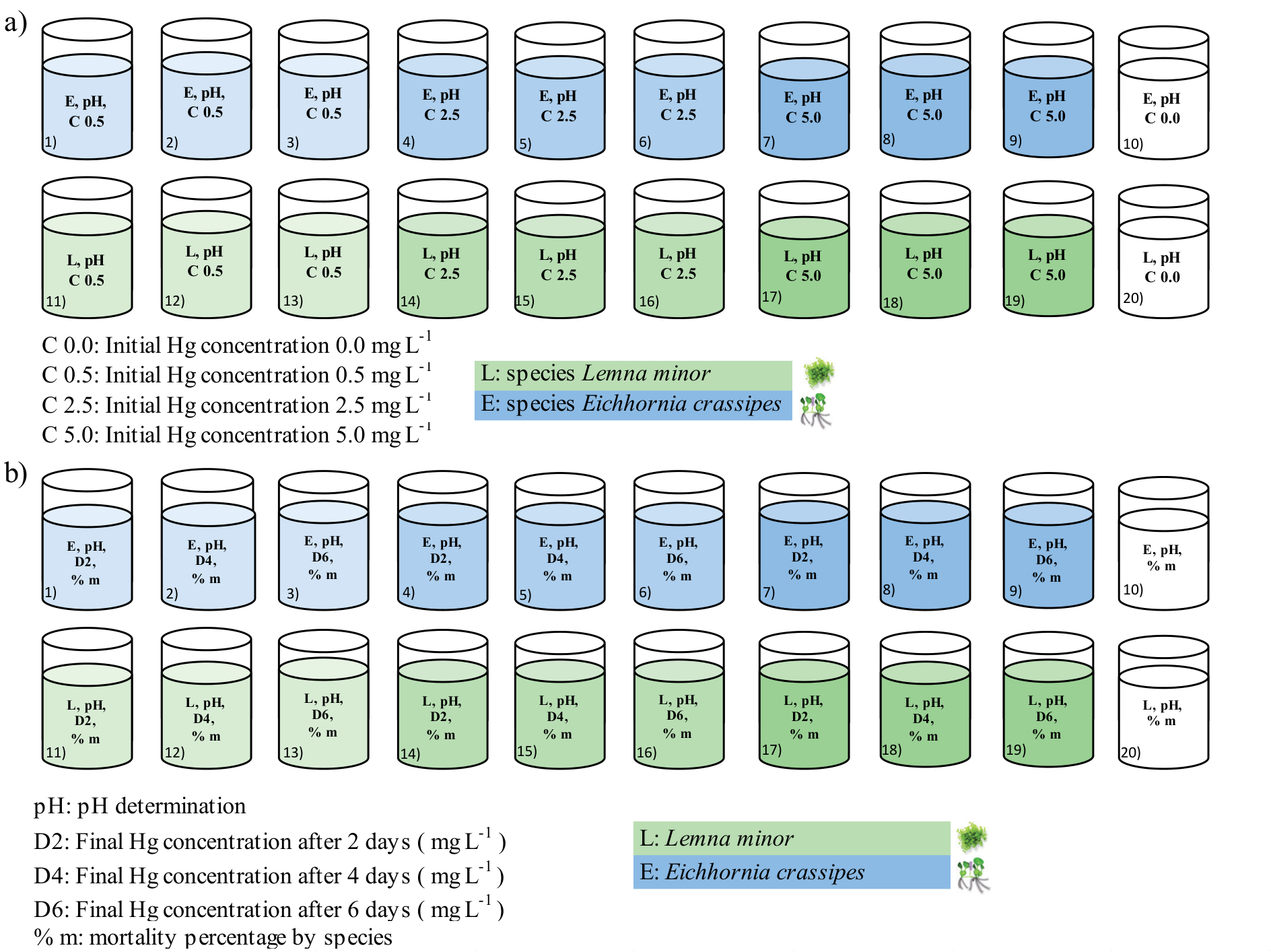
Fig. 1a) and b) represents the synthesis of the experimental design that had 10 trials for each species whose measurements were repeated three times, combining two types of plants with three mercury concentrations and three measurement times. In addition, the study had trials with controls to which Hg was not added, and they served to identify changes that could have occurred due to other factors unrelated to the research.
Stage I: Implementation of Phytoremediation Trials at Different Hg Concentrations
This stage was done in four steps: initially, plastic containers with an approximate capacity of 6 L were washed and labeled with precise information about each test. Subsequently, 5 L of water from the Tuluá River and one of the species to be studied were added to each container. It was verified that the plants were in good physical condition and the pH was between 6.7 and 7.3 at the time of starting the next step, which was the adaptation, which was done in 5 days so that the plants were conditioned to the container and the water before starting the test.
Afterward, nutrition continued to provide organic carbon to the species in order to stimulate their growth and good conditions before coming into contact with Hg; nutrition occurred for 7 days and consisted of applying to each container a commercially used compound commonly called photosynthetic intermediate where carbon is bioavailable; in the study, a product that is used in aquariums that have live plants was applied and the dose suggested by the manufacturer was applied.
To finish the first stage, solutions with different concentrations of Hg (0.5, 2.5, and 5.0 mg L-1) were prepared; 5 L were added per container for each test.
The Hg standard used was mercury (II) chloride (HgCl2) with 99.3% purity; it was chosen for its easy dissolution in water and for its ease of analysis when measuring mercury concentration [21, 25, 26,]. Finally, the species were introduced into the solutions prepared for 6 days of contact.
Stage II: Determination of the Percentage of Hg Decrease for Each Species
Mercury was analyzed by atomic absorption spectroscopy in all the solutions used in the tests with their 3 repetitions. The percentage of mercury decrease was calculated after 2, 4, and 6 days from the start of contact according to Eq. (1).
Stage III: Determination of the Species with the Best Performance in the Hg Removal Process
In the study, three criteria were rated according to a scale that was previously established (adapted from [27]); the criteria were: pH during the test; % mortality of the species; and % decrease in Hg. The scale to rate each criterion was between one and three. Table 2 includes in the first column the score that could be assigned to rate each criterion according to the reference values that were established and appear in the remaining columns.
Subsequently, with the average of the pH values, % mortality, and % mercury decrease for each species, scores were assigned for each trial according to the criteria in Table 2. The scores obtained for each species were added to obtain the total. In the end, the species with the highest score was considered the best performer.
The pH measurement was done with a digital pH-meter. In determining % mortality for L. minor, each test vessel was divided into four quadrants to count live and dead species and determine percent mortality per quadrat. For E. crassipes, the bulbs were counted at the beginning and end of the trials, and the percentage of mortality was determined.
Statistic Analysis
A three-factor ANOVA was developed to identify the effect of each factor on the dependent variable and the influence of combinations between the factors, which is known as interaction. Table 3 shows the distribution of the study variables.
The ANOVA used the null hypothesis and alternative hypothesis to identify interactions between factors:
Null Hypothesis (H0): the averages of the observations for each species or time were equal.
Alternative Hypothesis (H1): At least two averages of the observations by species or time were significantly different from each other.
Table 3.
ANOVA Variables and factors.
| Independent Variables (factors) | Dependent Variable | |
|---|---|---|
| Species | E. crassipes and L. minor | % Decrease in Hg concentration |
| Time | 2, 4, and 6 days | |
| Concentration | Initial Hg Concentration (0.5, 2.5, 5.0 mg L-1) | |
ANOVA was carried out to compare the results of the effect of the independent variables on the dependent variable and accept one of the proposed hypotheses; the intervention of the factors was analyzed with a significance level of 0.05 or 5% level as follows: when p>0.05, the null hypothesis was accepted, when p<0.05, the alternative hypothesis was accepted. In addition, multiple range tests, graphs, and analyses were prepared with the XLSTAT statistical software and Origin: Data Analysis and Graphing software.
Results
Obtaining Plant Species
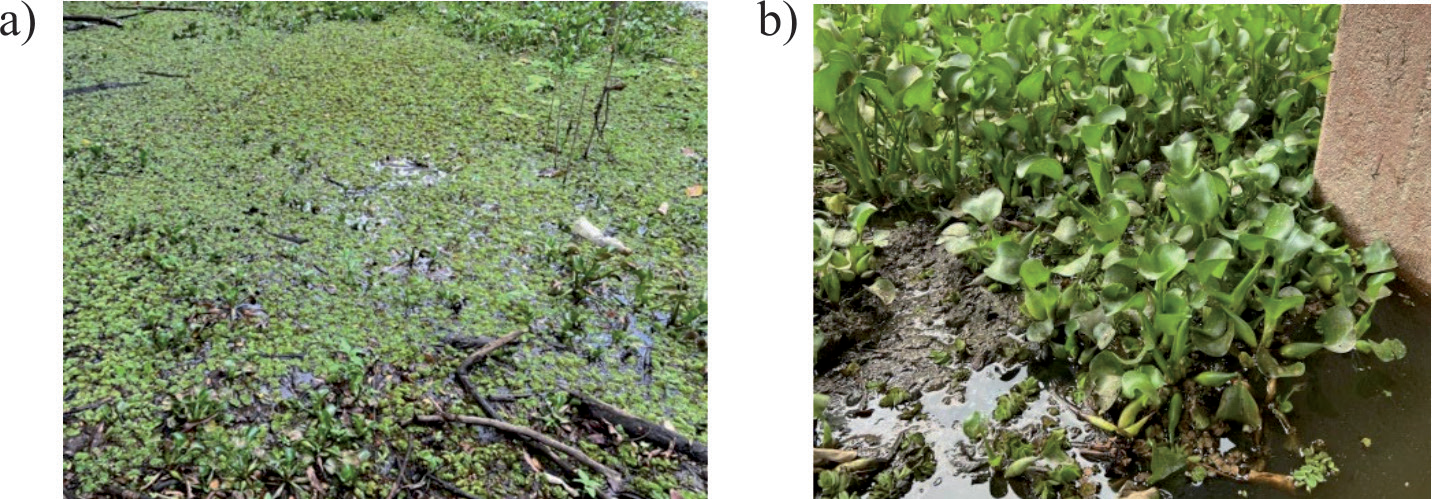
The species L. minor and E. crassipes were collected; the selection included as criteria the largest and best looking on the site (Fig. 2a) and b)).
Stage I: Implementation of Phytoremediation Trials at Different Hg Concentrations
The preparation of the tests used 20 plastic containers with a capacity of 6 L, washed, and labeled with the following information: E or L to identify the species E. crassipes or L. minor, X, Y, or Z to indicate repetition (one, two, or three), 0.5, 2.5, and 5.0 to indicate the Hg concentration in mg L-1, E0 or L0 to refer to species control tests.
Subsequently, 120 L of mercury-free water were collected from the Tuluá River and taken to the laboratory. Each container was filled with 5 L of water, and the species were introduced into them. In the case of E. crassipes, one species was added per container, and for L. minor, due to its size, 8 g were added to each container to cover a surface area similar to that of E. crassipes in the containers.
Table 2.
Assignment of scores to qualify the criteria for each species.
To monitor the adaptation of the species to the water used in the study, initial pH was measured in all tests and showed values between 6.9 and 7.2 for the tests with E. crassipes and between 6.8 and 7.3 for the tests with L. minor. In addition, possible changes in the species were observed daily; the physical characteristics of E. crassipes did not change significantly; its leaves looked good, intense green in color, and similar to the first day of the preparation phase. The physical characteristics of L. minor did not change, and as the days passed, small roots that looked like white threads developed.
Afterward, nutrition began for 7 days with the application (one-time only) of a commercial organic carbon source, known as a photosynthetic intermediate; each trial used the dose suggested by the manufacturer to stimulate the growth and strengthening of the species. It was observed that E. crassipes had greater root development and increased leaf size. L. minor increased the number of plants with respect to the first day of adaptation, and it was observed that some leaves were lighter in color than others.
Furthermore, it was noted that, at the end of nutrition, approximately 500 mL of the aqueous medium of the trials decreased; this is due to its absorption by macrophytes and evaporation. At the end of this stage, pH was measured, and the values for E. crassipes were between 7.2 and 7.9 and for L. minor between 7.3 and 8.0. These values show that there were no significant changes in pH between adaptation and nutrition.
After nutrition, the established doses were prepared using mercury (II) chloride HgCl2 as a source of Hg; to prepare 5 L of solution with concentrations of 0.5, 2.5, and 5.0 mg L-1 of Hg, it was necessary to add 0.00314, 0.01700, and 0.03410 g of HgCl2, respectively. When the doses of Hg were ready in the test containers, the species were added, and contact between the species and mercury began.
Fig. 3.
a), b), c) E. crassipes and d), e), f) L. minor at different Hg concentrations during the contact phase.
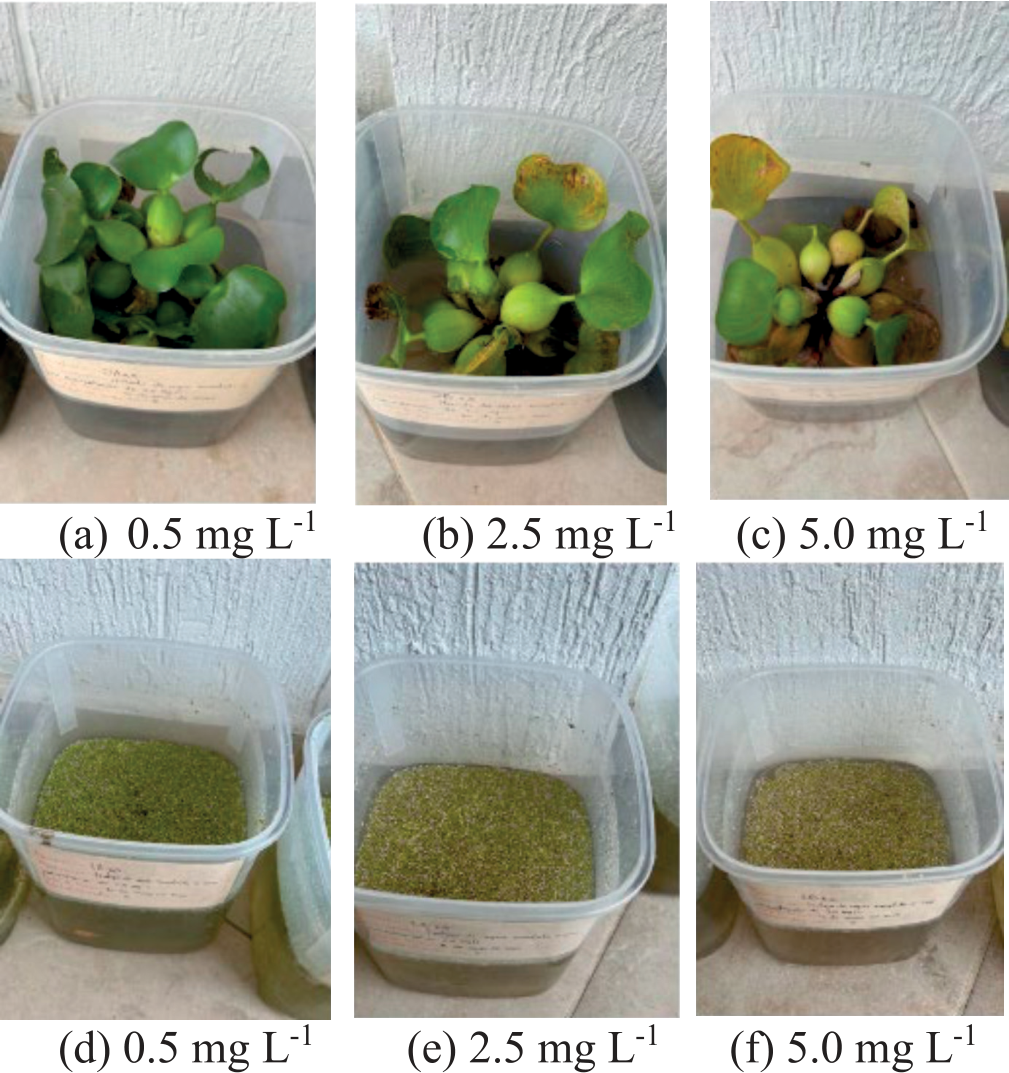
Table 4.
Synthesis of results for E. crassipes and L. minor.
The species that had contact with the highest concentration of mercury was most affected. As the days passed, the deterioration increased and there was wilting in some bulbs and leaves of the species. (Fig. 3).
Mercury Analysis in the Tests
After the contact phase began, 500 mL samples were taken after 2, 4, and 6 days, which was the time established for each trial; to preserve the samples, 0.40 mL of HNO3 (nitric acid) was applied to each sample to reach pH around 2.0 and stored in styrofoam refrigerators to achieve an approximate temperature of 14°C. The samples were analyzed one day after finishing all the essays.
Stage II: Determination of the Percentage of Hg Decrease for Each Species
The percentage decrease in mercury concentration was calculated for each species with the results of the Hg analyses. (Table 4).
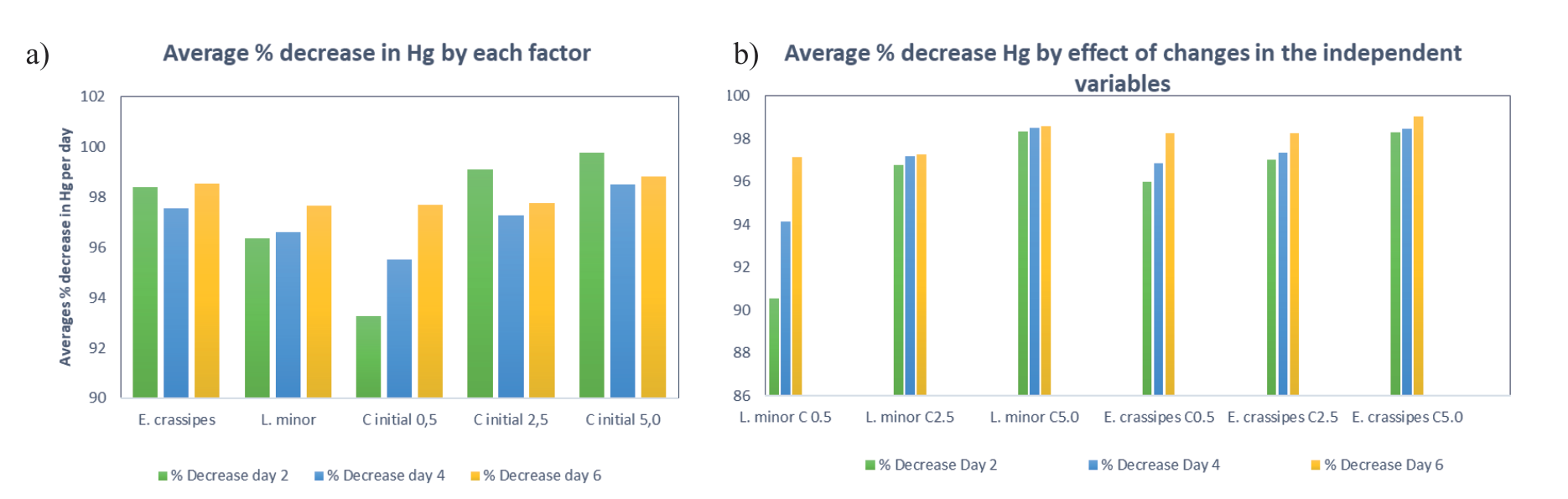
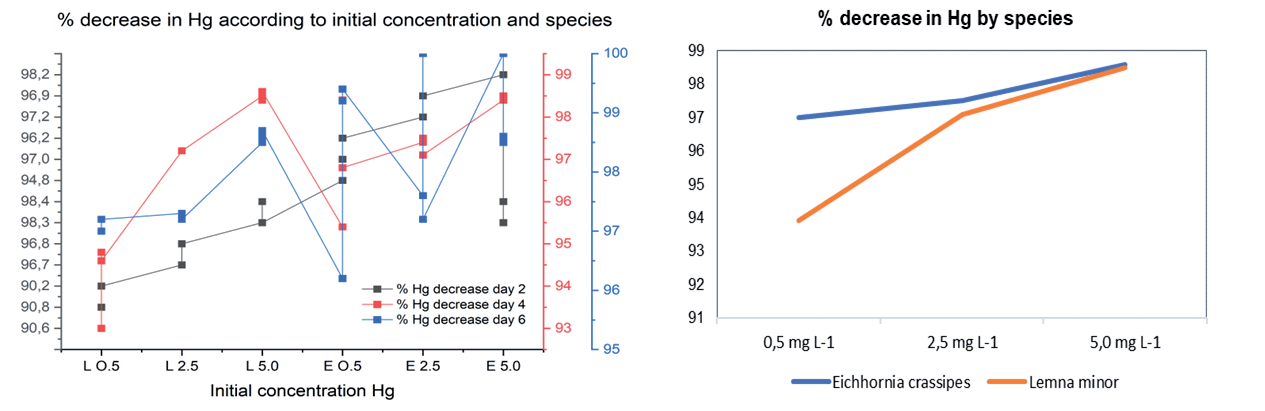
Fig. 4a) separately presents the effect of the species and the initial Hg concentration on the average % decrease in Hg according to time: with respect to the species, E. crassipes on day 6 shows the highest value, and according to the initial concentration, it reached the highest value on day 2. In Fig. 4b), when the three effects of initial concentration, species, and time are combined, the highest value is obtained for % Hg decrease with E. crassipes, an initial concentration of 0.5 mg L-1, and a time of 6 days.
Stage III: Determination of the Species with the Best Performance in the Hg Removal Process
The evaluation criteria and planned scores in Table 2 were used to establish the best-performing trial and species. The results by criterion are described below.
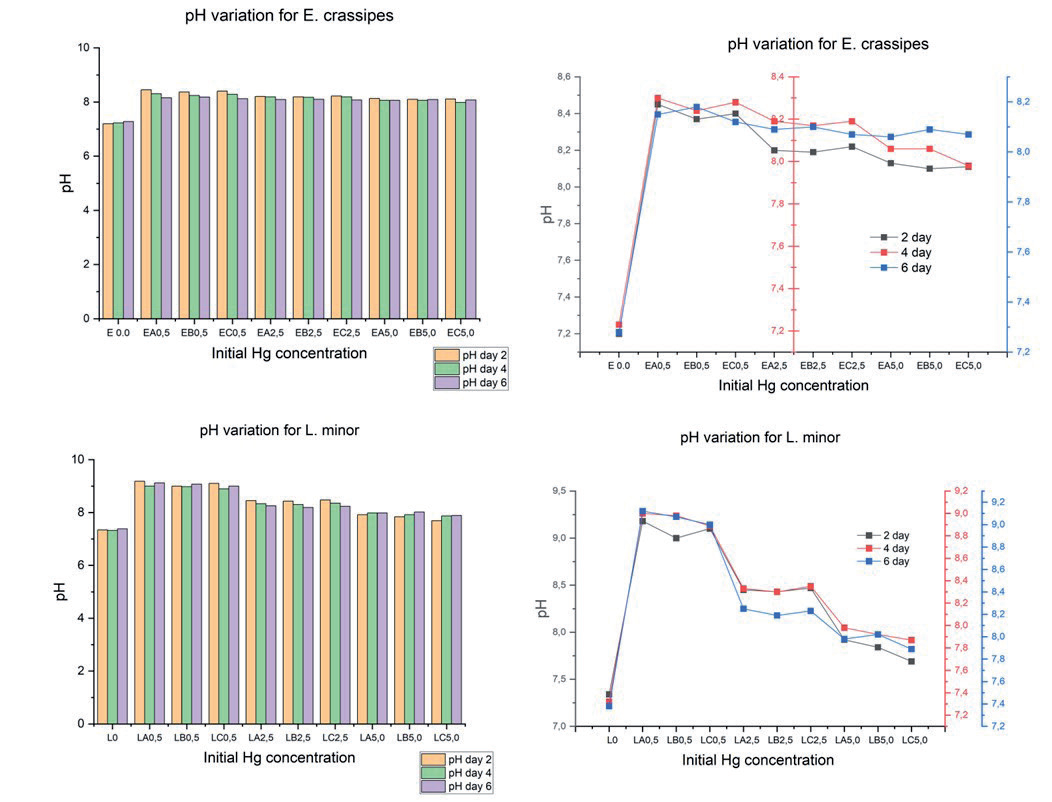
pH: In the contact phase, for E. crassipes the average pH was 8.08, and for L. minor the average pH was 8.32 (Fig. 5). With these values, both species were assigned a score of 3, according to Table 2.
% Mortality
For L. minor, each test container was divided into four quadrants, and the number of species was counted to determine percent mortality per quadrant; the results are presented in Table 5. According to the value obtained of 47.75% and its rating according to Table 2, a score of 2 was assigned.
For E. crassipes, bulbs were counted at the beginning and end of the trials, and the percentage of mortality was determined (Table 5). According to the value obtained of 27.65% and its rating according to Table 2, it obtained a score of 3.
In Fig. 6, the synthesis of results in relation to the percentage of mortality by species that was obtained on day 6 according to the initial concentration.
% Decrease in Hg
E. crassipes had values between 94.8 and 100% according to Table 4, and for this reason, received the highest score corresponding to 3 based on Table 2. L. minor had values between 90.2 and 98.7 according to Table 4 and obtained a score of 3 based on Table 2. Table 6 includes the score obtained after evaluating the criteria.
Based on the above, the species with the best performance in reducing mercury was E. crassipes with 9 points; likewise, it was identified that the difference was the % mortality. This result confirms that L. minor is also a good option for mercury phytoremediation.
Table 5.
% mortality of L. minor and E. crassipes.
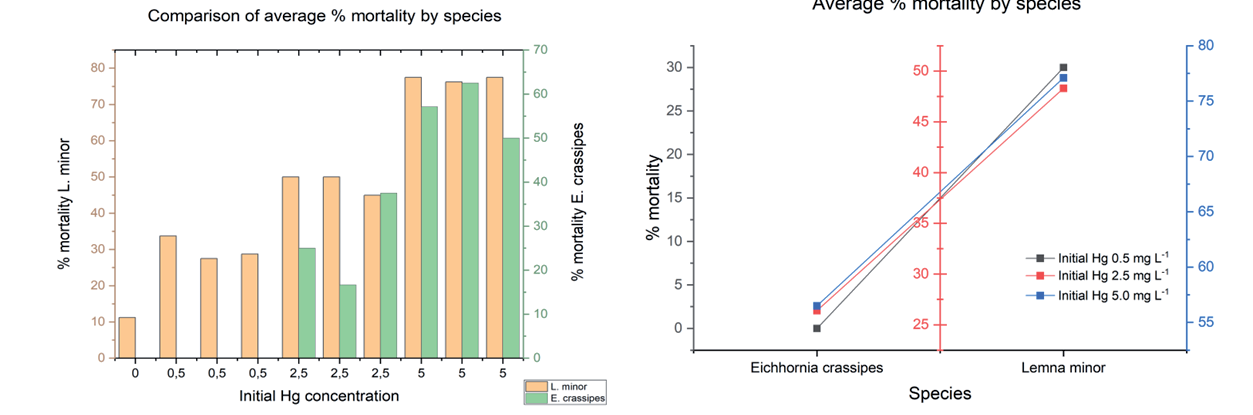
Table 6.
Criteria evaluation results.
| Species | Criteria | |||
|---|---|---|---|---|
| pH | Average % mortality | % Decrease in Hg concentration | Total score | |
| E. crassipes | 3 | 3 | 3 | 9 |
| L. minor | 3 | 2 | 3 | 8 |
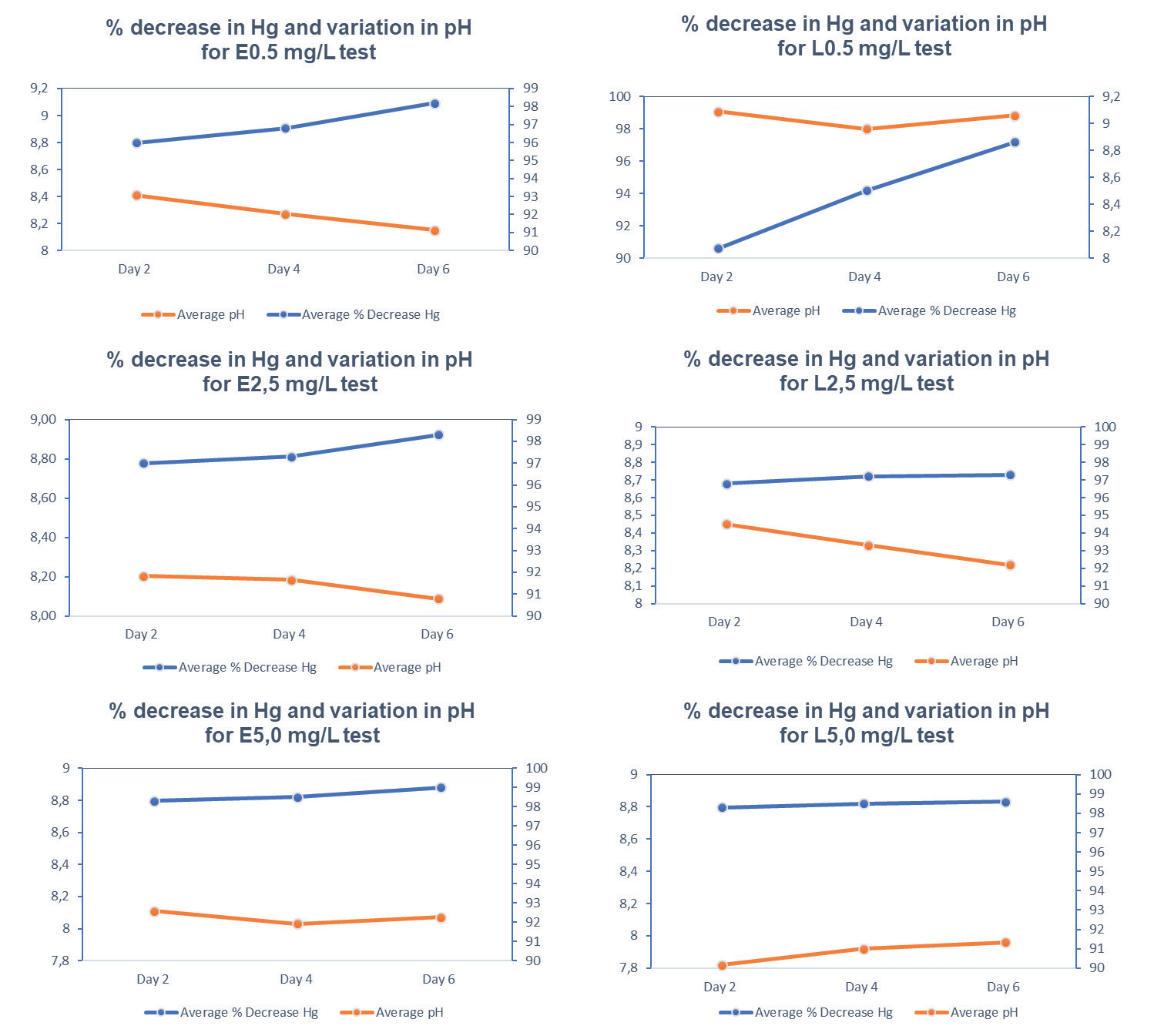
The behavior of % decrease in Hg according to pH, initial concentration of Hg, type of species, and time is included in Fig. 7. It is identified that the trials on day 2 with different initial concentrations had the lowest value of % decrease in Hg and for day 6 the highest value. The pH values had small variations between the beginning and the end, and the trend was to decrease in 5 of the 6 studies, and an inverse relationship between the pH values and the % decrease in Hg could be assumed.
Statistic Analysis
Multifactor ANOVA
Statgraphics Centurion XX software was used to study the influence of three factors: initial Hg concentration, species, and time, and the possible interaction between them to affect the dependent variable, which was % mercury decrease. Table 7 presents the results.
In the case of the factors (A, B, and C) and the interactions (AB, AC, and ABC), the P value was less than 0.05 (P<0.05), which means that there is a statistically significant effect on the percentage of decrease with a confidence level of 95.0%, and the null hypothesis that stated that “there are no significant effects on the reduction of mercury with the different concentrations” is rejected. In the case of the interaction (BC), the P value is greater than 0.05 (P>0.05); this means that the interaction of the factors species and time did not have a significant effect on the % decrease in Hg, and it is concluded that the initial concentration is the determining factor in this trial. The interactions appear in Fig. 8.
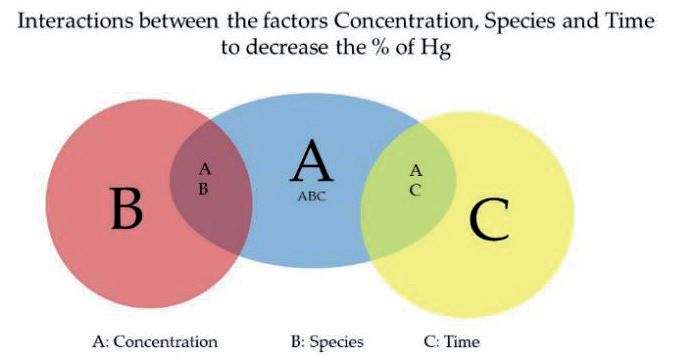
Table 7.
Analysis of Variance for % Hg Decrease - Type III Sum of Squares.
Multiple Range Test
The multiple range test confirmed what was said regarding the relationship between % decrease in Hg and initial concentration because it presented a defined pattern of behavior and it was observed that when the initial concentration increased, % decrease in Hg also increased. That is to say, the values of % decrease in Hg for the initial concentration of 0.5 mg L-1 were lower, and that for the concentration of 5.0 mg L-1, the % decrease in mercury was greater (Fig. 9).
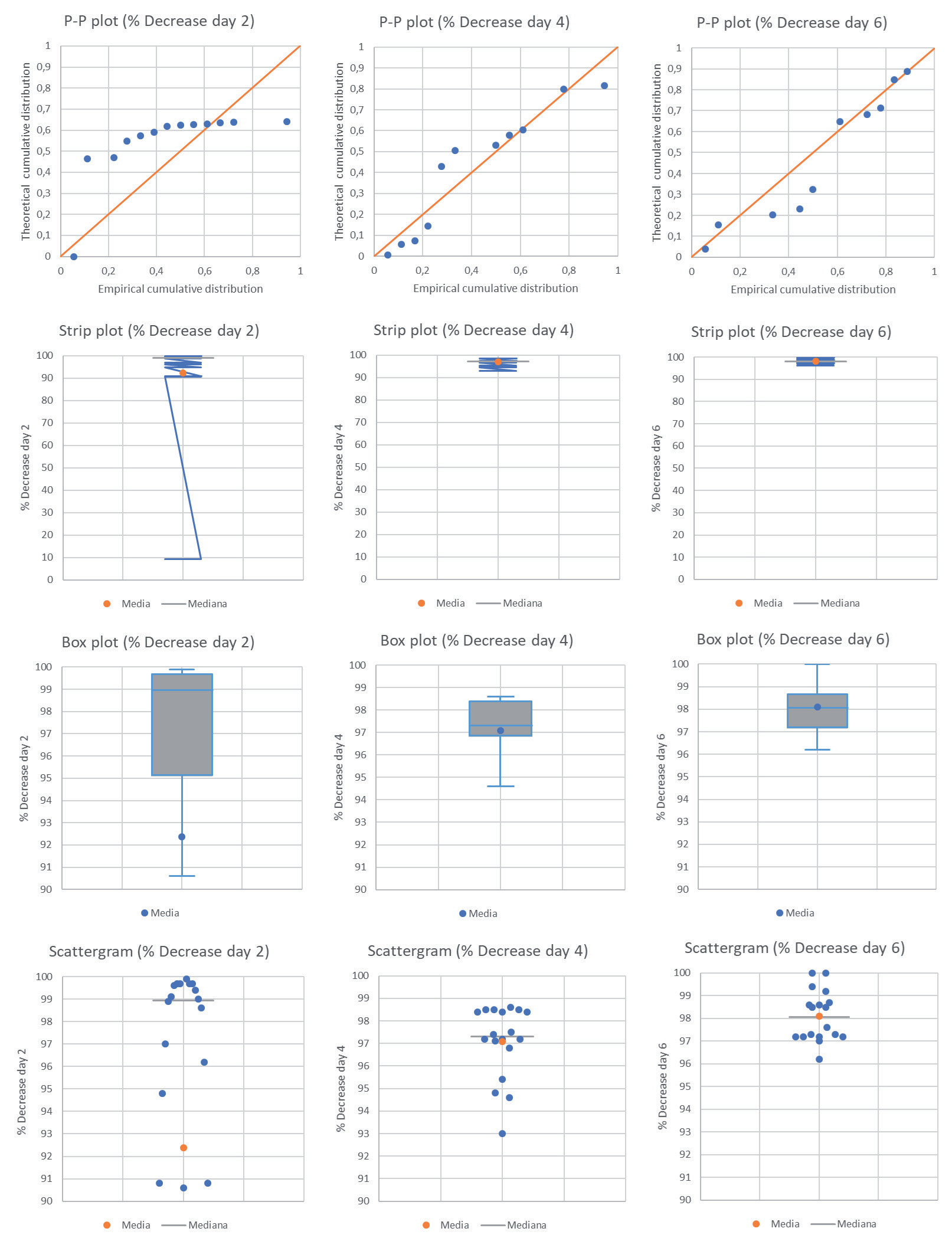
Next, Fig. 10 shows the behavior of the data in relation to the % decrease in Hg for days 2, 4, and 6. For all cases, the best behavior is evident in the results obtained in the test after 6 days.
Discussion
Heavy metals have adverse effects on the environment [23, 32, 33]. [34-38] studied several ways to reduce the Hg content in the environment. The Hg elimination study using aquatic plants developed by [7] worked with four species, including E. crassipes and L. minor; in their results, they found a 50.9% decrease in Hg, which was better in E. crassipes, and that after 42 days the accumulation did not increase due to root deterioration. The Hg phytoremediation study by [39] worked with L. minor and Salvinia natans and used mercury (II) nitrate (Hg(NO3)2) as a standard solution; for L. minor, they obtained around 30% reduction in Hg after 14 and 21 days with initial mercury concentrations of 0.15 and 0.20 mg L-1, while for initial concentrations of 0.30 mg L-1, they were 12% and 9% at 14 and 21 days, respectively.
This study showed the potential of L. minor for Hg phytoremediation; there were differences with the present study that perhaps marked another trend in the results reported for the percentages of Hg decrease; these differences were the lack of prior adaptation of the species to the water and the test container, the mercury standard used was different from (HgCl2), the duration of the tests, and the initial concentrations of Hg since in the present study better results were found with the maximum Hg concentration of 5.0 mg L-1. [40] also used L. minor in phytoremediation of chemicals in the environment, and [34] mixed L. minor with Spirodela polyrhiza to evaluate the bioaccumulation of Hg and found good results when working with the other species, and this may be an option mixing the two species studied. The study by [1] was also analyzed, which developed phytoremediation of heavy metals in the soil, including mercury with Chrysopogon zizanioides and Typha latifolial and amendments; the trial lasted four weeks and the average initial mercury concentration was 1.76 mg kg-1.
This study is related to identifying the performance in the reduction of Hg with other species, and other differences are established from that study that was carried out in the soil, and initial Hg concentration values lower than the maximum used in this trial were used. On the other hand, the study by [2] worked phytoremediation in the soil with Solanum negrol plus amendments and obtained a Hg removal rate of 32%; this work is included because it shows the use of other species for Hg bioremediation. In the study by [21], they worked with Salvinia biloba Raddi; they used Hg concentrations between 0.05, 0.1, and 0.2 mg L-1 for 3, 6, 9, 12, and 15 days and controlled pH values of 5.5, 6.0, and 6.6. What this research reports, and which also coincides with [7], is that it concludes that the higher the concentration of Hg in the solution, the greater the value retained by the plant, and that few symptoms of toxicity were observed; the focus of this study was towards measuring the bioaccumulation of Hg in the plant, and it presents great similarity with the procedure developed in the present investigation, since they adapted species and used the same mercury standard, but as an exception, they did not use additional nutrition. [41] promoted the growth of the species used in the phytoremediation of metals using microorganisms that served as nutrients and obtained better results. In relation to the greater removal of the contaminant, it is achieved when there are higher concentrations in the test, as mentioned in their study [10], in which they worked on phytoremediation with Lemna trisulca. [42] evaluated the removal of heavy metals in natural wetlands with several species, including E. crassipes, and showed percentages of decrease over 79% after 15 days. The study by [22] used L. minor and E. crassipes along with other species in the phytoremediation of heavy metals in wetlands with concentrations of 1.0, 2.0, and 5.0 mg L-1 but not specifically Hg; as a result, they found that E. crassipes was more efficient, followed by L. minor. The trial lasted 15 days and showed reduction percentages greater than 90%, which demonstrated that these species are a good option in the phytoremediation of heavy metals, as occurred in the present study. In the specific case of this study that worked on E. crassipes and L. minor, no other studies were found that compared these two species with the maximum concentration of 5.0 mg L-1. In the research by [17], who worked on Hg phytoremediation with Salvinia natans, mercury was removed from the substrate to a greater extent during the first seven days with a value of 85% that decreased at 14 and 21 days with values of 75% and 59% for a concentration of 0.20 mg Hg dm-3.
When considering the implications of pH, the values used in the present study, which were close to 7, studies were found in which pH was determined; according to [5], in dry climates acidic pH values between 3.2 and 5.4 were present and favored the transformation of Hg to methylmercury in existing wetlands that received direct discharge, while, in humid ones, they achieved values of pH close to neutrality and are comparable with this study. [14, 43] worked with values between 4, 5, and 6.7; in these studies, the phytoremediation of heavy metals that are bioavailable occurs because they are absorbed by the roots and then translocated in the plants. On the other hand, the study by [44] addressed the phytoremediation of soils contaminated with Hg, presented pH values between 3.6 and 5.4 in the soil, and also reported that the optimal pH range for plant growth is between 5 and 7. [24] studied the adsorption capacity of Hg present in water and reported that the pH of the solution is a critical factor since the adsorption capacity of mercury increased by increasing the pH above 5, which favored his mobility; only the soluble fraction of mercury is absorbed by plants [45]. Hg dissolved in water has greater bioavailability and bioaccumulation for bacteria and aquatic plants because the insoluble fraction has less mobility [17, 35, 46, 47].
Conclusions
The two species are a good option for Hg phytoremediation, and when comparing them, E. crassipes was better due to the highest percentages of Hg decrease and the lowest percentage of mortality in the trials. The interaction between concentration time and species demonstrated that the variation in the initial concentrations of Hg significantly influenced the results; to guide future research, it is suggested to start with values greater than 5.0 mg L-1 of Hg and 6 days because the test with the highest initial concentration of Hg and the longest contact time gave the best result.

