

Introduction
Green innovation, as an environmentally friendly technological innovation method, is a significant force in promoting the realization of “carbon peak” and “carbon neutral” [1]. From the perspective of global factor flows and resource allocation, significant economies such as the United States, the European Union, and Japan have increased financial support to encourage local enterprises to actively carry out green transformation work to explore new growth points in the green economy. As China’s overall scientific and technological level and its position in the international division of labor continue to improve, and as the international community raises more expectations for China in terms of combating climate change, energy conservation, and emission reduction, green innovation has become an indispensable link in the process of China’s high-quality development of its economy and an inevitable way to advance from a large industrial country to an industrial power. As the systemic and complex nature of green technological innovation becomes increasingly apparent. As environmental risks and uncertainties gradually rise, the innovation ecosystem becomes the basis for collaborative innovation, enabling innovative entities to gain sustainable competitive advantages. The innovation ecosystem realizes the core value proposition of members and promotes interdependence and trust among members [2]. Green innovation ecosystem is an aggregate of green innovation and innovation ecosystem, which examines the value realization and value co-creation of innovation subjects from the system level, and provides theoretical support and guidance for solving the above problems [3].
Because of the establishment of the trust transfer relationship among innovation subjects, the way of realizing the value of the green innovation ecosystem has changed significantly. In the regular collaborative innovation process of the ecosystem, innovation subjects usually carry out R&D and production of green products or services through the construction of information chains, resource chains, and talent chains to realize new value. In this process, the core enterprises must pay high costs of green innovation, leading to the lack of sustained motivation to develop new resources and R&D of new technologies. And based on trust transfer, the formation of trust networks dramatically reduces the cost and risk of green technology R&D and innovation, and the linear innovation form based on the traditional resource chain is replaced by the non-linear innovation form based on the ecosystem. In turn, interdependent innovation subjects based on the trust transfer network jointly realize the green innovation ecosystem value realization mode. Thus, trust transfer provides a new theoretical perspective for studying the value realization of the green innovation ecosystem. In the context of the green innovation ecosystem, the trust transfer of innovation subjects is based on the absorption and assimilation of their resources and the resources of cooperative partners, and the integration of these resources becomes a potential source of ecosystem value realization, providing a development basis for trust transfer. Further, this paper considers the following issues: first, the empowerment and orientation of trust transfer in green innovation ecosystems; second, which innovation subjects are mainly involved in value generation decisions and how innovation subjects make decisions to facilitate value generation; and third, what influences exist in value generation under the guidance of trust transfer and how they play a role.
This paper analyzes the decision-making problem of green innovation ecosystem value realization from the perspective of trust transfer, with three theoretical innovations: (1) It elaborates the functions and characteristics of the innovation subjects of the green innovation ecosystem, divides them into technology R&D platforms, promotion and service groups, and consumer and application groups, and discusses the influence of the technology R&D selection strategies of the three on the realization of ecosystem value.
(2) From the perspective of trust transfer, the decision-making mechanism of ecological value realization of green innovation is dynamically analyzed, which helps to open the “black box” of green technological innovation. (3) Introducing the core variables such as incentive subsidies, supervision level, and extra cost of acquiring non-green products, discussing their impacts on the perfection of trust transfer network and value realization, and verifying the effectiveness of the decision-making model through numerical simulation.
Theoretical Basis and Literature Review
Green Innovation Ecosystem
The green innovation ecosystem is a particular type of innovation ecosystem. The innovation ecosystem concept was proposed by Majchrzak et al., who believed that the innovation ecosystem is an integrated system within a specific range between various innovation subjects or between innovation environments through the transmission of material flow, energy flow, and information flow [4]. With the onset of the dual-carbon wave, the green innovation ecosystem is more adapted to the renewal of high technology than the innovation system [5]. At present, many scholars have not yet formed a standard conceptual definition of the green innovation ecosystem; Zeng et al. [6] believed that the green innovation ecosystem is a cooperative system to enhance green innovation through the flow of green innovation factors so that the green value concept is formed between the innovation subjects. From the viewpoint of the main body, the core enterprises in the green innovation ecosystem are also the basis for the formation of the system, forming a relatively close cooperative relationship through the green innovation platform, industry-university-research cooperation, and green innovation network [3]; it promotes the research and development of subversive low-carbon technologies, green and low-carbon scientific and technological exchanges and collaboration, and the transformation and application of green technological achievements. Of course, the green innovation ecosystem has the characteristics of sustainability, dynamism, interactivity, greenness, wholeness, and openness [3, 7]. Gao et al. [8] proposed that the green environment is an important part of the healthy development of the green innovation ecosystem, and environmental governance puts forward higher requirements for each green innovation subject within the green innovation ecosystem. In recent years, scholars have used different analytical methods to study green innovation ecosystems. For instance, Zeng et al. [9] used a three-dimensional dynamic evolution model to analyze the interaction among green knowledge creation, green product production and green product commercialization in green innovation ecosystems, and concluded that green innovation ecosystems show a synergistic evolutionary trend under environmental regulation. Yang et al. [10] studied the role of industry-university-research in the green innovation ecosystem, and concluded that default cost and R&D cost are the key factors affecting the stable development of the green innovation ecosystem by constructing an evolutionary game analysis method. Li et al. [11] constructed a tripartite evolutionary game model of enterprises, government, and financial institutions to analyze the evolutionary process of the interaction of enterprises’ green technological innovation subjects under environmental dual regulation, and concluded that both formal and informal environmental regulation can promote green technological innovation.
Trust and Trust Transfer
Trust is a composite concept, which has been divided into cognitive and affective dimensions by academics [12], where cognitive factors are the theoretical basis of trust and are closely related to the qualifications, competence, and professionalism of the person being trusted [13]. When there is an emotional bond between the actors, emotional trust arises from it, and the trusted person tends to fulfill the trust to maintain the relationship with the trustor [14]. Trust is an important research topic in academia. Golbeck et al. [15] constructed an algorithmic model based on the trust relationship, studied the shortest path evaluation system between the original and target users, and measured the comprehensive trust between subjects. Guo et al. [16] combined social trust with user feedback to investigate the path of inter-subject similarity on user preferences. Gohari et al. [17] proposed a dynamic local-whole trust perception approach to analyze the analysis of trust scenarios with fewer interactions between actors.
The trust transfer theory emphasizes that an actor's trust in a goal is based on belief in other related purposes, thus giving rise to the trust transfer path. Scholars have carried out rich research on trust transfer mechanisms and influence effects. Yin [18] argued that trust transmission is affected by the similarity between actors and multiple factors such as context, interaction content, and cooperative objects. Fang [19] found that positive effects such as word-of-mouth recommendation, trust transfer, and willingness to share will be realized among actors in the trust transfer process. The desire to purchase the actors increases along with it. Zhou [20] proposed that trust transfer has active characteristics, especially in the innovation network environment. The cost of leaving the actors is higher, so once the trust path is generated, the actors have a strong willingness to participate. The transfer and grafting of trust are often a psychological suggestion [21]. People generally accept the advice and warnings given by the authoritative figures of science and medicine [22]. In fact, the transfer and grafting of trust is in fact a transfer of security [23]. Some scholars believed that the transfer and grafting of trust is often a psychological suggestion [24, 25]. Trustworthy and respectable individuals, organizations, and institutions give people a sense of security, and the products or services associated with them indirectly give people a sense of security [26]. Zhang et al. [27] used partial least squares structural equations to examine trust transfer from offline to online platforms, and the results of the study effectively promoted users' purchasing behavior in offline merchants. Leung W.K. S. et al. [28] concluded through PLS-SEM analysis that both online and offline sources of trust significantly influence pro-social behavior, and the findings provide management guidance for organizers of time banking programs.
Value Realization and Co-Creation
In the era of the industrial economy, enterprise value realization focuses on the value chain. The innovation value chain theory was first proposed by Hansen et al. [29], which is the process from idea generation to the market transformation of the results by Ghawana et al. [30], which emphasized the value realization under the service domination, pointing out that the innovation process completes the value realization under the role of interaction and communication. Wang et al. [31] proposed that in the whole value realization process, the value of consumers is fully valued, and the realization of matter becomes a full-process penetration process. With the continuous expansion of the ecosphere, the boundary of the innovation subject becomes blurred, and the realization of innovation value gradually evolves into co-creation by multiple stakeholders [32]. Often different innovation agents collaborate on a system platform [33], resulting in more value-added sharing; however, in this context, synergy is more valuable than sharing, and the innovation is not a mere discovery or creation but rather a reorganization of existing resources, which promotes the realization of the value of the innovation.
With the progress of theory and deepening of understanding, the value realization process and how the value is co-created gradually develops into the enterprise's development strategy [34]. In this development process, the enterprise can not only obtain straight economic gains but also obtain the support of various stakeholders and promote the improvement of the comprehensive strength level of the enterprise to maximize the value of innovation [35]. Of course, value co-creation has been only the interaction between the enterprise and customer service, but multiple subjects participate in the exchange [36]. Through the interaction and communication of the participating issues, the value co-creation of innovation can lead to the upgrading of technology and products and create more value in the process of interaction and communication [37], most of the enterprises are node-type enterprises, and the ability of their resources is limited, based on the main business, the enterprise unites the partners in the value chain [38], to reduce the cost of its access to resources and the integration of resources, and optimize the allocation of resources, and each innovative main body will realize the value, and finally realize the value co-creation.
Research Gaps in the Existing Literature
In summary, green innovation ecosystems have received extensive attention from academics, but the existing research mainly focuses on the analysis of the construction of green innovation ecosystems and their influencing factors in a general sense, and the research on the linkage of the subjects and elements within the ecosystem is not deep enough. Regarding the models in the research field of green innovation ecosystem, scholars mainly use empirical models such as structural equations, least squares, et al. In recent years, attention has gradually been paid to the applicability of using the evolutionary game model to analyze the decision-making behavior of innovation subjects. Based on this, this paper takes the green innovation ecosystem as the research object, and discusses the value realization decision-making problem based on the perspective of trust transfer, so as to provide important reference for the sustainable development of green innovation ecosystem.
Problem Description
Similar to the natural ecosystem, the innovation ecosystem contains diversified innovation subjects such as suppliers, customers, government, financial institutions, information intermediaries, colleges and universities, and research institutes and institutes [39], which are generated around the green technology R&D and innovation activities, and have the characteristics of dynamic and stable development, interdependence, and heterogeneity. Based on the core function of the innovation body, this paper divides it into the technology R&D platform, promotion and service group, and consumption and application group. It should be noted that the group division of the innovation body needs to be fixed and dynamically dealt with in combination with the actual situation. Technology R&D platforms are organizations formed by core enterprises for green technology innovation and R&D, directly providing technical support for enterprises to produce green products. The promotion and service groups include universities, research institutes, financial institutions, information intermediaries, and other central bodies, which, on the one hand, collaborate in R&D and innovation for technology R&D platforms and reduce the R&D and trial-and-error costs of enterprises; on the other hand, they provide financial, information and additional resource support for technology platforms, which strengthens the foundation of green technology R&D and innovation. The consumer application group mainly refers to users or consumers on the direct demand side of green products. In addition, developing a green innovation ecosystem also requires the creation of a favorable green system innovation environment and a green governance innovation environment.
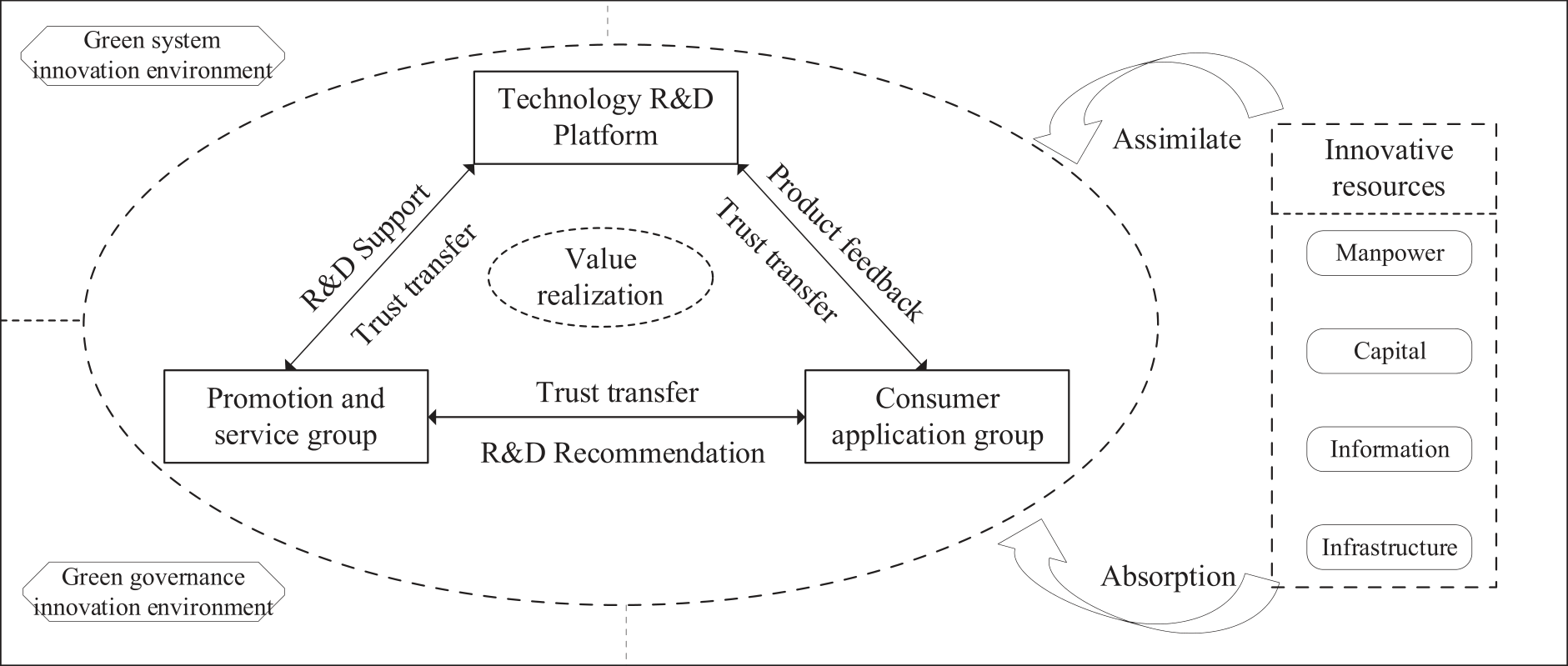
Under the trust transfer perspective, the green innovation ecosystem value creation process is a complex adaptive behavior of three groups collaborating to innovate around a joint value proposition for the mutual benefit of inter-subjects, as shown in Fig. 1. Therefore, the three groups jointly play the roles of R&D support, R&D recommendation, and product feedback and actively establish a stable trust relationship network to increase each other’s resource-sharing resources and willingness to participate in value realization. In turn, a perfect trust transfer network will reduce the cost of value realization of the three groups, improve product quality, and promote the sustainable and high-quality development of the green innovation ecosystem.
Model Construction
Basic Assumptions and Parameter Setting
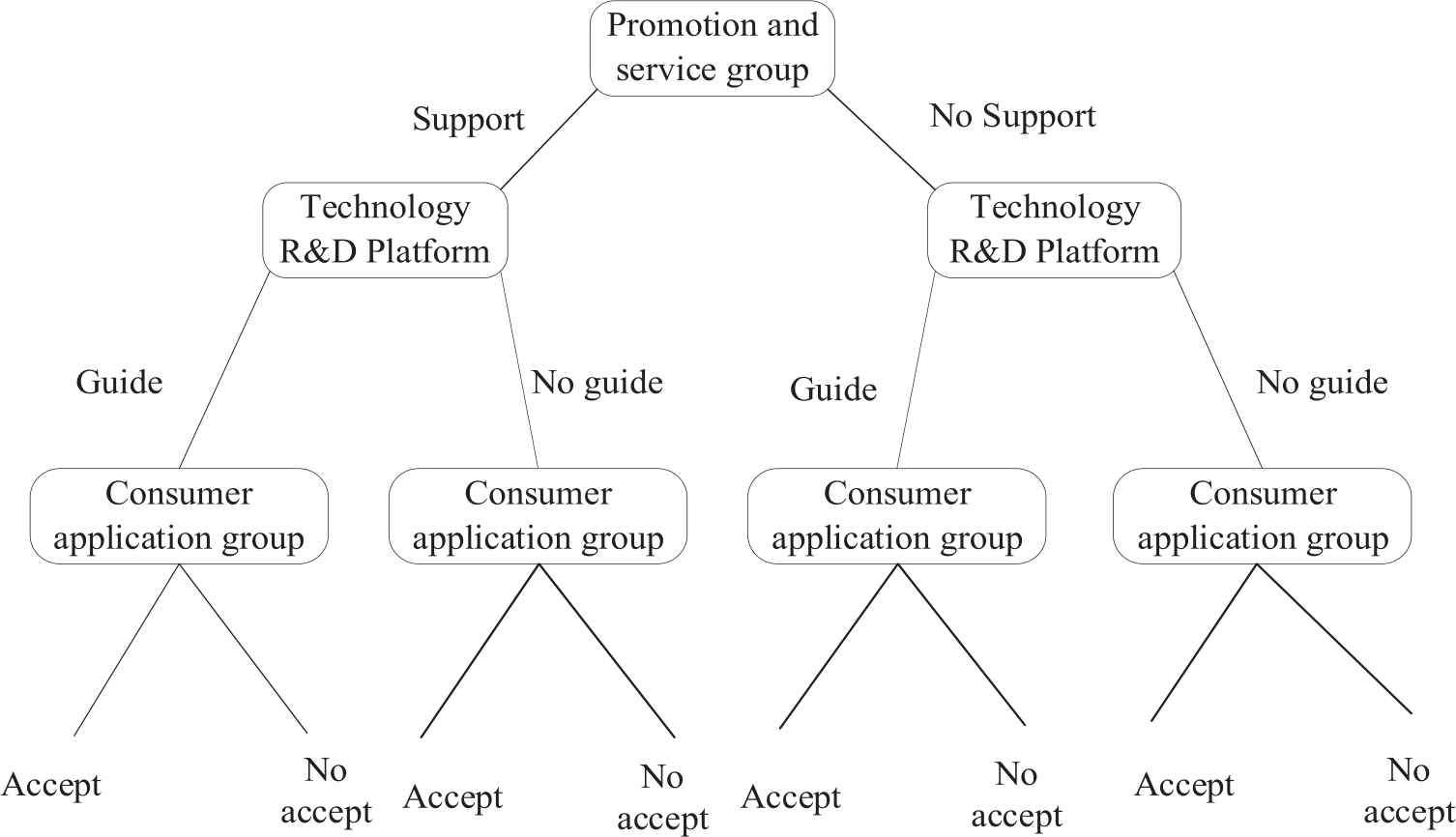
BYD, as a leading enterprise in China’s new energy vehicles, is rooted in green innovation and has the advantage of rapidly integrating internal and external resources to build a green innovation ecosystem, which aligns with the evolutionary characteristics of value realization and co-creation of innovation ecosystems. Under the background of the “dual-carbon” goal, BYD green innovation ecosystem takes knowledge value-added as the core focuses on green new energy frontier technology innovation, collaborates with the government, knowledge production institutions, intermediary institutions, and applicators to carry out collaborative innovation and R&D. Among them, the government carries out the guidance and mechanism arrangement, colleges and universities, scientific research institutes optimize the theoretical framework of green technological innovation and validate it, and other innovation central bodies give full play to their respective advantages and capabilities, to realize the complementarity of resources, and accelerate the promotion of green technology and industrial application [40]. Meanwhile, the consumer application group represented by users or consumers provides BYD with feedback and demands for using new energy vehicles and other products. Based on the actual development of BYD’s green innovation ecosystem, it is assumed that three groups are involved in the value realization decision-making, namely, the technology R&D platform, the promotion and service group, and the consumption and application group, and that each participant group has limited rationality and the ability of learning and imitation. The game process of the three innovation groups participating in value realization decision-making is shown in Fig. 2.
Fig. 1.
Value realization logic of green innovation ecosystem from the perspective of trust transfer.
Hypothesis 1. In the “dual carbon” goal context, the three innovation groups in the green innovation ecosystem choose different strategies. The probability that the promotion and development group choose the “support” strategy is z, and the probability that it chooses the “ no support” strategy is 1–z. The probability that the technology R&D platform chooses the “guide” strategy is x, and the probability that it chooses the “no guide” strategy is 1–x. The probability that the consumer and application groups choose the “accept” strategy is y, and the probability that they choose the “no accept” strategy is 1–y. Where 0≤x, y, z≤1, and x, y, z are functions of time t.
Hypothesis 2. In the trust transfer network, the three groups involved in green technology R&D are usually a unity of self-interest and exclusivity, with the mixed characteristics of rational people. On the one hand, they consider the overall benefits of green innovation ecosystem value realization based on the degree of cognition, and on the other hand, they will consider the degree of being trusted and their own benefits based on emotion. Under the trust transfer promotion, the green technology R&D capability is gradually improved, and then this paper defines the green technology R&D capability as two parts of technological innovation degree and technology application degree, which are represented by T and α respectively, then the benefit generated by the green technology is T α, T, α∈(0,1), and let ω = T α.
Hypothesis 3. Based on the classical assumptions of the A–J model, the cost of green technology innovation activities is set as
Hypothesis 4. The benefit of the technology R&D platform’s non-green innovation value realization activities alone is R0, and the cost to the consumer application groups of acquiring the relevant green products is Cu. The benefit of the technology R&D platform’s green innovation value realization activities alone is Rdw. If the consumer application group “accepts” the green product, and provides product feedback or puts forward the need to the technology research and development platform through the trust transfer network, the technology research and development platform will provide a certain amount of subsidy to the consumer application group, with the upper limit of S, S<fC, the proportion of subsidy as χ, χ∈(0,1), and the subsidy received by the consumer application group will be χS. If the consumer application group tends to adopt “no accept” strategy, it will continue to pay more for non-green products, the cost of this part of the upper limit is I, the proportion of φ, φ∈(0,1), and the degree of “ no accept “ strategy of the consumer application group related to the additional cost paid by the user is φI.
Hypothesis 5. The promotion and service groups exert a certain constraint on the realization of green innovation ecosystem value through trust transfer, which improves the fairness and sustainability of ecosystem development. The promotion and service groups obtain RH perceived benefit when they choose the “support” strategy, RL when they choose the “non-support” strategy, and a negative ecological benefit, U, RH>RL. The promotion and service groups make regulation of the technology R&D platform for non-green technology R&D and reduce the supply of resources, with the reduction capped at K, degree λ, and λ∈(0,1). If the consumer application group “does not accept” green products, the promotion and service group will increase the cost of non-green products by increasing the cost of supplying resources, with an upper bound of J, a coefficient of μ, and μ∈(0,1). Then, the increased cost to the consumer application group is μJ.
Hypothesis 6. After the trust transfer network is gradually improved, the promotion and service groups strongly support the technology R&D platform by making capital and other resource investments totaling G and obtaining a perceived benefit II. Thus, the technology R&D platform obtains a net benefit m(G–H), and the consumer application group obtains a net benefit (1–m)(G–H).
Table 1.
Value realization game payment matrix.
Equilibrium Analysis of the Tripartite Evolutionary Game
Based on the above assumptions, the payment matrix of the green technology innovation game for core enterprise, government, and applicants is derived, as shown in Table 1.
The expected benefit function of choosing the „ guide” strategy for the technology R&D platform is shown in (1).
(1)
The expected benefit function of choosing the “no guide” strategy for the technology R&D platform is shown in (2).
The average expected benefit function of the technology R&D platform is shown in (3).
The expected benefit function for the consumer application group choosing the “ accept” strategy is shown in (4).
The expected benefit function of the consumer application group choosing the “no accept” strategy is shown in (5).
The average expected benefit function for the consumer application group is shown in (6).
(6)
The expected benefit function for the promotion and service group choosing the “support” strategy is shown in (7).
(7)
The expected benefit function for the promotion and service groups choosing the “no support” strategy is shown in (8).
The average expected benefit function for the promotion and service group is shown in (9).
Analysis of Stabilization Strategies for Evolutionary Games Based on Dynamic Equations
The system of dynamic equations for replicating the technology R&D platform is shown in (10).
The system of dynamic equations for replicating the consumer application group is shown in (11).
The system of dynamic equations for replicating the promotion and service groups is shown in (12).
The stabilization strategy (ESS) of the evolutionary game refers to the game subject through continuous adjustment of their strategy to achieve the majority of the subject’s interests more significantly and then to accomplish the dynamic equilibrium of the system. At this time, the system can resist a specific impact of the external environment. The equilibrium point E1(0,0,0), E2(1,0,0), E3(0,1,0), E4(0,0,1), E5(1,1,0), E6(1,0,1), E7(0,1,1), E8(1,1,1), E9(x*,y*,z*), is obtained from (10)-(12).
The asymmetric game only needs to discuss the asymptotic stability of the pure strategy equilibrium, so only the equilibrium solutions E1–E8 are considered. The Jacobian matrix for the value realization of the green innovation ecosystem is shown in (13)-(22), and the stability of the evolutionary equilibrium point is obtained through the local stability of the Jacobian matrix.
(18)
(22)
When the eigenvalues of the equilibrium point are all positive, the fact is unstable; when the eigenvalues of the equilibrium point have both positive and negative values, the point is a saddle point; when the eigenvalues of the equilibrium point are all negative, the fact is stable. The equilibrium points, and eigenvalues are shown in Table 2.
As can be seen from Table 2, the three equilibrium points such as E1(0,0,0), E2(1,0,0), E3(0,1,0), are stable equilibrium points under certain conditions, which are analyzed as follows.
Scenario 1:
When
1
Scenario 2: When
Scenario 3: When
Table 2.
Eigenvalues of green innovation ecosystem equilibrium points.
Numerical Simulation
Evolutionary Stabilization Strategies
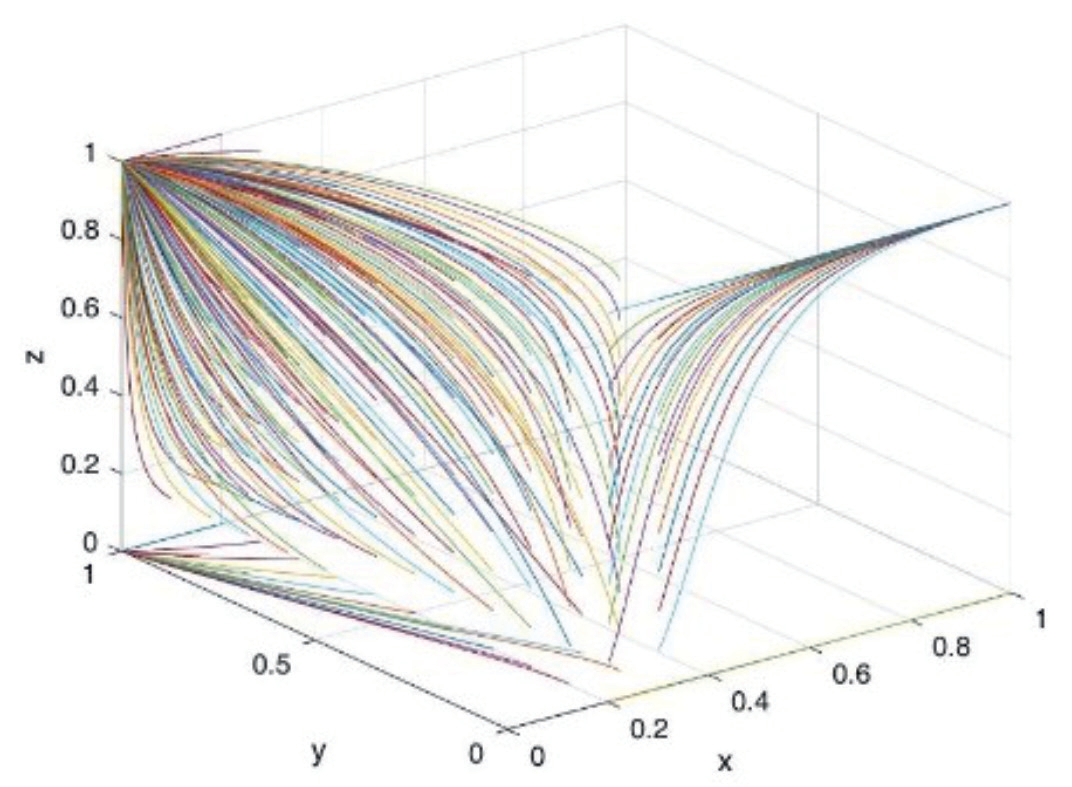
Based on the actual development situation of BYD’s green innovation ecosystem in the context of the “dual-carbon” goal and considering the reality of collaborative innovation among the core participants of the innovation ecosystem, we analyze the impacts of the comprehensive degree of green technological innovation, support incentives, and the degree of supervision on the evolution of ecosystem value through the theory of evolutionary game, taking the perspective of trust transfer. The evolutionary game theory analyzes the influence of the degree of integration, support incentive, and supervision of green technology innovation on the evolution of ecosystem value. Matlab software was used to simulate and verify the value realization decision-making model, and the direct correlation of the evolution of the trust transfer relationship among the three innovation groups was demonstrated. Referring to the numerical simulation logic of reference [41], combined with the practical evolution of green innovation ecosystem, we assign values to the core parameters in the evolutionary game model. The parameter assignments in the model are shown in Table 3. A numerical simulation of the evolutionary stabilization strategy is carried out, and the results are shown in Fig. 3, which indicates apparent differences in the final convergence strategies under different initial states of the three innovation groups.
Sensitivity Analysis of Important Parameters
The sensitivity of important parameters under the stabilization strategy is further explored to derive the influence of different values of variables on the strategy choice of game subjects. Based on the parameter assignment in Table 3, the parameter values are adjusted respectively. Since green technology R&D requires strong support and supervision from the upgrading and service groups, this paper focuses on the subsidy incentives, the degree of supervision, and the extra cost of acquiring non-innovative products for the consumer application groups to explore their impacts on the development of the trust transfer network and the evolution of value realization.
Table 3.
Model simulation parameters and assignments.
| Parameter | Value | Parameter | Value | Parameter | Value | Parameter | Value | Parameter | Value |
|---|---|---|---|---|---|---|---|---|---|
| b | 0.5 | e | 0.7 | f | 0.1 | w | 0.5 | R0 | 50 |
| φ | 0.6 | I | 10 | Rd | 100 | λ | 0.7 | K | 20 |
| m | 0.8 | G | 15 | H | 20 | Cu | 50 | μ | 0.6 |
| J | 3 | RH | 20 | RL | 5 | U | 4 |
a. Subsidy incentives for green innovation ecosystems from promotion and service group
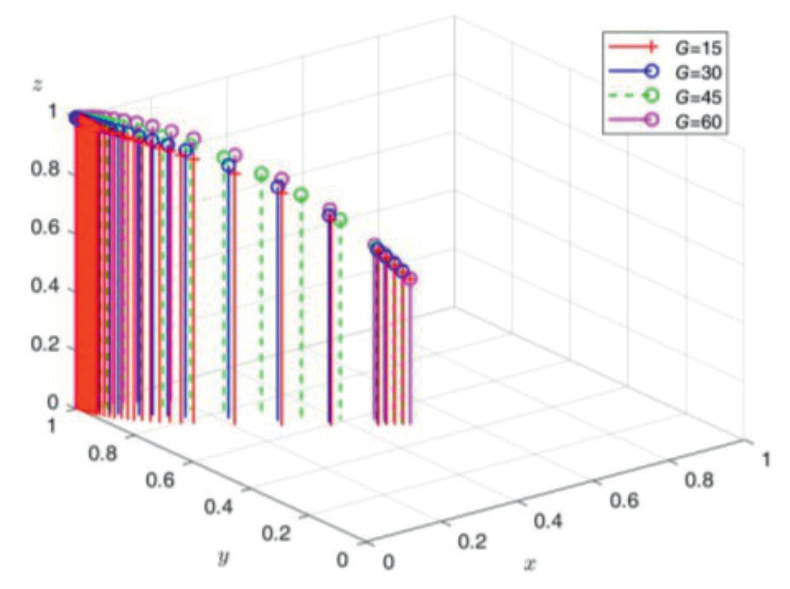
When other parameters are kept constant and G = 15,30,45,60 are taken respectively, the effects of changes in subsidy incentives for the promotion and service groups on the decisions of the three groups are shown in Fig. 4. It can be seen that as the subsidy incentives continue to increase, the faster the final convergence to the steady state, the willingness of the technology R&D platform and consumer application groups to choose to participate in green technology R&D gradually increases. Subsidized incentives for promotion and service groups are adequate to improve the trust transmission network and reduce the failure rate of green technology R&D in the early stage of green innovation ecosystem development or the growth period. However, the promotion and service groups should be cautious to avoid over-subsidization and waste.
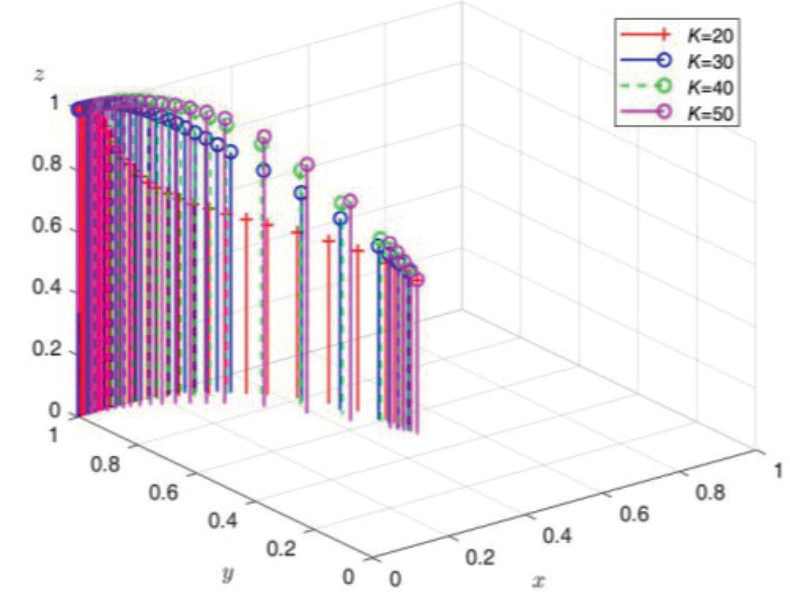
Fig. 6.
Impact of additional costs borne by consumer application groups for overuse of non-green products.
b. Oversight of technology R&D platform by promotion and service group
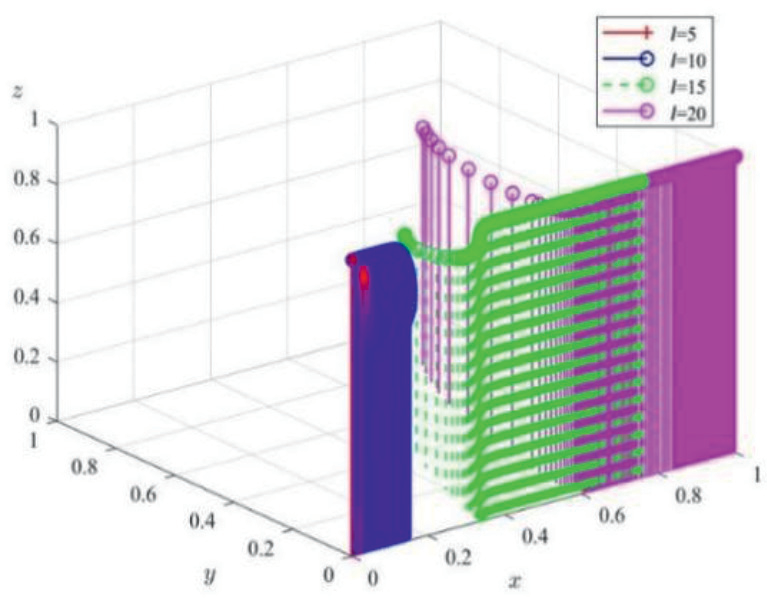
In the case of other parameters remain unchanged, change the value of supervision strength, respectively take K = 20,30,40,50, the three groups decision-making evolution results are shown in Fig. 5. As the supervision strength gradually rises, the stronger the trust of the technology R&D platform to guide the green technology R&D, the faster the rate of convergence to the stabilization strategy, and at the same time, the rate of convergence to the stabilization strategy of the consumption and application group and the promotion service group is also gradually accelerated. It can be concluded that excessive monitoring is not conducive to trust transfer and negatively affects the evolution of value realization, especially in the early stage of green innovation ecosystem development, monitoring will likely cause excessive caution in technology R&D platforms, directly slowing down the ecosystem value realization process and not conducive to trust network development. Especially when the value of supervision intensity is higher than 40, the promotion and service groups should change the original supervision strategy to one that is favorable to the improvement of the trust transmission network.
c. Additional costs of overuse of non-green products by consumer application group
The evolution results of the value realization decisions of the three groups are shown in Fig. 6 by varying the values of the additional costs borne by the consumer application groups for the overuse of non-green products by taking I = 5,10,15,20, respectively, while keeping the other parameters constant. As the extra cost of using traditional products increases, the rate of choosing the “no accept” stabilization strategy increases. When the value changes from 10 to 15, the stabilization strategy of the technology R&D platform changes from “guidance” to “no guide.” Still, the enhancement and service group’s stabilization strategy is unaffected. The consumer application group’s choice of green products directly affects the degree of trust of other innovation subjects. Furthermore, the fact that the consumer application group does not tend to choose green products now reduces the revenue of the R&D platform, and the R&D platform cannot support green technological innovation with sufficient costs.
Conclusions and Implications
Main Conclusions
From the perspective of trust transfer, this paper discusses the mechanism of value realization in the green innovation ecosystem with the collaborative participation of the technology R&D platform, the promotion and service group, and the consumption and application group. It constructs a game model of decision-making evolution to systematically analyze the intrinsic law of ecosystem value realization decision-making. The main conclusions of this paper are as follows.
(1) During the development of the trust transfer network, the technology R&D platform and the consumption and application group are regulated by the enhancement and service group, and the decision-making of the three innovation groups is based on the degree of trust and the relative size of the benefits. When the trust transfer network of the green innovation ecosystem is gradually improved, the difficulty and cost of green technology R&D are reduced, and the collaborative relationship between innovation subjects tends to be stable; In contrast, when green technology is shifted from maturity to the iterative upgrading period, the trust transfer network is attenuated, and the difficulty of innovation is increased at this time, the period becomes longer, the cost of invention is increased, and the instability of the relationship between the realization of the value of the innovation subjects is strengthened.
(2) Excessive supervision of the technology R&D platform by the promotion and service groups reduces the green technology R&D capacity. At the same time, the innovation subsidy incentive actively promotes the establishment and development of the ecosystem trust transmission network. When the green technology R&D capability is low, the willingness of the promotion and service groups to participate in the platform increases significantly, which in turn improves the transmission capacity of the ecosystem’s resources, such as talents, funds, and information. Then the ecosystem’s benefits gradually increase.
(3) The degree of acceptance of green products by the consumer application group promotes the decision-making of the technology R&D platform. When the degree of endorsement of green products by the consumer application group gradually increases, the degree of perfection of the ecosystem trust transfer network also increases. Moreover, the consumer application group has a critical green product feedback role, which has a quality-enhancing effect on the ecosystem trust transfer network and value realization evolution.
Theoretical Implications
First, this paper enriches the theory of green innovation ecosystem. Existing research on innovation ecosystems is more in-depth, but it has not yet paid attention to the formation and evolution law of green innovation ecosystems. This paper combines the trust transfer perspective with the green innovation ecosystem value realization decision-making, expanding the theoretical perspective of green innovation and innovation ecosystem. Secondly, this paper provides a theoretical model to supplement the collaborative behavior decision-making of innovation subjects within the green innovation ecosystem. The evolutionary game model is applied to the ecosystem value realization decision-making problem, and the evolutionary trend of innovation subjects is derived through numerical simulation, which effectively supports the sustainable development of the ecosystem.
Management Implications
This paper puts forward the following suggestions to realize the sustainability of the green innovation ecosystem and its trust transfer network improvement and better regulate the equilibrium relationship of innovation subjects.
First, the promotion and service groups should pay attention to the enabling role of digital and intelligent technologies on the ecosystem, accelerate the construction of advanced technology facilities, and promote the application of 5G, big data, cloud computing, and artificial intelligence in the R&D of green technologies. In the reality of digital and intelligent technologies broadening the channels of green technology innovation, the manager should create a healthy innovation environment for the ecosystem and promote cooperation between technology R&D platforms and high-tech enterprises. Moreover, appropriate cross-border cooperation mechanisms should be established to reduce the overall cost of the technology research and development platform and enhance the efficiency and quality of the value realization of the technology innovation platform.
Secondly, promotion and service groups should establish diversified subsidy channels, actively cooperate with technology R&D platforms, and formulate appropriate monitoring measures to urge technology R&D platforms and consumer application groups to participate in the whole value realization process. At the early stage of developing the green innovation ecosystem, strengthen collaboration with universities and research institutes to actively promote consumer acceptance of green products, thereby realizing the cash return of the technology research and development platform.
Finally, it is essential to improve the supervision of green innovation ecosystems by regulators to avoid them falling into the recession trap in the early stage of development. At the same time, a reasonable supervision mechanism should be set up to enhance the transparency and accuracy of the trust transfer of the ecosystem, and social public opinion supervision and third-party professional auditing institutions can be introduced to collaborate in the value realization process.
Research Gaps and Future Prospects
Although this paper finds that a higher level of green technological innovation helps the innovation ecosystem to collaborate on technological innovation and improve the trust transfer network, and then harmonize the competitive relationship of innovation subjects, it does not discuss the negative impact of a lower level of green technological innovation. However, the adverse effects of lower levels of green technological innovation have yet to be examined. Moreover, critical external influences such as environmental regulations have yet to be considered, and their specific mechanisms still need to be explored. In addition, the innovation ecosystem is a complex network structure that contains most subjects. Still, this paper only divides it into three groups and does not consider the interaction between subjects. Therefore, future research should consider the influence mechanism of individual issues and quantify more value realization factors.

