

Introduction
Ionic rare earth resources (IAT-Res) are special deposits in southern China’s red soil granite area. They formed during the crust weathering and differentiated in different soil-forming conditions [1]. Rare earth elements (REE) develop under hot and humid climate conditions are easily leached out under weathering and leaching, while those developed under dry and cold climate conditions are often enriched in the topsoil profile [2, 3]. Ionic rare earth ores share commonality with other types of rare earth ores, and also have their own characteristics, such as light rare earths (LREE) are easily enriched in the upper layer of regolith, while heavy rare earths (HREE) are relatively enriched in the lower layer [4].
The IAT-Res are crucial resources in many sectors, especially in the low carbon technologies, such as hybrid vehicles and wind turbines [5]. The demand for HREE is certainly of concern in many countries. In contrast, mining activities make the surface environment changes in the mining area have distinct regional and industrial characteristics [6]. It is not only wasting a lot of rare earth resources, but also a large amount of REE enter the surrounding soil environment. Under the effects of rainfall leaching and wind blowing, in addition of human activities, such as mining, dressing, smelting, farming, etc., REE are very likely to migrate, accumulate, transform and diffuse in the soil environment of mining areas. The REE diffuse to the periphery of the mining area along with the particles and solution, and finally gather in the paddy field surrounding the mining area [7, 8]. REE are enriched in the surface soil of paddy field as a result of the soil’s high absorption capacity [9]. The mining of IAT-Res in the Southern China has resulted of REE in the soil of the reclaimed mining area and adjacent paddy field being higher than the national background value, with a maximum value of up to 6 times [10].
Mining for IAT-Res causes negative impacts on the surrounding ecological environment, such as soil erosion, acidic wastewater residues. The contamination of REE can further threaten human health as it is translocated into crops, food chains, and other channels [11]. However, the environmental problems caused by the exploitation of mine resources haven’t attracted enough attention. Since the in-situ leaching process is the most prevalent mining method of recent mining techniques and rice is the main crop in southern China, we conducted this study to access the REE characteristics of paddy field surface soil downstream of an IAT-REs mining region and to evaluate the potential ecological risk of IAT-REs mining activities to the surrounding residents.
Material and Methods
Sampling Sites
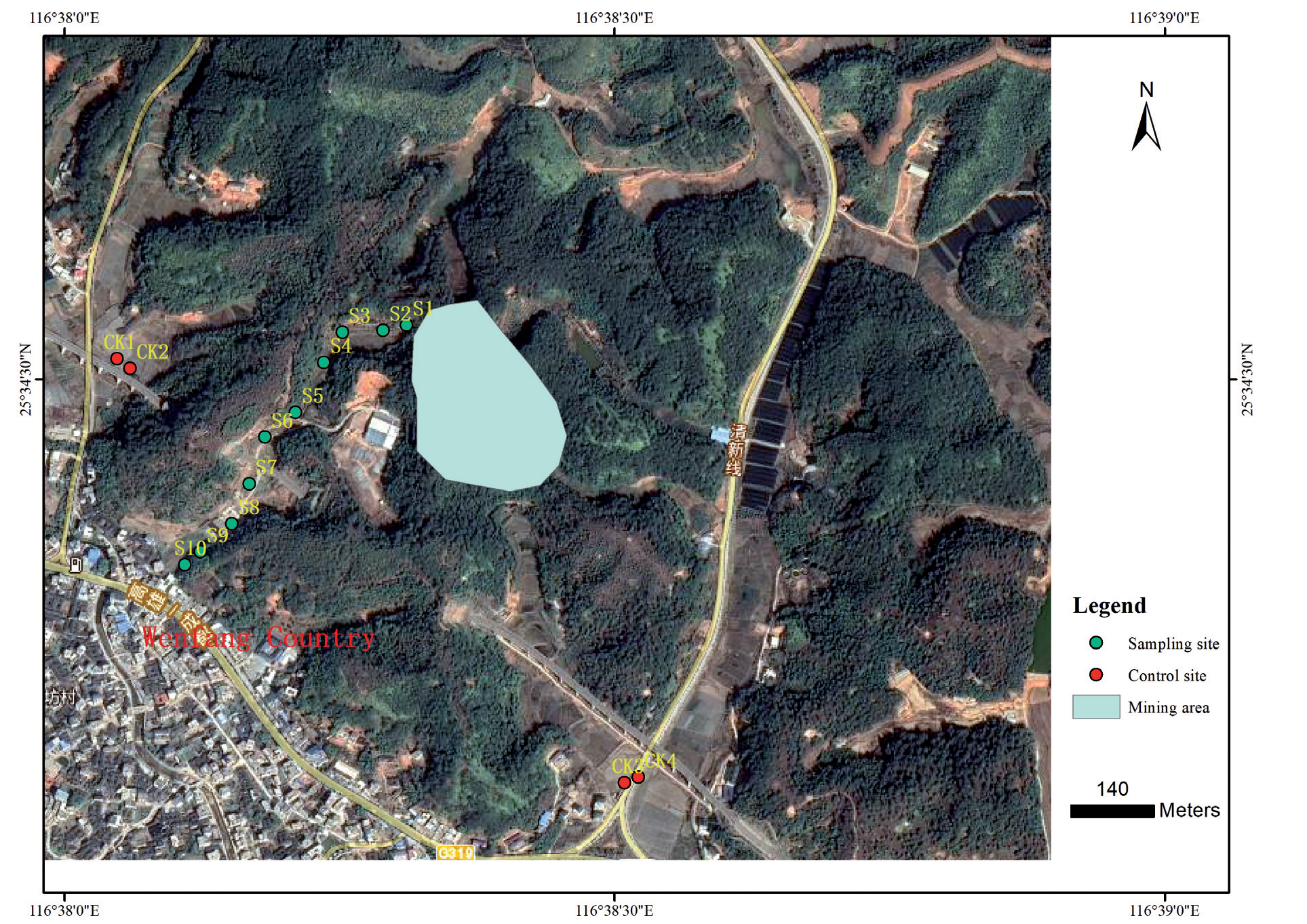
Liancheng County (25°13′-25°56′N, 116°32′- 117°10′E) Fujian Province is located on the southeastern section of Wuyi Mountain, with a total area of about 2578.59 km2 [12]. It has a mid-subtropical humid monsoon climate with an average annual temperature of about 18.9ºC and a frost-free period of 291 days. The average annual rainfall is 1,734 mm, with the majority of precipitation falling during the rainy season and spring. The prevailing wind direction is northeast in the winter and southwest in the summer. Soil types include red soil, skeletal red soil, dark red soil, yellow soil, skeletal yellow soil, mountain meadow soil, acid purple soil, and calcareous purple soil, among them prevalent with red soil, which developed from biotite granite and gneiss porphyritic biotite granite [13]. The sampling areas of this study are mainly located in Pengkou Town, where many ionic rare earth deposits are developed on weathered granite crusts. The rock mass is porphyritic granite with a medium-coarse grained granite structure, and the quartz feldspar crystals are coarse, with a particle size of generally 3-10 mm, feldspar phenocryst grain size of 20-40 mm, phenocryst content of 10-15%. The contact fissures between rock and mineral crystals are relatively large, making them more susceptible to erosion and weathering by water. The sampling site is located in Wenfang Rare Earth Mine, Pengkou Town, Liancheng County, which is the only official test site in the Longyan area that adopts in-situ leaching. The ore body of Wenfang Rare Earth Mine presents a low hilly landform, and the top of the hill is gentle and steamed bun-shaped. In the vertical direction, the grade of the weathered crust ore layer presents the characteristics of upper poor, middle rich and lower poor, with an average ore body grade of 0.038% [14]. The migration of water and rare earth-loaded particles plays a decisive role in the horizontal migration of rare earth elements. The migration characteristics of rare earths in the surface soil and the enrichment of rare earth elements in the surrounding environment after mining are the focus of this paper.
Sampling and Sample Analysis
We set the ore body which was mined using in-situ leaching to extract REE as the center and sampled the surface soil of paddy field in the downstream valley with an interval of 50 meters. We also collected the surrounding paddy field that were not affected by mining as a control. At each sampling site, five points of surface soil were collected at the depth of 0-20 cm. The specific sampling locations are shown in Fig. 1. The collected soil samples were brought back to the laboratory, spread out evenly, and placed at an indoors place with shade to ventilate and dry. After removing debris such as animal and plant residues and stones, grind and crush them, and finally pass through 20-mesh and 100-mesh sieves and put them into ziplock bags Stored in a dry place, the element content to be measured.
The determination of each index adopts the analysis method in “Analysis Methods of Soil Agricultural Chemistry” [15], or adopts the corresponding environmental standard method. The experimental analysis work is carried out in the cultivation base of the State Key Laboratory of Humid Subtropical Mountain Ecology. The methods are as follows: Soil pH was measured by water-to-soil ratio of 2.5:1, water immersion-potential method; soil texture was measured by NaOH dispersion and Malvern particle size analyzer (MasterSizer2000). Soil total carbon and total nitrogen content were measured by soil carbon and nitrogen element analyzer (Vario Max CN, Vario EL III) determination. And soil total phosphorus and potassium content were extracted by HClO4-H2SO4 and HF-HClO4 digestion, then measured by flow analyzer (SKalar san++) and flame photometer (FP640) respectively. The soil physical and chemical properties of this study are listed Table 1.
REE in the soil was digested with HNO3-HClO4-HF. The process as follow: weigh 0.04g soil sample into a polytetrafluoroethylene (PTFE) liner, add 1.5 ml HF, 0.5 ml HNO3 and heat in an oven at 150ºC for 15 h. After cooling, take out the PTFE liner and add 0.25 ml of HClO4, then evaporate to constant dry on a 150ºC electric heating plate. After that, add 2 ml of deionized water and 1 ml of HNO3, and re-dissolve in an oven at 150ºC for 15 h. After cooling, filter the solution of the liner into a plastic bottle, dilute it to 40 ml with deionized water and store it in an environment with a temperature of about 4ºC for analysis [16]. The REE were determined by an inductively coupled plasma mass spectrometer (ICP-MS: X Series 2, Thermo, USA) and national standard samples (yellow red soil GBE09405 and brick red soil GBW07407) were selected for quality control.
Table 1.
Soil Physical and Chemical Properties.
Characteristic parameters of rare earth Elements
REE coexist closely together in nature because of their similarity of atomic structure and valence. During the evolution of magma, there are observable regular changes that effectively illustrate the geochemical process of rock formation. Soil is a consequence of the weathering of rocks, it has effectively inherited their characteristics, and the characteristic parameters of REE have been widely used in soil REE research [17]. The characteristic parameters and correlation index method applied in this study as follow:
(1) δCe: Indicates the degree of Ce anomaly in the soil geochemical process. If δCe>1.05 or δCe<0.95, it indicates a positive Ce anomaly or a negative Ce anomaly respectively, while δCe between 0.95-1.05 indicates no anomaly.
δEu: Indicates the degree of Eu anomaly in the soil geochemical process. If δEu>1.05 or δEu<0.95, it means a positive Eu anomaly or a negative anomaly respectively, and δEu between 0.95-1.05 means no anomaly [18]. Their calculation formula:
Where: CeN, LaN, PrN, EuN, SmN, and GdN are the chondrite normalized values of the elements, respectively.
(2) (La/Yb)N reflects the degree of fractionation of light and heavy rare earths. (La/Yb)N>1 denotess the enrichment of LREE, whereas (La/Yb)N<1 indicates the enrichment of HREE. (La/Sm)N reflects the fractionation degree of LREE, the larger the value, the more enriched light rare earths; (Gd/Yb)N reflects the fractionation degree of HREE, the smaller the value, the more enriched HREE [18]. Their calculation formula as follow:
In the formula: LaN, YbN, SmN, and GdN are the chondrite standardized values of the elements, respectively.
Soil Pollution and Ecological Risk Assessment Method
The geoaccumulation index method [19] has been proposed to determine the contamination level of soil. To determine the ecological risk levels of REE contamination, the prospective ecological risk index method [20] has been implemented. They are used to evaluate the degree of pollution of rare earth elements, respectively. Their specific calculation formula and division indicators are shown in Table 2.
Results and Discussion
Characteristics of Rare Earth Elements Content in Surface Soil of Paddy Field
Table 3 shows the REE content of paddy surface soil in the downstream valley near the in-situ leaching area, which indicates the REE contamination in the downstream valley. The average content of REE in descending order was Ce>La>Nd>Y>Pr>Gd>Sm>Dy>E r>Yb>Eu>Ho>Tb>Tm>Lu. It is similar to the sequence of REE in soil of Fujian Province and the distribution basically follows the Oddo-Harkins rule [21], indicating that the content of REE in the paddy soil in the downstream valley near the in-situ leaching area was mainly affected by the abundance of the crust. The range of REE of the sampling sites was between 408.51-959.00 mg·kg-1, with an average value of 727.76 mg·kg-1, which was 3.26 times of the background value of soil in the Fujian Province. While the range of the control sites was 414.38-560.93 mg·kg-1, with an average value of 468.58 mg·kg-1, which was 2.1 times of the background value of soil in Fujian Province [22]. This demonstrates that the mining activities for REE have caused the migration and transformation of REE and thus led to the enrichment of REE in the downstream paddy field. An intriguing occurrence in the control land was the extraordinarily low Pr content, which was even lower than the average Fujian soil and Chinese soil values. This is possible because Pr deficiency has always existed in the surface soil of this region [22], whereas mining activities resulted migration of REE has made this phenomenon less apparent in the sampling sites. In terms of the total amount of LREE, HREE, and REE, in the surface soil of the downstream paddy field of the mining area were higher than that of the control area, and they were also higher than the background value of Fujian soil. The ratio between LREE and HREE of the surface soil in the paddy field downstream of the mining area was closer to the background value of Fujian Province, while the ratio was the largest of in China soil. This consistent with the fact that the soil in the southern China is enriched with HREE and the aforementioned deficient of Pr.
Table 2.
Evaluation Methods and Classification.
Table 3.
Rare earth element content of paddy soil in in-situ leaching area (mg·kg-1).
Distribution Characteristics of Rare Earth Elements in Surface Soil of Paddy Field
Chondrites normalization can eliminate the odd and even influence, and thus better reflect the degree of differentiation of REE composition relative to the original material [23]. The average value of REE contents in the surface soil of paddy field downstream of the mining area were normalized by chondrites and compared with the distribution pattern of soil background values in Fujian Province, as shown in Fig. 2.
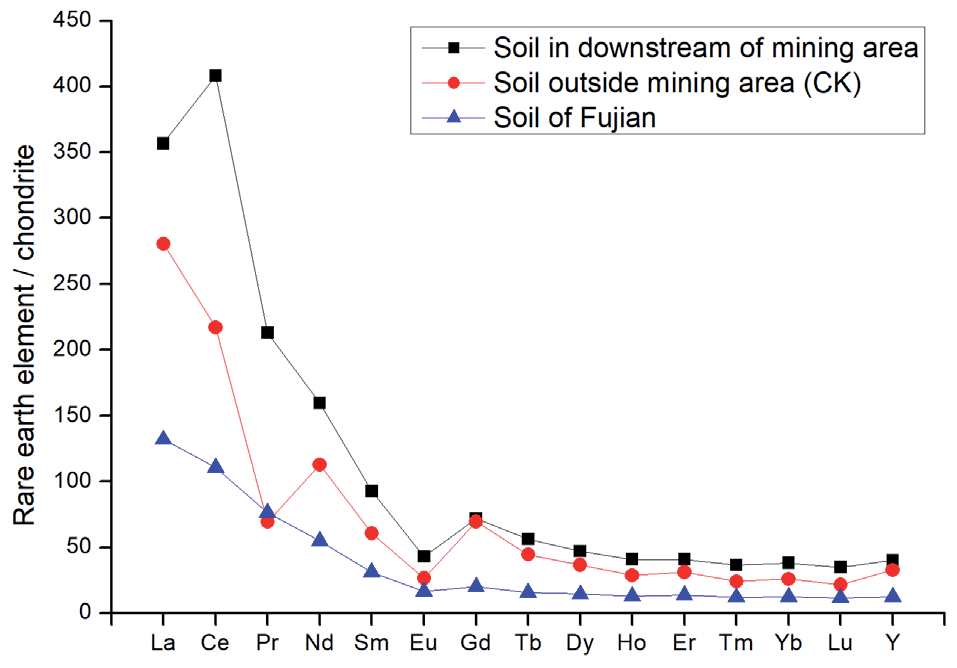
It can be seen from Fig. 2 that the distribution of REE in the sampling sites and control sites was significantly different. The standard distribution of the paddy field in the valley showed a significant La deficit. Whereas in the control sites, Pr was obviously deficient which is consistent with the phenomenon mentioned above, and HREE element Y showed pronounced enrichment. The mining of REE has led to changes in the distribution of REE in downstream paddy field, which is the main reason for the differences between the paddy soils in the valley and the control sites. We hypothesized that alternative fertilization strategies would also contribute to changes of REE distribution patterns of surface soil.
Table 4.
Characteristic parameters of rare earth elements in paddy soil downstream of mining area.
Table 5.
Evaluation results of geoaccumulation index.
Table 4 shows the major characterization characteristics of REE in the paddy surface soil downstrem of the in-situ leaching area. Both the soil in the study area (0.36) and the control soil (0.25) showed negative Ce anomalies, and the Ce negative anomaly in the control land was close to that of the Fujian soil. δEu also showed a negative anomaly, and the Eu negative anomaly in the control land was close to that of the Fujian soil. It shows that mining further differentiates the Ce and Eu of the surface soil of the downstream paddy field to a certain extent. By further comparing (La/Yb)N, it can be seen that the surface soil of the downstream paddy field is also enriched in LREE, but the enrichment degree was weak compared with the control. The values of (La/Sm)N and (Gd/Yb) N further verified that the enrichment degree of LREE in the paddy field downstream of the mining area was weakened, and the enrichment degree of HREE was strengthened.
Evaluation of Rare Earth Elements in Surface Soil of Paddy Field
Geoaccumulation Index Evaluation
According to the geoaccumulation index method proposed by Müller [19], the background value of soil in Fujian Province [22] was used as a reference value to evaluate the surface soil of the paddy field around the mining area. It can be seen from Fig. 3 that the geoaccumulation index of LREE, such as Ce, in the surface soil of paddy field in the mining area was relatively high, and the median values of La, Pr, Nd, Sm, Eu and other elements were around 2, indicating a moderate enrichment phenomenon. The median accumulation index of HREE is greater than 2, showing a moderate pollution; the median accumulation index of LREE in the surface soil of paddy field around the mining area were also lower than 2, and Pr was even lower than 0. Among HREE, Gd and Db’s median values of the accumulation coefficient were greater than 2, and the rest were less than 2, demonstrating moderate pollution.
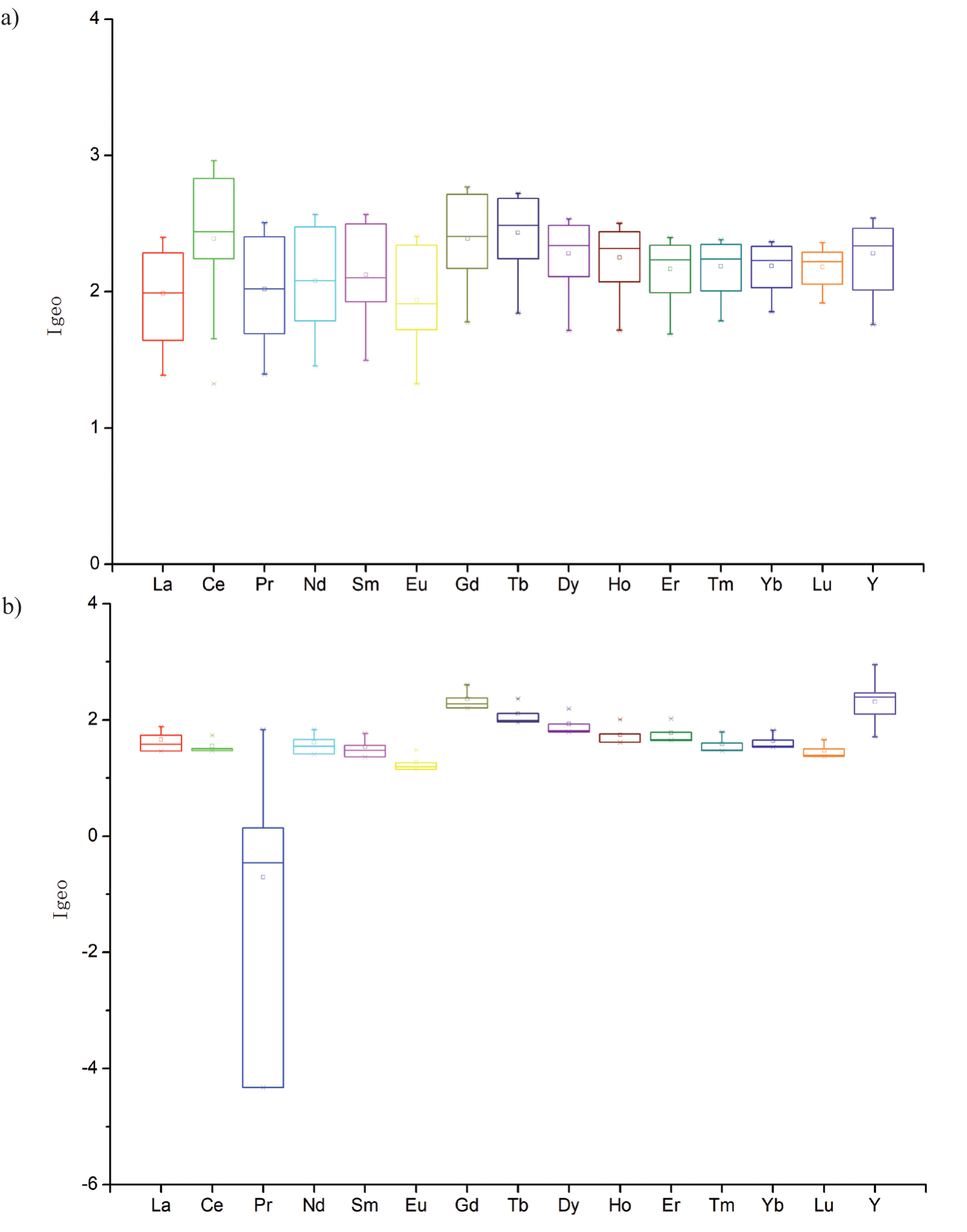
The evaluation results are shown in Table 5. From the distribution of the evaluation results of a single element, it can be seen that the pollution of all elements was at two pollution levels, III and IV. The overall examination of pollution found that the mining area’s valleys were moderately contaminated, as was the area surround the mines. It can be seen from the pollution degree ratio of each element that most REE present a certain degree of moderate pollution, and the highest pollution level in the overall evaluation was also moderate pollution. Although several elements were assigned to high pollution ratings, this was not shown accumulation in the overall pollution level evaluation.
Potential Ecological Risk Assessment
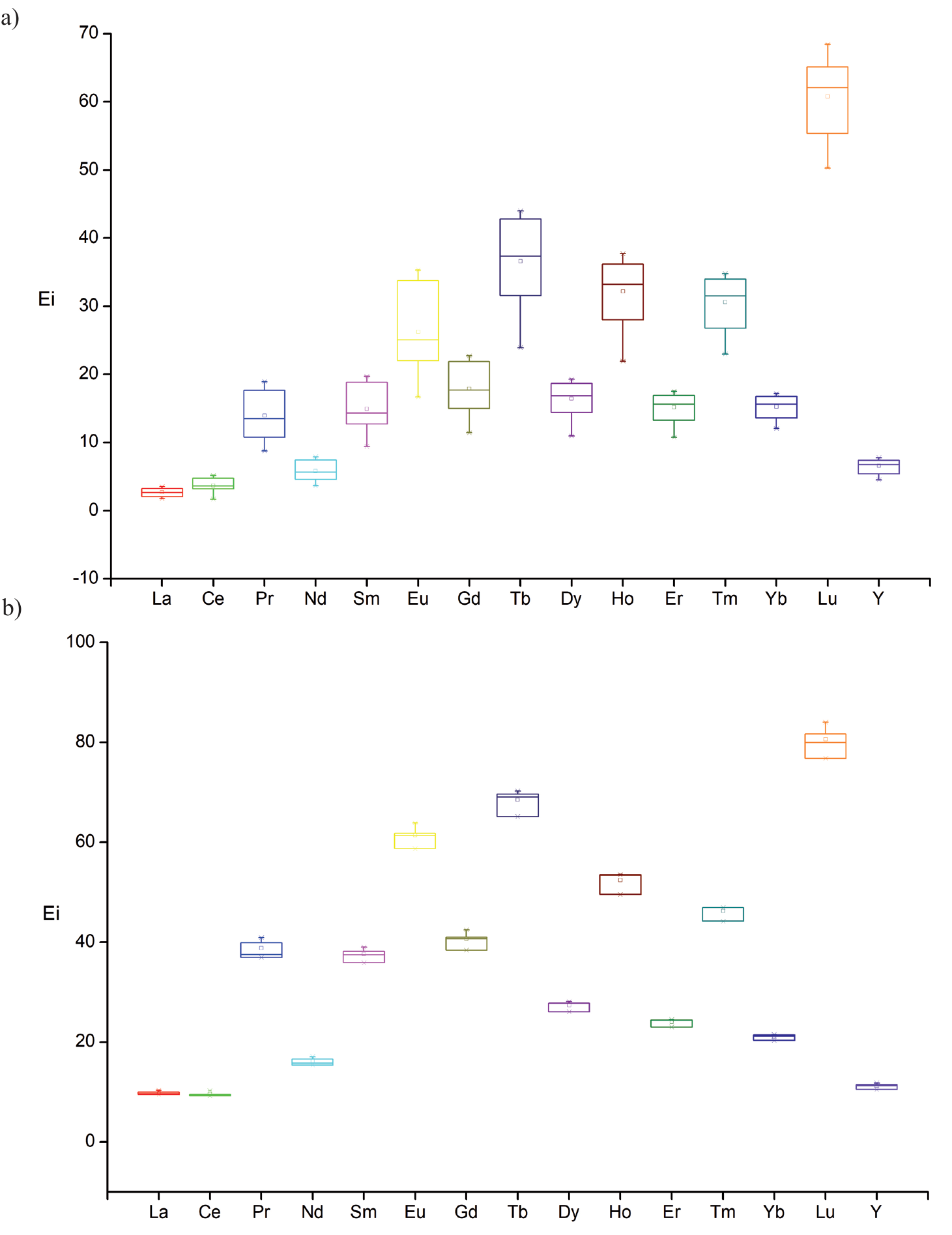
The potential ecological risk assessment of REE in the surface soil of paddy field was conducted using the REE potential ecological risk assessment system established by our research team [20]. From Fig. 4 and Table 6, it can be seen that the risk index Ei of five elements (Eu, Tb, Ho, Tm, and Lu) in the surface soil of the paddy field in the in-situ leaching area were higher than 20, with Lu (60.81) indicating an intensity potential ecology risk. The overall evaluation also showed strong potential ecological risk. While the REE risk index Ei of the surface soil of control sites contained 4 elements (Tb, Ho, Tm, and Lu) that were higher than 20, demonstrating a moderate potential ecological risk, the overall potential ecological risk evaluation revealed a moderate level too.
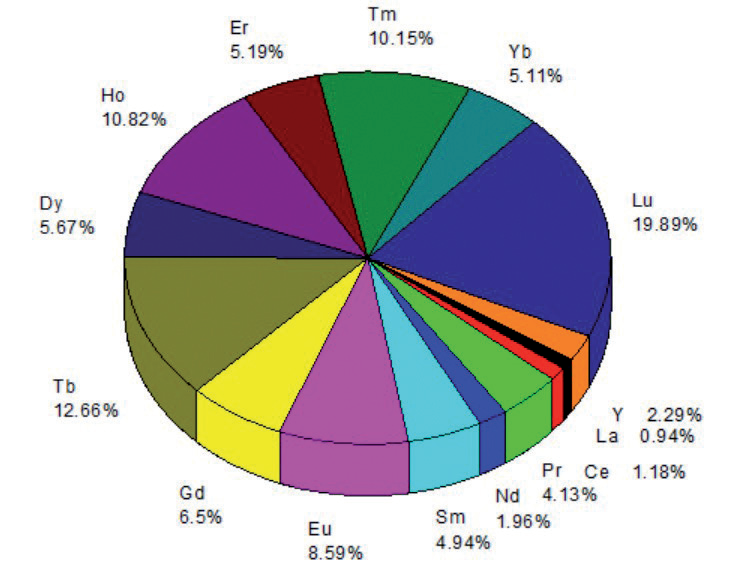
The average contribution of each REE element to the comprehensive potential ecological risk is shown in Fig. 5. The contribution rate of Tb, Ho, Tm and Lu to the comprehensive potential ecological risk evaluation index were higher than 10%, among which the contribution rate of Lu (19.89%) was lower compared to the result evaluated by geological accumulation method, while contribution value of Eu was relatively higher (8.59%).
From the evaluation results of the geoaccumulation index method and the potential ecological risk index method, it is evident that the results of the two evaluation methods were distinct. For instance, the comprehensive evaluation of the geoaccumulation index method weakens the accumulation of single element pollution. Most elements in the surface soil of paddy field were highly polluted, but the overall pollution did not accumulate. Whereas the potential ecological risk assessment could better reflect the accumulation of single element assessment. The geoaccumulation index method gives an intuitive level of trace element pollution, but does not consider the biological hazards of trace element pollution, while the potential ecological risk assessment reflects the biological toxicity and relative contribution of REE. Therefore, the pollution evaluation of REE should organically combine the two evaluation methods in order to evaluate the pollution level of REE more comprehensively and reasonably.
Table 6.
Evaluation results of potential ecological risk index.
Conclusions
In conclusion, our results demonstrated the following bullet points: (1) The REE content in the paddy field surface soil in the in-situ leaching area was 3.26 times of the background value, while the value of the control site was 2.10 times the background value, in-situ leaching for REE caused the migration and translocation of REE; (2) The distribution of REE in the paddy field in the sampling sites and control sites were significantly different. The standard distribution of the paddy field in the sampling sites was relatively consistent with the background value except for the deficiency of La, while the soil control sites shown significant difference, and the Pr shows a strong deficient and Y significantly enriched. In addition to the impact of REE mining on the REE content in the paddy field around the mining area, fertilization methods may have a certain impact on its distribution; (3) According to the geoaccumulation index method, the geoaccumulation index of Ce in the LREE in the surface soil of the paddy field in the in-situ leaching area was relatively high, and the median accumulation index of HREE was greater than 2, which was moderately polluted. The median value of Pr accumulation coefficient of LREE in the surface soil of the field was lower than 0, which was generally in the state of moderate pollution. From the overall pollution evaluation, the valleys in the mining area were slightly more polluted than the control sites moderately polluted, and the periphery of the mining area is moderately polluted; (4) According to the potential ecological risk evaluation system, the REE in the surface soil of the paddy field in the in-situ leaching area posed a strong ecological risk while moderate level in the paddy field surface soil of the control sites.
IAT-Res are curatorial resources for advancing the green economy. However, IAT-Res extraction has caused severe environmental damage. Our research determined the REE characteristics of paddy field surface soil downstream of an IAT-REs mining region and assessed the potential ecological risk posed by IAT-REs mining activities to the local populace. Our findings demonstrated that mining led to the migration and translocation of rare earth elements, and a high ecological risk was assessed at the paddy field surface downstream of the mining area. Consequently, environmental management is necessary to reduce the risk to residents. Furthermore, because REE are curative resources, phytoextraction may be considered in the future as a win-win solution in this field.

