

Introduction
Health expenditure is an important macro-indicator of the level of health services, reflecting the overall health consumption of a country or region over a certain period of time and having a far-reaching impact on the national economy and people’s quality of life [1]. Since 1978, China’s health expenditure has grown steadily, a trend closely related to economic development, the increasing health needs of the population, and the continuous expansion of health services and security [2]. By 2023, China’s total health expenditure had reached RMB 9,057.58 billion, with an annual growth rate of 6.2%, significantly higher than the GDP growth rate during the same period. The excessive growth of health expenditure has put great pressure on both the government and individuals in China [3]. Therefore, it is necessary to explore the key factors affecting the growth of health expenditures to effectively alleviate the government’s financial pressure, reduce the economic burden on patients, and provide a scientific basis for decision-making to control health expenditures growth.
A literature review reveals that existing studies have analyzed the reasons influencing changes in health expenditure mainly from the demand-side and supply-side perspectives [4, 5]. Among them, social factors, including economic and demographic factors, have an important impact on the demand side [6-8]. The income level determines the population’s ability to realize the demand for health services and thus influences the growth of health expenditure [9]. Differences in age structure further influence changes in health expenditure through changes in the disease spectrum [10]. On the other hand, on the supply side, which is dominated by medical factors, technological advances may increase the universality of health services, thus increasing the demand for health services and driving up health expenditure [11-13]. In addition, other scholars have explored the impact of factors such as health facilities, the number of health personnel, and health insurance coverage on health expenditures, thus further enriching the theoretical mechanisms of the supply-side impact on changes in health expenditures [14-17]. In addition to analyzing the impact of social and medical factors on health expenditure from the perspectives of the demand side and supply side, some scholars have focused their perspectives on exploring the relationship between environmental quality and health expenditure and analyzed the impact of air pollution, carbon dioxide emissions, government environmental governance efforts, energy structure, and other factors on health expenditure [18-28]. It has been shown in the literature that environmental pollution can have a significant negative impact on the health level of the population, thus affecting the changes in health expenditure [29, 30].
In summary, although the existing literature has made useful explorations of the research affecting changes in health expenditure, there are still areas for expansion. First, existing studies have mainly used regression models to explore the “net effect” of a single variable on health expenditure growth, ignoring the linkage effects of multiple conditional variables in complex environments. Second, existing studies mainly emphasize the unidirectional effects of different environmental factors on health expenditures, which makes it difficult to fully elucidate the key factors affecting the growth of health expenditures. The above problems can be effectively alleviated by structural equation modeling (SEM), which screens and analyzes the key driving factors affecting the growth of health expenditure in different dimensions, thus revealing the multivariate driving mechanism affecting the growth of health expenditure and providing a theoretical basis for suppressing the excessive growth of health expenditure.
The marginal contributions of this paper are mainly in the following three aspects: First, structural equation modeling is used to analyze the main factors affecting the growth of health expenditure. Compared with traditional regression models, structural equation modeling can explore the synergistic effects and pathways of multivariate influences on health expenditures, thus optimizing the limitations of single-factor studies [31]. Second, social, medical, and environmental factors are included in a unified research framework to explore the impact of different environments on health expenditure. Third, the classification of health expenditures into government health expenditures, social health expenditures, and personal health expenditures based on the structure of financing sources can visualize the impact of complex factors on health expenditures.
Materials and Methods
Data Sources and Variable Selection
Data Sources
This paper’s study population is selected from 30 provinces and cities in China (Hong Kong, Taiwan, Macao, and Tibet are excluded from the study population considering data availability). The data were obtained from the 2013-2022 China Statistical Yearbook, China Health Statistics Yearbook, China Environmental Statistics Yearbook, China Science and Technology Statistical Yearbook, and China Health Care Statistics Yearbook, as well as from official websites of provinces and cities and some authoritative databases.
Variable Selection
The reasons for the changes in health expenditure are a complex combination of factors. Therefore, this paper categorizes the influencing factors into the following three groups based on the research of domestic and foreign scholars:
In terms of social factors, as a socio-economic indicator, changes in health expenditures are inevitably affected by other social factors in the economic system [32]. It has been shown that the factors affecting health expenditure mainly include GDP, the residents’ income level, age structure, medical care consumer price index, demographic structure, and other indicators [33-37]. The growth of GDP not only brings about an increase in the population’s income level but also increases the government’s and society’s investment in health care, which leads to an increase in health expenditure [38]. After comparing the causal relationship between health expenditure and GDP for different income groups, Rana R.H. et al. found that the economic level reflects the affordable health costs for the population, which in turn affects health expenditure growth [39]. Goss J.R. suggested that the price of health services usually rises faster than the general level of inflation and that, in growing economies, the average price of health services rises faster than commodity prices and is an important driver of health expenditure increases [40]. Zhao Y. et al. found a significant negative correlation between population aging and health expenditure after applying panel data to assess the relationship between health expenditure and population aging [41]. Lopreite M. et al. empirically examined China’s aging index using Bayesian variance models. The study showed that population aging in China is relatively responsive to per capita health expenditure [42]. Wang L. et al. explored how health transitions of the elderly affect health expenditure based on a Markov model [43]. Carreras M. suggested that regardless of the specific type of health services provided, health expenditure at the end of life mainly depends on individuals’ health status [44]. Kutlu G. et al. applied a panel regression model to analyze whether the urban population has a significant positive impact on health expenditure [37]. Xu W. found that fiscal decentralization has a positive impact on increasing public health expenditure [45].
In terms of medical factors, a high-quality medical environment can, on the one hand, promote the economic level and improve the living environment of the residents, thus reducing personal investment in health. On the other hand, it can achieve the integration of medical resources and improve the allocation efficiency of health resources, thus affecting the changes in health expenditure [46]. Existing studies have shown that the factors affecting health expenditure growth mainly include technological progress, health facilities, and health insurance coverage [46-48]. Liu Y. M. believes that technological innovation has a significant role in promoting health expenditure [49]. Sorenson C. et al. believe that medical technology progress has become an important driving force to promote the growth of health expenditure [50]. As for the impact of the medical environment on health expenditure, related scholars discussed the impact of the number of health institutions, the number of health beds, and the number of health personnel on health expenditure, respectively [51, 52]. Tang S. et al. found that the number of beds per 1,000 people in primary health institutions and the number of health personnel per 1,000 people positively impacted health expenditure [53]. Hou J. et al. suggested that the number of beds per 10,000 people could explain the growth of health expenditure per capita in China [54]. Ma C. et al. concluded a significant positive correlation by analyzing the relationship between health insurance utilization and health expenditure [55].
In terms of environmental factors, stable economic growth is inevitably accompanied by the consumption of resources and ecological environment destruction [56]. In developing countries, for example, the rapid development of the industrial economy has led to the gradual deterioration of the population’s living environment, and the poor living environment will seriously threaten the population’s health [57]. On the one hand, environmental pollution will directly affect the health level of residents and thus affect the increase in health expenditure [58]. On the other hand, environmental pollution will lead to increasing expenditure on preventive health, thus indirectly contributing to changes in health expenditure [59]. Existing studies mainly include factors such as environmental pollution, natural resources, and climate change [60-62]. Zeeshan M. et al. pointed out that there is a bi-directional causality between environmental pollution and health expenditures [63]. Apergis N. et al. found that the proportion of increase in health expenditures varied among different income groups after they were affected by environmental pollution [64]. Hao Y. et al. utilized China’s panel data from 1998 to 2015 and found that environmental pollution does lead to an increase in health expenditure of Chinese residents, thus verifying the hypothesis that the relationship between environmental factors and health expenditure conforms to the Environmental Kuznets Curve (EKC) [65]. Kabir M.I. et al. found that 97.8% of the respondents believed their health expenditure would increase after an extreme weather event [66].
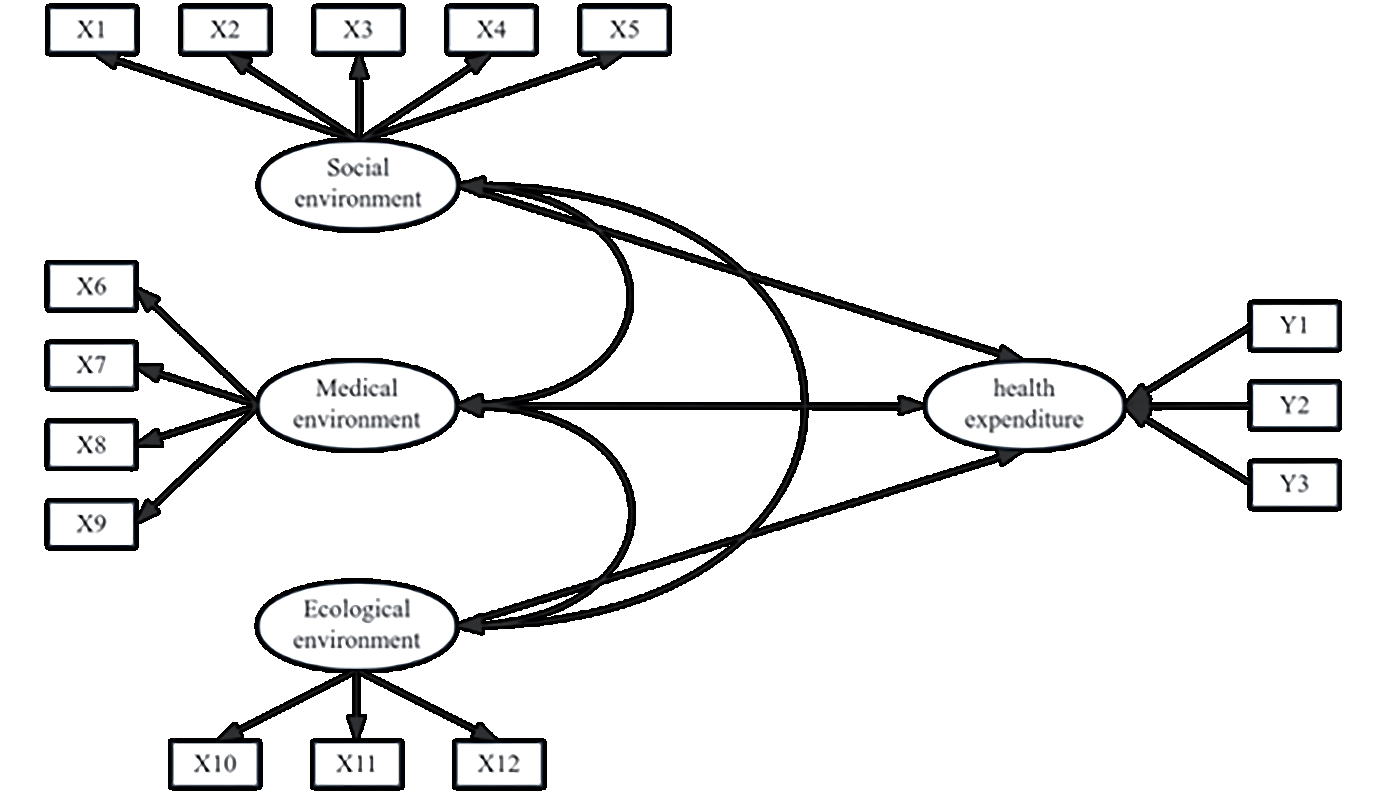
Based on this, this paper summarizes the three factors affecting health expenditure: the social environment, the medical environment, and the ecological environment [67]. Among them, the social environment refers to the environment consisting of a variety of social factors that influence changes in health expenditure, including real per capita GDP, disposable income of urban residents, disposable income of rural residents, medical care consumer price index, and the urbanization rate; the medical environment refers to the dimension consisting of medical factors that influence changes in health expenditure explored from the perspective of the supply of health services, including the number of health technicians per 1000 population, the number of beds in health institutions per 1000 population, the ratio of R&D expenditure to regional GDP, and coverage rate of basic medical insurance; and the ecological environment is the environment constructed by the combination of external natural environmental factors that directly or indirectly affect changes in health expenditures, including carbon dioxide emissions, comprehensive environmental pollution index, and PM2.5 concentration [68, 69].
Regarding the selection of target variables, this study chose government health expenditure (GHE), social health expenditure (SHE), and out-of-pocket expenditure (OOP) as dependent variables based on the source of financing health expenditure [5]. In order to address the integration problems in calculating health expenditures, the study used the growth rate approach to analyze health expenditures measured in RMB to calculate the GDP deflator index at 2012 prices [17]. The indicator system is detailed in Table 1.
Research Methods
Model Selection
Structural Equation Modeling (SEM), chosen for this study, integrates factor analysis and path studies and aims to test the relationship between observed variables, latent variables, disturbances, and error variables in the model, which is used to study the effects and paths between multiple latent variables [70]. By using structural equation modeling, we can obtain the direct, indirect, and total effects of the independent variables on the dependent variable and analyze in depth the linear associations between the variables through the covariance matrix and also compare the differences in covariance between the data and the hypothetical model, with the advantage of being able to analyze the direct and indirect effects between multiple variables. It is a modeling identification, estimation, and validation of complex multivariate relationships tool [31, 71].
Modeling Assumptions
Structural equation modeling is a model to study the relationship between latent variables, and this paper summarizes the social environment, the medical environment, and the ecological environment as factors affecting health expenditure [72-76], which are latent variables, after combing the relevant literature. Since latent variables cannot be directly observed and measured, they need to be indirectly measured by multiple observed variables to explore the influence relationship between different latent variables. A structural path diagram was designed based on these three latent variables, as shown in Fig. 1 below.
Analysis Steps
The analytical steps in this study are divided into the following two main steps:
In the first step, an Exploratory Factor Analysis (EFA) was conducted on the 12 selected indicator variables to identify the indicator variables corresponding to the three initially formulated dimensions, from which a theoretical structural model of health expenditure was developed [77]. Exploratory Factor Analysis (EFA) aims to reveal the underlying structure among the variables and provide a basis for measuring the model.
Table 1.
Name and symbol of variables influencing factors of health expenditure in China.
[i] *Due to the different and non-additive units of sulfur dioxide emissions in the exhaust gas, general industrial solid waste generation, and total wastewater discharges, the entropy method is used to process the ‘three wastes’ in a dimensionless manner. The respective weight coefficients are calculated for each year to weight and sum up the environmental pollution composite index [67-69]. The medical care consumer price index for 2012 was used as the basis for the fixed-base ratio.
In the second step, the established theoretical model was subjected to confirmatory factor analysis (CFA) and path analysis to test the relationship between the social environment, the medical environment, the ecological environment, and the health expenditure and to assess the direct and indirect effects of each factor on health expenditure [78].
As mentioned earlier, existing studies have mainly explored the factors affecting changes in health expenditure from the dimensions of social or medical factors [79-81], and some scholars have also explored the role of environmental pollution on health expenditure from the perspective of the environment [8, 83], which provide a theoretical basis for exploring the factors affecting changes in health expenditure [84]. Therefore, this paper uses structural equation modeling to construct a theoretical model of the impact of social, medical, and ecological environments on health expenditure from a multidimensional perspective.
Empirical Analysis
Exploratory Factor Analysis
Validity Test
Changes in health expenditure come from joint action under complex factors. Therefore, this paper summarizes and generalizes the existing studies to causally analyze and classify the variables affecting health expenditure into different dimensions through structural equation modeling. Considering that before dividing these 12 indicator variables, Kaiser-Meyer-Olkin (KMO) and Bartlett’s test for sphericity are also needed to ensure the validity of exploratory factor analysis [85]. The test results are detailed in Table 2.
The result of the KMO test was 0.805, p<0.01, and the approximate chi-square value of Bartlett’s test of sphericity was 3220, Sig<0.001 (i.e., p<0.01), which indicated that the dataset was suitable for exploratory factor analysis [86]. Therefore, the key factors affecting the change in health expenditure can be further analyzed, and dimensional division can be performed.
Model Fitting and Modification
In the assumptions of structural equation modeling, it is required that the data satisfy the characteristics of multivariate normality [87]. Therefore, in this paper, the normality test was performed on the indicators involved in the study. It was found that the absolute value of multivariate skewness in each measurement model was greater than 1, and the absolute value of kurtosis was greater than 1, indicating significant multivariate non-normality in the data [88]. Therefore, the method of Ma L. was used in this paper for adjusted model fitting and parameter estimation, and the adjusted models and data were fitted well [89]. The fitting results are detailed in Table 3.
Division of Observed Variables
In this study, the datasets were analyzed using the maximum variance rotation method and principal component analysis (PCA) to select factors with eigenvalues greater than 1 as latent variables and to retain variables with factor loadings greater than 0.40 to screen the latent variables affecting changes in health expenditures and to classify them into social environment, medical environment, and ecological environment [20, 90, 91]. The detailed results are shown in Table 4.
Factor 1 covers five indicators: real per capita GDP, disposable income of urban residents, disposable income of rural residents, medical care consumer price index, and urbanization rate, which are mainly focused on describing the characteristics of the development of the social environment and are therefore classified as the impact variables of the social environment in this paper [37, 38, 80, 92]. Factor 2 includes four variables: the number of health technicians per 1000 population, the number of beds in health institutions per 1000 population, the ratio of R&D expenditure to regional GDP, and the coverage rate of basic medical insurance, which reflect the level of health services in each region in terms of manpower, material resources, financial resources, and technology, respectively, and therefore are classified as influencing factors of the medical environment [48, 53-55]. The indicators embedded in Factor 3 are carbon dioxide emissions, comprehensive environmental pollution index, and PM2.5 concentration, which are indicators of changes in the ecological environment where human beings live and are therefore classified as factors affecting the ecological environment [93-96].
Validation Factor Analysis
The constructed theoretical model was found to have a good fitting ability after validation. Therefore, this paper analyzes the standardized factor loading between the latent variables and the observed variables, as well as the square multiple correlations (SMC) of the observed variables in different environments, to determine the magnitude of the explanatory degree of each of the observed variable factors on the latent variables to derive the key factors affecting the changes in health expenditures in different environments [97]. The results of the factor analysis are detailed in Table 5.
Table 4.
Factor load matrix and the variance contribution rate.
As can be seen from Table 5, the minimum value of the construct reliability (CR) of the three structural exogenous variables is 0.697 (CR standard range >0.7). Considering that the model constructed in this study is exploratory, it is believed that all three structural exogenous variables in this paper meet the requirements, indicating that all three measurement models are constructed with good reliability and that there is a high degree of consistency between the observed variables in each measurement model. In addition, the average variance extracted (AVE) values of the three structural exogenous variables range from 0.428 to 0.738, which generally states that an AVE value of 0.36 or more can be considered a good convergence of the model. The results of standardized factor loading (SFL), SMC, and path coefficients for each variable were statistically significant (all P-values <0.001) [77]. Therefore, in this study, the path coefficients of the three environmental factors on health expenditure were calculated to determine the intensity of the impact that different environmental dimensions have on health expenditure. The path coefficients are detailed in Table 6.
A comparison of the absolute values of the path coefficients of the impact of health expenditure under different environmental factors reveals that the medical environment has the greatest impact on health expenditure, the social environment is second, and the ecological environment has the relatively weakest impact. After comparing the influence path coefficients of health expenditures under different dimensions, it is found that the social environment has a significant positive influence on health expenditures, while the medical environment and the ecological environment have a significant negative influence on them. In the process of deepening the reform of the health system and implementing the development goal of ‘Healthy China’, the progress of medical technology is often accompanied by the creation of new technologies. These new technologies can effectively improve the cure rate of diseases and the accuracy of disease diagnosis, thus reducing the cost of medicine [49]. The impact of the ecological environment on the growth of health expenditure is negative, probably due to the increase in the number of diseases caused by environmental pollution, which leads to an increase in the frequency of patients’ visits to the doctor and the cost of treatment. In addition, the coping measures taken by the population due to environmental pollution may increase the cost of preventive health [18]. Therefore, the government and society need to invest more in monitoring and treating environmental pollution to reduce the impact of pollution on health.
Latent Variable Correlation Coefficient
In examining the influence relationship between latent and observed variables, the latent variable factor can also be considered an observed variable. Thus, the correlation coefficients between the social, medical, and ecological environments can be obtained. The coefficients’ results are detailed in Table 7.
As can be seen from the table above, the highest level of correlation is between the medical and social environments, followed by the strong correlation between the ecological and social environments, and finally, the level of correlation between the medical and ecological environments. The causes of changes in health expenditure are subject to a complex combination of factors. Therefore, when analyzing the factors affecting health expenditure growth, we should focus on the interaction between the social environment and the medical environment and consider the possible synergistic role of the ecological environment.
Table 5.
Potential surface confirmatory factor analysis.
Table 6.
Structural model path coefficient.
Modeling the Structural Equation
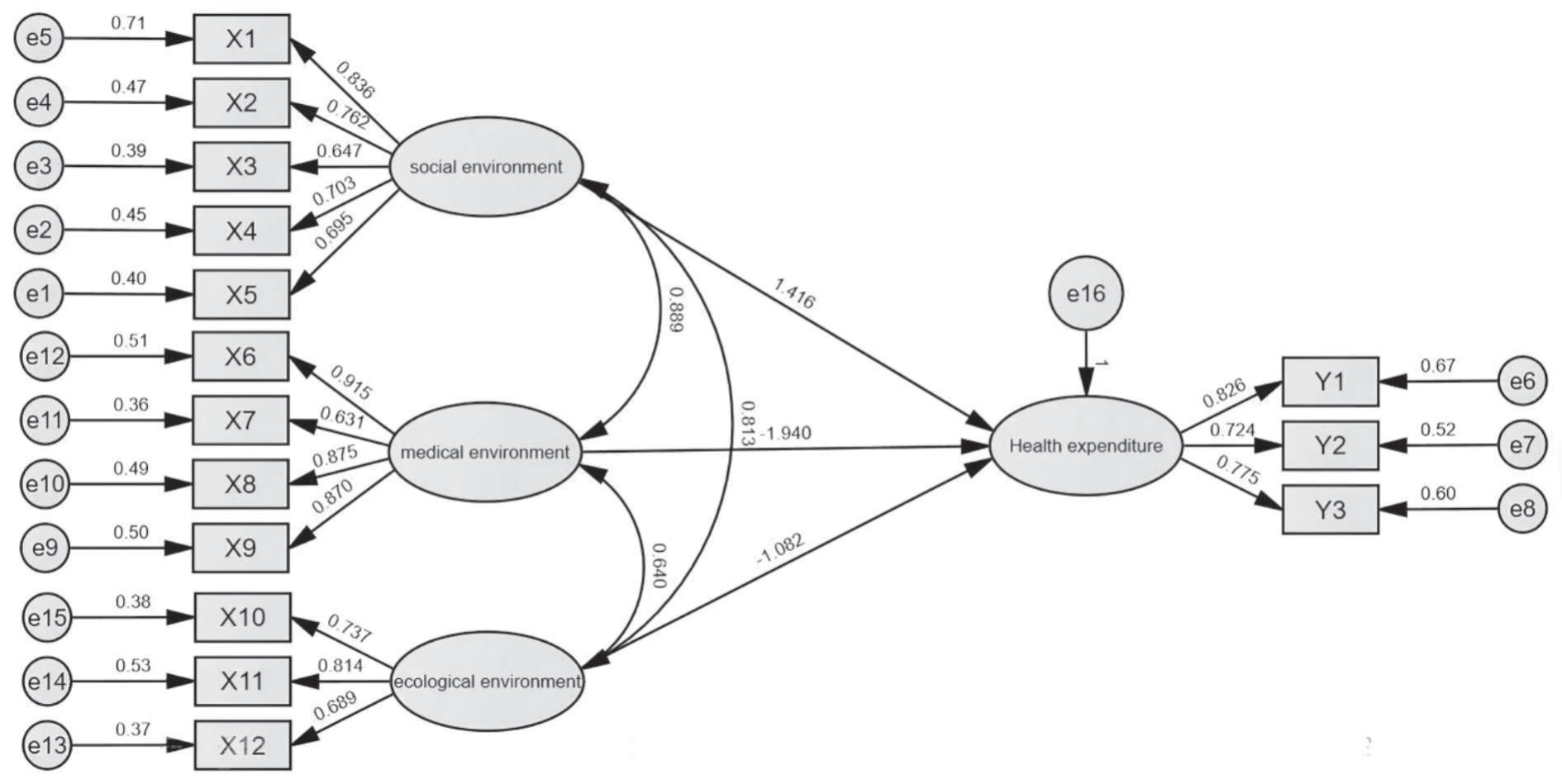
Based on the empirical results of the above study, a structural equation model is constructed on the factors influencing health expenditure. The details of the model are shown in Fig. 2.
Results and Discussion
Results
The social environment was positively correlated with health expenditure, with a standardized path coefficient of 1.416 (t = 9.048, P<0.001), while both the medical environment and the ecological environment were negatively correlated with health expenditure, with standardized path coefficients of -1.940 (t = -9.541, P<0.001) and -1.082 (t = -6.320, P<0.001), respectively. This result is similar to the findings of other scholars [93, 94], and the possible reason is that as social development and economic progress occur, they make the ecological environment and the medical environment suffer from different degrees of impact. At the same time, as the residents’ consumption level and health awareness increased, they paid more attention to the changes in their health status, which increased their personal need for health services and further contributed to the growth of health expenditures. Considering the results achieved by China’s ongoing health reforms, residents can enjoy quality health services more conveniently. Therefore, under the combined influence of the social and ecological environments, residents will pursue higher-quality health services to their own health status, thus contributing to the growth of health expenditures. However, as the medical environment improves, the fairness and accessibility of health services enjoyed by residents also increase, thus leading to a negative impact of the medical environment on health expenditure. It is worth noting that the highest correlation was found between the social environment and the medical environment, with the rest being, in order, the ecological and social environments, the medical environment, and the ecological environment. Therefore, when considering the changes in the impact of the medical environment on health expenditure, the possible influence of the social and ecological environments in it should be fully considered.
Discussion
In recent years, scholars from different fields have begun to explore the factors that influence excessive growth in health expenditure. However, few studies have explored the synergistic effect of multiple factors on health expenditure in different environments from a multidimensional perspective. Since changes in health expenditure are jointly influenced by a variety of complex factors, this paper adopts structural equation modeling to study the causal changes and pathways of health expenditure in 30 provinces and cities in China from 2012 to 2021 from the dimensions of social, medical, and ecological environments. This approach effectively avoids the limitations that occur when analyzing a single factor. The main conclusions of the study are as follows:
(1) Five variables in the social environment - real per capita GDP, disposable income of urban residents, disposable income of rural residents, medical care consumer price index, and urbanization rate - have a significant positive effect on the growth of health expenditure in China. Its standardized path is 1.416. The medical care consumer price index is an important measure of changes in the prices residents pay for health services and medical commodities, reflecting changes over time in the price level residents pay for access to health services and the purchase of medical commodities. When the medical care consumer price index rises, it implies a general increase in the prices of health services and medical commodities. This directly leads to an increase in residents’ health expenditures, especially in times of economic stress where households may be forced to spend more on health services [40]. Secondly, the urbanization rate also has a higher degree of influence. The urbanization rate is an important indicator of economic development and social change, and its increase implies an increase in the number of urban residents, which in turn pushes up the demand for health services from urban residents. This prompts the government to increase its investment in health infrastructure to meet the health needs of urban residents, thus driving up health expenditure. From the perspective of health financing, with the advancement of rural to urban development, the increase in residents’ demand for health services and the improvement of health infrastructure will prompt the government to invest in health expenditure, thus promoting the growth of overall health expenditure [98]. Finally, real per capita GDP, disposable income of urban residents, and disposable income of rural residents are all important factors. Real per capita GDP is an important macroeconomic indicator often used in conjunction with purchasing power and income levels to measure people’s standard of living in a region. This is consistent with the disposable income results per inhabitant. The increase in real per capita GDP indicates that economic development has promoted the improvement of medical technology. The consumption consciousness of the residents is also changing, and they are more and more willing to spend on medical and health treatments, improving their quality of life and prolonging their life span. The development of health products and the rapid rise of the medical beauty industry indicate that the improvement of the economy has led to a qualitative change in the consumption ability and purpose of the residents. Real per capita GDP, disposable income of urban residents, and disposable income of rural residents influence the growth of health expenditure by increasing the consumption capacity of residents and changing their needs from physiological needs to security needs. However, inequality in income distribution may affect the correlation between these factors, leading to differences in health expenditure among different groups.
(2) Four variables in the medical environment - the ratio of R&D expenditure to regional GDP, the number of beds in health institutions per 1000 population, the number of health technicians per 1000 population, and the coverage rate of basic medical insurance - have a significant negative impact on China’s health expenditures with a standardized path of -1.940. Among them, the ratio of R&D expenditure to regional GDP has the largest standardized factor loading. The ratio of R&D expenditure to regional GDP is an important indicator of the progress of medical technology in a region. The creation of new technologies is usually accompanied by improvements in the efficiency and quality of health services, which leads to a reduction in the length of treatment and hospitalization and, consequently, health expenditure [11]. Similarly, increases in the number of health technicians per 1000 population and the number of beds in health institutions per 1000 population reduce health expenditures to some extent. Adequate health resource allocation can quickly respond to patients‘ needs and provide high-quality health services, thus reducing the pressure on residents to seek medical treatment, enabling patients to receive timely treatment, and reducing the cost of later medical treatments [99]. On the other hand, adequate allocation of health resources helps to improve the level of medical technology, thereby reducing medical costs, improving the efficiency of diagnosis and treatment, and achieving the goal of controlling the growth of health expenditure. This is consistent with the conclusions of certain scholars. In addition, unlike previous studies, this study finds a negative correlation between the basic medical insurance coverage rate and health expenditure growth. From the perspective of health financing, an increase in the coverage rate of basic medical insurance is usually accompanied by government investment at the financial level, which leads to an increase in the government health expenditure component.
(3) Three variables in the ecological environment - comprehensive environmental pollution index, carbon dioxide emissions, and PM2.5 concentration - have a significant negative impact on China’s health expenditures, with a standardized path of -1.082. As China’s economy rises, the ‘crude’ industrial production model increases the probability of illnesses and diseases among residents in various regions, thus contributing to the growth of health expenditures. Among these three variables, the standardized factor loading of PM2.5 concentration was the largest. PM2.5 is considered one of the main components of air pollution, and its elevated concentration is closely related to the increased incidence of respiratory diseases, cardiovascular diseases, and lung cancers, among other diseases [100]. Therefore, in a poor ecological environment, residents may choose to treat or prevent related diseases due to concerns about their health status, leading to an increase in health expenditure [106]. In addition, the comprehensive environmental pollution index, as an important indicator of air, water, and soil pollution, can fully reflect changes in the ecological environment. The decline in environmental quality triggers health problems such as respiratory diseases, cardiovascular diseases, and allergic reactions, which in turn leads to an increase in the population’s demand for health services, thus driving the growth of health expenditure [65]. In addition, excessive emissions of carbon dioxide, an important factor affecting the ecosystem, lead to the greenhouse effect, which in turn causes climate warming [101-103]. Ecological changes such as extreme weather and natural disasters triggered by the greenhouse effect may be detrimental to the life and health of the population, as well as exacerbating heat waves, air pollution, and the spread of infectious diseases, which in turn leads to an increase in health expenditure [75].
Conclusions
Based on the above results, the following policy recommendations are made in order to control the growth of China’s health expenditure and to promote the sustainable development of China’s health sector, thus:
(1) Attaching importance to the role of the medical care consumer price index and enhancing the optimal allocation of health care resources.
The government should increase its investment in health resources, especially in small and medium-sized cities and rural areas, and upgrade the number and quality of health institutions. By increasing the number of beds in health institutions and the number of health technicians, the responsiveness and quality of health services can be improved, which in turn reduces patients’ health expenditures. Promoting the union and cooperation of health institutions in the region to form a health service network ensures that patients receive timely treatment at primary health institutions and reduces unnecessary high-cost referrals. The government should establish and improve the price management mechanism for health services to prevent the medical care consumer price index for health from rising too rapidly and reduce the financial burden on residents.
(2) Improving the social environment and economic conditions and implementing differentiated health insurance policies.
By promoting economic development and fairness in income distribution, the disposable income of rural and low-income groups will be raised, and the consumption capacity of the population will be strengthened to promote a shift in health consumption. Policies should be formulated to support rural residents’ health consumption and encourage the spread of healthy lifestyles. In the process of urbanization, the government should focus on infrastructure development to ensure the balanced development of health services between cities and rural areas and to reduce the imbalance in demand for health services arising from urbanization. It should formulate differentiated basic health insurance policies for groups with different income levels and health conditions, as well as improve insurance coverage for low-income groups while increasing financial support for health services and strengthening health insurance management to ensure the efficient use of insurance funds, especially for the health needs of high-risk groups, and improve coverage for the chronically and seriously ill, thereby reducing overall health expenditure.
(3) Strengthening ecological protection and environmental governance
Strict environmental protection policies have been formulated to reduce the emission of pollutants, especially PM2.5 and other harmful substances, in order to reduce health problems caused by environmental pollution and control the growth of health expenditure at its root. Incorporate the assessment of environmental factors into health policies and establish an environmental health monitoring system in order to identify and respond to potential health risks in a timely manner and mitigate the negative impact of the ecological environment on the population’s health.
Although this study aims to uncover the key factors influencing health expenditures, it still has some limitations. First, this study analyzes the factors influencing health expenditure in each region at the macro level, which can be further explored at the micro level in the future. Second, the indicators calculated through the entropy method may not be able to fully capture the health effects of different pollutants in the process of weight allocation. In the future, a more refined health risk assessment model for pollutants will be established, combining expert scoring, health effect assessment, and epidemiological studies to provide a more precise tool for studying environmental pollution and further improving its significance as a guide for public health.

