

Introduction
Economic sanctions are rapidly becoming one of the major tools in international politics these days, and tend to show up on the news daily on an international scale. Since the outbreak of World War I, economic sanctions have become increasingly important as alternatives to military conflict, and there have been a total of 187 sanctions episodes. Yet, despite the frequent use, they fail to achieve the intended results (about 80% of the cases), or even worse, some of them are counterproductive. That is why many people nowadays question their effectiveness.
Existing studies on international economic sanctions mainly center on the issues of whether and under what conditions economic sanctions tend to reach their desired goals. Despite numerous studies investigating the determinants of sanction success, until recent years, researchers are increasingly paying special attention to the issue of catastrophic consequences of sanctions for target states. The research indicates that economic sanctions unintendedly deteriorate human rights conditions [1], worsen public health [2, 3], exacerbate income inequality [4], impede agricultural trade [5], and intensify ethnic violence [6] in target countries. Current research mainly centers on the political and economic effects. It is well known that environmental problems have become a global issue of common concern in modern society, and a large number of studies have examined their relationship with environmental quality from the perspectives of economics, environmental regulations and natural resources [7–10], with a particular focus on exploring the relationship between economic growth and environmental quality [11, 12]. However, none of these studies have considered the impact of economic sanctions on the environmental quality of the target countries, and thus we know little about the impact of sanctions on environmental quality. This is a very critical research question given that one of the most serious issues facing humankind is the potential for marked changes in environmental quality, and the risk of such changes is generally accepted to be tied to emissions of greenhouse gases, mainly CO2 [13]. Iran's experience in past decades proves that both the sender and the target of sanctions ignore their environmental consequences. Thus, this study explores the effect of economic sanctions on environmental quality in target states, which is important from a policy perspective.
Environmental consequences of economic sanctions and other measures of economic activity are viewed as a long-term phenomenon, and Carbon Dioxide (CO2) is widely used as the key measure of environmental quality [14–16]. Therefore, our attention is given to investigating the long-term influences of economic sanctions on CO2 emissions by applying the recently developed dynamic panel heterogeneity approach. More precisely, we use the Pooled Mean Group (PMG) estimator of Pesaran et al. [17] for the Autoregressive Distributed Lag (ARDL) models with individual effects to explore both the short-term and long-term influences of economic sanctions on CO2 emissions. What makes this dynamic heterogeneous panel model attractive for this study is that it allows us to take on previously avoided estimation issues of data non-stationarity, and heterogeneity across nations, and solve the endogeneity bias by taking sufficient lag difference. Moreover, compared with the traditional panel estimators (i.e., random effects or fixed effects), the PMG estimator allows the short-term coefficients and error variances to differ freely across groups, and at the same time constrains the long-term coefficients to be the same. Considering that both the number of countries (N=45) and the number of time-series observations (T=36) are large in our study, the assumption of homogeneity of slope parameters is inappropriate [18]. Accordingly, this method is suitable for our long-term analysis.
The contributions of this paper are three-fold. First, nlike existing work on similar topics, we use a heterogeneous dynamic panel model to consider both the short-term and long-term association between economic sanctions and environmental quality. The use of this new method enables us to take country-specific heterogeneity into account. Next, it is the first paper to analyze the effect of economic sanctions on the target countries’ environmental quality, centering on (i) the severity of economic sanctions; (ii) unilateral sanctions VS. multilateral sanctions; and (iii) the duration of the sanction. Finally, this paper generates new insights for policymakers to realize the delicate balance between using sanctions to induce target states to change a policy and the possible unintended damage of deteriorating environmental quality conditions.
Material and Methods
Theoretical Considerations and Hypotheses Formulation
Economic sanctions are used as a tool of foreign policy by many countries; they are often designed to alter the strategic decisions of the state [19]. However, they not only carry influence on economic and political domains but also on wider social aspects, such as environmental quality. The current literature pays little attention to this critical issue. Here we provide a variety of theoretical reasons about why and how economic sanctions are expected to influence the target state’s environmental quality.
First, through the limitation of import and export markets and the elimination of foreign assistance, a country could experience environmental harm [20]. Economic sanctions usually trigger a slump in imports and exports as well as a retraction of international aid, which may cause a shortage of supplies and commodities necessary for subsistence [21]. Maslow's Hierarchy of Needs theory posits that individuals possess a pyramid of requisite needs, which they will satisfy hierarchically from the lowest to the highest level. Similarly, if a nation's fundamental needs are fulfilled, it may then direct its attention to concerns situated at higher levels, such as environmental quality. Perhaps the aid fund could be used to purchase or develop advanced technologies that engender less destruction on the environment. This can be seen in the case of the US embargo against Iran, where sanctions have brought environmental decline. A typical example of this is that the Iranian government transformed the petrochemical factories into oil refineries after the US President Obama ordered sanctions on Iran in 2010 to penalize the country’s oil exports. Subsequent reports indicate that Iran’s petrol contains 10 times the level of contaminants of imported petrol, and its diesel hundreds of times the international norms for Sulphur, which is regarded as the major cause of its deadly air pollution today. Moreover, the multilateral sanctions from the EU and the UN leave it with few legally available sources of financing, and the United States has also tried to restrict and even block environmental financial aid from some international organizations and agencies (like the IMF and the Global Environment Facility), which should help developing countries build a better life and improve the environment. This would lead to further deterioration of environmental quality in Iran. Accordingly, economic sanctions may operate by restricting a country’s import and export markets [22], stopping or severely cutting back on funding assistance, or adding additional financial constraints, which will certainly have profound influences on the target country’s economy that might translate to additional environmental impacts.
Second, the transmission of advanced technology is crucial for economic development as well as environmental improvements. The ozone problem and the climate problem can be amended if the technology is used to cut harmful emissions and build a lower-carbon economy. This can be achieved if technologies like geothermal, biomass, and nuclear power become accessible and affordable [23]. However, sanctions could constrain technological modernization, due to restrictions on technology imports, investment, and application of best practices [24]. Hence, lack of the exchange and communication of new technology or information might end up being the biggest culprits in such a situation.
Finally, the worst mechanism through which economic sanctions might harm a nation’s environment is the destruction of the state’s economy. Plenty of studies have demonstrated that sanctions have adverse effects on economic outcomes, such as government consumption, national currency, and economic growth [25]. Countries that are already economically weak cannot bear this extra burden, and so they surely cannot give priority attention to the environmental quality problems when basic living standards are no longer satisfied in an impoverished country. There is also the issue of the burden of debt because of the loss of financial assistance. Heavy debt to lender states traps countries in a difficult situation, which may translate to environmental issues as the environment can no longer be a key priority for the target states.
Overall, several pathways for the environmental effects of economic sanctions seem possible. Therefore, our main hypothesis in this paper is:
H1. The imposition of economic sanctions reduces environmental quality in the target states.
In addition, the argument that multilateral sanctions are more severe than unilateral sanctions is given considerable support in the literature [26]. Multilateral sanctions are imposed on the target state by more than one country and are often endorsed by the international community, while unilateral sanctions are only imposed by individual countries without involving any international organizations. Naturally, we could agree that multilateral sanctions increase economic pressure by removing easy access to credit markets. For example, due to provisions in UN sanctions that banned banks from extending Serbia the credit it needed to address its economic crisis, Slobodan Milosevic ultimately had to change his position. In contrast, countries such as Libya and Cuba, despite sanctions imposed by individual nations, have other reliable sources of capital and are therefore less likely to alter their policies or behavior. Consequently, multilateral sanctions may be more severe than unilateral sanctions. To test if the number of actors involved has any particular influence during the imposition stage, we put the following hypotheses:
H2. The effect of multilateral sanctions on environmental quality is more severe than unilateral sanctions.
Finally, there is some reason to support that the effect of economic sanctions on environmental quality initially increases, and then decreases over time. In the theoretic aspect, Dizaji and van Bergeijk [27] argue that the effect of economic sanctions might be more powerful at first than in later phases. That is because once the target government realizes the damage caused by sanctions, it may adapt to the new situation and learn how to successfully evade the grip of sanctions, effectively mitigating their impact over time. In the empirical aspect, Neuenkirch and Neumeier [21] find that the link between the duration of sanctions and the poverty gap takes an inverted U-shaped form. Additionally, we may also expect that the influence of economic sanctions on environmental quality increases over time. For example, Kaempfer and Lowenberg [28] find that sanction damage increases with time. Therefore, our last hypothesis checks whether the association between the duration of sanctions and environmental quality is nonlinear or linear.
H3. The impact of economic sanctions on environmental quality increases over time, or first increases and then decreases over time.
Theoretical Framework of the Model
This study uses the Stochastic Impacts by Regression on Population, Affluence, and Technology (STIRPAT) model as the reference theoretical and analytical framework. The STIRPAT model is defined as
where I means environmental impact, P, A, and T are population size, affluence, and technological progress, respectively. e is the error term, and μ represents the country-specific effects. To eliminate possible heteroscedasticity, all variables take logarithmic form, and thereby the model (1) can be written as follows
The STIRPAT model has been widely applied to investigate the determinants of a variety of environmental impacts [29, 30] In this paper, to investigate the impacts of economic sanctions on CO2 emission, model (2) is augmented with economic sanctions, and the augmented model is
where I represents the per capita CO2 emissions, P denotes the total population, A is measured by the per capita GDP, and consistent with [31] study, the technology index T is proxied by using energy intensity, which is calculated as the total energy use per dollar of GDP. The vector CV contains a set of control variables suggested in earlier studies on the determinants of CO2 emissions.
Methodology
It is well known that traditional panel data methods (such as pooled OLS, random effect, and fixed effect) are unsuitable in the presence of non-stationary data. The reliability of Generalized Method of Moments (GMM) estimators is often questioned when estimating long panel data. More importantly, imposing homogeneity assumptions on the coefficients of lagged dependent variables can lead to significant biases in GMM estimators. Therefore, we adopt the following error correction representation of an ARDL (p, q) model
where X represents explanatory variables, i.e., economic sanctions, GDP per capita, population size, energy intensity and urbanization. Eq. (4) can be reparameterized as an error-correction form
where λ signifies the short-term effects of the lagged dependent variable, and δ means the short-term effects of independent variables, while θ means the long-term effect. Moreover, Φi is the error correction term. If the condition Φi<0 is tenable, then a long-term relation does exist, and the higher the absolute value of Φi , the faster the rate of convergence toward the long-term equilibrium. But if Φi<0, no stable association exists among the variables in the long run. Accordingly, both θ and Φi will be the main concerns of our estimation.
Eq. (5) can be estimated by using the Mean Group (MG) estimator [18] or the PMG estimator, and these two methods are applied to estimate non-stationary dynamic panel models. The MG estimator allows both the short-term and long-term coefficients to be heterogeneous. Alternatively, the PMG estimator constrains the long-term coefficients to be identical but allows variations in the short-term coefficients, and error variances across groups. The MG estimator will be inefficient if the long-term homogeneity assumptions are valid, but the PMG estimator will yield a more efficient estimator [17]. Following previous studies, we use the Hausman test to choose the appropriate estimation method.
According to Phillipps and Hansen [32], a long-term relationship can exist only among variables with the same order of integration. However, whether they are I (0) or I (1) or a mixture of the two, the panel ARDL model can be used even with variables with different orders of integration [33, 34]. In addition, by starting from a general ARDL modeling, it allows for some degree of endogeneity in the variables1. Adequately selecting the lag length of both dependent and independent variables in the ARDL model is sufficient to correct for the issue of endogenous regressors, and maintain the asymptotic distribution of the estimators of the long-run parameters.
Data
This paper attempts to investigate both the short-term and long-term environmental impacts of economic sanctions using data from a cross-section of 45 target countries2 from 1971 through 2006. The choice of countries and periods was based on data availability. The dependent variable in this paper is CO2 emissions (metric tons of carbon dioxide emissions), which is a well-known cause of global warming.
The data on economic sanctions were obtained from the latest edition of the widely used Economic Sanctions Reconsidered data set by Hufbauer et al. [35]. To account for the severity of economic sanctions, consistent with Peksen's [26] study, we also define the key variable of interest, economic sanctions, as an ordinal variable (0–2). Specifically, variables are classified as 0, 1 and 2 if a state is under no sanction, partial sanctions and extensive sanctions, respectively, in a given year. In addition, we extend our analysis by examining whether the number of actors involved (multilateral vs. unilateral) in the imposition process has any particular influence on environmental quality in target countries. The variable multilateral sanctions account for only partial and extensive sanctions imposed by the UN or some regional intergovernmental organizations (such as the EU, and NATO), while unilateral sanctions include only partial and extensive sanctions imposed by individual 1 Some may argue that this study suffers from selection bias.
However, we believe that our data analysis is not affected by
such an issue. A closer examination of the aims of economic
sanctions cases in the dataset suggests that environmental
quality has never been prioritized or even considered a rea-
son for imposing sanctions. Generally, economic sanctions
are imposed to compel the target state to improve its human
rights record, halt its nuclear program, or end its support for
international terrorist organizations [16, 24]. 2 A list of the countries included in the sample is provided in
the appendix Tables A1 countries. Finally, we define the duration of economic sanctions by the number of years to investigate whether the length of the sanctions has a significant impact. To test hypothesis 3, we add the linear and square terms of the duration of sanctions in Eq. (5), respectively.
Table 1.
Summary statistics of the variables.
Table 2.
The impact of economic sanctions on the environmental quality.
Besides, based on the previous studies, and the theoretical model in subsection 3.1, some additional important explanatory variables (GDP per capita, population size, energy intensity, and urbanization level3) are also included in our study. Energy intensity is defined as total energy use per dollar of GDP. The series real GDP (constant 2011 national prices in millions) and population size are from the Penn World Table version 9.0, while CO2 emissions, energy use, and urbanization are obtained from the World Development Indicators online database. The descriptive statistics for all the variables are provided in Table 1.
Results and Discussion
Main Results
For the ARDL lag structure, we used the Schwartz Bayesian Criterion (SBC). Based on the SBC we impose 3 The theories of urban environmental transition and ecologi-
cal modernization both argue that urbanization can affect
environmental quality. the following lag structure (1, 1, 1, 1, 1). Then we proceed with estimation using both MG and PMG estimators, and Table 2 shows the main results. Remarkably, the coefficient of the error correction term is significantly negative and less than unity, implying the existence of the long-term relationship between CO2 emissions and its determinants.
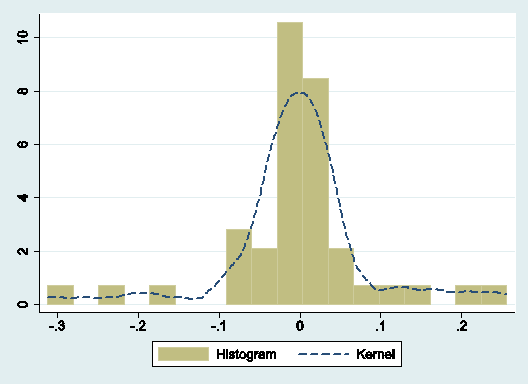
Our main interest is to consider both the short-term and long-term environmental impacts of economic sanctions. The results indicate that economic sanctions have a significantly positive effect on CO2 emissions in the long run, implying that sanctions have an adverse influence on the level of environmental quality in the target state. However, in the short run, economic sanctions have a negative impact on CO2 emissions but are statistically insignificant according to the PMG estimator (column 1 in Table 2). One potential explanation is that, in the near term, economic sanctions have resulted in a deceleration or stagnation of economic activity in the target country, leading to a transient enhancement in environmental quality. However, over time, the consequences of economic sanctions are gradually becoming evident, as they exert a significant influence on gross domestic product (GDP), foreign investment, and the dissemination of technology [36], among other factors, which in turn gives rise to heightened environmental contamination. Meanwhile, in the long run, the MG estimator also shows a positive but insignificant coefficient. To decide which estimator is more appropriate, we employ the joint Hausman test, and the result suggests that the null of the long-term homogeneity can’t be rejected, implying the use of the PMG estimator is appropriate in this study. The environmental Kuznets curve (EKC) hypothesis postulates an Inverted-U-shaped link between environmental quality and economic development, i.e., environmental pollution increases up to a certain level as development goes up; after that, it decreases [37, 38]. That is why we include a quadratic term of GDP per capita in Eq. (5), the results of which are reported in columns (3)-(4) of Table 2. It is worth noting that our main variable, economic sanctions, is still statistically significant and has the expected positive sign, which confirms our main findings again. As expected, our empirical results show the existence of the EKC for CO2 emissions, but only statistically significant in the long run (column 3). Next, we further explore the country-specific influence of economic sanctions on air pollution in the short run based on PMG estimations (Table 3). Column (1) in Table 3 highlights countries in which economic sanctions are, in the short run, significantly decreasing emissions. The results demonstrate that Ethiopia, Haiti, India, Sudan, and Turkey benefit from sanctions to reduce their emissions. Column (1) shows the countries in which the coefficients of economic sanctions appear negative but insignificant. This suggests that, due to the imposition of sanctions, CO2 emissions are decreasing insignificantly in Algeria, Bolivia, China, Coate d’Ivoire, Egypt, El Salvador, Guatemala, Iraq, Lebanon, Nigeria, Pakistan, Paraguay, Poland, Portugal, Syria, Thailand and Uruguay. However, Column (2) indicates that, in the short run, sanctions add to CO2 emissions in Angola, Chile, Ecuador, and Indonesia. It also reports that sanctions insignificantly promote CO2 emissions in Albania, Argentina, Brazil, Cameroon, Colombia, Iran, Israel, Jordan, Kenya, Nicaragua, Myanmar, Panama, Peru, Romania, South Africa, Togo, Vietnam, Zambia and Zimbabwe. Fig. 1 also demonstrates that the estimates of short-term coefficients on economic sanctions are highly heterogeneous. Consequently, the contrast between the short-term and long-term impacts and the cross-country heterogeneity offers a strong rationale for adopting the PMG method.
Table 3.
The heterogeneous effect of economic sanctions on the environmental quality in the short-run.
Table 4.
The impact of Multilateral sanctions VS. Unilateral sanctions on the environmental quality.
To test whether the number of actors involved during the imposition stage has any particular influence on emissions (hypothesis 2), we add both the unilateral and multilateral sanctions variables in Eq. (5). Table 4 shows that multilateral sanctions have a positive impact on CO2 emissions both in the short run and in the long run, and only significantly so in the long run. However, both the short-term and long-term estimated coefficients of unilateral sanctions are negative and statistically insignificant, suggesting that countries with the imposition of unilateral sanctions do not emit more CO2 emissions; rather, such sanctions may lead to a decrease in CO2 emissions. Therefore, the effect of multilateral sanctions on environmental quality is more devastating than unilateral sanctions (Statistic = 5.99; p-value = 0.01), which confirms hypothesis 2.
Taking the sanction years into account, we find that the duration of the sanction has no impact on environmental quality (Columns (1)-(2) in Table 5). This is not surprising. If their actual relationship is nonlinear, it may resemble the findings of Neuenkirch and Neumeier [21], who identified a nonlinear association between the duration of sanctions and levels of poverty. Therefore, we add the square term of the duration of sanctions variable in Eq. (5), the results of which are shown in columns (3)-(4) of Table 5. Indeed, our results show the coefficient for the square terms is negative and statistically significant at the 5% level, which implies a diminishing influence of sanctions on environmental quality. This confirms an Inverted-U relationship between the number of sanction years and CO2 emissions. The harmful consequences of sanctions on emissions initially increase over time, but after the maximum (approximately 9 years)4, the effect of economic sanctions gradually diminishes over time.
Regarding our control variable, we have also uncovered some intriguing insights. First, we focus on the relationship between economic development and CO2 emissions. Based on Tables 2, 4, and 5, we find that both the linear and the quadratic term of GDP per capita are highly significant with a positive and negative sign in the long run, respectively, which confirms the existence of an inverted U-shaped EKC. Another noteworthy result is the effect of population size. The short-term 4 The calculation of the turn point is based on the estimates in
column (3) of Table 5. coefficient on population size is positive and highly significant, suggesting that population size is associated with more CO2 emissions in the short run. However, the estimates of long-term coefficients show that population size is associated with fewer CO2 emissions (Table 2). Third, both the short-term and long-term estimated coefficients of energy intensity are positive and significant, implying that the CO2 emissions correlate positively with energy intensity, which is consistent with the work of Sadorsky [39]. In addition, the magnitude of the short-term estimated coefficient is higher than the long-term one, which means that the influence of energy intensity on CO2 emissions will be attenuated over time. Finally, as for variable urbanization, its coefficient is positive and significant in the long run, however, in the short run, it is statistically insignificant.
Table 5.
The impact of duration of sanction on the environmental quality.
Overall, our main findings can be summarized as follows: First, economic sanctions have a deleterious effect on environmental quality, and increase with the severity of sanctions in the target states; Second, multilateral sanctions are more severe than unilateral sanctions; Third, there exists an Inverted-U relationship between the duration of sanction and environmental quality.
Robustness Tests
To explore the sensitivity of the results, this section conducts some robustness checks. These include considering: (i) Alternative measures of environmental quality; (ii) Controlling for other effects; and (iii) Using different sub-samples to account for different levels of economic development. The Hausman test result shows that the PMG estimator is more efficient than the MG estimator in our study. Therefore, we only report the results obtained from the PMG estimator.
Table 6.
Robustness tests: alternatives measures of environmental quality.
First, to check if our main results are sensitive to other measures of environmental quality, here we use Sulfur Dioxide (SO2) emissions as the dependent variable, which is a generally used indicator of local air pollution. We obtained this data from Smith et al. [40], and the analysis covers the period up to 2005 due to the unavailability of data on SO2 emissions beyond that year. Table 6 displays the results, and as expected, it does not change the sign and statistical significance of economic sanctions.
Second, we check if our main findings are robust to the choice of control variables. Notably, we include dimensions of democracy, economic globalization5, and year-fixed effects. Payne [41] finds that people are free to gather information about the environment, express their preferences, and put pressure on the governments in democratic countries, thus he argues democracy can improve environmental quality. Economic globalization has also been documented to substantially influence CO2 emissions, mainly through technological effects [42, 43]. In addition, we add the four-year dummy variables in our model to account for common shocks or time trends. The results, depicted in Table 7, show that economic sanctions retain their positive impact on environmental quality in the long run, with a magnitude ranging from 0.01 to 0.02.
Third, considering the large panel of countries with varying levels of economic development, the association between economic sanctions and CO2 emissions may differ based on GDP per capita levels. To explore this possibility, we explore to what degree our main results vary with the level of economic development by re-estimating the panel ARDL model for the following sub-samples: (i) high and upper-middle income (HUMI) countries, and (ii) low and lower middle income (LLMI) countries6. Since overall economic strength varies across countries, the impact of sanctions on target states also differs. Table 8 shows the results for the HUMI countries. The long-term coefficients of economic sanctions and multilateral sanctions are statistically significant with a positive sign. Additionally, an inverted-U relationship is observed between the duration of sanctions and environmental quality in the long run. In contrast, when the LLMI countries are considered, as shown in Table 9, although there exists an inverted-U relationship between the sanction years and the environmental quality, it is statistically insignificant. Another interesting by-product finding is that, in LLMI countries, multilateral sanctions can improve rather 5 The data of democracy and economic globalization are ob-
tained from Polity IV project and Dreher, 2006, respectively. 6 Due to the small sample sizes of high-income and low-in-
come countries, we combined the five high-income coun-
tries (Chile, Israel, Poland, Portugal, and Uruguay) with the
nineteen upper-middle-income countries into a single group.
Similarly, we merged the four low-income countries (Ethio-
pia, Haiti, Togo, and Zimbabwe) with the seventeen lower-
middle-income countries into another group for this study. than worsen the environmental quality of the target countries in the long run; as for unilateral sanctions, the opposite is the case. The long-term effect of economic sanctions on the environment is still significant at the 5% level, and the magnitude of the long-term estimated coefficient is higher than the estimated coefficient in HUMI countries, implying that the LLMI countries are affected more by economic sanctions than the HUMI countries. One possible explanation is that, compared with the LLMI countries, the HUMI countries have adequate financial and other resources for coping with sanctions to mitigate the consequences of sanctions. In addition, it should be stressed here that the inverted-U relationship between economic development and environmental quality only exists in HUMI countries, whereas for LLMI countries, the EKC does not exist. The reason is that these countries are in the early stages of development.
Table 7.
Robustness tests: Controlling for other effects.
To summarize, these robustness checks further verify the robustness of our main results. Furthermore, we also find that, in the LLMI countries, economic sanctions affect their CO2 emissions more severely than in the HUMI countries.
Table 8.
Robustness tests: results of the PMG estimates of HUMI countries.
Table 9.
Robustness tests: results of the PMG estimates of LLMI countries.
Conclusions
Although considerable literature investigates the influence of economic sanctions on the target countries’ economy, politics, and culture, few researchers have investigated the relationship between economic sanctions and the environmental quality of the target state. In this paper, we make an attempt to study the impact of economic sanctions on the environment. To that end, we apply panel cointegration techniques to investigate both long-term and short-term effects of economic sanctions on the environmental quality. Our results indicate that, in the long run, economic sanctions tend to increase CO2 emissions, ceteris paribus. Moreover, we find that the influence of sanctions on environmental quality increases with the severity of economic sanctions, and multilateral sanctions have a larger impact on the environment than unilateral sanctions. Additionally, our results confirm an inverted U-shaped association between the duration of sanctions and CO2 emissions. Finally, we also provide some evidence that the environmental quality of the LLMI countries is affected more by economic sanctions than the HUMI countries.
The message to come out of this paper is that the use of economic coercion as a foreign policy tool, partial or extensive, multilateral or unilateral, does not contribute to the improvement of environmental quality in the long run. Consequently, individual countries or international communities, such as NATO, the UN, or the EU, when imposing sanctions, should realize the delicate tradeoff between using sanctions to induce targets to change a policy and the possible unintended damage of deteriorating environmental quality conditions. More accurately, policy decision-makers should incorporate the potential repercussions of economic sanctions on environmental quality into their cost-benefit analyses, even in scenarios where the sanctions may successfully achieve their intended policy objectives.
Although our findings are new to the existing literature, some limitations also exist in our paper. First, our study does not account for cross-sectional dependence. For variables such as GDP, cross-sectional dependence is expected due to regional linkages, which often arise from shared global shocks. Moreover, further studies shall also take spatial dependence into account. Second, we adopt a cross-national panel method to study the relationship between economic sanctions and environmental quality. However, the cross-national study cannot describe in detail how economic sanctions may influence environmental quality in specific locations. Consequently, a case study analysis of this issue at the subnational level would be very interesting and meaningful.

