

Introduction
Since the inception of China's reform and opening-up policies, its economy has soared to unprecedented heights, currently positioning the country as the globe's foremost manufacturing hub and the second-largest economy worldwide. Nevertheless, this meteoric economic rise has been accompanied by substantial environmental degradation, primarily stemming from industrial activities [1, 2]. Recognizing the escalating severity of environmental pollution as a societal challenge, businesses have increasingly prioritized green investments, transforming them into a pivotal aspect of corporate operations and reputation-building [3]. Beyond mere economic gains, fostering a healthy environment is vital for safeguarding public health and welfare while also empowering companies to cultivate a favorable societal image that transcends mere profit maximization [4]. By impressing investors and consumers alike, such a positive corporate image fosters reputational advantages, bolstering market confidence and enhancing brand prestige [5-7]. Hence, expanding green investments and improving environmental quality are top priorities for enterprises, especially in heavily polluting sectors, to tackle this urgent concern.
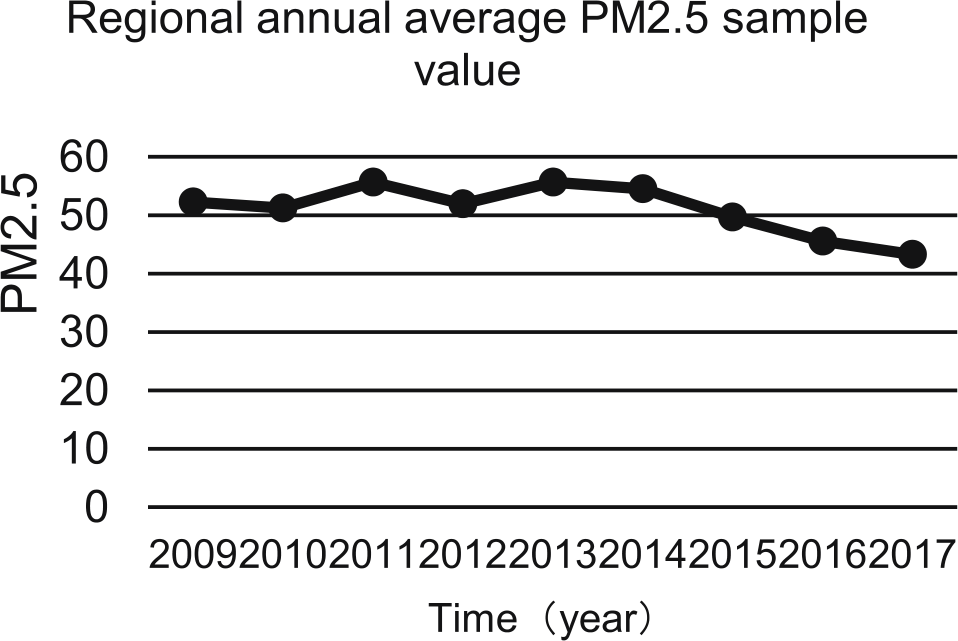
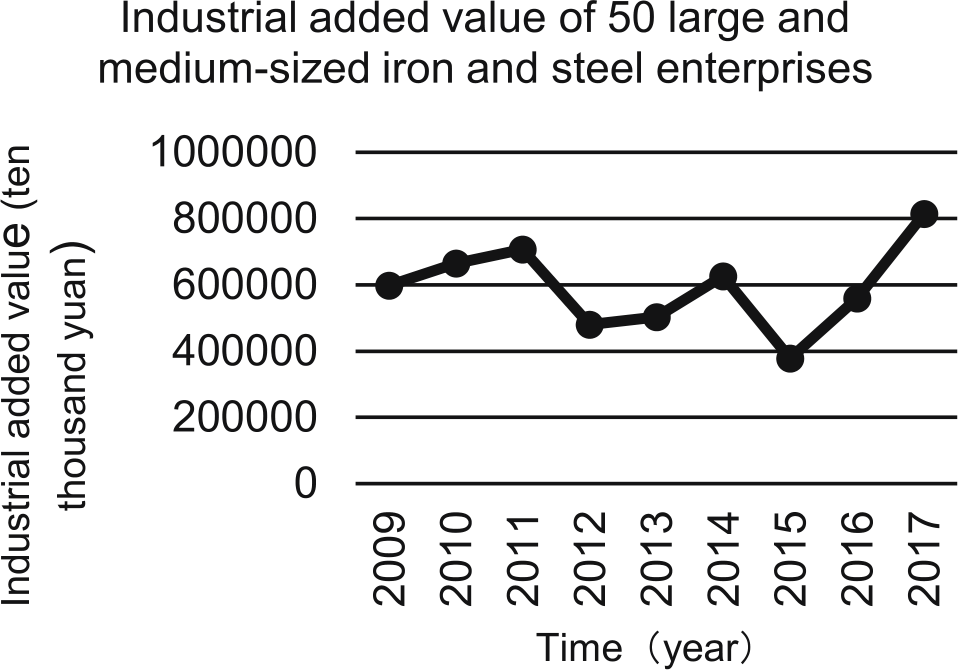
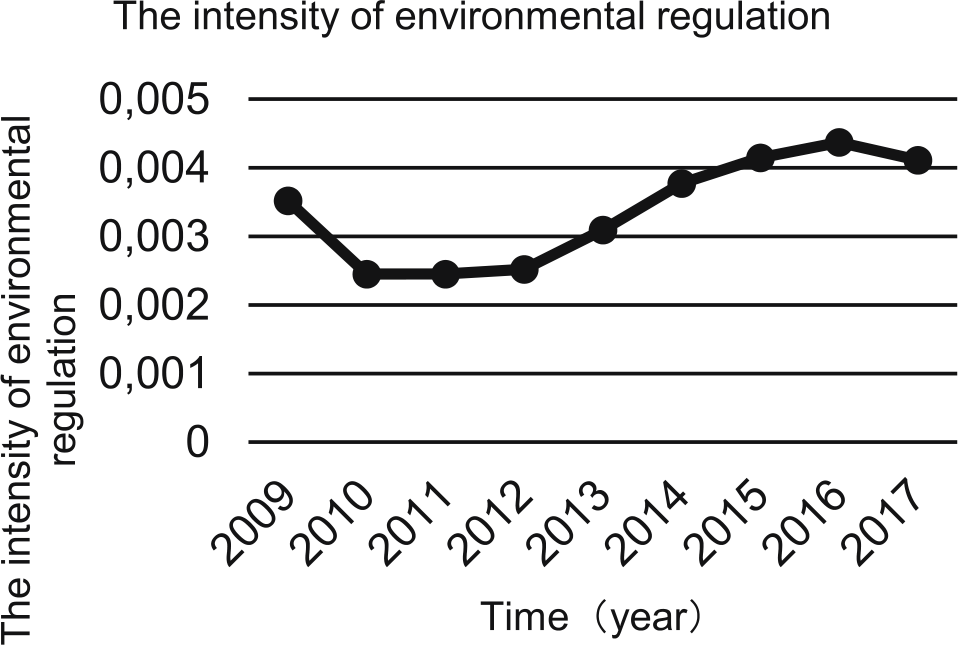
As environmental regulations evolve, China's environmental quality consistently advances. Illustratively, the variation in average PM2.5 levels in selected industrial cities mirrors an inverse relationship with the stringency of regulations (refer to Figs. 1 and 2). Heightened regulation corresponds with lower PM2.5 readings, and vice versa. This prompts the inquiry: Do regulations enhance the environment by constraining industrial output or by fostering corporate efficiency? Focusing on large and medium-sized steel enterprises as case studies, our analysis reveals that industrial output, as measured by added value (Fig. 3), has remained resilient against increasing regulations. Notably, since 2015, even amidst the continuous tightening of environmental rules, the industrial added value of these enterprises has continued to grow steadily. This suggests that production constraints alone are not the primary driver of environmental improvements. Consequently, this paper delves into alternative factors influencing the environment, particularly the efficacy of green investments.
Green investment is an effective social responsibility investment that is based on the consideration of three major social responsibilities, namely environmental protection, resource conservation, and fairness [8]. Green investment is an investment method that conforms to the concept of ecological civilization. Its purpose is to achieve the coordination of various social factors, such as economic, environmental, and social benefits, so as to realize the sustainable development of the social economy. It urges enterprises to actively fulfill their corresponding social responsibilities while pursuing economic interests. In recent years, global green investment has increased substantially, from $7 billion in 2000 to $154 billion in 2010. Some research shows that a large amount of green investment has been transferred from Western countries to China, and the amount is increasing year by year [9]. Nowadays, the Chinese government has strengthened the enforcement of environmental laws and regulations, especially the newly implemented environmental protection law in 2015, which will urge enterprises to fulfill their green responsibilities. Under stringent environmental laws and regulations, green investment has attracted the attention of more and more enterprises and has gradually become an effective means for enterprises to realize green transformation.
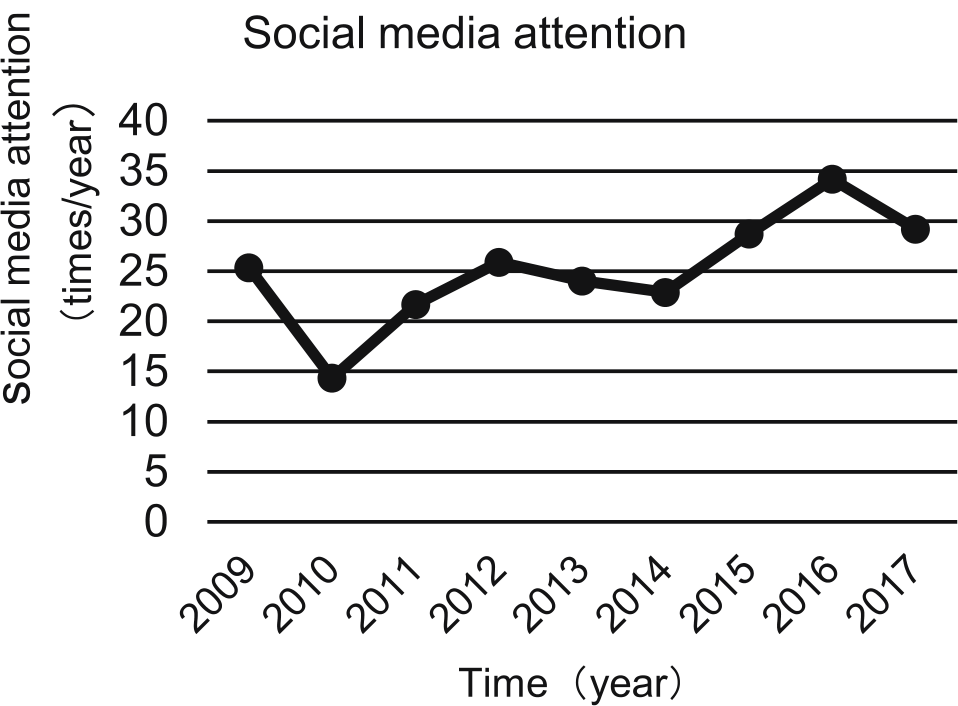
Nowadays, the development of media is very rapid, and its influence on people is also very far-reaching [10]. In recent years, the coverage of environmental protection by social media in China has shown an overall upward trend (refer to Fig. 4). The influence of the media is mainly reflected in monitoring the social environment, coordinating social relations, inheriting culture, and providing entertainment. For enterprises, social media attention mainly plays a supervisory role. On the one hand, the media, as the medium of corporate information disclosure, constantly transmits a large amount of corporate information to the capital market, which may have a good or bad impact on the enterprise. This forces enterprises to constantly adjust their development strategies and try to show the good aspects to the public through the media, such as improving the efficiency of green investment and promoting the improvement of corporate environmental performance [11, 12]. On the other hand, it holds that the media, as a supervision mechanism, can effectively supervise the external behavior of the company. In order to better cooperate with the supervision of the media, enterprises will strive to do their own environmental protection. In addition to increasing the scale of green investment, the most effective is to improve the efficiency of green investment [13]. It is the existence of this external supervision mechanism that the media influence corporate decision-making and investor behavior by constantly passing relevant information to the public, so as to improve the level of corporate governance [14].
In conclusion, the literature on media attention and green investment is abundant, but there are few studies that consider the connection between the two. How does media attention affect the efficiency of green investment? Will the impact of media attention on the efficiency of green investment be interfered with or moderated by other factors? In the face of these problems, this paper explores in depth the relationship between media attention and green investment efficiency, and the contribution of this paper is as follows:
First, this paper studies enterprise green investment from the perspective of social media attention. Previous literature mostly focused on the contribution of green investment to energy conservation and emission reduction [15], as well as various internal factors affecting green investment, such as enterprise size, industry heterogeneity, and so on [16]. Social media attention is a new monitoring mechanism for public environmental health. Through the influence of social media attention, the improvement of enterprise green investment efficiency is conducive to improving the quality of environmental decision-making and sustainable development [17].
Second, the data on social media attention is taken from the China economic news database of the China Information Bank (hereinafter referred to as the China economic news database). Compared with the social media attention measures used in the previous literature, such as mainland newspaper text analysis [18], TV pollution reports [19], etc., the measurement method in this paper is more comprehensive and objective, not only avoiding selection bias to a certain extent, but also more relevant to the target.
Finally, the measurement data of green investment efficiency in this paper is based on the China Iron and Steel Association. Compared with a wide range of research samples, the research samples in this paper are more representative and authentic. The main purpose of this paper is to provide some theoretical reference for China's heavy polluting enterprises to achieve green transformation.
Literature Review
Since enterprises (especially heavy polluting enterprises) inevitably pollute the environment in the production process [20], coupled with a large number of social media attention and increasingly strict environmental supervision, energy conservation, and emission reduction have become an unavoidable problem for enterprises [21]. Enterprises can achieve sustainable development only by implementing green transformation. Therefore, in recent years, more and more enterprises have paid attention to green investment, and it has gradually become a popular method for enterprises to improve environmental performance. A large number of scholars have also conducted corresponding research on green investment, proving the importance of this issue [22]. This paper reviews the literature from the perspective of social media attention and environmental regulation.
Social Media Attention and Green Investment
In recent times, the sway of social media attention over corporate decision-making has significantly intensified. This attention has emerged as an alternative avenue for corporate governance, particularly in the realm of environmental stewardship. Firstly, firms can leverage social media to showcase their proactive stance in environmental conservation, thereby fostering a favorable green image [23, 24]. By doing so, they transmit a clear message of their commitment to environmental responsibility, which not only enhances their external reputation but also fosters oversight over green investments, ultimately boosting their green investment efficiency [25]. Conversely, adverse media coverage draws public scrutiny towards non-compliant enterprises and environmental concerns, prompting the attention of governmental environmental regulatory bodies. To evade stringent environmental penalties, companies are compelled to intensify their eco-friendly initiatives and refine green investment efficiency [26, 27]. Furthermore, short-term media focus on environmental pollution often signals impending stricter environmental regulations from the government. Anticipating this, enterprises proactively bolster their environmental protection efforts, enhance their performance in this regard, and meticulously prepare for impending environmental audits [28].
Social Media Attention, Environmental Regulation, and Green Investment
Almost all enterprises' environmental protection decisions (including environmental capital allocation, recruitment of technical staff, purchase of sewage equipment, etc.) will be affected by local environmental laws and regulations [29]. Coupled with industrial and regional differences, enterprises' production and operation activities usually face different environmental laws and government intervention [30, 31]. On the one hand, some research shows that environmental regulation promotes the scale of green investment of enterprises, and government supervision can significantly promote the exertion of the power of environmental laws and regulations, requiring enterprises to strengthen environmental protection practices and thus improve their green investment efficiency. On the other hand, as a special investment method, green investment aims to pursue comprehensive benefits integrating economy and environment, but the result is that the economic benefits are far inferior to the environmental benefits [32]. Green investment is not only difficult to bring direct economic contribution to enterprises in the short term, but also requires enterprises to spend a lot of money to buy environmental protection facilities and carry out environmental protection technology innovation, which seriously reduces the willingness of enterprises to carry out green investment [33, 34]. Even if some enterprises voluntarily carry out green investment; it is often to reduce the cost of environmental compliance and meet the management requirements of the government, its green investment efficiency is very low [35]. Some enterprises even prefer to pay relatively small environmental taxes and fines to reduce their environmental investment. When the environmental regulation is continuously strengthened and reaches a certain degree (i.e., the critical value and inflection point), the amount of green investment required by the enterprise is not much different from the environmental tax and penalty, and even the amount of green investment required by the enterprise is far lower than the environmental tax and penalty. At this time, the enterprise can no longer avoid its own pollution control problems. Especially when the media pay attention to environmental issues or polluting enterprises themselves, enterprises will pay more attention to their own green investment efficiency and environmental governance results and highly abide by environmental policies [36].
Theoretical Analysis and Research Hypothesis
Since enterprises will inevitably produce environmental pollution in the production process, the government has formulated a series of legal regulations to regulate the environmental protection behavior of enterprises [37, 38]. Therefore, this paper assumes that the intensity of environmental regulation is ER. Generally speaking, the stricter the environmental regulation, the higher the corresponding environmental protection cost of the enterprise and the more green investment it needs. This paper assumes that the intensity of environmental regulation is constant in a certain period of time, and the investment quota of C can meet the requirements of environmental regulation under the premise that the green investment efficiency of enterprises is 1, and the green investment efficiency of enterprises is assumed to be η (0<η< 1), then the effect of enterprise green investment is ηC. Assuming that when the enterprise faces an environmental protection fine of P due to unqualified environmental protection, the funds that the enterprise needs to continue to invest are:
Where
Suppose the firm's profit in period t is Rt (This does not consider green investment and random penalty costs). When an enterprise is punished for environmental protection issues, it will have a negative impression on the company's reputation, which will then affect the enterprise's profits. Suppose that the profit of the enterprise after its reputation is damaged due to environmental protection punishment is RSt , and Rt – RSt is the reputation loss of the enterprise due to environmental punishment. Assuming that the social media attention is At, and the enterprise does not comply with environmental protection standards, the expected profit of the company in period t is:
The derivative of π over C, we can get:
It can be seen from (3) that the increase in enterprises' green investment will lead to the loss of enterprises' profits, which also explains why most enterprises are unwilling to make green investment independently.
The derivative of π over ƞ, we can get:
It can be seen from (4) that the improvement of enterprise green investment efficiency can improve enterprise profits. The greater the social media attention, the greater the role of green efficiency in promoting enterprise profits. That is, when the intensity of environmental regulation remains unchanged, the enhancement of social media attention can promote the efficiency of green investment with the goal of maximizing profits. Based on the above analysis, we can get the following hypothesis:
H1: Social media attention has a significant positive effect on enterprise green investment efficiency.
When environmental regulation is not constant, enterprise green investment will increase with the increase of environmental regulation. We assume that the amount of enterprise green investment C(ER) is the monotonic increasing function of environmental regulation. At this time, (4) can be rewritten as:
It can be seen from (5) that when the intensity of environmental regulation increases, the green investment quota C(ER) required by enterprises to meet environmental regulation increases. The impact of green investment efficiency on enterprise profits is positively affected by the interaction of environmental regulation and social media attention. That is, under the goal of profit maximization, the interaction of the intensity of environmental regulation and social media attention promotes green investment efficiency. Based on the above analysis, we can get the following hypothesis:
H2: Environmental regulation has a significant positive effect on enterprise green investment efficiency; the influence of social media attention on enterprise green investment efficiency is positively affected by environmental regulation.
Through the above analysis, this paper combs the relationship between the various variables of the relationship and gives the corresponding frame research framework (refer to Fig. 5).
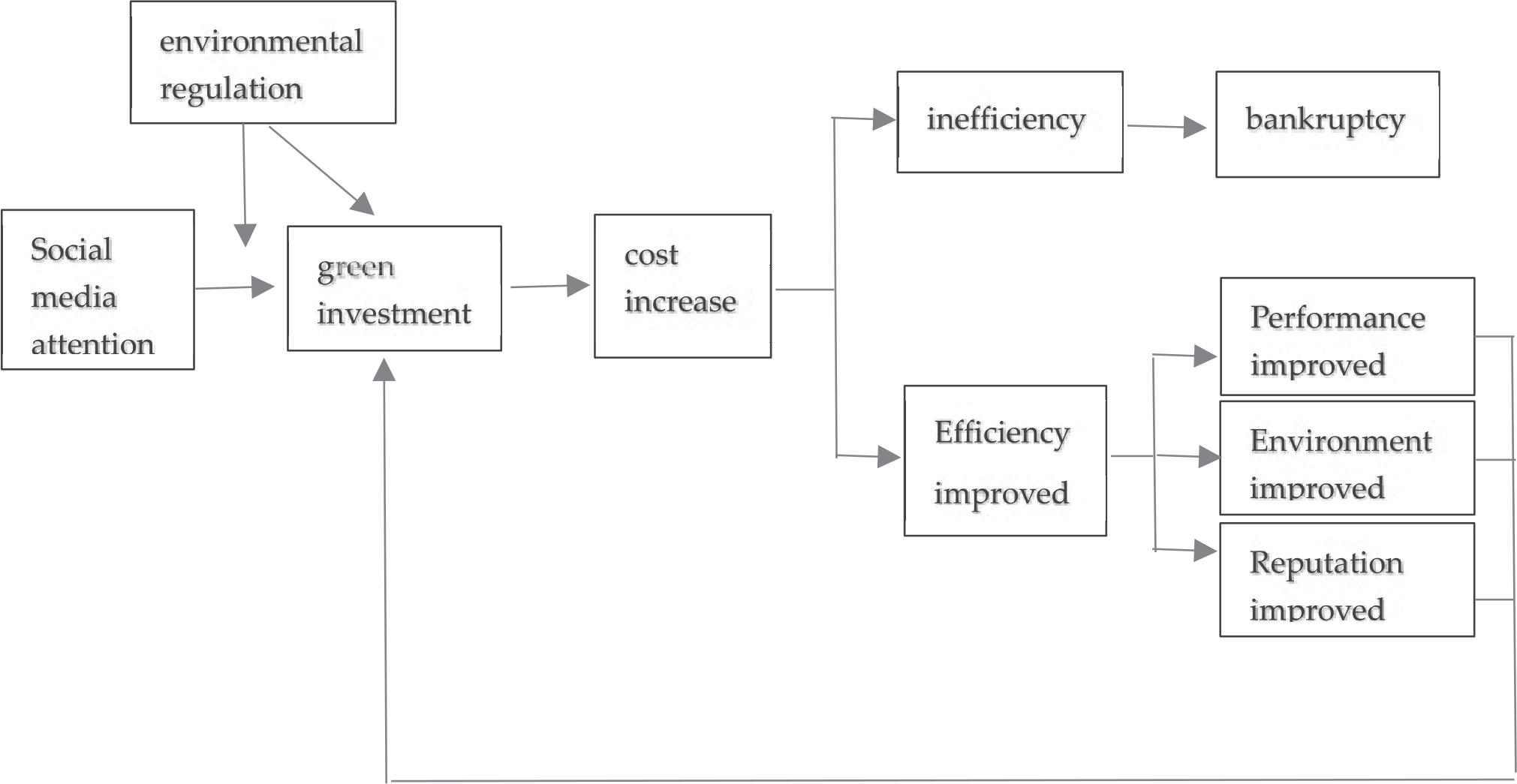
Table 1.
Variable selection and interpretation.
Data, Methodology, and Model
Data Selection of Green Investment Efficiency
As a pillar industry in China, the steel industry has played a very important role in the development of the national economy. In addition, based on the high energy consumption and high emission characteristics, the steel industry has caused great harm to the environment. Therefore, green investment has gradually become a common means of green transformation for China's steel enterprises. This paper plans to select China's large and medium-sized steel enterprises as the research object, take the enterprise green investment as the input, take the waste generated by the enterprise as the undesired output, and take the output value of comprehensive utilization of three wastes as the expected output to measure the green investment efficiency of the enterprise. Based on statistical data from the China Iron and Steel Association, a panel dataset of 50 large enterprises in China’s iron and steel industry from 2009 to 2017 was collected. The explanation and statistical description of data variables are shown in Table 1 and Table 2, respectively.
Measuring Enterprise Green Investment Efficiency
The DEA method is one of the most popular methods for measuring efficiency. It can accurately measure the efficiency of each input unit by means of linear programming. As a nonparametric efficiency evaluation method, the advantage of DEA over the parameter estimation method is that it avoids the error caused by parameter matching in parameter estimation. When the dimension of each input unit differs greatly, the error will expand. For the research based on enterprise data, due to the inconsistency of data units and the large difference of magnitude, the parameter estimation is easy to cause large errors, while DEA only needs to consider input and output units, which is a good way to avoid this problem. Therefore, the advantage of DEA research at the enterprise level is more obvious.
The green investment efficiency measured in this paper includes undesirable output, so the traditional DEA method is no longer suitable for this paper. In addition, when the efficiency values of multiple units are all 1, the traditional DEA cannot further distinguish the efficiency differences of these units. Therefore, Andersen and Petersen proposed a method based on SBM super efficiency DEA [39], which allows the efficiency value to be greater than 1 and can solve this problem well. This paper intends to use the method of undesired output SBM super-efficiency DEA, based on the relevant data involved in the production of steel enterprises, to measure the green investment efficiency of enterprises, which provides an intuitive reference for steel enterprises to improve their green investment efficiency. The calculation model is as follows:
Table 2.
Descriptive statistics of input and output variables for steel enterprises (2009–2017).
In Model (6), it is assumed that there are n decision-making units, and each decision-making unit has an input vector, an expected output vector, and an undesired output vector. Assuming that there are m types of inputs and q types of outputs, including q1 expected outputs and q2 undesired outputs, the input vector is x ∈ Rm, the expected output vector is y ∈ Rq1 , and the undesired output vector is b ∈ Rq2. Where S represents the slack of input and output, A− represents the input redundancy, A+ represents the expected output shortage, Ab− represents the undesired output excess, λ is the weight vector, and ρ represents the efficiency score.
Variable Description
The dependent variable is green investment efficiency. Based on the SBM super efficiency DEA model, this paper takes green investment in steel production as the input, the discharge of waste (waste gas, waste water, and waste residue) produced in steel production as the undesired output, and the output value of three wastes utilization as the expected output. The calculated efficiency value is shown in Table 3. The higher the index, the higher the green investment efficiency of the enterprise.
The independent variable is social media attention. The data on social media attention is taken from the China economic news database of the China Information Bank (hereinafter referred to as the China economic news database). According to the media reports of the China economic news database, this paper selects the total number of media reports through full-text and Title Retrieval, then analyzes the content of each report and selects the total number of environmental reports (logarithm) to measure the social media attention.
The moderating variable is environmental regulation. Based on the intensity of environmental regulation. This paper uses the proportion of industrial pollution control investment in the secondary industry to measure the intensity of environmental regulation.
The control variables include the following: Enterprise scale. The annual total output value (logarithm) of the enterprise is used to measure the scale of the enterprise. Main business income. It is measured by the total annual main operating income (logarithm). Economic density. The economic density is measured by dividing the total annual GDP in the region by the regional area (in provinces). PM2.5. Select the annual average PM2.5 index in the region to measure the regional environmental quality (in prefecture level cities). The larger the index, the worse the air quality. Regional carbon emissions. Select the total annual carbon emissions in the region to measure the regional carbon emissions (in prefecture level cities). The larger the index, the more regional carbon emissions and the worse the environment.
Table 3.
Summary statistics.
The original data comes from the China Iron and Steel Association, the "China Urban Statistical Yearbook", the "China Statistical Yearbook" (over the past years), the statistical yearbooks of various provinces, and the China economic news database.
Model Building
To some extent, media reports can force enterprises to reduce environmental damage by purchasing environmental protection equipment, investing in environmental protection technology research and development, and new energy research and development. Do these green investments have a significant impact on the improvement of the corporate environment, or are they mere formalities? In order to test this problem, this paper selects the panel data of 50 large and medium-sized enterprises in China's steel industry from 2009 to 2017, constructs the green investment efficiency index, and studies the impact of social media attention on green investment efficiency. Combined with the research models of Cai et al. [40], this paper proposes the following econometric hypothetical equation model.
Some research shows that enterprises have different attitudes towards environmental protection under different environmental regulations [41, 42]. Therefore, this paper adds environmental regulation variables to the above model and constructs the interactive item between environmental regulation and social media attention to further investigate whether the impact of social media attention on enterprise green investment efficiency is consistent under different environmental regulations.
Table 4.
Basic test.
In the above model, i represents the enterprise and t represents the time (2009–2017). α0 ~ α6 are the parameters to be estimated, and εit is the random disturbance term.
Empirical Analysis
Basic Test
Combined with models (13) and (14), this paper intends to use the fixed effect model to empirically test the relationship between social media attention and green investment efficiency and further investigate the moderating impact of environmental regulation on the two variables. The empirical results are as follows:
The results in Table 4 show that the coefficients of social media attention in models I-IV are significantly positive, indicating that social media attention has a significant role in promoting green investment efficiency as a whole, which verifies hypothesis H1. In model Ⅲ-IV, the coefficient of environmental regulation is significantly positive, and the coefficient of interaction term between environmental regulation and social media attention is significantly positive, indicating that environmental regulation significantly promotes the green investment efficiency of enterprises, and the impact of social media attention on green investment efficiency is positively regulated by environmental regulation; that is, in an environment with strict environmental regulation, the promotion of enterprise social media attention on green investment efficiency is more significant; it also verifies the hypothesis H2.
Table 5.
Robust test.
Table 6.
Dynamic panel test.
Robust Test
In order to further verify the robustness of the model, this paper uses the maximum likelihood estimation method to test the relationship between social media attention and green investment efficiency. The regression results are as follows:
The results in Table 5 show that the results of the robustness test are basically consistent with the results of Table 4, which demonstrates the robustness of the model to a certain extent.
In order to further solve the endogenous problems existing in the model setting, that is, the causal relationship between independent variables and dependent variables, as well as the potential sample selectivity bias and missing variable bias, this paper introduces the first-order lag term of green investment efficiency as a tool variable to build a dynamic panel model and uses the System GMM method to correct some errors in the static panel model. See Table 6 for the detailed results.
Dynamic Panel Test
The results in Table 6 show that the AR(2) values in models I-IV are all greater than 0.05, indicating that the model does not have the problem of second-order auto-correlation. At the same time, the p-values of the Sargan test are all greater than 0.05, indicating that the model does not have the problem of transition identification. The overall regression results of the dynamic panel are consistent with the basic regression. (except for some variables that are not significant) social media attention has a significant promoting effect on green investment efficiency, and environmental regulation has a significant promoting effect on green investment efficiency, but the interaction term between environmental regulation and social media attention does not significantly.
Table 7.
Scale heterogeneity test.
Heterogeneity Test
In order to test the results reflected by different types of samples, this paper classifies the samples by size, ownership, and region, and carries out a regression test. The results are as follows:
Scale Heterogeneity Test
Since the financial decision-making and green environmental protection practices are affected by the scale of the enterprise, this paper divides the samples into two groups according to the output value and investigates the impact of social media attention on the green investment efficiency of enterprises of different scales. The regression results are as follows:
The results in Table 7 show that, firstly, the promotion effect of social media attention on the green investment efficiency of large enterprises is more significant than that of medium-sized enterprises (the statistical level of 1% for large enterprises and 10% for medium-sized enterprises is significant). Secondly, whether large or medium-sized enterprises, environmental regulation plays a significant role in promoting green investment efficiency. Finally, the moderating effect of environmental regulation is only significant in medium-sized enterprises, but not in large-scale enterprises.
Table 8.
Ownership heterogeneity test.
Ownership Heterogeneity Test
Since different enterprise ownership may affect the production decision-making and development direction of enterprises, this paper divides the enterprise samples into two groups: state-owned enterprises and private enterprises, and examines the impact of social media attention on green investment efficiency of enterprises with different ownership. The regression results are as follows:
The results in Table 8 show that, firstly, compared with private enterprises, social media attention has a more significant effect on promoting the green investment efficiency of state-owned enterprises (the statistical level of 1% for state-owned enterprises and 10% for private enterprises). Secondly, environmental regulation promotes green investment efficiency to a certain extent (whether state-owned enterprises or private enterprises). Finally, the moderating effect of environmental regulation only affects private enterprises, but has no significant impact on state-owned enterprises.
Regional Heterogeneity Test
Since different regional environments have different impacts on the environmental protection needs of enterprises and thus affect enterprise green investment. This paper intends to divide the sample enterprises into three groups according to their locations: the eastern, central, and western groups to further test the impact of social media attention on the green investment efficiency of enterprises under regional heterogeneity.
Table 9.
Regional heterogeneity test.
The results in Table 9 show that, firstly, the promotion effect of social media attention on green investment efficiency is more significant in eastern China than in central and western China. Secondly, the promotion effect of environmental regulation on green investment efficiency is significant in both eastern, central, and western China. Finally, the moderating effect of environmental regulation is only significant in central and western China, not in east China.
Discussion
In recent years, with more and more public attention and media reports, the government has paid more and more attention to environmental issues (such as the promulgation of the new environmental protection law in 2015 and the determination of the carbon peak and carbon neutralization goals in 2020). Green investment is an effective way for enterprises (especially heavy polluting enterprises) to achieve sustainable development under increasingly strict environmental regulations. Through green investment, enterprises can not only improve the environment, but also improve their reputation. It is a positive embodiment of corporate social responsibility, which is very beneficial to the long-term development of enterprises [43]. With more and more enterprises' attention, green investment has gradually become an important means for heavily polluting enterprises to solve environmental conflicts [44]. Therefore, this paper selects China's large and medium-sized steel enterprises as the research sample to explore the relationship between social media attention, environmental regulation, and enterprise green investment efficiency and analyzes the relevant research results as follows:
Firstly, this paper has examined the positive impact of social media attention on green investment efficiency. Some research has shown that media reports on environmental pollution, especially enterprise environmental pollution, can not only arouse the attention of government departments to the environment, but also serve as a warning to enterprises, promote enterprises to increase green investment, strengthen environmental protection practices and then achieve the effect of improving green investment efficiency [45], which is also consistent with the research conclusion of this paper. The regression results of control variables show that, firstly, main business income and regional economic density are positively correlated with green investment efficiency, which is also consistent with the current facts in China. A good economic environment provides a good platform for the production and operation of enterprises, and sufficient capital revenue is the material condition for enterprises to improve their green investment efficiency. Enterprises can only produce and operate in a good economic environment and obtain certain profits, and they can be motivated to further improve their green investment efficiency. Secondly, the scale of enterprises has a positive impact on green investment efficiency. Some research shows that large-scale enterprises generally do better than small and medium-sized enterprises in environmental improvement [46]. The reason may be that, compared with small enterprises, large enterprises have financial and technological advantages and can actively implement environmental protection practices. However, due to the shortage of funds and backward technology, the implementation of environmental protection by small-scale enterprises is only in response to the government's call for environmental protection, resulting in the failure of green investment to be implemented and having no significant impact on green investment efficiency [47]. Finally, the PM2.5 index and carbon emissions have a significant negative correlation with green investment efficiency, which is also consistent with the actual situation in China. Some research shows that the harsh external environment will not only affect the green investment efficiency of enterprises, but also increase the additional environmental protection costs and public resources [48, 49]. Therefore, increasing the scale of green investment and improving the green investment efficiency of enterprises are important ways for China to implement the sustainable development strategy. For example, Tingyi, as a leading enterprise in the domestic food industry, has achieved remarkable results in green transformation in recent years and has been widely reported by the media. These reports not only demonstrate Tingyi's positive actions in environmental protection, but also further promote the efficiency of the enterprise's green investment. Driven by media reports, Tingyi has further increased its investment in green technology, green products, and green services. For example, the Hangzhou plant's "Steam Thermal Energy collection and reuse system" recycles waste heat from instant noodle steaming boxes through its own technology, significantly reducing carbon dioxide emissions. This innovative technology not only reduces the production cost of enterprises, but also improves the efficiency of green investment.
Secondly, this study examines the positive impact of environmental regulation on enterprise green investment efficiency, and the impact of social media attention on green investment efficiency is positively affected by environmental regulation. The research shows that strict environmental regulation can promote energy conservation and emission reduction through the regulation and management constraints on enterprises, so as to achieve the effect of improving the public environment [50]. The goal of enterprises is to pursue profits. Green investment and environmental protection require enterprises to invest a lot of capital and technology for a long time, and there is little benefit in a short period of time. On the one hand, when the environmental regulations are relatively loose and the punishment for environmental protection is light, some enterprises do not implement the environmental protection policies thoroughly or even fail to implement them in order to save costs. A few enterprises prefer to pay less environmental protection punishment rather than a large amount of environmental protection investment, so green investment efficiency cannot be fundamentally improved. On the other hand, when environmental regulations are strict, companies that fail to meet environmental protection standards will face high environmental penalties. At this time, enterprises can only reduce damage to the environment by increasing green investment, thereby improving their green investment efficiency and meeting the government's environmental protection requirements. A small number of enterprises that do not comply with environmental protection requirements will be severely punished or even ordered to stop production through corresponding laws. At this time, social media attention can significantly promote the improvement of green investment efficiency.
Finally, based on the heterogeneity of sample enterprises, this study examines the impact of social media attention on the green investment efficiency of enterprises with different attributes. Based on the heterogeneity of scale, social media attention plays a more significant role in promoting the green investment efficiency of large enterprises than that of medium-sized enterprises (large enterprises have a significant statistical level of 1%, while medium-sized enterprises have a significant statistical level of 10%), but the moderating effect of environmental regulation is only significant in medium-sized enterprises, not significant for large enterprises. The main reason is that, on the one hand, enterprise green investment requires a lot of capital and technology investment, and there is no income and return in the short term. Large scale enterprises have provided a good material foundation for green investment by virtue of abundant funds and advanced technology [51]. When the media continue to report environmental issues, large enterprises have the ability to increase green investment in a short period of time and play a more significant role in promoting the efficiency of green investment. On the other hand, when environmental regulations are relatively loose, relatively small enterprises do not have enough funds to undertake a large number of unprofitable investments in the short term due to the shortage of funds and backward technology. Even if the media's attention to environmental protection issues has brought pressure on enterprises, small enterprises are unable to bear the risk of investment failure. Their green investment is often only to meet the requirements of the government [52], and the efficiency is not substantially improved. When environmental regulations are strict, social media attention has forced small and medium-sized enterprises to increase the scale of green investment for fear of environmental punishment, resulting in significant improvement in efficiency, while large enterprises continue to invest and adhere to environmental protection rather than change with environmental laws and regulations. Based on the heterogeneity of ownership, social media attention plays a more significant role in promoting the green investment efficiency of state-owned enterprises than that of private enterprises. This is because state-owned enterprises are not only the main force of national economic development, but also play the role of national macro-control. The production and operation of state-owned enterprises are often considered from the overall level of the country, sometimes even regardless of costs [53]. Therefore, when the media pay attention to environmental issues, state-owned enterprises will take the lead in increasing investment in environmental protection, significantly improving the efficiency of green investment. The main purpose of private enterprises is to make profits. In the period of relatively loose environmental regulation, although the media pay attention to environmental issues, their enthusiasm for low-income activities such as green investment is often less than that of state-owned enterprises. With the continuous strengthening of environmental regulation, private enterprises have to change their ideas and strengthen green investment to improve the environment. At this time, the moderating effect of environmental regulation is more significant in private enterprises. Based on the regional heterogeneity, social media attention in the eastern region plays a more significant role in promoting green investment efficiency than that in the central and western regions, which is also consistent with the actual national conditions of China. Due to the developed economy and numerous enterprises in the eastern region, the pollution in this region is relatively serious, and the environmental supervision is very strict. Social media attention brings relatively great pressure to enterprises. Almost all enterprises in the eastern region attach great importance to their own environmental performance, while enterprises in the central and western regions have relatively loose environmental regulations and pay less attention to environmental performance [54]. The role of green investment is less significant than that of enterprises in the eastern region; the pressure on enterprises brought by social media attention is not as great as that of eastern enterprises; and its role in promoting the efficiency of green investment is not significant.
Conclusions and Recommendations
Conclusions
Based on the panel data of 50 large and medium-sized steel enterprises in China, this paper studies the relationship between social media attention and green investment efficiency and further discusses several heterogeneity characteristics of steel enterprises. Firstly, social media attention in steel enterprises promotes green investment efficiency as a whole. Secondly, environmental regulation promotes the green investment efficiency of steel enterprises, and the effect of social media attention on the green investment efficiency of steel enterprises is positively affected by environmental regulation. Finally, based on the heterogeneity of scale, the impact of social media attention on the green investment efficiency of large enterprises is more significant than that of medium-sized enterprises. The moderating effect of environmental regulation is only significant for medium-sized enterprises, but not for large enterprises. Based on the heterogeneity of ownership, social media attention has a more significant impact on the green investment efficiency of state-owned enterprises than private enterprises. The moderating effect of environmental regulation is only significant for private enterprises, but not for state-owned enterprises. Based on the regional heterogeneity, the impact of social media attention on the green investment efficiency of enterprises in the eastern region is higher than that in the central and western regions. Based on the empirical results and discussion, this paper puts forward some policy recommendations.
Recommendations
This paper examines the relationship among social media attention, environmental regulation, and green investment efficiency of steel enterprises and discusses the impact of social media attention on green investment efficiency based on the heterogeneity of various enterprises. Under the analysis of the full text, this paper puts forward the following policy recommendations:
Firstly, all sectors of society should give play to the environmental governance functions of informal institutions such as the media for enterprises. The media should pay more attention to the environmental information of enterprises and openly report on the environmental pollution of enterprises and cities so as to play a corresponding supervisory role.
Secondly, the government should further standardize and improve environmental regulation, strengthen government environmental supervision, and ensure the effective implementation of environmental protection policies. On the one hand, when formulating environmental protection policies, the government should fully combine public environmental health with the affordability of enterprises, not only focusing on environmental protection, but also promoting development. On the other hand, the government should further strengthen the environmental supervision and management of enterprises, advocate and encourage the behavior of complying with environmental protection norms, and resolutely stop the behavior of violating environmental protection laws and regulations, so as to ensure the implementation of environmental protection policies.
Thirdly, the government should support relevant preferential policies and subsidies to encourage enterprises to increase the scale of green investment. Enterprise green investment requires a large amount of investment capital and manpower, and it is an investment that will not return in the short term. Some enterprises, especially small and medium-sized enterprises, have this difficulty in terms of capital and technology. The government should give certain subsidies and preferential policies (such as tax relief, policy support, and environmental protection subsidies) during the transition period to guide and promote enterprise green transformation.
Finally, enterprises should strengthen their awareness of environmental responsibility and actively undertake the social responsibility of environmental protection. On the one hand, enterprises should actively respond to environmental protection policies, increase the scale of green investment, and take the initiative to undertake environmental protection responsibilities when their own conditions permit. On the other hand, enterprises should establish an environmental information disclosure system and actively put their own environmental information under the supervision of the public to ensure the public's right to know about environmental issues.
The limitations and future research. First, due to the limitation of data availability, this paper only examines the impact of social media attention on green investment in iron and steel enterprises and does not involve other industries. Second, there is no further classified investigation on the contents concerned by the media, such as the impact of positive and negative media reports on the green investment efficiency of enterprises, respectively. Based on the above limitations, future research will focus on a wider range of enterprises, and the specific content of social media attention will be more detailed. Third, this study only involves Chinese enterprises, not foreign enterprises, especially in poor countries such as India. Whether the supervision role of social media is also effective is a topic worthy of discussion in the future.

