

Introduction
The ocean covers 71% of the Earth’s surface and harbors abundant resources. The development and utilization of marine resources are crucial for human survival, economic development, and social progress [1]. According to the United Nations, approximately 40% of the global population resides in coastal areas, and over 3 billion people rely on the oceans for their livelihoods. Furthermore, the marine transportation industry plays a vital role in the global economy and international trade. Statistics indicate that approximately 80% of global trade is conducted through maritime routes [2]. The exploitation and utilization of the ocean has become one of humanity’s vital pursuits, with the development of the marine economy extending into multiple realms, including the economy, society, and culture. Due to population growth, industrial development, and accelerated urbanization, human development is facing serious problems of energy exhaustion and environmental pollution. Marine and coastal areas play a crucial role in ensuring energy security and promoting sustainable development. The blue economy (BE) embodies a composite of diverse industrial endeavors aimed at cultivating, harnessing, and safeguarding the ocean, along with concomitant activities. Owing to its escalating significance, the BE has surfaced as a novel catalyst of worldwide economic expansion and an incipient arena for international collaboration. The BE involves various related industries, including fisheries, seafood trade, aquaculture, marine biotechnology, seabed mining, maritime transport, shipbuilding, waste management, and biodiversity conservation [3]. The BE bears intricate connections with numerous United Nations Sustainable Development Goals (SDGs), encompassing SDG 14: Life below Water, SDG 13: Climate Action, SDG 1: No Poverty, SDG 2: Zero Hunger, and SDG 8: Decent Work and Economic Growth [4]. The development of the BE is closely related to SDGs, as it holds significant potential for growth and serves as a crucial catalyst for promoting economic diversity, enhancing economic resilience, and facilitating sustainable economic development. The Organisation for Economic Co-operation and Development estimated marine-related economic activity at about $1.5 trillion in 2010 and projected that by 2030, the marine economy’s contribution to global value-added could more than double to more than US $3 trillion annually [5]. Hence, all regions and coastal countries in the world attach great importance to the development prospects of BE.
In recent years, there has been widespread discussion and growing consensus worldwide regarding the concept of the “BE”, and there has been a significant increase in research literature related to the BE. Researchers have conducted valuable explorations on the BE, focusing on its connotation, research scale, and research methods. For instance, Choudhary et al. conducted a systematic comparative assessment of the challenges encountered by various existing BE industries and domains. They also proposed an industrial layout strategy that warrants further exploration and implementation [6]. Rayner et al. reviewed the significance of observation, measurement, and prediction in facilitating the sustainable and efficient utilization of oceanic resources, emphasizing the importance of environmental preservation [7]. Ayilu et al. provided a comprehensive review of how the BE concept is perceived by academic scholars and regional/multilateral organizations, particularly focusing on its relationship with small-scale fisheries [8]. However, many existing studies mainly consist of literature data induction and summaries, lacking a systematic summary of these accomplishments based on knowledge graphs.
Bibliometrics is a discipline that employs mathematical and statistical methods to identify, evaluate, and predict the current status and developmental trends of science and technology through the analysis of various literature characteristics [9]. It is often used to analyze the research status, hot topics, and evolutionary trends of knowledge points in a subject field, and the cooperative relationship between academic researchers and their institutions. Quantitative analysis of existing literature enables objective evaluation of the evolution, research directions, and hotspots in a particular research field within a specific time frame. Furthermore, it aids researchers in capturing future development trends within the field of research [10]. At present, bibliometrics has been widely used in marine renewable energy [11], ocean literacy [12], marine spatial planning [13], coastal and marine tourism [14], and other research fields. However, there have been no reports on bibliometric analysis in the field of BE research.
This investigation presented an exhaustive quantitative evaluation of academic literature pertaining to BE research, spanning the period between 2004 and 2023. Utilizing a bibliometric framework, the study endeavors to elucidate the current state of research and discern prevailing tendencies in the realm of BE research. The purpose and the contributions of this paper are as follows:
(1) To thoroughly examine the research field by selecting publications from the Web of Science Core Collection (WOSCC) database as the data sample and employing bibliometric software (Bibliometrix, VOSviewer, and Citespace) for literature visualization and analysis.
(2) To conduct an in-depth investigation into the development history and hotspots related to the BE research over 20 years from 2004 to 2023 through an analysis that incorporates multiple perspectives, such as year, country/region, institution, and journal publications.
(3) To delineate the prevailing research landscape and potential avenues for exploration to scholars, this study concurrently offers insights into prospective research trajectories by meticulously scrutinizing the identified keywords in the field.
Material and Methods
Data Sources
In this study, the WOSCC database was employed as the principal database for the procurement of pertinent scholarly literature. A search was conducted employing search terms such as “blue econom*”, “ocean econom*”, “oceanic econom*”, “marine econom*”, “blue growth,” and “blue competition.” The designated time frame spanned from January 1, 2004, to December 31, 2023, and the literature type was limited to “Article.” This search was executed on February 21, 2024. Applicable literary sources were identified, curated, and cataloged in a plain text file. Following the organization and subsequent exclusion of invalid entries, a total of 1,390 valid results were compiled.
Bibliometric Analysis
Bibliometric software such as bibliometrix, VOSviewer, and CiteSpace were used in this study. Bibliometrix is a software package that utilizes the R language and offers significant advantages in data mining and visualization [15]. VOSviewer can extract relevant information from a vast amount of scientific research literature to generate visual network graphs, including author analysis, co-occurrence analysis, citation analysis, and author-institution cooperation analysis. Its functions for keyword clustering and density view can effectively identify the research field’s hotspots [16]. CiteSpace is a software tool employed in the exploration of data and information visualization for scientometric analysis. Through multivariate, time-sharing, and dynamic citation analysis, it reveals the structure, patterns, and dissemination of scientific knowledge, ultimately forming a visualized map of scientific knowledge [17]. This study employed analytical tools such as Bibliometrix, VOSviewer, and Citespace to scrutinize the scholarly literature in the field of BE research over the past two decades. The multi-faceted analysis encompassed various dimensions, including publication count, keywords, institutions, countries, authors, citation frequency, primary disciplines, and journals. Additionally, graphical representations were constructed utilizing Origin 2018 and Scimago Graphica to supplement the analysis.
Results and Discussion
Trend of Publication
The number of publications is based on the publication year, and the number of articles published each year is taken as the total number of publications, which can reflect the growth and change of knowledge in this field [18]. Based on statistics of annual publications in the field of BE research, global publications and citations exhibited an overall upward trend from 2004 to 2023 (Fig. 1), which can be roughly classified into three stages: (1) The preliminary exploratory stage (2004-2012) observed a limited number of published papers. A total of 31 papers were published, accounting for 2.23% of the total publications, with an annual publication count of no more than 10, indicating the research was in its initial rising stage. (2) The slow development stage (2013-2018) witnessed a gradual increase in annual publications, from 20 in 2013 to 71 in 2018, accumulating to 208 publications, accounting for 14.96% of the total publications. This suggests an increased attention to research in this field during this period. (3) The rapid growth stage (2019-2023) manifested a significant rise in annual publications, exceeding 100 articles per year. The count increased from 147 in 2019 to 260 in 2023, with the peak at 282 articles in 2020. The cumulative number of publications during this period reached 1151, making up 82.81% of the total publications.
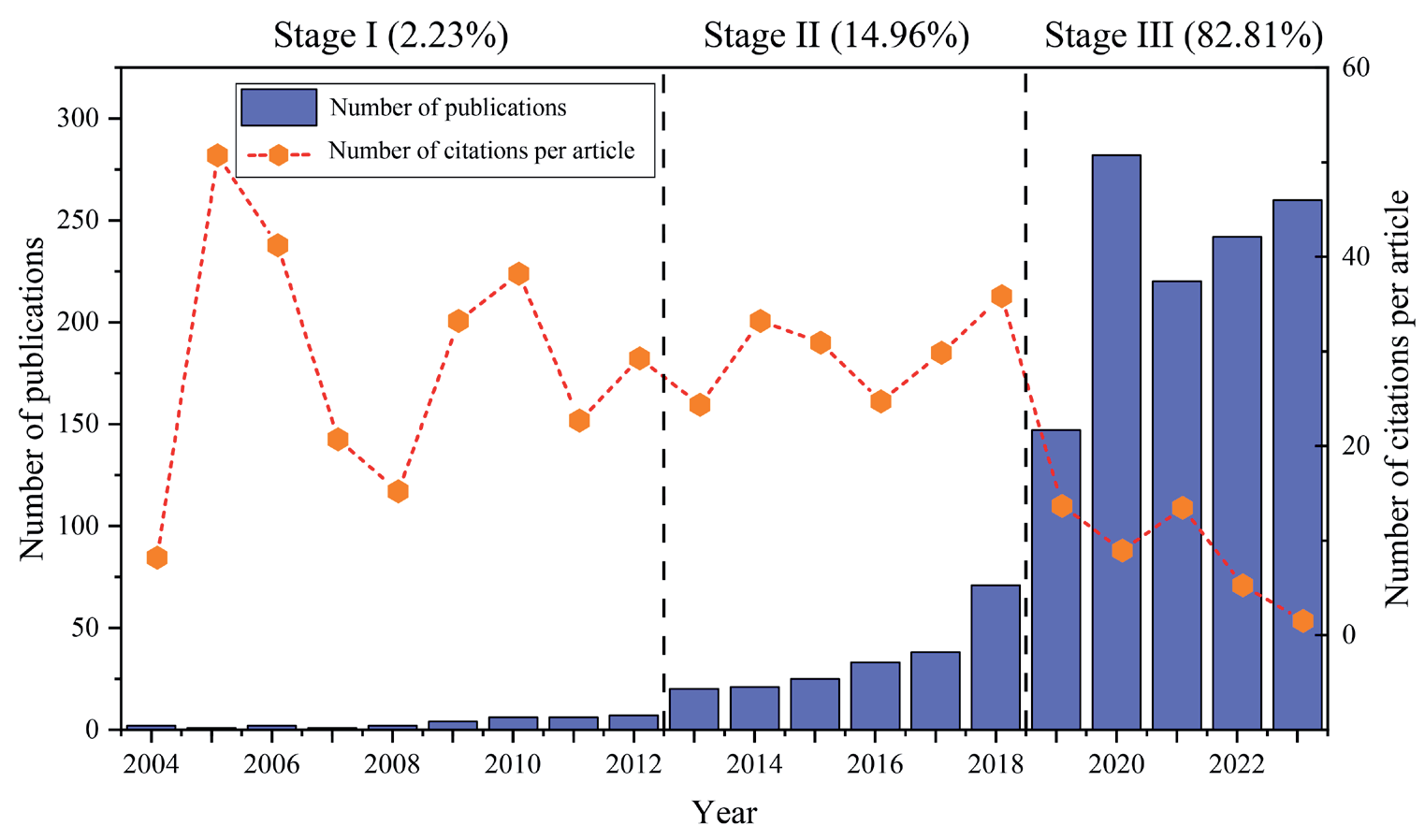
The citation frequency of an article reflects the level of attention it receives, which indicates the utilization and significance of scientific papers in the research process and establishes their role and status in academic communication [19]. According to the citation analysis conducted using the WOSCC database, the most frequently cited article in this field is Araujo R’s “Current status of the algae production industry in Europe: an emerging sector of the blue bioeconomy”, published in Frontiers in Marine Science. This article presented and analyzed maps featuring 447 algal and spirulina production units across 23 European countries [20]. The second most frequently cited article is Silver’s “Blue economy and competing runners-up in international ocean governance,” published in the Journal of Environment & Development in 2015. This article utilizes documents and data from the 2012 UN Conference on Sustainable Development to study the various discourses surrounding the BE within the context of the relationship between people and the sea, highlighting four competing perspectives [21]. The third most frequently cited article is Cohen P J’s “Securing a just space for small-scale fisheries in the blue economy,” published in Frontiers in Marine Science in 2019. This article explores how ocean governance can better incorporate the social dimensions of fisheries from both social science and small-scale fisheries perspectives [22].
Country and Institutional Analysis
Tracking research forces such as countries and institutions can quickly understand the latest research trends in the field [23]. Based on the WOSCC database, researchers in the field of BE research were primarily affiliated with over 78 countries and regions from 2004 to 2023. A list of the top 10 countries based on publication count is provided in Table 1. Among the top three countries based on publication count, China led with 487 articles (35.04%), followed by the UK with 103 articles (7.41%), and the USA with 94 articles (6.76%). China outperformed other countries in terms of publication count, with significantly higher numbers. Additionally, articles authored by Chinese scholars demonstrated the highest citation frequency. However, the average citation frequency per paper was only 7.54, suggesting a need to enhance China’s influence in the field, despite its scholars exhibiting a strong level of attention and research interest. Excluding China, the top ten countries collectively contributed to 34.9% of the total publication count. Notably, Canada, Italy, and the UK published 41, 40, and 103 articles, respectively. Moreover, these three countries exhibited prominent citation rates, with values of 27.73, 20.48, and 20.37, respectively, demonstrating their leadership positions. This suggests that these countries possess a high level of research expertise in the field of BE research, along with considerable international influence and persuasive capabilities.
A cooperative network among countries was established using VOSviewer. The size of each circle in the graph represents the level of activity and the number of published articles for each country/region, while the thickness of the lines connecting each country/region signifies the extent of collaboration between them. Close collaboration among countries has the potential to facilitate extensive and in-depth research on the BE. Fig. 2 demonstrates the close collaboration among countries/regions and their shared commitment to advancing research in the field of BE. Notably, China, the USA, Canada, and Australia engage in robust exchanges and demonstrate close collaboration with other nations.
Table 1.
Statistics of the top 10 productive countries/regions from Jan 2004 to Dec 2023.
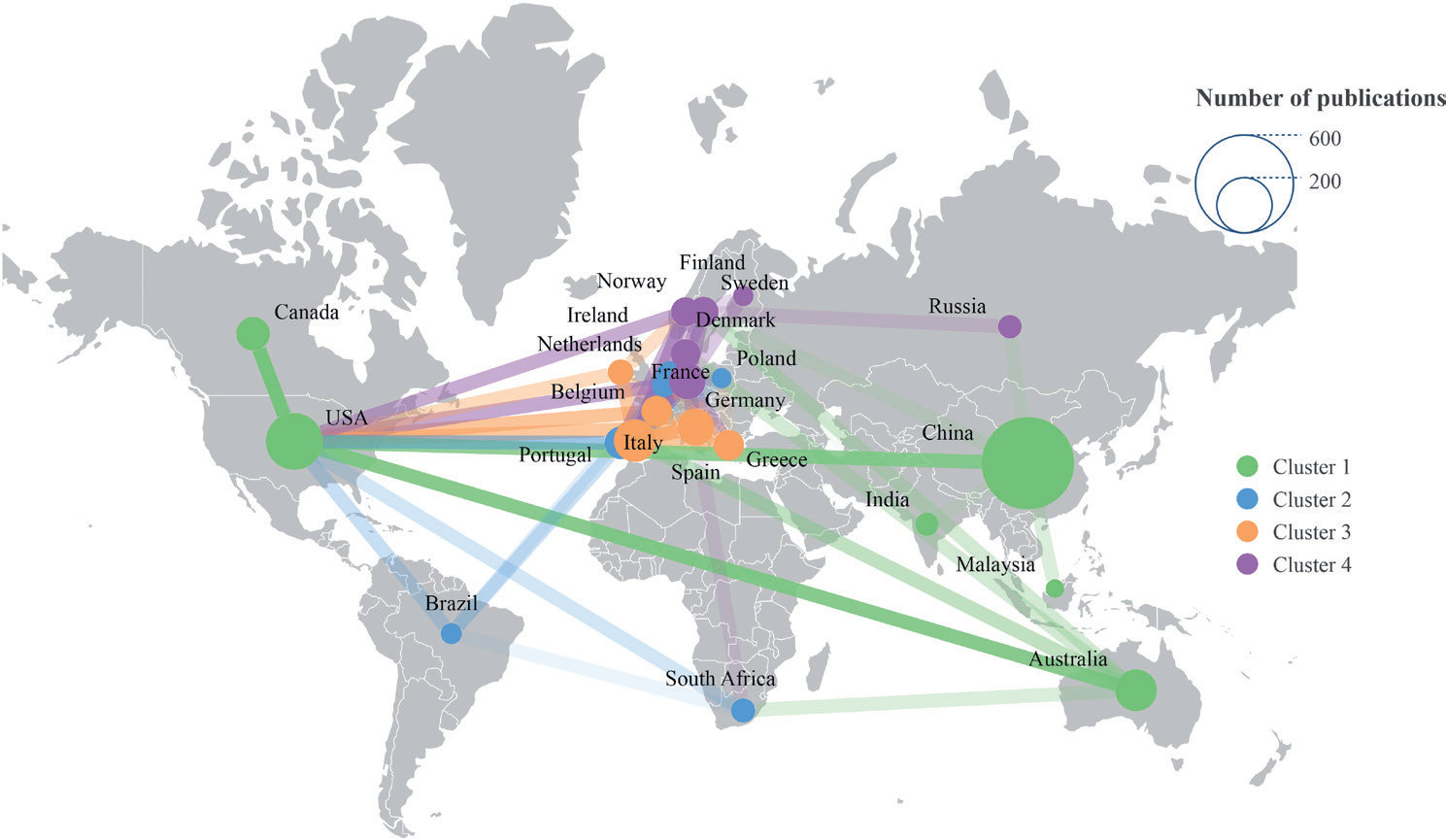
Table 2.
Statistics of the top 10 productive institutions from Jan 2004 to Dec 2023.
According to Table 2, the institutions with the highest publication counts are Ocean University of China (94 articles), followed by the University of British Columbia (26 articles) and the University of Tasmania (22 articles). Five research institutions published more than 20 articles, with Ocean University of China having a significantly higher number of publications compared to the other institutions. The total citation frequency was 1170 times; however, the average citation frequency was relatively low at 12.45, ranking ninth in terms of average citation frequency. The University of British Columbia had the highest average citation frequency, followed by the University of Wollongong (30.85), and the University of Exeter (29.95) and (26.39).
Cited Journal Analysis
The statistical analysis of published journals is instrumental in uncovering the research direction, hotspots, and evolutionary processes in this field [24]. Using statistical analysis of the WOSCC database, a total of 410 journals were identified within the field of BE research from 2004 to 2023. The top three journals were the Journal of Coastal Research, Marine Policy, and Ocean & Coastal Management, which included 183, 183, and 80 papers, respectively (Table 3). Among them, Marine Policy exhibited the highest total number of citations (4,235 times), and its citations per article (23.14 times) ranked second among all journals, indicating that the journal has a high level of international influence. It is worth mentioning that although the Journal of Cleaner Production has published fewer articles in the field of BE research (13 articles), accounting for only 0.94% of the total number of articles published, its average cited times reached 26.54, ranking first in all journals.
Table 3.
Statistics of the top 10 productive journals from Jan 2004 to Dec 2023.
Cited Author Analysis
Authors are important subjects of scientific research work. The analysis of the network map of authors and their cooperative relationships can reflect the core author groups and cooperative relationships in the field [25]. In this study, a total of 4,907 authors (including all authors involved in the publications) were identified from the 1,390 selected literature sources. Following data cleaning, the top five authors based on the number of publications were identified and listed (Table 4). Voyer M from Univ Wollongong is the author with the largest number of publications, with 11 publications, mainly focusing on the policy of BE and the framework of ocean management. Secondly, Bennett NJ, Depellegrin D, Liu Y, and Wang Y all published 9 papers. Bennett NJ from Univ British Columbia was the author of the total number of citations to the article and had their articles cited a total of 464 times.
Topic Category Analysis
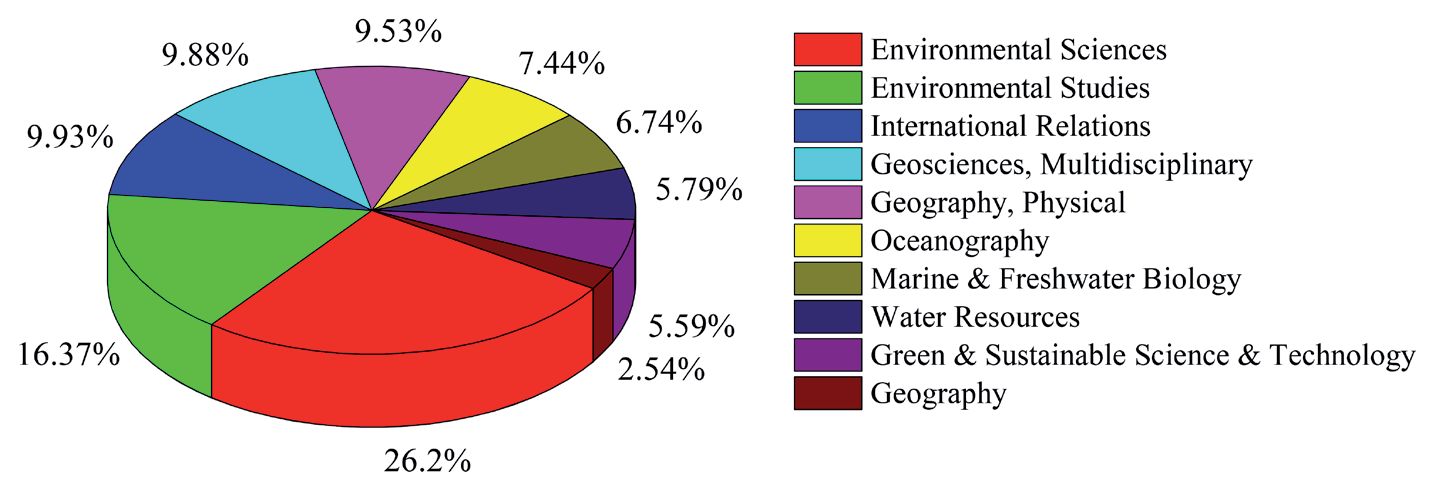
According to the discipline category of the article, the general research orientation and development process can be understood. Based on the analysis of the top ten disciplines in the field of BE research published from 2004 to 2023 (Fig. 3), a total of 109 disciplines were involved in the retrieved literature, indicating that this field has received high attention from researchers in different fields. Additionally, the analysis reveals the diversified and interdisciplinary development trend in the field. The discipline ranked first in terms of the number of articles published was Environmental Sciences, with 525 articles published, accounting for 26.2% of the total. Followed by Environmental Studies, which ranked second with 328 published papers, contributing to 16.37% of the discipline’s total publications. The third most published discipline was International Relations, with 199 articles published, representing 9.93% of the total. This was closely followed by Geosciences, Multidisciplinary, Geography, Physical, and other disciplines. The BE research encompasses various aspects of the ocean, ranging from the innovative development of traditional marine industries like fisheries, marine transportation, and shipbuilding to emerging marine industries such as blue biotechnology, sustainable aquaculture, offshore renewable energy, seabed mining, and blue carbon sequestration. Therefore, research in this field mainly involves Green & Sustainable Science & Technology, Geosciences, Multidisciplinary, Marine & Freshwater Biology, Economics, Transportation, Energy & Fuels, and Fisheries. Simultaneously, the BE research emphasizes the conservation of marine resources and the protection of marine environments during the utilization of marine resources.
Table 4.
Statistics of the top 10 productive authors from Jan 2004 to Dec 2023.
Keywords Analysis
Keyword Co-Occurrence Analysis
Keywords provide a concise overview of the core thesis and topic of a paper, and analyzing keywords in a specific field is beneficial for identifying the research hotspots [26]. The analysis was performed using VOSviewer software, with a keyword occurrence threshold set at 10. Cluster analysis was conducted on the 194 selected keywords, resulting in the formation of a keyword co-occurrence network within BE-related literature (Fig. 4, Table 5). The size of a circle in the figure corresponds to the frequency of the keyword in the literature, indicating the prominence of the topic as a research hotspot in the field. The different colors of the circles represent the different thematic clusters under that research field. Fig. 4 displays three different colors, reflecting the division of research hotspots in this field into three distinct research themes.
Cluster Red consists of keywords such as “environmental regulation”, “sustainable development”, “renewable energy”, and “CO2 emissions”. It primarily focuses on the sustainable development of the marine environment. Climate change poses the most significant threat to the BE, contributing to ocean acidification and warming, which jeopardizes the development prospects of new marine products in the marine food industry. Additionally, it imposes great environmental pressure on the marine ecosystem. Consequently, it is crucial to explore strategies for the rational development and utilization of marine resources, as well as efforts to foster the development of the BE while effectively coordinating with marine ecological environment protection. With the global increase in carbon dioxide (CO2) emissions, there is a corresponding rise in the amount of CO2 absorbed by the oceans. This, in turn, leads to water acidification, reduced oxygen levels, and potential harm or mortality of marine plants, animals, and other life forms, including coral bleaching [27].
The ocean holds tremendous potential as a carbon sink and contains a carbon pool that is 50 times larger than that of the atmosphere and 20 times larger than that of terrestrial ecosystems. The global ocean absorbs approximately 2 billion tons of CO2 from the atmosphere each year, accounting for roughly one-third of the global annual CO2 emissions. It serves as an enormous reservoir for atmospheric CO2 [28]. Marine carbon sinks possess distinctive features such as a large capacity for carbon sequestration, high efficiency, and long storage duration when compared to other carbon sinks. Carbon sequestration in terrestrial ecosystems, such as forests and grasslands, has a maximum storage period of only a few decades. In contrast, ocean carbon sequestration can last for hundreds or even thousands of years [29]. Thus, the utilization of the marine carbon sink can effectively mitigate greenhouse gas emissions and contribute to the goal of achieving carbon neutrality. This has emerged as a pivotal aspect of global climate governance endeavors. Additionally, carbon emission reduction and decarbonization of the power industry represent key strategies for mitigating global carbon emissions. Marine renewable energy, encompassing offshore wind energy, tidal energy, wave energy, temperature difference energy, and other sources, possesses vast reserves and tremendous potential for carbon emission reduction. It constitutes a crucial component of the marine economy. The life cycle carbon emissions of marine renewable energy amount to 0.008 kg/KWh, which is less than 1% of the emissions produced per unit of coal [30]. Consequently, the substitution of current high levels of fossil energy, such as coal, with marine renewable energy will have a significant carbon emission reduction impact.
The Cluster Blue contains keywords such as “management”, “marine spatial planning”, “framework”, “biodiversity” and “ecosystem-based management” and focuses on marine ecosystem management. An unreasonable marine management system is one of the reasons leading to the continuous deterioration of the marine ecological environment worldwide. Toward the end of the 20th century, the international community widely acknowledged and actively implemented the concept of marine ecosystem-based management. Numerous countries around the world, including partition protection efforts for the Great Barrier Reef in Australia, the comprehensive Everglades restoration plan in the USA, and the Integrated Coastal Zone Management (ICZM) in Xiamen, China, have embraced this concept. Ecosystem-based management is a holistic approach that accounts for the interdependency between marine ecosystems and human activities and explores the interconnections between various sectors and activities within the BE. It assists in identifying potential synergies and trade-offs while supporting sustainable practices that uphold the health and resilience of marine ecosystems. [31]. As an example, Young et al. developed a spatially explicit Bayesian belief network (BBN) that considers factors such as environmental suitability, historical income, and past fishery presence to identify the optimal fishing location for offshore aquaculture farms [32]. Munoz et al. employed a general additive model (GAM) overlaid with the European Natural Information System (EUNIS) habitat to model the spatial distribution of European cod conservation areas in the Alberan Sea. This approach enabled them to identify and quantify the influence of human pressures on the availability of food within marine habitats, which are crucial ecosystem services [33].
The Cluster Green contains keywords such as “fisheries”, “aquaculture”, “small-scale fisheries” and “food security”, which mainly focus on related research such as marine aquaculture. “Blue food”, represented by aquatic products, serves as a renewable food source, and aquaculture demonstrates a higher feed utilization rate compared to terrestrial animal farming. Consequently, if a larger proportion of the global population raises and consumes aquatic products, it will not only free up significant arable land resources for cultivating feed grains but also sustainably nourish the projected population of 9.7 billion by 2050 [34]. Nevertheless, traditional and outdated aquaculture models impose substantial pressure on natural resources, including freshwater, land, and wild fish stocks. Simultaneously, they give rise to issues such as water eutrophication, water acidification, biodiversity loss, biological invasion, genetic variation, disease transmission, and global warming. Blue food is an important tool to reduce the consumption of global protein production resources, improve the ability to cope with climate change and other global emergencies (such as pandemics and geopolitical instability), and play a key role in guaranteeing food security. What’s more, blue food also provides essential nutrients for a growing population, which contributes to achieving the world’s goal of Zero Hunger (SDG 2) while reducing dependence on limited natural resources and is critical to the long-term viability of the BE [35]. Moreover, the mariculture industry encompasses a lengthy chain that includes numerous related sectors both upstream and downstream. The upstream includes seedling, feed, vaccine, and equipment industries, etc., and the downstream includes processing, transportation, storage, sales, catering, tourism, etc., which play a large role in driving the relevant BE industries. During the development of traditional marine industries, such as marine fisheries, it is crucial to conduct comprehensive assessments of their impacts on the marine environment, with a particular emphasis on the health and resilience of marine ecosystems. Additionally, the establishment of nature-based solutions for ecosystem restoration proves beneficial in attaining a balance between economic growth and environmental protection.
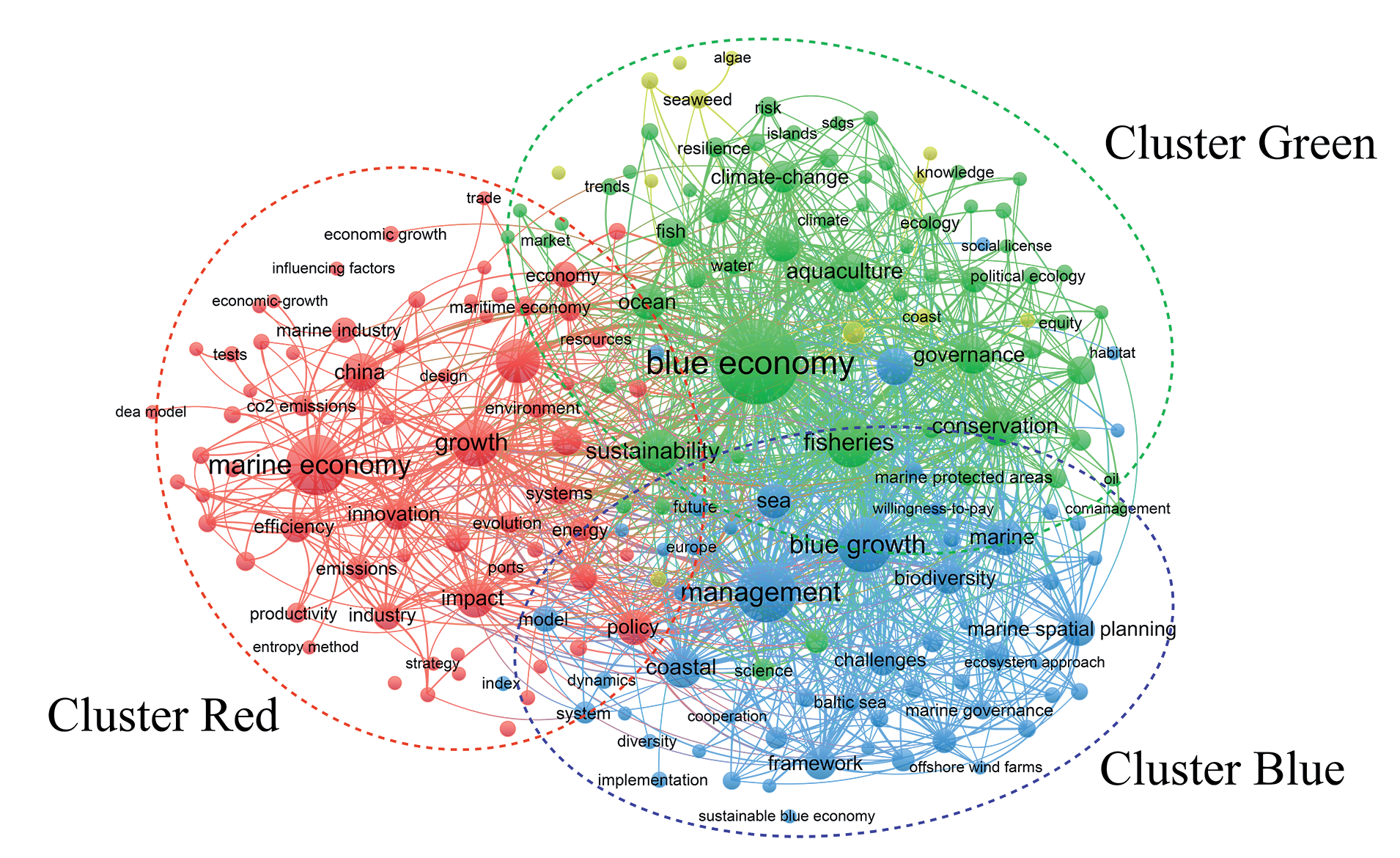
Table 5.
Keyword cluster co-occurrence list.
Burst Analysis
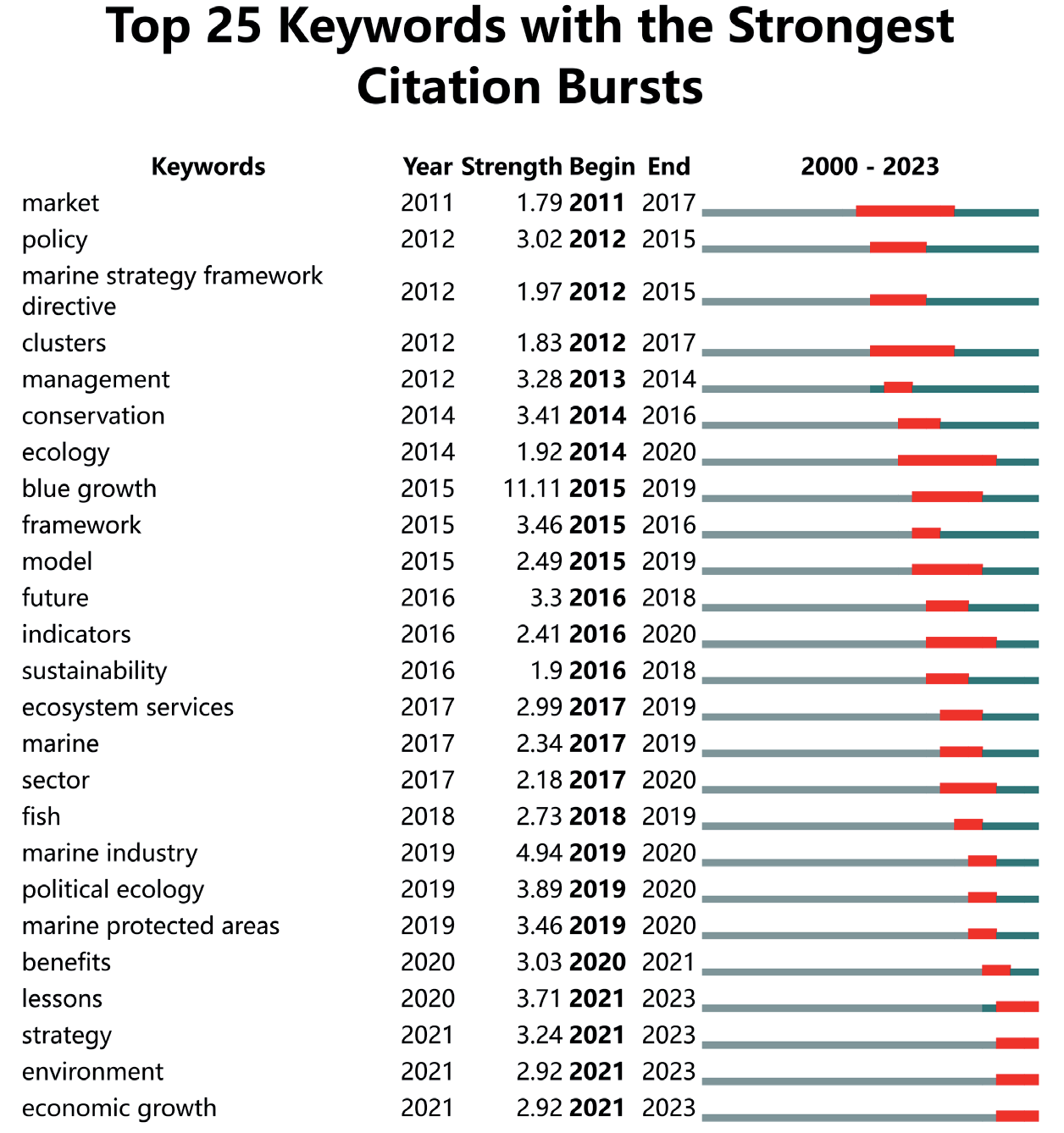
The burst term refers to keywords that experience a sudden surge in frequency within a short period. They serve as an effective approach for understanding and identifying research hotspots and academic trends in related fields [36]. The keyword burst strength indicates the significance of a keyword’s frequency during its emergence period within the research field. Typically, keywords with high burst strength and recent occurrence years are considered the research frontiers in this field [37]. Leveraging CiteSpace’s burst analysis function, keyword burst detection analysis in the BE was conducted from 2000 to 2023, considering a minimum duration of 1 year. The red range corresponds to the period with the most substantial frequency changes and, therefore, the greatest influence.
Fig. 5 shows that due to the limited number of papers published in the field of BE research between 2004 and 2012, there were no keywords with significant burst strength during this period. The burst of keywords was primarily concentrated in the years after 2012. Between 2012 and 2018, the prominent burst keywords were “ecology,” “conservation,” “sustainability,” “ecosystem services,” “indicators,” and “model.” These terms symbolize the frontier research hotspots during different periods, reflecting the hot research of study in this related research field. Notably, the keyword “ecology” emerged and remained prominent for 7 years, spanning from 2014 to 2020, signifying its central position in this research field. Additionally, the research periods for “blue growth,” “indicators,” and “model” all exceeded 5 years. The primary research focus during these periods revolved around the environmental ramifications of marine economic development. Between 2019 and 2023, the prominent keywords are “marine industry,” “strategy,” and “economic growth.” Notably, recent BE research has concentrated on the development and strategic planning of BE industries. BE research closely aligns itself with the current trends and is intertwined with international and national policies, as evident from the examination of keyword burst strength about different periods.
Challenges and Future Perspectives
Improve Laws and Policies
As the significance of the BE continues to grow, it has gradually become integrated into the national economic systems of coastal countries since the 1970s. Globally, the BE has been acknowledged as a comprehensive system by major maritime nations. However, there exist significant disparities in the definitions, terminology, statistics, and classification standards associated with it. The statistical data of the BE encounters various issues, such as missing data, lags, and a significant lack of parallelism and comparability. These challenges impact the statistics, classification, and comparison of the global BE, consequently influencing our ability to understand the current state and future development of the BE. Strengthening the development of marine economics and promoting international exchanges is crucial. It is also essential to establish a cohesive understanding of concepts, standards, and statistical classification methods within the BE field. Additionally, the establishment of a unified international trade classification and standard is imperative to foster the sustainable development of the BE.
Secondly, effective governance and regulatory frameworks are of paramount importance for promoting the sustainable development of the BE. Governments should enhance coordination among relevant departments and stakeholders, reinforce governance structures, promote collaboration among stakeholders, and establish coherent and enforceable regulations. Examples of such regulations involve the implementation of effective fisheries management strategies, the promotion of sustainable aquaculture practices, and the regulation of offshore energy and tourism activities. It is essential to establish robust mechanisms for monitoring, control, and oversight to prevent illicit activities and ensure compliance with regulations.
Marine Energy and Resource Development
The ocean holds vast resources. As land resources become increasingly scarce, the development and utilization of marine resources have emerged as a crucial approach to addressing human survival and sustainable development challenges. Given the impacts of global climate change, reducing reliance on fossil fuels is a shared challenge that the world must confront. The pollution resulting from the combustion of fossil fuels compels all nations to swiftly seek alternative green energy sources. Offshore wind farms, tidal energy, wave energy, and ocean thermal energy conversion technologies contribute to the production of clean and sustainable energy. There is increasing international competition for the exploration of deep-sea resources, including deep-sea oil, polymetallic nodules, hydrothermal sulfides, and “flammable ice”. These technologies not only reduce reliance on fossil fuels but also mitigate the impacts of climate change [38]. Nonetheless, there is limited understanding of the environmental and social implications associated with offshore energy development, encompassing potential effects on marine habitats, migratory bird species, and fishing activities.
The ocean harbors abundant biological resources (such as algae, sponges, bacteria, marine plants, marine animals, etc.), which exhibit tremendous variety, extensive resources, and considerable potential for sustainable utilization. Marine organisms have developed unique genes in response to the challenging conditions of high salinity, high pressure, low oxygen, and limited light availability. These genes contribute to the formation of distinctive structures and more remarkable activities compared to their terrestrial counterparts [39]. Marine biological resources can be used to develop novel products, including industrial enzymes, medical functional materials, innovative drugs, new biomaterials, bio-chemicals, and environmentally friendly agricultural biological agents. Georgianna et al. used seaweed to successfully produce biofuel (bioethanol), which has the advantages of being an alternative to land plants, easy to grow, high yield, and sustainable [40]. By studying the nutritional structure and composition of marine organisms, scientists have found bioactive substances such as carotenoids, polyunsaturated fatty acids, proteins, and enzymes, which can be used in the pharmaceutical industry in the form of antioxidants, antibiotics, analgesics, anti-tumor, anti-inflammatory, and anti-fungal drugs [41]. The progress of the marine biotechnology industry is closely interlinked with the advancement of biotechnology. In recent decades, the significance of biotechnology in the development and exploitation of marine resources has garnered increasing attention from researchers, leading various countries to invest significantly in marine technology research and development. Currently, the exploitation of marine biological resources remains constrained. Nevertheless, advancements in biological technologies, including biologics, pathogenic biology, immunology, natural product chemistry, synthetic biology, and environmental biology, will enable us to maximize the potential of marine biological resources.
Blue Carbon and Ecosystem Service
The ocean serves as a carbon sink through physical, deep-sea, marine biological, and coastal wetland sequestration processes [42]. Marine carbon sink, commonly referred to as “blue carbon,” refers to the storage of CO2 within the coastal zone or marine ecosystems [43]. Blue carbon exhibits greater carbon capture and storage capacity compared to traditional green carbon sinks, pointing to significant potential for future development. The protection and development of blue carbon is an important way to achieve carbon neutrality. Nonetheless, the degradation of coastal wetland ecosystems due to land reclamation projects, pollution from industrial and land-based sources, excessive exploitation of fishery resources, and natural disasters, including typhoons, pose threats to the integrity of the blue carbon sink. Additionally, the blue carbon monitoring and accounting system remains incomplete, leading to differing perceptions within the international community regarding the specific components of the marine carbon sink. Furthermore, the carbon sink mechanisms in different marine habitats vary among various animal and plant species, impacting the realization of a closed-loop blue carbon resource capitalization system. Finally, a majority of blue carbon projects have yet to achieve the commercialization of carbon sinks or the establishment of dedicated trading platforms. Accounting for blue carbon development to become an economically viable and efficient production by the principles of economic systems requires the establishment of a blue carbon trading market alongside appropriate measurement and pricing mechanisms for blue carbon products. The ecosystem services of the blue carbon ecosystem can be maximally preserved and enhanced.
Conclusions
The sustainable development of the BE has garnered significant attention as ocean development continues to advance. This study employed bibliometric analysis to study the research hotspots and trends within the field of BE research. Through a literature analysis of 1,390 articles retrieved from the WOSCC database, Bibliometrix, VOSviewer, and Citespace software were employed for data analysis. Combined with the network knowledge map of the number of papers published, keywords, publishing institutions, and authors, the following conclusions are drawn:
(1) Research on the BE has been gaining attention, resulting in an anticipated increase in the number of publications and citations in this field from 2004 to 2023. According to the WOSCC discipline classification, research in this field encompasses a range of disciplines, including Environmental Sciences, Water Resources, Green & Sustainable Science & Technology, Geosciences, Multidisciplinary, Marine & Freshwater Biology, Economics, Transportation, Energy & Fuels, and Fisheries.
(2) China has played an active role in the research in the field of BE. The proportion of Chinese publications was 35.04%, which was much higher than that of other countries and ranked first in the number of publications and citations among various countries and regions. The primary contributing institutions and authors are the Ocean University of China and Voyer M from the University of Wollongong. The top three journals with the highest number of publications in this field were the Journal of Coastal Research, Marine Policy, and Ocean & Coastal Management.
(3) Keyword analysis revealed that the research hotspots in this field primarily revolve around the sustainable development of the marine environment, marine ecosystem management, and marine aquaculture. Future development in this field should prioritize the utilization of marine resources (particularly marine energy and marine organisms), blue carbon, and its ecological value, taking into account the current research status and focal points of BE.
(4) Although the WOSCC database ostensibly covers an extensive array of academic papers, its collection scope exhibits salient constraints. Articles emanating from highly specialized journals, region-specific periodicals, or burgeoning disciplines may occasionally circumvent retrieval in the WOSCC database. Furthermore, while the WOSCC database boasts an array of sophisticated search functionalities, this study predominantly retrieved literature, specifically encompassing titles, keywords, and abstracts, centrally germane to the BE via search terms. Consequently, certain pertinent scholarly works might reside outside the scope of the present search parameters. To transcend the limitations intrinsic to the WOSCC database and facilitate a more comprehensive and methodical collection and examination of relevant scholarly works, future research endeavors should contemplate amalgamating the advantages offered by alternative academic databases, such as Google Scholar, Pubmed, Dimensions, and Scopus.

