

Introduction
Syzygium cumini (L.) Skeels, commonly known as Java Plum/Jamun, are a fruit-bearing crop belonging to the Mytraceae family. The plant is native to South Asia, mainly Pakistan, India, Afghanistan and Australia. It is also cultivated in Florida and Kenya. Java plum is an important indigenous minor fruit species that grows under a variety of agro-climatic conditions [1]. During ripening, the fruit is greenish and, at maturity, pink to shining crimson. The harvesting period of the fruit is usually in the monsoon season (June to July) and lasts for 30 to 40 days [2].
S. cumini is a medicinally and nutritionally important fruit crop. Its fruits are rich in carbohydrates, fiber, proteins, vitamins, minerals, fats, and calories [2]. Plants have various secondary metabolites, which are unprocessed by-products, including bioactive substances. Extract of the Jamun fruit has been used to treat a variety of illnesses and ailments and has anti-diabetic properties [3]. Allelochemicals may be present in leaves, flowers, roots, fruits, or stems. They can also be found in the surrounding soil after the decomposition of the allelopathic plant residues. The allelopathic interactions are deleterious to their surrounding plants, but these might also be involved in giving an advantage to selective plants [4]. In allelopathy research, inhibitory substances were often argued to explain the growth pattern, while other substances remained neglected [5].
On the other hand, the antimicrobial activities of some plant species have been widely researched. For example, the crude extracts of cinnamon, garlic, basil, curry, ginger, sage, mustard, and other herbs exhibited antimicrobial properties against a wide range of Gram-positive and Gram-negative bacteria [6-7]. Antimicrobial resistance arises when some of the micro-organisms that cause infection (pathogens) adapt to survive exposure to a medicine that would normally kill them or stop their growth [8].
The present studies were undertaken to investigate the allelopathic potential of various parts of java plum (S. cumini) against the growth of economically important crops and to evaluate the antimicrobial potential of various parts of S. cumini against pathogenic fungal and bacterial strains.
Material and Methods
Various parts (leaf, bark, fruit, stem, and seed) of the java plum tree were collected, washed thoroughly with water, and air-dried for 25-30 days. The dried sample was ground into a fine powder and stored in dry condition until used. The aqueous extracts of the plant parts were evaluated for their allelopathic and antimicrobial potential by using the filter paper method and the agar well diffusion method, respectively. Different concentrations, such as 0.5g, 1g, and 2 g of fine powder of each plant part, were weighed separately. To prepare the aqueous extracts, weighed materials were soaked in 100 ml of distilled water overnight, and then the extracts were filtered with the help of a Whatman filter paper. The filtrate was stored in the refrigerator for further use.
Allelopathic Evaluation
The seeds of carrot (Daucus carota L.), cucumber (Cucumis sativus L.), rice (Oryza sativa L.), soybean (Glycine max L.), wheat (Triticum aestivum L.), and maize (Zea mays L.) were used to investigate the allelopathic potential of all the five parts of java plum plant against it. The filter paper method is effective and easy to handle. Different extracts of 0.5%, 1%, and 2% concentrations were applied to the test by soaking a double layer of filter papers. For sterilization of medium from dust particles or fungal attack, Petri dishes were cleaned with ethanol-dipped cotton. Ten seeds of the test plant were placed between two folds of filter paper in each petri dish. Extracts of each plant species were applied to seeds. Distilled water was used for the control set instead of extracts. The experiment with each treatment was replicated five times.
Petri dishes of the experiment were set at 25℃. The experiment extended over a period of seven days. The result was determined by counting germinated seeds and measuring the length of the root and shoot. The length of the hypocotyl and radicle of seedlings was measured with a millimeter (mm) scale.
Antimicrobial Evaluation
Escherichia coli, Acinetobacter baumannii, Candida
albicans, and Aspergillus niger were used to check the antimicrobial activity of extracts of Java plum plant parts such as root, leaf, stem, bark, and fruit in different concentrations. For the agar well diffusion method, the agar plate surface was inoculated by spreading a volume of the microbial inoculum over the entire agar surface. Then, a hole with a diameter of 6 to 8 mm was punched aseptically with a sterile cork borer, and a volume (20– 100 µL) of the antimicrobial agent or extract solution at the desired concentration was introduced into the well. Then, agar plates are incubated under suitable conditions depending on the test microorganism. The antimicrobial agent diffused in the agar medium and inhibited the growth of the microbial strain tested.
Data Analysis
Data was analyzed using statistical software, SPSS 13.0 (Statistical Package for the Social Sciences) and Microsoft Excel. To determine the significance of the activity, a single-factor ANOVA (analysis of variance) was performed. The level of significance was set at 0.05. To visually represent the percentage germination and growth of the radicle and hypocotyl, a line graph was created.
Results
Experiments were conducted to screen the allelopathic and antimicrobial potential of various parts of the java plum (Syzygium cumini (L.) Skeels). Different extracts, i.e., leaf, stem, bark, seed, and fruit, were used for quantitative analysis of allelopathic potential against the germination and growth of carrot (Daucus carota L.), cucumber (Cucumis sativus L.), rice (Oryza sativa L.), soybean (Glycine max L.), wheat (Triticum aestivum L.), and maize (Zea mays L.). These extracts were also investigated to evaluate their antimicrobial potential against the inhibition of microbes, such as bacterial species (Escherichia coli and Acinetobacter baumannii) and fungal species (Candida albicans and Aspergillus niger).
Evaluation of Allelopathic Potential
For the investigation of allelopathic activity, three different concentrations (0.5%, 1%, and 2%) of five different plant parts, i.e., leaf, stem, bark, seed, and fruit, were applied. Various effects were observed under the treatments of three different concentrations. Percentage germination along with lengths of hypocotyl and radicle of seedlings were recorded by comparing with respective controls. Different extracts of the S. cumini plant were used to investigate the seed germination of wheat and maize. Donor plants displayed both stimulatory and inhibitory effects on seed germination of the test plants.
Effect of Syzygium cumini on Seed Germination of Test Plant
The effects of various extracts of S. cumini plant parts (leaf, stem, bark, seed, and fruit) were observed to study the germination percentage of carrot (Daucus carota L.), cucumber (Cucumis sativus L.), rice (Oryza sativa L.) soybean (Glycine max L.), wheat (Triticum aestivum L.) and maize (Zea mays L.). Among all the test species, germination was observed to be increased under the influence of java plum plant extract. Greater effects were shown with bark extract having a 1% concentration. The rest of the crops had non-significant effects on seed germination under the influence of plant part extracts.
Efffect on Seed Growth of Test Plants
All extracts of java plum showed inhibition of wheat at higher concentrations. Leaf extracts showed a negligible effect. Stem and bark extracts inhibited the seed growth of wheat at all of its concentrations. All extracts of seed and fruit showed stimulation of seed growth at all concentrations.
Syzygium cumini extracts have diverse effects on the growth of soybean (Glycine max L.). Results revealed that the bark extract had the most significant impact, causing maximum retardation of soybean growth across all concentrations (Fig. 1). Leaf extract showed varied effects on the growth of soybean. Stem extract at 1% concentration increased growth, while other concentrations negatively affected hypocotyl and radical length. The seed extract of 0.5% concentration increased the hypocotyl and radical length. Fruit extract overall stimulated soybean growth. Radical length showed the highest elevation against 0.5%, 1%, and 2% fruit extract. ANOVA confirmed the significant effect of S. cumini on radical and plumule length at all concentrations (Table 1).
Aqueous extracts of different parts of the S. cumini plant were found to inhibit the growth of cucumber (Cucumis sativus) at all concentrations. The leaf extract exhibited the maximum reduction in hypocotyl and radical length. Stem extracts at 0.5% showed a significant decrease in both hypocotyl and radical length (Fig. 1). Seed extract of 0.5% concentration caused the highest reduction in radicle length. Bark and fruit extract 2% concentration had the highest reduction in hypocotyl length and caused significant reductions in radicle length as well. However, the ANOVA showed that the effects of S. cumini extracts on cucumber hypocotyl and radical length were not statistically significant at all concentrations (Table 1).
S. cumini (plant parts) exhibited diverse effects on the growth of carrots at different concentrations. The leaf extract had the highest stimulatory effect, increasing hypocotyl length in a concentration-dependent manner. The highest stimulation of radical length (46%) was observed with 1% leaf extract (Fig. 1). Bark extract at 1% concentration also resulted in a maximal increase in hypocotyl length (30%). However, 0.5% extract had the highest reduction in radical length (51%). Stem extracts initially increased and then decreased hypocotyl length, with 2% concentration inhibiting growth by 15%. Seed extract at 1% increased hypocotyl length by 14%, while other concentrations decreased it. Fruit extract caused reductions in hypocotyl length, with the highest reduction at 2% concentration. The ANOVA indicated that the effects of S. cumini on carrot hypocotyl and radical length were not statistically significant at all concentrations (Table 1).
Various concentrations of Syzygium cumini extracts had varied effects on the growth of rice (O. sativa). Leaf extract showed negligible effects, except for a 19% increase in radical length with 0.5% extract. Stem extract at 2% caused a reduction of 26% in radical length. Bark extracts at 0.5% and 1% concentrations caused reductions in hypocotyl length. Similarly, seed extracts at 1% and 2% concentrations reduced the radical length by 17% and 18%, respectively. Fruit extract decreased hypocotyl and radical length by 35% with 2% concentration (Fig. 1). ANOVA indicated that Syzygium cumini extracts had a non-significant effect on rice's radical and hypocotyl length at all concentrations (Table 1).
S. cumini (java plum) had a diverse effect on the growth of wheat. The leaf extract stimulated hypocotyl length (65%) at 1% concentration but declined at 2% concentration. The stem extract inhibited the growth of hypocotyl and radicle, with varying degrees of inhibition at different concentrations. The bark extract also showed inhibition at 0.5% and 1% concentrations and a decrease in hypocotyl length at 2% concentration. The radicle length increased with increasing concentration. The seed extract exhibited inhibition at 0.5% concentration and stimulated hypocotyl growth at 1% and 2% concentrations. The radicle length showed inhibitory effects at 1% concentration. The fruit extract showed the highest inhibition at 1% and 2% concentrations, particularly affecting hypocotyl length (Fig. 1). The study revealed diverse effects of the extracts on wheat growth, with the fruit extract exhibiting the most significant impact on radicle length (Table 1).
Fig. 1.
Allelopathic Effect of Java Plum Plant Parts on various Test Species (A) Bark Extract vs. Soybean (B) Leaf Extract vs. Cucumber (C) Leaf Extract vs. Carrot (D) Fruit Extract vs. Rice (E) Fruit Extract vs. Wheat (F) Stem Extract vs. Maize.
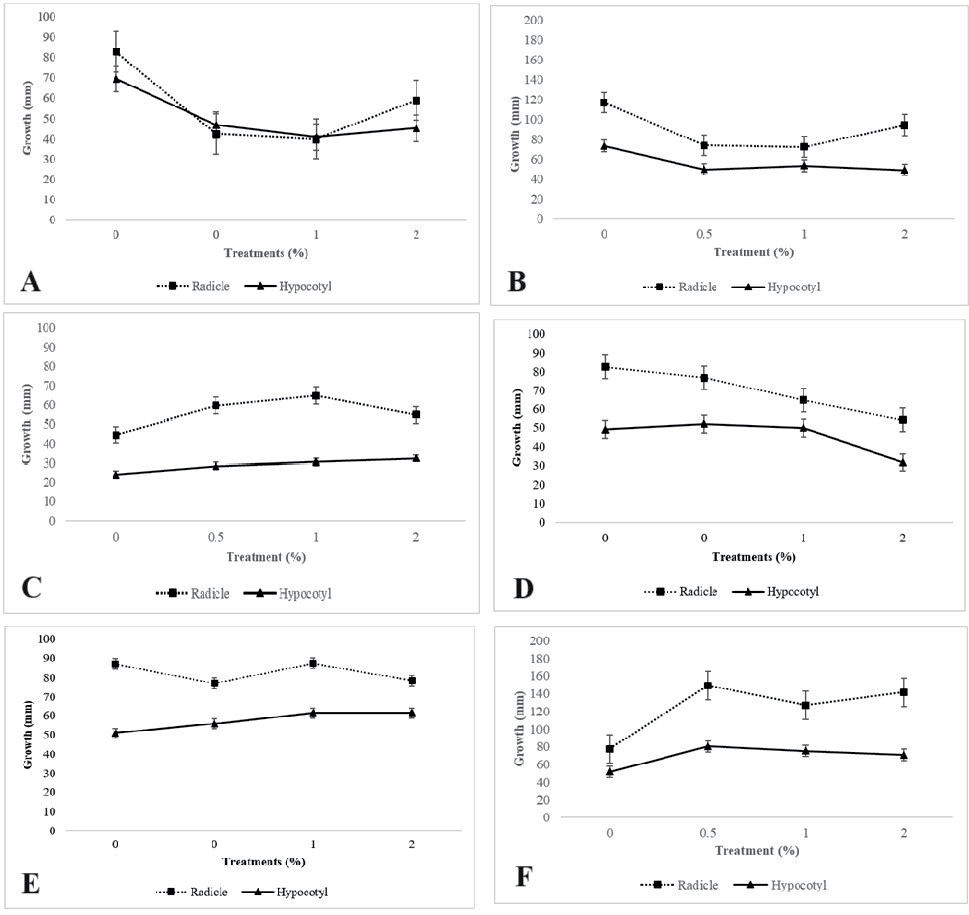
S. cumini (java plum) had a diverse effect on the growth of maize. The leaf and bark extracts exhibited inhibitory effects on both hypocotyl and radicle growth of maize, with increasing inhibition at higher concentrations. The stem extract, on the other hand, stimulated the length of maize hypocotyl but showed inhibitory effects on radicle growth (Fig. 1). The seed extract displayed a mix of stimulatory and inhibitory effects on hypocotyl and radicle growth. The fruit extract showed a stimulatory effect on hypocotyl length and increased radicle length with increasing concentration. Overall, the extracts of S. cumini exhibited diverse effects on the growth of maize, with variations depending on the plant part and concentration (Table 1).
Evaluation of Antimicrobial Potential
Three different concentrations (0.5%, 1%, and 2%) of S. cumini plant parts, i.e., leaf, stem, bark, seed, and fruit, were investigated to evaluate their antibacterial activity against Escherichia coli and Acinetobacter barmannii, as well as antifungal activity against Aspergillus niger and Candida albicans. The zone of inhibitions was observed under the treatments of three different concentrations. Results were recorded by measuring the zone of inhibition by comparing them with anti-microbe medicines. For the control treatment, antibacterial amoxil and antifungal axicon were used.
Antibacterial Activity of Java Plum Extracts
The study examined the antibacterial activity of S. cumini (java plum) leaf, stem, bark, and fruit extracts against Escherichia coli and Acinetobacter barmannii (Fig. 2-3). The leaf extract demonstrated significant antibacterial activity against E. coli, with an increasing zone of inhibition at higher concentrations. The zone of inhibition rates were 11mm, 15mm, and 18mm at 0.5%, 1%, and 2% concentrations, respectively. However, the leaf extract showed comparatively less effectiveness against A. barmannii. The stem extract showed promising results against both E. coli and A. barmannii, with an increasing zone of inhibition at higher concentrations. The bark extract exhibited variable antibacterial activity, while the seed extract showed a higher zone of inhibition against E. coli at higher concentrations. The fruit extract showed significant antibacterial activity against both E. coli and A. baumannii. Overall, the agar well diffusion method revealed that the plant extracts exhibited better antimicrobial activity against A. baumannii compared to E. coli in some cases.
Antifungal Activity of Java Plum Extract
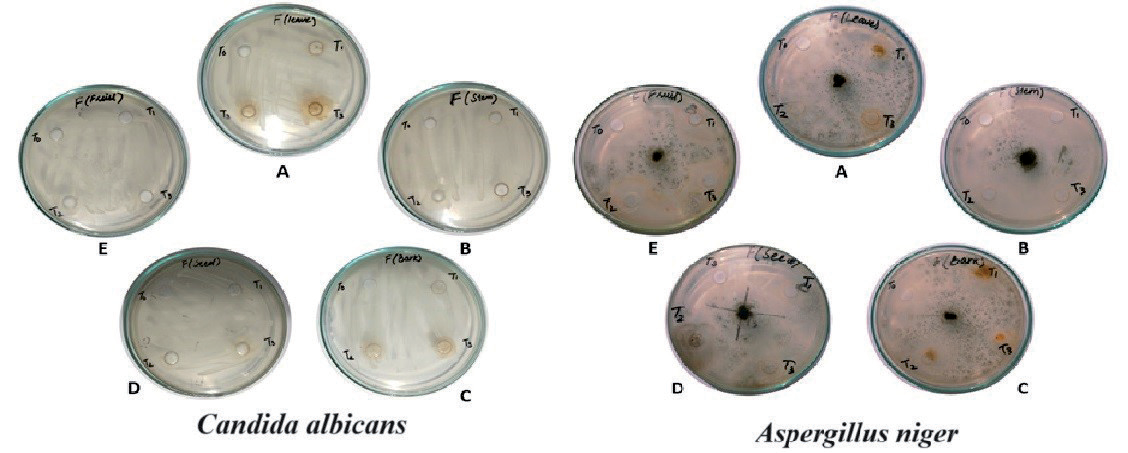
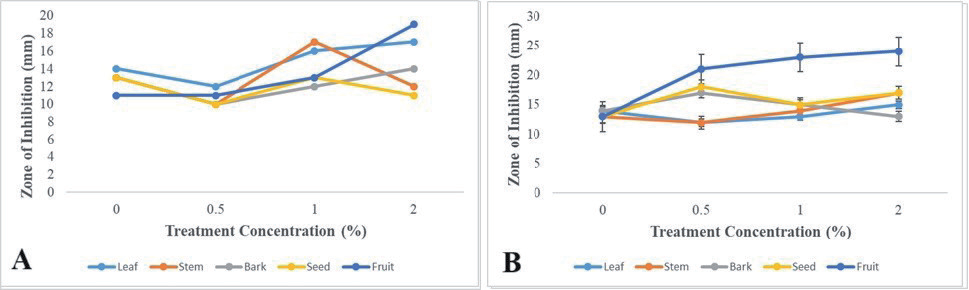
The study investigated the antifungal activity of S. cumini (java plum) leaf, stem, bark, and fruit extracts against Candida albicans and Aspergillus niger (Fig. 4-5). The leaf extract demonstrated significant antifungal effects against C. albicans, with an increasing zone of inhibition at higher concentrations. The zone of inhibition rates were 12mm, 16mm, and 17mm at 0.5%, 1%, and 2% concentrations, respectively. However, the leaf extract showed comparatively less effectiveness against A. niger. The stem extract showed promising results against both C. albicans and A. niger, with an increasing zone of inhibition at higher concentrations. The bark extract exhibited variable antifungal activity, while the seed extract showed a higher zone of inhibition against A. niger at higher concentrations. The fruit extract showed significant antifungal activity against both C. albicans and A. niger. Overall, the agar well diffusion method revealed that the plant extracts exhibited better antifungal activity against A. niger compared to C. albicans in some cases.
Discussion
Allelopathy refers to the phenomenon in which a plant releases certain biochemicals, known as allelochemicals, that can influence the growth, survival, and reproduction of other plant species. These allelochemicals can have both positive and negative effects on the target plant species [9]. It is estimated that higher plants can produce approximately 10,000 distinct allelochemicals, each with its own unique activity and mode of action in receptor plants [10-11]. The allelopathic effects of S. cumini are likely attributable to the presence of allelochemicals in various parts of the plant, including the leaf, stem, bark, seed, and fruit. The present study aimed to investigate the allelopathic potential of different components of S. cumini on the germination and growth of soybean, cucumber, carrot, rice, wheat, and maize seedlings.
Table 1.
Allelopathic Effect of Java Plum Plant Parts on Growth of Various Test Species.
Fig. 2.
Antibacterial activity of Java Plum Plant Parts against Escherichia coli and Acinetobacter baumannii. Note: A: Leaf Extract B: Stem Extract C: Bark Extract D: Seed Extract E: Fruit Extract.
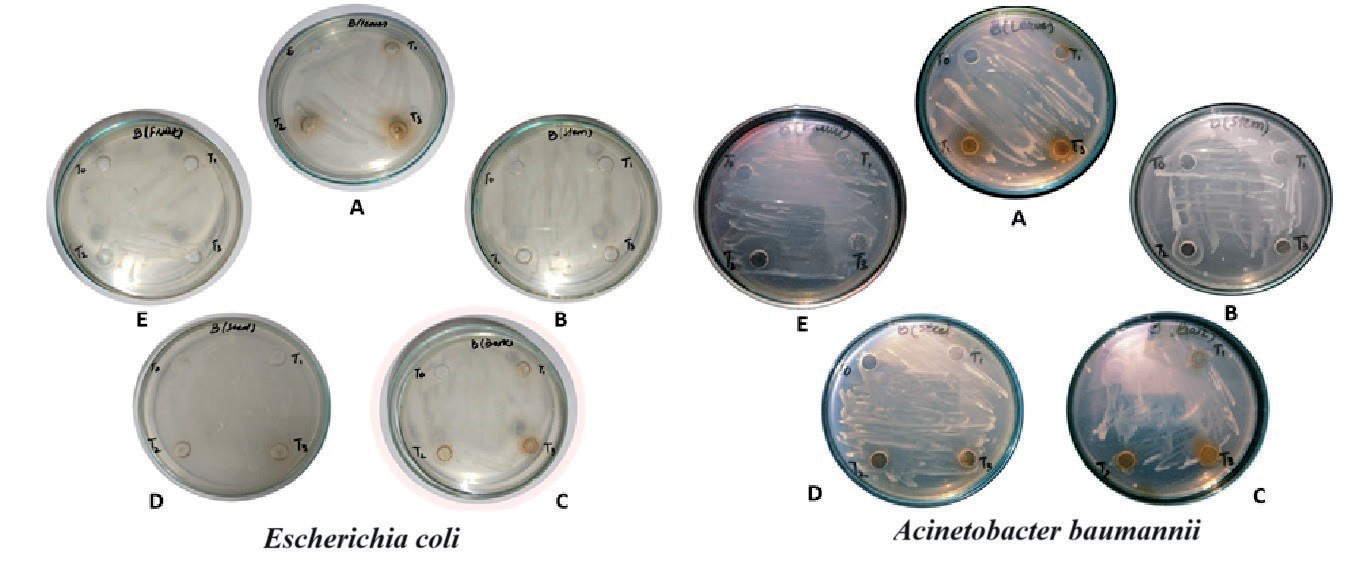
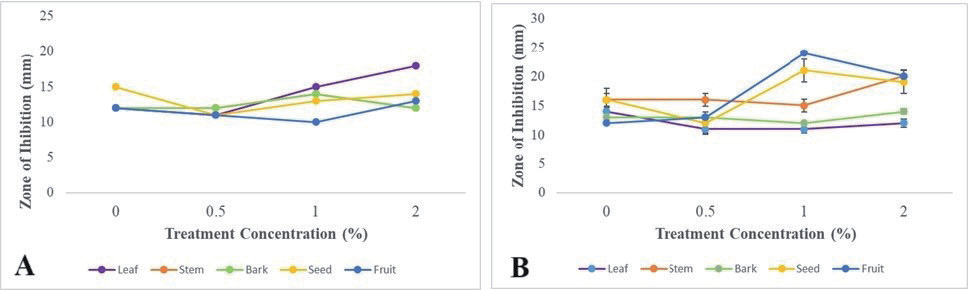
Fig. 4.
Antibacterial activity of Java Plum Plant Parts against Candida albicans and Aspergillus niger. Note: A: Leaf Extract B: Stem Extract C: Bark Extract D: Seed Extract E: Fruit Extract.
The present findings of soybean also agreed with Shi et al. [12], who reported the concentration-dependent effect of Abutilon theophrasti Medik on the germination and growth of Glycine max, Triticum aestivum and Zea mays L. Antioxidant enzyme and root system activities might be responsible for inhibitory or stimulatory response on test species. Siyar et al. [13] reported that a higher concentration of leaf and bark extracts of Dalbergia sissoo retarded the germination and growth of wheat. Similarly, Khan et al. [14] reported that aqueous leaf extract of rice and mustard restrained the growth of soybean at high extract concentrations and stimulated the growth at low concentrations. The different types of allelochemicals (phenolic acid, terpenes, diterpenoids, flavones, and p-coumaric acid) are present in rice. These chemicals repressed the energy metabolism by decreasing the cell division at the mitosis level (p-coumaric acid) and inhibiting water utilization (ferulic acid). As a result, germination and growth of test species were inhibited depending upon the concentration of allelochemicals [15-18]. Bari et al. [19] reported that carrot, garlic, ginger, and turmeric germination and growth are enhanced by aqueous extracts of Dalbergia sissoo.
The present results were consistent with the findings of Mondal et al. [20], who reported a reduction in germination and growth of rice at higher concentrations of leaf extract of S. cumini. Saeed et al. [21] also reported S. cumini exhibited an inhibitory effect on the growth of wheat at higher aqueous extract concentrations. The phytochemical analysis of S. cumini revealed that a greater number of alkaloids, flavonoids, glycosides, steroids, steroid phenols, tennis, and saponins were present in the leaves [22]. The different effect of allelochemicals depends upon the plant source from which chemicals are liberated, the level of concentration and the recipient species [23-24].
The present study investigated the effects of aqueous extracts of S. cumini (java plum) on the growth and germination of wheat seedlings. The leaf extract stimulated wheat hypocotyl growth at all tested concentrations, consistent with Mali and Kanade [25] who found a similar stimulatory effect with Cynodon dactylon extract. However, the leaf extract showed inhibition of wheat radicle growth at the highest concentration, in line with Tripathy [26] and Al-Wakeel et al. [27], who observed inhibition with higher concentrations of Acacia nilotica extract.
Sisodia and Siddique [28] also reported inhibitory effects at higher concentrations of leaf extracts. It was observed that by increasing the aqueous extract concentrations, pH, total phenolic contents and osmotic potential were also increased. It may retard the growth of test species. The fruit extract exhibited inhibition of wheat hypocotyl growth at lower concentrations but stimulation at the highest concentration, as observed by Idu and Oghale [29] with Ageratum conyzoides extract. Mulatu et al. [30] reported inhibitory effects of Parthenium hysterophorus and A. auriculiformis extracts, respectively, supporting the present findings. The seed extract of S. cumini showed inhibition in wheat seed germination across all tested concentrations, similar to Arslan and Uremis [31], who observed inhibition with rapeseed extract. These findings suggest the presence of allelochemicals in S. cumini extracts that predominantly exert inhibitory effects on the growth and germination of wheat. Several types of research proved that allelopathic effects might depend on the plant tissues from which chemicals are liberated [32-33].
In the present study, the bark extract of S. cumini demonstrated a stimulating effect on maize growth at lower concentrations but showed inhibition at the highest concentrations. Similar effects were reported by Iqbal [34] with Moringa oleifera and Brassica extracts. Seigler et al. [35] highlighted the allelopathic effects of certain Acacia species on other crops, mainly attributed to phenolic compounds in their litter. These allelochemical retarded the early growth of weed due to the inhibition of metabolic processes.
Gomaa et al. [36] reported negative effects of Sonchus oleraceus on crops and weeds, associated with phenols and alkaloids that can inhibit cell division and alter cell ultrastructure. The aqueous seed extracts of S. cumini significantly inhibited maize seed germination, with the seed extract exhibiting the highest inhibitory effect, consistent with Phuwiwat et al. [37], who observed inhibition with Melia azedarach leaf extract. Inhibitory compounds were reported by Carpinella et al. [38] and Harborne et al. [39] in M. azedarach, while Kato-Noguchi and Macias [40] suggested α-amylase inhibition as a potential mode of action. On the other hand, the fruit extract of S. cumini stimulated maize growth, with higher concentrations showing greater stimulation in hypocotyl growth, aligning with Sisodia and Siddiqui [28], who found a stimulatory effect with Croton bonplandianum stem extract. Antibodies stimulating plant growth regulators and increased amino acid incorporation into proteins were proposed as mechanisms by Bouwmeester et al. [41] and Tang and Eaton [42].
In the present study, the seed extract of java plum (S. cumini) showed inhibitory effects against E. coli, with a zone of inhibition of 14 mm. The antimicrobial activity of the seed extracts varied depending on the concentration, with inhibitory effects ranging from 11 mm to 15 mm against E. coli. The stem and bark extracts of S. cumini displayed a 14 mm zone of inhibition against E. coli at a concentration of 1%, while the fruit extract showed a 14 mm zone of inhibition against E. coli at a concentration of 2%. These results are consistent with the antibacterial activity reported for Allium sativum [43] and Mentha piperita [44]. Both the stem and fruit extracts of S. cumini demonstrated inhibitory effects against Acinetobacter baumannii, with a maximum zone of inhibition of 20 mm observed at a concentration of 2%. However, at low concentrations, the extracts showed minimal or no inhibitory effects. It is important to note that the antimicrobial activity of the extracts may vary depending on the specific microorganism tested and the concentration of the extracts used. Discrepancies in results between different studies can be attributed to variations in the sources of microorganisms and other factors. Similar inhibitory effects of S. cumini extracts against Klebsiella pneumoniae, Pseudomonas aeruginosa, and Escherichia coli were reported by Keskin and Toroglu [45].
In the present study, the extracts of different parts of S. cumini exhibited varying levels of antifungal activity against the tested fungal species. The aqueous leaf extract at a concentration of 1% showed a significant zone of inhibition of 17 mm for Candida albicans and 15 mm for Aspergillus niger. The antifungal activity of the leaf extract of S. cumini is likely attributed to the presence of tannins and other phenolic constituents. Previous research has reported that S. cumini is rich in gallic and ellagic acid polyphenol derivatives [46]. Acylated flavonol glycosides, kaempferol, myricetin, and other polyphenols have also been isolated from S. cumini leaves, which could contribute to the observed antifungal activity [47]. The significant antifungal effects of the aqueous leaf extract indicate the presence of specific antifungal chemicals in the leaves of S. cumini.
In the present study, the fruit extracts of S. cumini exhibited significant antifungal activity against Aspergillus niger. The aqueous fruit extracts showed clear zones of inhibition of 21 mm, 23 mm, and 24 mm at concentrations of 0.5%, 1%, and 2%, respectively. However, the fruit extracts were found to be comparatively less effective against Candida albicans. Previous research by Chandrasekaran and Venkatesalu [48] also reported the effectiveness of aqueous fruit extract of S. cumini against various fungal species, including C. albicans, Aspergillus flavus, Aspergillus fumigatus, and Aspergillus niger. This suggests that the chemicals present in the fruit of S. cumini possess specific antifungal activity. Anthocyanins, such as glucosides of delphinidin, petunidin, and malvidin found in the fruit peel, as well as phenolics present in the kernel and seed coatings, could be responsible for the observed antifungal activity of the fruit extracts [47].
Conclusions
The results concluded that Syzygium cumini (L.) Skeels exhibit significant allelopathic and antimicrobial activity. It was observed that aqueous extract of S. cumini plant parts had diverse effects on carrot, rice, maize, and soybean growth. All extracts inhibited cucumber growth at all concentrations as compared to the control. The antimicrobial findings showed that the plant extracts exhibited stronger antimicrobial activity than commercially available antibiotics. For example, the fruit extract had the largest zone of inhibition (24 mm) against A. niger and A. baumannii. The study also revealed the potential antifungal effects of java plum seed and fruit extract on tested fungal species, particularly Aspergillus niger, as evidenced by the size of the inhibition zones. Further studies on the allelochemical of java plum plant parts can help in understanding its use for agricultural and medicinal purposes.

