

Introduction
The scarcity of freshwater resources is a significant global issue. This issue has been partially raised due to rapid population growth, industrialization, inefficient water resource management, and unplanned urbanization [1]. The impact of water scarcity in the current climate change scenario is a threat to environmental sustainability and global food security [2]. The use of wastewater in this scenario is a sustainable solution. However, wastewater treatment is vital before its usage in agriculture. Currently, a well-established wastewater collection system is lacking in most parts of the world. Wastewater is usually discharged directly into the open environment, causing water and soil pollution [3]. Wastewater treatment is imperative for the agriculture sector, which uses 70% of the globally available water resources for food production [4]. The increasing demand for irrigation for sustainable crop production has forced farmers to adopt non-conventional irrigation methods to ensure water availability for the proper irrigation of agricultural crops [5].
Gray water largely comprises household water and generally contains portions of soap, toothpaste, shampoo, grease, cooking oil, and detergents [6]. Typically, 50-80% of domestic wastewater falls into the category of gray water. The composition and characteristics of gray water largely depend upon the water supply source, the community’s socio-cultural habits, household activities, and the nature of household chemicals [7]. Gray water collected from bathtubs, hand wash basins, and showers is considered the least polluted gray water, as its biological oxygen demand (BOD) and chemical oxygen demand (COD) usually fall within the defined permissible limits [8].
In recent years, the use of treated gray water for irrigation has gained significant attention from researchers and scientists as it offers a wide range of environmental benefits. Its use can meet the growing demand for water supply for sustainable crop production and can enhance the economic benefits for growers as it possesses essential nutrients, which in turn reduces the need for fertilizer applications [9]. In Pakistan, the rapidly growing population is causing an increase in gray water. Drainage of this gray water usually goes to the ground, which results in the pooling of a large amount of wastewater and, ultimately, contamination of soil and groundwater [10]. Wastewater pooling also leads to soil erosion, surface runoff, unpleasant smells, mosquito breeding, and human health hazards [11]. Gray water has multiple uses in agriculture if properly treated and recycled. For instance, it can be used as a water source for indoor plants [12] and for irrigating turfs, ornamental beds, groundwater recharge, cooling operations in industry, reducing soil erosion, decorative fountains, and crops, as it possesses vital essential nutrients and organic matter [13].
Using untreated wastewater in agriculture may compromise the quality and quantity of the product; however, it is possible to achieve sustainable crop production while maintaining good soil health via efficiently employing treated gray water [14]. Various source segregation, gray water management, and treatment techniques have been tested to make the utilization of domestic gray water possible for irrigation and domestic use [15]. Although different high and cost-effective water treatment techniques have been used to treat gray water globally, such technologies are scarce in Pakistan. Hence, there is a dire need to develop low-cost technology for treating gray water in developing countries like Pakistan. Biofilters, especially those based on agricultural crop residues, offer a novel and sustainable approach to treating gray water. Corncob is an agricultural residue rich in porous structures among the crop residues. It possesses significant potential as an effective biofilter material owing to its contaminant-absorbing capacity [16]. The use of agriculture-based biofilters could be a promising option for treating gray water, especially in areas with inadequate sanitation and high amounts of gray water produced annually. Furthermore, this treatment may offer economical and green energy solutions [17].
Spinach (Spinacia oleracea L.) is a leafy vegetable with a high nutritional and medicinal value. Spinach has one of the highest consumption rates among green leafy vegetables in Pakistan. As a highly nutritional crop, it was used as a test plant for examining the effects of corn cob-filtered gray water in arid to semi-arid regions [18]. In the current study, two spinach varieties (Sindhi and Prikli) were grown using untreated and treated domestic gray water. We hypothesized that the use of low-cost natural adsorbent-treated gray water would increase spinach plant growth and physio-biochemical parameters. The objectives of the current study were to (i) verify the positive correlation between treated gray water and spinach seedling growth, (ii) elucidate the regulatory effect of treated gray water on the activities of antioxidant enzymes, and (iii) compare the regulatory role of untreated and treated gray water on the two different spinach varieties.
Materials and Methods
Experimental Plan and Gray Water Treatment
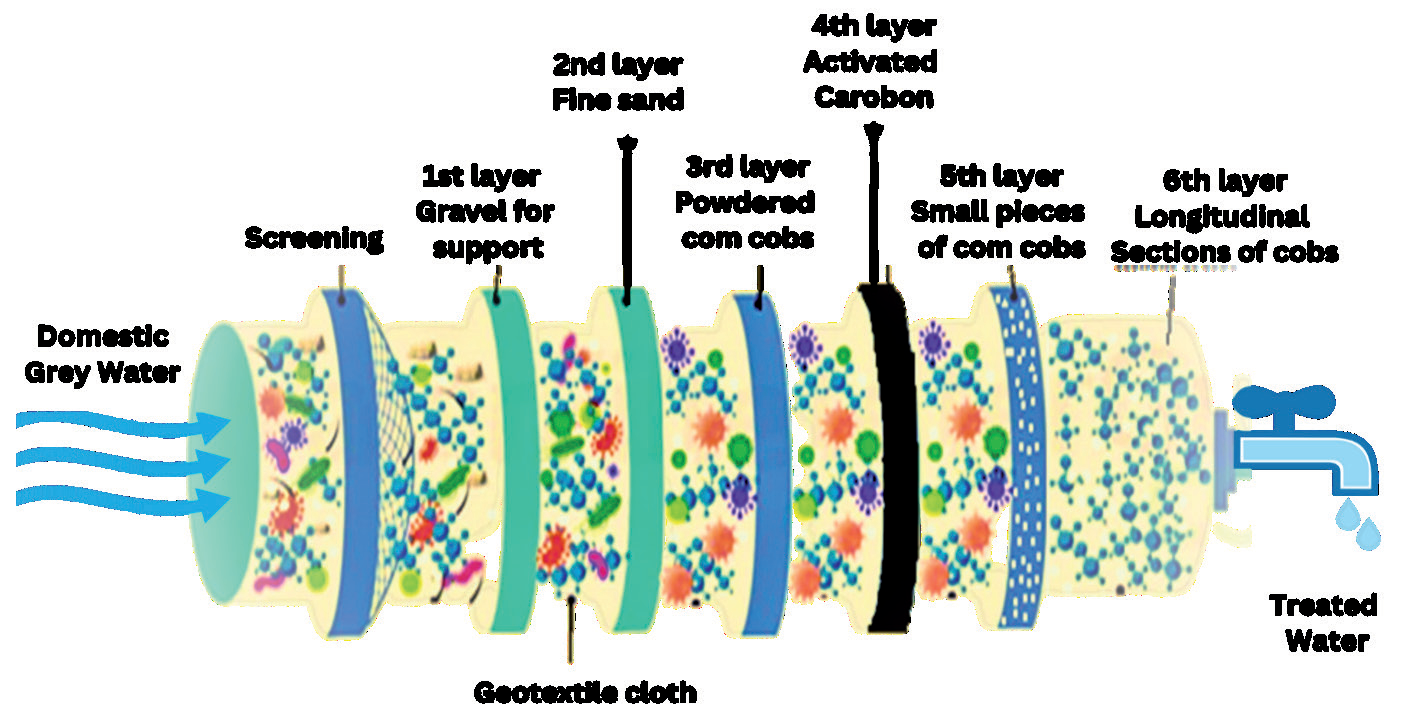
The current study evaluated the effect of gray water (untreated and treated) on the physio-biochemical and antioxidant properties of two spinach varieties (Sindhi and Prickly). Domestic gray water was collected from different locations in Bahawalpur, Pakistan, mixed, and stored in plastic containers. The collected gray water was then passed through a natural adsorbent corncob filter with six layers to purify the gray water. The filter layers included (i) gravel (20 mm), (ii) fine sand, (iii) corn cob powder, (iv) ash-free activated carbon, (v) small pieces of corncob (2 to 5 cm), and (vi) longitudinal sections of cobs (Fig. 1). All layers were separated from each other using a polypropylene geotextile cloth. The treated gray water was stored to be used for irrigation. The biochemical properties of gray water were analyzed before and after the filter treatment. Seeds of two spinach varieties (Sindhi and Prickly) were sown in earthen pots filled with sandy loam soil (10 kg) in a completely randomized design with four replications. At the two-leaf stage, equal volumes of untreated and treated gray water were applied as an irrigation source for 45 days on alternate days. The treatment includes good quality tap water (TW), untreated domestic gray water (UGW), and treated domestic gray water (TGW) (physical and chemical properties are given in Table 1).
Plant Growth and Physiological Attributes
Spinach plants were harvested 60 days after germination. Shoot and root lengths were measured using a scale and root area meter (WinRHIZOTM, 2022A, Netherlands), respectively. Fresh biomass was measured using an analytical weighing balance, while the leaves were dried in an electric oven to measure the dry biomass. Fresh leaf strips were taken to estimate the relative water content (RWC) in both spinach varieties. After measuring the fresh weight (FW), the leaf samples were placed overnight in stoppered vials filled with distilled water to determine their turgid weight (TW). The same samples were then oven-dried in paper bags at 70ºC until they reached a consistent dry weight (DW). The RWC (%) was calculated by adopting the following equation, as described by [19]:
Fig. 1.
The impact of tap water (TW), untreated gray water (UGW), and corn cob-treated gray water (TGW) on SPAD contents, relative water contents (RWC) and membrane stability index (MSI) of two spinach varieties (Sindhi and Prikli). The values of the graph bars present the average of four replications, and the values having different lowercase letters differ from one another at the P<0.5 level (LSD).
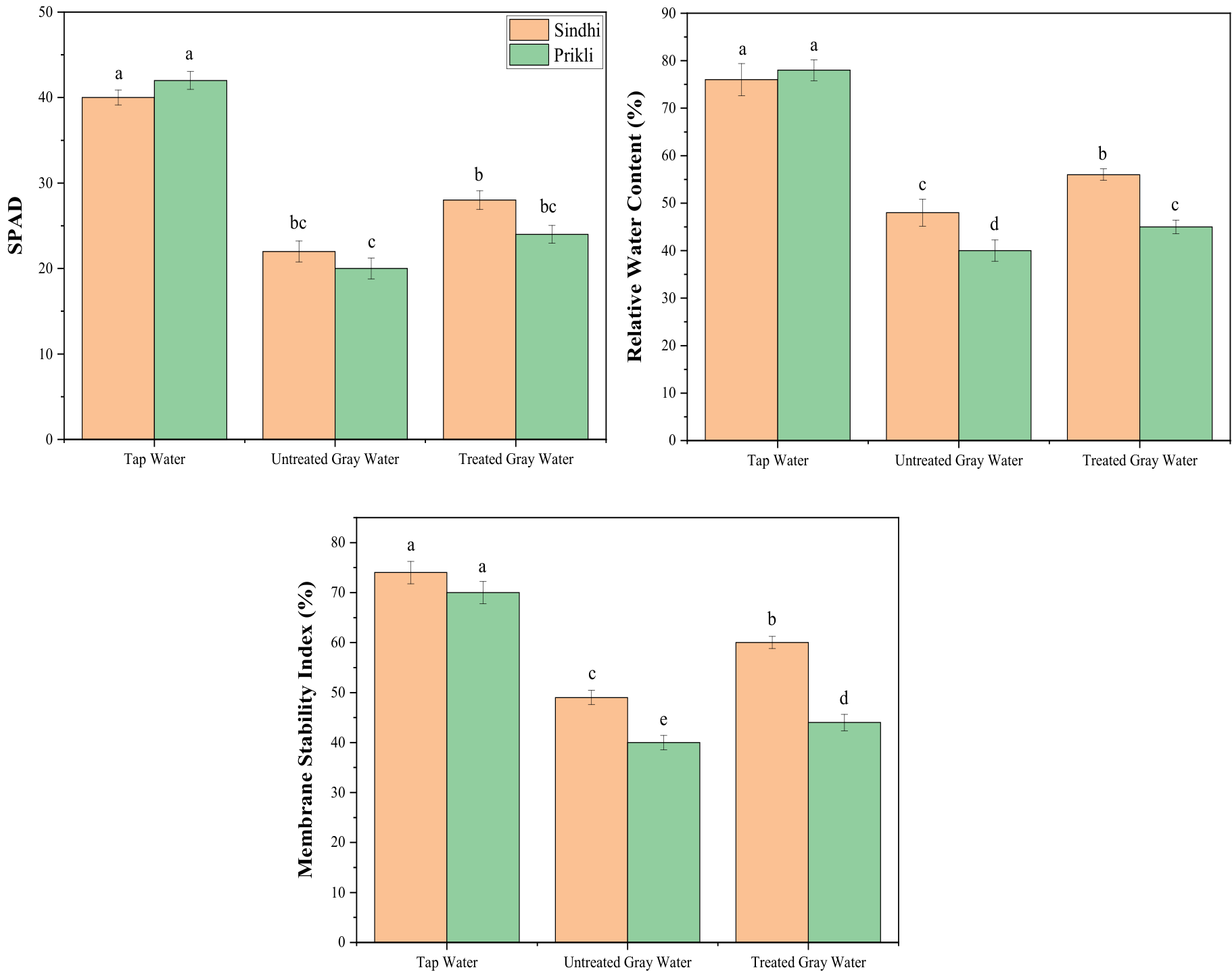
Table 1.
Physical and chemical properties of tap water (TW), untreated domestic gray water (UGW), and corn cob-treated gray water (TGW) used in the experiment.
To determine the membrane stability index (MSI) in seedlings of both spinach varieties, expanded leaf tissues (100 mg) were heated in distilled water (10 mL) in a water bath for 30 min at 40ºC, and the initial electrical conductivity (EC1) was measured. Subsequently, the same spinach leaf samples were placed at 100ºC for 10 min, and the final EC (EC2) was recorded [20]. MSI was determined as follows:
Plant chlorophyll content (SPAD value) was measured using a SPAD meter (Minolta Japan) following [21].
Oxidative Stress Indicators
Malondialdehyde (MDA) content in the spinach was measured by heating leaf segments in a water bath at 90ºC after treatment with PBS solution. The treated samples were allowed to cool and subsequently dissolved in TBA solution, and a UV spectrophotometer was used to record the measurement at 530 nm. Similarly, leaf strips of spinach seedlings were mixed with a 0.1% TCA mixture after extracting the reaction solution using K–P buffer to measure the H2O2 concentration in plant tissues. The H2O2 concentration was measured following the methodology described in [22].
Soluble Sugar Content
To determine the soluble sugar (sucrose and fructose) content in the spinach, 85% ethanol (2 mL) was used to extract fresh leaf tissues (0.1 g). Plant samples were passed through a 0.45 mm membrane filter, and the extract was then placed at 80ºC in a water bath for 60 min. The subsequent samples were separated and placed in an electric oven at 150ºC. Finally, by operating a fluorescence detector, soluble sugar (fructose and sucrose) contents were calculated at 320 nm and 430 nm wavelengths using HPLC (Agilent, USA) [23].
Estimation of Antioxidant Enzyme Activity
Fresh leaf strips (0.5 g) were ground and treated with 10 mL of 50 mM extracted phosphate buffer solution (pH 7.8 at 0-4ºC). The subsequent homogenous mixture was then centrifuged at 15000 rpm for 20 min. The mixture, after centrifugation, was used to estimate the antioxidant enzyme activities. Superoxide dismutase (SOD) activity at 560 nm was measured using a spectrophotometer following the protocol used by [5]. By adopting the procedure described by [24], the activity of peroxidase (POD) was measured at 470 nm, while CAT (catalase) activity was measured at 240 nm using a UV spectrophotometer [25].
Determination of Lignin Content, Carbohydrates, and Crude Protein
Lignin contents in both spinach varieties’ seedlings were determined using a colorimetric method. Plant samples (0.3 g) were treated with anthrone and reagent boiled at 100ºC with a nitric and acetic acid mixture. The absorbance was measured spectrophotometrically at 620 nm [26]. Glucose content was measured following the methodology of [27].
Statistical Analysis
Collected data analysis was performed using Statistics 8.1 (USA). The standard deviation (SD) for each treatment was calculated using four replicates (n = 4) to determine the differences between the means of each treatment at P<0.05. The least significant difference (LSD) test was performed [28], and Origin Pro 2021 software was used to make the figures.
Results
The sustainable production of spinach crops is facing a serious threat due to land and water resource degradation under the current climate change scenario. The current study investigated the growth responses of two spinach genotypes in terms of fresh and dry biomass under good-quality irrigation water and untreated and treated gray water application (Table 2). From the results, it was evident that compared to the control treatment (tap water), untreated gray water showed pronounced negative impacts on spinach growth and fresh and dry biomass. Root traits of both spinach varieties were significantly affected in response to untreated gray water. More specifically, 45%, 43%, and 39% reductions were noted in root length and fresh and dry biomass, respectively, in Sindhi, whereas reductions of 56%, 64%, and 65% were noted in Prikli. However, gray water treatment improved the root length and fresh and dry weights by 25%, 23%, and 17%, respectively, in Sindhi and 16%, 20%, and 16%, respectively, in Prikli. Similarly, Sindh showed a 33%, 42%, and 37% reduction in shoot length and fresh and dry weight when irrigated with untreated gray water, while the reduction in the case of Prikli was 42%, 52%, and 60%, respectively. When irrigated with treated gray water, Sindhi showed improved growth by 21%, 26%, and 20% in shoot length and fresh and dry weight, respectively, whereas Prikli showed an improvement of 17%, 10%, and 13% in these traits.
Table 2.
The impact of tap water (TW), untreated gray water (UGW), and corn cob-treated gray water (TGW) on the fresh and dry biomass of two spinach varieties (Sindhi and Prikli). The values present the average of four replications, and the values having different lowercase letters differ from one another at the P<0.5 level (LSD).
The effects of untreated and treated gray water applications on membrane stability (MSI), RWC, and spinach’s SPAD contents were evaluated (Fig. 2). Compared to the control, untreated gray water remarkably affected plant physiological traits. However, the application of treated gray water significantly improved these traits. The results revealed that, compared to the control, reductions of 34%, 36%, and 44% were observed in MSI, RWC, and SPAD chlorophyll contents in Sindhi, while reductions of 43%, 48%, and 52% were observed in Prikli. Treated gray water improved MSI, RWC, and SPAD chlorophyll content by 22%, 16%, and 27%, respectively, in Sindhi and 10%, 12%, and 20%, respectively, in Prikli compared to untreated gray water.
Fig. 2.
The impact of tap water (TW), untreated gray water (UGW), and corn cob-treated gray water (TGW) on superoxide dismutase (SOD), catalase (CAT), and peroxidase (POD) contents of two spinach varieties (Sindhi and Prikli). The values of the graph bars present the average of four replications, and the values having different lowercase letters from one another at the P<0.5 level (LSD).
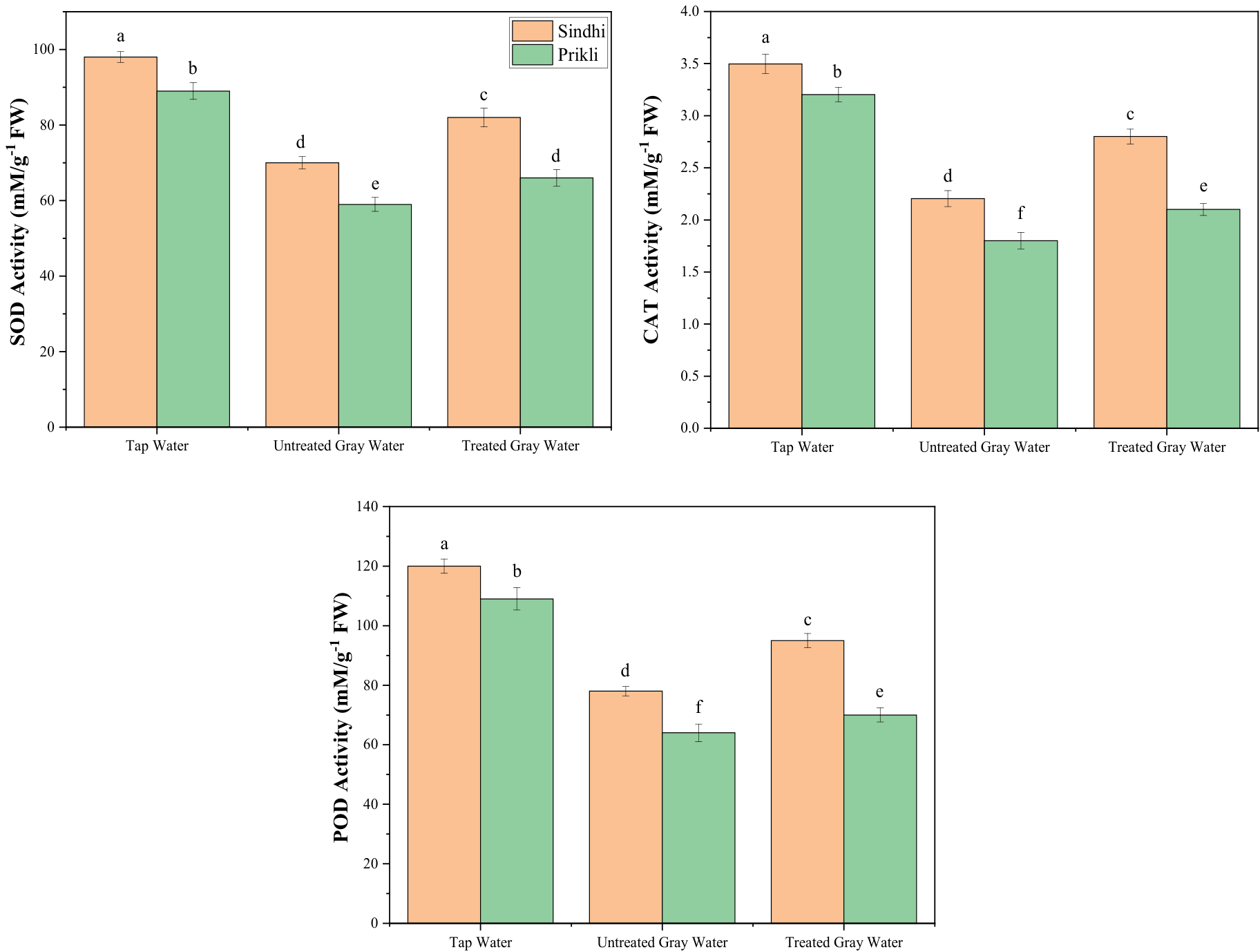
Fig. 3.
The impact of tap water (TW), untreated gray water (UGW), and corn cob-treated gray water (TGW) on antioxidant stress indicators and soluble sugar content of two spinach varieties (Sindhi and Prikli). The values of the graph bars present the average of four replications, and the values having different lowercase letters differ from one another at the P<0.5 level (LSD).
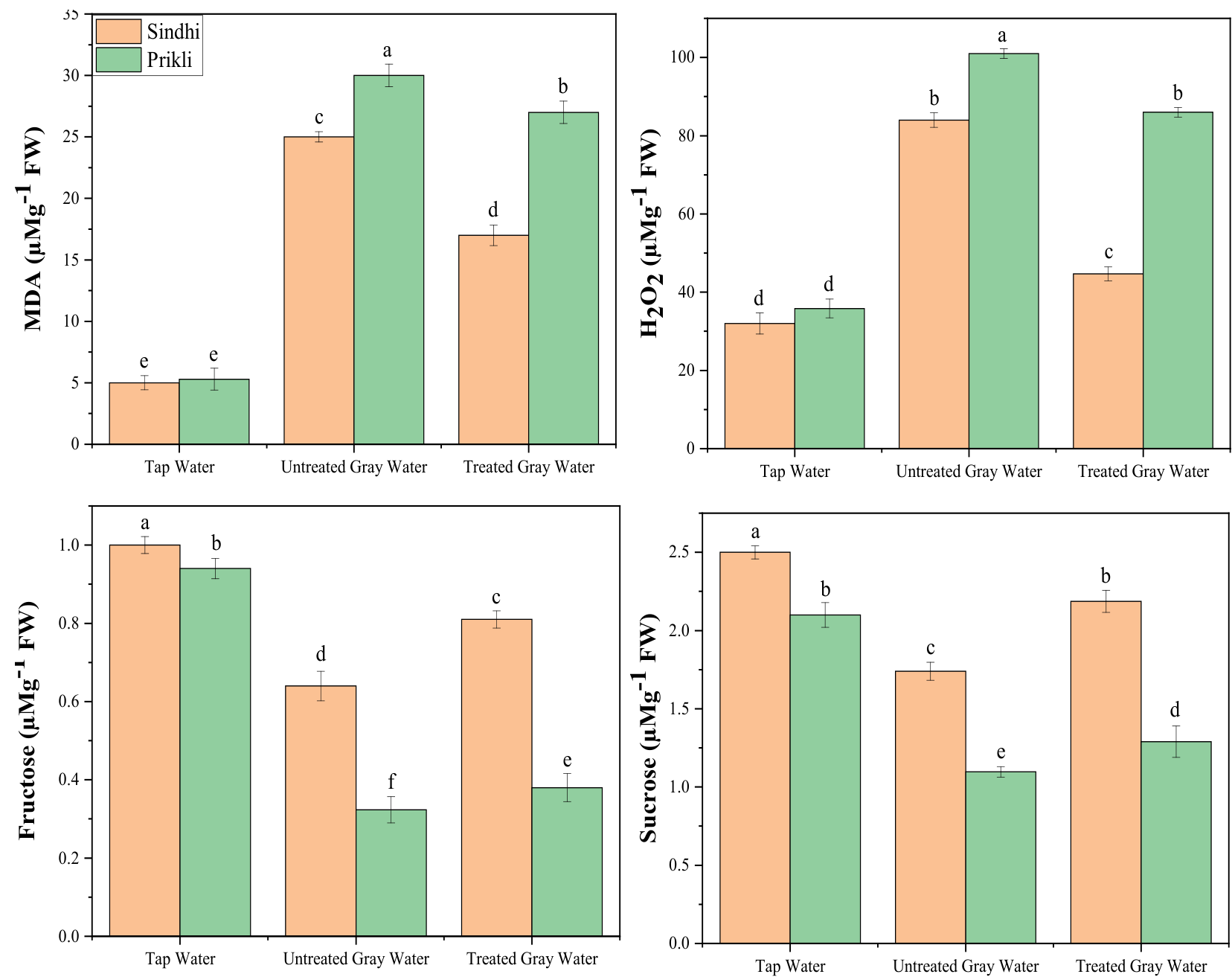
Antioxidant enzymes play a front-line role in alleviating certain abiotic stresses in plants. In this study, alterations in the activities of antioxidant enzymes (SOD, POD, and CAT) were noted when spinach seedlings were subjected to the application of treated and untreated gray water. The analyzed data revealed that the application of untreated gray water significantly reduced the activities of antioxidant enzymes; however, the application of corn cob-filtered treated gray water significantly improved (by more than 20%) the activities of SOD, POD, and CAT enzymes (Fig. 3). In the current study, oxidative stress indicators, that is MDA and H2O2 contents, were also measured (Fig. 4) in the leaves of both spinach varieties under untreated and treated gray water application. Irrigation with untreated gray water increased MDA and H2O2, whereas treatment with treated gray water caused a notable decrease in MDA and H2O2 contents. Sindhi showed an eminent response to treated gray water application, and when compared with the untreated gray water, Sindhi showed a reduction of 40% and 46% regarding MDA and H2O2 contents, respectively, while Prikli showed 18% and 17%. The results showed that both spinach varieties had considerably lower soluble sugar content when irrigated with untreated gray water than the control. In terms of sucrose, Sindhi and Prikli showed a reduction of 31% and 47%, respectively. Regarding fructose content, Sindhi and Prikli showed a reduction of 36% and 65%, respectively, under untreated gray water application. However, a notable increase in the content of soluble sugars (sucrose and fructose) was noted when seedlings of both spinach species were irrigated with treated domestic gray water (Fig. 4).
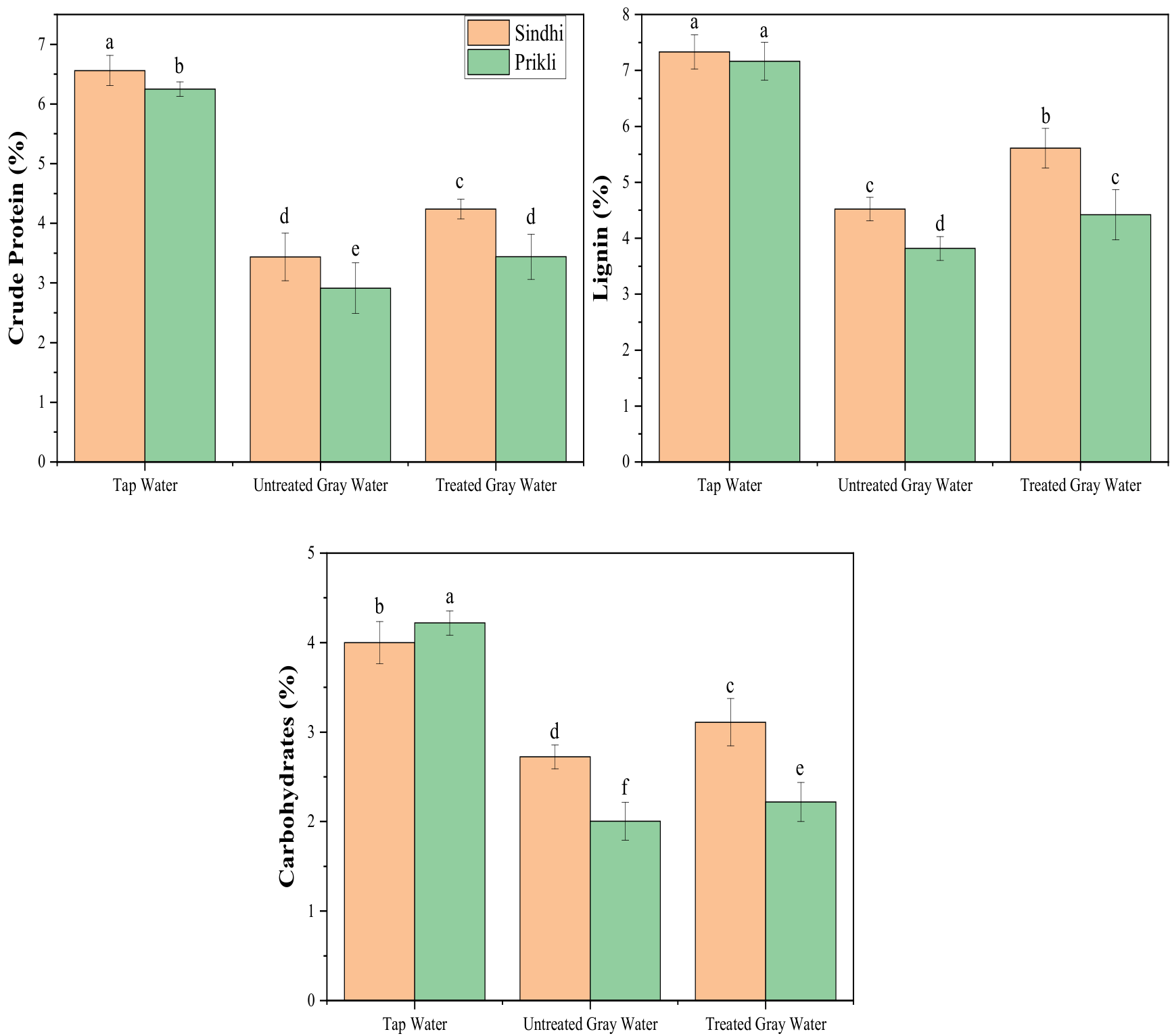
The analyzed data revealed that when both spinach varieties were exposed to untreated gray water, a significant reduction in crude protein (38%), lignin (35%), and carbohydrate content (33%) was observed in the spinach variety Sindhi compared with the control treatment, while a reduction in Prikli was noticed by 54%, 43%, and 45%, respectively. However, when the same seedlings of both spinach varieties were subjected to the application of treated gray water, a notable improvement in nutritional composition was observed in Sindhi, with 22%, 25%, and 21% improvement in crude protein, lignin, and carbohydrate contents, respectively, while the improvement noted in Prikli was 16%, 15%, and 11%, respectively (Fig. 5).
Fig. 4.
The impact of tap water (TW), untreated gray water (UGW), and corn cob-treated gray water (TGW) on crude protein, lignin, and carbohydrates contents of two spinach varieties (Sindhi and Prikli). The values of the graph bars present the average of four replications, and the values having different lowercase letters differ from one another at the P<0.5 level (LSD).
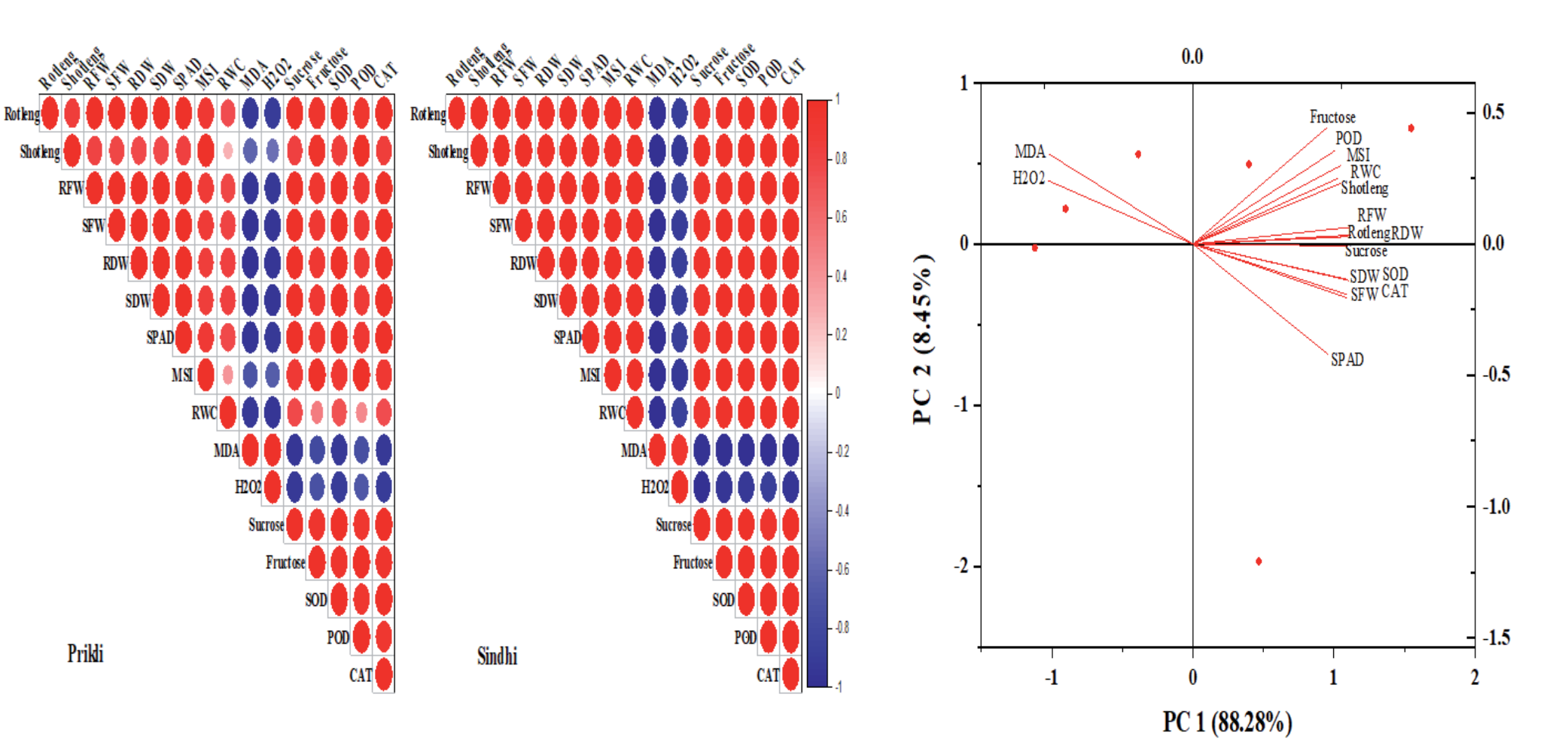
Pearson correlations and principal component analysis revealed the relationship among the studied traits of both spinach varieties under treated and untreated gray water application (Fig. 6). The correlation analysis revealed that plant growth attributes, that is, shoot and root length, root and shoot fresh weight, root and shoot dry weight, chlorophyll content, membrane stability, plant water content, soluble sugar content, MDA and H2O2 content, along with the activities of antioxidant enzymes, could serve as potential parameters for assessing the plant. A negative relationship between MDA and H2O2 contents was observed with growth attributes, plant physiology, plant soluble sugars, and antioxidant enzyme activities.
Discussion
Currently, the global hydrological cycle and human health are negatively affected by water pollution and the presence of toxic elements in wastewater. The use of toxic, untreated gray water for irrigation in agricultural settings is now a common practice in many developing countries, where farmers have restricted access to good-quality irrigation water [29]. This situation raises serious concerns for human health and environmental implications [30]. Treatment of gray water and its use are important for providing an alternate source of irrigation water and addressing the environmental toxicology and sanitation problems arising from the disposal of gray water near city areas [31]. In the current study, a significant decrease in growth attributes in terms of root and shoot of both spinach varieties was noted in response to untreated gray water. The possible mechanism behind this reduction could be the presence of increased Na+ concentration, reduced water infiltration into the root cell, and specific ion toxicity [32]. Moreover, untreated gray water generally causes an imbalance in the availability and uptake of essential plant nutrients by plant roots and their transport to aerial plant tissues, ultimately resulting in lower growth and decreased fresh and dry biomass [33]. Our results are in line with [34], who reported a decrease in Glycine max growth and biomass under the application of untreated domestic gray water. However, when irrigated with treated gray water, a significant increase in plant growth traits was reported, which might be due to the absence of ion concentration (especially heavy metals) and Na+ content in treated gray water. Moreover, the decrease in growth could be due to the regulation of rhizosphere pH, which can ultimately decrease root cell damage and facilitate the enhanced uptake of essential plant nutrients from the rhizosphere. These results are also in line with [35], who reported an increase in African spinach plant height and root growth in response to treated gray water compared to untreated gray water application.
Fig. 5.
Correlation analysis (P<0.05) and principal component analysis between different measured parameters of cotton plant seedlings and soil properties under chemical fertilizer and fermented manure applications. The abbreviations are as follows: RFW (root fresh weight), SFW (shoot fresh weight), RDW (root dry weight), SDW (shoot dry weight), SPAD (SPAD chlorophyll contents), MSI (membrane stability index), RWC (relative water contents), sucrose and fructose (soluble sugars), SOD (superoxide dismutase), POD (peroxidase), and CAT (catalase).
Physiological traits such as plant chlorophyll content, cell membrane stability, plant water relations, and moisture content are important markers for maintaining plant growth [36]. The current study showed reductions in plant MSI, RWC, and SPAD chlorophyll values under untreated gray water application. This event is likely due to the presence of some toxic components, especially chloride, boron, and dissolved salts in the applied gray water, which adversely affect plant cell membrane stability and result in plasma membrane rupture [37]. The rupture of the plasma membrane results in an ionic imbalance in the plant cell, which ultimately desiccates the cell and results in lower plant water content [38]. Plants close their stomata under water stress and nutrient imbalance, resulting in less photosynthesis [39]. These results were previously supported by [40], who reported a decrease in chlorophyll content and disrupted plant physiological attributes under long-term irrigation with gray water. The current study observed a significant increase in plant physiological attributes under treated gray water application. This could be due to the balanced uptake of nutrients from the soil. These nutrients are important because they are crucial for metabolic processes; nitrogen availability increases the rubisco enzyme, which is essential for chlorophyll synthesis, and also increases plasma membrane stability [41]. Moreover, the improvement in soil saturation and less dissolved salts could contribute to plants’ improved relative water content [42]. The improvement of moisture content and cell membrane stability results in improved physiological characteristics and ultimately improved growth under gray water treatment, as previously supported by the results of [43] in spinach.
According to [44], untreated raw gray water induces oxidative stress in cucumber plants, which is a major factor in plasma membrane deterioration, imbalanced lipid peroxidation, enhanced cell electrolyte leakage, and poor nutrient transport from roots to aerial parts of the plant, as shown in Fig. 4. These results are in parallel with the findings of [45], who reported a significant increase in oxidative injury in plants under untreated gray water treatment. In the current study, we observed that untreated gray water application to spinach seedlings resulted in an increase in MDA and H2O2 contents compared to treated gray water. Provision of treated gray water to spinach seedlings enhanced the activities of SOD, POD, GR, and CAT, leading to the detoxification of ROS [46, 47].
Fig. 6.
Schematic diagram of corn cob filter showing different layers of powdered, small pieces and longitudinal sections of corn for treating domestic gray water.
In the current study, the activities of antioxidant enzymes under different irrigation water treatments were also evaluated in spinach. Several studies have investigated the tolerance mechanisms of various plant species to abiotic environmental stresses [48]. Antioxidant enzymes (SOD, POD, CAT, and APX) have been reported to improve the plant defense system, which helps in the reduction of stress [49, 50]. In the current study, lower activities of antioxidant enzymes were noted in spinach under untreated gray water application when compared to treated gray water. Our results are in line with the findings of [45], which reported an increase in antioxidant enzyme activities under treated gray water application.
A significant variation in the crude protein, lignin, and carbohydrate contents was observed in the current study in both spinach varieties when subjected to treated and untreated gray water. Under untreated gray water, a reduction in the uptake of K+ was observed, which might be a reason for the reduced crude protein content in plants, as K+ is vital for protein synthesis [13]. Under the high toxicity imposed by untreated wastewater, the release of certain enzymes involved in catalyzing monolignol biosynthesis could be disturbed, which would reduce lignin production in plants [51]. Treated gray water application improved plant mineral nutrition, especially K+ availability, antioxidant enzymes, scavenging toxic radicals, and improved photosynthesis and protein synthesis [52].
Conclusions
This study showed that untreated gray water poses serious detrimental effects on the growth and physio-biochemical aspects, such as membrane stability, chlorophyll content, and soluble sugars. However, the corn cob filter-based treated gray water application recovered plant growth and biomass, boosting the antioxidant enzyme activities, cell membrane stability, and sucrose and fructose contents more than the untreated water application. Furthermore, the decrease in MDA and H2O2 in response to the treated water treatment indicates amelioration in the oxidative stress in spinach. Both spinach varieties responded differently to the application of treated gray water, and Sindhi showed eminent growth under all treatments when compared to Prikli. The improvement in these biochemical and nutritional aspects indicates the health benefits of spinach for human health. Moreover, these results indicate the potential of the technology to use gray water to produce sensitive horticultural crops. Further, based on these outcomes, the use of corn cob-treated gray water provides a good alternative for irrigation as it can reduce freshwater demand, promote environmental protection, and support the sustainable production of horticultural crops, especially in the water-scarce regions of Pakistan. However, the response of other crops to treated gray water can define the success of this technology, and it should be further explored in future studies. To the best of our knowledge, this is the first research study that provides a novel and sustainable approach for treating gray water using a low-cost natural adsorbent and its application for sustainable spinach production. Future research should focus on long-term field trials on different salinity and heavy metal-sensitive crops, optimizing the filtration efficiency of this technology and assessing the broader environmental impacts and the molecular aspects of crops in response to treated water application.

