

Introduction
Soil salinity is a major issue facing the arid and semi-arid regions, which reduces crop productivity [1]. It has been previously investigated that soil salinity lowers water availability and increases ion toxicity in plants, as well as deteriorates microbial activity in the soil [2]. The loss in production of crops and poor soil health to support plants is severely damaging to the farmer community as related to crop yield. The sunflower is an important edible oil crop. The crop is sensitive to salinity stress and yield reduction is considerable in salt-affected soils [3]. Soil salinity increases as the organic matter level decreases in the soil [4]. Soil microorganisms and organic matter are vital components for soil fertility reduction in microbial activities in saline soils and can decrease the growth of plants [5]. Enhancing the microbial and enzymatic activity of the soil can help plants resist the negative effects of soil salinity [6]. Biochar has traditionally been utilized to enhance soil conditions for improved crop growth. Biochar supplies carbon and nutrients to the microbial population, promoting soil enzymatic activity [7]. Several research efforts have investigated the impact of biochar on soil quality. These studies indicate that biochar enhances soil organic carbon, water-holding capacity, soil aeration, nutrient availability, stimulation of soil microbial and enzymatic activity, and cation exchange capacity (CEC) [8, 9]. Biochar has numerous advantages for soil, but its elevated pH level can pose challenges for soil fertility, particularly affecting the accessibility of soil minerals like phosphorus [10]. Raising the pH of soil enhances microbial nitrification, leading to nitrate losses and reduced availability of ammonium, the primary nitrogen source for plants [11].
Another method to reduce the impact of salinity is by utilizing arbuscular mycorrhizal fungi [12, 13]. Research on salt stress tolerance in mycorrhizal plants indicates that arbuscular mycorrhizal (AM) plants exhibit enhanced growth because of improved mineral nutrition and physiological activities, such as photosynthesis, water use efficiency, and osmoregulation. Arbuscular mycorrhizal fungi (AMF) are commonly found among various soil microorganisms in the rhizosphere [14]. The study [15] showed that inoculating arbuscular mycorrhizae improves nutrition absorption and preserves cell hydration. The AMF boosts the production of proteins and chlorophyll by directly affecting the absorption of magnesium, a crucial component of the chlorophyll molecule [16].
Salinity stress is a significant constraint affecting agricultural productivity, particularly in arid and semi-arid regions. Sunflower (Helianthus annuus L.) is an important oilseed crop with considerable economic value [17]. The synergistic effects of Sulfur-treated biochar and AMF on sunflower growth, nutrient assimilation, and biochemical attributes under salinity stress remain understudied [18–20]. Based on preliminary observations and existing literature, we hypothesize that the combined application of Sulfur-treated biochar and arbuscular mycorrhizal fungi will lead to a significant improvement in sunflower growth, nutrient assimilation, and biochemical attributes under salinity stress conditions.
Material and Methods
Experimental Detail
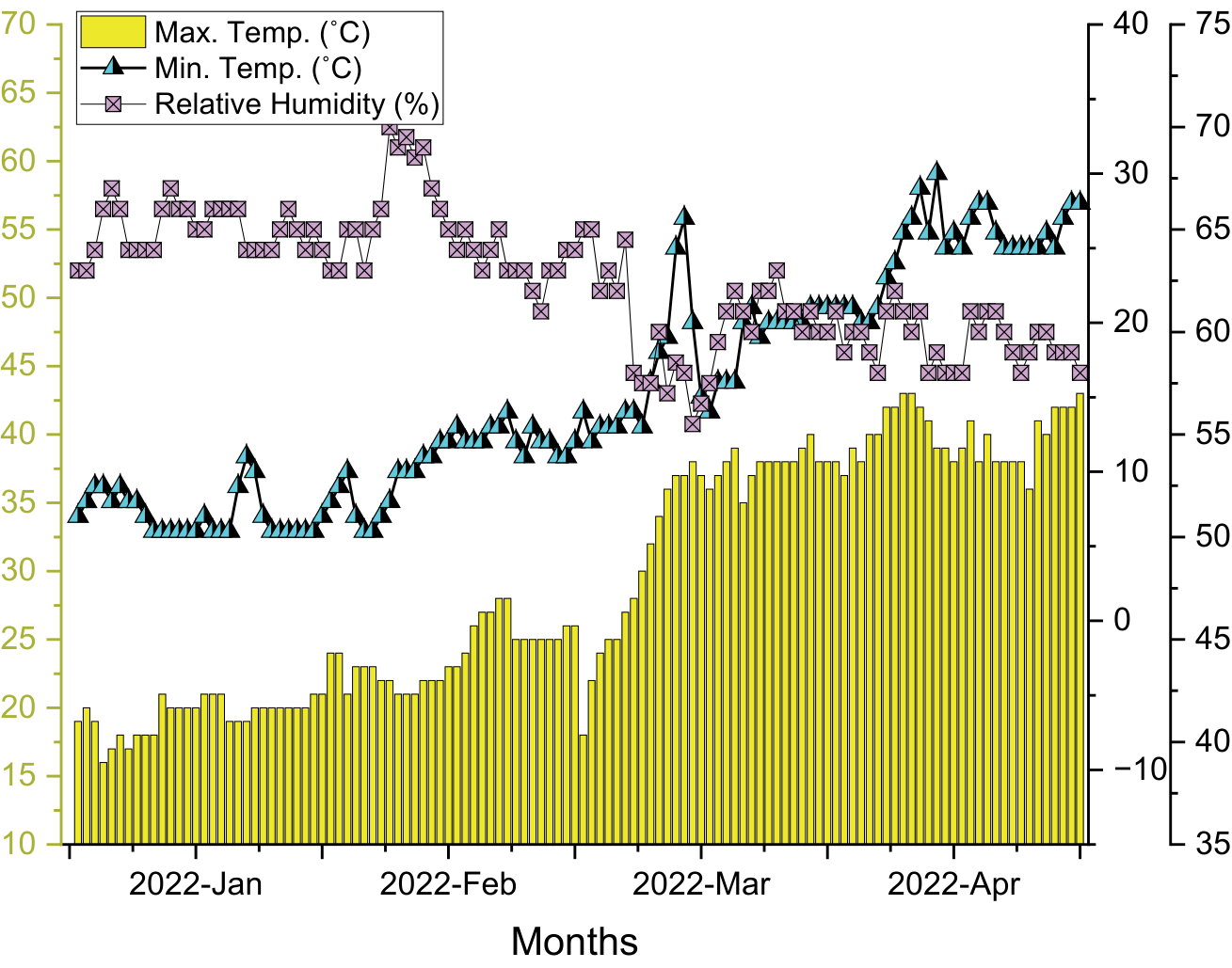
A pot experiment was conducted in the research area of the Faculty of Agricultural Sciences and Technology, Bahauddin Zakariya University Multan (Punjab) Pakistan, which is situated at geographical coordinates 30°15′49″N &71°30′35″E (Fig. 1). The physiochemical properties of soil and irrigation water were given in (Table. 1). The experimental design followed a completely randomized design (CRD), where each treatment combination was random with three replications assigned to the experimental units (Control (CK), 1% Sulfur-treated biochar (1%BS), arbuscular mycorrhizal fungi (AMF) inoculation. Each treatment group was subjected to two different salinity levels i.e., control having EC 2.58 dSm1 and saline soils having EC 5.68 dSm1.
Seeds Collection and Sterilization
Hysun33 (Helianthus annuus L.) seeds were obtained from Government of Punjab Pakistan-certified seed dealers. To ensure quality, only sound seeds were chosen for the experiment, excluding broken or fragile ones. Select seeds were surface-sterilized before sowing. Starting with 5% sodium hypochlorite, the seeds were rinsed three times with 95% ethanol. The seeds were triple-washed in sterile deionized water to remove leftover sterilizing chemicals [21].
Fertilizer
A balanced 60:40:25 ratio of nitrogen (N), phosphorus (P), and potassium (K) met plant nutritional needs. This essential nutrition blend came from artificial fertilizers. These nutrients were delivered during sowing, watering, and flowering. These growth phases had different nutritional amounts. Along with primary nutrients, the cultivation regimen included additional micronutrients like Sulphur (S), zinc (Zn) at 33%, and borax (B) at 11%. The micronutrient application was exact, with 5 kg per acre for Sulfur, 6 kg for zinc, and 3 kg for borax.
Harvesting and Data Collection
125 days after seeding, the plants were mature and ready for harvesting. Each plant’s height, achene count, and head diameter were carefully measured. With a calibrated electric balance, 1000 achenes were weighed. We harvested the entire pot and let the plants dry in the sun after this inspection. The plant heads were carefully removed, and the grains were manually threshed. Using a calibrated electric balance, all grains from each pot were weighed.
Determination of Macronutrients
For the determination of nitrogen, phosphorus, and potassium in plant samples, the procedure mentioned in the ICARDA manual 3rd edition was followed by Ryan et al. (2001).
Chlorophyll (Spad) Contents
Chlorophyll content was measured using a portable chlorophyll meter (SPAD meter) by placing the meter on a fully expanded leaf and recording the SPAD reading.
Relative Water Content (%)
Fresh weights of leaf samples were recorded. After soaking in distilled water for several hours, they were wiped dry and reweighed for turgidity. Finally, the samples were oven-dried and weighed again to establish dry weight. The formula for relative water content (RWC) was: RWC (%) = [(Fresh Weight – Dry Weight) / (Turgid Weight – Dry Weight)] × 100
Electrolyte Leakage (%)
Electrolyte leakage was determined as an indicator of cell membrane damage and stress. Leaf samples were collected and submerged in deionized water (initial conductivity, C1). After 24 hours, the conductivity of the solution (final conductivity, C2) was measured using a conductivity meter. Electrolyte leakage was calculated as the percentage of conductivity increase: Electrolyte Leakage (%) = ((C2-C1))/C1 ×100
Gas Exchange Attributes
Quantifying gas exchange properties required the Infra-Red Gas Analyzer. This sophisticated device measured photosynthesis, intercellular CO2 concentration, transpiration, and stomatal conductance.
Data Analysis
To identify significant treatment differences, the data were analyzed using ANOVA. After comparing means with appropriate Tukey’s post-hoc tests, correlation analyses were used to examine parameter connections. To establish treatment effects and significance, R was used for statistical analysis.
Table 1.
Pre-experimental biochar and irrigation characteristics.
Results
Plant Height
The study measured sunflower plant height at 2.58 dS/m and 5.68 dS/m to quantify salinity stress. Compared to the control group’s 51.62 cm average height, 1% Sulfur-Treated Biochar (BS) and 0.5% Arbuscular Mycorrhizal Fungi (AMF) raised plant height by 11.74% and 18.76%, respectively. The combination of 0.5% AMF and 1% BS increased 31.07%. In the 5.68 dS/m salinity stress condition, controls averaged 49.50 cm tall. Adding 1% Sulfur-Treated Biochar and 0.5% Arbuscular Mycorrhizal Fungi improved plant height by 12.25% and 20.54%. 0.5% AMF and 1% BS increased sunflower crop growth by 30.99%, suggesting they may reduce salt stress (Table 2).
Root Fresh Weight
The sunflower crop’s root fresh weight (g/plant) under 2.58 dS/m and 5.68 dS/m salt stress yielded important insights. The control group (CK) averaged 1.99 grams per plant in root fresh weight at 2.58 dS/m. Compared to the control group, 1% Sulfur-Treated Biochar (1%BS) increased yields by 20.50% to 2.40 g/plant. Compared to the control group, 0.5% Arbuscular Mycorrhizal Fungi (0.5% AMF) increased the average root fresh weight by 66.02% to 3.31 g/plant. The treatment with 0.5% arbuscular mycorrhizal fungus (AMF) and 1% beneficial soil bacteria (BS) produced the highest root fresh weight, 3.84 g per plant. This is 92.59% higher than the control group. The control group had an average root fresh weight of 1.49 g/plant after 5.68 dS/m saline exposure. Compared to the control group, 1% Sulfur-Treated Biochar increased root fresh weight by 41.31% to 2.11 g/plant. Similar to the control group, 0.5% Arbuscular Mycorrhizal Fungi increased root fresh weight by 93.19% to 2.89 g/plant. Significantly, 0.5% arbuscular mycorrhizal fungus (AMF) and 1% bio-stimulant (BS) produced an average root fresh weight of 3.44 g per plant. This is 130.11% higher than the control group (Table 2).
Shoot Fresh Weight
Fresh sunflower shoot weight (g/plant) was measured under 2.58 dS/m and 5.68 dS/m salt stress. The control group (CK) averaged 6.67 g/plant shoot fresh weight at 2.58 dS/m salinity. 1% Sulfur-Treated Biochar (1% BS) boosted growth by 49.32% over the control at 9.96 g/plant. 0.5% AMF raised the average shoot fresh weight by 96.86% to 13.13 g/plant compared with the control. The 0.5% AMF and 1% BS treatment generated the highest average shoot fresh weight at 16.47 g/plant, 146.91% greater than the control group. The control group averaged 4.96 g/plant shoot fresh weight at 5.68 dS/m salinity. Over the control, 1% Sulfur-Treated Biochar raised the shoot fresh weight 67.34% to 8.30 g/plant. The average shoot fresh weight with 0.5% Arbuscular Mycorrhizal Fungi was 11.83 g/plant, 138.61% higher than the control. 0.5% AMF and 1% BS raised shoot fresh weight 206.27% to 15.18 g/plant (Table 2).
Root Dry Weight
In the control group (CK), root dry weight averaged 0.87 g/plant at 2.58 dS/m. With an average of 1.13 g/plant, 1% Sulfur-Treated Biochar (1% BS) increased growth by 29.81% over the control. The treatment of 0.5% Arbuscular Mycorrhizal Fungi (0.5% AMF) increased root dry weight by 60.67% to 1.39 g/plant. The treatment of 0.5% AMF plus 1% BS (0.5% AMF + 1% BS) produced the greatest average root dry weight at 1.75 g/plant, 102.14% more than the control group. At 5.68 dS/m salinity, the control group had 0.71 g/plant root dry weight. 1% Sulfur-Treated Biochar increased root dry weight by 45.96% to 1.03 g/plant. Arbuscular Mycorrhizal Fungi at 0.5% produced an average root dry weight of 1.25 g/plant, a 77.71% increase over the control. The treatment of 0.5% AMF and 1% BS increased root dry weight by 122.04% over the control group to 1.57 g/plant (Table 3).
Table 2.
Effect of Sulfur-treated biochar (BS) and arbuscular mycorrhizae (AMF) on plant height, root fresh weight, and shoot fresh weight of sunflower plants cultivated under normal (EC = 2.58 dS/m) and saline (EC = 5.68 dS/m) soil condition.
Shoot Dry Weight
The shoot dry weight (g/plant) of sunflower cultivars under 2.58 dS/m and 5.68 dS/m salinity stress conditions was intriguing. The control group (CK) averaged 1.63 g/plant shoot dry weight at 2.58 dS/m salinity. An average of 2.39 g/plant, 46.25 percent higher than the control, was achieved with 1% Sulfur-Treated Biochar (1% BS). Compared to the control, 0.5% Arbuscular Mycorrhizal Fungi (0.5% AMF) increased the average shoot dry weight by 113.70% to 3.49 g/plant. 0.5% AMF plus 1% BS (0.5% AMF + 1% BS) produced the highest average shoot dry weight of 3.89 g/plant, 137.80% more than the control group. At 5.68 dS/m salinity, the control group averaged 1.43 g/plant shoot dry weight. Compared to the control, 1% Sulfur-Treated Biochar raised the plant shoot dry weight by 35.79%. The application of 0.5% Arbuscular Mycorrhizal Fungi produced an average shoot dry weight of 2.88 g/plant, a 101.25 percent increase over the control. The combination of 0.5% AMF and 1% BS produced an average shoot dry weight of 3.71 g/plant, 159.25 % more than the control group (Table 3).
Head Diameter
Head diameter averaged 5.32 cm for the control group (CK) at 2.58 dS/m salinity. With an average head diameter of 5.84 cm, 1% Sulfur-Treated Biochar (1%BS) increased growth by 9.77% over the control. Compared to the control, 0.5% Arbuscular Mycorrhizal Fungi (0.5% AMF) increased head diameter by 20.87% to 6.43 cm. The treatment of 0.5% AMF and 1% BS (0.5% AMF + 1% BS) produced the largest head diameter at 7.30 cm, 37.17% higher than the control group. An average head diameter of 5.10 cm was observed in the control group at 5.68 dS/m salinity. The average head diameter increased by 7.99% with 1% Sulfur-Treated Biochar to 5.51 cm. Applying 0.5% Arbuscular Mycorrhizal Fungi increased head diameter by 6.20 cm, a 21.50% increase over the control. The average head diameter was 7.02 cm after 0.5% AMF and 1% BS treatment, a 37.62% increase over the control group (Table 3).
Number of Achene Head-1
The control group (CK) averaged 244.50 achenes per head at 2.58 dS/m salinity. Sulfur-treated biochar (1% BS) increased achenes per head by 19.34%, averaging 291.79 per head. Similar to 0.5% AMF, 333.59 achenes per head were produced, a 36.44% increase over the control. The combination treatment of 0.5% AMF and 1% BS (0.5% AMF + 1% BS) caused the greatest achenes per head (372.62), 52.40% more than the control group. After switching to 5.68 dS/m salinity, the control group averaged 219.29 achenes per head. Over the control, 1% Sulfur-Treated Biochar produced 268.81 achenes per head, 22.58% more. Similarly, 0.5% Arbuscular Mycorrhizal Fungi produced 312.14 achenes per head, 42.34% more than the control. The combined therapy of 0.5% AMF and 1% BS produced 343.91 achenes per head, 56.83% more than the control group (Table 4).
Table 3.
Effects of Sulfur-treated biochar (BS) and arbuscular mycorrhizae (AMF) on root dry weight, shoot dry weight and head diameter of sunflower plants cultivated under normal (EC = 2.58 dS/m) and saline (EC = 5.68 dS/m) soil condition.
Table 4.
Effect of Sulfur-treated biochar (BS) and arbuscular mycorrhizae (AMF) on a number of achene head-1, thousand achene weight, and achene yield of sunflower plants cultivated under normal (EC = 2.58 dS/m) and saline (EC = 5.68 dS/m) soil condition.
Thousand Achene Weight
Under 2.58 dS/m and 5.68 dS/m salinity stress conditions, sunflower crop thousand achene weight (g) was significant. The control group (CK) averaged 32.44 g per thousand achenes at 2.58 dS/m salinity. Adding 1% Sulfur-Treated Biochar (1% BS) increased growth by 16.57%, averaging 37.81 g. Compared to the control, 0.5% Arbuscular Mycorrhizal Fungi (0.5% AMF) increased the average thousand achene weight by 23.18% to 39.95 g. Most impressively, 0.5% AMF plus 1% BS (0.5% AMF + 1% BS) produced the greatest thousand achene weight at 51.98 g, 60.24% higher than the control group. At 5.68 dS/m salinity, the control group averaged 30.16 g per thousand achenes. With 1% Sulfur-Treated Biochar, the average thousand achene weight was 33.50 g, up 11.05% from the control. The average thousand achene weight was 38.66 g with 0.5% Arbuscular Mycorrhizal Fungi, a 28.16% increase over the control. Achieving an average thousand achene weight of 45.02 g with 0.5% AMF and 1% BS was 49.25% higher than the control group (Table 4).
Achene Yield
Achene yield (g/plant) in sunflower cultivars under 2.58 dS/m and 5.68 dS/m salinity stress conditions provided significant insights. The control group (CK) produced 6.92 g of achenes per plant at 2.58 dS/m salinity. With an average of 8.46 g per plant, 1% Sulphur-Treated Biochar (1% BS) increased achene yield by 22.35%. The application of 0.5% Arbuscular Mycorrhizal Fungi (0.5% AMF) increased achene yield by 48.71% to 10.29 g/plant. The combo treatment of 0.5% AMF and 1% BS yielded the most achenes at 11.31 g/plant, 63.55% more than the control group. At 5.68 dS/m salinity, the control group yielded 6.35 g per plant in achenes. Adding 1% Sulfur-Treated Biochar increased achene output by 17.97% to 7.49 g/plant. Using 0.5% Arbuscular Mycorrhizal Fungi increased the achene output by 51.45% to 9.62 g/plant. Compared to the control group, 0.5% AMF and 1% BS boosted plant achene yield by 69.58 percent (Table 4).
Root/Shoot (N:P:K) Assimilation
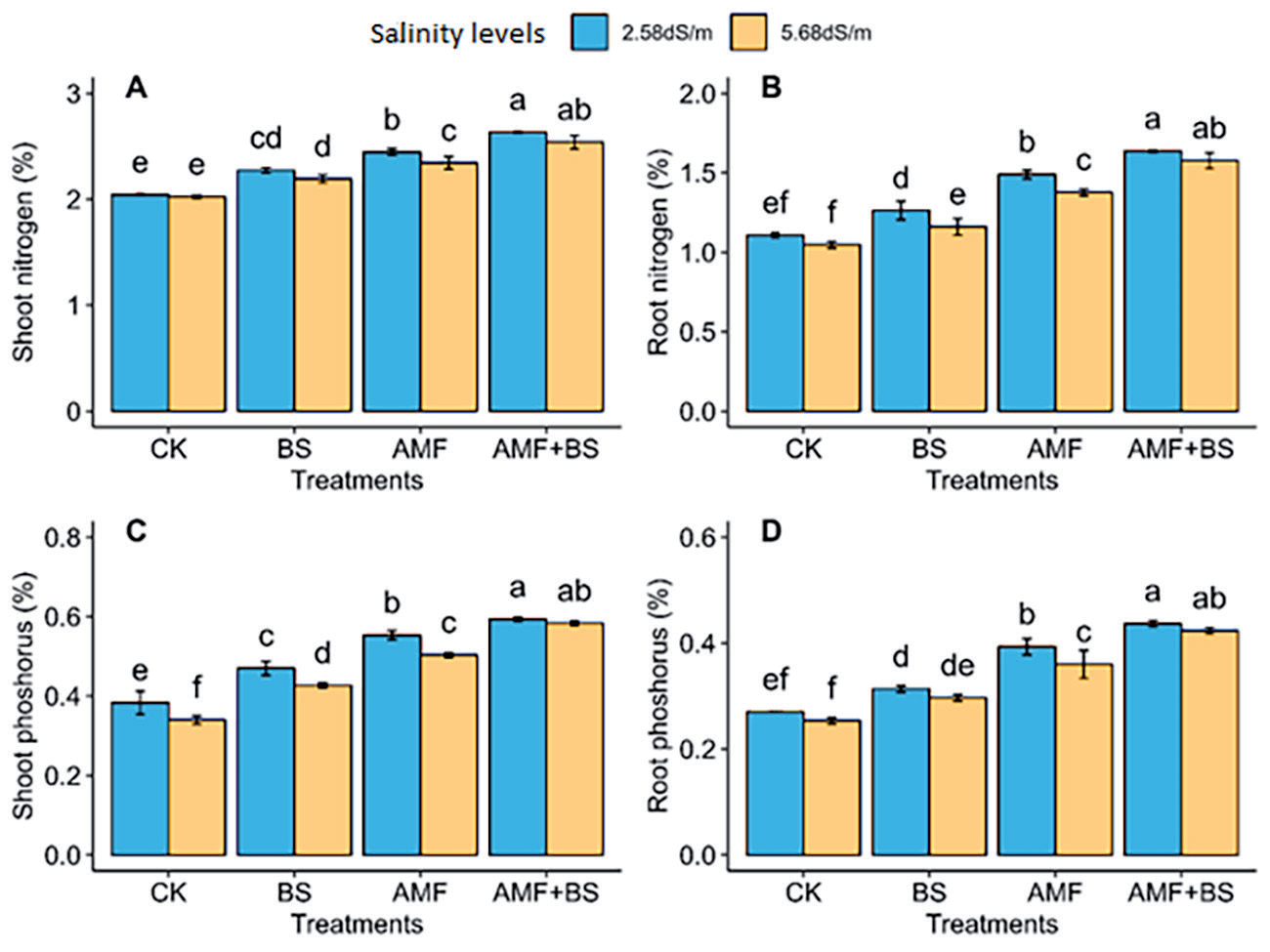
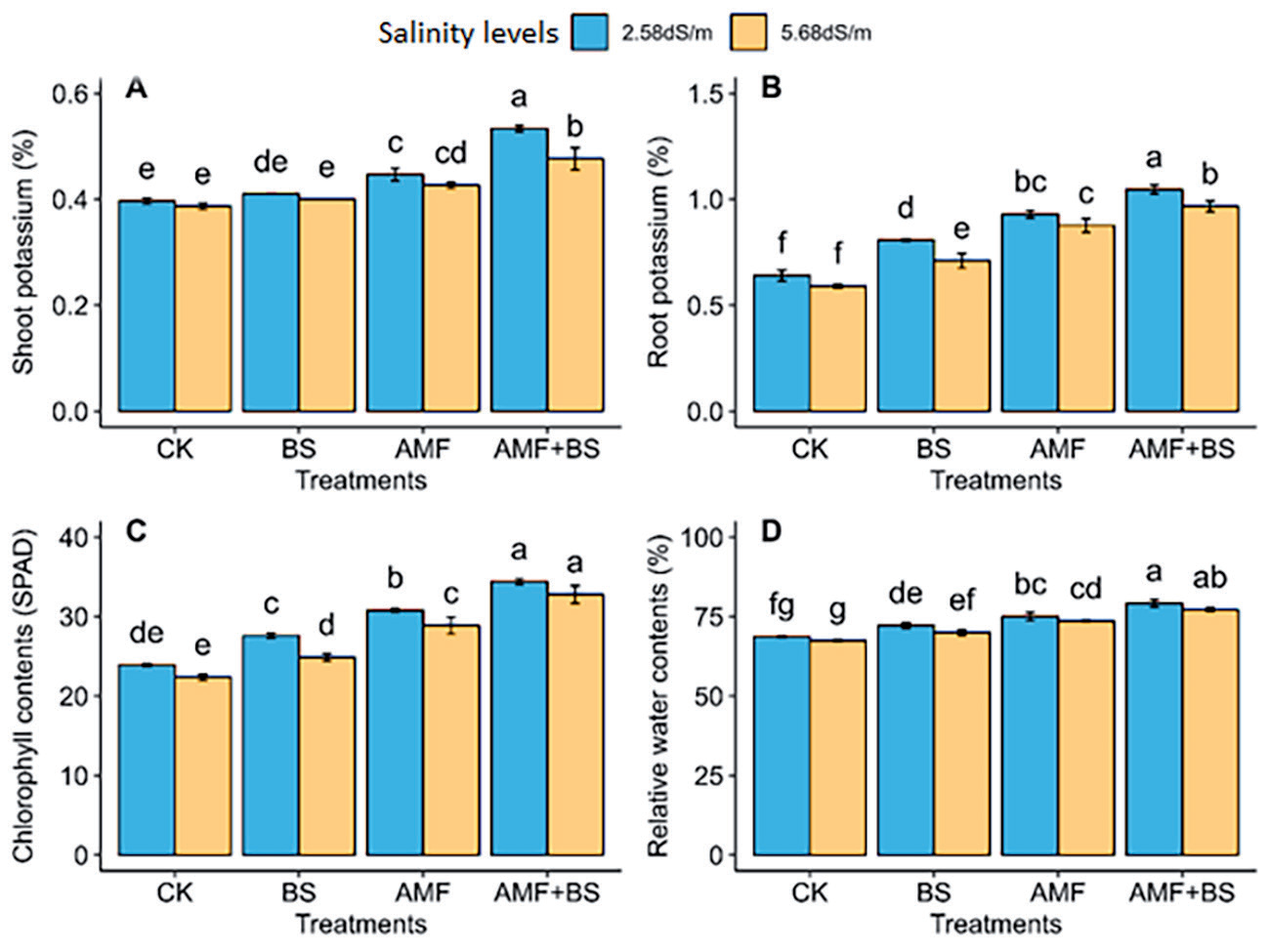
The impact of various treatments on nitrogen, phosphorus, and potassium content in sunflower shoots and roots under different salinity stress levels is evident. Generally, treatments such as Sulfur-Treated Biochar (1% BS) and Arbuscular Mycorrhizal Fungi (AMF) individually and in combination significantly enhanced nutrient uptake compared to the control groups across both salinity levels. For nitrogen concentration in shoots and roots, the application of 0.5% AMF and 1% BS (0.5% AMF + 1% BS) produced the highest increases, with a 28.90% rise in shoot nitrogen and a remarkable 47.31% increase in root nitrogen compared to respective controls. Regarding phosphorus, the combined treatment of 0.5% AMF and 1% BS consistently resulted in the highest increments, with shoot phosphorus increasing by 54.68% and root phosphorus by 60.13% compared to controls across salinity levels. Similarly, for potassium content, the combined treatment of 0.5% AMF and 1% BS showed the most significant enhancements, with shoot potassium increasing by 34.71% and root potassium by 63.37% compared with controls under 2.58 dS/m salinity. Overall, these findings suggest that combined applications of AMF and BS can effectively mitigate salinity stress and promote nutrient uptake in sunflower crops (Fig. 2, Fig. 3A, B).
Chlorophyll Contents (SPAD)
The control group averaged 23.90 Chlorophyll at 2.58 dS/m. Sulfur-treated Biochar (1% BS) boosted Chlorophyll content by 15.46%, whereas 0.5% Arbuscular Mycorrhizal Fungi (0.5%) enhanced it by 28.82%. 0.5% AMF and 1% BS produced the greatest average Chlorophyll content at 34.40, a 43.92% increase. At 5.68 dS/m, the control group had 22.37 chlorophyll, whereas 1% Sulfur-Treated Biochar increased it by 11.18%. Chlorophyll concentration averaged 28.88 with 0.5% Arbuscular Mycorrhizal Fungi, a 29.14% increase. The combination of 0.5% AMF and 1% BS increased by 46.51% (Fig. 3C).
Relative Water Contents
The control group’s (CK) relative water content was 68.68% at 2.58 dS/m salinity. 1% Sulfur-Treated Biochar (1% BS) boosted growth by 5.12% over the control with an average relative water content of 72.19%. 0.5% Arbuscular Mycorrhizal Fungi (AMF) raised relative water content by 9.26% to 75.04% compared to the control. The treatment of 0.5% AMF and 1% BS (0.5% AMF + 1% BS) yielded the highest average relative water content at 79.20%, 15.32% higher than the control group. The control group’s relative water content was 67.47% at 5.68 dS/m salinity. Compared to the control, 1% Sulfur-Treated Biochar raised the relative water content to 70.02%. With 0.5% Arbuscular Mycorrhizal Fungi, the relative water content averaged 73.64%, up 9.14% from the control. To 77.14%, 0.5% AMF and 1% BS increased relative water content by 14.32% above the control group (Fig. 3D).
Fig. 2.
Effect of Sulfur-treated biochar (BS), arbuscular mycorrhizae (AMF) and their combination on the shoot and root, nitrogen and phosphorus percentage in sunflower plants. Different letters on bars (means of 3 replicates ± SD) showing significant changes at the p ≤ 0.05 compared by using Tukey’s HSD.
Electrolyte Leakage
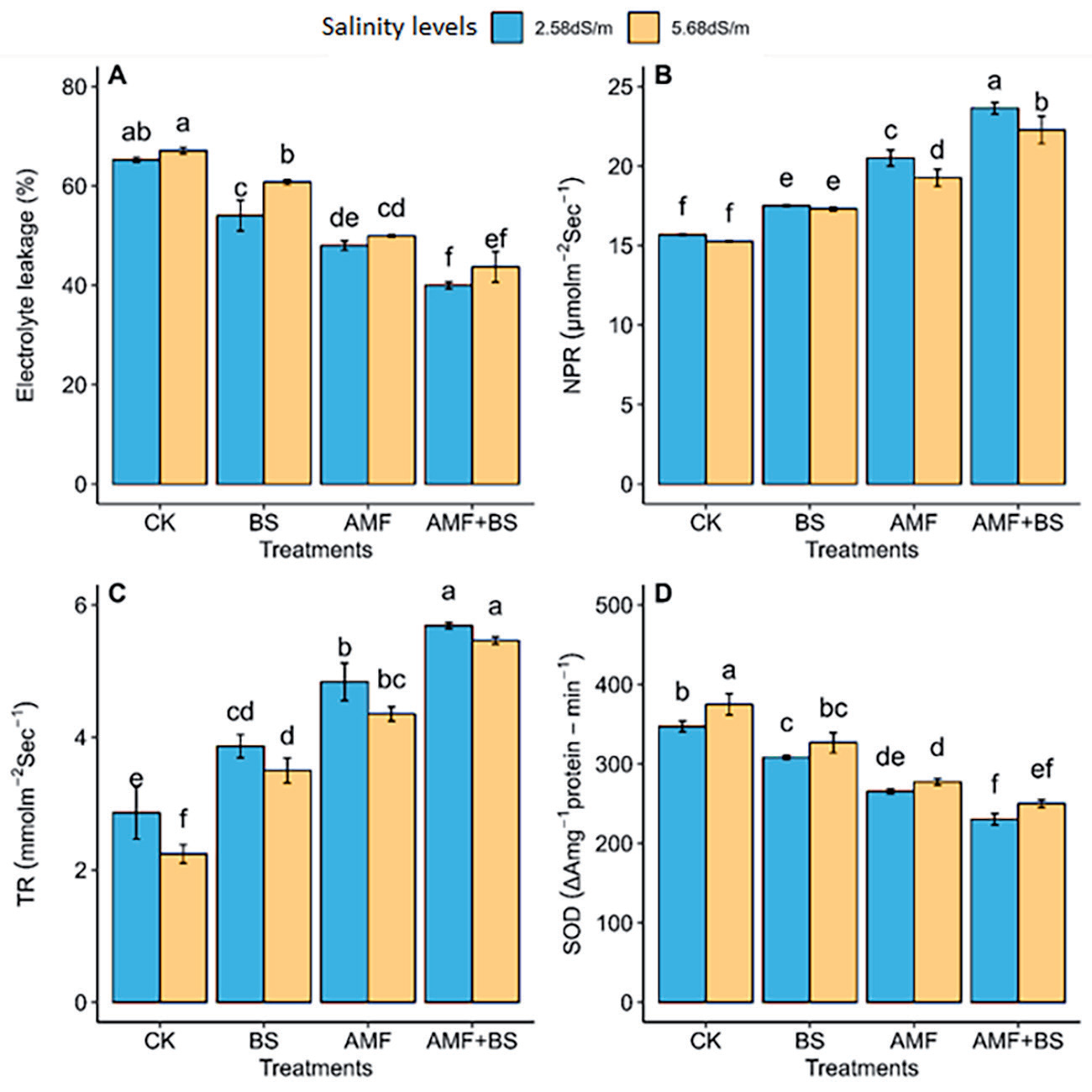
Under CK had an average EL of 65.27% during 2.58 dS/m salt stress. The addition of 1% Sulfur-Treated Biochar (1% BS) reduced EL by 17.3%. EL dropped 26.5% with 0.5% Arbuscular Mycorrhizal Fungi (0.5% AMF). The therapy of 0.5% AMF plus 1% BS (0.5% AMF + 1% BS) demonstrated the greatest reduction, 38.7%. At a salinity of 5.68 dS/m, the control group had an average EL of 67.11%. According to the previous trend, 1% Sulfur-Treated Biochar reduced EL by 9.6%. Applying 0.5% Arbuscular Mycorrhizal Fungi reduced EL by 25.5%. The highest significant reduction was 34.9% with 0.5% AMF and 1% BS (Fig. 4A).
Net Photosynthetic Rate
At 2.58 dS/m salinity, the control group (CK) had an average net photosynthetic rate of 15.67 µmolm-2s-1. The addition of 1% Sulfur-Treated Biochar (1% BS) led to an average growth rate of 17.50 µmolm-2s-1, an 11.67% increase over the control. The addition of 0.5% Arbuscular Mycorrhizal Fungi (0.5% AMF) resulted in an average rate of 20.51 µmolm-2s-1, a significant increase of 30.84% compared to the control. The treatment with 0.5% AMF and 1% BS resulted in the highest Net Photosynthetic Rate of 23.63 µmolm-2s-1, a 50.79% increase over the control group. After adjusting to 5.68 dS/m salinity, the control group achieved an average Net Photosynthetic Rate of 15.26 µmolm-2s-1. Adding 1% Sulfur-Treated Biochar resulted in an average rate of 17.30 µmolm-2s-1, a 13.39% increase over the control. Applying 0.5% Arbuscular Mycorrhizal Fungi resulted in an average growth rate of 19.26 µmolm-2s-1, a significant 26.21% increase over the control. In the treatment of 0.5% AMF and 1% BS, the average Net Photosynthetic Rate increased by 45.94% over the control group (Fig. 4B).
Fig. 3.
Effect of Sulfur-treated biochar (BS), arbuscular mycorrhizae (AMF), and their combination on the shoot and root potassium percentage, chlorophyll contents, and relative water contents in sunflower plants. Different letters on bars (means of 3 replicates ± SD) showing significant changes at the p ≤ 0.05 compared by using Tukey’s HSD.
Transpiration Rate
Transpiration Rate averaged 2.86 mmolm-2s-1 at 2.58 dS/m for the control group (CK). With 1% Sulfur-Treated Biochar (1% BS), growth averaged 3.86 mmolm-2s-1, 35.22% higher than the control. The treatment of 0.5% Arbuscular Mycorrhizal Fungi increased the average rate by 69.26% to 4.84 mmolm-2s-1. 0.5% AMF and 1% BS (0.55% AMF + 1% BS) had the highest average Transpiration Rate at 5.69 mmolm-2s-1, 99.11% higher than the control group. Transpiration Rate averaged 2.24 mmolm-2s-1 in the control group under 5.68 dS/m. Averaging 4.36 mmolm-2s-1, 1% Sulfur-Treated Biochar and 0.5% Arbuscular Mycorrhizal Fungi increased growth by 94.47% over the control. Treatment with 0.5% AMF and 1% BS increased by 143.63% over the control group (Fig. 4C).
Enzymatic Activities (SOD, POD, CAT)
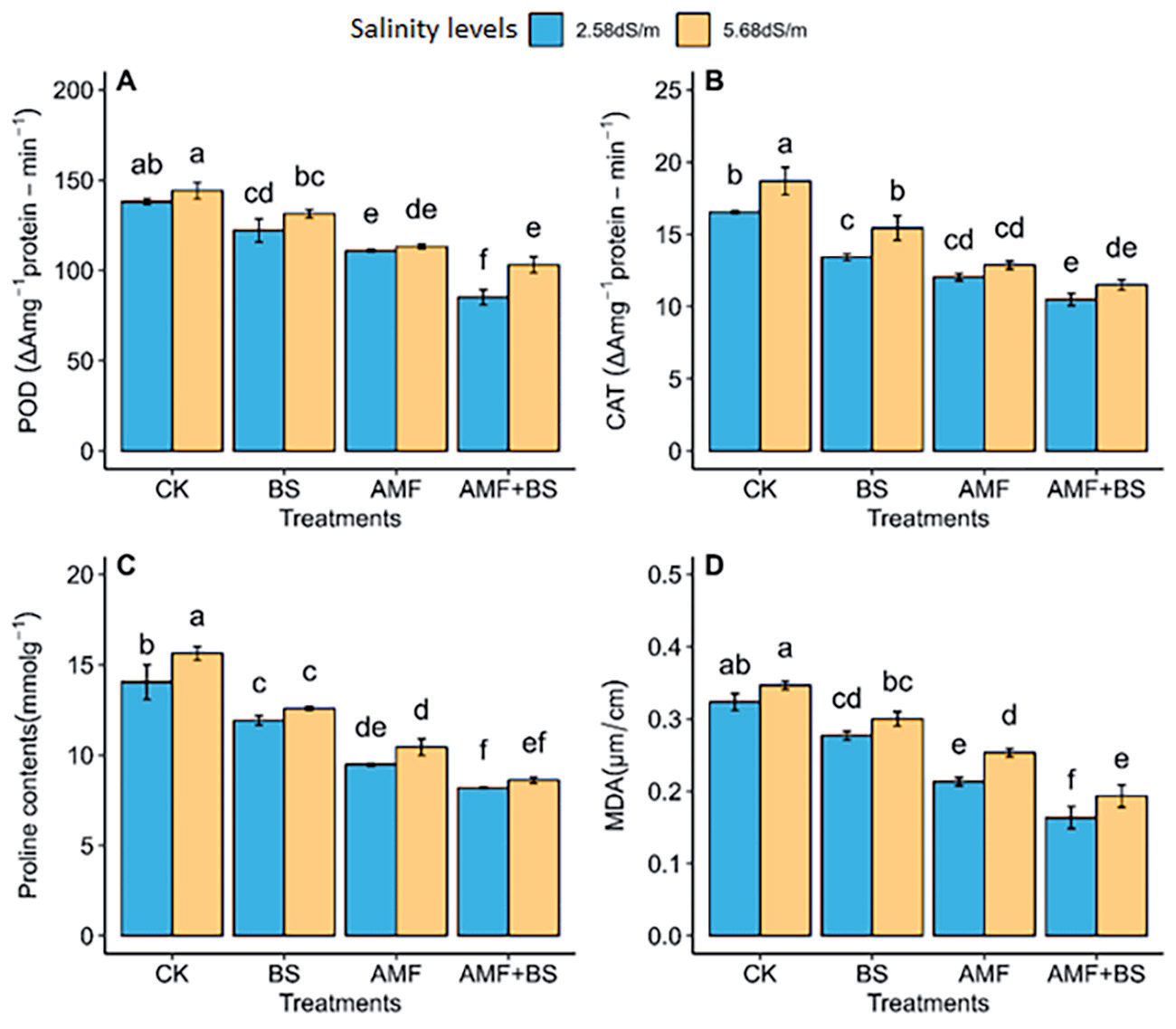
The enzymatic activities of Superoxide Dismutase (SOD), Peroxidase (POD), and Catalase (CAT) in sunflower crops exhibited significant alterations under varying salinity stress levels. For SOD activity, at 2.58 dS/m salinity, the introduction of treatments led to reductions compared to the control, with the combined treatment of 0.5% AMF and 1% BS resulting in the most substantial decrease, around 33.7%. Similarly, at 5.68 dS/m, treatments also reduced SOD activity, with the combined treatment showing the most significant reduction, approximately 33.2%. Regarding POD activity, at both salinity levels, treatments caused decreases compared to the control, with the combined treatment of 0.5% AMF and 1% BS demonstrating the most prominent reduction, approximately 38.3% at 2.58 dS/m and 28.4% at 5.68 dS/m (Fig. 4D, 5A, B).
Fig. 4.
Effect of Sulfur-treated biochar (BS), arbuscular mycorrhizae (AMF), and their combination on the shoot and root potassium percentage, chlorophyll contents, and relative water contents in sunflower plants. Different letters on bars (means of 3 replicates ± SD) showing significant changes at the p ≤ 0.05 compared by using Tukey’s HSD.
For CAT activity, reductions were observed under both salinity conditions with treatment application. The combined treatment consistently resulted in the greatest reduction in CAT activity compared to individual treatments and the control group. Overall, these findings indicate that the combined application of 0.5% AMF and 1% BS consistently led to the most significant reductions in enzymatic activities across all three enzymes under study, suggesting potential implications for mitigating salinity stress in sunflower crops.
Proline Contents
The Proline levels in sunflower (Helianthus annuus) crops exposed to 2.58 dS/m and 5.68 dS/m salt stress showed different percentage changes. Under 2.58 dS/m salinity stress, the control group (CK) had an average Proline level of 14.04 µmol/g. Adding 1% Sulfur-Treated Biochar (1% BS) reduced Proline by 15.1%. Similarly, 0.5% Arbuscular Mycorrhizal Fungi (0.5% AMF) reduced Proline levels by 32.5%. The therapy with 0.5% AMF and 1% BS (0.5% AMF + 1% BS) showed the greatest reduction, 41.7%. At a salinity level of 5.68 dS/m, the control group had an average Proline content of 15.63 µmol/g. As expected, 1% Sulfur-Treated Biochar reduced Proline levels by 19.5%. Similarly, 0.5% Arbuscular Mycorrhizal Fungi reduced Proline by 33.2%. The largest significant decrease was 44.8% with 0.5% AMF and 1% BS (Fig. 5C).
Fig. 5.
Effect of Sulfur-treated biochar (BS), arbuscular mycorrhizae (AMF), and their combination on the shoot and root potassium percentage, chlorophyll contents, and relative water contents in sunflower plants. Different letters on bars (means of 3 replicates ± SD) showing significant changes at the p ≤ 0.05 compared by using Tukey’s HSD.
Malondialdehyde (MDA)
At salinity stress of 2.58 dS/m, the control group (CK) had an average MDA level of 0.33μm cm-1. The addition of 1% Sulfur-Treated Biochar (1% BS) reduced MDA levels by 15.2%. Applying 0.5% Arbuscular Mycorrhizal Fungi (0.5% AMF) resulted in a significant drop in MDA levels, around 36.4%. The therapy of 0.5% AMF plus 1% BS (0.5% AMF +1% BS) showed the greatest reduction, 48.5%. Upon adjusting to 5.68 dS/m salinity, the control group had an average MDA level of 0.34 μm cm-1. In line with the previous trend, 1% Sulfur-Treated Biochar reduced MDA levels by 11.8%. Similarly, 0.5% Arbuscular Mycorrhizal Fungi reduced MDA by 11.8%. The largest significant decrease was 44.1% with 0.5% AMF and 1% BS (Fig. 5D).
Discussion
Salinity reduces sunflower growth and biochemistry, according to the study. As salt-sensitive plants, sunflowers grew and yielded less at higher salinities. Salinity stress did not stop the AMF and BS from surviving. AMF and BS help plants absorb NPK, as shown by their increased NPK content. The treatments significantly improved plant growth (Table 2). Arbuscular mycorrhizae and sulfur treatment biochar increase plant height, root and shoot dry and fresh weight, and achene yield. The study showed improved nutrient uptake, which may explain this. The arbuscular mycorrhizae with Sulfur-treated biochar strategy outperformed the individual treatments. Similar results were seen with saline-irrigated sunflowers [22]. [23] found that AMF and PGBP increased fungi colonization and nutrient uptake in salinity-treated lucerne. The current experiment showed that AMF increased NPK concentration more than BS [24, 25]. The best results came from AMF and BS. BS may control nutrient toxicity, and AMF increases plant NPK, which boosts yield and agronomic qualities [26]. AMF increases potassium uptake, which maintains turgor pressure and osmotic balance, preventing enzymatic disruption and protein synthesis inhibition [27–29].
Arbuscular mycorrhizae and BS improved chlorophyll, relative water, and photosynthetic rate, but the combination of AMF and BS yielded remarkable results. Electrolyte leakage (EL) indicates plant injury in abiotic stress. AMF-BS combination had the lowest EL under both salinity stress levels. The study confirmed that AMF is a biological method for mitigating salinity effects and improving plant morphological, physiological, and biochemical changes that cope with salinity [30–33]. This boosts nutrient absorption. Since magnesium is an essential part of chlorophyll, AMF boosts de novo protein and chlorophyll synthesis [34]. [35] found that AMF enhanced chlorophyll pigment, supporting the study results.
Plants under high salinity stress had lower NPK levels. These findings were consistent with [36, 37], who found that soil-increasing salinity decreased plant N concentration. Microbial treatments raised root N levels. AMF may have increased N by assimilation of nitrate in extraradical mycelium and increased enzyme production for primary nitrogen fixation [38, 39]. Plants under saline stress absorb less P [40]. AMF increases P concentration in salt-affected soil plants [41]. AMF and BS reduced stress-induced increases in antioxidants like SOD, POD, CAT, and proline. Our study supported Ebrahimian et al. [42], who found that salinity stress greatly increased enzyme activity. Similar results were obtained by [43] on stressed millet leaves.
Salt stress alters plant metabolism. Ion toxicity, osmotic stress, and ROS production are the main ones [44]. Antioxidant enzymes like SOD, APX, and CAT reduce ROS production [45]. In sunflowers, cadmium-stressed plants accumulate more proline, which increases tolerance [46]. Higher proline levels maintain cell osmotic balance and water content. Instead of interfering with metabolic pathways, proline replaces water [47–50]. AMF-inoculated plants accumulate more proline under normal and stressed conditions [51, 52]. Our study found lower proline concentrations, contradicting [49]. The BS may increase NPK and preserve soil conditions for plant growth by reducing stress, while the AMF may increase NPK uptake and reduce proline production. Previous research showed that sulfur-modified biochar with sulfate ions increased CEC. The number of functional groups in sulfur-modified biochar changes, causing this CEC change. Musa al-Reza Taheri found that B and BS treatments increased RWC, with BS enhancing RWC at a lower level than B. The relationship between RWC and soil water content is positive [53]. Sulfur-enriched biochar and effective microorganisms improved Capsicum annuum growth and yield under salt stress [52, 53]. Ion toxicity, osmotic stress, and ROS production are the main effects of salt stress on plant metabolism [53, 54]. SOD, APX, and CAT reduce ROS production [53]. The current study also found low antioxidant production in the integrated effect of AMF and BS, suggesting favorable plant growth conditions. Salinity stress increased antioxidant enzyme activity, as found in [54]. Similar results were obtained by [55] on stressed millet leaves.
The latest study [56] found that 0.50AMF-BC reduces antioxidants and drought stress at the highest dose. They also release glomalin, a glycoprotein that helps soil aggregation and water retention. In times of osmotic stress, it helps the soil retain moisture for longer, providing plant roots with water. The increased water retention capacity helps maintain soil moisture and provides plants with more consistent water, reducing osmotic stress [57]. A porous carbon-based substance called biochar improves soil structure and water retention, improving treatment effectiveness. Due to its large surface area and micropores, the material stores water and nutrients, maintaining soil moisture and facilitating root penetration [58, 59]. Biochar prevents soil compaction and improves water infiltration [60]. The study examined biochar and [61, 62] synergy. This study examines how AMF-Biochar affects spinach plant growth, nutrient concentrations, and antioxidant enzymes to reduce drought stress. Sulfur-treated biochar and arbuscular mycorrhizal fungi (AMF) reduced salinity-induced stress in sunflower cultivation, improving plant height, shoot biomass, and root development [63]. This treatment regimen also improved nutrient assimilation, as plant tissues had higher nitrogen, phosphorus, and potassium levels. The combined application also increased chlorophyll content, antioxidant enzyme activities (e.g., superoxide dismutase, catalase), and osmolytes like proline, reducing salinity stress-induced oxidative damage. Biochar and AMF symbiosis improve soil structure and nutrient retention, which may explain the synergistic effects. Future research could investigate the complex molecular mechanisms behind these synergies and conduct field trials to evaluate this approach’s long-term efficacy and scalability in various agroecosystems. These findings demonstrate that integrating sulfur-treated biochar and AMF can sustainably improve sunflower salinity stress resilience and crop productivity.
Conclusion
The results of the current pilot research study conclude that treatments with arbuscular mycorrhizae fungi and Sulfur-treated biochar proved beneficial for the growth of the sunflower plant. However, the combination of 0.5% AMF and 1% Sulfur-treated biochar gives remarkable results to cope with the salinity problem. Furthermore, field experimentation is preferred to verify the results and the investigation of the mechanisms involves combating the salinity problem in agriculture.

