

Introduction
Global karst covers about 22 million square kilometers, or 15% of the Earth’s land area [1], and these residual terrestrial carbon pools can deposit up to 250 billion grams of carbon per year [2]. Karst in Guangxi covers an area of 918,700 square kilometers, accounting for 41.57% of the area of Guangxi [3]. The parent materials of the soil in the karst region of western Guangxi are mainly limestone and dolomite [4], with chemical compositions of CaCO3 and CaMg(CO3)2, respectively. Studies have shown that soils developed from limestone and dolomite are characterized by high soil calcium/magnesium content, high bedrock exposure rates, and shallow soil layers [5]. Guangxi is the region with the highest concentration of ethnic minorities, the largest number of poor people, and the largest area of poverty in China. High population growth and low land output have led to the gradual conversion of land use from primitive forest land to artificial ecosystems, resulting in serious degradation of forest ecosystems in the region [3]. Patterns of coexistence of ecosystems such as virgin, secondary, and planted forests have emerged [6]. This causes a gradual decrease in the carbon sink function, affecting the soil’s organic carbon stock.
The SOC plays a key role in soil nutrient cycling and energy flow [7] and is not only an important indicator for soil quality assessment but also a major influence on the soil carbon pool [8]. Anthropogenic activities and soil properties are the driving factors controlling changes in SOC [9, 10]. Considering the lag in the response of soils to ecological changes in karst regions, Haynes proposed that the most direct and rapid influence of land-use practices is the active component of soil organic carbon [11]. Hongzao He [12] and others showed that the organic matter content of virgin forest land soil was greater than that of secondary forest land soil. Jin Wang et al.[13] showed that virgin shrub forests had the highest organic carbon content in all soil layers compared to planted forest lands. This all suggests that anthropogenic disturbances can alter soil nutrient cycling pathways and intensities, causing changes in soil nutrient levels and affecting soil carbon cycling [14].
Table 1.
Plot Information.
Table 2.
Basic physical and chemical properties of forestland soils.
Therefore, this study selects two types of parent materials (limestone and dolomite) in the Hechi area of Guangxi, China, and three forest soils under different levels of human disturbance (virgin forest, secondary forest, and planted forest) as research subjects. The study aims to explore the impact of different levels of human disturbance on soil nutrients, enzyme activity, and the potential for organic carbon sequestration under limestone and dolomite parent materials. This study is intended to provide a reference for soil carbon cycling, carbon sequestration, and emission reduction in karst forests.
Materials and Methods
Overview of the Study Area
This study area is located in the concentrated karst area in the southwest of Huanjiang County, Guangxi, a typical exposed pure limestone mountain environment. The average annual temperature is 15.7°C, annual rainfall is 1389.1 mm, and the frost-free period is 290 d [15]. The soil types in the test area are limestone soil developed from dolomite in the Mulian Karst Experimental Station and limestone soil developed from limestone in the Shimonanguzhou Desertification Comprehensive Management Area, respectively.
Sample Collection and Processing
Based on the field study, three types of forest lands, namely virgin forest, secondary forest, and planted forest under dolomite and limestone soil-forming matrices, were selected for the study. The plot information is shown in Table 1. Three replicate sample plots were set up for each sample plot, with a sample area of 20×20 (m), and topsoil (0-20 cm) was taken by the plum blossom five-point sampling method, totaling 18 soil samples. After removing plant roots and stones, the collected soil samples were air-dried and sieved to 2 mm for subsequent tests. The basic physical and chemical properties of the soil at each forest site are shown in Table 2. In the field sampling, the development type of the area selected for each soil sample was basically the same, with similar factors such as elevation, slope, and slope direction, and the soil sample collection was completed in November 2021.
Experimental Design and Methods
For the mineralization test, 18 500-mL culture bottles containing 50 g of air-dried soil of different soil types were prepared, and each soil type treatment was repeated three times, maintaining 40% of the water holding capacity in the field. At the same time, a beaker containing 10 ml of 0.2 mol·L-1 NaOH absorbent solution was placed into a 500 ml culture bottle, sealed with a lid, and incubated in a constant temperature incubator at 25°C. The amount of CO2 released from each soil was determined by BaCl2-HCl titration on the 1st, 3rd, 5th, 10th, 15th, 20th, 30th, and 60th days of incubation, respectively.
For the soil culture experiment, 1 kg of air-dried soil sieved through 2 mm was taken into 2 L polyethylene culture flasks, and each soil type treatment was repeated three times, maintaining a field water holding capacity of 40%, and incubated continuously in a thermostatic incubator at 25°C. Samples were analyzed on days 1, 3, 5, 10, 15, 20, 30, 40, and 60, respectively, with about 100 g of soil taken each time. Soil microbial biomass, dissolved organic carbon, and enzyme activity indicators were determined using fresh soil, while other indicators were measured using air-dried soil.
Determination of Soil Indicators
The capacity was determined using a ring knife with a volume of 100 cm3. The pH was determined using the pH meter method (water: soil = 2.5:1). Cation exchange capacity (CEC) was determined using the BaCl2-H2SO4 exchange method. The fast-acting potassium (AK) content was determined using the 1 mol·L-1 ammonium acetate extraction-flame photometer method [16].
Microbial bulk carbon (MBC) content was determined by chloroform fumigation and leaching. Organic carbon (SOC) content was determined using the potassium dichromate volumetric method with external heating. Dissolved Organic Carbon (DOC) content was determined by a carbon auto-analyzer. Readily oxidizable organic carbon (ROC) content was determined by oxidation with potassium permanganate at 333 mmol·L-1. Organic carbon mineralization was determined using the BaCl2-HCl titration method. The calculation formulas for the rate of organic carbon mineralization and the cumulative mineralization of organic carbon are as follows:
Organic carbon mineralization (mg·kg-1)={[(V0-V)×C×0.022×(22.4/44)×1000]×2×1000}/m
Formula:
V0—Volume of standard hydrochloric acid consumed in blank titration, mL
V—Volume of standard hydrochloric acid consumed in sample titration, mL
C—Concentration of standard hydrochloric acid, mol·L-1
0.022—Molar mass of carbon dioxide (1/2CO2), M(1/2CO2)=0.022 g·mmol-1
22.4×1000/44—Milliliters per gram of CO2 in the standard state
Rate of soil organic carbon mineralization
Rate of organic carbon mineralization (mg·kg-1·d-1)= Organic carbon mineralization /Δt
Formula: Δt—Number of days between incubation intervals, d
Cumulative mineralization of organic carbon
Cumulative mineralization of organic carbon = ∑n1 Organic carbon mineralization
Catalase activity was determined by potassium permanganate titration. A sodium phenol-sodium hypochlorite colorimetric assay determined soil urease activity. Soil sucrose activity was determined by the 3,5-dinitrosalicylic acid method [17].
Data Processing
The experimental data were initially analyzed and organized in Excel 2019 and plotted using Origin Pro 2022 software. The correlation between soil physicochemical properties, organic carbon and its carbon fractions, and enzyme activities was investigated using Pearson correlation analysis, and structural equation modeling was performed using the R language, with the significance level set at P<0.05. The data in the graphs and tables are presented as mean ± standard deviation.
Results
Effects of Different Anthropogenic Disturbance Intensities on the Basic Physical and Chemical Properties of Soil
As shown in Fig. 1. At the end of the incubation period, the pH range of DP, DS, and LV soils was 7.5- 8.2, with the soil being weakly alkaline; the LP, LS, and DV soil pH ranged from 6.3 to 6.8, and the soil was weakly acidic (Fig. 1a, d). Forestland soil incubation for 60 days decreased the CEC content of dolomite-forming parent forestland soil and increased the CEC content of limestone-forming parent forestland soil. Among them, the CEC content of LV was the highest, at 137.69 cmol·kg-1, and the CEC content of DV was the lowest, at 16.95 cmol·kg-1 (Fig. 1b, e). At the end of the cultivation period, human interference increases the soil’s AK content under the dolomite parent material. The AK contents of the three forestland soils under limestone soil-forming parent material were ranked as follows: virgin forest > secondary forest > planted forest. Among them, DV had the lowest AK content of 15.89 mg·kg-1. (Fig. 1c, f).
Effects of Different Anthropogenic Disturbance Intensities on Soil Organic Carbon Mineralization in the Forest Land
The rates of organic carbon mineralization in forest soils all showed an increasing and then decreasing trend during the incubation time. The maximum value was reached on the 5th day of incubation, where LV had the highest rate of organic carbon mineralization at 198.02 mg·kg-1·d-1. The effects of different intensities of anthropogenic disturbance on the rate of organic carbon mineralization in forest land were as follows: limestone-forming parent soil was larger than dolomite-forming parent soil (Fig. 2a, b). The cumulative mineralization of organic carbon in forest land soils increased with the extension of incubation time, and the cumulative mineralization of organic carbon increased rapidly in the early stage of incubation and then slowed down and leveled off in the later stage. In both dolomite and limestone soil-forming matrices, the cumulative mineralization of organic carbon in the forested soils of virgin forests was greater than that in forested soils of both planted and secondary forests. The difference in cumulative mineralization of organic carbon between the two soil-forming matrices was the greatest in the native forest stand soil. At the end of the incubation, the cumulative mineralization of the organic carbon of LV was 1.32 times higher than the cumulative mineralization of the organic carbon of DV. The cumulative mineralization of organic carbon in the LV reached 2935.266 mg·kg-1.
The dynamics between organic carbon mineralization and incubation days in different soil types were fitted using the first-order kinetic equation Ct=C0(1-e-kt), which was a good fit, with a correlation coefficient of R2>0.97 (Table 3). Under the dolomite parent material, the C0 values of the three types of forest soils decrease with the increase of human disturbance intensity, and the K increases with the increase of human disturbance intensity. Under the limestone parent material, the C0 values of the three types of forest soils are in the order of virgin forest>planted forest>secondary forest, and the K is in the order of secondary forest>virgin forest>planted forest. The C0/SOC values of the three forest land soils under dolomite soil-forming parent material decreased with increasing intensity of anthropogenic disturbance, and the C0/SOC of the three forest land soils under limestone soil-forming parent material increased with increasing intensity of anthropogenic disturbance. Among them, DV had the largest C0/SOC value of 0.11.
Fig. 1.
Effects of different anthropogenic disturbance intensities on the physicochemical properties of forest land soils (pH (a), cation exchange capacity (CEC) (b), and acute potassium content (AK) (c) of forestland soils under dolomite-forming parent material; pH (d), cation exchange capacity (CEC) (e), and acute potassium content (AK) (f) of forestland soils under limestone-forming parent material).
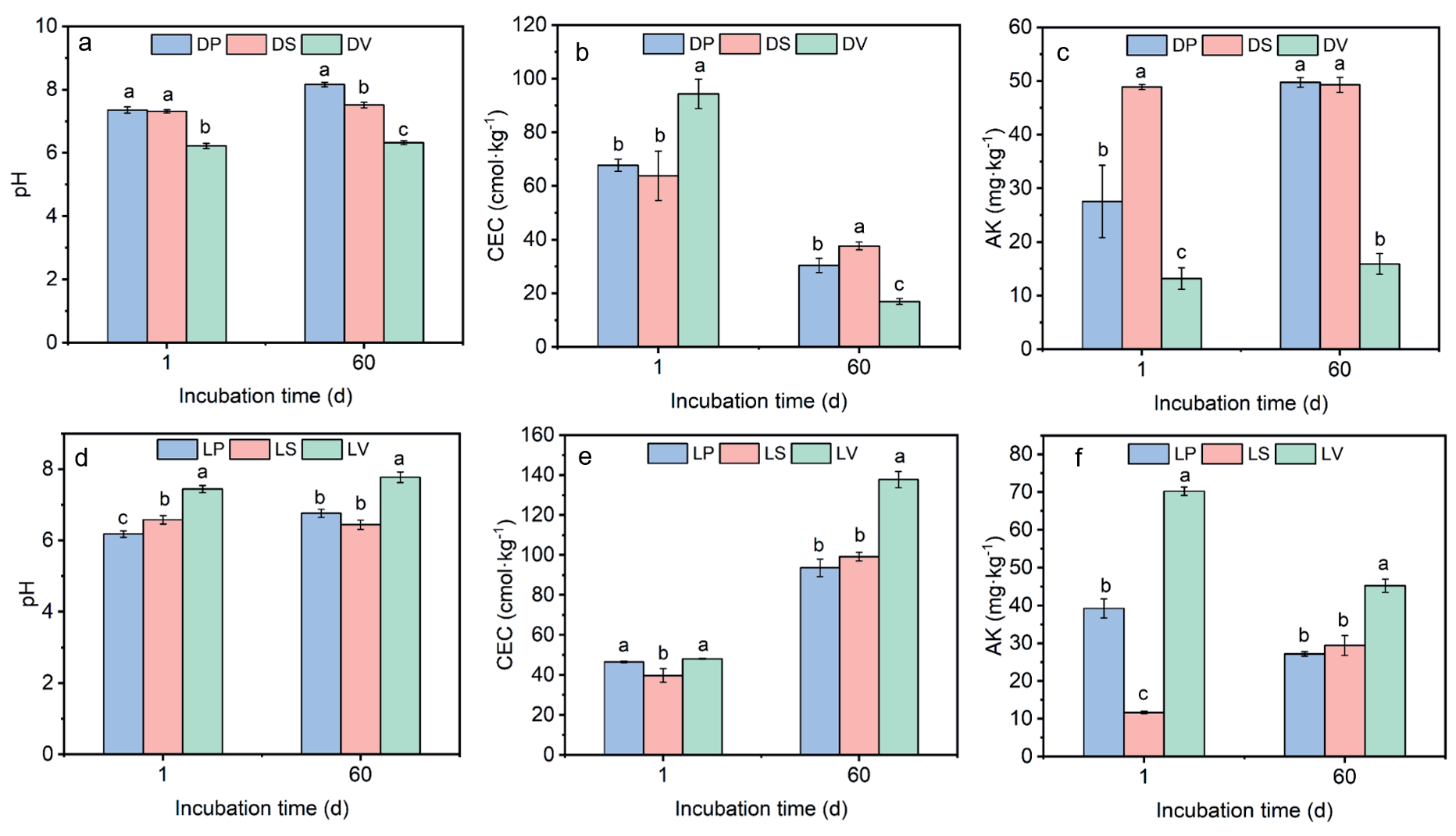
Fig. 2.
Effects of different intensities of anthropogenic disturbance on the amount of organic carbon mineralization in forest soils (organic carbon mineralization rate (a), cumulative organic carbon mineralization (c) in forest soils under dolomite matrix; organic carbon mineralization rate (b), cumulative organic carbon mineralization (d) in forest soils under limestone matrix).
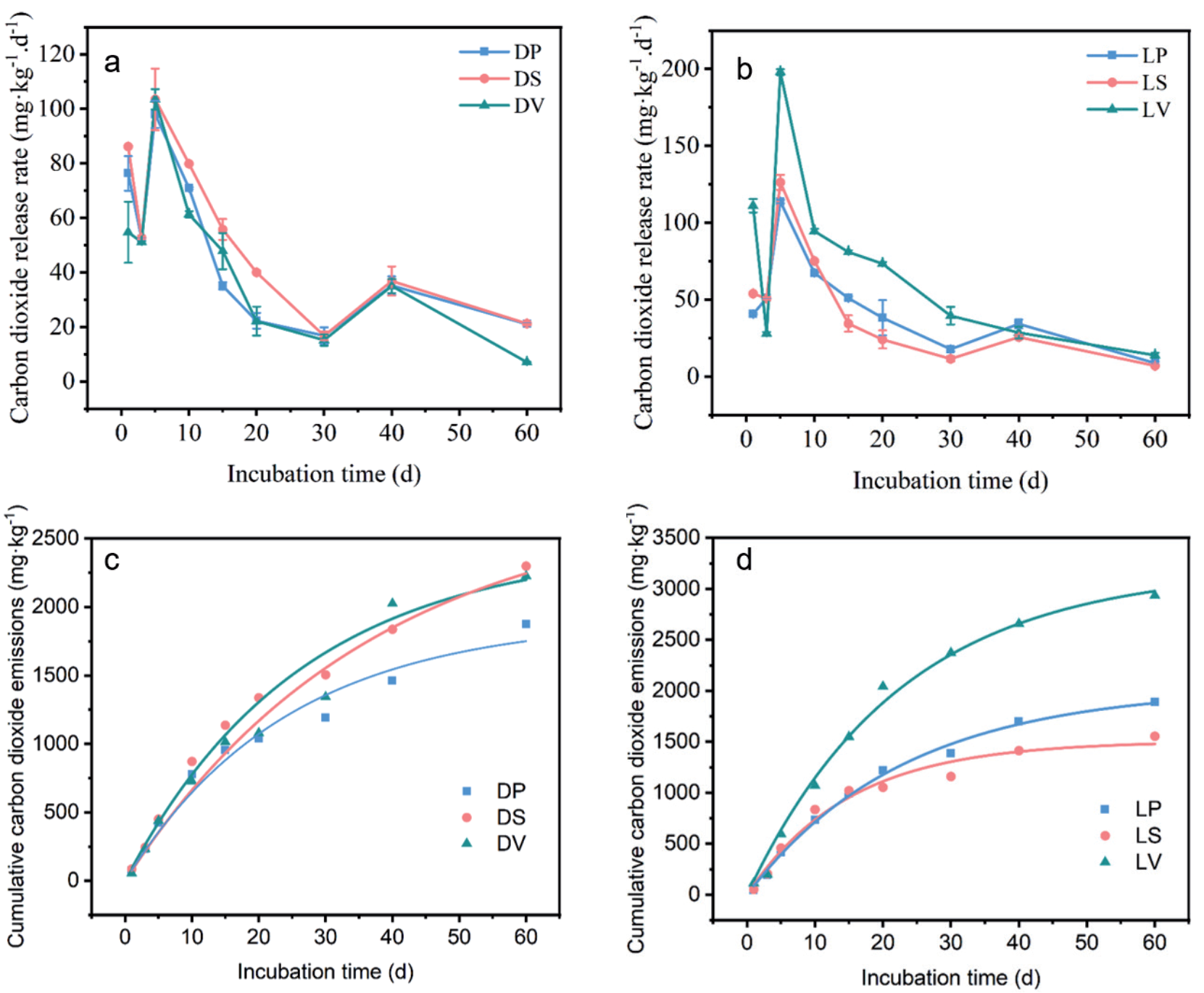
Table 3.
Soil mineralization kinetic parameters under different anthropogenic disturbance intensities.
Effects of Different Anthropogenic Disturbance Intensities on Soil Organic Carbon and its Active Carbon Fractions in Forest Land.
As shown in Fig. 3, at the end of incubation, the soil organic carbon content (SOC) in each stand was reduced to some extent compared to the first day of incubation. Among them, the SOC content of the LP decreased the most by 55.06%, and the SOC content of the LV decreased the least by 14.99%. In the dolomite soil-forming parent material, the SOC contents of the two types of forest soils, planted forest and secondary forest, were larger than the SOC contents of the virgin forest soils. In limestone soil-forming matrices, the SOC content of both planted and secondary forest soils was less than the SOC content of virgin forest soils. The SOC content of the limestone soil-forming parent material was greater than that of the dolomite soil-forming parent material in both virgin and planted forest soils. The SOC content of dolomite soil-forming matrices was greater than the SOC content of limestone soil-forming matrices in both secondary and planted forest soils. At the end of incubation, LV had the highest SOC content of 55.94 g·kg-1, and LP had the lowest SOC content of 16.19 g·kg-1.
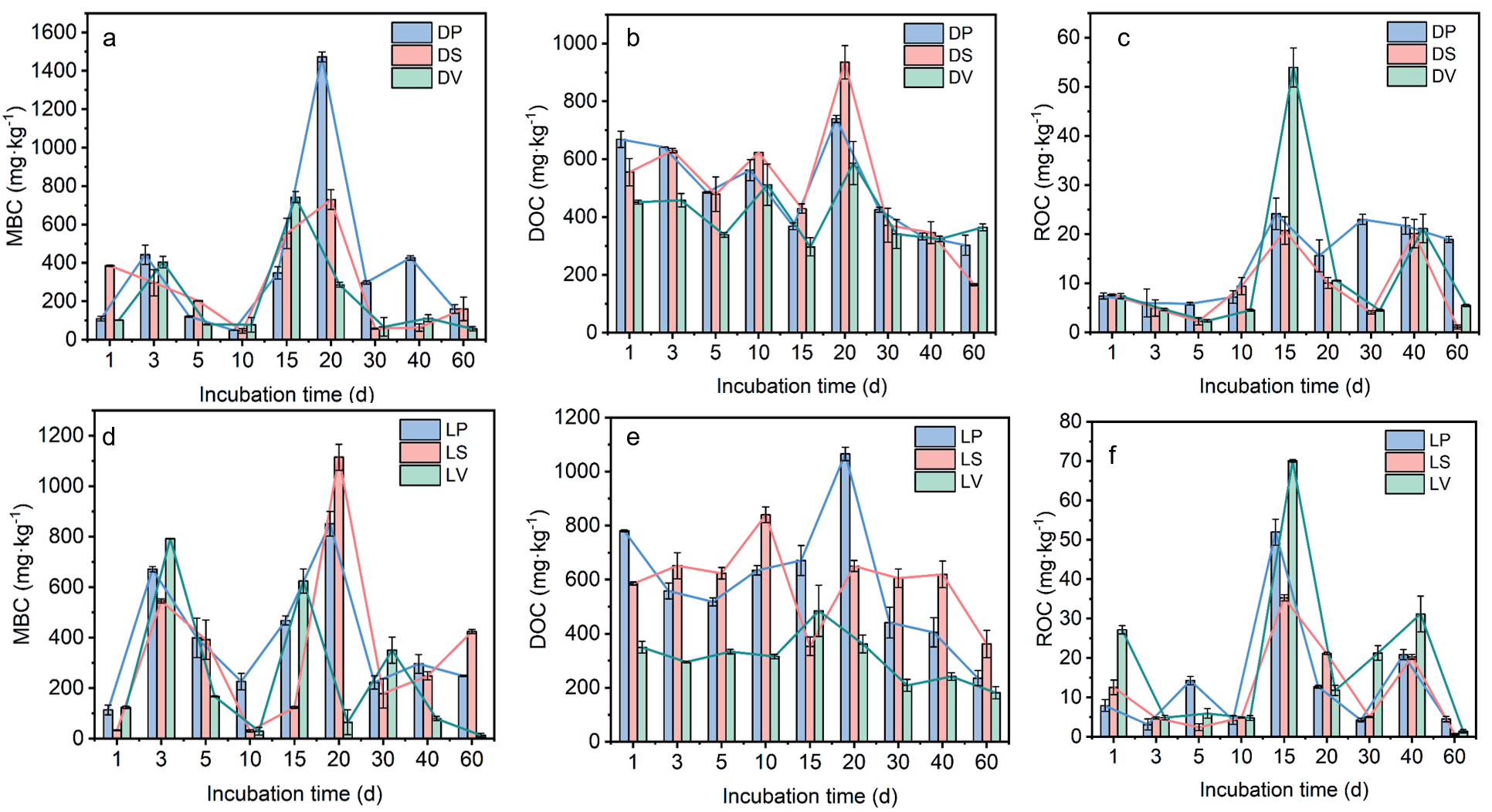
During the cultivation period, the trend of microbial biomass carbon (MBC) change in soils of different forest types is the same, overall showing a pattern of rising, falling, rising again, and then falling. On the 15th day of incubation, the MBC content of DV reached the maximum value of 742.4 mg·kg-1. At the end of incubation, the LS had the highest MBC of 423.9 mg·kg-1, and the LV had the lowest of 13.2 mg·kg-1 (Fig. 4a, d). The soluble organic carbon content (DOC) of the forest land showed an overall decreasing trend during the 60-day incubation cycle, and the maximum values of DP, DS, and DV were reached on the 20th day of incubation, which were 739.53 mg·kg-1, 935.1 mg·kg-1, and 586.53 mg·kg-1, respectively. In the soils of planted forests and secondary forests, the dissolved organic carbon (DOC) content in soils derived from limestone parent material is greater than in soils derived from dolomite parent material. Conversely, in the soils of virgin forests, the DOC content is the opposite (Fig. 4b, e). During the 60-day cultivation period, the overall trend of readily oxidizable carbon (ROC) showed the same pattern, initially increasing and then decreasing. On the 15th day of incubation, the ROC content of each forest land soil reached the maximum value, and the ROC content of LV was the highest, at 70.068 mg·kg-1, and the ROC content of DS was the lowest, at 20.741 mg·kg-1. At the end of the 60-day incubation period, the ROC contents of the two types of soil-forming parent material forest land soils were in the following order: planted forests, secondary forests, virgin forests, and the ROC content of the limestone soil-forming parent material was greater than that of the dolomite soil-forming parent material (Fig. 4c, f).
Fig. 3.
Changes in the organic carbon content of the soil in the lower forestland soil under different anthropogenic disturbance intensities (Organic carbon content of forestland under dolomite soil-forming parent material (a); organic carbon content of forestland soil under limestone soil-forming parent material (b)).
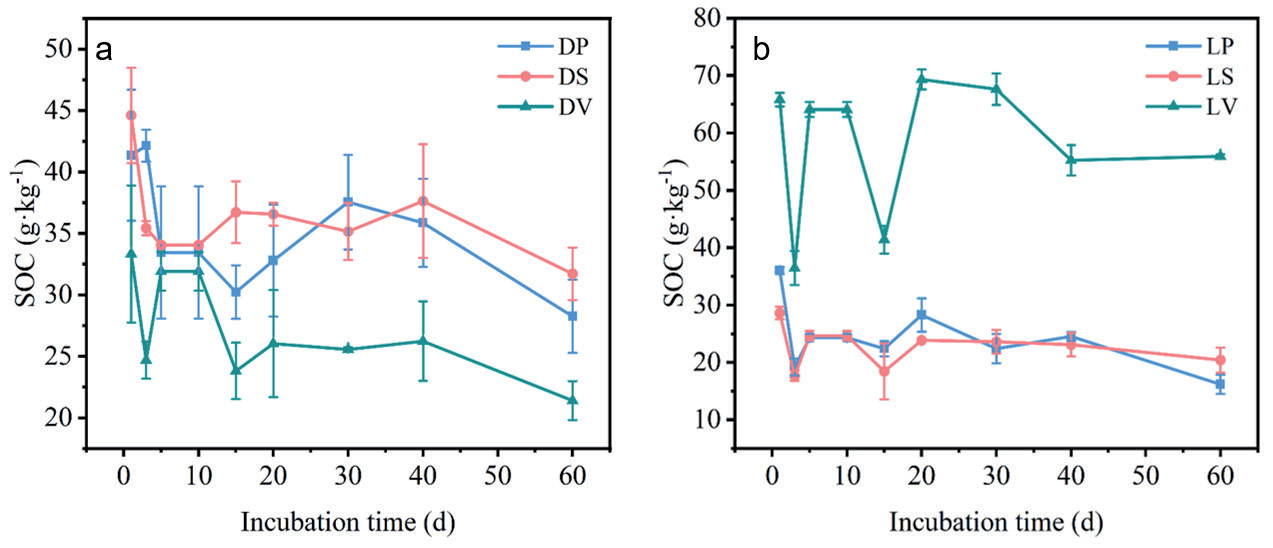
Fig. 4.
Effects of different anthropogenic disturbance intensities on the active organic carbon content of forestland soils (Microbiomass carbon (a), water-soluble organic carbon (b), readily oxidizable organic carbon (c) in dolomite-forming parent material forestland soil; microbiomass carbon (d), water-soluble organic carbon (e), readily oxidizable organic carbon (f) in limestone-forming parent material forestland soil).
Effects of Different Intensities of Anthropogenic Disturbances on Soil Enzyme Activities in Forest Land
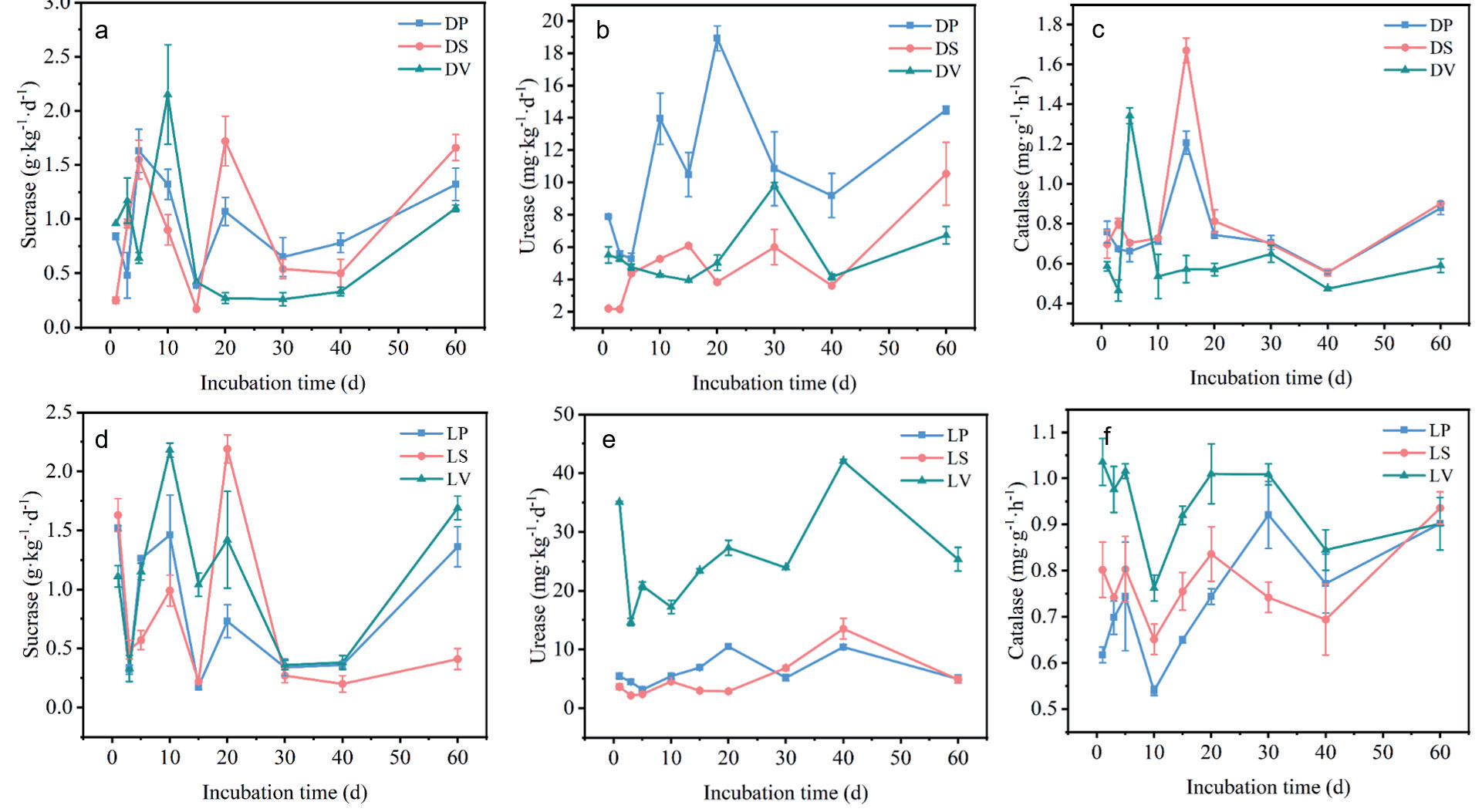
At the end of the incubation, the sucrase activities of DP, DS, and DV showed an increasing trend, reaching 1.66 g·kg-1·d-1 (DS), 1.32 g·kg-1·d-1 (DP), and 1.10 g·kg- 1·d-1 (DV), respectively, at the 60th day of incubation. In the forest soil derived from limestone parent material, the sucrase activity at the end of the cultivation period was LV>LP>LS. LS showed the greatest decrease in sucrase activity, which decreased by 74.85% (Fig. 5a, d). The urease activities of the three forest land soils under dolomite soil-forming parent material showed an overall increasing trend, with DS showing the greatest increasing trend, and the urease activity at the end of incubation was 4.79 times that at the first day. At the end of incubation, the soil urease activity of forest land soil under dolomite soil-forming parent material was in the order of planted forest, secondary forest, and virgin forest; the urease activities of the three forest lands with limestone soil-forming parent material were LV > LP > LS. In general, the urease activities of LV were higher than those of the other soil types (Fig. 5b, e). The catalase activities of the three forest land soils under limestone soil-forming parent material reached the minimum on the 10th day of incubation at 0.539 mg·g-1·h-1 (LP), 0.651 mg·g-1·h-1 (LS), and 0.762 mg·g- 1·h-1 (LV), respectively. The trend of catalase changes in the dolomite soil-forming matrices was higher, with DV peaking at 1.343 mg·g-1·h-1 on the 5th day of incubation and DP and DS peaking at 1.207 mg·g-1·h-1, 1.670 mg·g- 1·h-1, respectively, on the 15th day of incubation (Fig. 5c, f).
Correlation Analysis
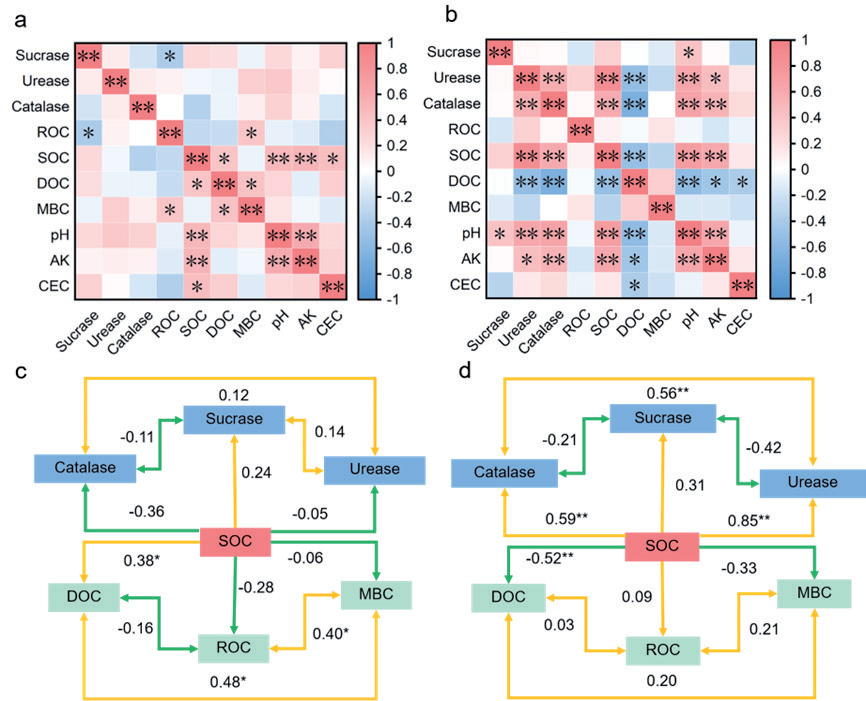
In the dolomite soil-forming parent material, sucrase showed a significant negative correlation with ROC (P<0.05). MBC showed a significant positive correlation with ROC (P<0.05, 0.40) and a significant positive correlation with DOC (P<0.05, 0.48). SOC showed a significant positive correlation with CEC (P<0.05), a highly significant positive correlation with AK and pH (P<0.01), and a significant positive correlation (P<0.05, 0.38) (Fig. 6a, c) in limestone soil-forming parent material. Sucrase showed a significant positive correlation (P<0.05) with pH. Urease showed a significant positive correlation (P<0.05) with AK, a highly significant positive correlation (P<0.01) with pH and catalase, and a highly significant negative correlation (P<0.01) with DOC. Catalase showed a highly significant positive correlation with AK and pH (P<0.01) and a highly significant negative correlation with DOC (P<0.01). SOC showed a highly significant positive correlation with AK and pH (P<0.01) and a highly significant negative correlation with DOC (P<0.01, 0.52); it also showed a highly significant positive correlation with urease (P<0.01, 0.85) and a highly significant positive correlation with catalase (P<0.01, 0.59). DOC showed a significant negative correlation with CEC and AK (P<0.05) and a highly significant negative correlation with pH (P<0.01). pH showed a highly significant positive correlation with AK (P<0.01) (Fig. 6b, d).
Discussion
Effects of Different Intensities of Anthropogenic Disturbances on the Physico-Chemical Properties of Forest Lands
Soil physico-chemical properties can reflect changes in soil fertility [18]. Different intensities of anthropogenic disturbances affect soil stability by influencing soil physico-chemical properties [19].
In this study, at the end of incubation, the secondary and planted forest land soils under the dolomite soil-forming parent material were weakly alkaline, which agreed with the findings of Shizhen Xiao et al. [20]. In the land soil under limestone soil-forming parent material, the virgin forest soil was weakly alkaline. The soil of secondary and planted forest land was weakly acidic, which might be due to the fact that the soil developed by limestone is rich in calcium carbonate and salt base. The calcium carbonate retarded the leaching of the soil salt base and the acidification process of the soil during anthropogenic disturbances [21]. Therefore, in the limestone soil-forming parent material, the pH of the two types of forest land soils, secondary and planted forests, did not change significantly relative to that of the virgin forest land soils.
Fig. 6.
Correlation analysis (correlation heat map (a), structural equation modeling (c) for dolomite-forming parent forestland soils; correlation heat map (b), structural equation modeling (d) for limestone-forming parent forestland soils). Note: * p<0.05<** p<0.01
Cation exchange capacity (CEC) is the total amount of various cations that can be adsorbed by soil colloids, which is an important indicator to characterize the fertilizer retention performance of soil [22]. In the limestone soil matrix, the CEC of virgin forest land was greater than that of secondary forest and planted forest land, indicating that anthropogenic disturbance can inhibit the adsorption of cations in the limestone soil matrix. The CEC of virgin forest lands under dolomite soil-forming parent material was smaller than that of secondary and planted forest lands. Since the buffering capacity of soil nutrients can be reflected by the processes of diffusion, adsorption, and exchange of ions, the amount of cations exchanged can represent the amount of nutrients that the soil can hold [23]. Therefore, anthropogenic disturbances can increase the buffering capacity of soil nutrients in dolomite-forming parent material forest lands. These phenomena indicate that the soil-forming parent material greatly influences the formation and development of soils in Northwest Gui [24].
Quick-acting potassium (AK) is the potassium in the soil that is readily available for crop uptake and utilization. Anthropogenic disturbance can increase the medium-rapid potassium content of dolomite-forming parent forestland soils. The main source of AK is soil organic matter [25]. A positive correlation between AK and SOC was observed in the dolomite soil-forming parent material, and the soil organic carbon content of the native forest stand was the lowest, so the soil quick potassium content of the native forest stand was the smallest under the dolomite soil-forming parent material. In limestone soil-forming parent material, the quick potassium content of virgin forest land soil was greater than that of planted and secondary forest land soil, and this finding was consistent with that of Guo Li [25]. This may be due to the fact that virgin forest land has high vegetation cover, a good ecological environment, and less anthropogenic interference, which is favorable to the accumulation of potassium.
Effects of Different Anthropogenic Disturbance Intensities on Soil Organic Carbon Mineralization Characteristics
Soil CO2 emissions are influenced by soil physical, chemical, and biological processes and are related to soil carbon content and cation exchange capacity, among other factors [26]. In the 60-day constant temperature incubation experiment, the rate of organic carbon mineralization decreased rapidly in the first 30 days of incubation, and the amount of organic carbon mineralization accumulated rapidly. The main reason was that the decomposition of plant and animal residues and microorganisms in the soil at the early stage of incubation produced a large amount of nutrients, which increased the activity of soil microorganisms and contributed to the rapid mineralization of organic carbon in the soil [27]. However, because the carbon decomposed by soil microorganisms in the early stage belongs to active organic carbon that is easy to decompose when a large amount of organic carbon is consumed, the microbial activity decreases. The microbial decomposition target turns to inert organic carbon that is difficult to decompose, e.g., cellulose, lignin, etc. [28]. Therefore, from the 30th to the 60th day of incubation, the rate of organic carbon mineralization gradually stabilized, and the amount of organic carbon mineralization gradually leveled off. Among the three types of forest land soils, the cumulative organic carbon mineralization of the two types of forest land soils, planted forest and secondary forest, was smaller than the cumulative organic carbon mineralization of virgin forest. The results of this study were consistent with those obtained by Yawei Wei et al. [29]. It indicates that anthropogenic disturbances will reduce the mineralization of organic carbon in forest lands with both dolomite and limestone soil-forming matrices.
In this study, we used first-order kinetics to fit the process of organic carbon mineralization in three forest land soils. The C0/SOC value indicates the proportion of soil organic carbon consumed by soil organic carbon mineralization degradation, which can indicate the strength of the soil carbon sequestration capacity, and the stronger the soil carbon sequestration capacity is, the smaller the value will be [30]. The results of the study indicated that DP and LV had the lowest C0/ SOC values, which indicated that the intensity of anthropogenic disturbance had different effects on soil carbon sequestration capacity under different soil-forming matrices and that anthropogenic disturbance could enhance the carbon sequestration capacity of forest lands in dolomite soil-forming matrices, while anthropogenic disturbance would weaken the carbon sequestration capacity of forest lands in limestone soil-forming matrices. Meanwhile, the carbon sequestration effect of soil is related to the pH of the soil; the higher the pH, the easier it is to promote the formation of carbonate ions and reduce the release of carbon dioxide to achieve the purpose of carbon sequestration [31, 32]. In this study, the pH of DP was greater than that of other soil types, and the C0/SOC value of DP was the lowest, so the forest land soil of planted forest (DP) under dolomite soil-forming parent material could sequester carbon better.
Effects of Different Intensities of Anthropogenic Disturbances on Soil Organic Carbon and its Active Fractions in Forest Land
Soil organic carbon (SOC) refers to a variety of carbon-containing organic compounds in the soil in the positive valence state, which is an extremely important component of the soil. Different intensities of anthropogenic disturbance can greatly impact soil organic carbon content, and its content and dynamic balance can reflect the soil quality [33]. The stability of soil organic carbon depends on the ease with which microorganisms can decompose and utilize organic carbon [34]. In virgin forest land soils, the organic carbon content of limestone soil-forming parent material is greater than that of dolomite soil-forming parent material, and this finding is consistent with that of Xingfu Wang et al.[35]. Among the limestone soil-forming matrices, the organic carbon content of the virgin forest stands was the highest, which was two to three times higher than that of the organic carbon in the soil in secondary forests and planted forests. This may be due to the fact that virgin forests are less affected by anthropogenic disturbances, which is favorable to the storage of soil organic carbon [36], while secondary forests and planted forests have been subjected to different degrees of anthropogenic disturbances, and the storage capacity of soil organic carbon has become weaker.
The waxing and waning of soil microbial biomass carbon (MBC) reflects the process of microorganisms using soil carbon sources for their own cell building to multiply and microbial cell disintegration to mineralize organic carbon, which is one of the signs of soil activity [37]. In the two soil-forming matrices, the MBC content in both forest land soils of planted and secondary forests was higher than that of virgin forests, which indicates that anthropogenic disturbance can enhance microbial activity in forest land soils. Tong Zhao et al. [38] showed that soil microbial biomass carbon (MBC) was closely related to soil organic carbon (SOC) content. In this study, MBC and SOC showed a negative correlation, so the MBC content of limestone soil-forming parent material was greater than that of dolomite soil-forming parent material in the two types of forest land soils, secondary forest and planted forest.
Soil water-soluble organic carbon (DOC) is the most active component of soil organic carbon, is easy to decompose by soil microorganisms, and can provide soil nutrients that are mainly derived from plant apoptosis and humus in soil organic matter [39]. Jiacheng Lan [40] and others showed that soil DOC content and microbial carbon have a good positive correlation, and the enhancement of soil microbial activity can promote the rate of DOC production [41]. Therefore, the DOC content of the soil of the two soil-forming matrices in the pre-incubation period was greater in planted and secondary forests than in virgin forests. In the correlation analysis, soil DOC and SOC of both planted and secondary forests showed a positive correlation, which indicated that soil organic carbon components were largely dependent on soil organic carbon content, and the relationship between the components was close, which could effectively reflect the changes in soil organic carbon [42].
Soil readily oxidizable organic carbon (ROC) is the fastest-turnover component of soil organic carbon and is more susceptible to vegetation type than total soil organic carbon [43]. In forest land soils of limestone soil-forming matrices, the ROC content in virgin forest lands was higher than that in secondary and planted forests, probably because anthropogenic disturbances increased soil-microbe contact and accelerated the decomposition of ROC in soils. Among the two soil-forming matrices, the easily oxidized organic carbon of forest land soils differed significantly due to different intensities of anthropogenic disturbances, which, on the one hand, may be due to the different vegetation of different land-use modes. Vegetation type can reflect the high or low amount of organic matter input from vegetation to the soil [44]; on the other hand, it may be because different soil utilization modes can affect the input of organic matter, which in turn affects the content of readily oxidizable organic carbon [45].
Effects of Different Intensities of Anthropogenic Disturbances on Soil Enzyme Activities in Forest Land
Catalase is an important oxidoreductase enzyme involved in transforming matter and energy in soil, which reflects the intensity of soil biochemical processes to a certain extent. In limestone soil-forming matrices, catalase activity was in the order of virgin, secondary, and planted forests from high to low, indicating that anthropogenic disturbances can attenuate catalase activity in limestone soil-forming matrices [46]. In the dolomite soil-forming parent material, the peroxidase activities of the two types of forested soils, secondary and planted forests, were generally higher than those of virgin forests, probably due to the increase in forest depression with the progress of succession and the deep trees and high heights of virgin forests, which resulted in lower light within the forests and thus reduced the peroxidase activities of the soils [47]. The results of Jia Chen et al. [48] showed that soil catalase activity was significantly negatively correlated with pH under anthropogenic disturbance. As a result, the peroxidase activity of the soil in both planted and secondary forests was greater in limestone-forming than in dolomite-forming matrices.
Urease is a specialized enzyme, and urease activity can be used to indicate soil nitrogen status [17, 49]. In dolomite soil-forming parent material, the urease activity of planted forest land soil was greater than that of virgin forest, and this finding is consistent with that of Zhang Guowei et al. [50]. At the end of incubation, the urease activity of limestone soil-forming matrices showed that virgin forests were larger than secondary and planted forests, indicating that vegetation restoration can increase soil urease activity, promote nitrogen conversion to provide plants with available nutrients in the active state, improve nitrogen utilization efficiency, and accelerate soil nitrogen cycling [51].
Sucrase is an important enzyme widely present in soils, and many scholars have used the activity of the soil-transforming enzyme (i.e., sucrase) to indicate the degree of soil maturation and fertility level [17]. At the end of incubation, the sucrase activity of virgin forest land soils under limestone soil-forming parent material was greater than that of secondary and planted forests. It may be that the decomposition of fallen leaves from the forest floor’s dying vegetation and the virgin forest’s root secretions stimulated the sucrase activity in the forest land soil, which increased the sucrase activity of the virgin forest land soil. It also indicates that the biological activity and fertility of virgin forest land soils are higher than those of the remaining two vegetation types [52]. In the dolomite soil-forming parent material, the sucrase activity of forest land soils of both planted and secondary forests was greater than the sucrase activity of virgin forest lands, which suggests that anthropogenic disturbances can inhibit the decomposition of macromolecular compounds in forest land soils of the dolomite soil-forming parent material.
Conclusion
In the two types of parent materials, the cumulative mineralization of organic carbon in the primary forest soil is less than that in the artificially planted and secondary forest soils. In the limestone parent material, human disturbance reduced the organic carbon content in the forest soil, while in the dolomite parent material, human disturbance increased the mineralization of organic carbon in the forest soil. At the same time, human disturbance increased the enzyme activity in the forest soil derived from dolomite parent material. It decreased the enzyme activity in the forest soil derived from limestone parent material. In summary, the three types of forest land soils - virgin forest, secondary forest, and planted forest - showed different responses to soil organic carbon sequestration in two karstic soil-forming matrices, dolomite and limestone. The carbon sequestration capacity of virgin forest land soils was stronger in the limestone soil-forming parent material. Among the dolomitic soil matrices, planted forest land soils had the strongest carbon sequestration capacity, and organic carbon changes were less affected by anthropogenic disturbances, so the forest land economy could be developed moderately.

