

Introduction
In the process of economic transformation in China, high-quality development has become a core objective, emphasizing not only the establishment of a digital powerhouse but also the enhancement of environmental quality. This dual focus reflects the urgent demand for sustainable economic and social development. The digital economy (DE), as a product of information technology advancement, provides China with crucial opportunities to achieve innovation-driven growth, efficiency improvement, and structural optimization [1–3].
DE has the potential to reduce air pollution through various channels. First, the development of DE promotes industrial restructuring and technological upgrades, shifting the economy towards cleaner and more efficient production modes. Second, DE facilitates the adoption of smart technologies for environmental monitoring, pollution control, and resource optimization. Third, DE enables the growth of knowledge-intensive and service-oriented industries, which generally have lower environmental footprints compared to traditional manufacturing sectors. Therefore, the growth of DE is expected to alleviate air pollution while driving economic progress. However, the development of DE must be harmonized with environmental protection and ecological balance, as traditional economic models often lead to environmental degradation and resource depletion [4–6].
Air pollution stands as a critical factor affecting public health and quality of life, concurrently posing significant obstacles to economic development [7–9]. With the growing demand for improving the ecological environment, addressing air pollution has become a national priority and a universal expectation in society. This study aims to explore the potential of DE to significantly improve the air pollution situation in China. Through this research, we hope to uncover the underlying mechanisms of DE’s impact on the environment and thereby provide insights for policy measures.
Compared with previous studies, the key innovation of this paper is to adopt a quasi-natural experiment approach using the “Broadband China” policy, which effectively addresses endogeneity concerns through a difference-in-differences model. Moreover, the analysis comprehensively investigates the dynamic effects and regional heterogeneities of DE on air quality.
In discussing the relationship between DE and environmental quality, a key question arises: How does DE effectively improve air quality while promoting economic growth? To answer this question, this study utilizes the “Broadband China” policy as a quasi-natural experiment, employing a difference-in-differences model to establish the fundamental causal relationship between DE and air pollution improvement. This approach effectively mitigates issues of endogeneity and omitted variables, ensuring the robustness and credibility of the research findings. The analysis is based on panel data from prefecture-level cities nationwide, comprehensively examining the effects of DE on the Air Quality Index (AQI) and PM2.5 concentration, including dynamic effects and regional disparities.
This study contributes to academic and policy discussions by examining the role of DE in improving air pollution from both economic and environmental perspectives. It provides empirical evidence and policy recommendations to promote the simultaneous growth of DE and environmental governance. The article concludes that DE represents a green economic model capable of reducing air pollution and promoting harmonious development between the economy and the environment. It advocates for accelerating the development of DE, emphasizing quality and level enhancement, while concurrently strengthening environmental protection and governance to achieve mutual benefits between DE and environmental quality.
Subsequent sections will elaborate on the policy background and research hypotheses, introduce variable descriptions, model specifications, and data sources, present research results, including descriptive analysis, correlation analysis, parallel trend testing, baseline regression, and placebo testing, and engage in discussion. Finally, in Conclusions section will summarize the main findings of the study, and all cited references will be listed in the reference section.
Policy Background and Research Hypotheses
Policy Background
To align with the development trend of the information age and promote the prosperity of the national economy and society, the Chinese government promulgated the “Broadband China” strategy and implementation plan in 2013. This strategy outlined goals for achieving two crucial development stages by 2020, providing detailed plans for accelerating broadband network construction, including technological paths, development timelines, five key tasks, and seven support measures. Positioning broadband networks as a strategic national public infrastructure, the policy emphasized strengthening top-level design and planning, concurrently coordinating the construction of networks, technological research and development, industrial development, application services, and security guarantees. The aim was to effectively support comprehensive development in China across economic, technological, and social dimensions.
To implement this policy, the State Council successively designated three batches of 120 cities as “Broadband China” demonstration points in 2014, 2015, and 2016. These cities were required to achieve significant results in broadband network construction, application innovation, and industrial development, forming experiences and models that could be replicated and promoted. Notably, the selection of these demonstration points primarily considered local network user numbers, network access capabilities, and the demand and potential for broadband development. However, the selection did not encompass local environmental pollution conditions. Therefore, this policy can be regarded as a quasi-natural experiment, providing robust support for identifying causal relationships between DE and air pollution.
This paper fully leverages the unique nature of the “Broadband China” policy as a quasi-natural experiment, employing a double-difference model for in-depth analysis. This approach aims to unveil the basic causal relationship between promoting the development of the DE and improving air pollution, along with potential regional differences and operating mechanisms. This research method not only effectively addresses endogeneity and omitted variable issues but also enhances the credibility and robustness of the analytical results.
Research Hypotheses
In our current study, we delve into how the rise of the digital economy paves the way for improved environmental governance and air quality. In order to build the theoretical foundation of the study, we not only integrated multiple research results but also incorporated classical economics and management theory to deepen our understanding of the relationship between the digital economy and air quality.
First, according to Endogenous Growth Theory, technological innovation is a key factor driving economic growth. Fang et al. (2023) emphasizes the importance of digital technology in improving energy efficiency and resource utilization, consistent with the endogenous growth theory that emphasizes the contribution of technological progress to sustained economic growth [10]. The development of intelligent manufacturing and automation technologies has optimized production processes and reduced energy waste, which is the application of Productivity Theory, which states that productivity improvements can reduce the environmental cost per unit of output.
Secondly, Wu et al. (2023) proposed that the development of the digital economy promoted the green transformation of industrial structures [11, 12]. This view echoes the Environmental Kuznets Curve (EKC) theory, which states that as economic development reaches a particular stage, improvements in environmental policies and technologies will lead to a reduction in pollutant emissions. The optimization and upgrading of industrial structure promoted by the digital economy will help achieve a win-win situation between economic growth and environmental protection.
Moreover, Zhang et al. (2023) pointed out that digital technology plays a significant role in improving the efficiency and effectiveness of environmental regulation [13–15]. This is in line with the New Public Management (NPM) theory, which advocates using information technology to improve the efficiency and effectiveness of government services. Applying digital technologies in environmental regulation, such as extensive data analysis and remote sensing monitoring, provides a scientific basis for policymakers and promotes the effective implementation of pollution control and treatment measures.
Finally, Islam’s (2023) study reveals the role of the digital economy in increasing public environmental awareness and participation [16]. This is consistent with Collective Action Theory, which states that collaboration between members of society can solve public problems. The widespread use of digital platforms and social media has increased public awareness of environmental issues and galvanized social participation in environmental protection actions, which is critical to building support for environmental protection policies.
Based on these theories, we propose a research hypothesis
H1: There is a positive correlation between the digital economy’s development and air quality improvement. Accordingly, there is a negative correlation with the pollutant index.
We expect that as the digital economy continues to grow, the concentration of pollutants in the air will show a downward trend. Based on the comprehensive analysis of existing literature and the application of classical theories, this hypothesis aims to reveal the potential impact mechanism of the digital economy on the improvement of environmental quality through empirical testing.
Materials and Methods
Variable Descriptions
The core explanatory variable in this study is a policy shock virtual variable (BC), indicating whether city i was designated as a “Broadband China” pilot city in year t. The study’s dependent variables represent the level of air pollution in cities, measured respectively by the natural logarithm of PM2.5 concentration and the Air Quality Index (AQI). Both AQI values and PM2.5 values to some extent reflect the level of air pollution, with lower values indicating better air quality. Additionally, following the practices of previous scholars [17–20], the study controls for various factors influencing the level of Air pollution in cities. Based on the concept of the Environmental Kuznets Curve (EKC), which suggests an inverted U-shaped relationship between economic development and the level of environmental pollution, the study includes the logarithm of per capita GDP (PGDP) and its squared term (PGDP2) as one of the control variables. Industrial structure (INSTR) is measured by the proportion of the value-added of the secondary industry to GDP. Population density (PD) is calculated as the ratio of total population to urban area. Green coverage of the built-up area (GC) is represented by the ratio of green area to total built-up area. Finally, foreign direct investment intensity (FDI) is measured as the proportion of foreign direct investment to GDP.
Model Specification
The “Broadband China” policy was implemented in 2013, and subsequently, three batches of 120 cities were designated as “Broadband China” demonstration points in 2014, 2015, and 2016, respectively. The time range for the sample period in this paper is from 2005 to 2018. Parallel trend and double-difference models are established as follows:
(1)
(3)
As shown in Equations (1)–(4), BC serves as the main explanatory variable in this paper, representing the cities where the “Broadband China” initiative has been implemented. Control variables, denoted as Control, are included to account for other influencing factors. Year and City respectively represent individual fixed effects for the year and city. ε denotes the random disturbance term.
Data Source
Given the availability and completeness of data, the study utilizes balanced panel data from 2005 to 2018, covering a total of 281 prefecture-level and above cities over 14 years. During the data processing phase, due to partial numerical missing values, the study employs a moving average method for imputation. The data primarily derive from sources such as the “China City Statistical Yearbook,” provincial statistical yearbooks, statistical bulletins from various cities, as well as databases like CSMAR, EPS, and the online platform for air quality monitoring and analysis. By integrating these diverse data sources, we aim to ensure the comprehensiveness and accuracy of the data, thereby supporting the reliability and scientific integrity of this research.
Results
Descriptive Analysis
Descriptive statistical analysis offers preliminary insights into key variables involved in the study. The average value of the Air Quality Index (AQI) is 2.650, indicating a relatively low level of air pollution, yet the standard deviation of 0.126 suggests some degree of variation in air quality across different regions. The average value of PM2.5 is 1.240, with its small standard deviation of 0.056 further confirming air quality stability. The logarithmic value of per capita Gross Domestic Product (PGDP) and the average value of its square term (PGDP2) are 1.029 and 2.059 respectively, potentially implying a complex dynamic relationship between economic growth and air pollution. The mean values of industrial structure (INSTR), population density (PD), green space coverage (GC), and foreign direct investment (FDI) are 0.476, 0.196, 0.468, and 0.569 respectively, laying the foundation for analyzing how these economic and social indicators influence air quality. These statistical data provide crucial background information for understanding the interaction between the digital economy and environmental quality, establishing a solid basis for further analysis.
Correlation Analysis
The correlation analysis results depicted in Fig. 1 reveal a significant negative correlation between the Air Quality Index (AQI) and the digital economy indicator (BC). This trend is similarly reflected in the analysis of PM2.5, indicating a negative correlation between PM2.5 concentration and the development of the digital economy. This finding suggests that the development of the digital economy may play a positive role in improving air quality. This negative correlation may reflect the digital economy’s potential to reduce adverse environmental impacts while driving economic growth, by promoting the use of clean energy, enhancing energy efficiency, and supporting remote work and electronic transactions, thereby reducing pollutant emissions.
This result holds important implications for policymakers, emphasizing the need to consider harnessing the potential of the digital economy to promote environmental sustainability when formulating economic policies. This may include encouraging technological innovation, supporting the construction of green digital infrastructure, and advocating for the integration of digital economy and environmental protection policies. Through these measures, a win-win situation between the digital economy and environmental quality can be anticipated in the future, laying the groundwork for a greener, more sustainable path of social development.
Parallel Trends Test
To ensure the reliability of results derived from the multi-period difference-in-differences (DID) method, it is crucial to satisfy the parallel trends assumption, wherein the trend of changes between the treatment and control groups should be consistent before policy implementation. To validate this assumption, this study employs the event study method for examination. Specifically, we introduce time dummy variables, marking the year of policy implementation as 1 and other years as 0, and combine these time dummy variables with group dummy variables representing policy shocks. The study uses the year before policy implementation as the base period and assesses the significance of interaction terms to judge the validity of the parallel trends assumption. If the interaction terms are not significant before policy implementation, it supports the parallel trends assumption.
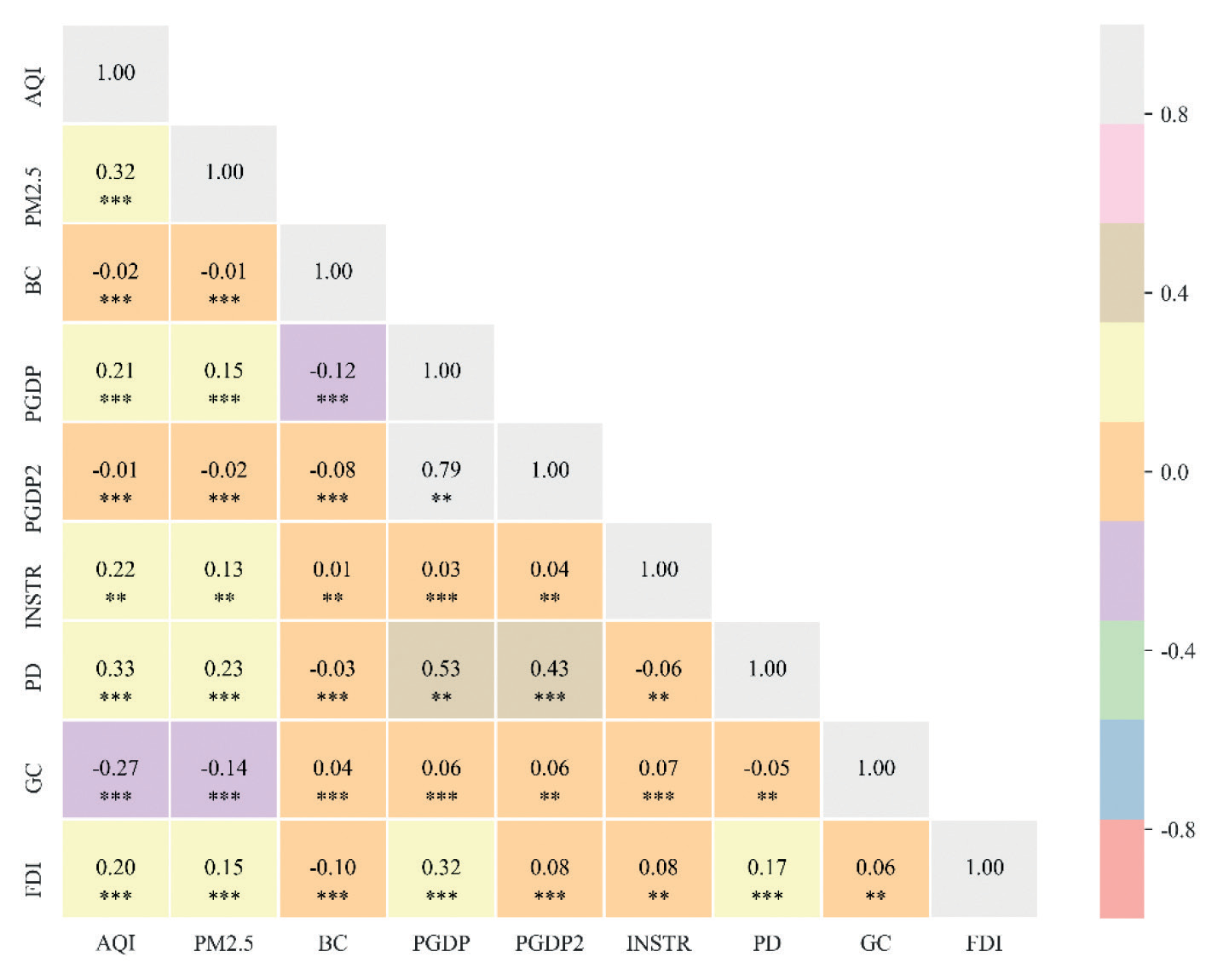
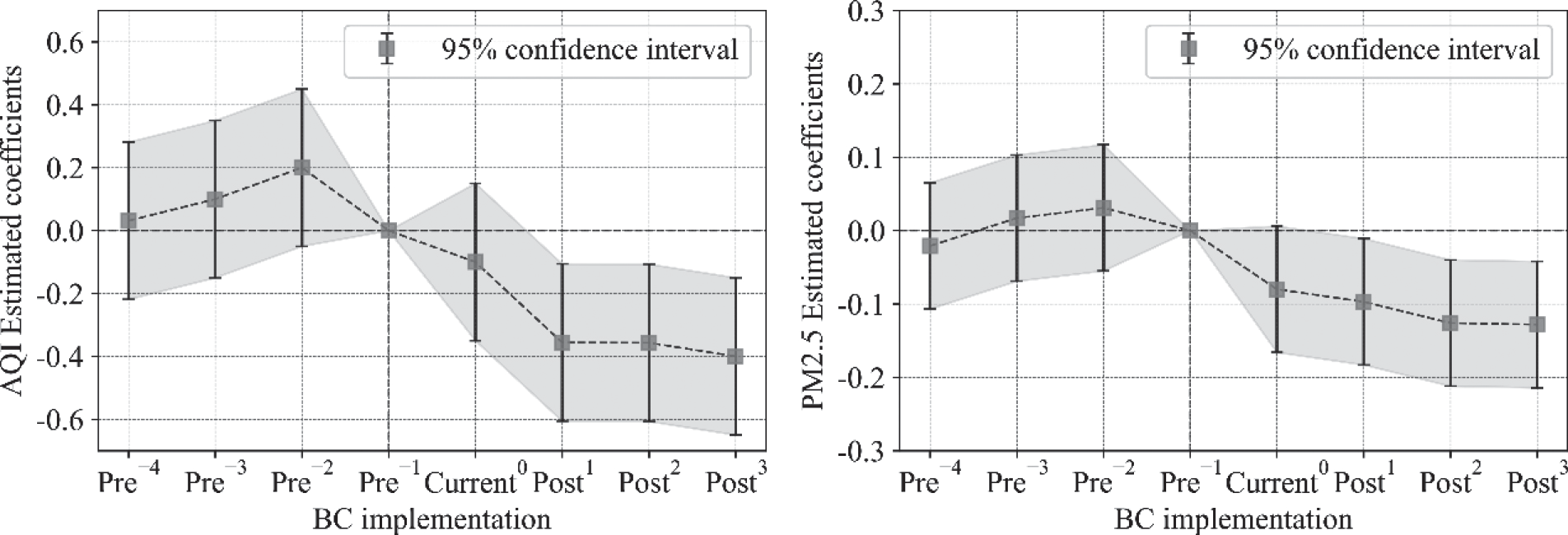
Fig. 2 illustrates the estimated coefficients and their 95% confidence intervals for each interaction term. The analysis results demonstrate that the multi-period DID model utilized in this study satisfies the parallel trends assumption, indicating a high level of credibility in our results. Fig. 2 further reveals the positive impact of the “Broadband China” policy on air quality, with both AQI and PM2.5 showing significant improvement over time following policy implementation. This improvement demonstrates a cumulative effect, indicating that as the policy is implemented more extensively, its positive impact on air quality gradually strengthens. It is noteworthy that the initial effect of the digital economy on air quality improvement is not evident during the early stages of policy implementation, but over time, this improvement effect becomes more apparent and enhanced. This may suggest that the development of the digital economy and its positive impact on the environment need to undergo a certain construction period and entail lag effects. This finding holds significant implications for policymakers, providing profound insights into the temporal dynamics and long-term effects of the digital economy in governing air pollution.
Baseline Regression
This study ingeniously leverages the context of the “Broadband China” strategy as a quasi-natural experiment to reveal the potential causal relationship between the digital economy and air environmental pollution. In Table 1, we present the results of regression analysis aimed at assessing the impact of the “Broadband China” strategy on the Air Quality Index (AQI) and particulate matter (PM2.5). In conducting causal inference using the multi-period difference-in-differences method (DID), we particularly focus on the regression coefficients of the core explanatory variables. To ensure the robustness of the results, we report in columns (1) and (2) of Table 1 the effects of the “Broadband China” strategy on AQI and PM2.5, respectively. The regression results indicate that the estimated coefficients of the core explanatory variable — digital economy indicator (BC) — are significantly negative in both models, suggesting preliminarily that cities selected as “Broadband China” pilot areas are able to effectively reduce local AQI and PM2.5 levels in the process of promoting the digital economy. This finding suggests that the development of the digital economy may offer new avenues for improving air quality.
More specifically, our analysis indicates that the implementation of the “Broadband China” strategy resulted in approximately a 1.4% reduction in AQI and PM2.5 values. This significant decrease further confirms the positive role of digital economy development in addressing air pollution. This result not only provides valuable information for policymakers, but also offers empirical evidence for understanding how the digital economy positively impacts the environment through promoting clean energy usage, enhancing energy efficiency, and supporting remote work, among other means.
Endogeneity Test
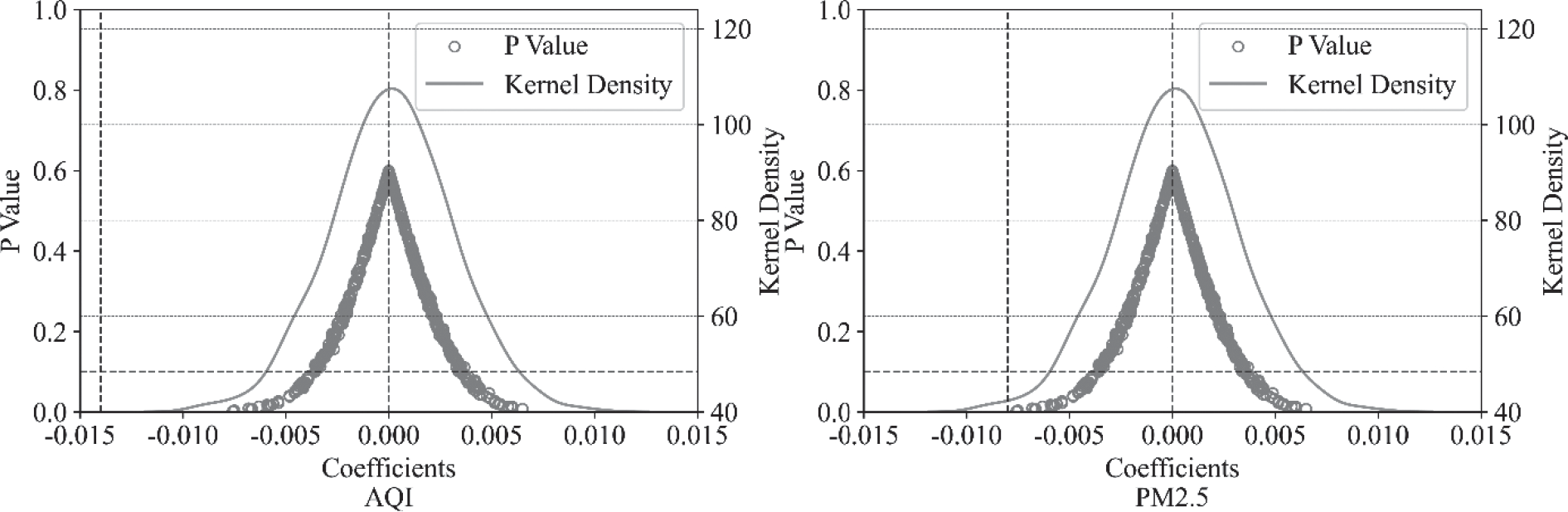
To further examine the robustness of our empirical results, we employ a placebo test. Although previous analyses theoretically exclude potential interference from other environmental policies, and the parallel trends test results indicate that our identification strategy meets the assumptions of the multi-period double-difference model, there is still a possibility of omitted variables in practice, posing a threat to the credibility of our empirical results. Therefore, we conduct a placebo test by randomly assigning pilot cities.
Specifically, we randomly select a subset of cities from the 281 cities in the sample as the treatment group, with the remaining cities not chosen as the control group. If, under this condition, the estimated coefficient of the core explanatory variable BC remains significant, it suggests that our empirical results may be caused by other unobserved factors. Conversely, if the coefficient is not significant, it can be inferred that the pollution control effect of the DE is genuinely present. We perform 2000 random samplings and conduct regression analysis according to the regression model in column (2) of Table 1. Fig. 3 presents the results of the placebo test after 2000 random samplings of the core explanatory variable BC. The results show that the significance level of the core explanatory variable BC is well below 5%, indicating that our empirical results can effectively reflect the pollution control effect of the DE to a certain extent.
In addition, to further strengthen our robustness test, we adopted the propensity score match-differentially (PSM-DID) method, the specific results are shown in columns (3) and (4) of Table 2. This approach combines the advantages of propensity score matching (PSM) and difference by difference (DID). It aims to reduce bias in estimates of treatment effects by matching observations from the experimental and control groups. First, we used propensity score matching to match each experimental group city with a control city, ensuring that the observations in both groups were as similar as possible before treatment. We then applied a difference-difference model to estimate the treatment effects and the impact of the digital economy on air quality. With this approach, we can control potentially confounding variables more accurately, resulting in more robust estimates of treatment effects. Applying the PSM-DID method improves the credibility of our empirical results. It provides deeper insights into how the digital economy affects environmental quality through different mechanisms. The application of this approach further confirms the positive role of the digital economy in promoting environmental sustainability. It provides a more solid basis for policymakers to formulate effective policies to promote the coordinated development of the digital economy and environmental protection.
Heterogeneity Analysis
In further exploring the impact of the digital economy on air quality, this study focuses on three key factors: innovation capability, industrial structure, and urban scale. Through meticulous analysis, we find that these factors play crucial roles in the relationship between the digital economy and air quality improvement. Specifically, the results in Table 3 demonstrate that in cities with stronger innovation capabilities, the positive effects of the digital economy on addressing air pollution are more pronounced. This phenomenon is evident in the improvement of both AQI and PM2.5. It may be attributed to the fact that cities with strong innovation capabilities are more likely to adopt advanced environmental technologies and clean energy sources, thereby effectively reducing pollutant emissions during the process of digital economy development.
Furthermore, the analysis in Table 4 reveals that the impact of the digital economy on reducing air pollution levels is more significant in cities with a higher level of industrial structure. This result applies similarly to both AQI and PM2.5. It may be because cities with optimized industrial structures tend to develop low-pollution, high-value-added industries. The growth of the digital economy in these cities is more likely to integrate with environmentally friendly industries, thereby promoting overall improvement in air quality.
These findings provide valuable insights, suggesting that in promoting the development of the digital economy, consideration should be given to the different characteristics of cities, such as innovation capability and industrial structure, in order to formulate and implement environmental policies more effectively. Through these in-depth analyses, we can better understand how the digital economy operates in different urban environments and how policy guidance can make the digital economy a significant force in improving air quality.
Discussion
The above analysis establishes a causal relationship between promoting the development of the digital economy and improving air pollution. So, what transmission mechanism is used to promote the development of the digital economy to improve local environmental pollution? In order to answer this question, this paper uses a two-stage mediation model for empirical testing. The natural logarithm of the number of prefecture-level green patent applications is taken as the mechanism variable (GPAT), and the specific results are shown in Table 5. Specifically, the development of the digital economy has effectively reduced the emission of air pollutants and improved air quality by promoting innovation in clean and environmentally friendly technologies, such as the increase in green patent applications reflected in GPAT. The identification of this mechanism reveals the positive role of the digital economy in promoting environmental sustainability, especially in promoting the green transformation of industrial structure, improving the efficiency of environmental regulation, and enhancing public awareness of environmental protection. Therefore, decision-makers should fully consider the potential of the digital economy when formulating economic policies and combine the digital economy with environmental protection policies by encouraging technological innovation and building green digital infrastructure to achieve a win-win situation between economic development and environmental protection.
In addition, we have added some potential mechanism tests. First, from the perspective of energy structure optimization, this paper defines the intermediate variable as the proportion of clean energy (CEP), which represents the proportion of clean energy in total energy consumption. The measurement process is calculated by calculating each region’s production and consumption of clean energy. Secondly, from the perspective of industrial structure adjustment, the intermediate variable is defined as the proportion of high-polluting industries (HPIB), which reflects the proportion of high-polluting industries in the whole industry. The measurement process involves calculating the output value of highly polluting industries in each region and then calculating their share in the total industrial total. Finally, starting from the support of green finance, the intermediate variable is defined as the total amount of green finance loans (GFL) to evaluate the degree of financial institutions’ support for environmental protection projects. The measurement process is to count the total amount of green finance loans provided by financial institutions in each region. These tests further confirm the positive impact of the digital economy on environmental quality improvement, providing policymakers with a more comprehensive perspective to formulate and implement policies that promote the integration of economic development and environmental protection.
Table 5.
The Potential Mechanism Tests.
| Variable | (1) | (2) | (3) | (4) |
|---|---|---|---|---|
| GPAT | CEP | HPIB | GFL | |
| BC | 0.015*** | 0.019** | -0.013*** | 0.027*** |
| (3.68) | (2.46) | (-2.93) | (2.89) | |
| Controls | ✔ | ✔ | ✔ | ✔ |
| Year | ✔ | ✔ | ✔ | ✔ |
| City | ✔ | ✔ | ✔ | ✔ |
| N | 3895 | 3895 | 3895 | 3895 |
| Adj_R2 | 0.762 | 0.658 | 0.682 | 0.785 |
In summary, the development of the digital economy not only directly improves air quality through technological innovation but also indirectly promotes environmental sustainability through mechanisms such as energy structure optimization, industrial structure adjustment, and green financial support. These findings highlight the need to consider the digital economy’s multi-faceted potential when formulating economic policies to achieve economic and environmental harmony. Policymakers should promote the healthy development of the digital economy through incentive measures and policy guidance while strengthening environmental protection and governance to promote a greener and more sustainable development of society.
Conclusions
This research has delved into the interplay between the digital economy (DE) and air quality, utilizing the “Broadband China” initiative as a natural experiment to explore DE’s potential in enhancing environmental sustainability. The empirical analysis, encompassing descriptive statistics, correlation analysis, parallel trends test, baseline regression, and placebo tests, offers a comprehensive understanding of the relationship between DE and air quality. The findings reveal a significant negative correlation between DE and air pollution levels, as measured by the Air Quality Index (AQI) and PM2.5 concentrations.
To sum up, the development of the digital economy not only directly improves air quality through technological innovation but also indirectly promotes environmental sustainability through mechanisms such as energy structure optimization, industrial structure adjustment, and green financial support. These findings highlight the need to consider the digital economy’s multi-faceted potential when formulating economic policies to achieve economic and environmental harmony. Through incentives and policy guidance, we will promote the healthy development of the digital economy while strengthening environmental protection and governance and promoting the development of society in a greener and more sustainable direction.
Recommendations
Based on the study’s findings, it is recommended to accelerate the development of the digital economy with a focus on enhancing its quality and level, while concurrently strengthening environmental protection and governance. This integrated approach is expected to yield mutual benefits for both DE and environmental quality, fostering a harmonious development between the economy and the environment. Policymakers should leverage the potential of DE to drive sustainable development, integrate environmental considerations into economic strategies, and create policies that support the growth of green digital infrastructure and technologies. Although the study is based on data from China, the insights gained may have broader implications and applicability to other countries and regions. The fundamental mechanisms by which DE can alleviate air pollution, such as industrial restructuring, technological upgrades, and the expansion of cleaner service sectors, are likely to be relevant in various contexts. However, it is crucial to consider local economic, technological, and environmental conditions when adapting these insights to different regions. Policymakers can translate the research findings into actionable policy recommendations by investing in digital infrastructure, promoting the adoption of advanced technologies, encouraging the growth of knowledge-intensive and service-oriented industries, fostering innovation ecosystems, and developing comprehensive regulatory frameworks that integrate environmental protection and sustainability principles into economic policies. By implementing such measures, DE’s potential can be harnessed to drive sustainable development, reduce air pollution, and promote a green economic model that balances economic progress with environmental stewardship.

