

Introduction
In recent years, the issue of pollution has become increasingly prominent, leading to stricter environmental policies and heightened attention from enterprises towards environmental issues. On the one hand, societal progress and improved public awareness of environmental protection have raised expectations for enterprises to proactively shoulder their responsibility in this regard [1]. On the other hand, embracing environmental responsibility not only ensures compliance and reduces legal risks for businesses but also enhances resource utilization efficiency, minimizes waste generation, lowers production costs, and fosters long-term sustainable development [2]. Moreover, given that consumers are increasingly inclined towards environmentally friendly products and services, enterprises prioritizing environmental protection often gain public recognition and respect while enhancing their brand image and reputation [3]. Therefore, improving the environmental performance of enterprises is an essential measure to promote long-term, high-quality development under today’s stringent environmental regulations.
The green cognition of business executives pertains to the comprehension of executives in relation to matters such as environmental preservation and sustainable development. This cognition not only encompasses corporate social responsibility but also directly influences strategic decision-making, operational management, and long-term enterprise growth [4]. In the current context where enterprises place significant emphasis on environmental protection, the green cognition of executives exerts a crucial impact on the sustained development of enterprises. Research indicates that executives’ green cognition not only aids in shaping an organizational culture and values centered around environmental protection, enabling comprehensive consideration of environmental factors during strategic decision-making while avoiding the myopic pursuit of short-term gains at the expense of long-term consequences [5], but also facilitates executive insight into green market demands and trends, fostering product/service development aligned with environmental requirements to meet consumers’ eco-friendly needs [6]. Furthermore, given escalating global awareness regarding environmental preservation, governments are increasingly implementing stringent regulations and policies. Business executives’ environmentally conscious mindset assists companies in effectively navigating these challenges while mitigating risks such as fines or reputational damage resulting from non-compliance with regulations [7]. Consequently, business executives’ green cognition plays a pivotal role in ensuring the enduring implementation of sustainable enterprise practices.
As the leadership core of the enterprise, the green cognition degree of the enterprise executives directly determines the investment and strength of the enterprise in environmental protection and sustainable development. First of all, from the perspective of corporate strategy, executives' green cognition can guide enterprises to develop strategies that are more suitable for the development of the green economy. These strategies not only help to enhance the market competitiveness of enterprises, but also promote the sustainable development of enterprises in the long run. Secondly, from the level of corporate decision-making, executives' green cognition can ensure that enterprises make more scientific and reasonable choices when facing environmental problems. For example, in investment decisions, executives will give priority to projects with good environmental benefits and low emissions; in operation management, it will promote the implementation of environmental protection measures such as energy conservation, emission reduction, and resource recycling. These decisions not only help reduce environmental risks, but also improve environmental performance. Finally, from the level of performance improvement, the green cognition of executives can help reduce the environmental cost of enterprises, improve resource utilization efficiency, reduce environmental pollution and emissions, and thus improve the environmental performance of enterprises by guiding enterprises to formulate green strategies, make environmental protection decisions, and promote environmental protection actions.
Currently, research on corporate environmental performance has broadened its scope to encompass various influencing factors, such as governmental policies and regulations aimed at environmental protection, economic development levels, public sentiment shifts, and technological advancements, all of which have been shown to exert significant influence on this performance metric [8-11]. However, a notable gap exists in the literature regarding the exploration of executives’ cognition as a pivotal factor in shaping corporate environmental performance. This oversight is particularly intriguing given that executives’ green cognition, in the long run, is poised to foster sustainable development within organizations. Yet, the question remains: Does this green cognition, in the shorter term, exert a direct and tangible enhancement on environmental performance? Furthermore, how does this cognitive aspect specifically influence corporate environmental performance, and are there any underlying heterogeneities in this relationship? To address these pertinent questions, this study meticulously examines the case of China’s A-share listed companies spanning the years 2012 to 2021. By leveraging this comprehensive sample, we delve into the intricate relationship between executives’ green cognition and corporate environmental performance, uncovering the mechanisms that underlie this connection. Our findings underscore the pivotal role of executives’ green cognition in bolstering firms’ environmental performance, primarily through the stimulation of green technology innovation. Moreover, we discover that this positive effect is further amplified by robust corporate governance practices, indicating a synergistic relationship between cognitive commitment and structural support. In a deeper analysis, we uncover heterogeneity in the impact of executives’ green cognition on corporate environmental performance, contingent upon factors such as equity ownership structure, geographical location, and industry type. Notably, non-state-owned manufacturing enterprises situated in the central and western regions of China exhibit a particularly pronounced response to executives’ green cognition, highlighting the intricate interplay between cognitive factors and contextual variables. Overall, this study contributes to the growing body of knowledge on corporate environmental performance by shedding light on the overlooked yet critical role of executives’ green cognition and its multifaceted interactions with organizational and environmental contexts.
The main contributions of this study are as follows: First, from the perspective of executives' cognition, it studies the influencing factors of corporate environmental performance, provides a new idea for improving corporate environmental performance, and enriches relevant research; second, it explores the mechanism of the impact of executives’ green cognition on corporate environmental performance and provides a theoretical basis for a comprehensive understanding of the path to realize the impact of executives’ green cognition on corporate environmental performance; third, in the context of today’s high emphasis on environmental protection, the results of this study have strong practical significance for promoting long-term sustainable development of enterprises and achieving high-quality development of China’s economy.
Literature Review and Research Hypotheses
Executive’s Green Cognition and Corporate Environmental Performance
Executives’ green cognition refers to the cognition level of senior managers on the concepts of sustainable development and environmental protection of corporate operations and their willingness and ability to apply them to corporate strategic planning and daily management [12]. With the continuous development of economic globalization, greening, and digitalization, the green cognition of corporate executives is becoming more and more important, which is not only an important embodiment of corporate social responsibility and the establishment of corporate brand image, but also related to the improvement of enterprise market competition level. The upper echelons theory was put forward by Hambrick and Mason [13], who believed that managers are faced with a complex and volatile environment, and their knowledge and ability are limited. Managers will make decisions based on their own experience, ability, or cognition, which means that the individual characteristics or psychological cognition of managers will affect the strategic decision-making of enterprises.
First, executives’ green cognition is an important boost for enterprises to formulate environmental protection strategies. The upper echelons theory points out that the cognitive model and other characteristics of executives will lead to certain preferences in the formulation of strategies, which will further affect the performance of enterprises through strategies [13]. The green cognition level of executives directly affects their cognition and implementation of environmental protection concepts in the process of enterprise operation and management. The higher the cognitive level of corporate executives is, the more likely they are to actively perform environmental protection duties in operation and management activities, and the more active they will be in learning and understanding the laws and regulations on environmental protection in their daily work and actively practicing them. Starting from the senior management level, the environmental protection production plan formulated is more in line with the actual situation of the enterprise, which can obtain higher economic benefits and better environmental protection effects on the premise of complying with relevant laws and promoting the enterprise’s environmental protection decision-making and management to be more forward-looking. Executives’ green perceptions often prompt them to make green commitments, which usually improve the environmental performance of enterprises [14].
Second, executives’ green cognition can effectively enhance employees’ environmental awareness. On the one hand, executives are leaders and advocates of enterprises and play a leading role in demonstrating the behaviors of employees. The higher the level of green cognition of executives is, the more likely they are to advocate and practice the concept of environmental protection at work, so as to drive all employees to carry out environmental protection activities, form a good environmental protection cultural atmosphere, and gradually form a habit, which is implemented throughout the company. Existing studies have found that employees’ green teams have a positive impact on corporate environmental performance [15]. On the other hand, executives’ green cognition can encourage companies to increase their awareness of social responsibility. Whether in the process of enterprise management or daily work, they will actively take measures to protect the environment and contribute to sustainable social development [16]. Executives’ green cognition not only improves their sense of social responsibility, but also helps enterprises gradually build a good social image, which helps improve the visibility of enterprises and the level of market competition [17].
Third, executives’ green cognition helps enterprises introduce and use new green products and technologies. With the deepening of the national concept of green development and the continuous innovation of environmental protection technology, paying attention to the application of green technology and the promotion of green products has become a requirement for the sustainable development of enterprises. Generally speaking, executives with green cognition are more willing to actively introduce and apply green technologies and products to help enterprises reduce energy consumption, reduce pollutant emissions, and improve resource utilization, thus promoting the improvement of environmental performance [18]. Liu and Chen found that the green innovation of enterprises with senior executives’ green cognition was 12.5% higher than that of enterprises without green cognition [19]. In addition, executives’ green cognition can encourage enterprises to carry out more environmental protection technology activities, actively communicate with environmental protection experts, integrate environmental protection activities and resources into the daily management process of enterprises, form environmental protection technology support programs with enterprise characteristics, and help enterprises continuously improve the level of environmental protection, so as to improve environmental performance. Putra et al. found that green CEOs played an important positive role in regulating the relationship between management ability and corporate environmental performance [16].
Based on the above analysis, we propose the following hypotheses:
Hypothesis 1 (H1): The executive’s green cognition promotes the improvement of corporate environmental performance.
Executive’s Green Cognition, Corporate Governance, and Corporate Environmental Performance
The upper echelons theory holds that internal or external stimuli will affect the psychological cognition of executives and play an important role in the relationship between executives’ psychological cognition and corporate performance [13]. Corporate governance refers to the supervision and restraint of corporate managers through internal or external mechanisms to ensure that corporate decisions are in line with the interests of stakeholders. Corporate governance will not only affect the psychological cognition of executives, but also have an impact on the relationship between executives’ psychological cognition and firm performance. In the context of escalating environmental and social issues, corporate governance becomes the key to achieving a balance between the environment and society. First, beneficial corporate governance can promote the efficient implementation of executives’ green cognition in enterprises. The more perfect the corporate governance is, the more standardized the decision-making and behavior of executives will be, avoiding excessive interference of personal will in the decision-making process. A sound corporate governance structure can promote the institutionalization and systematization of executives’ green cognition, which can be transformed into operational plans and implemented into specific actions. In addition, the transparency and standardization of corporate governance can also help executives get more support and improve the implementation effect of environmental protection measures in enterprises. Second, beneficial corporate governance can help executives establish green management authority and enhance their influence. A sound corporate governance system can make executives’ decisions more credible and receive a higher degree of recognition [20]. The executives’ green cognition is supported at the organizational level and continuously promoted by employees, and this authority can promote the formation of consistent environmental inertia and daily actions among all employees, thereby promoting the improvement of environmental performance in the enterprise. Third, beneficial corporate governance can reduce the barriers to executives in the process of promoting green cognition. In the absence of effective corporate governance, corporate executives may face pressure from different stakeholders, resulting in executives having to devote their energy to dealing with these objections and doubts, which will greatly reduce the implementation effect of environmental protection. On the contrary, good corporate governance can standardize corporate philosophy, fully balance the interests of multiple parties, and create a good management and decision-making environment [21], so as to promote the smooth implementation of executives’ green cognition and improve the company’s environmental performance. Fourth, beneficial corporate governance can encourage executives to give full play to their innovative spirit in green development. In a good corporate governance environment, executives usually have a stronger sense of social responsibility [20], actively learn green development knowledge, and practice green and environmental protection concepts in enterprises. In addition, the corporate governance and restraint mechanism can stimulate the vitality of the organization, activate the innovative spirit of executives, encourage them to seek new technologies, and promote the improvement of corporate environmental performance. Ren et al. found that corporate governance measures such as green human resource management practices promoted the environmental performance of enterprises [22].
Based on the above analysis, we propose the following hypotheses:
Hypothesis 2 (H2): Corporate governance positively moderates the promotion effect of executives’ green cognition on corporate environmental performance; that is, the better the corporate governance level, the greater the promotion effect of executives’ green cognition on corporate environmental performance.
Executive’s Green Cognition, Corporate Green Technology Innovation, and Corporate Environmental Performance
The upper echelons theory points out that the cognitive model and other characteristics of executives will lead to certain preferences in the formulation of strategies, which will further affect the performance of enterprises through strategies [13]. This means that executives with green cognition are more likely to choose innovation strategies that are consistent with their self-preferences. Executives are an important factor for enterprises to implement technological innovation. When executives have high green cognition, they will give consideration to environmental protection concepts in enterprise technological innovation and promote enterprise green technological innovation. Specifically, first, executives are the decision-makers and leaders of the enterprise and play a key role in guiding the behavior of the whole enterprise [23]. Generally speaking, executives with green cognition are more willing to apply environmental protection concepts and sustainable development concepts to the strategic formulation and daily management process of enterprises [24]. Green cognition can help enterprises fully integrate environmental protection concepts in technological innovation and pay attention to fully integrating environmental and economic benefits in carrying out various work, so that green innovation can truly be integrated into enterprise development. Second, executives’ green cognition is conducive to building a company’s green cultural atmosphere. In general, executives with green cognition tend to integrate the concept of green development into the internal management of the enterprise, formulate green policies, and take the lead in practicing green values [25], and cultivate employees’ environmental awareness and innovation spirit through daily management behaviors. This behavior encourages employees to increase their green cognition and innovation enthusiasm, actively engage in cross-professional and cross-field communication and co-creation with various departments, and thus promote the emergence of green technology innovation. Hu et al. found that green leadership had a positive impact on employees’ green behavior [26]. Third, executives’ green cognition can help enterprises obtain more external resources [27]. With the continuous deepening of environmental protection concepts, enterprises with green cognition are more likely to receive external attention and support. Support from the government, consumers, investors, and other aspects can inject more funds into enterprises and help them solve problems encountered in green technology innovation. In this exchange process, it also brings new development perspectives and opportunities to enterprises. Fourth, executives’ green cognition can help enterprises pay attention to and identify opportunities for green technology innovation. With the continuous enhancement of consumers’ concept of environmental protection, consumers have a higher demand for green, healthy, and safe products, and carrying out green technology innovation has become an important means for enterprises to enhance market competitiveness [28]. Executives with green cognition can seize market demand, seize development opportunities in the tide of green technology innovation, and promote the sustainable development of enterprises [25]. Wang et al. found that executives’ ESG cognition positively affects corporate green innovation [12]. Singh et al. found that green human resource practices positively affect corporate green innovation [29].
According to the upper echelons theory, managers’ psychological cognition can further affect corporate performance through strategic preference. It has been analyzed above that executives with green cognition are more likely to choose green-related technological innovation. Next, we will further analyze how enterprise green technology innovation promotes the improvement of enterprise environmental performance, as follows: First, green innovation technology can help enterprises reduce their adverse impact on the environment. Most enterprises adopt traditional production methods and technologies, which often bring problems of high emissions and high energy consumption, which not only waste resources, but also put pressure on the environment in the region where the enterprises are located. The adoption of green innovative technologies such as resource recycling technology and cleaner production technology can reduce energy consumption and pollutant emissions in the production process of enterprises [30], which can not only ensure that enterprises comply with relevant environmental laws and regulations, but also promote enterprises to actively undertake environmental protection responsibilities and help enterprises establish a good social image. Second, green innovation technology can help enterprises improve resource utilization. Green innovation technology usually adopts more advanced process technology and management processes, which can make full use of raw materials and various energy consumption, improve resource utilization rates, and help enterprises reduce production costs [31]. In addition, green innovation technology can promote enterprises to reuse waste, realize harmless and resource-based waste, and help enterprises improve economic benefits while reducing external emissions [32]. Third, green technology innovation can encourage enterprises to develop green products. Currently, consumers have a higher demand for green products and services, and enterprises can innovate and develop green technologies based on this. While launching products that meet consumer needs, they can achieve their goals of emission reduction and conservation, forming a new economic growth point [33]. Fourth, green innovation technology can help firms optimize their green management models. Green technology innovation is an important support for enterprises to establish a green management system. On this basis, enterprises can deeply implement the green concept, advocate for employees to practice the concept of sustainable development [33], form a good atmosphere for full participation, and enhance employees’ environmental awareness and social responsibility. Promote the synchronous improvement of economic benefits and environmental protection benefits. Previous studies have shown that there is a positive relationship between green innovation and green performance [34]. Hojnik and Ruzzier found that managers’ environmental cognition affected corporate performance and competitive advantage through green innovation [35].
Based on the above analysis, we propose the following hypotheses:
Hypothesis 3 (H3): Executives’ green cognition promotes the improvement of corporate environmental performance by improving corporate green technology innovation.
Experimental
Data Source
This paper takes all of China’s A-share listed companies from 2012 to 2021 as the research sample, using data mainly from the CSMAR database and annual reports of listed companies, and manually collecting and collating individual necessary missing values through Baidu, Sohu, Sina Finance, and other websites. The research data were screened as follows:
(1) Financial enterprises such as banks and securities companies were excluded; (2) The samples of ST, *ST, and PT were excluded; (3) Remove the samples with missing or outlier data. In addition, in order to eliminate the influence of extreme values on the study results, all continuous variables were indented at 1% and 99%, respectively. In the end, 19652 sample observations were identified, and STATA14.0 was used for data processing and analysis.
Definition of Variables
The explained variable is corporate environmental performance. In this paper, in order to reflect the effects of environmental protection and governance, the comprehensive score of environmental performance and governance disclosure in CSMAR’s ENV database is used to measure corporate environmental performance (Cep) with reference to existing studies. The corporate environmental performance index consists of the following six parts: (1) waste gas emission reduction and governance; (2) wastewater reduction and treatment;
(3) dust and dust control; (4) utilization and disposal of solid waste; (5) noise, light pollution, radiation, and other control; (6) implementation of cleaner production. They are given a score of 0, 1, or 2 based on their degree of disclosure (whether they disclose qualitative or quantitative disclosure). At the same time, in order to reduce the heteroscedasticity and ensure the stationarity of the data, logarithmic processing is performed in this paper. In addition, the environmental responsibility score in the CSR score is considered to be able to evaluate a company’s achievements in environmental governance more broadly and comprehensively. Therefore, the Environmental Responsibility Score (Cer) in the Bloomberg ESG score is used as an alternative measure of corporate environmental performance in the robustness test.
The explanatory variable is the executives’ green cognition. Text analysis has been proven to be effective in measuring executive cognition and can be used in longitudinal data studies [36]. The data needed to measure executive cognition comes from the annual reports of listed companies [37]. Therefore, text analysis is adopted in this paper, and a series of keywords are selected based on three dimensions: cognition of green competitive advantage, cognition of corporate social responsibility, and perception of external environmental pressure. The frequency of the above words in the annual reports of listed companies from 2012 to 2021 was used to measure executives’ green cognition (Egc). At the same time, in order to reduce heteroscedasticity and ensure the stationarity of the data, this paper performs logarithmic processing.
The moderating variable is corporate governance. Drawing on the practices of Naikang, and Yanli [38] and Qian et al. [39], this paper uses the principal component analysis method to construct comprehensive indicators from the aspects of supervision, incentive, and decision-making to measure the level of corporate governance. Executive compensation (Mana Pay) and executive shareholding ratio (Mana Share) are chosen to represent the incentive mechanism in corporate governance, and the supervisory role of the Board of Directors is expressed by the ratio of independent directors (Outratio), as well as the size of the Board of Directors (Board). Institutional Shareholding Ratio (Inst_Share) and Share Balance (sum of shareholding ratio of two to five major shareholders/shareholding ratio of controlling shareholders) are used to express the supervisory role of equity structure, and whether the chairman and the general manager are Dual is used to express the decision-making power of the general manager. Based on the above 7 indicators, the principal component analysis method is used to construct the corporate governance index (Cg). The greater the Cg index, the higher the level of corporate governance.
The mediating variable is green technology innovation. Referring to the research of scholars such as Shaozhou et al. [40], Jia, and Jingbo [41], the number of green invention patent applications of listed companies is used to measure green technology innovation (Gti). In order to ensure the comparability of the data and eliminate heteroscedasticity, it is processed logarithmically in this paper.
Control variables. First, the size of the enterprise (Size). This paper uses the natural logarithm of the total assets of the enterprise at the end of the year to measure the size of the enterprise. Second, the age of establishment (His) is measured by the difference between the year studied by the sample and the year in which the firm was established. In order to eliminate heteroscedasticity, this paper carries out logarithmic processing on His. Third, debt-paying ability (Lev) is measured by the asset-liability ratio of the enterprise, that is, the ratio of the total liabilities of the enterprise to the total assets. Fourth, profitability (Roa), this paper uses the net profit rate of total assets, that is, the ratio of corporate net profit to the average balance of total assets to measure. Fifth is the operating ability (Tat). This paper uses the total asset turnover, that is, the ratio of the enterprise’s operating income to the total assets at the end of the balance to measure.
Table 1.
Variable definition and interpretation.
Model Setting
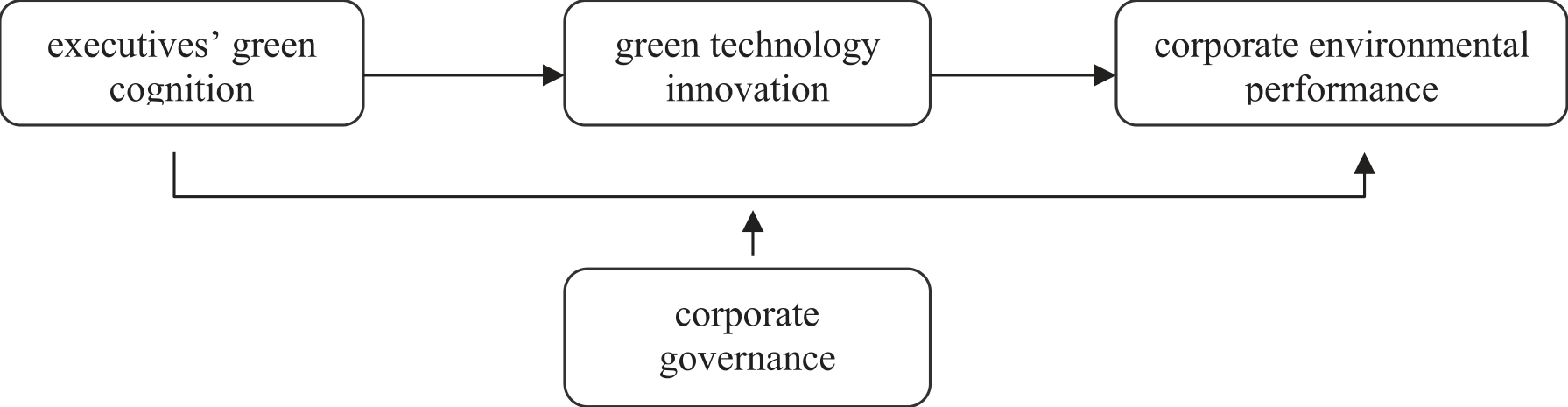
In order to verify hypothesis 1, model (1) is constructed to empirically test the impact of executives’ green cognition on corporate environmental performance. Cepi,t is the environmental performance of the explained variable, which is measured by the comprehensive score of environmental performance and governance disclosure. In order to maintain the comparability of the data, it is processed logarithmically. Egci,t is the green cognition of executives; Control_varlablesi,t is the control variable listed in Table 1, and εi,t is the residual term. In addition, the influence of annual and industry effects is taken into account, and both the year and industry are controlled. Focus on the coefficient β1 of Cepi,t. If β1 is significantly positive, then hypothesis 1 is valid.
In order to verify hypothesis 2, model (2) is constructed to empirically test the moderating effect of corporate governance on executives’ green cognition and corporate environmental performance. Where, Cgi,t is the regulating variable corporate governance; Egci,t * Cgi,t is the interaction term between the explanatory variable executives’ green cognition and the regulating variable corporate governance; Control_varlablesi,t is the control variable listed in Table 2, and εi,t is the residual term. In addition, the influence of annual and industry effects is taken into account, and both the year and industry are controlled.
In order to test hypothesis 3, the “three-step method” is used to test the mediation effect; model (1) has tested the relationship between the explained variable and the explanatory variable, and then model (3) and model (4) are constructed to test the relationship between the mediating variable, and the explanatory variable, and the relationship between the explained variable, the mediating variable, and the explanatory variable, respectively. Where, Gtii,t is the intermediary variable of green technological innovation; Control_varlablesi,t is the control variable, consistent with the control variable in model (1).
Results
Descriptive Statistics
Table 2 reports the results of descriptive statistics for all variables. It can be seen from the table that the mean value of corporate environmental performance (Cep) is 0.680, the standard deviation is 0.810, the minimum value is 0.000, and the maximum value is 2.398, indicating that there are great differences in the corporate environmental performance of China’s A-share listed companies within the selected sample interval. The mean value of green cognition (Egc) of executives is 0.929, the standard deviation is 0.898, the minimum value is 0.000, and the maximum value is 3.258, indicating that the green cognition of executives of China’s A-share listed companies also has great differences within the selected sample interval. In addition, it can be found that there is a good discretization among the mediating variables, regulating variables, and control variables, indicating that the selection of variables is reasonable, which is conducive to the regression analysis in the following paper.
There are obvious differences in many aspects between listed companies with high and low corporate environmental performance. In order to more clearly describe the differences between the two different types of listed companies, the group is grouped according to the median of corporate environmental performance, and the difference between the groups is analyzed by the T-test. Table 3 reports the univariate analysis results. It can be seen that when the corporate environmental performance is low, the mean of the executives’ green cognition (Egc) is 0.654; when the corporate environmental performance is high, the mean Egc is 1.258; and the difference between groups is significant at the 1% level. The above results indicate that listed companies with higher corporate environmental performance have higher levels of green cognition among their executives. At the same time, it can be found that when corporate environmental performance is low, the mean value of corporate governance (Cg) is -0.287, and the mean value of corporate green technology innovation (Gti) is 0.228. When the environmental performance of enterprises is high, the mean values of Cg and Gti is 0.095 and 0.353. The differences between the groups were significant at the 1% level. The above results indicate that listed companies with higher corporate environmental performance have better corporate governance and a higher level of green technology innovation.
Basic Regression Analysis
Table 4 reports the regression results of the impact of executives’ green cognition on corporate environmental performance. In column (1), when the influence of control variables is not considered, the correlation coefficient between Cep and Egc is 0.214, which is significant at the 1% level, indicating a significant positive correlation between executives’ green cognition and corporate environmental performance, that is, executives’ green cognition positively promotes the improvement of corporate environmental performance. Hypothesis 1 has been verified. In column (2), after considering the influence of control variables, the correlation coefficient between Cep and Egc is 0.184, and it is still significant at the 1% level, indicating that after considering the influence of control variables, the green cognition of executives still positively promotes the improvement of corporate environmental performance. Hypothesis 1 is proved. In column (3), after corporate governance Cg and Egc*Cg, the interaction term between corporate governance and executives’ green cognition, are introduced, the fixed effects of year and industry are controlled bidirectional at the same time, and the correlation coefficient between Cep and Egc is 0.184, which is significant at 1% level; The correlation coefficient between Cep and interaction term Egc*Cg is 0.017, and it is significant at 1% level; This indicates that corporate governance positively regulates the promoting effect of executives’ green cognition on corporate environmental performance, that is, the better the corporate governance level, the greater the promoting effect of executives’ green cognition on corporate environmental performance. Hypothesis 2 is verified.
Table 2.
Summary statistics.
Table 3.
Grouping descriptive statistics according to the level of digital economy development.
Table 4.
Benchmark test.
Table 5 reports the test results of the mechanism of executives’ green cognition on corporate environmental performance. In column (1), the correlation coefficient between Gti and Egc is 0.112, which is significant at the 1% level, indicating that the improvement of green cognition of executives can promote green technology innovation. In column (2), after introducing the mediating variable green technology innovation, the correlation coefficient between Cep and Gti is 0.020, and it is significant at the level of 1%; the correlation coefficient between Cep and Egc is 0.181, which is still significant at the 1% level; this indicates that executives’ green cognition can promote the improvement of enterprises’ environmental performance by enhancing enterprises’ green technology innovation, and the mediating effect is a partially mediating effect. Hypothesis 3 is verified.
Robustness Test
Replace the Explained Variable Measurement Method
In order to verify the robustness of the regression conclusion, the corporate environmental performance measurement index is replaced next, and the environmental responsibility score (Cer) in the Bloomberg ESG score is used as an alternative indicator for regression. Table 6 reports the robustness test results after replacing the measurement method of explained variables. It can be seen that the correlation coefficient between Cer and Egc in column (1) is 1.279, and it is still significant at the 1% level, indicating that the green cognition of executives positively promotes the improvement of corporate environmental performance. Hypothesis 1 has been proved again. In column (2), the correlation coefficient between Cer and the interaction item Egc*Cg is 0.773, which is still significant at the 1% level. This indicates that the better the corporate governance level is, the greater the promotion effect of executives’ green cognition on corporate environmental performance. Hypothesis 2 has been verified again. After introducing the mediating variable green technology innovation into column (3), the correlation coefficient between Cer and Gti is 0.908, which is significant at the 1% level; the correlation coefficient between Cer and Egc is 1.058, which is still significant at the 1% level. This indicates that the green cognition of executives can promote the improvement of corporate environmental performance by improving corporate green technology innovation. Hypothesis 3 has been verified again.
Explanatory Variables Lag by One Period
In order to verify the robustness of the regression conclusion and take into account the lag of the impact of executives’ green cognition on corporate environmental performance, all explanatory variables are regressed with a lag of one period. Table 7 reports the robustness test results of explanatory variables with a lag of one period. It can be seen that the correlation coefficient between Cep and Egc in column (1) is 0.161, which is still significant at the 1% level, indicating that the green cognition of executives positively promotes the improvement of corporate environmental performance. Hypothesis 1 has been proved again. In column (2), the correlation coefficient between Cep and the interaction item Egc*Cg is 0.012, which is significant at the level of 10%. This indicates that the better the corporate governance level is, the greater the promotion effect of executives’ green cognition on corporate environmental performance. Hypothesis 2 has been verified again. In columns (3) and (4), the correlation coefficient between Gti and Egc is 0.122, which is significant at the 1% level; the correlation coefficient between Cep and Gti is 0.028, and it is significant at the 1% level; the correlation coefficient between Cep and Egc is 0.157, which is still significant at the 1% level. This indicates that executives’ green cognition can promote the improvement of corporate environmental performance by improving corporate green technology innovation. Hypothesis 3 has been verified again.
Table 5.
Mechanisms of influence testing.
Table 6.
Benchmark test.
Narrow the Sample Interval
In the descriptive statistics section, we find that the minimum value of executives’ green cognition is 0, that is, the annual reports of some listed companies do not contain the word frequency related to executives’ green cognition. In order to eliminate the influence of this part of listed companies on the regression results, the sample selection interval was narrowed, and only listed companies that reported the green cognition of executives in their annual reports were selected for the study. Table 8 reported the robustness test results after the sample selection interval was narrowed. It can be seen that the correlation coefficient between Cep and Egc in column (1) is 0.214, which is still significant at the 1% level, indicating that the green cognition of executives positively promotes the improvement of corporate environmental performance. Hypothesis 1 has been proved again. In column (2), the correlation coefficient between Cep and the interaction item Egc*Cg is 0.016, which is significant at the level of 5%; this indicates that the better the corporate governance level is, the greater the promotion effect of executives’ green cognition on the corporate environmental performance. Hypothesis 2 has been verified again. In columns (3) and (4), the correlation coefficient between Gti and Egc is 0.133, which is significant at the 1% level; the correlation coefficient between Cep and Gti is 0.020, and it is significant at the 1% level; the correlation coefficient between Cep and Egc is 0.211, which is still significant at 1% level. This indicates that executives’ green cognition can promote the improvement of corporate environmental performance by improving corporate green technology innovation. Hypothesis 3 has been verified again. The regression results are consistent with the previous ones, and the regression conclusions are robust.
Table 7.
Robustness test - explaining variables lagged one period.
Further Analysis
Equity Heterogeneity
Considering the special institutional background of China, state-owned enterprises and nonstate-owned enterprises are quite different in terms of policy support, goals and missions, etc. Therefore, it is necessary to further explore the difference in the impact of green cognition on the corporate environmental performance of listed companies with different ownership natures. Next, all listed companies are further divided into state-owned enterprises and non-state-owned enterprises for regression. Table 9 reports the regression results of equity heterogeneity. It can be seen that in state-owned enterprises, the correlation coefficient between Cep and Egc is 0.157, which is significant at the level of 10%. In non-state-owned enterprises, the correlation coefficient between Cep and Egc is 0.202, which is significant at the 1% level. It shows that the promotion of green cognition by executives on corporate environmental performance is more obvious in non-state-owned enterprises. This may be because state-owned enterprises, as the “eldest son” of the republic, shoulder more social responsibilities and generally attach more importance to environmental performance. Therefore, compared with non-state-owned enterprises, corporate environmental performance is less sensitive to the improvement of executives’ green cognition.
Table 8.
Robustness test - shortening the time lattice.
Regional Heterogeneity
Due to the differences in economic conditions, resource endowments, and national policy preferences among different regions, the impact of executives’ green cognition on corporate environmental performance is also unbalanced. The nationwide test is likely to cover some regional characteristics, so it is necessary to further explore the difference in the impact of executives’ green cognition on the corporate environmental performance of listed companies in different regions. Next, according to the division of China’s economic regions in the report of the 16th National Congress of the Communist Party of China, the regions where listed companies are located are divided into four regions, namely the eastern region, central region, western region, and northeast region, and then regression is carried out, respectively. Table 10 reports the regression results of regional heterogeneity. It can be seen that in the eastern region, the correlation coefficient between Cep and Egc is 0.169, which is significant at the level of 5%. In the central region, the correlation coefficient between Cep and Egc is 0.211, and it is significant at the 1% level; in the western region, the correlation coefficient between Cep and Egc is 0.209, which is significant at the 1% level; in northeast China, the correlation coefficient between Cep and Egc is 0.181, and it is significant at 10% level. This indicates that the promotion effect of green cognition on corporate environmental performance is more significant in the central region and the western region, but weaker in the eastern region and northeast region.
Table 9.
Equity heterogeneity.
Industry Heterogeneity
Considering that listed companies in different industries, manufacturing listed companies, and non-manufacturing listed companies, have great differences in the processes of company development, production, and operation, the impact of executives’ green cognition on the corporate environmental performance may also show inconsistent results. Therefore, it is necessary to further explore the differences in the impact of executives’ green cognition on corporate environmental performance of listed companies in different industries. Next, all listed companies are further divided into manufacturing listed companies and non-manufacturing listed companies for regression. Table 11 reports the regression results of industry heterogeneity. It can be seen that the correlation coefficient between Cep and Egc of listed companies in manufacturing is 0.180, and it is significant at the 1% level. In non-manufacturing listed companies, the correlation coefficient between Cep and Egc is 0.136, and it is significant at the 10% level. This indicates that the promotion effect of executives’ green cognition on corporate environmental performance is more obvious in manufacturing listed companies. This may be because, as the pillar industry of China’s national economy, the manufacturing industry plays a pivotal role in promoting economic and social development. However, the manufacturing industry is also a large consumer of environmental factors, and the cost of environmental pollution is relatively high. A large number of products produced by the manufacturing industry will put great pressure on the environment, such as resource loss and energy consumption. Therefore, compared with non-manufacturing listed companies, their executives’ green cognition has a more obvious impact on corporate environmental performance.
Discussion
In recent years, with the increasing prominence of environmental issues, corporate executives have gradually heightened their awareness of sustainability in hopes of enhancing their environmental performance. By bolstering the green cognition of senior executives, enterprises can further fortify corporate governance, foster innovative green practices, and address any deficiencies in environmental protection to ultimately promote overall corporate environmental performance improvement. Therefore, this study selects China’s A-share listed companies from 2012 to 2021 as research samples to explore the relationship between corporate executives’ green cognition and corporate environmental performance. The relevant research findings are analyzed as follows: Firstly, this paper examines the impact of executives’ green cognition on corporate environmental performance. Executives’ green cognition signifies top management’s comprehension and perception regarding resource and environmental concerns, encompassing not only an understanding of green competitive advantage but also awareness of environmental responsibility and recognition of external pressures. Primarily, a profound understanding by executives regarding green competitive advantage not only prompts them to develop more environmentally friendly and sustainable business strategies but also fosters a culture within the organization that emphasizes ecological values while encouraging employee participation in eco-friendly activities [42]. Secondly, augmenting senior executives’ consciousness about their environmental responsibilities not only motivates enterprises to formulate and implement stringent environment policies ensuring compliance with regulatory requirements but also enables increased investment in promoting green innovation, thereby improving production processes and facilitating environmentally friendly product development [43]. Finally, the pressure perception of senior executives can play a two-fold role. On the one hand, when senior executives perceive the pressure of regulations and standards from the external environment, such as government and regulatory agencies, they will pay more attention to compliance with relevant regulations and standards [44]. On the other hand, when executives perceive reputation pressure from the public, consumers, investors, and other external environments, in order to maintain a good reputation, executives and even enterprises will pay more attention to the performance of enterprises in environmental protection [3]. Take Tesla as an example; its CEO, Elon Musk, has built Tesla into the world’s leading electric vehicle manufacturer with his unique leadership style and forward thinking. Musk’s green cognition and strong belief in sustainability have led Tesla to make remarkable achievements in the field of electric vehicles and renewable energy. Tesla has not only improved the performance and range of electric vehicles through technological innovation, but also promoted the popularity of electric vehicles by building infrastructure such as supercharging stations. At the same time, Tesla is also actively involved in environmental activities, such as promoting the use of renewable energy and reducing carbon emissions in the production process. These efforts not only improve Tesla’s environmental performance, but also enhance its brand image and market competitiveness.
Table 10.
Regional heterogeneity.
Secondly, this paper examines the moderating effect of corporate governance on the relationship between executives’ green cognition and corporate environmental performance. To begin with, a high level of corporate governance implies that the company possesses a comprehensive and effective decision-making mechanism as well as a management system [45]. In such an environment, the decision-making process of senior management becomes more transparent, scientific, and standardized, thereby ensuring that green concepts are fully integrated into strategic planning and business execution. Consequently, senior executives’ green cognition plays a pivotal role under strong institutional guarantees. However, it is evident that low levels of corporate governance have shortcomings in this regard, which hinder the full manifestation of executives’ green cognition. Secondly, the robust corporate governance framework ensures a stringent supervision mechanism and incentive structure within the organization. The supervision mechanism effectively prevents executives from deviating from the intended direction and mitigates shortsighted behavior and moral hazards during the promotion of green development. Simultaneously, the incentive structure motivates senior executives to actively fulfill their environmental responsibilities and strive for continuous improvement in the company’s environmental performance. This dual role synergistically facilitates the transformation of green awareness into tangible actions by senior executives [46]. Lastly, sound corporate governance fosters a positive corporate culture and values that further reinforce environmental consciousness among executives, encouraging them to proactively promote enhancements in corporate environmental performance [47].
Table 11.
Industry heterogeneity.
Thirdly, this paper examines the mechanism by which executives’ green cognition affects corporate environmental performance. On one hand, executives’ green cognition promotes the enterprise’s level of green technology innovation. Firstly, senior executives’ understanding and recognition of environmental protection as an important strategic direction for enterprise development directly influences decision-making and resource allocation, encouraging investment in green technology innovation (5). Secondly, green cognition fosters greater corporate social responsibility among executives who pay more attention to environmental factors in decision-making processes and promote technological innovation toward a greener future [46]. Finally, senior executives’ green cognition can also foster a culture of green innovation within the enterprise by advocating for environmentally friendly concepts and encouraging employee participation in innovative efforts that stimulate potential breakthroughs in sustainable technologies [11]. On the other hand, corporate-level investments in green technology innovations improve overall environmental performance by reducing resource consumption and energy usage. By adopting advanced production technologies that are eco-friendly, enterprises can make more efficient use of raw materials while reducing waste per unit product produced, resulting in not only cost savings but also significant reductions in pollution levels. This not only helps enterprises reduce costs and improve economic efficiency, but also significantly reduces environmental pollution and improves corporate environmental performance [43]. Secondly, the improvement of the level of green technology can help reduce the pollutant emissions of enterprises. Through the research, development, and application of cleaner production technologies and waste gas and wastewater treatment technologies, enterprises can significantly reduce pollutant emissions in the production process, improve environmental quality, and enhance their environmental performance [48]. Finally, green innovation technologies promote product upgrading and service innovation, which in turn improves the environmental performance of enterprises. By incorporating the concept of environmental protection, enterprises can develop products that better meet the green needs of consumers and provide more environmentally friendly services. This can not only improve the environmental performance of enterprises, but also help enterprises expand market share and enhance their market competitiveness [49].
Finally, this paper examines the heterogeneity of the impact of executives’ green cognition on firms’ environmental performance. From the perspective of equity ownership, the green cognition of executives in non-state-owned enterprises has a more significant promoting effect on corporate environmental performance. The reasons are mainly because, on the one hand, non-state-owned enterprises usually face more fierce market competition. In order to stand out in the market, these enterprises pay more attention to innovation and differentiation. Senior executives have green cognition and can lead enterprises to innovate in environmentally friendly technologies and products to meet the growing green consumption demand, thus enhancing their market competitiveness. This innovation orientation enables non-state-owned enterprises to be more active in improving their environmental performance. On the other hand, the decision-making process of non-state-owned enterprises is relatively flexible and efficient. Nonstate-owned enterprises are able to respond more quickly to market changes and environmental policy adjustments. With green awareness, senior executives are able to make quick decisions, push their companies to adopt green measures, and improve environmental performance. This ability to respond quickly gives non-state-owned enterprises an edge in the field of environmental protection. From the perspective of regional heterogeneity, the green cognition of corporate executives in the central and western regions has a more significant promoting effect on corporate environmental performance. On the one hand, compared with the eastern region, the central and western regions may face greater challenges in terms of economic development and resource utilization. Companies in these regions may need to rely more on executives’ green awareness to guide their sustainable development strategies. The green cognition of senior executives helps enterprises to find a balance between the economy and the environment and achieve a win-win situation of economic and environmental benefits. On the other hand, enterprises in central and western regions may face fiercer market competition and resource constraints. Executives’ green cognition can help enterprises identify and utilize green business opportunities, improve their differentiated competitive advantages, and promote their environmental performance by innovating green technologies and products. From the perspective of the industry, the impact of executives’ green cognition on corporate environmental performance in manufacturing enterprises is more obvious than that in non-manufacturing enterprises. First, manufacturing is a resource-intensive industry, consuming large amounts of resources such as raw materials, energy, and water while producing relatively large amounts of waste and pollutants. As a result, manufacturing companies are more likely to have a significant impact on the environment in their production processes. Executives’ green cognition can encourage enterprises to pay more attention to environmental protection in product design, raw material procurement, production process, and waste treatment, so as to effectively reduce environmental pollution and resource waste and significantly improve the environmental performance of enterprises. Secondly, the products of manufacturing enterprises are often closely related to people’s daily lives, and consumers’ requirements for environmental performance and quality of products are increasing. The green cognition of senior executives helps enterprises grasp the market trend, actively develop green products, and meet the green needs of consumers, thus enhancing the market competitiveness of enterprises. Finally, the promotion of green products also helps to enhance the brand image and reputation of enterprises and further promote the improvement of the environmental performance of enterprises. Manufacturing enterprises usually have a relatively complete production system and supply chain, and the promotion of green cognition among executives is easier to implement in the entire production chain and supply chain. By encouraging suppliers and partners to jointly practice green production and supply chain management, manufacturing enterprises can more effectively reduce the environmental impact of the entire industrial chain and achieve broader environmental benefits.
Conclusions
Based on the panel data of China’s A-share listed companies from 2012 to 2021, this study examines the correlation between executives’ green cognition and corporate environmental performance while delving into its impact mechanism and heterogeneity characteristics. The findings are as follows: Firstly, executives’ green cognition has positively influenced corporate environmental performance. Secondly, executives’ green cognition can enhance corporate environmental performance by fostering innovation in green technology. Thirdly, the influence of green cognition on corporate environmental performance is positively moderated by corporate governance. Lastly, from a heterogeneity perspective, the promotion effect of executives’ green cognition on corporate environmental performance is more pronounced in non-state-owned manufacturing enterprises located in central and western regions.
Recommendations
(1) Improve the green cognition level of corporate executives
Corporate executives are the leaders and decision-makers of the company, and their green cognition level is related to the implementation of corporate environmental protection behavior and the improvement of environmental protection performance. Therefore, attention must be paid to improving the green cognition level of corporate executives. First, professional green training and education can promote the improvement of executives’ green cognition. To be specific, government-enterprise cooperation can be adopted to carry out green cognitive training courses, inviting entrepreneurs and environmental experts with rich experience in green management to give targeted lectures to corporate executives and strive to promote executives’ comprehensive improvement in green development concepts, technological innovation cases, and environmental protection laws and regulations. Second, establish a green incentive mechanism through both internal and external aspects. On the one hand, government departments set up green special awards to publicly praise enterprises and executives with outstanding performance in the process of green innovation and development, forming a good demonstration and leading role in the whole society. On the other hand, enterprises can set up special green performance indicators and incorporate them into the important consideration dimensions of executives’ qualification level promotion and salary adjustment to encourage executives to pay attention to both economic benefits and environmental performance. Third, optimize the internal performance management mechanism of enterprises and strengthen green performance assessment. Enterprises can formulate green assessment indicators, set operational assessment standards, regularly assess and track executives’ environmental protection plans and implementation, urge executives to correct errors in a timely manner, and promote their green cognition level.
(2) Strengthening enterprises’ green technology innovation
Green technology innovation is an important way for enterprises to achieve sustainable development and improve environmental performance, which is of great significance. Firstly, the government should strengthen the support for enterprises to carry out GTI. The government can provide incentives to enterprises through capital injection, preferential loan policies, tax incentives, special bonuses, and other aspects to help enterprises reduce the risk of carrying out GSTI activities and improve the enthusiasm of enterprises to carry out GSTI. In addition, the government can also establish a library of innovation projects to encourage enterprises to actively participate. Second, the establishment of a green innovation technology development platform. The government can actively guide enterprises, scientific research institutions, and universities to cooperate with each other through policies to jointly carry out green technology innovation activities, form a sharing and co-creation mechanism of industry, university, and research institutes, realize the agglomeration of multiple forces, and promote the rapid development of green technology innovation. Third, increase the publicity and promotion of the development of green innovation technology. The government can cooperate with enterprises to hold green technology seminars, green technology innovation achievement exhibitions, and other activities to show the latest green technology innovation achievements to the whole society and attract the attention of the masses, so as to enhance the green cognition of the society. At the same time, the media can also be required to actively publicize the achievements of green technology innovation to form a good social atmosphere.
(3) Establish a green development system with the participation of the government, enterprises, and society
Green development is a systematic project that requires the participation of all sectors of society. It is inevitable to build a coordinated development system among the government, enterprises, and society to promote sustainable development. First, policy publicity and guidance should be strengthened. Government departments should first formulate and improve regulations and policies related to environmental protection, clarify the responsibilities and obligations of enterprises in it, and guide enterprises to actively carry out green acquisitions. At the same time, government departments should strengthen supervision, timely development, and correct violations in the process. Second, strengthen the construction of the green industrial chain. The government should encourage cooperation between upstream and downstream enterprises, improve the utilization rate of resources, and reduce the adverse impact on the social environment through resource sharing and technology co-creation. In addition, the government can carry out the construction of the green supply chain, form a good situation with the participation of upstream and downstream enterprises and even customers, and promote the improvement of the green development level of the whole society. Third, we should pay attention to the joint improvement of the green awareness of the whole society. The government, enterprises, and social media should work together to actively publicize the concept of green technology innovation, carry out public welfare activities related to green development, popularize green knowledge at the level of the whole society, enhance the green awareness of the whole society, and form a good social atmosphere for full participation.
Limitations and Future Research
The current study is limited to Chinese enterprises, excluding foreign entities, particularly those in less economically developed countries like India. The question of whether the effectiveness of enterprise digital transformation extends to these contexts remains an intriguing avenue for future research and exploration.

