

Introduction
China has been the world's largest manufacturing country, accounting for approximately 30% of global manufacturing value-added, maintaining this top position for 14 consecutive years [1]. However, the rapid development of the manufacturing industry has also brought severe environmental issues, making it the "third culprit" of carbon emissions with a 20% global share [2]. In response to global climate change, China has actively pledged to achieve the goals of 'carbon neutrality' and 'green transformation' on the international stage, showcasing its commitment to promoting green development. Notably, at the Annual Conference of the Boao Forum for Asia in 2022, China reiterated its dedication to planning and laying the groundwork for these aspirations [3]. In this endeavor, digital transformation emerges as a potent force, gradually demonstrating its ability to propel green production and refine resource allocation. Digital transformation entails enterprises comprehensively revamping their business models by embracing emerging information technologies, including big data, cloud computing, and artificial intelligence, thereby unleashing the innovative potential of data elements and fostering enterprise transformation and upgradation [4]. This transformation not only spurs changes in production modalities but also provides robust support for realizing 'digital carbon reduction' and facilitating green transformation [5].
In the tide of economic development, particularly during the digital transformation of enterprises, it is crucial to consider environmental protection and achieve a win-win situation for both the economy and the environment. Throughout existing research, scholars have extensively explored the profound impact of digitization on multidimensional transformations in enterprises, including the enhancement of operational efficiency, optimization of organizational structure, and reshaping of business models [6, 7]. These studies not only reveal the universal effects of digital transformation but also delve into the value creation pathways in the process of enterprise digitization through specific cases, such as the successful practices of digital platform enterprises [8]. Notably, while digital transformation demonstrates universal value, its implementation effects exhibit significant differences across different industries and enterprises with varying attributes [9]. This variation is partly attributed to factors such as varying technical thresholds, pressures of fundraising, and differing levels of policy environmental support, which together constitute important obstacles in the process of "dual transformation," namely, the integration of digital transformation and green transformation [10]. Therefore, addressing these challenges and deeply exploring how digital transformation can overcome existing obstacles to effectively promote green transformation has become a critical issue that current research urgently needs to resolve.
Currently, research on digitization and greening is relatively scattered, with only a few scholars focusing on the impact of digital transformation on green innovation [11]. Despite this, most studies mainly concentrate on how digital transformation directly influences enterprises' green innovation behavior and capabilities, neglecting the exploration of intrinsic connections and impact mechanisms from macro and systemic perspectives, such as green investment and industrial policies. Especially in the manufacturing sector, there is a lack of theoretical and empirical analysis regarding how digital transformation promotes green transformation and the role of green investment in this process. Furthermore, industrial policy, as an important means for governments to guide enterprise behavior [12], requires exploration of its specific role in digital transformation and green transformation. Manufacturing enterprises differ from general enterprises, with their digitization process exhibiting industry-specific characteristics and their demands and potential for green transformation being particularly prominent [13]. Therefore, it is necessary to take manufacturing enterprises as research objects, reveal the impact mechanism of digital transformation in promoting green transformation in the manufacturing industry from the perspectives of green investment and industrial policy, and thereby fill this research gap.
In response to the national "dual carbon goals" and the major strategic demand for green transformation, this study focuses on the core issue of "How does digital transformation drive the green transformation of manufacturing". Using data from A-share listed manufacturing companies from 2013 to 2022, this paper utilizes fixed effects models and statistical analysis methods to reveal the dynamic relationships between digital transformation, green investment, green transformation, and industrial policy. The possible marginal contributions of this paper are: (1) In terms of theoretical research, the paper builds a comprehensive multivariate theoretical framework. The framework not only reveals how digital transformation affects the direct path of green transformation, but also provides insights into how the indirect path (through green investment) and external factors (industrial policy) affect this process, providing a more unique perspective for understanding the phenomenon of the "dual transformation". (2) In terms of research mechanism, this paper reveals the influence path of digital transformation driving green transformation from the perspectives of green investment and industrial policies and tries to deconstruct the mechanism "black box" of "dual transformation". Simultaneously, this paper also performs grouped regression based on production factors to capture the heterogeneous effects of corporate digitization driving green transformation. (3) In terms of research findings, this paper reveals the "suppression effect" of green investment, meaning that the current inadequate scale and unreasonable structure of green investment have led to negative effects, which differ from previous research findings regarding the positive effects of green investment.
Literature Review and Research Hypotheses
Digital Transformation and Green Transformation of the Manufacturing Industry
The research trend towards digital and green transformations in the manufacturing industry has become increasingly evident. On the one hand, digital transformation is evolving from mere automation and informatization towards intelligence and networking, with the integrated application of technologies such as artificial intelligence emerging as a research hotspot [14]. On the other hand, green transformation is moving towards whole-process control, emphasizing pollution prevention at the source and improving resource utilization efficiency [15].
Digital transformation primarily involves upgrading and updating the information processing methods and processes of enterprise business activities. The essence of this transformation lies in the innovation and transformation of information technology [16]. Both government agencies and general enterprises need to reasonably improve the structure and layout of their data, systems, technology, and organizational forms. Digital transformation promotes enterprise development by increasing the storage and use of digital commodity information, accelerating data dissemination, and converting digital information into decision-making processes [17]. The understanding of green transformation mainly comes from the extension of the concept of the "green economy". Some scholars believe that maximizing resource utilization is the core content of green transformation in manufacturing, aiming to achieve low emissions of waste during the production process [18]. The United Nations Industrial Development Organization also defined green transformation in manufacturing in 2011, stating that it requires a shift towards green production and consumption in the development process, promoting harmonious development between economic growth and the ecological environment. Thus, green transformation in manufacturing represents a new industrial development model that is low-carbon, environmentally friendly, and energy-efficient [19]. However, some current studies have not fully covered the differentiated impacts of digital and green transformations across different industries, and additional quantitative analyses and empirical data are needed to support specific conclusions. This leads to insufficient reliability and persuasiveness of the conclusions.
Green transformation in manufacturing, as an important pathway to promote sustained national economic development and enhance overall national strength, not only emphasizes improving resource efficiency and achieving intensive development within enterprises but also aims to optimize and upgrade the entire industrial structure [20]. In this transformation process, digital transformation demonstrates its unique value and influence. As Lee Sungjoo (2009) pointed out, digital transformation has the potential to inject new momentum into traditional industries through the adoption of new technologies and business model innovation [21]. Studies by Heo and Lee (2019) have verified that the innovative spillover of digital transformation significantly enhances industrial efficiency and technological innovation when integrated with other industries, thereby facilitating green transformation [22]. Scholars such as Gaputo et al. (2016) have pointed out that data assets have highlighted an important role in the green transformation [23]. The academic community has also conducted extensive research on the relationship between the "dual transformation", primarily focusing on areas such as supply chain management [24], and technological innovation [25], all of which contribute to the progress of green transformation in manufacturing. In summary, green transformation relies on the impetus of digital transformation, which enhances resource efficiency, fosters technological innovation, and ultimately achieves industrial upgrading. Based on this, the following hypothesis is proposed in this paper:
H1: Digital transformation in manufacturing has a significant positive effect on promoting green transformation.
Digital Transformation, Green Investment, and Green Transformation
Regarding the definition of green investment, the "Green Investment Guidelines (Trial)" issued by the China Securities Investment Fund Association states that green investment encompasses the strategic allocation of capital into ventures or undertakings that yield ecological advantages, minimizing both environmental expenditures and hazards. This approach incorporates comprehensive green investment methodologies aimed at enhancing corporate sustainability, fostering the growth of eco-friendly industries, and alleviating environmental risks [26]. This investment approach focuses not only on the financial performance of enterprises but also on their performance in environmental protection, social responsibility, and other aspects. Green transformation aims to shift the traditional high-carbon and polluting economic development model towards a low-carbon, environmentally friendly, and sustainable one [27]. Green investment serves as a crucial means to achieve green transformation, facilitating industrial green transformation by directing capital towards environmental protection and green industries [28].
According to the International Energy Agency’s (IEA) estimates, by 2030, worldwide annual investments in renewable energy sources are anticipated to surge to $4 trillion, marking a significant leap of over three times the current investment levels [29]. This provides a vast market space and investment opportunities for green investment. Strengthening green investment is necessary to achieve green transformation. Saunila et al. (2018) stated that the key to solving environmental problems is to guide enterprises to invest in renewable and environmentally friendly projects [30]. Enterprises constitute the mainstay of the economy, serve as the principal consumers of energy, and are the foremost generators of environmental pollution. As an economic means of environmental protection, green investment promotes the improvement of production processes, forces the elimination of high-energy-consuming and polluting industries, and optimizes the industrial structure [31]. However, existing research lacks in-depth discussion on the specific investment strategies and scale of green investments, particularly in the context of digital transformation. For example, how to identify priority areas and projects for green investment in the context of the advantages of digital transformation and how to ensure the effective implementation and continued operation of green investment projects.
In the context of digital transformation, green investment serves as a bridge connecting digital transformation and green transformation. On the one hand, digital transformation enables enterprises to collect, analyze, and utilize various information more efficiently through the introduction of advanced technology [32]. Efficient information utilization not only helps enterprises improve management efficiency and operational intelligence but also provides strong support for green investment. On the other hand, digital transformation optimizes resource allocation efficiency within enterprises through data sharing, data analysis, and other methods. This reduces time and opportunity costs in production and operation, enabling enterprises to grasp market opportunities more precisely and enhance the efficiency of green investment [33]. Based on digital transformation, green investment drives the green transformation of enterprises. Studies have found that by investing in green projects in areas such as renewable energy and energy conservation, enterprises can not only reduce their environmental risks but also enhance their market competitiveness [34]. Through investing in green projects and technologies, enterprises can improve production processes, increase energy efficiency, and reduce pollutant emissions, thereby achieving green transformation. In summary, propelled by digital transformation, green investment has become a multiplier of environmental, economic, and social benefits, efficiently driving green transformation. Based on the above analysis, this paper proposes the following hypothesis:
H2: Green investment plays a positive mediating effect between digital transformation and green transformation.
The Impact of Industrial Policy
The theory of government intervention focuses on the role and function of government in the market, especially in regulating and intervening in the market through policy instruments [35]. Industrial policy encompasses a range of governmental interventions aimed at shaping and fostering the growth of industries in order to accomplish specific economic and societal objectives. These policies are further categorized into regulatory industrial policies and incentive industrial policies. Regulatory industrial policies aim to standardize and restrain the development of industries by formulating and implementing various rules, standards, and regulations, including but not limited to setting market entry thresholds and specifying product quality standards [36]. On the other hand, incentive industrial policies stimulate and promote the development of specific industries by providing measures such as financial support, tax incentives, and technical assistance, including tax breaks, financial subsidies, and talent introduction [37].
Industrial policies directly and indirectly affect the development of enterprises through policy guidance and incentives. In terms of policy guidance, the government directly stimulates businesses' expectations about their industry environment and future development by recognizing their industry and expressing optimism about its prospects [38]. This expectation enhances enterprises' motivation for technological innovation investment, thereby promoting technological progress and industrial upgrading. In terms of policy incentives, incentive industrial policies can help enterprises diversify risks associated with technological innovation and investment through tools like financial subsidies and tax incentives [39]. Alternatively, they can reduce the risks faced by enterprises by introducing other market entities like banks, encouraging them to attempt higher-risk innovation projects. Additionally, incentive industrial policies not only directly boost enterprises' confidence in their own development but also indirectly affect their technological innovation by influencing other market entities' (such as banks’) confidence in their development. When these external market entities encounter policy support for the industry in which the enterprises operate, they may increase their tolerance for these enterprises, thereby promoting their transformation and upgrading. Finally, in terms of environmental protection, industrial policies promote sustainable economic development by establishing green standards and promoting green production methods, among other measures, to encourage enterprises to reduce environmental pollution and resource consumption [40]. However, existing research lacks adequate analyses of the synergies of industrial policies. There is a lack of sufficient empirical research on how industrial policies can create synergies and influence the transformation and upgrading of manufacturing industries in studies on digital transformation, green investment, and green transformation.
Digital transformation stands as a critical pathway for driving green industrial transformation, and industrial policies play a pivotal moderating role in this process. By formulating relevant industrial policies, the government encourages enterprises to adopt digital technologies to enhance production efficiency and environmental performance, thereby facilitating green transformation [27]. For instance, the government can offer financial aid to enterprises for advanced digital tools, promoting the integration of digitalization and green transformation. Digital transformation presents more opportunities and possibilities for green investment. In this process, industrial policies serve as a guide and incentive. The government encourages enterprises to increase investment in green projects through tax incentives, loan guarantees, and other policy measures [41]. By leveraging digital technologies, the efficiency of these green investments can be significantly improved. Green investment serves as a direct driver for green transformation, and industrial policies play a crucial moderating role in this process. The government guides and encourages capital to flow into green industries and projects through various means, such as formulating green industry development plans, providing green credit support, and establishing green investment funds [42]. These measures accelerate the green transformation process. In summary, industrial policy plays a crucial role in guiding and promoting digital transformation, green investment, and green transformation. Based on the analysis of existing literature, this paper proposes the following hypotheses:
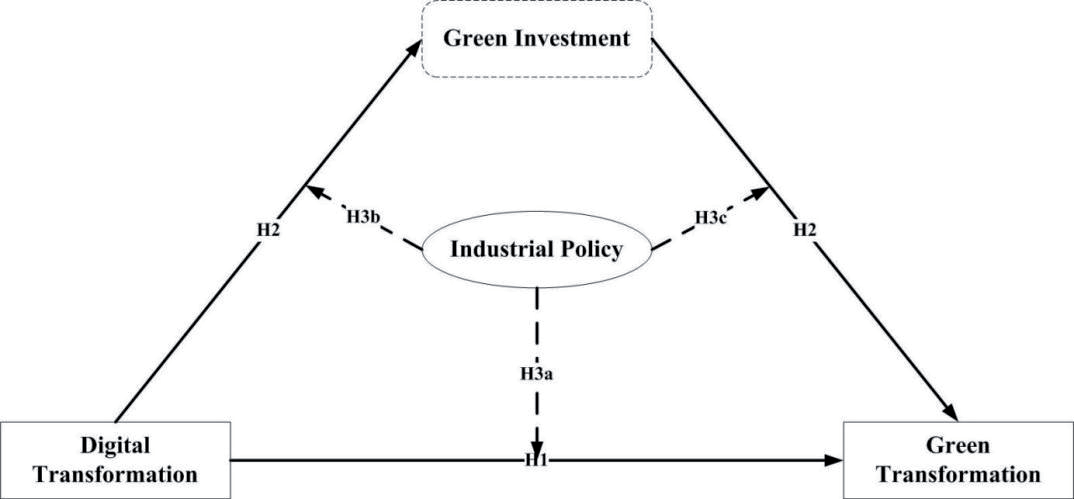
H3a: Industrial policies have a positive moderating effect on the relationship between digital transformation and green transformation.
H3b: Industrial policies have a positive moderating effect on the relationship between digital transformation and green investment.
H3c: Industrial policies have a positive moderating effect on the relationship between green investment and green transformation.
In summary, this paper constructs the following conceptual model, as shown in Fig. 1.
Data and Research Methodology
Variable Selection
(1) Explained variable (Green Transformation, Green)
Green transformation refers to the evolution of enterprises away from a conventional, energy-intensive, and environmentally hazardous growth paradigm towards a contemporary manufacturing approach that is marked by reduced consumption, minimal emissions, enhanced efficiency, and superior profitability [19]. Green transformation is closely related to the theory of sustainable development, which emphasizes the coordinated development of the economy, society, and environment. Therefore, based on the theory of sustainable development and the research of He et al. (2021) [43], this study constructs a comprehensive index system for green transformation of manufacturing enterprises from three dimensions: economic profit, social value, and environmental benefit. The entropy method is adopted to calculate the comprehensive index of green development, which is used to measure the degree of green development. Specific indicator selection and calculation methods are shown in Table 1.
(2) Explanatory variable (Digital Transformation, Digit)
Digital transformation is a comprehensive process that necessitates changes in multiple aspects, including technology, business, and management models. Scholars primarily adopt the following methods to measure this intricate process: Firstly, text analysis, which involves counting the frequency of characteristic words related to digital transformation in the text data of corporate annual reports to measure the degree of digitization [4]; secondly, the asset investment ratio method, which analyzes the proportion of digital fixed asset investment and digital intangible asset investment in total assets [44]; thirdly, the questionnaire method, which quantifies the level of digitization through questionnaires on digital transformation filled out by corporate executives [45]. Based on feasibility and robustness considerations, this paper chooses to adopt the text analysis method, referring to the approach of Wu et al., utilizing text information from listed companies to measure the digitization degree of manufacturing enterprises from two dimensions: digital technology and practical application of digital technology [46]. To avoid the impact of the "right-skewed" characteristic of the data, the result data is processed by adding 1 and then taking the logarithm. Additionally, considering that it takes some time for enterprise digital transformation to affect green transformation, this article lags the core explanatory variables by one period. This not only takes into account the time delay in practice between variables but also technically minimizes the issue of endogenous interference caused by reverse causality.
Table 1.
Green transformation development index system.
(3) Mediator variable (Green Investment, Gin)
Industrial activities of enterprises are a primary factor leading to environmental degradation. While rapidly accumulating economic benefits for the market, these activities also impose significant environmental costs on society. The amount of environmental investment can comprehensively and objectively reflect the input and effectiveness of enterprises in green development [47]. Therefore, it is a crucial indicator for assessing the green investment situation of enterprises. Referring to the method of Qiu et al. (2021) [48], this paper merged the expenditures specifically related to environmental protection in the detailed entries of the construction-in-progress account in the annual financial statements of listed companies and obtained the increment of environmental investment in this fiscal year. Finally, the logarithm of the increased amount of environmental investment divided by 10,000 represents the green investment situation.
(4) Moderator Variable (Industrial Policy, INP)
Scholars primarily measure industrial policies based on three approaches: first, the expert scoring method, which involves inviting experts to score various indicators of industrial policies and comprehensively evaluating their implementation effects and impacts; second, the policy document count, which assesses the government's attention and support for a specific industry by counting and analyzing the number of policy documents issued by the government; third, the instrumental variable method, which selects specific instrumental variables and measures the strength and effectiveness of industrial policies by quantifying changes in these variables. Given that this paper focuses on examining the impact of government on the development of the manufacturing industry, it selects the Five-Year Plan documents, which better reflect the government's role as the "visible hand" influencing resource allocation, as the data source for quantitative evaluation of industrial policies. Following the approach of Zhao and Sun (2022) [49], this paper employs text analysis and the instrumental variable method to measure industrial policies.
In this study, the government's "Twelfth Five-Year Plan", "Thirteenth Five-Year Plan", and "Fourteenth Five-Year Plan" documents were collected from 2013 to 2022. By searching for words such as "develop", "promote", "facilitate", and "innovate", which are commonly used to express a positive attitude and expectations towards certain behaviors or activities in government planning documents, a total of 2,705 industrial policies were obtained. Based on policy attitudes, a key support dummy variable (Policy_S) was set, with a value of 2 indicating that the state provides preferential policies such as finance, taxation, and land use, a value of 1 indicating ordinary policies, and 0 indicating no preferential policies. To identify the specific impact of policies on different industries or business groups, a policy audience dummy variable (Policy_E) was further set, with a value of 1 indicating medium and large enterprises and 0 indicating small and micro enterprises. These variables were weighted and accumulated to form a comprehensive variable, which was introduced as a moderating variable. The magnitude and significance of the coefficients of each dummy variable were observed to determine the effect of the policies.
Table 2.
Research variables and their definitions.
(5) Control variables
The factors affecting the green transformation of manufacturing enterprises are complex. This paper selects return on assets (Roa), basic earnings per share (Beps), audit opinion (AT), regional economic level (lngdp), and regional industrial structure (Str) as the control variables from the micro perspective of the enterprise and the macro perspective of the economy [50].
Data Sources
This paper has selected data from A-share listed companies in the manufacturing industry for the period from 2013 to 2022, excluding ST, *ST companies, and companies that have been delisted during the research period. Samples with missing values for any variable were also excluded, resulting in a dataset consisting of 10,980 observations from 1,098 companies. The corporate data primarily comes from the CSMAR Database (https://data.csmar.com), while the annual reports of listed companies are sourced from CNINFO (http://www.cninfo.com.cn). City-related data is obtained from the "China Industry Statistical Yearbook" and "China City Statistical Yearbook". The definitions of each variable are shown in Table 2.
Model Construction
(1) Baseline regression model
Cross-sectional data analysis faces challenges such as heteroscedasticity and missing variables. In contrast, panel data can handle unobservable individual and time effects across different cross-sections, facilitating the description and analysis of dynamic adjustment processes as well as the handling of error components. Therefore, this study adopts a panel data model. Additionally, adhering to the method of Su and Tan (2023) [3], this paper selects between the fixed-effects model and the random-effects model by conducting F-tests and Hausman tests. As the P-values of these tests are all 0, indicating rejection of the null hypothesis of using the random-effects model at a 1% significance level, this paper employs the fixed-effects model. To examine the impact of digital transformation in the manufacturing industry on green transformation, this paper establishes the following benchmark model:
In formula (1), i represents individual enterprises, t represents the year, Greenit is the explained variable representing regional green transformation; Digit i(t-1) is the core explanatory variable; Controlsit represents control variables; α is the parameter to be estimated; δt represents the time-fixed effect; μi represents the individual fixed effect; and εit represents the error term.
(2) Mediating effect model
To verify the existence of a mediation mechanism for green investment, the testing process is now presented, which together with formula (1) constitutes a complete testing model:
In formula (2)(3), Ginit represents the mediator variable, while β and γ are parameters to be estimated. When α1 is significant, it indicates that Digit has an impact on Gin. When β1 is significant, it suggests that Digit affects the mediator variable.
(3) Moderating effect model
In formulas (4)(5)(6), INPit serves as the moderating variable. Digiti(t-1) * INPit represents the interaction term between Digit and INP, while Ginit * INPit represents the interaction term between Gin and INP. θ, ρ, and σ are all parameters to be estimated. When θ2, ρ2, and σ2 are significant, it indicates the presence of a moderating effect of INP.
Results
Correlation Analysis
The correlation analysis presented in Table 3 demonstrates varying degrees of correlation among different variables. A moderate positive correlation exists between Green and Digit, indicating that, to some extent, the advancement of digital transformation may facilitate green transformation. Furthermore, there are certain degrees of correlation among other variables, with correlation coefficients all less than 0.8, suggesting a low likelihood of multicollinearity issues within the model.
Benchmark Regression Results
(1) Regression results
Table 4 presents the baseline regression results of Digit driving Green in the manufacturing industry. For robustness, subsequent analyses primarily rely on the empirical results from Column (4), which are the estimation results after incorporating both firm-level and macro-level control variables.
The data reveals that the coefficient of Digit is significantly positive and significant at the 1% level (β=0.274, p<0.01). This indicates that Digit has a significant positive impact on Green, supporting Hypothesis H1. In other words, as the degree of Digit increases in manufacturing enterprises, the level of Green also rises accordingly. This finding aligns with many current studies on digital transformation promoting sustainable and green development [51].
Among the control variables, the coefficient of Beps is positive and significant (β=0.003, p<0.05). This suggests that the stronger a company's profitability, the more likely it is to undertake green transformation. This may be because highly profitable companies have more resources and funds to invest in green technologies and sustainable practices. Conversely, the coefficient of Roa is negative and significant (β=-0.029, p<0.01), reflecting the initial investment in green transformation that leads to a short-term decrease in corporate profitability.
(2) Robustness check
To guarantee the credibility and robustness of the study's findings, the current research has undergone a comprehensive set of robustness tests: (1) Substitute core variables. Drawing on the research of Loughran & Mcdonald (2011), this paper measured corporate green transformation using the number of green transformation words in the annual reports of listed companies [52]. This article, based on Hart's theory, selects keywords from five aspects: publicity initiatives, strategic concepts, technological innovation, pollution control, and monitoring management to calculate word frequency [53, 54]. Table 5 shows that after replacing the explained variable, the positive driving effect of corporate Digit on Green remains robust. (2) Exclude years affected by COVID-19. Considering that corporate digital transformation may be impacted by the COVID-19 pandemic, ignoring such significant factors may lead to endogenous problems. Meanwhile, taking into account the after-effects of economic recovery from the epidemic, this paper excludes data from 2020 and 2021 for re-examination. The regression results show that the impact of Digit on Green remains stable after excluding the years affected by COVID-19. (3) Exclude the lag effect of annual report data from listed companies. Since listed companies often disclose their annual reports with a one-year lag, this paper postpones the control variables by one period to reduce estimation errors caused by data time differences. The data shows that after adjusting the sample data, the positive driving effect of corporate Digit on Green remains robust. The robustness test results are shown in Table 5.
Table 3.
Correlation Analysis.
Table 4.
Regression analysis.
(3) Endogeneity test
Digital transformation, through technological innovation and data-driven approaches, has propelled the process of green transformation, achieving a more environmentally friendly and sustainable development. Conversely, the demand for green transformation has also "forced" the industry to deepen its digital development, providing a broader space for the application of digital technology. Therefore, there may exist a two-way causal relationship between the two, which could potentially lead to a loss of unbiasedness and consistency in coefficient estimates. To address the endogeneity issues caused by this two-way causality, this paper employs the instrumental variable method and a robust two-stage least squares approach.
When selecting instrumental variables, it is crucial to ensure they meet two key criteria: first, they must be highly correlated with the endogenous explanatory variable (in this case, the degree of enterprise digital transformation); second, they should be uncorrelated with the error term (representing other influencing factors not included in the model). Based on these criteria, this paper chooses the Digit data of other enterprises in the same industry, excluding the sample enterprise, from the previous year as the instrumental variable [55]. Furthermore, if there is a high degree of collinearity among variables, the floating-point rounding errors in matrix operations during parameter estimation can be magnified, leading to biases in the parameter estimation results. This issue is particularly evident in the two-stage least squares estimation. Finally, further robust two-stage least squares are conducted based on 500 random sampling tests to examine the robustness of the instrumental variable method.
Table 5.
Robustness check.
Table 6 presents the results of the endogeneity test. The findings indicate that the impact of Digit on Green remains significantly positive. Since the instrumental variables use city-level data, city-level fixed effects, and time trend terms are added to the two-stage least squares method. The results from the instrumental variable method in columns (1) and (2) and the robust two-stage least squares method in column (3) show that digital technology can significantly drive corporate strategic change. Additionally, the critical values for the Cragg-Donald Wald F statistic and the Kleibergen-Paap rk Wald F statistic indicate that the instrumental variables are effective, ruling out the issue of weak instrumental variables.
(4) Heterogeneity analysis
This paper classifies all sample industries into three types based on the intensity of production factors: technology-intensive, capital-intensive, and labor-intensive [56]. This paper selects three variables as classification indicators: payroll expense ratio (payroll expense/total revenue), research and development expenditure ratio (R&D expenditure/total revenue), and fixed assets ratio (net fixed assets/average total assets). Firstly, industries with a high payroll expense ratio are classified as labor-intensive; secondly, those with a high R&D expenditure to payroll ratio are deemed technology-intensive; finally, those with a significant fixed assets ratio are considered capital-intensive, indicating the high importance of capital.
Table 7 presents the regression results of heterogeneity tests based on production factors. In columns (1) and (2), the influence coefficient of Digit is slightly larger in non-labor-intensive enterprises (β1=0.229, p<0.01; β2=0.284, p<0.01), suggesting a more pronounced role of Digit in promoting Green in these enterprises. Non-labor-intensive enterprises often focus more on technological innovation and automated production, enabling digital transformation to optimize production processes and reduce resource consumption and waste emissions, thereby facilitating green transformation. In columns (3) and (4), the influence coefficient is marginally higher in technology-intensive enterprises (β3=0.275, p<0.01; β4=0.260, p<0.01), implying an additional boost from technological investment in Green. These enterprises usually possess more advanced production techniques and equipment, allowing digital transformation to integrate these technical resources, enhance production and resource utilization efficiency, and consequently promote green transformation. In columns (5) and (6), the influence coefficient is slightly elevated in capital-intensive enterprises (β5=0.284, p<0.01; β6=0.264, p<0.01), indicating a more significant role of Digit in driving Green. Digital transformation aids in optimizing production processes and allocating resources reasonably, thereby reducing resource consumption and waste emissions in these enterprises.
Table 6.
Endogeneity test.
Table 7.
Heterogeneity analysis.
Regression results grouped by production factors reveal that Digit has a significant positive impact on Green across different types of enterprises. However, there are certain variations in the promotional effect of Digit on Green among various enterprise types. These differences may stem from distinct characteristics in production factor inputs. Specifically, non-labor-intensive and technology-intensive enterprises tend to prioritize technological innovation and automated production, enabling digital transformation to enhance production process optimization and resource utilization efficiency. In contrast, capital-intensive enterprises focus on optimizing asset management and production processes through digital transformation to drive green transformation. These disparities suggest the need for targeted policies and measures tailored to the characteristics of different enterprise types to fully leverage the promotional role of digital transformation in green transformation during the manufacturing industry's green shift.
Mechanism Analysis
(1) Mediating effect
Based on the theoretical analysis presented earlier, this section focuses on exploring the mechanisms of digital transformation and green transformation through green investment. Table 8's Model (1) represents the total effect of Digit on Green, Model (2) shows the impact of Digit on Gin, and Model (3) examines the effect of Gin on Green after controlling for the influence of Digit.
In Model (3), after adding Gin as an explanatory variable, the coefficient of Digit remains significantly positive (β=0.277, p<0.01), but the coefficient of Gin is significantly negative (β=-0.225, p<0.05). This suggests that Gin plays a partial mediating role between Digit and Green, but in the opposite direction from what was expected. Specifically, an increase in green investment actually reduces the degree of green transformation, contradicting Hypothesis H2. In this scenario, green investment effectively acts as a suppressor.
The suppression effect manifests as opposite signs for the direct and indirect effects [57]. Here, Digit positively affects Gin, as shown in Model (2) (β=0.015, p<0.01), but Gin negatively affects Green, as demonstrated in Model (3) (β=-0.225, p<0.05). This suppression effect indicates that although digital transformation promotes green investment, the increase in green investment does not facilitate green transformation as anticipated, but rather inhibits it. This could be due to inefficient use of green investment, inappropriate investment directions, or a long return period for green investments that does not immediately show a positive impact on green transformation. This finding aligns with research conclusions from 10, which suggest that the main issues with green investment practices in China relate to inadequate investment scale and unreasonable investment structure [49].
In summary, Gin exerts a suppression effect between Digit and Green. This underscores the need to pay closer attention to the scale and structure of green investment when promoting digital and green transformations to ensure that it effectively facilitates the achievement of green transformation.
(2) Moderating effect
Industrial policy is one of the essential tools to promote digital and green transformations. This paper focuses on exploring the role of INP in the interplay between Digit, Gin, and Green. In Table 8, Model (4) reveals that the coefficient of Digit remains significantly positive (β=0.277, p<0.01), and the coefficient of INP is also significantly positive (β=0.001, p<0.05), indicating that industrial policy itself positively promotes green transformation. Crucially, the coefficient of the interaction term Digit*INP is significantly negative (β=- 0.026, p<0.05), suggesting that INP plays a negative moderating role in the process of Digit driving Green. This finding rejects Hypothesis H3a. In other words, the implementation of industrial policy, to some extent, diminishes the positive impact of Digit on Green. This could be attributed to a mismatch between the specific measures of industrial policy and the demands of digital transformation or certain obstacles during policy implementation [17]. Digital transformation is a continuously evolving process that requires flexibility and forward-thinking policies. If the policies are too rigid or lag behind, they may not align with the pace of digital transformation, thereby weakening their role in promoting green transformation. Additionally, policy implementation may face various obstacles, such as insufficient funding, talent shortages, and technological bottlenecks, which could limit enterprises' ability to undergo digital transformation, further reducing its positive impact on green transformation.
Table 8.
Mechanism analysis.
In Table 8, Model (5) shows that the coefficient of INP is significantly positive (β=0.001, p<0.01), and the coefficient of the interaction term Digit*INP is significantly positive (β=0.116, p<0.01). This indicates that INP plays a positive moderating role between Digit and Gin, supporting Hypothesis H3b. This implies that when industrial policy is properly implemented, it can enhance the positive impact of Digit on Gin. As a critical tool for national macro-control, industrial policy can clearly guide the development direction of national industries, providing a clear policy orientation for enterprises and investors. For green investment projects, the state can reduce investment risks and improve investment returns through policy measures such as financial subsidies and tax incentives, attracting more social capital to participate in green investment[38].
In Table 8, Model (6) demonstrates that the coefficient of INP is significantly negative (β=0.001, p<0.01), while the coefficient of the interaction term Gin*INP is significantly positive (β=3.467, p<0.01). This suggests that INP plays an extremely important positive moderating role between Gin and Green, supporting Hypothesis H3c. This means that although green investment temporarily has a negative impact on green transformation, when combined with appropriate industrial policies, the synergistic effect of the two can positively impact green transformation. Industrial policy can clarify the development direction of green investment and green transformation, providing clear policy signals and expectations for market players [58]. This, in turn, guides resources such as capital, technology, and talent to converge in the green sector.
Discussion, Conclusion, and Implication
Discussion
With the rapid development of digital technology, digital transformation has become an irreversible trend for global manufacturing enterprises. This transformation not only alters the operational mode of enterprises but also has a profound impact on their environmental sustainability. In exploring the complex relationships between digital transformation, green transformation, green investment, and industrial policies in the manufacturing industry, this study has uncovered several key findings that contribute to and expand upon the existing literature:
Firstly, this study demonstrates that digital transformation significantly promotes green transformation in manufacturing enterprises, confirming the positive impact of digital technology on environmental sustainability. This finding echoes the growing literature emphasizing the crucial role of digital transformation in enhancing resource utilization efficiency and fostering green innovation [11, 40]. This result adds empirical support to the existing literature and deepens our understanding of how digital technology shapes the future green economic model.
However, the study also reveals a subtle and somewhat unexpected finding regarding green investment. While prior research generally emphasizes the positive impact of green investment on environmental performance [34], our analysis indicated that green investment inhibits the green transformation of the manufacturing industry. This finding suggests that the current scale and structure of green investment may be insufficient to promote the required transformation.
Furthermore, our research highlights the moderating role of industrial policies in the relationship between digital transformation and green transformation. This finding aligns with scholars who argue that policy support is crucial for promoting technological innovation and environmental sustainability [38, 39]. By emphasizing the importance of industrial policies, our research contributes to the literature by providing empirical evidence of their effectiveness in the context of digital transformation and green transformation.
It is also necessary to acknowledge some limitations of this study. The sample was drawn from A-share manufacturing companies in China, which may not fully represent the global manufacturing industry. Therefore, future research could expand the sample to include companies from different countries and industries and use more granular data to provide a deeper understanding. Additionally, this study only finds that green investment plays a suppressing role in digital transformation and green transformation without further exploring the impact of green investment of different scales and structures on digital transformation and green transformation. Future research could examine the conditions under which green investment is more likely to promote green transformation, thereby determining the optimal investment scale or structure. Lastly, a detailed analysis of how digital technology promotes green transformation in specific industries remains to be explored. Future research could investigate the potential applications of blockchain technology and digital twin technology in the green transformation of the manufacturing industry.
Conclusion
Based on data from listed manufacturing companies spanning from 2013 to 2022, this paper conducts an in-depth analysis of the complex relationship between Digit, Gin, Green, and, INP. The following conclusions are drawn:
(1) The benchmark regression results support the hypothesis that Digit has a significant positive impact on Green, indicating that investments made by manufacturing enterprises in the process of digitization can indeed facilitate their shift towards more environmentally friendly and sustainable production modes. This finding highlights the urgency and importance of digital transformation as a key pathway for enterprises to achieve green development goals, especially in the context of the current global climate change and intensifying resource constraints.
(2) Through mediation effect analysis, this paper observes that green investment plays a "suppression effect" in the process of Digit promoting Green. Although Digit boosts Gin, the direct impact of Gin on Green is negative. This may be attributed to the fact that the efficiency and investment direction of green investment have not reached optimality, hindering the effective promotion of green transformation in the short term. This conclusion underscores the importance of focusing on the quality and efficiency of investments rather than merely pursuing an increase in investment scale when promoting green investments.
(3) This paper finds that industrial policy plays an important moderating role in digital transformation, green transformation, and green investment. Specifically, while industrial policy weakens the direct driving force of digital transformation on green transformation, this seemingly negative moderating effect may imply deeper implications: it indicates that industrial policy may place greater emphasis on long-term benefits and sustainable development, avoiding potential resource misallocation and inefficiency that could arise from blind green transformation in the short term. At the same time, industrial policy significantly enhances the positive effect of digital transformation on green investment, helping enterprises optimize resource allocation, increase green investment, and lay the foundation for green transformation. Furthermore, industrial policy also mitigates the negative impact of green investment on green transformation in the short term, ensuring a robust and sustainable transformation process. This study reveals the multi-dimensional mechanism of industrial policy as a moderating variable. Through rational design and implementation, industrial policy can effectively guide digital transformation and green investment, flexibly address challenges, and maximize the promotion of enterprises' green transformation.
Implication
By uncovering the nuanced role of green investment as an intermediary and the regulatory effects of industrial policies, this study enriches the theories surrounding digital transformation and green transition. It demonstrates that managers need to adopt a more holistic perspective when formulating green transition strategies, considering not only the cutting-edge areas of digital technology but also investment efficiency and policy guidance. Consistent with research emphasizing the integration of digital technology and green initiatives [24], this study underscores the necessity for managers to integrate digital transformation and green investment strategies within a broader sustainability framework. Doing so can enhance the ability of enterprises to effectively navigate dual transformations and gain a competitive edge in the green economy.
From a practical perspective, this study offers several insights for policymakers and business managers. Firstly, it emphasizes the importance of industrial policies in shaping the trajectory of digital transformation and green investment, aligning with the viewpoints of policy-oriented significant research [41]. Policymakers can leverage these findings to design more effective policies that incentivize responsible green investment and guide digital transformation toward sustainable outcomes. Secondly, this study highlights the quality and direction of green investment, providing practical guidance for managers in optimizing their green transition portfolios. By considering the potential negative impacts of green investment misalignments identified in this study, managers can make more informed decisions that contribute to achieving long-term sustainability goals.

