

Introduction
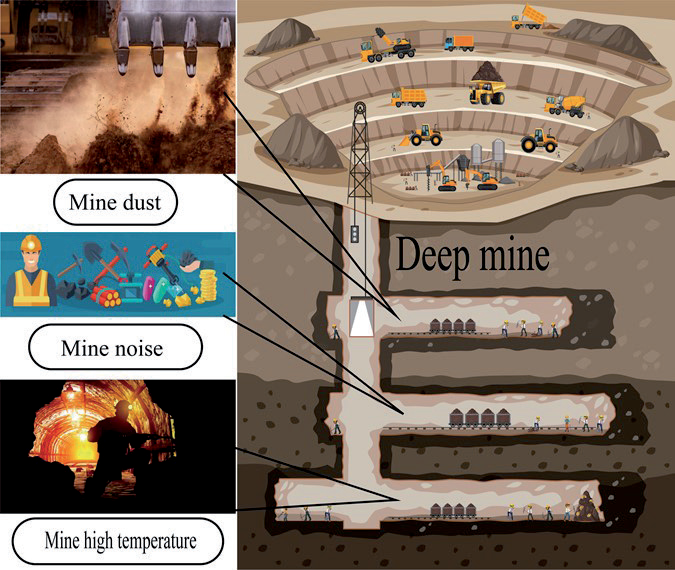
At present, the resources on the surface of the mines are beginning to be depleted, and mining is moving into the deeper parts of the mines [1, 2]. Meanwhile, coal mines are being mined to a depth of 1500 m, and non-ferrous metal mines are being mined to a depth of more than 4000 m [3]. The ecological conditions of deep mine mining are extremely poor, and the safety and occupational health of miners are constantly threatened by high temperatures, dust, noise, and other factors, as shown in Fig. 1. The dust produced by mining floats in the air; the deep shaft operation environment is hot; noise pollution is serious; long-term work in deep mines makes it very easy for human lungs to inhale dust particles, causing rational symptoms; long-term exposure to dust will make it very easy to cause a variety of lung diseases; long-term work in the noise environment will cause hearing loss; and long-term operation in high-temperature mines will cause miners’ blood pressure instability, irregular heart rate, and other diseases. These dangerous ecological features of deep mines are not only harmful to the physiological health of miners but also cause psychological diseases. This can cause fear and disgust among miners, which can lead to potential psychological hazards such as depression, anxiety, and burnout.
Domestic studies on the features of the mine’s ecological environment and the miners’ occupational health have achieved some results. In terms of mine ecological environment and miners’ occupational health, Wang et al. [4] measured individual noise exposure levels, investigated hearing protection device (HPD) devices, and pointed out that noise measurements of deep mine workers were significantly higher than those of open pit workers, and high levels of harmful noise exposure were common in non-coal mines. A study by Wu et al. [5] pointed out that coal dust is the most influential risk factor for respiratory and cardiovascular diseases among miners. Qin et al. [6] suggested that after mining beyond the critical depth, the degree of danger in the workplace increases dramatically with the depth of mining with the increasing depth of underground engineering. Yuan et al. [7] explained that there are various risk factors that jeopardize the health of workers. Han et al. [8] revealed the inherent psychological risk factors affecting coal mine safety and health, which provided necessary guides for coal mine safety and health work. It was found that coal miners of different job types differed significantly in their SCL-90 scores on each factor, and some factors varied significantly in terms of age and education [9]. A large number of miners are exposed to various mine ecological hazards, and deep mine workers have lower physical and mental health scores [10]. Currently, some scholars have conducted some studies on the ecological characteristics of deep mines and miner’s occupational health, but the studies mainly focus on a single aspect of ecological characteristics or occupational diseases, and there are still shortcomings in the investigation, such as immature survey scales and no single standard, geographic and time-objective conditions in the investigation process, and the existence of a latent period for the onset of occupational diseases.
Because of this, the author addresses the current status of the research on the ecological environmental traits and occupational health effects of deep mines and the existing problems, summarizes the characteristics of the harsh ecological environment and health hazards of deep mines from the industry demand for development, and on this basis provides a scientific basis for the prevention and treatment of occupational health hazards for miners in deep mines.
Ecological Characteristics of Deep Mines and Their Health Influencing Factors
Characteristics and Hazards of Dust in Deep Mines
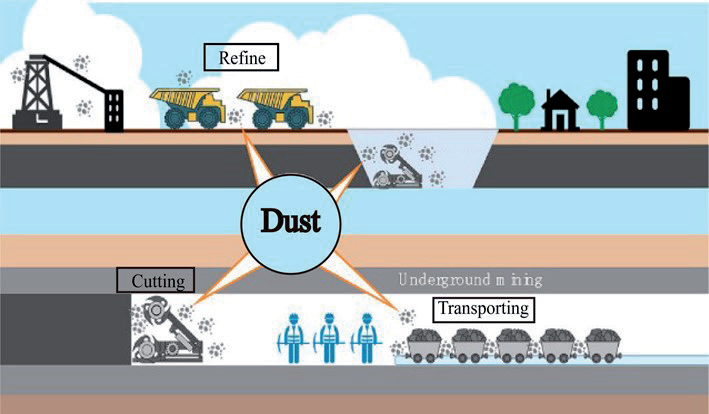
In deep mines, dust accompanies almost the whole process of mining, transportation, and refining, as shown in Fig. 2 [11], and the generated dust is easily released into the confined deep mine working environment. Dust is the most fundamental threat to miners’ occupational health [12]. At present, scholars mainly study environmental and technical fields, and the research content is mainly about the whole process of mine dust generation, diffusion, and reduction. The research hotspots are mainly mine dust pollution, dust control and dust reduction measures, occupational protection for miners, and dust monitoring and prevention [13]. Qiu et al. [14] point out that the structural deformation of the workplace due to deep operations causes dust to appear in all operational aspects of the work environment. Liu [15] established a dust concentration early warning model based on the LSTM neural network to study the diffusion characteristics of dust concentration and the effects of meteorological conditions such as temperature, humidity, and wind speed on dust concentration. Su et al. [16] established dust monitoring sites in four mines in Northwest China and studied the diffusion trajectory and concentration distribution of mine dust, with Shenfu, Shajing, and Majiatan having a wider range of pollution, and Binchang having a relatively concentrated range of pollution. It was also pointed out that dust enters the environment through air-suspended particulate matter and surface runoff, posing serious hazards to occupational health and safety. Numerical simulation was used to derive the dust concentration along the coal conveyor route in combination with on-site monitoring, and it can be concluded that the error between the two is less than 9.24% [17]. However, there is still a lack of information on dust generation and dispersion, precise dust reduction techniques and equipment, high-precision dust concentration monitoring, and dust control in deep concave open pit coal mines with extremely complex environments.
The ventilation conditions of deep mines are worse than those of open-pit mines, and the situation of dust pollution is grim. Over the years, scholars at home and abroad have conducted a lot of research on pneumoconiosis and achieved many valuable results. The prevention and control of occupational pneumoconiosis in China have also achieved fruitful results. However, the different levels of individual exposure and the different ventilation and protection in each place, have led to the lack of an objective standard for measuring the level of exposure and disagreement on the degree of lung damage caused by dust exposure. Over the past decade, the safety situation in China’s mining enterprises has been stable, but cases of miner’s pneumoconiosis have gradually increased. The number of deaths from coal mine accidents in China dropped from 2,635 to 225 in 2009, while the number of pneumoconiosis patients has stabilized at around 14,000 cases.
Deep Mine Noise Features and Hazards
Noise is one of the main hazards of deep mines [18]. With the increased mining mechanization and the use of a large amount of equipment to ensure safe production, deep mine noise presents characteristics such as multiple sound sources, high intensity, high sound level, and wide frequency band [19-23]. Generally, noise the level of more than 85 dB(A) is considered hazardous, and deep mine mining is in a closed and restricted space, where the surrounding environment has a small noise absorption coefficient and a strong reflection ability, and it is very easy to form a strong reverberant sound field, which makes the noise hazard more serious [24]. Comparing the findings of three domestic metal mines, it was found that the average exposure noise of individuals was around 89.7 dB(A), and the exposure of drilling workers was even above 102.5 dB(A) [25]. In another survey of six metal mines [26], the noise exceeded 85 dB(A) in 56.3% of the areas. Nevertheless, reports collected on mine noise are still limited, and some of the results show only the noise levels in individual areas or facilities, and there is a serious lack of studies on the noise exposure of workers in the deep mines. Extensive data on noise hazards in deep mines in China have rarely been investigated.
Following a survey of noise exposure in non-coal mines in four Chinese provinces [4], Table 1 reveals that a total of 423 noise dosimeter measurements were obtained therein, including drilling, blasting, mine exit, and transportation. Individual noise layers exceeded 85 dB(A) in 31.9% of the cases, and the median dose for non-coal miners with high noise exposure was -89.1 dB(A) for excavation workers, -88.7 dB(A) for mill operators, and -87.0 dB(A) for crusher operators.
Table 1.
Distribution of noise exposure among non-coal mining workers in four provinces of China [4].
Among the main ecological hazards in mines, the impact of noise on occupational health is the second-most important hazard after dust [27]. If miners are exposed to 85 dBA of high-intensity noise for long periods of time without protective equipment, they may lose their hearing and cause permanent occupational deafness [28].
Current research on the effects of noise on miners mainly focuses on occupational hazards, and studies have shown that noise in the workplace has a significant effect on the health of workers. Representative literature includes Wang et al. [29], who found that working in a noisy environment causes significant hearing damage to workers compared to a noise-free environment. Alkharab-Sheh [30] et al.’s survey of more than 300 miners found that an increase in noise loudness led to a significant increase in hearing loss in miners, resulting in deafness. Zhang et al. [31] stated that the high prevalence of hearing loss is associated with high noise levels prevalent in the work environment and long-term exposure to noise. Liu et al. [32] found that occupational noise had an effect on hypertension and hearing in coal miners. Occupational noise is an independent risk factor for hypertension and can increase SBP and DBP. Li and Cai et al. [33] studied the effects of different short-term noise levels on human physiology. The conclusion showed that the stronger the noise intensity, the shorter the exposure time required for significant changes in physiological indicators.
The hearing impairment and high-frequency hearing loss detection rates of 480,200 mining workers exposed to noise in China in 2020 were 29.96% and 10.11%, [34] respectively, which were higher than those of industrial enterprises in other trades. The high detection rate of hearing impairment in the southwest, south-central China, and east China, respectively, is 30.21%, 29.99%, and 29.90%, and the high detection rate of high-frequency hearing loss in south-central and southwest China, respectively, is 11.12% and 9.78%, The detection rate of hearing impairment and high-frequency hearing loss is showing a trend of increasing with age and working age.
Characteristics and Hazards of High Temperature in Deep Mines
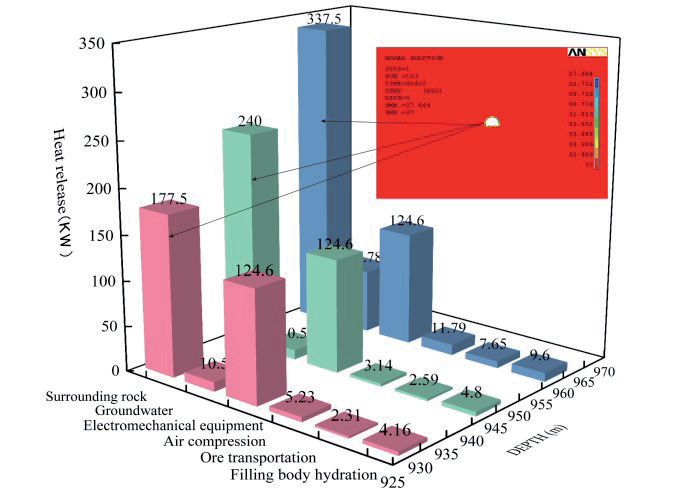
As the depth of underground mining increases, the factors affecting the temperature change of the thermal environment in deep wells [35] can be categorized into two main groups according to the mode of heat transfer. One is relative heat sources, such as surrounding rock and groundwater. These heat sources are influenced by the ambient temperature of the quarry. The other category is absolute heat sources, such as compressed air exotherm, blast exotherm, and equipment exotherm. Fig. 3 shows that these heat sources increase in exotherm with the depth of the mine. Currently, most of the mines in China have entered the primary and secondary thermal hazard zones, with more serious thermal hazards in mines in North, East, and Northeast China [36]. Wu et al. [37] and Xu et al. [38] explored the geothermal characteristics of the Anhui mining area in China. The geothermal temperature gradient in this mine area is stable at 1.00-4.00ºC/hm. the average surface temperatures at mining depths of -500 m, -1000 m, and -2000 m are 29.96ºC, 41.84ºC, and 69.62ºC, respectively. a sudden increase in overall temperature can be found with the increase in the depth of the buried depth [49].
The problem of heat damage in mines is becoming increasingly prominent, and the high-temperature environment underground, which seriously endangers the occupational health of miners, is highly susceptible to occupational diseases such as heat stroke, heat deficiency, skin disease, heart disease, and psychosis [40], which greatly affect the labor productivity of miners and the safe production of mines. Anderson, R. et al. [41] continuously monitored environmental parameters at key locations in deep mines and analyzed the evaluation of the high-temperature heat damage system; He and Xu et al. [36] studied the environmental characteristics of high-temperature heat damage in Sanhejian Wells and used the HEMS system to provide improved methods for deep mine cooling and heat damage control; Zhuang [42] pointed out the factors of high temperature in deep mines that affect the health of underground workers: high temperature, wind speed, thermal radiation, and the microclimate environment of the mine shaft. In summary, most of the studies on the evaluation system of high-temperature thermal conditions in mines have been conducted in shallow rather than deep mine environments, with problems such as a single evaluation index, incomplete types of heat sources, and different criteria for weight determination. Research on human function in high-temperature, hot, and humid environments has focused on the effects of high-temperature heat hazards on miners’ physiology, while the relationship between miners’ physiology and psychology and deep mine high-temperature environments has not been adequately studied.
Heart rate is an extremely important indicator in the high ambient temperatures of deep mines. When the wind speed is 2.5 m/s, moisture is 60~80%, and temperature is below 27ºC, the heart rate is below 100bpm, which is in the normal range; when the wind speed is 0.5m/s, moisture is 60~80%, and temperature is between 23~34ºC, which is in the standard range; when the wind speed is 1.5m/s and temperature is between 23~38ºC, which is in the target range; when the wind speed is 2.5 m/s and temperature is between 2.5 m/s, the temperature is between 27~38ºC, the heart rate is between 100~140 bpm, the heart rate is too fast; when the temperature is 35~38ºC, the heart rate reaches 148 times/minute, which is close to the maximum of the body’s too fast heart rate range, if it continues to work, the human life is threatened.
The Current Ecological Situation of Deep Mines and the Psychological Hazards to Miners
Currently, deep mine miners, being one of the most dangerous occupations, are constantly subjected to high-temperature heat damage, dust, noise, and other harsh ecological environments, and this harsh working environment is very likely to lead to the occurrence of occupational diseases among miners, endangering their safety and occupational health. After investigating and studying the occupational health of a large number of deep mine miners, as well as the related harsh working environment factors, it was found that physiological and mental are mutually influenced, both caused by the extreme physical environment of deep mine mining. Improvement measures must be taken to reduce these hostile work environments and research must be conducted to establish a causal relationship between the deep mine environment, and physical and mental occupational health.
Table 2.
Self-reported adverse factors and physical symptoms by DUG miners [43].
Fig. 4.
a) Temperature and humidity environment in the deep mine of the Shenma Group mine b) Environmental parameters of air pressure and CO2 concentration in the deep mine of the Shenma Group mine [43].
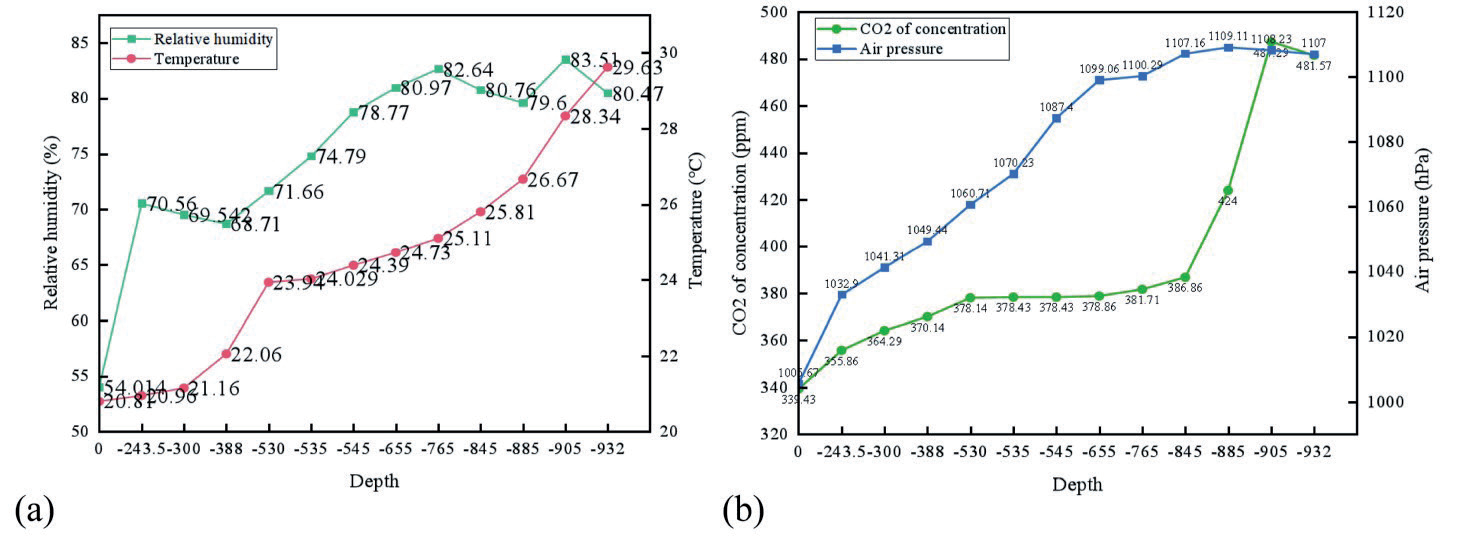
At the Pingmei Shenma mine in China, a cross-sectional questionnaire study was completed on 286 deep underground miners [43]. Five ecological environmental factors were measured in the mine, and the data from 266 questionnaires were studied to derive Table 2. Among the symptoms related to occupational health and ecological hazard factors. The three most common hazard factors were humidity (62.03%), dimness (45.86%), and high temperature (42.11%). The three main symptoms were fatigue (40.22%), hearing loss (34.96%), and tinnitus (31.58%). A positive correlation was found between the mentioned ecological hazards of deep mines and physical symptoms (r = 0.586, P<.001).
Fig. 4 shows that the environmental parameters CO2 concentration, relative humidity, temperature, and air pressure of a mine in Shenma all increased with the depth of mining; therefore, the occupational health of miners underground was worse than that of the general male population in China, conclusively demonstrating the impact of the mine environment on the physical and mental health of miners.
Yu Min and Li Jizu et al. [44] conducted a cross-sectional survey of miners in Shaanxi Province, China, to explore the relationship between work-family conflict and mental health and concluded that work-family conflict was positively correlated with anxiety and depressive symptoms. Meihua Zhou and Wen Li et al. [45] explored the relationship between coal miners’ work resources and job burnout and the mediating role of psychological capital and fatigue in their relationship. Qiu et al. [46] noted that burnout is very common among workers, and as burnout increases, mental health and work capacity also decline. Yong et al. [47] pointed out that working hours and burnout have a direct effect on depression. Researchers domestic and foreign have conducted a large number of investigations and studies on factors affecting occupational mental health, most of which are inadequate and lack comprehensive and systematic studies on the influencing factors of occupational mental health, while studies on the influencing factors of occupational mental health of miners in deep mines are even rarer.
Table 3.
Demographic and work characteristics of the study population [44].
Lu and Zhang et al. [48] investigated 6130 workers and miners in Urumqi City. The effects of burnout and the mine environment on miners’ psychology were studied. Among them, severe and moderate burnouts were 2484 (40.59%) and 576 (9.41%), and positive and negative psychological health was 61.73% and 38.27%, respectively. The results indicated that 85.98% of workers and miners experienced burnout to varying degrees.
Liu and Wang et al. [49] surveyed 2,500 northeastern underground miners and analyzed the prevalence and influencing factors of depressive symptoms among Chinese coal miners. The results showed that most Chinese underground coal miners suffered from severe depressive symptoms and that deep mine ecological characteristics and professional psychology had an impact on depressive symptoms, where the prevalence of depressive symptoms was 62.8%, as shown in Table 3.
Various research studies have confirmed that the harsh operating environment of deep mines has an extremely serious direct influence on the occupational health of miners, and the long-term exposure of deep mine workers to this harsh working environment can increase the chance of occupational health diseases. Relevant authorities should pay high attention to enhancing the environment of deep mines.
Deep Mine Occupational Health Evaluation System
Cox Regression Analysis
Cox regression analysis, with survival outcome and survival time as dependent variables, can simultaneously analyze the effects of numerous factors on survival, and the model has been widely used in medical follow-up studies. However, its need to consider multiple influencing factors simultaneously makes it unsuitable for plotting survival curves and requires modeling for further analysis.
Between 1949 and 2019, scholars investigated 16,792 pneumoconioses from four coal mines in a certain area [50]. Cox regression analysis was used to analyze the factors influencing the survival of coal workers’ pneumoconiosis patients; in the final multivariate Cox regression analysis, the variables entering the model were working age, cumulative exposure, and the year of dust catching, which were the hazards on the survival of the pneumoconiosis patients; among them, the year of dust catching had the highest hazard (4.16), followed by cumulative exposure (1.00) and working age (0.90); see Table 4.
Multiple Stepwise Regression Analysis
Multifactor stepwise regression analysis is to introduce each explanatory variable of the stepwise regression analysis into the model in turn for the F-test, and at the same time to carry out the T-test for the explanatory variables that have been introduced one by one. The resulting regression equation is the combination of explanatory variables with optimal significance, which not only accomplishes the comparison of significance among explanatory variables, but also solves the problem of multicollinearity. Currently, stepwise regression analysis is widely used in various disciplines, such as medicine, meteorology, humanities, economics and so on.
Table 4.
Results of multivariate Cox regression analysis for coal workers' pneumoconiosis patients [50].
Table 5.
Multiple stepwise regression results of RP underground miners [10].
| Dependent variable | Independent variable | Regression coefficient | Standardized regression coefficient | t | p |
|---|---|---|---|---|---|
| RP | Job tenure for dust exposure | -3.519 | -0.091 | -2.265 | 0.024 |
To evaluate the quality of life of coal miners, a survey was conducted to compare 612 underground workers and 354 surface workers in a coal mine in Xuzhou [10]. After evaluating the quality of life of coal miners using a 36-item health status questionnaire, a multi-factor stepwise regression analysis was used to evaluate the potential factors affecting the quality of survival. Compared to the normal population, the study participants scored lower in physical and mental health and numerous other factors, including the length of exposure to dust, health insurance, and chronic diseases. The results suggest that dust exposure and chronic diseases may contribute to the lower somatic health scores of miners. Multiple stepwise regression was further used to adjust for influencing factors and explore significant independent variables that predicted miners’ RP scores. The number of working years of dust exposure was found to significantly affect the miners’ RP measure scores in Table 5.
Hierarchical Linear Regression Analysis
Hierarchical linear regression analysis was used to test for differences between multiple regression models. The core study variable is placed in the last step of the model to examine the contribution of that variable to the regression equation after excluding the contribution of other variables. This approach is commonly used in mediating or moderating effects studies, but requires that observations of no fewer than two independent variables be independent of each other, free of multicollinearity and significantly different values.
In order to assess the prevalence of depressive symptoms among deep shaft miners [49], a survey study was conducted on 2500 underground workers in Northeast China, with a depression detection rate of 62.9 Preliminary results showed that marital status, monthly income, education level, and weekly working hours were significantly associated with depressive symptoms. High levels of depressive symptoms were significantly associated with high give-high-reward imbalance, perceived physical environment, and work-family conflict.
After testing for correlations between continuous independent variables and depressive symptoms, the respondents’ age was found to be independent of depressive symptoms, and hours worked per week, the ERI, and PPE were positively correlated with depressive symptoms. The results of the stratified linear regression analysis of the factors associated with depression are then presented in Table 6. In block 1, age, education, and chronic illness were significantly associated with depressive symptoms. In block 2, age, education, and hours worked per week were significantly associated with depressive symptoms. In block 3, among these demographic and work features, education and hours worked per week were significantly associated with symptoms of depression. In addition, high levels of depressive symptoms were significantly associated with high ERI and PPE.
Table 6.
Hierarchical linear regression analyses of the factors associated with depressive symptoms [49].
Improvement Methods
To improve the deep mine ecological characteristics and hazards as well as to promote the occupational health and safety of miners, the following improvement methods are proposed:
The dust pollution problem in deep mining ecosystems should be emphasized, and green sustainability is the future trend [51]. In this paper, wind screen dust reduction technology is proposed to solve this serious pollution problem. At the same time, the application of this technology should focus on the comparison between the experimental test results and the field data collected in the actual engineering application, which has obtained more objective conclusions [52]. The dust control principle of this technology mainly consists of two air curtain dust removal fans and two deflector covers [53]. The two fans are symmetrically set on the coal mining machine, with the inlet of the fans facing the coal mining machine drum and the outlet facing the hydraulic support. The fan motors drive the impellers to rotate, creating a negative pressure gradient, thus drawing in the dusty air near the drum. Filters and mist eliminators in the fan help remove dust from the air. Finally, the clean airflow passes through the deflector plates to form a fan-shaped air curtain, which reduces the dust generated by the coal cut-off and moving frames from 1,800 mg/m3 and 1,300 mg/m3 to less than 500 mg/m3 when the fan is on.
Aiming at the noise hazard characteristics of the deep mine ecosystem, more advanced active noise reduction technology is needed. Firstly, the signal spectrum analysis of the noise in the underground working environment is carried out to determine what kind of noise signals the human ear is sensitive to; secondly, the two important problems of acoustic feedback and delay are analyzed in the LMS algorithm, and the FX-LMS algorithm is chosen to reduce the environmental noise and analyze the effect of the noise reduction; once again, the idea of combining the local structure and the overall algorithm is used to processing, and finally derive the optimal parameters.
With the increase of mining depth, the problem of heat damage in the working face of deep mines is becoming more and more prominent. In order to effectively reduce the temperature of the working face and provide a comfortable working environment for miners, a high-temperature mobile cooling system can be used, which adopts an integrated design, and sets the return air outlet of the cooling equipment in the cooling space through the connecting duct and the wind barrier to form a closed target cooling space, which can effectively prevent the heat dissipation from the refrigeration equipment from entering into the target cooling space, and prevent the cold air from spreading outward, so as to achieve the purpose of blocking heat dissipation [41]. Moreover, it covers a small area, is easy to move, has a long air supply distance, and is easy to install and maintain. The field test was carried out in Yunnan Dahongshan Copper Mine. The final results show that the mobile cooling system can reduce the wet bulb temperature difference between the front and rear before and after work at the test site by more than 4ºC after 1 h of activation, and for every 10% reduction in the humidity of the air supply, the wet bulb temperature and relative humidity of the target cooling area will be reduced by 0.764ºC and 4.38% on average, respectively.
The mental health level of deep shaft miners is lower than that of average men. Enterprises should help employees solve their psychological problems through individual psychological counseling, and they can also organize group psychological counseling on a regular basis to improve the psychological quality of employees. In addition to improving the mental health of miners through various measures, enterprises should also reduce the physical and mental health diseases of miners by strengthening total quality management, increasing safety production, standardizing rules and regulations, and enhancing personnel training.
Conclusion
Miners are a special group of people, especially deep mine miners, who work in an ecological environment with high noise pollution, high temperatures, heat damage, and serious dust pollution for a long time, and their occupational health is always affected to varying degrees, laying hidden dangers for safe production.
(1) The ecological environment of deep mines is becoming more polluted, and pneumoconiosis has become one of the biggest threats to the occupational health of miners. The number of new cases of pneumoconiosis in recent years has exceeded 14,000;
(2) the impact of deep mine noise on the occupational health of miners is second only to dust hazards in terms of noise exposure. 3,034,500 people are mining workers, of whom hearing impairment and high-frequency hearing loss account for 29.96% and 10.11%, respectively;
(3) mining has now reached a depth of several thousand meters, buried at a depth of -500 m, -1000 m, and -2000 m with an average ground temperature of 29.96ºC, 41.84ºC, and 69.62ºC, respectively. The hazards of high temperatures in deep mines cannot be ignored and can easily lead to heat-related diseases among deep miners. The harsh ecological characteristics of these deep mines are seriously underestimated. Working for a long time in a harsh ecological environment with dust pollution, high noise pollution, and high temperature and heat hazards, the physiological and psychological health of deep mine workers is always affected to varying degrees, and this creates hidden dangers for safe production. This research study shows that the occupational health level of deep mine workers is much lower than that of normal adult males. Compared to surface mining, the ecological environment in deep mines has more serious problems, and occupational health problems are extremely serious, similar to the results of a large number of studies in the domestic literature. The prevention and control of occupational health hazards from the poor ecological environment in deep mines is a matter of urgency.

