

Introduction
When environmental degradation is exacerbated by human development, there is a growing interest in finding effective ways to maintain the ecological environment. Ecological compensation is seen as a key strategy for fostering environmental improvement. Ecological compensation has received a lot of study over the years, and environmental economics has already generated significant discussion on the topic.
Ecological compensation is generally referred to as payment for ecosystem services (PES) [1]. The typical basic principles are as follows: the provider gets principle (PGP) and the beneficiary pays principle (BPP). Eco-compensation is an important compensatory mechanism for internalizing negative environmental externalities that were proposed by the Study of Critical Environmental Problems (SCEP) in the 1970s [2]. Despite the early emergence of ecological compensation ideas, several interpretations have not yet been unified in academia. Ecological compensation in a broad sense includes compensation for the damage caused to natural resources and ecosystems, as well as compensation for the collective and individual sacrifices to protect and restore the ecological environment and functions [3]. These can be interpreted as a combination of payment, trade, reward, or compensation for ecological services. Ecological compensation, in a narrow sense, refers to the compensation for the adverse effects of human actions on the ecological environment. (i.e., a series of activities such as restoration and comprehensive improvement of the ecosystem, as well as the natural resources caused by human production and life, together with the implementation of the damages in the aftermath).
Numerous studies on ecological compensation have been conducted by experts in various fields. Due to their respective policy backgrounds and interest needs, there are minor variations in research focus among fields. These studies have covered important topics such as conceptual connotation, theoretical underpinnings, compensation subjects and objects, compensation standards, and compensation effect evaluation. For instance, in the area of watersheds, compensation standards are the subject of research, which mainly focuses on exploring the fundamental theoretical approach or analyzing based on specific cases [4, 5]. In the area of forests, researchers have focused more on foresters’ willingness to participate and the factors affecting them [6, 7]. Due to herders’ behavioral responses greatly influencing the effect of policy implementation, many scholars have studied in-depth the willingness, satisfaction, and expectation preferences of herders in the field of grasslands [8]. Wetland banks have attracted more attention from academics in the field of wetlands [9, 10].
Ecological compensation has been widely used in nations all over the world as an efficient economic instrument for environmental protection and enhancement. For instance, the British Parliament approved in 1985 a law to safeguard Britain’s traditional agricultural landscape [11]. Wetland mitigation programs proposed in the United States intend to change the functional characteristics and benefits of wetlands in the landscape [12]. Forests and watersheds are two main areas of ecological compensation. As a method of watershed management, the New York City administration levied a tax on citizens who used water to improve the water quality in the Catskill watershed [13]. Colombia and Canada also have a watershed management scheme with ecological compensation [14]. The Costa Rican government has, since 1979, established programs like the National Forest Fund and the Forest Environmental Services Payment (FESP) to compensate farmers who meet program requirements, while the Mexican government started offering compensation for forest conservation in 2003 [15]. Furthermore, China has been implementing the Natural Forest Conservation Program (NFCP) and the Grain to Green Program (GTGP) [16]. For theoretical research, these methods have amassed a wealth of case data.
Although various ecological compensation literature has been produced in past decades, there is little literature mapping the global ecological compensation research, and material that adopts a bibliometric approach is particularly rare. Current research tends to be theoretical, comprising case studies and empirical analysis. To investigate the academic networks and general trends in the study of ecological compensation, this paper used CiteSpace and VOSviewer to identify research hotspots and evolutionary paths from a bibliometric perspective and elucidate the frontiers and development trends of ecological compensation research based on the literature on ecological compensation published in the web of science database. The paper’s contributions are: 1) systematically summarize and discuss the global ecological compensation research; 2) outline the future research directions about ecological compensation; 3) highlight the research characteristics and practical progress of ecological compensation in China.
The remainder of the article is organized as follows. Section 2 presents the data and method. Section 3 presents and discusses the literature quantity and institutional cooperation. Section 4 contains a thematic evolutionary analysis, and section 5 contains the conclusion.
Data and Methodology
Data Selection
The research data is retrieved from the core collection of Web of Science (WoS) in December 2023 by using the topic = (“ecological compensation” or “ecocompensation” or “ecocompensation” or “Payments for Ecosystem Services” or “Payments for watershed services” or “payment for environment services” or “payment for agro-ecosystem service”), and the time span is from 1987-2023. Meanwhile, the type of English literature comprises articles, review articles, and meetings. Eventually, a total of 2161 acceptable articles were obtained after duplicates were filtered.
Methodology
Bibliometrics is a quantitative analysis method that uses various external characteristics of scientific and technical literature as the research object. It uses mathematical and statistical methods to describe, evaluate, and predict the current situation and development trends of science and technology. CiteSpace is an information visualization analysis tool developed by Dr. Chen, which is widely used to explore emerging trends and important changes in established research areas [17]. It is a citation visualization analysis software developed gradually under the background of scientometrics and data visualization. On the basis of sufficient collection, the software can present the structure, regularity, and distribution of scientific knowledge. Therefore, utilizing CiteSpace to study the existing literature will help scholars explicitly figure out the knowledge and theoretical progress pathway and elucidate the appearing tendency of research topics. VOSviewer is a visual analysis software developed by Professor van Eck of Leiden University in the Netherlands, which can handle large maps, building co-citation networks and visual data analysis [18]. VOSviewer has a relative advantage in presenting clear relationships with subject topics or when the volume of data is enormous. These networks may comprise journals, researchers, or individual publications, among others, and can be constructed based on citations, bibliographic coupling, co-citations, co-author relationships, etc. Additionally, along with Citespace, it can avoid the mutual coverage between the important pots and labels. The following steps are used to study this article, as shown in Fig. 1.
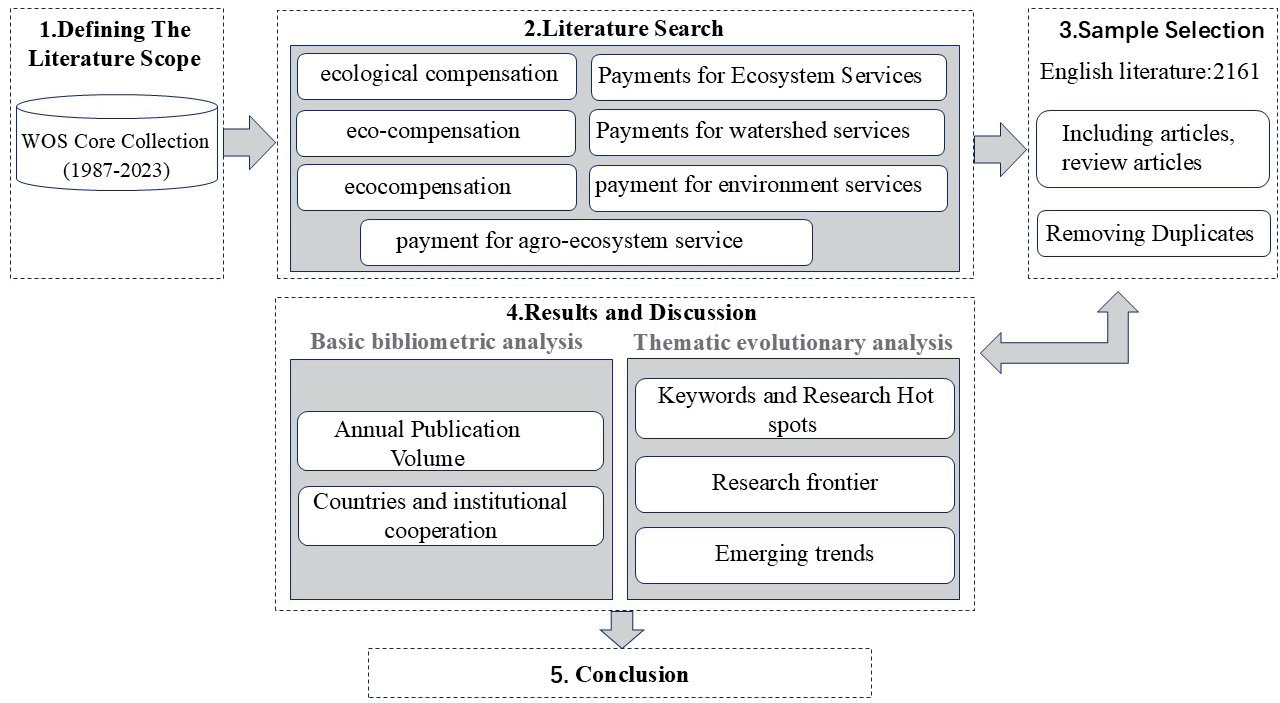
First, determine the scope of the review. Data for the study came from literature published in Web of Science (WoS) between 1987 and 2023. Then, retrieve literature. Set the appropriate search terms to retrieve the relevant literature. Third, sample selection. The literature selected in this paper includes articles, review articles, and meetings, and the duplicate articles are removed. 2161 pieces of English literature are obtained as the research object. Fourth, present the above research results. The annual analysis of the number of literature pieces related to ecological compensation is presented. Meanwhile, the number of pieces of literature published by each country and the cooperation network among countries are statistically discussed. Fifth, further analysis of theme evolution. Through the statistical research of keywords, the research hotspots, research frontiers, and research trends in this field are obtained.
Results and Discussion
Basic Bibliometric Analysis
Literature Quantity Analysis
Publications are commonly accepted indicators for quantitative analysis of innovation research performance. Fig. 2 shows the publications on ecological compensation from 1987 to 2023. It appears that there were just a few publications before 2007, roughly two per year. Since then, however, the number of papers has greatly increased along with the rise of sustainable development research.
Although works of literature on ecological compensation have appeared in the WoS database since 1987, only 29 papers were published between 1987 and 2006. This makes ecological compensation research relatively sluggish in these two decades. From 2016 to 2021, the annual publication volume grew at a relatively high rate, especially after 2016. The amount of literature from 2016 to 2021 accounts for 63.28% of the total literature, indicating that ecological compensation research has developed rapidly in recent years and has received high attention from academics. It is obviously influenced by the UN Climate Change Conference (COP21) in Paris, France, on 12 December 2015. The Paris Agreement, which aimed to improve ecosystem stewardship, was adopted by 196 Parties at this conference [19]. Subsequently, the People’s Republic of China declared in 2021 that it will achieve carbon neutrality by 2060 as part of its international commitment to lowering CO2 emissions. China’s continuously increasing emphasis on environmental policies has greatly promoted scholars’ attention to the field of ecological compensation.
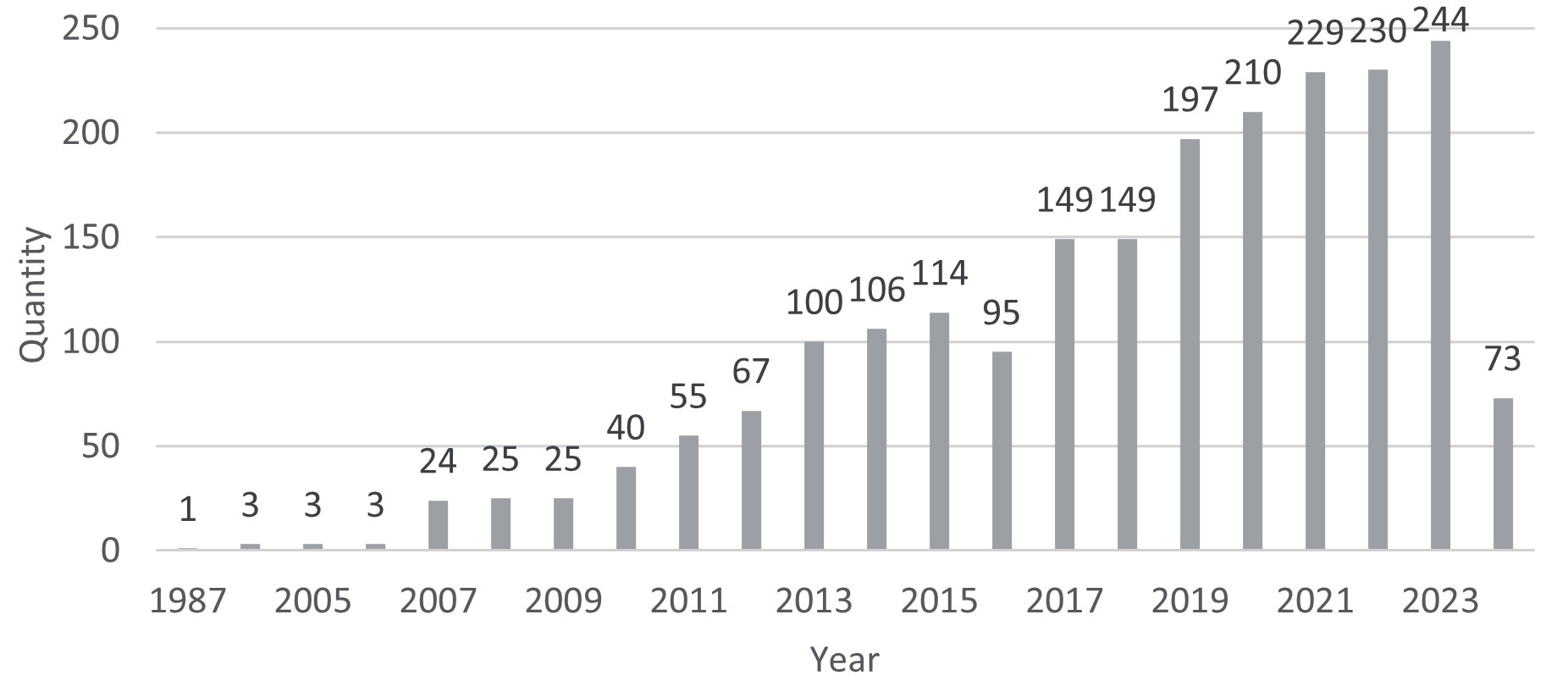
Moreover, this trend also demonstrates that in various countries since 2016, the importance of ecological and resource compensation issues has increased among scholars. In general, this increased interest may be a result of resource shortages and ecological damage owing to the rapid economic development and overconsumption of resources and ecology, and due to the attention given to ecological compensation.
Countries and Institutional Cooperation Analysis
72 countries have published articles on Ecocompensation from 1987, and some key countries, with their cooperation network, are visualized in Fig. 2. The size of a circle in the map reflects the number of papers of a nation published. As Fig. 3 shows, the People’s Republic of China (referred to as China) produced the most papers, followed by the United States of America (USA), Switzerland, Brazil, England, Australia and Germany. It can be clearly seen that China and the USA are the two most influential countries in this research field. The publication volume of these two countries is equal to the sum of the publication volumes from the third to the twentieth. The 20 countries with the largest number of publications and the corresponding number of publications are shown in Table 1.
In addition, the thickness of the lines between countries reflects the degree of cooperation. The number of lines that connect with a nation represents the level of international cooperation. China, the USA, Switzerland, Brazil, and England were at the core position of the entire network since their line numbers and connection strength were larger than other countries. In this respect, they would benefit from knowledge transfer in the Ecocompensation research field.
Table 1.
Top 20 countries with the highest number of publications.
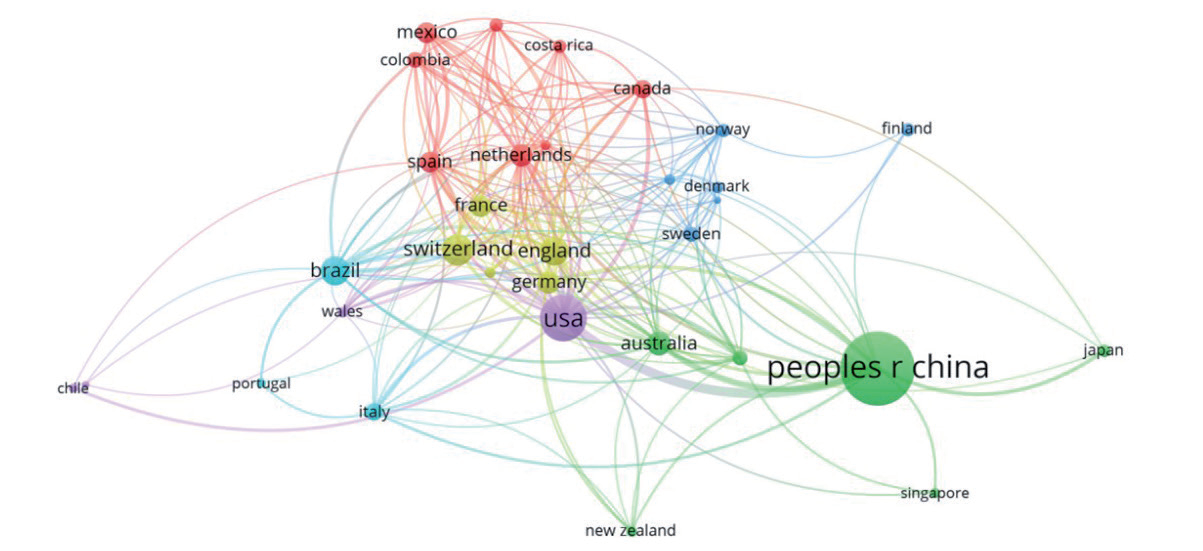
Fig. 4.
The network visualization of institutions’ cooperation in the Eco-compensation research field.
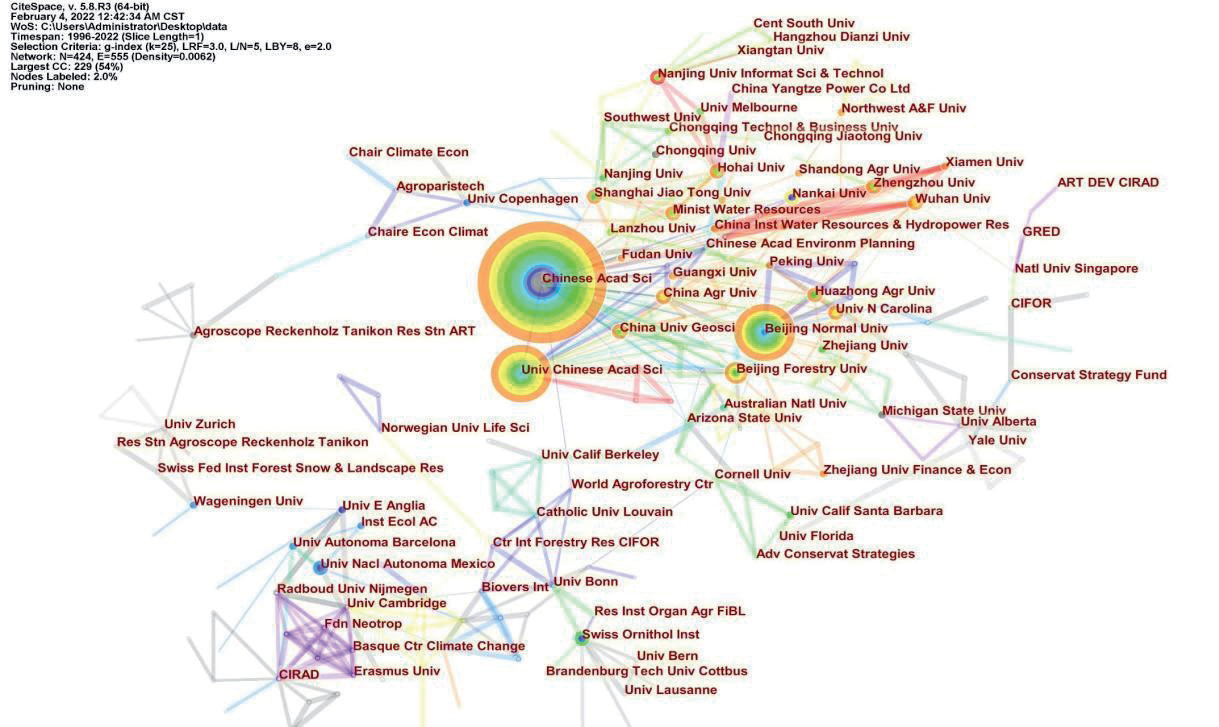
There are 424 institutions in Fig. 4 and 555 connecting lines between them, with a density of 0.0062. This indicates a deeper degree of cooperation between institutions. Larger nodes mean a higher frequency of institutional co-occurrence.
The top four institutions in this field are the Chinese Academy of Sciences, the University of Chinese Academy of Sciences, Beijing Normal University, and Beijing Forestry University. Clearly, the People’s Republic of China, with numerous highest-ranked research institutions, has contributed more to ecological compensation research, covering both theory and practice. From the perspective of inter-country cooperation, the number of linkages between the People’s Republic of China, the United States, Australia, and Germany shows a relatively tight cooperative relationship. Initially, the majority of studies were focused on developed countries, but in recent years, developing countries, led by the People’s Republic of China, have increased their involvement in research in ecological compensation, indicating that they place an increasing emphasis on environmental protection and sustainable development, as well as on international cooperation.
In addition, ecological compensation research has stronger institutional links between the same countries. This viewpoint can be supported by the cooperation network diagram of relevant research institutions in the United States, China, and Switzerland from Fig. 3. Furthermore, some research institutions have a large number of transnational collaborations, such as the Chinese Academy of Sciences and World Agroforestry Organization, the Swiss Institute of Ornithology and the University of Bonn, etc.
Thematic Evolutionary Analysis
Keywords and Research Hot Spots Analysis
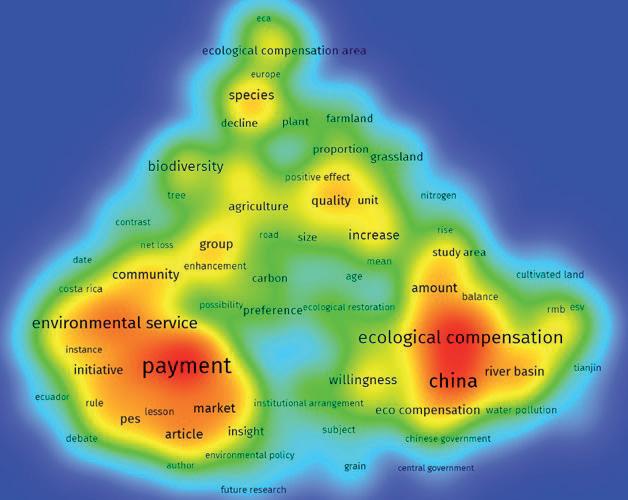
Keyword analysis can provide information on research hotspots and trends. VOSviewer’s density visualization of ecological compensation research areas based on the frequency of keyword usage yielded Fig. 5. The density map can help to give prominence to the most important areas on the map. The more frequently a keyword appears, the larger its label and the more obvious its density.
More than half of the top 10 most frequently occurring keywords are related to ecological compensation itself. The terms ecosystem services (254 times) and environmental services (215 times) are the most frequently used, followed by conservation (207 times) and payment (170 times), indicating that ecological compensation is directly related to the fields of ecosystem services and environmental protection.
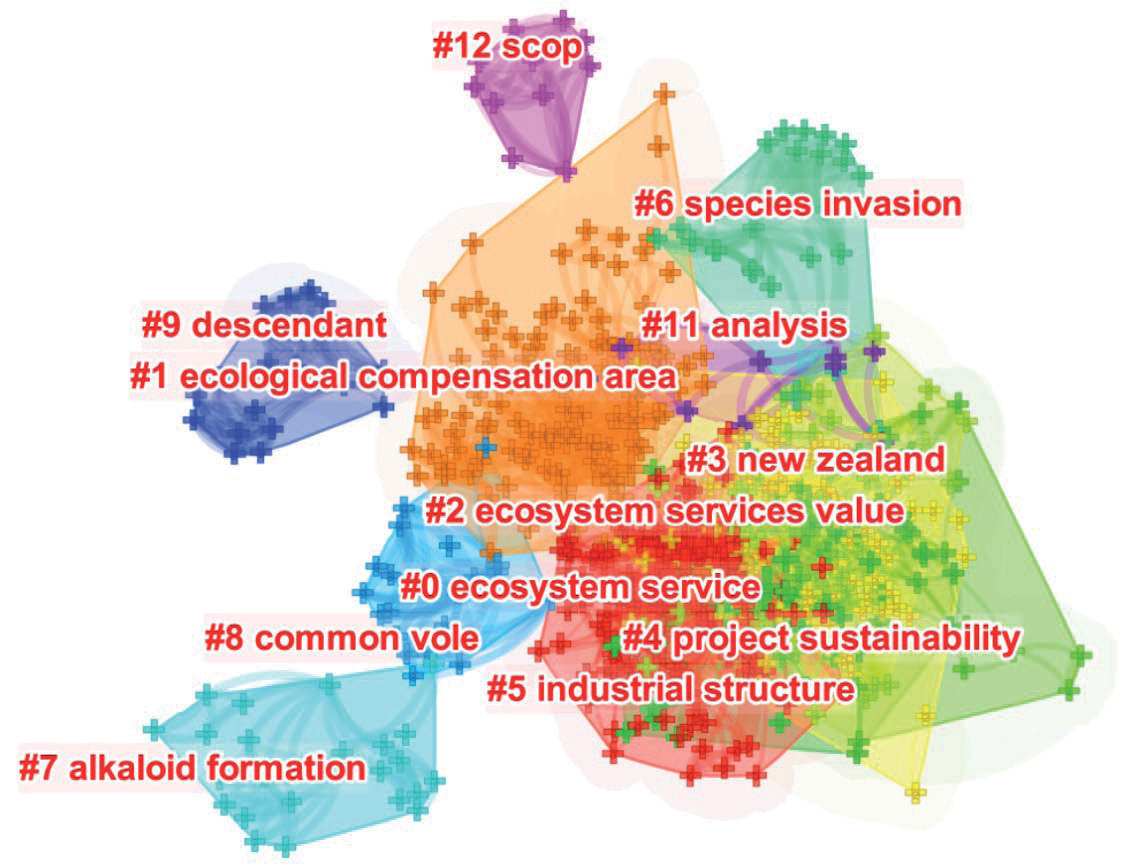
The literature on ecological compensation is subdivided into several research areas, such as river basins, grassland, farmland, agriculture, biodiversity, and comprehensive ecological compensation. For better comprehension of the hot topic distribution of ecological compensation, the keywords were clustered based on their similarity, and 12 clusters were obtained. As shown in Fig. 6, the Modularity Q value is 0.4516, greater than 0.3 can be implicated that the clustering network is significant and credible results, and the Mean S value is 0.554, which expresses reasonable clustering [20]. The research areas were then divided into 4 categories as follows.
(1) Ecosystem service. Multiple services are provided by ecosystems for human survival, health, and well-being, and pricing these services is thought to be a key strategy for evaluating the value of ecosystems and advancing financial incentives [21]. Research on ecosystem service functions and how to evaluate them made significant strides in the 1990s, eventually emerging as a hot area of ecological study [22]. Currently, researchers are enhancing their understanding of the value of ecosystem services and conducting in-depth debates from a variety of perspectives, including rivers, lakes, croplands, forests, and deserts. While research on grasslands, forests, and watersheds focuses on the definition of ecological service functions and evaluation techniques, research on arable ecosystems focuses on human activities and management mechanisms. Due to the complexity of the ecological environment, some scholars focus on in-depth research on the value of ecosystem service functions from the research scale and single service function [23]. In addition to providing novel theoretical, methodological, and technical assistance for the management of natural resources, these projects and research also disclose the current conditions and trends of change in many ecosystems. For those making decisions on the preservation of ecosystems and sustainable development, they offer useful information.
(2) Poverty reduction and sustainability. It is frequently studied and debated how to break the vicious cycle of poverty and environmental destruction. In the poverty alleviation practices in different countries, ecological poverty alleviation (EPA) is regarded as an important way to synthesize the dual goals of poverty reduction and environmental protection and to achieve sustainability. Many researchers have fruitful research achievements on EPA, and they do recognize that EPA is a complex system involving multiple policy instruments, governmental agencies, social forces, agents, etc. [24, 25].
Some researchers have discovered that participants’ income is affected by ecological compensation [26]. Researchers have mainly concentrated on the growth in farmers’ income from programs for forestry ecocompensation and the growth in herders’ revenue from programs for grassland eco-compensation [27, 28]. Other academics are mainly concerned about the role of the implementation of the watershed ecological compensation program in the optimization of industrial structure [29, 30]. The implementation of ecocompensation policies contributes to optimizing the industrial structure to the maximum extent, and poverty alleviation is of great significance to attract social capital to the economic transformation and development of ecological compensation areas and to realize the sustainable development of the ecological environment.
(3) Species conservation. Research on species conservation focuses on biodiversity restoration and habitat ecosystem improvement, with scholars most frequently focusing on the compositional attributes of biodiversity and the analysis of impacts on the plant and animal communities [31]. Researchers went further into the current situation, assessment frameworks, and conservation strategies for biodiversity at many levels, including ecosystems and species [32-34].
Biodiversity is globally recognized as a critical component of healthy ecosystems, and its conservation is increasingly becoming one of the important aims of environmental management. At present, scholars have widely used models such as DSPIR (Driving Force-Pressure-State-Impact-Response), MCA (Multi-Criteria Analysis), BII (Biodiversity Intactness Index), and other models to establish an integrated biodiversity assessment framework [35-37]. Academics span problem framing, policy goals, targeted groups, implementing agents, and policy instruments via analyzing the policy designs of national biodiversity strategies in Australia, France, and New Zealand to draw lessons on the transformation of species conservation governance [38, 39]. Moreover, the decline of specialized species and the rise of foreign species invasion have similarly raised concerns among some scholars [40, 41].
(4) The underlying theory and analysis of ecological compensation. The investigation of ecological compensation’s fundamental ideas, such as the theory of natural environmental value, externality theory, ecological capital theory, public goods theory, and sustainable development theory, from the basis of the topic’s in-depth study. Numerous academics from various nations have thoroughly examined and discussed ecological compensation in terms of its definition, goals, guiding principles, and areas of application. Some academics argue that the concepts of environmental protection, cost-effectiveness, and fairness should be considered while developing an ecological compensation scheme [42].
Researchers have mostly looked at stakeholders, influencing variables, compensation standards, compensation conditions, and ecological compensation methods from the perspective of designing an ecological compensation system. Scholars mostly use the cost technique, the willingness survey method, and the ecosystem service value assessment method to compute the ecological compensation standard. Thus, the theoretical research framework and system of ecological compensation have been expanded and improved. Secondly, to provide a theoretical foundation for resolving cases and problems involving increasingly complicated ecological and environmental issues, theorists have focused more on the relationship between theory and practice.
Research Frontier Analysis
In bibliometrics, “Burst Detection” is a method employed to identify and analyze abrupt and substantial surges in citations or attention to related elements like a research topic, keyword, or author within a particular time frame. CiteSpace can display the research frontiers and trends in a given discipline by extracting emergent words from a huge number of subject terms in the literature to examine mutations in keyword frequency through burst detection.
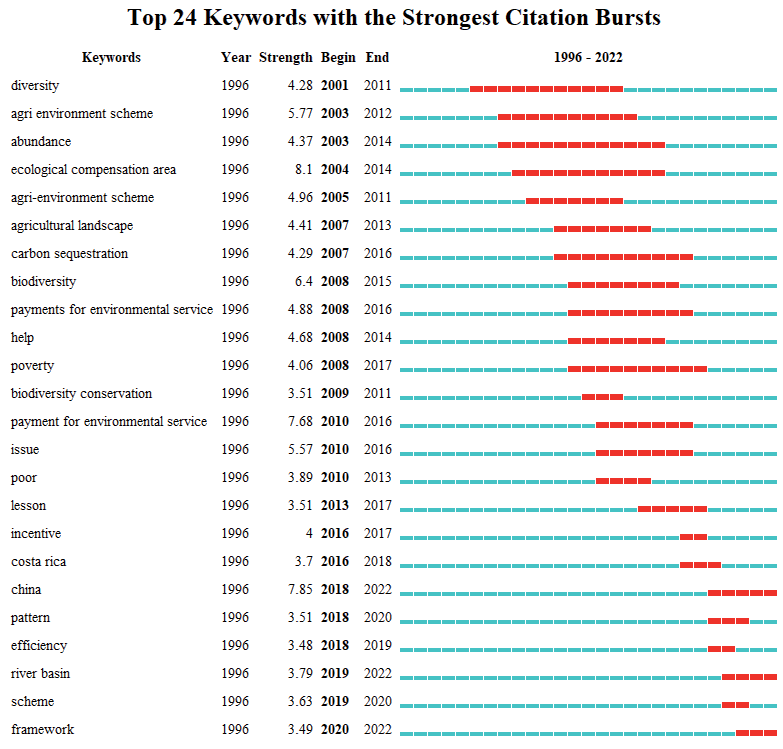
The degree of keyword emergence can reflect the influential research areas over time. The top 24 citation burst phrases of ecological compensation from 1996 to 2023 were obtained in Fig. 7, and the top 10 keywords with the strongest citation bursts were as follows: ecological compensation area; China; payment for environmental service (payments for environmental service); biodiversity; Agri environment scheme; agri-environment scheme; help; and agricultural landscaped. From the perspective of burst intensity, the keyword with the greatest burst intensity is the ecological compensation area (8.1). This indicates that ecological compensation area is an important direction of research in this field and has received all-embracing attention from intellectuals.
Table 2.
Ecological compensation types in China by ecological elements.
In the context of time series, the strongest citation bursts words before 2007 were diversity; agri-environment scheme; abundance; ecological compensation area; and agri-environment scheme. Among them, “ecological compensation area” had the highest burst intensity, followed by “agri-environment scheme” and “agri-environment scheme.” This points out that the ecological compensation area and agri-environment scheme are the latest research frontier topics at this stage. From 2007 to 2016, the strongest citation bursts words were agricultural landscape; carbon sequestration; biodiversity; payments for environmental service; help; poverty; biodiversity conservation; payments for environmental service; issue; poor; lesson; incentive; and Costa Rica. During the last six years, the most popular keyword searches were: China; pattern; efficiency; river basin; scheme; and framework. These came to the stage after 2016. Additionally, the keyword ‘China’ has shown a massive explosion of research in ecological compensation since 2016, with the value of prominence jumping to the highest point in the past 6 years. This reached 7.85. The rapid increase in the number of articles published by Chinese scholars is due to their focus on ecological issues that have emerged in China in recent years.
Referring to the periodicity of the influence of burst words, the field of abundance is the longest (12 years), with diversity and ecological compensation area for 11 years. This signifies that these three have a longer impact time in the ecological compensation domain. In particular, ecosystem properties depend greatly on biodiversity [43]. Therefore, biodiversity research, which began in the 1990s, has been a hot topic of interest in ecology.
In addition, the hot words of research in recent years were China and the river basin. Chinese researchers focus on a variety of hotspot locations, including watersheds, forests, grasslands, wetlands, croplands, oceans, mineral resources, biodiversity, comprehensive ecological compensation, etc. Some types of ecological compensation in China are shown in Table 2. Studies on watershed and forest ecological compensation account for approximately 60% of all hotspot areas examined. Most scholars believe that ecological compensation effectively solves the conflict of interests among transboundary river basin countries [44]. As the study develops, the attention of scholars on ecological compensation in watersheds has steadily shifted to frontier topics. These include the coordination of interests between basin stakeholders upstream and downstream, the analysis of compensation and willingness to be compensated, and the analysis of compensation effect. These research areas aim to improve the ecological compensation system in the watersheds [45]. In recent years, numerous scholars have proposed the comprehensive ecological compensation model, which intends to offer economic and policy compensation to the regions, groups, or individuals safeguarding the ecological environment and providing ecological services in diverse manners. Compared to single-factor ecological compensation, comprehensive ecological compensation is more all-encompassing, systematic, and holistic, capable of better addressing complex ecological protection and development issues. Comprehensive ecological compensation holds irreplaceable advantages and significant value in facilitating the construction of ecological civilization and achieving sustainable economic and social development.
Emerging Trends Analysis
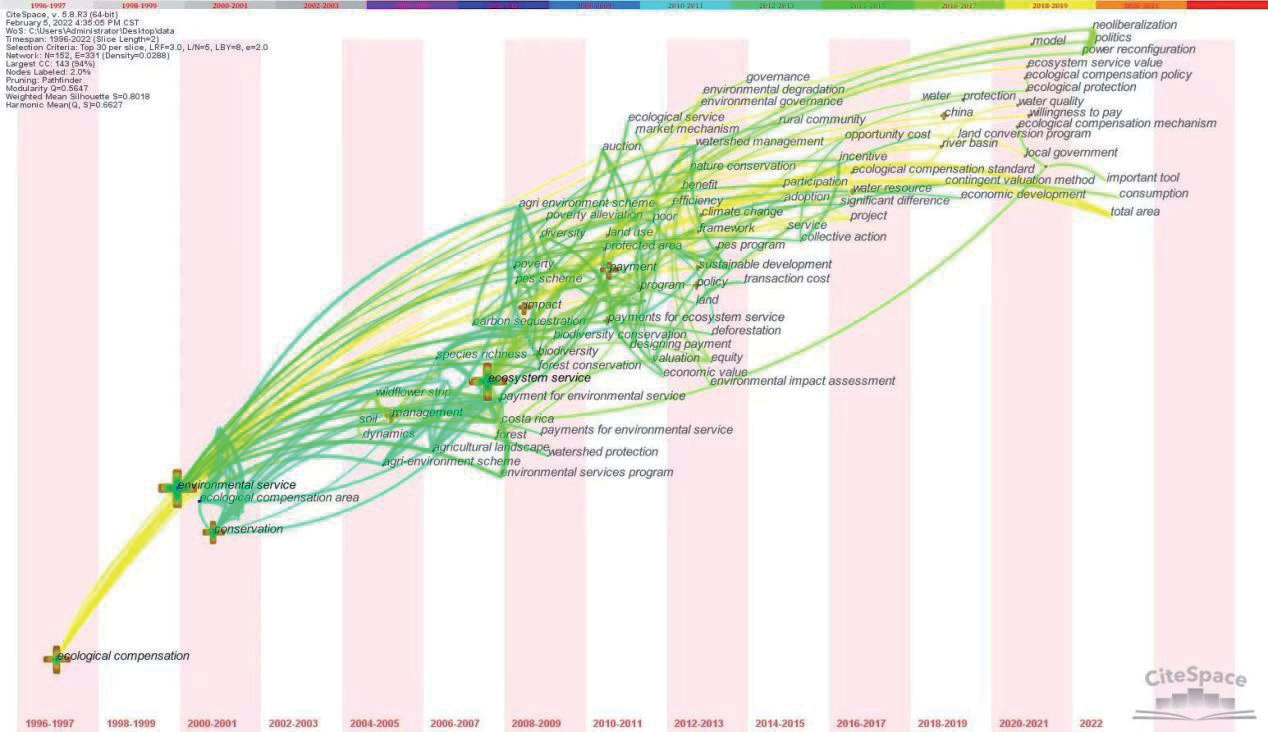
Research hotspots may change as a result of trends in the evolution of keywords in the area of ecological compensation. The horizontal axis corresponds to a different time zone each year. In Fig. 8, the intersecting nodes stand in for keywords. The size of the node increases with the frequency of the keyword, and from left to right, it stands for the temporal evolution from 1996 to 2023.
As can be seen from Fig. 7, the research hotspots were concentrated from 1996 to 2023 on ecological compensation, environmental service, and conservation. In this period, the literature in this field was limited and mainly concentrated on fundamental ecological studies. At the budding stage of research, the majority of relevant hot studies focused on the theoretical analysis of ecological compensation and conceptual interpretation. Scholars have proposed, based on the preceding theoretical study, a more complex and comprehensive theoretical system of ecological compensation. This included a public goods theory, externality theory, ecosystem service value theory, etc. These theories are designed to internalize the external costs of environmental resources through appropriate institutional design, and in so doing, making them economically justified [46]. Based on the above theories, scholars have researched and discussed the compensation standards and compensation methods of ecological compensation separately.
During this period, several ecological compensation measures have been implemented. In 2004, the U.S. government adopted the Forest Stewardship Initiative (FSI) to reduce the damage caused by deforestation effectively [47]. To promote reforestation, agroforestry, and complex agriculture, the World Bank formally established the BioCarbon Fund in 2003 [48]. Additionally, in watershed ecological compensation, Colombia, the United States, and South Africa rely on taxes, funds, and public debt to subsidize businesses and individuals in the upper reaches of rivers [49]. In the year 2000, Ecuador implemented the Water Protection Fund (FONAG) to meet people’s basic demands for drinking water and successfully address the water scarcity situation [50].
There are some special large nodes during 2006– 2015. New research directions have emerged, and these can be deemed as a transitional development period. The important nodes that appear include ecosystem service, payment, payments for ecological compensation, and sustainable development. These indicate that, in mid-term research, academics mostly continued and expanded on earlier ecological compensation theories in depth. Examples of theories that have been used to examine ecological compensation-related concerns include game theory and sustainable development theory. Moreover, the payment for ecological compensation has also become more complete. Consequently, a slightly modified version of PES was proposed, which is widely accepted by academics [51].
The scope and approaches of research on international ecological compensation research and the practice of ecological compensation have been enlarged. A comprehensive ecological compensation system has basically been established in various countries, especially in the areas of forest ecological compensation and watershed management [52, 53]. Research in this period has placed greater emphasis on market-based mechanisms for ecological compensation, focusing on the analysis of the economic value that can be derived from the adoption of compensation measures and striving to balance the relationship between human activities and ecosystems and achieve sustainable regional economic development [54, 55].
Among the research since 2016, the nodes are modest and concentrated, indicating a flourishing trend in research during that period. In recent years, the exponential growth in the volume of literature, deepened the research content of previous years. Furthermore, it has gradually moved toward interdisciplinary and cross-cutting research. Reviewing the literature in the last six years, the keywords focus on river basin, China, and willingness to pay. Scholars have, based on the current practice, begun multi-level discussions on topics such as compensation methods, compensation subjects and purposes, compensation scope, compensation fund sources, and compensation supporting infrastructure. In terms of compensation methods, they have gradually begun to look for ways to realize value through policy preference, project construction, ecological certification, and water rights trading [56-59], etc. Meanwhile, academics have begun to investigate the compensation mechanism with the involvement of various interests [60].
China has focused on resolving the issue of a destroyed ecological environment and has not only carried out ecological compensation management in watersheds, forests, and agriculture in many provinces, cities, and autonomous regions but has also introduced many policies to ensure the smooth promotion of ecology. This rapid economic development, coupled with the improvement of comprehensive national power, has, in recent years, made China a hot topic and frontier. As an important step toward furthering the development of the ecological compensation system, the Action Plan for Establishing Market-Oriented and Diversified Ecological Protection Compensation Mechanism published in 2018 and the Pilot Program for Comprehensive Ecological Compensation published in 2019 will serve as a guide for social capital to invest in ecological compensation and create environmentally beneficial industries [61]. As early as 2017, the green development concept of “clear water and green mountains are gold and silver mountains” put forward new guidance for the ecocompensation system [62]. The “Dual-carbon goals” on the CCS investment timing proposed by China sped up the process of creating an ecological compensation system with Chinese characteristics in 2020. Therefore, in the field of ecological compensation research, the number of Chinese scholars’ literature has increased in a spurt. They have covered a wide range of topics, both in terms of theory and practical research.
From a single subject to several subjects, Chinese scholars’ research on compensation topics has changed over time. According to research and practice, the overall guiding principle when defining compensation subjects and objects is “whoever benefits is compensated, and whoever protects is compensated” [63]. Research on compensation topics is typically separated into government, exploiters, and beneficiaries of ecological advantages. The government compensation approach, along with the market compensation method, is the primary ecological compensatory strategy. Most experts used the conditional value method, opportunity cost method, willingness survey method, and water footprint method to calculate the ecological compensation standard for watersheds. The key areas of ecological compensation such as forests, grasslands, wetlands, deserts, oceans, water flows, arable land, and key ecological function areas. They are essentially clear, with a pulse of ecological compensation policies. The design of China’s ecological compensation system tends to unify from being dispersed and vague.
The number of academics studying ecological compensation has grown over time. They have created several fresh lines of inquiry based on their interests. These studies, however, are isolated and lack cooperation because of the dispersed nature of research sites and the endogenous character of research institutions. No sizable research hotspots have been generated, in which case a time zone map is formed, illustrating the movement of hotspots. The aforementioned migration of hotspots also highlights the field’s future research potential and the ongoing global interest in research in the area of ecological compensation from the side. This reflects the field’s ongoing development in the direction of diversification and expansion of research scope.
Conclusion
This study is a systematic visual analysis of the literature in the field of ecological compensation research based on Citespace and VOSviewer methods. The current status of research in the domain of ecological compensation was identified and reported, including literature volume, institutional cooperation, high-frequency keywords, categories of research areas, frontiers, and emerging trends.
Firstly, results show that research articles have increased steadily and rapidly in the last 15 years, and this is influenced by the global wave of sustainable development, especially with China’s increasing environmental regulatory policies. Correspondingly, Chinese research institutions are very active in this field, followed by the United States, Australia, and Germany.
Secondly, the analysis demonstrated that papers about ecological compensation research can be classified mainly in the areas of ecosystem service, poverty reduction and sustainability, species conservation, the underlying theory, and analysis of ecological compensation. In addition, keyword analysis finds that ecosystem services, environmental services, conservation and payment were dominant keywords. Through analyzing the emerging trends and frontier, it can be concluded that ecological compensation mechanism, river basin, and willingness to pay will be the research hot spots in the next few years.
Finally, with the ongoing advancement of ecological compensation theory and practice, ecological compensation approaches have their limitations. Current assessment approaches might lack sufficient precision to measure the value and alteration of ecosystem services precisely. Thus, scholars’ future efforts will be focused on introducing new methods or techniques from other disciplinary domains to address the flaws. Ultimately, as ecological compensation theory and practice have continued to advance, academics from a variety of fields have proposed appropriate public policies from the viewpoint of their respective fields, but a comprehensive empirical examination of the consequences of ecological compensation is lacking. Therefore, improving the assessment of the outcomes of ecological compensation initiatives and defining the rights and interests of pertinent stakeholders in the field of ecological compensation are crucial directions for further study.

