

Introduction
The three essential biogenic elements of ecosystems are carbon (C), nitrogen (N), and phosphorus (P), which play a critical role in limiting nutrients and carbon assimilation, growth, and other essential biological processes, respectively [1]. By combining the elementary concepts of biology, chemistry, and physics, ecological stoichiometry underscores the interplay between ecological energy and the diverse range of chemical elements, thereby emphasizing the importance of balance in ecological systems [2]. Studying the impacts of global environmental changes on the biogeochemical cycles of C, N, and P can offer valuable insights into the functioning and resilience mechanisms of terrestrial ecosystems. The connection between the chemical stoichiometry among C, N, and P traits of different ecosystem elements (plants, litter, soil, etc.) and their response to the external environment has been extensively explored and embraced. This approach helps us enhance our comprehension of the intricate relationships between various ecological components and the dynamics of nutrients [3].
Intermediating the nutrient cycling between plant and soil within forest ecosystems, litter establishes itself as a pivotal channel for nutrient pool and flux, performing a mission-critical role in sustaining the delicate balance of nutrient dynamics [4]. Determining the nutrient content of litter is regarded as a crucial factor influencing the quality and rate of nutrient return. Their initial values manifest an interdependent relationship with the soil nutrient status, plant nutrient uptake, and resorption efficiency. Forest productivity and the input of above-ground litter into the soil are subject to significant modification as a result of human-induced disturbances and environmental fluctuations [5], such as a change in litter input that arises from forest thinning operations. This was expected to result in a reduction of litter deposition, and increases in CO2 content have been linked to increased forest productivity [6]. Aboveground litter modifications can considerably impact underground biogeochemistry by directly altering organic C and nutrient input or indirectly through changes in biotic activity.
An ever-increasing amount of attention has been directed towards exploring the ecological consequences of the stoichiometry patterns of litter in a regional or global context, starting at the turn of the 20th century [7]. However, there remains limited exploration of the effects of litter P input on the nutrient circulation system [8]. They can better illustrate the interdependent connections among various components within an ecological system. For instance, a reduced C/N ratio can enhance the rate of decomposition in the litter, while the N/P ratio serves as an indicator to distinguish whether N or P is the limiting factor influencing the decomposability of the litter [9]. The nutrient use efficiency of a forest can be appraised interchangeably through the use of either the nutrient contents, which exhibits an inverse proportionality to the efficiency. Or, the ratio of C and nutrients that displays a direct proportionality to efficiency [10]. The importance of litter stoichiometry in the establishment of biogeochemical models is underscored by its critical function in the estimation of litter nutrient stock within ecosystems and its consequential implications for important ecological processes [11]. Consequently, research on litter stoichiometry can shed light on the unique nutrient fluctuation patterns that emerge in varying environmental contexts. This provides a more comprehensive understanding of the intricate nutrient cycling processes that shape forest ecosystems.
Currently, soil C-N-P stoichiometry is a widely studied topic worldwide. Many studies have reached a consensus that stand type plays a critical role in shaping the soil C-N-P stoichiometric characteristics [12]. Several studies have observed a decreasing or increasing trend in soil organic Corg, total Ntot, and total Ptot contents in different stand types [13], while different variation patterns were discovered for soil C/N/P ratios. Surprisingly, a lower C/N ratio was found in grassland as compared to subtropical forests in one study [14]. As mentioned earlier, there were inconsistent variation patterns of C-N-P stoichiometric ratios in various forest ecosystems. However, most of these studies were focused on regional or global scales and lacked an aggregate perspective.
Soil aggregates, as an indispensable component of soil structure, display differentiated capacities of soil. Corg, Ntot, and Ptot supply and preserve with their varying sizes [15]. Thus, the exploration of the Corg, Ntot, and Ptot stoichiometry within soil aggregates could comprehend the structure and function of soil ecosystems. Nevertheless, the corpus of empirical studies examining the dispersion of Corg, Ntot, and Ptot within soil aggregates presents conflicting findings. Certain studies suggest a positive relationship between diminishing soil aggregate dimensions and an augmented content of soil Corg, even as the concentrations of Ntot and Ptot experience a decline. Conversely, alternative research has determined a trend that is diametrically opposed. Moreover, the inclusion of clay particles distributed in a stochastic pattern among aggregates of various sizes exclusively determined the Ntot and Ptot contents within soil aggregates [16].
In diversified artificial afforestation, Chinese fir (Cunninghamia lanceolata), a traditional afforestation species, is particularly preferred in China due to its fast growth rate, high yield, and excellent wood quality [17]. Past investigations of Chinese fir litter have predominantly centered on its decomposition process and the consequential impact on soil properties [18]. However, research into the chemical composition of the litter and its impact on soil chemical stoichiometry has been relatively sparse and often ignored in localized experiments. As an illustration, certain researchers have explored the correlation between Chinese fir litter chemical stoichiometry and the stand type, arriving at the inference that the decomposition of litter was restricted by P limitation [19]. Up to now, there has been a paucity of results examining the stoichiometry of both litter and soil within the Chinese fir plantation at a regional level.
It has been previously noted that the decomposition of litter in Chinese fir plantations might contribute to increased soil fertility. Nonetheless, the stoichiometric profiles encompassing C-N-P within both litter and soil at a regional scale throughout the cultivation of Chinese fir plantations are yet to be comprehensively deciphered. Thus, this research aimed to comprehensively quantify the litter C-N-P contents and stocks, and the ratio of C/N/P variation in stand types Ⅰ, Ⅱ, and Ⅲ, as well as the soil Corg, Ntot, and Ptot contents, stocks, and the ratios of C/N/P variation in stand types Ⅰ, Ⅱ, and Ⅲ, together with aggregate sizes (>2, 2-0.25, <0.25 mm). This research assumed that (ⅰ) mixed Chinese fir plantations have more litter C-N-P stocks; (ⅱ) soil aggregate stocks are mainly distributed in >2 mm aggregates.
Materials and Methods
Research Area
In October 2021, the research was planned on plots in the experimental Forest Farm named Daqing Shan, which was established in 2019 and will be used for long-term scientific research regarding the main planting area of Chinese fir (Table 1). The subtropic monsoon climate of the research area, whose yearly average rainfall and temperature are 1200-1500 mm and 20.8ºC, respectively, which are dominated by low mountains and hills of the landform, with gradients and elevations of 27-33ºC and 183.2-259.4 m, respectively. The local soil type is Krasnozem according to the IUSS Working Group (2014), which gradually comes from native sedimentary rock. The research area’s vegetation mainly consists of Chinese fir forest (Michelia macclurei, Mytilaria laosensis, and Evodia), and requires a management approach that closely mimics natural processes and aims to minimize human disturbance and other external factors.
Experiment Design
In this research, we selected stand type Ⅰ, stand type Ⅱ, and stand type Ⅲ in the Qingshan experimental site according to the local geographical location and geomorphic condition (Table 1). The three plantations were planted in 1992, were all planted with a uniform row spacing of 2 m × 3 m, and were situated in the southeast (106°41′~106°59′E, 21°57′~22°16′N). Among these plantations, stand type I and stand type II were mixed in a ratio of 3/1. Throughout the initial 3 years, all three stands were subject to weeding and nurturing practices. Subsequently, a near-natural management approach was adopted, without any artificial interventions or fertilization. To ensure unbiased sampling, a total of three standard quadrats with dimensions of 30×30 m were established. These quadrats were positioned more than 50 m away from the stand margin, and adjacent quadrats were spaced at least 800 m apart to avoid spatial autocorrelation and prevent pseudo-replication.
Specimen Collection
The mixed litter samples were obtained from the soil surface within each quadrat according to the “S” shape (S = 1m×1m) for a total of 9 mixed litter samples (3 stand types × 3 replicates). Following the removal of the understory vegetation and aboveground litter, we acquired 9 mixed soil specimens (3 stand types × 3 replicates) at the same position of litter sampling by using a spade from the soil layer (0-20 cm) in the 9 quadrats (S = 1m×1m). Then we should handle 9 mixture samplings, which were placed in the laboratory for air drying. Friendly separated them into the natural aggregate part, which was sieved by a 5 mm shifter in order to remove small stones, macrofauns, and coarse toots. To measure the bulk density (BD), Corg, Ntot, and Ptot contents of bulk soil, cutting rings were used to randomly collect from the soil layer (0-20 cm) the other 3 soil samples for each quadrat.
Litter Manipulation
The prescreened litter was placed inside an oven with a temperature specification of 500ºC, followed by sterilization at 80ºC for 30 minutes and dehydration under controlled conditions at 65ºC until reaching the constant weight. The dehydrated litter was further subjected to ball milling (the Retsch MM70, Germany) and subsequently filtered by a 100-mesh sieve. The gathered litter particles were subsequently collected and encased in airtight containers, primed for the examination of their C, N, and P compositions.
Aggregate Separation
Each mixed soil specimen (250 g) was sifted continuously through 2 and 0.25 mm in a dry sieving method. Namely, different-sized aggregates (>2, 2-0.25, and <0.25 mm) were obtained to analyze the soil Corg, Ntot, and Ptot contents.
Litter and Soil Property Analysis
After sorting and sieving litter following the drying process, litter C content was determined by the potassium dichromate oxidation external heating method (Determination of organic carbon in forest plants and forest floors, LY/T 1237-1999). Litter N and P were determined by digestion with sulfuric and perchloric acid (Determination of total nitrogen and phosphorus in forest plants and forest floors, LY/T 1271- 1999). Before analysis of soil properties, soil specimens were supposed to wither naturally at room temperature, and soil bulk density was determined by cutting rings. Soil bulk density was explored using cutting rings. The soil Corg content was determined using the method of dichromate wet oxidation [20]. Soil Ntot content was determined using the method of micro-Kjeldahl [21]. Soil Ptot content was determined using the method of molybdenum blue colorimetry [22].
Calculations
Generally accepted by people, the mean weight diameter (MWD, mm) was used for describing the stability of soil aggregate, which meant the higher the MWD, the stronger and more stable the soil aggregate [23].
Where Xi (mm) symbolized the average diameter of aggregate fractions, and Mi (% in weight) stood for the weight ratio of each size fraction. Soil Corg stock (g m-2) followed this formula [24].
Where Mi (% in weight) indicated the weight ratio of each size fraction, and Corgi (g kg-1) represented the Corg content, which was the ith size aggregates, B (g cm-3) and H (cm) meant the bulk density and soil depth, separately. Moreover, soil Ntot and Ptot stocks were also acquired following that. Litter C stock = Litter C contnet ⋅ Litter biomass
Where litter C content was obtained from the above, litter biomass was measured in the drying oven after drying. Moreover, litter N and P stocks were also obtained following that.
Statistical Analysis
In this research, the stand type and soil aggregate were the two main variables. A one-way analysis of variance (ANOVA) was applied to analyze the effect of stand type on the bulk soil properties (Table 2) and litter stoichiometric characteristics (Table S1) within Duncan at the 0.05 significance level using IBM SPSS statistics (version 24). Means were calculated by Tukey’s HSD, with the significance level set at p≤0.05. A two-way analysis of variance (ANOVA) was utilized to analyze the effect of stand types and aggregate sizes on soil stoichiometric characteristics. Redundancy analysis (RDA) was utilized by CANOCO 5.0 to further evaluate the stoichiometric characteristics of the relationship between litter and soil.
Results and Discussion
The Stoichiometric Characteristics of Litter
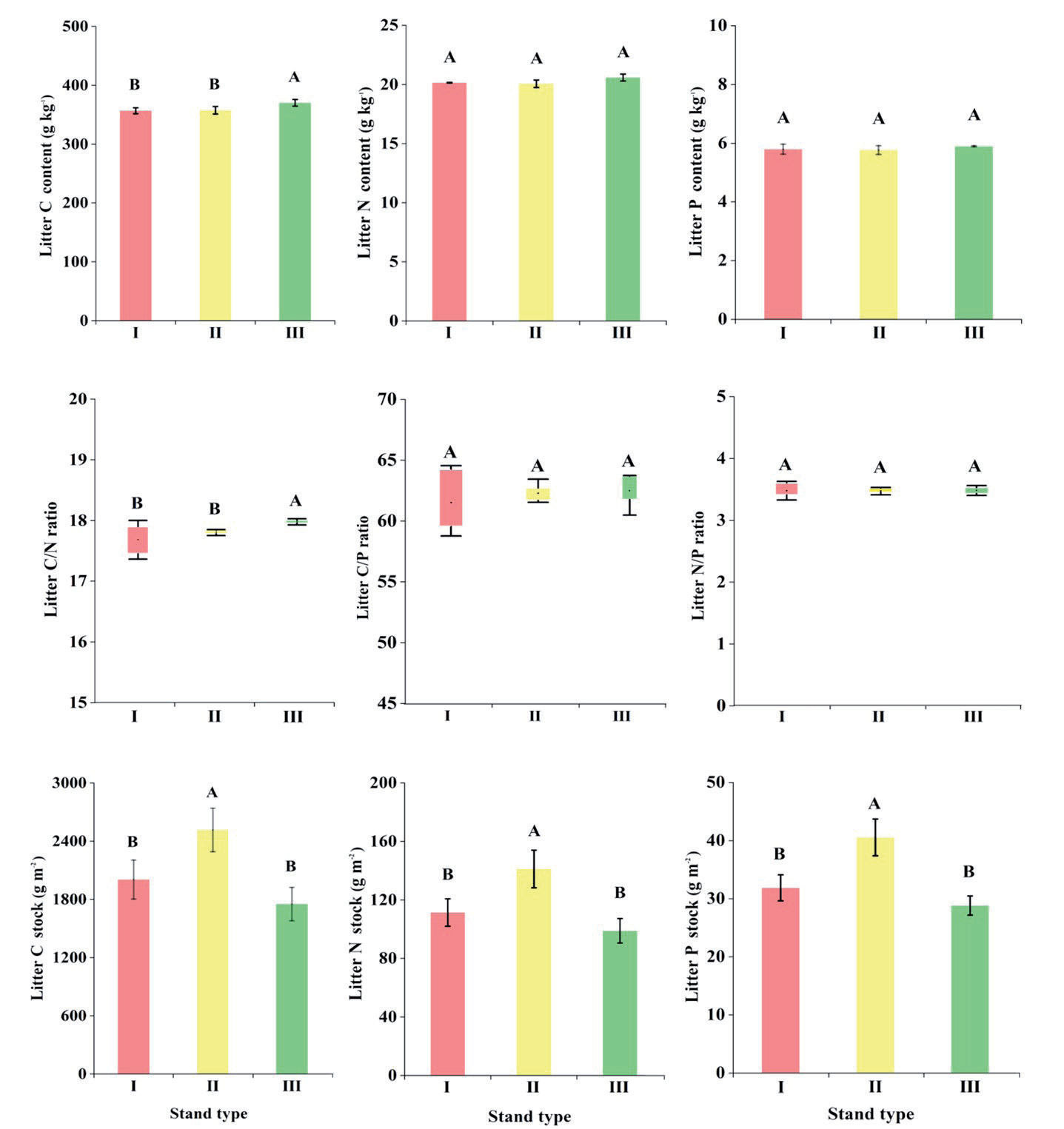
Litter N and P contents didn’t exhibit significant variations across various stand types. In contrast, litter C content displayed a significant increase within stand type III in comparison to stand types I and II, with no significant difference observed between the latter two (Fig. 1). Simultaneously, litter C/P and N/P ratios showed no significant variance among the various stand types, whereas the C/N ratio of the stand type Ⅲ was significantly higher than the stand types I and II, but this distinction was narrowly between the stand types I and II (Fig. 1). Furthermore, the stocks of litter C, N, and P were significantly higher within the stand type II as opposed to the stand types I and III, with no significant variance noted between the stand types I and III (Fig. 1).
The Stoichiometric Characteristics of Soil
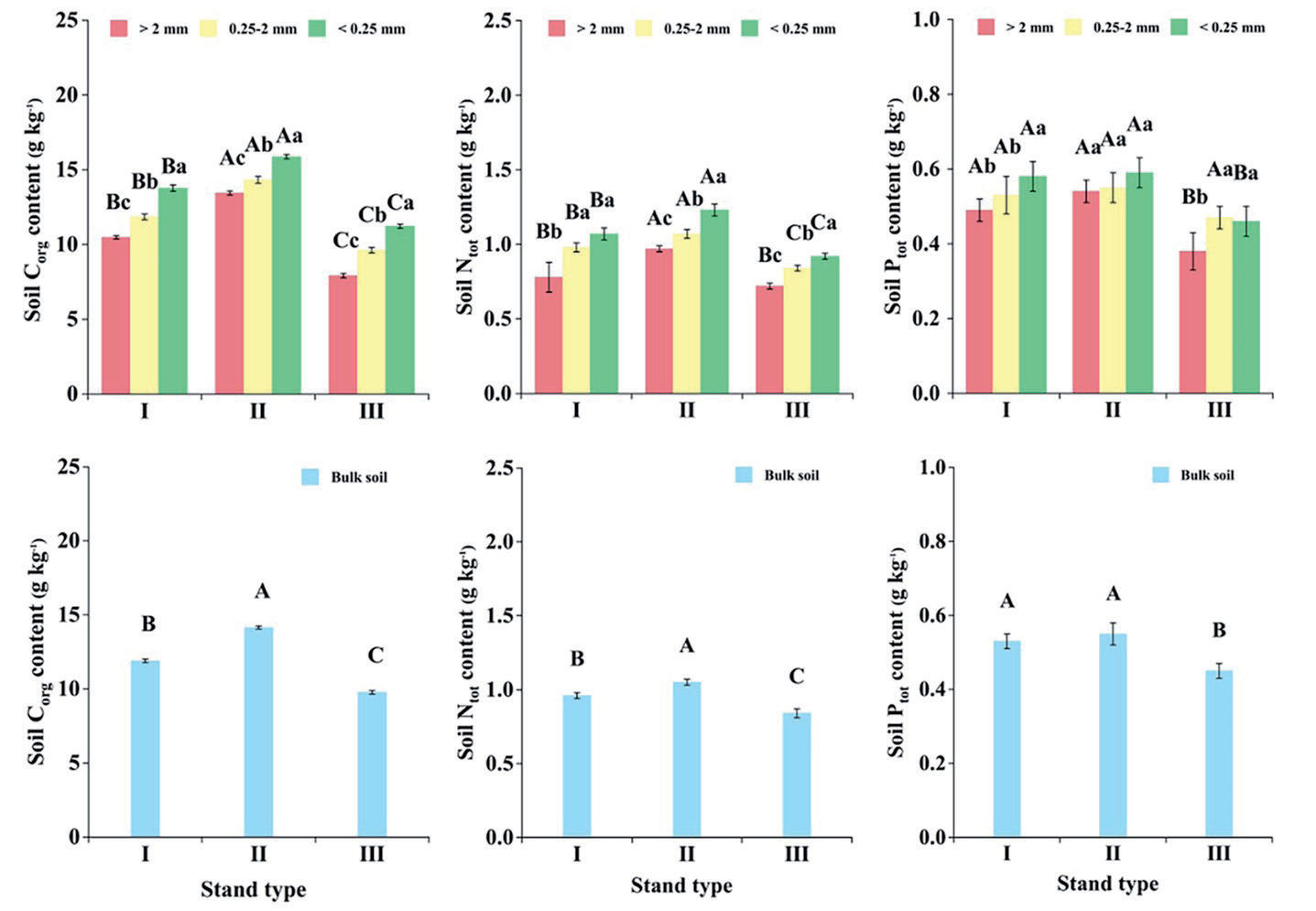
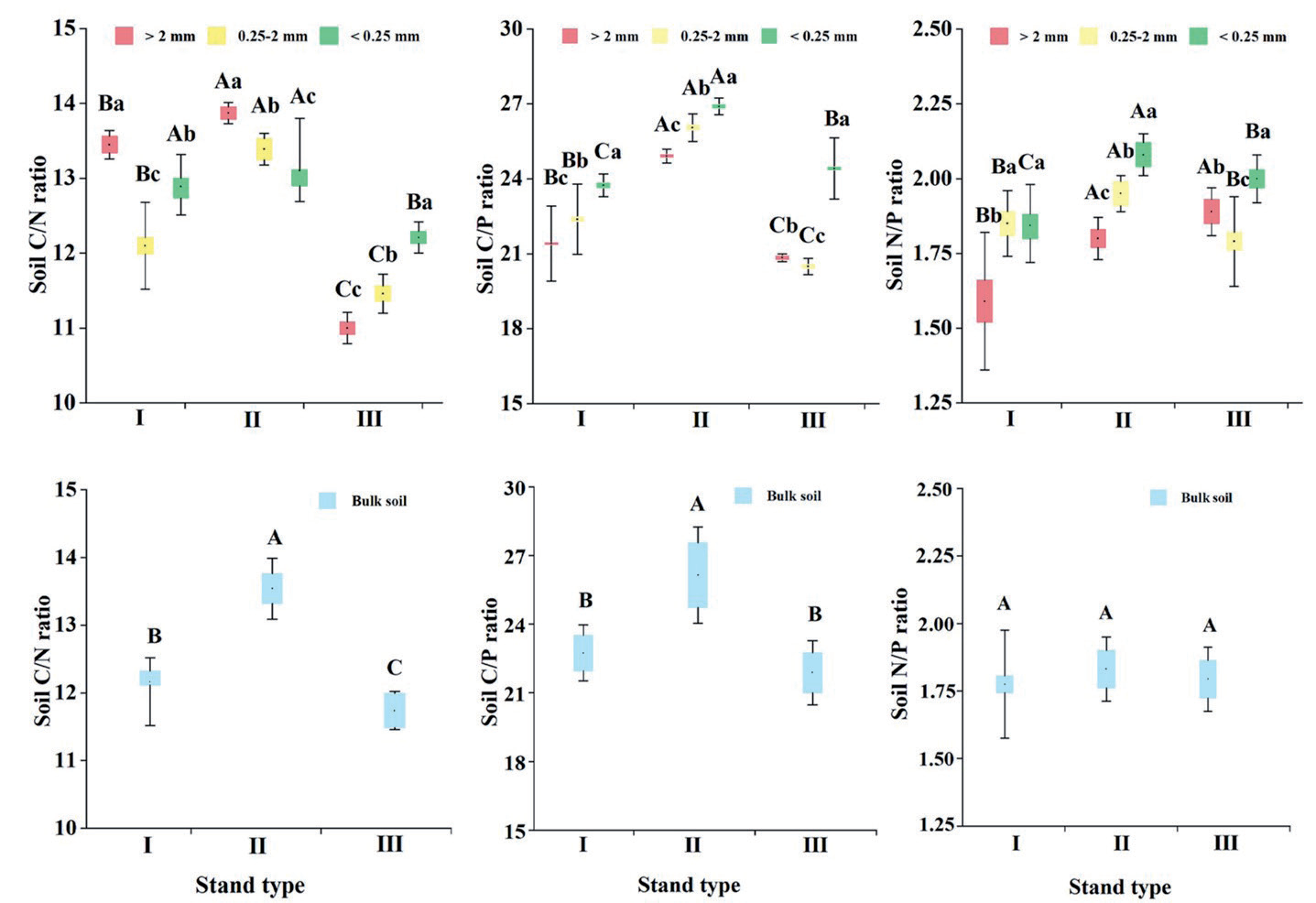
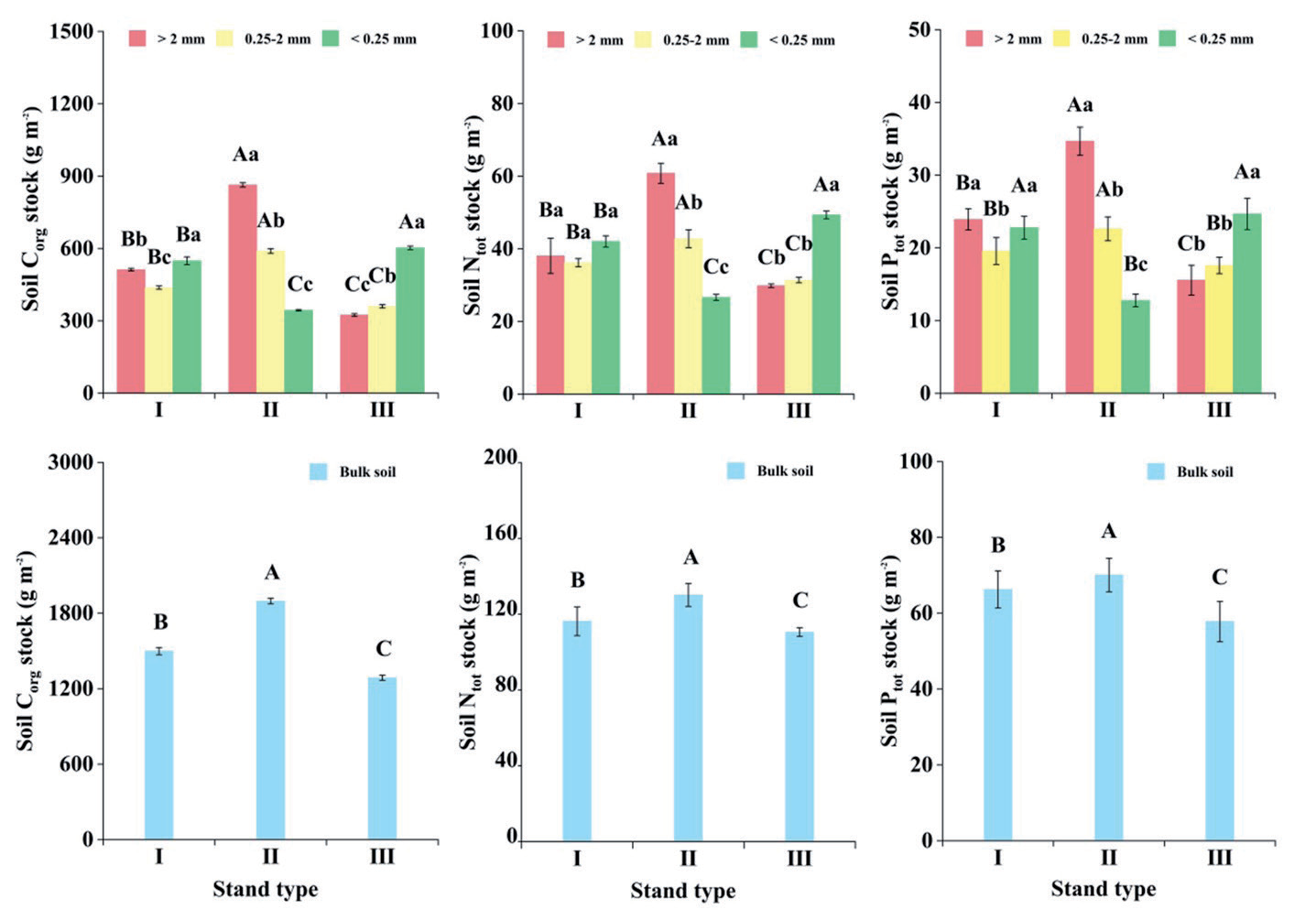
Soil Corg, Ntot, and Ptot contents in various stand types were primarily concentrated within aggregates of <0.25 mm. Significantly, stand type II exhibited a markedly higher content of both soil Corg and Ntot compared to stand types I and III. Furthermore, stand type I also demonstrated significantly increased soil contents Corg and Ntot in comparison to stand type III. As for soil Ptot content, it notably surpassed that of stand types I and II within stand type III, but showed no significant variance between stand types I and II (Fig. 2). Simultaneously, the ratios of soil C/N, C/P, and N/P in various stand types increased as the particle size of soil aggregates declined, with the highest ratios observed in <0.25 mm aggregates. Notably, the stand type II exhibited significantly higher soil C/N and C/P ratios than the stand types I and III, while the N/P ratio remained relatively consistent across different stand types (Fig. 3). Furthermore, the stocks of soil Corg, Ntot, and Ptot in various stand types were predominantly found in aggregates with >2 mm aggregates. Stand type II displayed significantly higher levels of this soil stock compared to stand types I and III. Finally, stand type I also showed significantly greater stocks of soil Corg, Ntot, and Ptot compared to stand type III (Fig. 4).
Table 2.
Composition of soil aggregates in different stand types.
[i] Note: Different uppercase letters in the same row meant significant difference among the different stand types, and different lowercase letters in the same column meant significant difference among the soil aggregate fractions at 0.05 level. MWD represent Mean weight diameter of soil aggregates.
The Stoichiometric Relationship between Soil and Litter
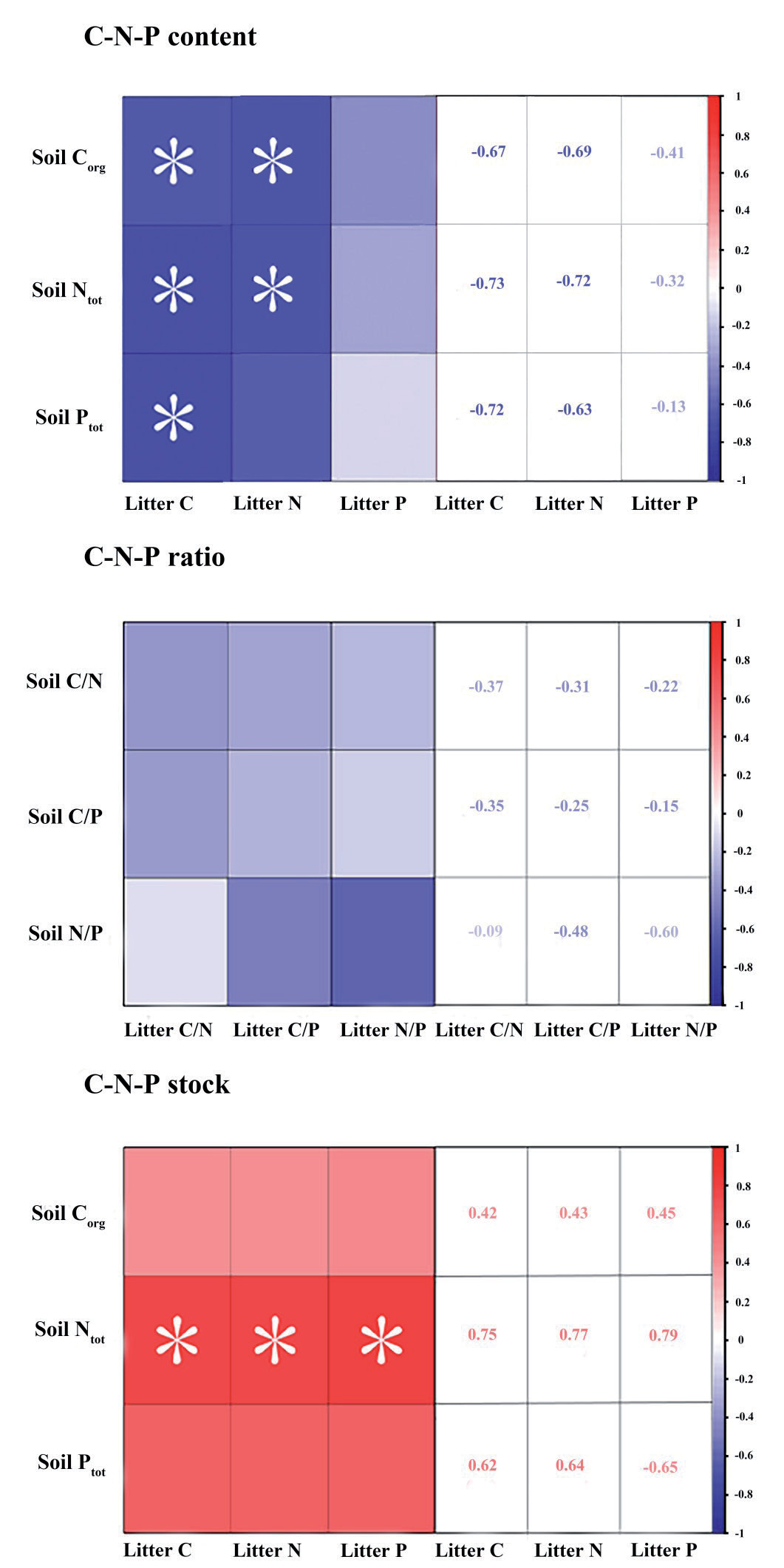
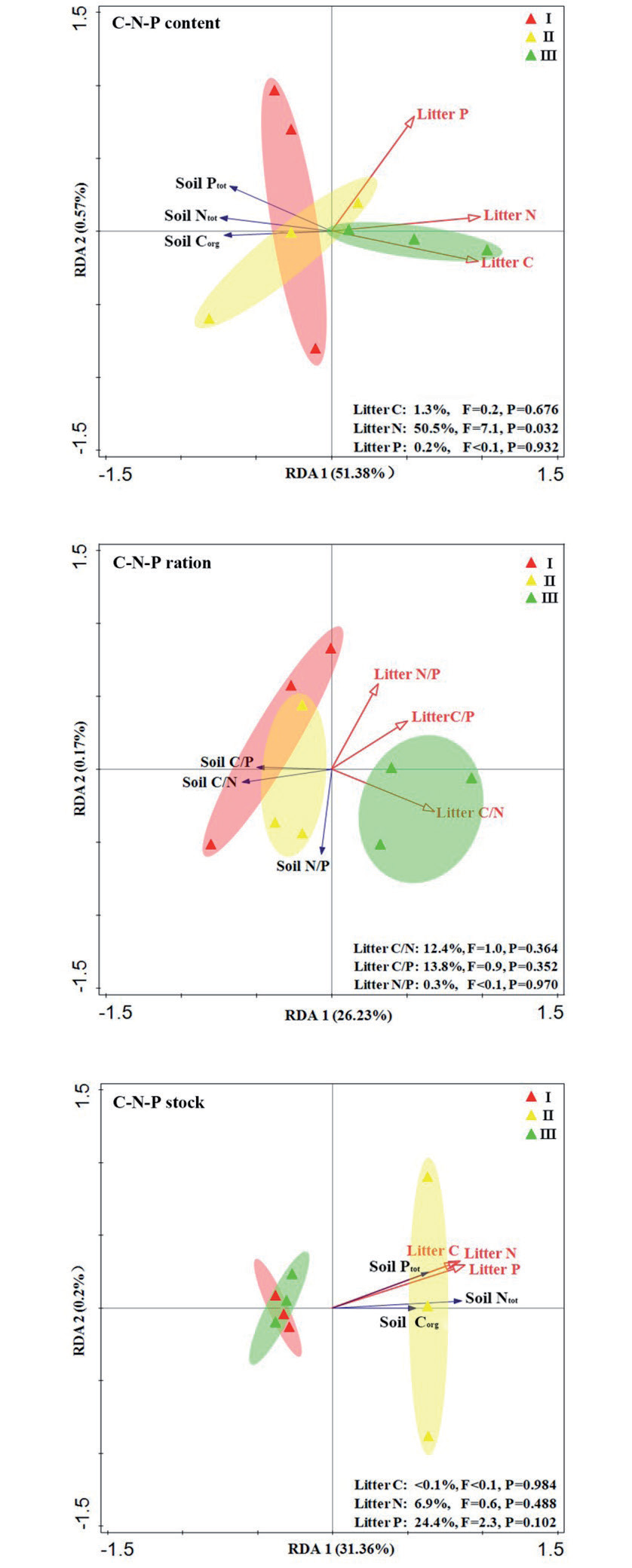
Within various stand types, a conspicuous negative correlation was evident between litter C and N contents and the contents of soil Corg, Ntot, and Ptot (Fig. 5). It was noteworthy that the N content within litter significantly influenced the variations in soil Corg, Ntot, and Ptot contents, which accounted for a substantial 50.5% of the variance (Fig. 6). Simultaneously, no significant correlations were observed between the ratios of C/N/P in litter and their counterparts in the soil (Fig. 5). Among these ratios, the litter C/P ratio notably exerted the most significant impact on soil C/N/P ratios, explaining 13.8% of the variance (Fig. 6). Furthermore, a noteworthy positive correlation existed between the stocks of C, N, and P in litter and the stock of soil Ntot (Fig. 5). But the remarkable thing was the influence of litter P stock on variations in soil Corg, Ntot, and Ptot stocks, accounting for a substantial 24.4% of the explained variance (Fig. 6).
Fig. 2.
Soil organic carbon (Corg), soil total nitrogen (Ntot) and soil total phosphorus (Ptot) content as affected by stand type and aggregate size in Chinese fir plantations. Data represent the means of three replicates, and error bars represent the standard deviations. Various capital letters stand for significant differences (P<0.05) among various stand types. Divers lower-letters stand for significance difference (P<0.05) among various aggregate sizes.
The Stoichiometric Characteristics of Litter
Litter, acting as a repository for organic carbon and nutrients in terrestrial ecosystems, plays a pivotal role in the exchange of energy and nutrients between soil and plants [25]. It holds great significance in the maintenance of forest ecosystem health and nutrient circulation. The composition and stoichiometric attributes of litter could be modulated by varying stand types, either through direct impacts or via the alteration of soil microbial community structures [26]. This finding was in concordance with the substantial influences of the stand types elucidated in our study. Litter with elevated N content had the capacity to attenuate microbial activity involved in decomposing refractory carbon [27], thereby leading to an augmentation in carbon sequestration. The findings of this study, which highlighted the high C and low N contents in stand type II as opposed to stand type I, provided evidence of how stand types impacted nutrient release from litter. This relationship was typically linked to the intrinsic nature (including species composition, soil type and quality, and climate and microclimate conditions) of the forest stand itself. Zhao et al. [28] suggested that in the high-altitude mountain forests of western Sichuan, broadleaf tree species consistently demonstrate a higher prevalence of organic soluble components in their litter when compared to coniferous tree species. These organic soluble components, being more susceptible to decomposition, exert a significant influence on litter substrate quality, consequently affecting the decomposition process. The N content of stand types Ⅰ, Ⅱ, and Ⅲ was 20.16, 20.07, and 20.59 g kg-1, while the P content was 5.80, 5.77, and 5.90 g kg-1 (Fig. 1). They all exceeded the mass fractions of N (10.0 g kg-1) and P (0.7 g kg-1) found in global forest litter [29]. This connection might be attributed to the reuptake of nitrogen and phosphorus elements. Diverse stand types exhibited disparities in litter quantities (Table 1). Within stand type III, there was a notable disparity where the litter was relatively scarce, yet the carbon content was notably elevated, a phenomenon intricately linked to the chemical composition inherent in the litter of the tree species. Cai et al. [30] suggested that coniferous tree species had leaves abundant in resins, tannins, and other compounds, attributes that serve to heighten the carbon content within the leaves. These compounds, characterized by their slow degradation, subsequently made a more substantial contribution to carbon during the litter decomposition process.
Fig. 3.
Soil C/N, C/P, and N/P ratio as affected by stand type and aggregate size in Chinese fir plantations. Data represent the means of three replicates, and error bars represent the standard deviations. Various capital letters stand for significant differences (P<0.05) among various stand types. Divers lower-letters stand for significance difference (P<0.05) among various aggregate sizes.
The litter C/N ratio, as substantiated by previous research [31], served as a robust metric to characterize the kinetics of litter decomposition. A lower C/N ratio is essential for a higher rate of decomposition because a higher N content stimulates microbial activity, which in turn accelerates litter decomposition. Consequently, this implied that within stand type III, characterized as a pristine Chinese fir plantation, the speed of litter decomposition markedly lags behind that of stand types I and II. This correlation pertained to the volume of nutrients recirculated within coniferous and broad-leaved forests; as delineated by Zhang et al. [32], the amount of nutrients returned by broadleaves was greater than that of coniferous forests. Therefore, the amount of nutrients returned in mixed forest stands was greater than that in pure coniferous forests. In stand types I and II, the mixed planting mode of coniferous and broad-leaved could increase the decomposition rate of surface litter, accelerate the rate of nutrient return in the stand, and change the content and proportion of each nutrient element. At all, the C/N of needles was high, which was not beneficial to decomposition, but broadleaf C/N was lower and easier to decompose [33].
The forest stand category and nutrient composition emerge as instrumental factors delineating the pool of litter in forest ecosystems, as substantiated in previous investigations [34]. Notably, within the realm of stand type II, characterized by the cultivation of Castanopsis trees renowned for their inherent propensity for self-pruning, which would lead to litter C and N communication.
The Stoichiometric Characteristics of Soil
Carbon (C) and nitrogen (N) constitute pivotal elements in the composition of soil organic matter (OMs), while the dynamics governing phosphorus (P) transformation and uptake bear profound implications for the maintenance of soil quality, as confirmed by a previous study [35]. In contrast to the size of > 2 mm aggregates, these measuring < 0.25 mm aggregates exhibited an expanded surface area, endowing them with heightened adsorption capacities for OMs, a phenomenon harmonizing with the results of our current research. Specifically, across diverse stand types, soil Corg, Ntot, and Ptot contents predominantly found themselves within the realm of < 0.25 mm aggregates (Fig. 2). The contents of Corg and Ntot within these soil aggregates were intricately influenced by clay content, with clay serving as binding sites that foster enhanced interaction between OMs and soil aggregates [36]. Generally speaking, phosphorus within the soil is a fundamental element crucial for the growth and developmental processes of plants, concurrently representing a significant scale in assessing the fertility of the soil [37]. In accordance with the findings of our experimental research, the largest portion of Ptot content (Fig. 2) primarily resided within the confines of the <0.25 mm aggregates, an observation aligning with the intrinsic trait of selective P adsorption by aggregates of heterogeneous sizes. However, the various proportions of soil aggregates in each stand type were associated with the variation of soil Corg, Ntot, and Ptot contents (Table 2).
Fig. 4.
Soil organic carbon (Corg), soil total nitrogen (Ntot) and soil total phosphorus (Ptot) stock as affected by stand type and aggregate size in Chinese fir plantations. Data represent the means of three replicates, and error bars represent the standard deviations. Various capital letters stand for significant differences (P<0.05) among various stand types. Divers lower-letters stand for significance difference (P<0.05) among various aggregate sizes.
During diverse stand types, variations in planting strategies and distinctive characteristics of tree species among stands lead to disparities in soil Corg, Ntot, and Ptot contents, a phenomenon well-documented in prior research [38]. Soil nutrients primarily emanated from the decomposition of litter and the natural senescence of fine roots from the vegetation within stand types. The gradual decomposition of litter accumulated on the soil surface resulted in the gradual release of nutrients, subsequently facilitating their migration from the topsoil into deeper soil layers. Comparatively, mixed planting models, notably exemplified in stand type II, introduced subtle modifications to stand structure and the quality of litter. These nuanced adjustments stimulated an augmented presence of soil microorganisms and increased enzyme activity within the soil matrix [39]. These complexities facilitate the swift conveyance of nutrient-laden litter into the soil, ultimately leading to enhanced concentrations of Corg, Ntot, and Ptot within the soil matrix. These intricacies expedite the transference of nutrient-rich litter into the soil, ultimately culminating in elevated levels of soil Corg, Ntot, and Ptot contents.
Soil C/N/P ratios served as crucial gauges for assessing soil health, providing valuable insights into soil carbon cycling and guiding the equilibrium of nitrogen and phosphorus within soil ecosystems, as underlined by previous research [40]. In our present research, an intriguing trend emerges: the soil C/N ratio exhibited an increase as soil aggregate particle size decreased (Fig. 3). This pattern suggested that organic matter stability within the >2 mm aggregates was comparatively lower than in other soil aggregates, rendering them more susceptible to decomposition [41]. Inversely, within the <0.25 mm aggregates, organic matter underwent multiple degradation cycles, resulting in the highest C/N ratio within this fraction. The C/P and N/P ratios exhibited a close interconnection with variations in soil aggregate particle size and fluctuations in soil aggregate Corg and Ntot contents (Table S1).
Fig. 5.
Relationship of soil (Corg, Ntot, and Ptot) and litter (C, N, and P) content, ratio, and their stock in Chinese fir plantations. **, * indicate significant correlations at P<0.01 and P<0.05, respectively.
According to the findings of our experiment, it’s marked that the soil C/N ratio significantly rose within the stand type II compared to the stands type I and III, with the stand type I exhibiting a substantial superiority over the stand type III (Fig. 3). This suggests that the coalescence of carbon and nitrogen elements was more beneficial in mixed stand types than in homogeneous stand types. Specifically, within the ambit of stand type II, the increased soil C/N ratio signifies a more efficacious utilization of soil Corg and Ntot. This is attributed to the mixed composition of stand type II, which entails a heightened engagement of biochemical processes pertinent to carbon and nitrogen [42]. Besides, the region under investigation exhibits acidic soil conditions, accompanied by a comparatively diminished microbial population and suboptimal soil enzyme activity. These factors collectively impede the mineralization of soil nutrients and the breakdown of organic matter [43]. In the realm of soil chemistry, the soil C/P ratio often serves as an indicator of soil phosphorus availability [44]. As P in the soil primarily originates from rock weathering and the return of litter, its mobility within the soil is inherently low. Thus, the magnitude of the C/P ratio within the stand type was predominantly influenced by C content, a factor that properly explained the significant increase of the C/P ratio in the stand type II compared to the stand types I and III. Conversely, the soil N/P ratio showed no significant differences across the various stand types. This uniformity could be attributed to the intrinsic characteristics of tree species and their adaptability to the environment. Notably, both N and P were often considered key limiting factors influencing tree growth dynamics [45].
In the area of our investigation within the Chinese fir plantation, a conspicuous trend emerges when examining soil Corg, Ntot, and Ptot stocks in contrast to their corresponding content levels. Notably, the majority of this stock was predominantly distributed within the >2 mm aggregates (Fig. 4). This underscored the pivotal role played by the >2 mm aggregates as the principal repositories for soil Corg, Ntot, and Ptot stocks. Contrary to expectations, the >2 mm aggregates, while less prevalent among various size categories (Fig. 2), surprisingly exhibited the highest level of both soil organic Corg and Ntot contents. This phenomenon could largely be attributed to the relatively substantial proportion of >2 mm aggregates relative to aggregates of other sizes. Our experimental results incontrovertibly demonstrated that the allocation of soil Corg, Ntot, and Ptot stocks was intrinsically linked to the proportions of aggregates of different sizes, exhibiting a modest correlation with the actual content levels of these constituents. Nevertheless, it was worth acknowledging that prior research has suggested that in scenarios where the proportions of aggregates of varying sizes remain relatively consistent, the contents of Corg, Ntot, and Ptot within soil aggregates could indeed exert an influence on their respective reserves [46]. Moreover, the marked disparity in soil Corg, Ntot, and Ptot stocked between stand type II and stand types I and III in various forest settings could plausibly be ascribed to the substantially greater litter biomass present in stand type II. The increased litter biomass observed in stand type II led to a more significant release of nutrients through the decomposition process, thereby resulting in an enhanced accumulation of nutrients within the soil.
The Stoichiometric Relationship between Soil and Litter
In this research, it became evident that litter C and N contents in diverse stand types exhibited a substantial negative correlation with soil Corg, Ntot, and Ptot contents (Fig. 5). Noticeably, litter N content emerged as the pivotal factor dictating variations in soil Corg, Ntot, and Ptot contents. This elucidated that the accumulation and release dynamics of nitrogen in litter exerted the most obvious influence on the contents and ratios of C, N, and P within the soil matrix. The stoichiometric relationships between litter and soil constituents exhibited a synergistic interplay [47]. Specifically, within the context of a C/N ratio in litter ranging from 12 to 20 (with this research at 17.98), decomposers operated without nitrogen constraints, resulting in the maximal efflux of inorganic nitrogen into the soil [48]. Findings from previous research on artificially established forests within subtropical plantations highlight that tree development in these areas may be limited by the availability of nitrogen. Furthermore, disparities in certain elemental compositions can disturb the balanced nutrient exchange between litter and soil, potentially hindering ecosystem functionality.
These intricate dynamics were intimately linked to the sources of soil Corg, Ntot, and Ptot elements and the complex processes governing nutrient cycling and decomposition within litter. Furthermore, the relatively modest correlations observed between litter C/N, C/P, and N/P ratios and their corresponding soil counterparts (C/N, C/P, and N/P) were intricately tied to the varying rates of litter decomposition and nutrient reabsorption efficiencies prevailing across various stand types, thereby leading to differing utilization efficiencies concerning C, N, and P elements [49]. The observed strong positive correlation between litter’s C, N, and P stocks and soil Ntot (Fig. 5) underscored the beneficial influence of C, N, and P stocks within litter on the accumulation of Ntot in the soil. This emphasized the efficient nutrient cycling processes within the ecosystem. The breakdown of litter, which stocked essential nutrients, played a crucial role in sustaining the absorption and stock of soil nutrients [50]. During the decomposition process, the C in the litter provided energy and stimulated microbial activity. Microorganisms convert organic carbon into carbon dioxide, and some of the carbon is stocked in the soil as organic matter, which would lead to the accumulation of organic matter in soil Corg stock. Higher N content encouraged microorganisms to actively decompose litter [51], releasing organic nitrogen into the soil and increasing soil Ntot stock. Conversely, if litter had a lower N content, it might lead to nitrogen limitations, restricting the activities of decomposers and affecting soil Ntot stock dynamics. Furthermore, the rate of N conversion from litter loss to soil Ntot tended to decrease along with the advancing stages of litter decomposition [52]. Simultaneously, the N content harbored within litter underwent intricate biochemical transformations orchestrated by microorganisms and decomposers, resulting in the conversion of nitrogen-containing compounds within the soil. This intricate interplay, in turn, engendered discernible variations in the soil Ntot stock dynamic. Additionally, P in litter was released through microbial decomposition, and some was stocked in the soil in organic or inorganic form [53]. This affected the N/P ratio in the soil, influencing changes in soil Ntot stock. At last, precipitation represented a paramount element in this intricate progression. On the one hand, it facilitated an increase in N influx through both nitrogen deposition and litter, thereby stimulating the input of litter and elevating the concentrations of C, N, and P within it [54]. On the other hand, precipitation acted as a catalyst for accelerated plant growth, hastening the accumulation of organic matter and concurrently enhancing soil Ntot density, thereby contributing to the augmentation of soil Ntot stock. In conclusion, the intricate process of litter decomposition, with its dynamic interplay of C, N, and P dynamics, shaped nutrient cycling processes and impacted the equilibrium and stock of Ntot in the soil.
Conclusions
In this research, the mixed Chinese fir plantations had more litter C-N-P stocks and soil aggregate stocks, which were mainly distributed in >2 mm aggregates, which just fulfilled our hypothesis. Besides, the content of soil Corg, Ntot, and Ptot was the highest in stand type Ⅱ. Meanwhile, the litter also had the highest reserves of C, N, and P in this stand type. Through the coupling relationship between litter and soil, there was a significant positive correlation between the C-N-P content and stock of litter and soil. So, we would obtain that the planting pattern of the mixed model of stand type II (C. lanceolata and M. macclurei) was more conducive to the maintenance of soil fertility and nutrient recovery than pure plantations of C. lanceolata. It was recommended to promote this type of mixed model in the subsequent planting process of Chinese fir plantations to provide better conditions for Chinese fir artificial forests. It also provided valuable reference value for the sustainable development of forests.