

Introduction
In India, one of the most significant disasters is agricultural drought. Deployment of mathematical models (indices) in agricultural drought has gained momentum in recent years. Numerous research studies conducted in recent decades have evaluated the effectiveness of different indices for measuring agricultural drought [1].
The application of geospatial technology (remote sensing and GIS) and modern computing tools like ANN has been found to increase the accuracy of these indices in recent years. For any region in the world, a good customized agricultural drought index developed with these latest technologies would be highly beneficial for managing agricultural drought [2].
Agricultural drought indices are classified into two categories depending on data collection technology:
(i) ground-based agricultural drought indices and (ii) remote sensing-based agricultural drought indices [3]. For ground-based agricultural drought indices, the necessary input data for calculating these indices is gathered on-site. In-situ data collection requires a lot of instrumentation, infrastructural facilities, and time. The Soil Moisture Deficit Index (SMDI), Evapotranspiration Deficit Index (EDI), Bhalme Mooley Drought Index (BMDI), Reconnaissance Drought Index (RDI), Agricultural Drought Index (DTx), Moisture Availability Index (MAI), Soil Moisture Anomaly Index (SMAI), and Soil Moisture Availability Index (SMAvI) are the conventional ground-based indices used to monitor agricultural drought conditions [4]. BMDI is designed to characterize drought conditions in India [5], and in practice, even now.
Satellite imagery acquired is utilized to calculate remote sensing-based agricultural drought indices (RSADIs). The implementation of RSADIs completely resolves the issues related to instrumentation and accessibility in ground data collection. The Normalized Difference Vegetation Index (NDVI), Vegetation Condition Index (VCI), Temperature Condition Index (TCI), Vegetation Health Index (VHI), Normalized Difference Water Index (NDWI), Temperature Vegetation Dryness Index (TVDI), Deviation of the Normalized Difference Vegetation Index (Dev_ NDVI), Enhanced Vegetation Index (EVI), Normalized Difference Temperature Index (NDTI), and Soil Adjusted Vegetation Index (SAVI) are frequently utilized RSADIs [4].
The study area considered in this research work is Pudukkottai district in Tamil Nadu state, India. For the study area, no drought prediction/monitoring model is available presently. In a small number of research studies, BMDI is used for Indian conditions with data collected conventionally from the ground. Availability of ground data is again a serious concern in India, as it involves a laborious, tedious, and time-consuming process. Hence, a remote sensing-based data collection will solve this problem. From the literature, it is observed that the existing remote sensing models are mostly location-specific and cannot be transferred to the study area. Some global models are available for predicting drought conditions, but they are complicated and involve many input parameters [6]. The meteorological, hydrological, and soil conditions vary by location. Hence, exclusive models for each study area with conventional ground-based or remote sensing-based indices are required, depending upon the geographic location.
Taking into account the requirements of the study area, the goals of this research are established as (i) to characterize agricultural drought in the study area by analyzing conventional ground data by BMDI for the long-term period from the year 2000-01 to 2022-23, (ii) to identify the best available RSADI that yields results closer to BMDI with conventional ground data, and (iii) to develop an artificial neural network-based RSADI with enhanced accuracy that can replace BMDI.
Materials and Methods
Study Area Description
The study area encompasses 4,644 square kilometres, located between latitudes 9°50′N and 10°40′N, as well as longitudes 78°25′E and 79°15′E. It features diverse geographical landscapes, including plains, hills, and seasonal river basins. The Northeast and Southwest monsoons are primarily responsible for the study area’s semi-arid environment, which receives an average of 900 mm of precipitation annually. The monthly precipitation data for the study area, covering the period from 2000-01 to 2022-23, were collected from the State Ground and Surface Water Resources Data Centre, Taramani, Chennai. Temperatures vary from 22ºC to 40ºC, and relative humidity levels range from 60% to 90% [7]. The groundwater level is typically 4 to 6 meters below ground level. About 55% of the land is utilized for agriculture, with paddy, groundnut, sugarcane, and pulses being the main crops, supported by red and black soil types.
Methodology Adopted for the Research Work
(i) The study area was demarcated using Topo-sheets created by the Survey of India. Cultivable land in this area was identified using the Land Use Land Cover (LULC) map created by the National Remote Sensing Centre (NRSC), Government of India.
(ii) The agricultural drought index for the study area was determined using traditional ground data, specifically the BMDI, covering the period from 2000- 01 to 2022-23.
(iii) The RSADIs, including the NDVI, VCI, TCI, VHI, NDWI, TVDI, Dev_NDVI, EVI, NDTI, and SAVI, were computed for the period from 2000-01 to 2022-23. The best existing RSADI for the study area was identified, which can yield results closer to the BMDI (ground data model) used in India.
(iv) An advanced agricultural drought monitoring model utilizing remote sensing data has been developed for the study area, employing cutting-edge techniques such as geospatial technology and the ANN algorithm. This model replaces the tedious manual data collection process and is based on remote sensing data gathered from 2000-01 to 2022-23. The accuracy of the newly developed model was validated statistically.
(v) Conclusions were drawn from the analysis of the results of the existing best RSADI and the newly developed remote sensing-based agricultural drought model.
Demarcation of Study Area and LULC Preparation
The shape file of the boundary of the study area, i.e., Pudukkottai district, has been digitized from Topo-sheet No: 58/J15 of the Survey of India department and transferred to Landsat imagery of the year 2023. During November and December of every year, all the cultivable lands are with crops, and natural vegetation is also healthy due to the northeast monsoons. The cloud-free Landsat imagery for these two months of the year 2023 was used in this study, and the study area was demarcated on it. The cultivable land was demarcated within the study area from the LULC map prepared by NRSC, Government of India.
The long-term period from 2000-01 to 2022-23 has been taken for the analysis. In India, the hydrological year incorporates all four climatic seasons: the southwest monsoon from June to September, the northeast monsoon from October to December, winter from January to February, and the hot season from March to May. This cycle commences in June of each year and concludes in May of the subsequent year. Therefore, this study collected data for the hydrological years spanning from 2000-01 to 2022-23.
Imagery for Indices Calculation
For each hydrologic year from 2000-01 to 2022-23, agricultural drought indices were calculated for each month. Landsat data are preferred for drought assessment in India due to their high spatial resolution, long-term historical availability, and multispectral capabilities, enabling detailed monitoring of vegetation stress and land surface changes. The Landsat satellite passes over the study area once or twice each month, given its temporal resolution of 16 days. For each passing of a satellite every month, imagery was taken, and indices were calculated. When the satellite passed twice in a month, indices were calculated for both images individually, and the average value was taken. From the monthly values of indices, the annual mean was calculated to indicate the agricultural drought condition of the year. Imagery with more than 20% cloud cover was not considered for the index calculation, and the annual mean index value was calculated excluding such imagery. Remote sensing-based drought indices were determined using Google Earth Engine and Python by accessing satellite datasets, computing indices like NDVI, VCI, TCI, VHI, NDWI, TVDI, Dev_NDVI, EVI, NDTI, and SAVI, and exporting results for analysis.
Calculation of the Conventional Ground-Based Agricultural Drought Index
The BMDI is a conventional ground-based agricultural drought index widely used by agricultural scientists in India. It determines monthly drought intensity by standardizing rainfall deviations from the historical median, classifying conditions from wet to extreme drought. The formula for calculating this index is given below [8].
Where,
Ik – intensity of the drought in the current month (k)
Mk – index for humidity
Pk – actual precipitation for the monthly time period
Pmed – median precipitation data for that month based on long-term historical data
S – standard deviation of precipitation data for that month based on historical data
In this study, the original empirical constants of the BMDI (a = 0.5, b = 0, c = 0.5), proposed by Bhalme and Mooley for Indian conditions, were adopted without recalibration to serve as a benchmark for evaluating the remote sensing-based drought indices.
The drought levels are categorized as normal (≥-0.99), mild (-1.0 to -1.99), moderate (-2.0 to -2.99), severe (-3.0 to -3.99), and extreme (-4 or less).
Calculation of Existing RSADIs
The formulae used for calculating existing RSADIs used in this research work are given below.
(i) NDVI
The formula for calculating NDVI, as established by Rouse et al. [9], is given by
Where,
NIR – spectral reflectance in NIR
R – spectral reflectance in red
The drought levels are categorized as normal (>0.6), mild (0.4 to 0.6), moderate (0.2 to 0.4), and extreme (<0.2).
(ii) VCI
The formula for calculating VCI [10] is given by
Where,
NDVIj – value of the normalized difference vegetation index for every month
NDVImax, NDVImin – maximum and minimum NDVI calculated for every month
The drought levels are categorized as normal (40 to 100), mild (30 to 40), moderate (20 to 30), severe (10 to 20), and extreme (0 to 10).
(iii) TCI
The formula for calculating TCI [11] is given by
Where,
Tmax, Tmin – maximal and minimal recorded temperatures for brightness over the same time interval
Tcurrent – current satellite observed brightness temperature
The drought levels are categorized as normal (40 to 100), mild (30 to 40), moderate (20 to 30), severe (10 to 20), and extreme (0 to 10).
(iv) VHI
The formula for calculating VHI [12] is given by
Where,
A – contributions to the vegetation index in relation to temperature and moisture
The drought levels are categorized as normal (40 to 100), mild (30 to 40), moderate (20 to 30), severe (10 to 20), and extreme (0 to 10).
(v) NDWI
The formula for calculating NDWI [13] is given by
Where,
r (at 0.86µm) and r (at 1.24 µm) – spectral reflectance measurements in specific wavelengths of 0.86 µm and 1.24 µm.
The drought levels are categorized as normal (≥0), moderate (-0.2 to 0), and severe (<-0.2).
(vi) TVDI
The formula for calculating TVDI [14] is given by
Where,
LST – temperature of the land surface
LSTmin – lower horizontal line that defines the moist border of the triangle or trapezoid
LST max – dry edge’s maximum surface temperature
The drought levels are categorized as normal (0 to 0.67), slight (0.68 to 0.74), moderate (0.75 to 0.80), severe (0.81 to 0.86), and excessive (0.87 to 1.00).
(vii) Dev_NDVI
The formula for calculating Dev_NDVI [15] is given by
Where,
NDVI present – present value of normalized difference vegetation index
NDVI mean – historical mean normalized difference vegetation index values.
The drought levels are categorized as severe (≤-0.20), moderate (-0.20 to -0.05), and normal (≤-0.05).
(viii) EVI
The formula for calculating EVI [16] is given by
Where,
g – gain factor
k1, k2 – coefficients for atmospheric dust particles
l – correction for canopy background
PNIR – reflectance percentage of NIR reflection
PRED – reflectance percentage in the red spectrum
PBLUE – reflectance percentage in the blue spectrum
The drought levels are categorized as healthy vegetation (>0.60), moderate vegetation health (0.20 to 0.60), low vegetation or vegetation stress (0 to 0.20), bare soil or no vegetation (= 0), and severe vegetation stress or negative vegetation response (<0).
(ix) NDTI
The formula for calculating NDTI [17] is given by
Where,
Ts – temperature of the land surface
T∞ – simulated surface temperature with infinite surface resistance (ET = 0)
T0 – simulated surface temperature with zero surface resistance (ET = ETp)
The drought levels are categorized as cooler conditions (>0.20), moderate temperature stress (0 to 0.20), normal temperature stress (= 0), moderate heat stress (-0.20 to 0), and severe heat stress (< - 0.20).
(x) SAVI
The formula for calculating SAVI [18] is given by
Where,
NIR – spectral reflectance in NIR
R – spectral reflectance in red
S – factor for soil adjustment (ranges from 0 to 1)
The drought levels are categorized as normal (>0.3), mild (0.2 to 0.3), moderate (0.1 to 0.19), and severe (≤0.1).
Development of a New Remote Sensing-Based Agricultural drought Index
An ANN model has been developed in this research study for calculating the new agricultural drought index. The parameters identified from the analysis of existing RSADIs were given as the input layer. The output is the improved new index value. The model was then statistically validated for its accuracy.
Results and Discussion
The ground-based agricultural drought index (BMDI), along with various Remote Sensing Agricultural Drought Indices (RSADIs) such as NDVI, VCI, TCI, VHI, NDWI, TVDI, Dev_NDVI, EVI, NDTI, and SAVI, are used to assess the severity and condition of agricultural drought over both spatial and temporal dimensions from the years 2000-01 and 2022-23 in the study area.
(a) BMDI
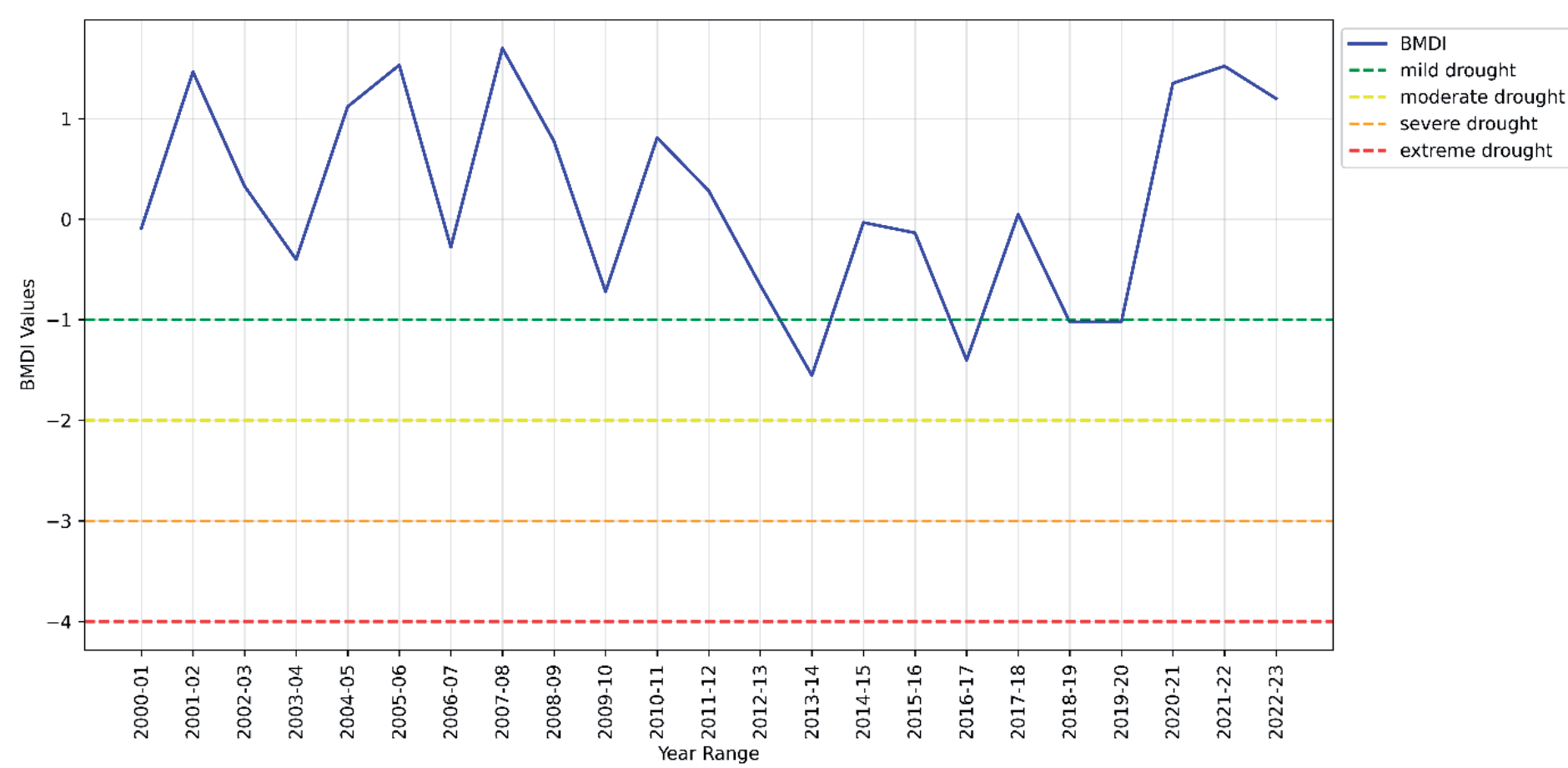
Fig. 1 shows the BMDI time series from 2000-01 to 2022-23 in the Pudukkottai district of Tamil Nadu state in India. According to the analysis, mild drought conditions were seen in 2013-14, 2016-17, 2018-19, and 2019-20. Additionally, the time series analysis reveals that no drought conditions were present in the other years (2000-01 to 2009-10, 2010-11 to 2012-13, 2015-16, 2017-18, and 2020-21 to 2022-23).
The time series data of BMDI obtained through the GEE, as depicted in Fig. 1, demonstrate that the average BMDI values fluctuate between -1.55 and 1.70 throughout the duration of the study. The maximum BMDI value observed was 1.70 in the year 2007-08, and the minimum BMDI value observed was -1.55 in the year 2013-14.
(b) RSADIs
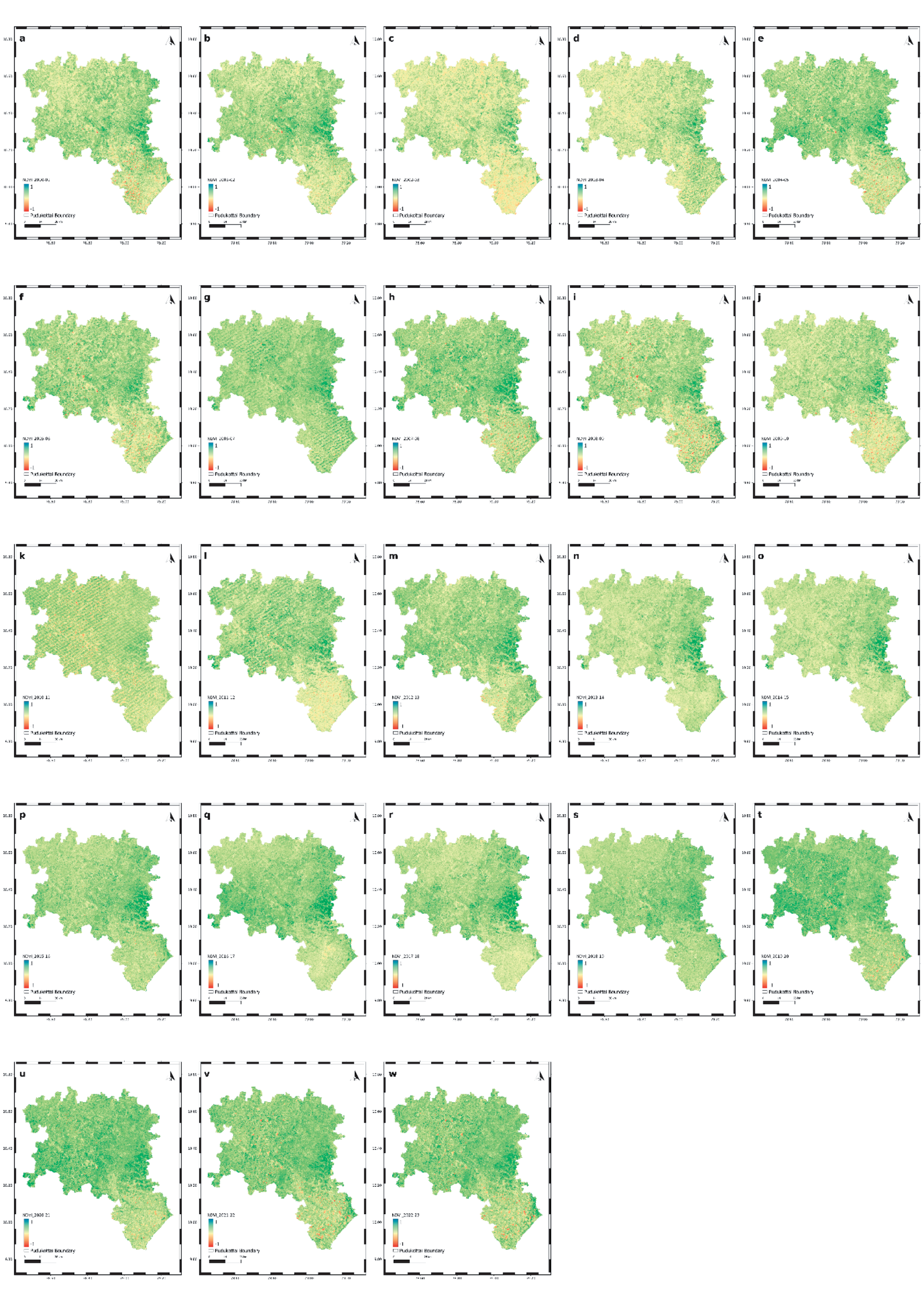
The spatial and temporal distribution of RSADIs was obtained from GEE for the period 2000-01 to 2022-23. As a sample, the spatial resolution maps and temporal distribution plots are given in this paper for NDVI alone. For other indices, observations from the map and plot alone are given to minimize the number of pages in this paper.
(i) NDVI
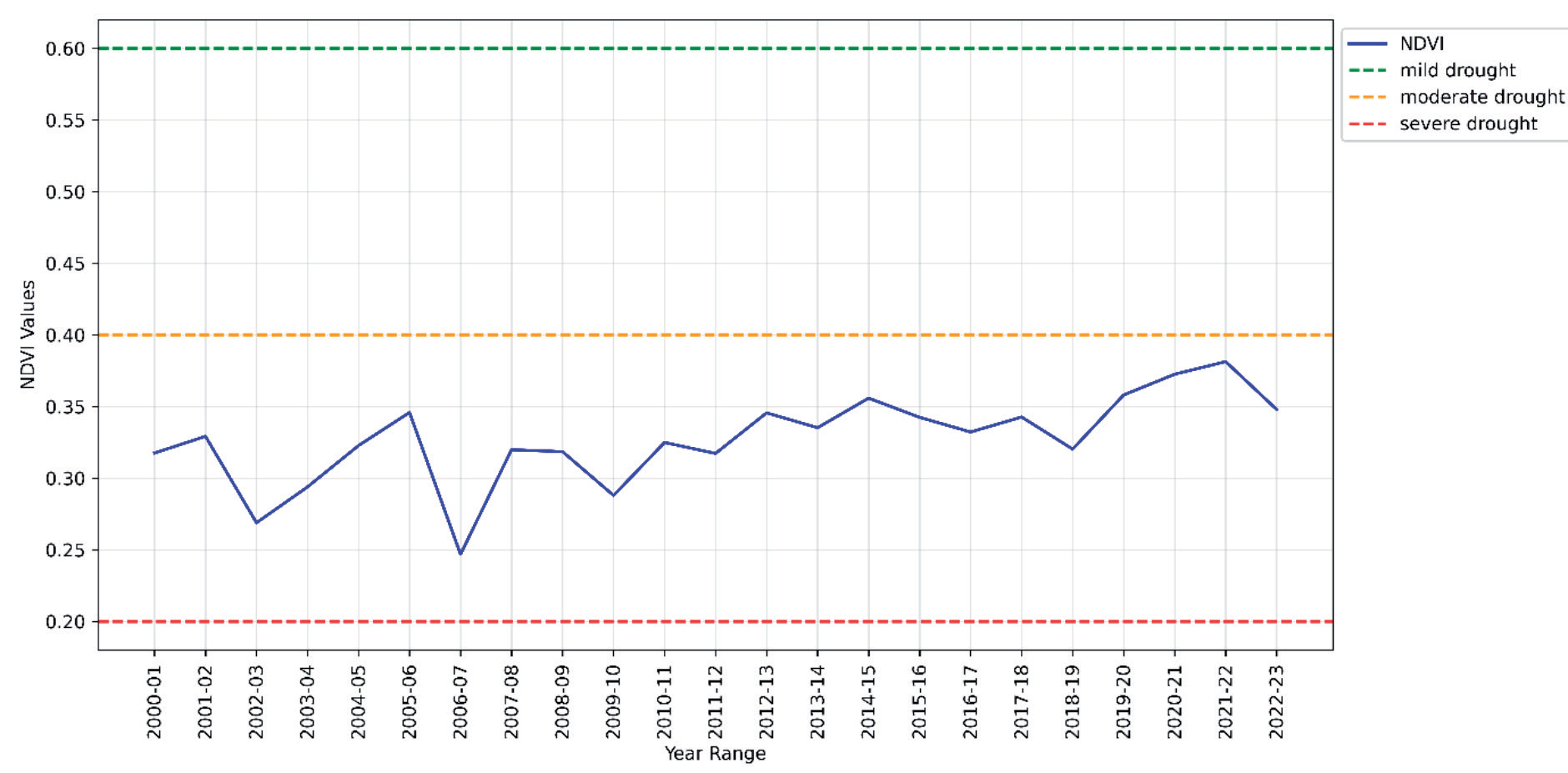
Fig. 2 and Fig. 3 show the spatial and temporal distribution of NDVI from 2000-01 to 2022-23 for the Pudukkottai district of Tamil Nadu state in India. The NDVI time series obtained through GEE, as depicted in Fig. 3, indicates that the average NDVI values fluctuated between 0.25 and 0.38 in the entire study duration. The NDVI time series graph shows that the study area continuously faced moderate drought conditions from the year 2000-01 to 2022-23. While the highest NDVI value recorded was 0.38 during the 2021-22 period, the lowest NDVI value observed was 0.25 in the 2006-07 period.
(ii) VCI
The average VCI values fluctuated between 40.11 and 77.55 throughout the duration of the study. The s t u d y a r e a experienced no drought in all the years from 2000-01 to 2022-23. The maximum VCI value observed was 77.55 in the year 2010-11, and the minimum VCI value observed was 40.11 in the year 2021-22. A condition of no drought is indicated by the minimum and maximum values falling between 40 and 100 on the VCI scale.
(iii) TCI
The average TCI values varied between 8.27 and 50.06 throughout the study period, suggesting that mild drought conditions were present in the years 2002-03, 2004-05, 2005-06, 2007-08, 2008-09, 2014-15, 2019-20, 2021-22, and 2022-23. Moderate drought conditions were observed in the years 2013-14, 2015-16, 2017-18, 2018-19, and 2020-21. Severe drought conditions were noted during the years 2010-11 and 2012-13, while extreme drought was noted in 2009-10 and 2011-12. Additionally, time series analyses indicate that no drought conditions occurred in the other years (2000-01, 2001-02, 2003-04, and 2006-07). The maximum TCI value observed was 50.06 in the year 2006-07, which indicates no drought conditions, and the minimum TCI value observed was 8.27 in the year 2011-12, which indicates excessive drought.
(iv) VHI
The average VHI values fluctuated between 35.95 and 54.28 throughout the study period, suggesting that mild drought conditions were present in the years 2009-10, 2011-12, and 2012-13. Additionally, the time series analyses indicate that there were no drought conditions indicated in the years 2000-01, 2001-02, 2002-03, 2003-04, 2004-05, 2005-06, 2006-07, 2007-08, 2008-09, 2010-11, 2013-14, 2014-15, 2015-16, 2016-17, 2017-18, 2018-19, 2019-20, 2020-21, 2021-22, and 2022-23. The maximum VHI value observed was 54.28 in the year 2016-17, which indicates no drought condition, and the minimum VHI value observed was 35.95 in the year 2009-10, which indicates mild drought.
(v) NDWI
The average NDWI values fluctuated between 0.04 and 0.15 throughout the duration of the study. The study area experienced no drought in all the years from 2000-01 to 2022-23. The highest NDWI value recorded was 0.15 during the 2020-21 period, while the lowest NDWI value was 0.04 in the 2002-03 period. Both values fall within the NDWI range of 0-0.2, indicating the absence of drought conditions.
(vi) TVDI
The mean TVDI values fluctuated between 0.50 and 0.92 throughout the study duration. This indicates that mild agricultural drought conditions existed during the years 2002-03, 2004-05, 2013-14, 2014-15, 2015-16, 2017-18, and 2020-21. A moderate drought condition was noted in 2018-19, while severe drought conditions were present in 2009-10, 2010-11, 2011-12, and 2012-13. Additionally, time series analyses reveal that no drought conditions occurred in the remaining years (2000-01, 2001-02, 2003-04, 2005-06, 2006-07, 2007-08, 2008-09, 2016-17, 2019-20, 2021-22, and 2022-23). The highest TVDI value recorded was 0.92 in 2011-12, indicating severe drought, whereas the lowest value of 0.50 was observed in 2006-07, signifying no drought.
(vii) Dev_NDVI
The mean Dev_NDVI values fluctuate between -0.24 and 0.17 throughout the study period. This implies that moderate drought conditions were present during the years 2002-03 and 2009-10, while an extreme drought occurred in 2006-07. Additionally, time series analyses revealed that no drought conditions were recorded in the other years (2000-01, 2001-02, 2003-04, 2004-05, 2005-06, 2007-08, 2008-09, 2010-11, 2011-12, 2012-13, 2013-14, 2014-15, 2015-16, 2016-17, 2017-18, 2018-19, 2019-20, 2020-21, 2021-22, and 2022-23). The highest Dev_NDVI value recorded was 0.17 in 2021-22, indicating no drought, while the lowest value of -0.24 was noted in 2006-07, signifying severe drought.
(viii) EVI
The mean EVI values ranged from 0.27 to 0.39 during the study period. The study area experienced moderate vegetation health in all the years from 2000-01 to 2022-23. The highest EVI value recorded was 0.39 during the years 2015-16, 2019-20, 2020-21, and 2021-22, while the lowest EVI value noted was 0.27 in the years 2003-04 and 2006-07. Both the minimum and maximum values fall within the EVI range of 0.20-0.60, indicating moderate vegetation health.
(ix) NDTI
The average NDTI values varied from 0 to 0.91 throughout the duration of the study. It indicates that moderate temperature stress conditions were observed in the years 2016-17 and 2019-20. Normal temperature stress conditions were observed in the year 2014-15. Moreover, the time series analyses depict cooler conditions in other years (2000-01, 2001-02, 2002-03, 2003-04, 2004-05, 2005-06, 2006-07, 2007-08, 2008-09, 2009-10, 2010-11, 2011-12, 2012-13, 2013-14, 2015-16, 2017-18, 2018-19, 2020-21, 2021-22, and 2022-23). The highest recorded NDTI value was 0.91 during the 2000-01 period, suggesting cooler conditions, while the lowest NDTI value of 0 was noted in the 2014-15 period, indicating normal temperature stress conditions. Consequently, throughout the whole study period, no drought conditions were noted.
(x) SAVI
The mean SAVI values varied between 0.16 and 0.25 during the study period, indicating the occurrence of mild drought conditions from the years 2000-01 to 2022-23. Moderate drought conditions were observed in the years 2002-03, 2003-04, 2006-07, 2007-08, 2008-09, and 2009-10. The highest recorded SAVI value was 0.25 during the years 2020-21 and 2021-22, suggesting mild drought conditions, while the lowest SAVI value of 0.16 was noted in 2006-07, indicating moderate drought conditions.
Multi-Index Approach for Drought Dynamics
All ten remote sensing-based drought indices were calculated for the study period. Drought conditions vary across indices, even for the same location and time, because each index captures different environmental parameters like precipitation, vegetation condition, or land surface temperature. These components respond differently in terms of timing, intensity, and spatial distribution, leading to variation in drought classification. This variability is expected and underscores the value of a multi-index approach for capturing the complex nature of drought. Correlation analysis was performed between BMDI, a conventional ground-based index, and each of the remote sensing drought indices to evaluate the consistency and reliability of remote sensing-based assessments.
Correlation between BMDI and RSADIs
BMDI, a widely used ground-based drought index in India, was selected as a benchmark for comparison, as it provides reliable historical precipitation data for evaluating the consistency and performance of remote sensing-based drought indices (RSADIs). The study assessed the linear correlations between BMDI and RSADIs from the year 2000-01 to 2022-23 using the Pearson Correlation Coefficient (PCC). The Standardized Anomaly Index (SAI) was employed to detect anomalies in RSADIs. Subsequently, the anomalies in RSADIs were compared with BMDI to evaluate their correlation. The SAI is calculated using the following equation [19, 20].
SAIx = (Xi – X) / σ Where, Xi = value of RSADI at any month X = long-term mean of RSADI for the study duration σ = standard deviation of RSADI for the study duration
The PCC was computed between the ground-based agricultural drought index (BMDI) and various RSADIs (including NDVI, VCI, TCI, VHI, NDWI, TVDI, Dev_NDVI, EVI, NDTI, and SAVI) over the study period from 2000-01 to 2022-23, as shown in Table 1. Notably, NDTI demonstrated a strong correlation with BMDI during this timeframe, yielding a PCC of 0.50, with a Standard Error Estimate (SEE) of 0.89 and a Root Mean Square Error (RMSE) of 0.95.
The PCC value indicates the correlation between RSADIs and the explanatory variable (BMDI), illustrating the degree of agreement between these variables, which can vary from -1 (representing negative correlation) to +1 (representing positive correlation). The Standard Error of Estimate (SEE) derived from PCC is used to estimate errors between BMDI and RSADIs, as this statistic facilitates the creation of a confidence interval that encompasses the true population correlation [21]. In Table 1, it is found that NDTI with BMDI has a relatively higher PCC value and lower SEE and RMSE values when compared to other RSADIs.
Table 1.
PCC, SE, and RMSE of RSADIs.
Hence, among the 10 RSADIs considered in this study, NDTI is the best RSADI. Even though NDTI is the best RSADI, the PCC value of 0.50 is not satisfactory. Next to NDTI, the other better indices are VCI with a PCC of 0.40 and NDWI with a PCC of 0.36. But SEE and RMSE are higher with VCI and NDWI. Consistent statistical trends are available only with NDTI, i.e., higher PCC values and lower SEE and RMSE values.
Observations from Correlation Analysis
This study utilized Landsat satellite imagery and carried out a time series analysis through GEE to investigate the spatial and temporal patterns of agricultural drought in the study area. It compared the ground-based agricultural drought index BMDI with RSADIs for monitoring purposes. The findings indicate that NDTI is an effective RSADI among the ten commonly used RSADIs evaluated in this study.
Out of 10 RSADIs, 8 RSADIs are positively correlated, and 2 RSADIs are negatively correlated. The RSADIs with positive correlation in decreasing order of PCC values are NDTI, VCI, NDWI, VHI, NDVI, Dev_NDVI, TCI, and SAVI, with values of 0.50, 0.40, 0.36, 0.34, 0.30, 0.29, 0.06, and 0.06, respectively. NDTI value is calculated from the remote sensing parameters such as the temperature of the land surface (Ts), simulated surface temperature with infinite surface resistance (T∞), and simulated surface temperature with zero surface resistance (To). These parameters can be treated as the most influential parameters. VCI is calculated from the remote sensing parameter NDVI. Therefore, NDVI can be treated as the next influencing parameter. The NDWI value is calculated from the reflectance value in the NIR band. VHI is calculated from VCI and TCI. Dev_NDVI is calculated from NDVI. SAVI is derived from the reflectance measurements in NIR and RED spectral bands. Summarizing the above, remote sensing parameters influencing the value of the ground-based agricultural drought index (BMDI) are found to be temperature of the land surface (Ts), simulated surface temperature with infinite surface resistance (T∞), simulated surface temperature with zero surface resistance (To), NDTI, NDVI, VCI, TCI, and reflectance values at NIR & RED bands. Hence, the development of a new RSADI or the modification of an existing RSADI with remote sensing-based input parameters such as the temperature of the land surface (Ts), simulated surface temperature with infinite surface resistance (T∞), simulated surface temperature with zero surface resistance (To), NDTI, NDVI, NDWI, VCI, VHI, TCI, and reflectance values at NIR & RED bands can be attempted with the artificial neural network concept for replacing the existing ground-based agricultural drought index (BMDI) for facilitating drought management in a very easy and versatile manner. This research alerts policymakers, researchers, and the government to develop alternative, better RSADI or modify the existing RSADI using recent advancements in technology.
Development of a New Remote Sensing-Based ANN Model
A model of BMDI was developed using ANN incorporating various remote sensing parameters, including temperature of the land surface (Ts), simulated surface temperatures with infinite (T∞) and zero (To) surface resistance, as well as NDTI, NDVI, NDWI, VCI, TCI, VHI, and reflectance values in NIR and RED bands [22]. The reasons for considering these remote sensing parameters are explained in the previous paragraph of this paper. All possible non-empty combinations of the eleven input features were generated, resulting in 2,047 unique input subsets. Each of these combinations was evaluated to determine its predictive strength in estimating BMDI, thereby allowing the model to identify feature interactions and remove redundancy.
In this study, the ANN architecture utilized a fully connected feedforward design featuring two hidden layers. Each of these layers was succeeded by an activation function and a dropout layer to reduce the risk of overfitting. The output layer comprised a single neuron that generated the predicted BMDI value. Training was carried out using the Mean Squared Error (MSE) loss function, with optimization performed via the Adam optimizer.
Table 2.
Hyperparameter search space and best-performing value.
To ensure optimal model performance, a rigorous hyperparameter tuning process was employed using the Optuna optimization framework. Optuna was selected due to its ability to perform efficient and adaptive hyperparameter search using the Tree-structured Parzen Estimator (TPE) algorithm. Unlike traditional grid or random search, the TPE algorithm models the likelihood of achieving high performance based on past trial outcomes, enabling faster and more informed exploration of the search space. In this study, a total of 8 different hyperparameters were chosen, and a suitable search space was defined for each parameter. By using the TPE algorithm from the Optuna module, the hyperparameters were tuned to acquire the optimal value for each parameter as given in Table 2.
Activation functions are crucial in artificial neural networks, as they introduce non-linearity to the model. This non-linearity is vital for allowing the network to learn and approximate intricate relationships between inputs and outputs. Without activation functions, an ANN would be reduced to a linear model, incapable of capturing intricate patterns present in environmental and remotely sensed data. Activation functions convert the weighted sum of inputs in each neuron into a nonlinear output, enabling the network to capture more abstract and higher-level features as its depth increases.
In this study, five activation functions were considered as part of the hyperparameter tuning process, as given in Table 3. Each function has distinct characteristics that influence the learning behavior and effectiveness of the network.
ANN Model Results
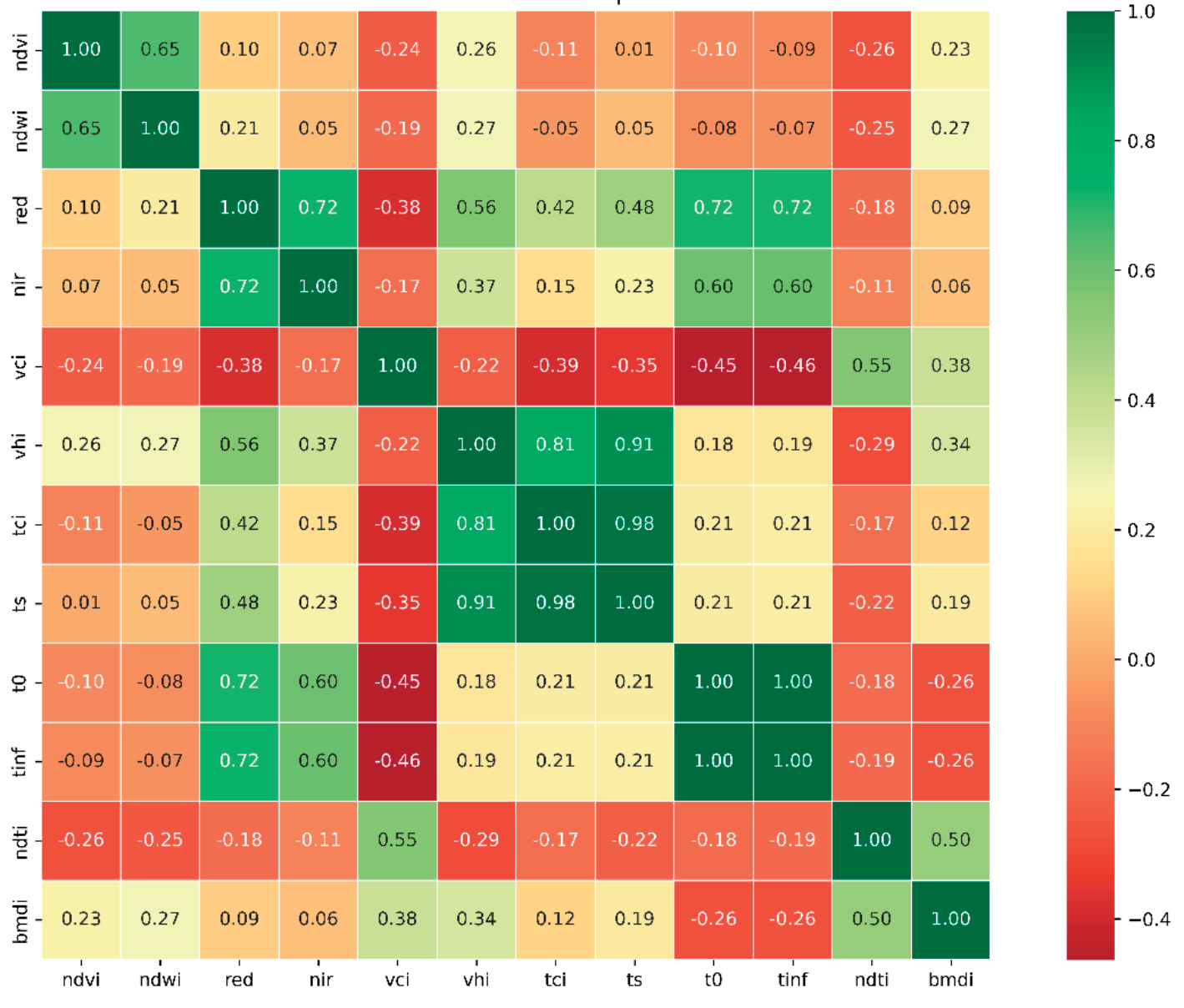
To get a clear understanding of the correlation between the different input variables and the target index (BMDI), a correlation heatmap was generated. From this heatmap, it was seen that different indices on their own can correlate with BMDI only to a certain extent, with NDTI being the highest correlated index with BMDI, with a PCC of 0.5, which is not very adequate in identifying drought. Furthermore, the heatmap shown in Fig. 4 also highlights the correlation between the different indices, indicating the collinearity among the different input variables.
The Artificial Neural Network (ANN) model was trained and validated across 1,000 trials using Optuna’s hyperparameter optimization framework. The objective was to enhance the model’s capacity to forecast the BMDI using input parameters derived from remote sensing. The optimal model configuration, chosen based on the correlation coefficient (R) that measures the relationship between predicted and actual BMDI values, utilized a selection of six features: RED, NIR, VCI, VHI, TCI, and T₀. This feature subset was identified as the most informative combination among the 2,047 possible input combinations generated.
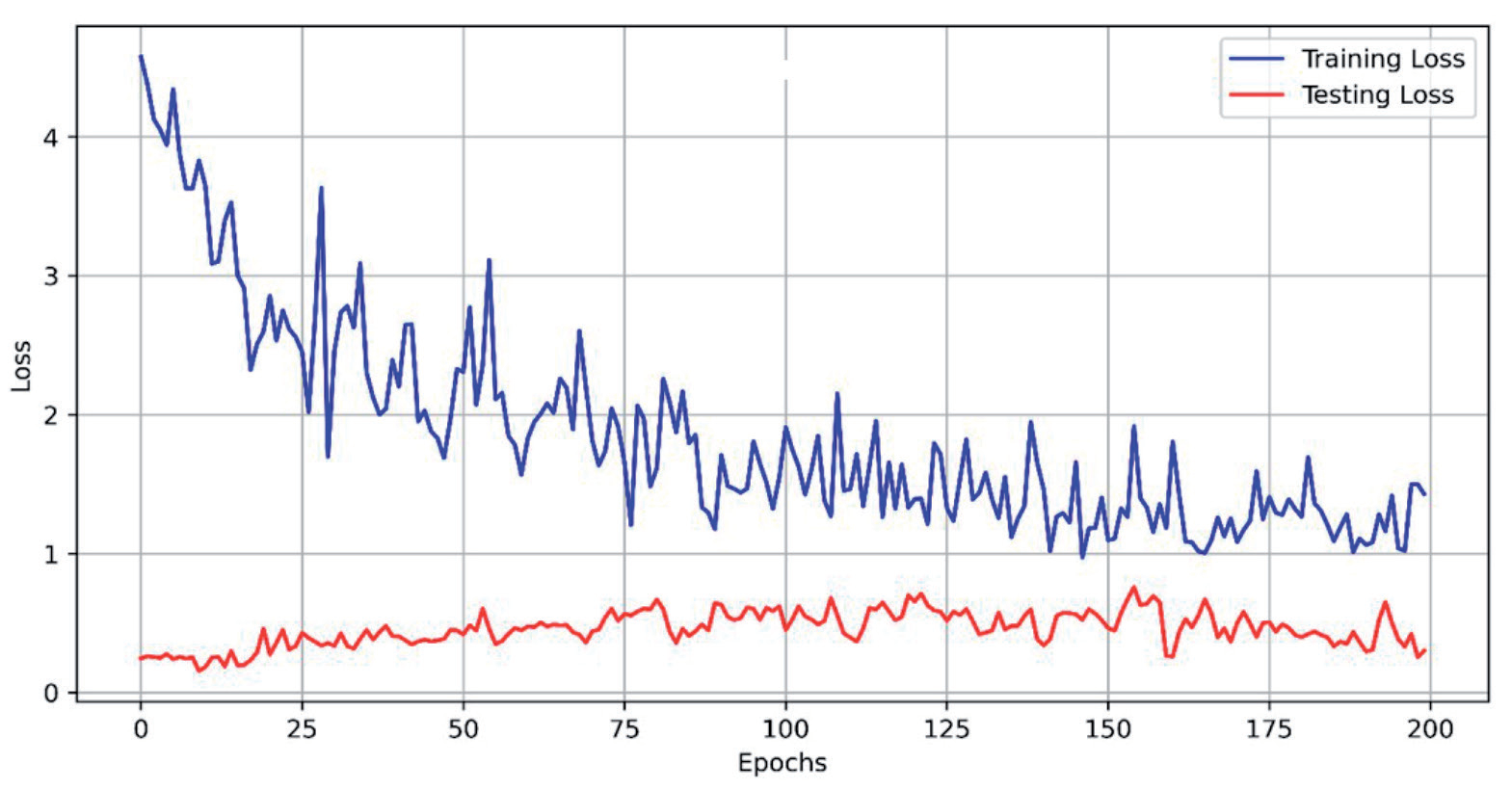
The ideal hyperparameter configuration for this model included a train-test split ratio of 0.1, 56 neurons in the first hidden layer, 72 neurons in the second hidden layer, a dropout rate of 0.3, the ReLU activation function, a learning rate of 0.0018, and a total of 200 training epochs.
The stability and reliability of the ANN model during training were assessed by tracking the loss values over epochs for both the training and testing datasets. A consistently decreasing training loss, coupled with a relatively stable and low testing loss, indicates that the model was capable of successively learning the underlying data distribution without succumbing to overfitting. This behavior reflects not only a well-tuned learning process but also a strong generalization capability. The training loss demonstrates a steady downward trend over the 200 training epochs, while the testing loss maintains a relatively flat profile, suggesting that the model performance remained stable throughout the training process (Fig. 5). It is important to note that it displays loss values (Mean Squared Error) over epochs, not accuracy metrics, and the stable testing loss indicates the model did not overfit. In parallel, to assess the predictive accuracy of the final model, a comparison between the actual BMDI values and the ANN-predicted outputs was conducted.
Table 3.
ANN activation function description.
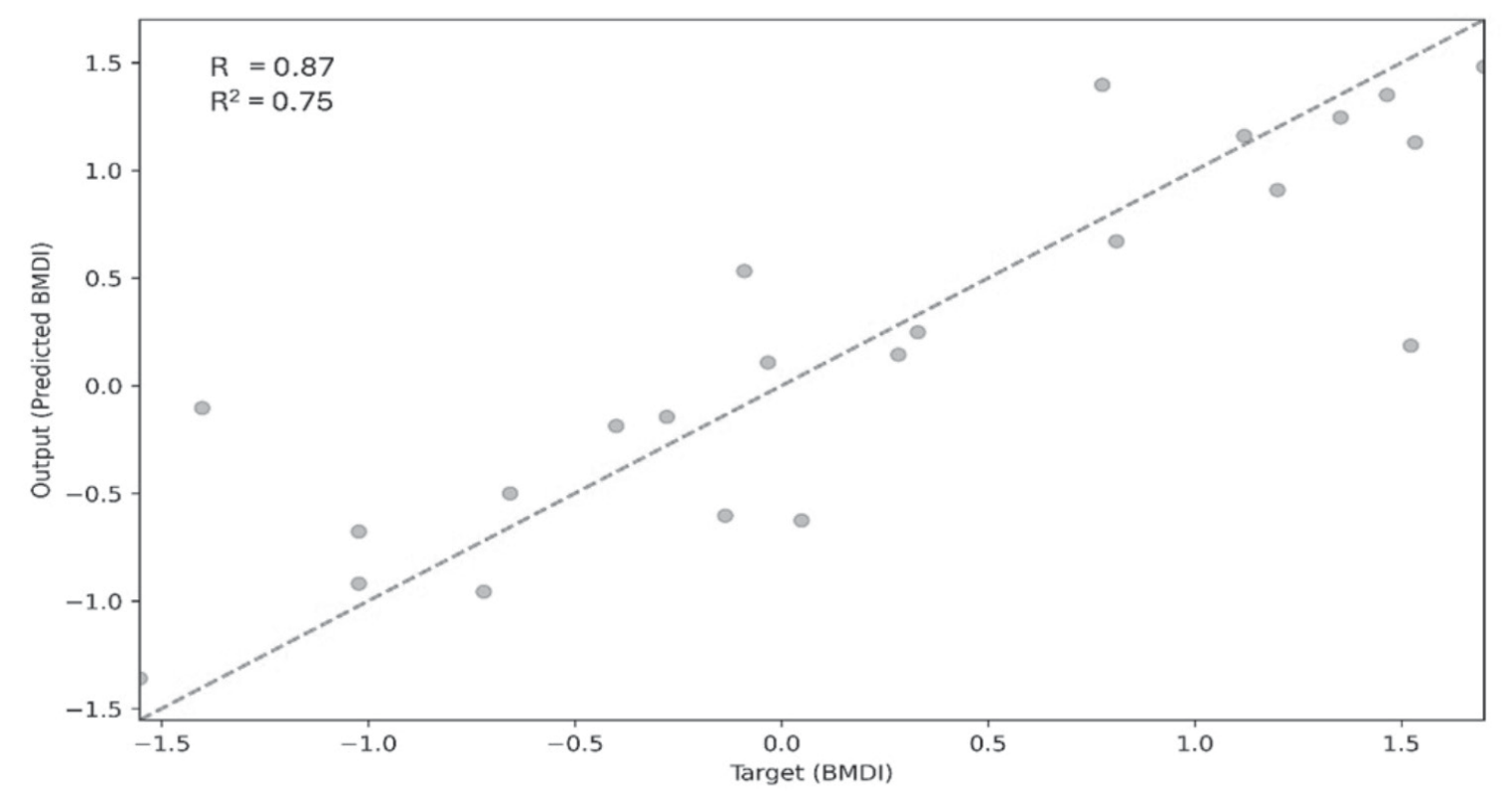
The results, depicted in Fig. 6, reveal a high degree of correlation, with most predictions clustering around the 1:1 reference line. This strong alignment demonstrates that the model successfully captured the nonlinear relations among the chosen remote sensing indices and the drought severity metrics. The model’s capacity to represent these interactions is further sustained by a strong correlation coefficient (R = 0.87) and a coefficient of determination (R² = 0.75), emphasizing the reliability of the developed ANN framework for estimating drought.
Applications in Agricultural Drought Monitoring and Management
The outcomes of this study present substantial practical relevance in the context of agricultural drought monitoring and management, especially for regions like India, where agriculture is highly dependent on climatic conditions and timely drought information is critical for decision-making.
Agricultural extension services can use the ANN-based model to offer irrigation and crop advisories, plan effective drought relief and resource allocation, and promote climate-resilient farming practices through timely, data-driven decision-making tailored to drought severity and local conditions [23]. The model also has applicability beyond India. As BMDI-like indices are used in other regions under different names or with similar methodologies [24], the same modeling framework can be retrained and customized for those areas using their own satellite and limited ground data.
Conclusions
The findings derived from the analysis performed in this study are given below.
(i) The most often used traditional ground-based agricultural drought indices are BMDI, SMDI, EDI, RDI, DTx, MAI, SMAI, and SMAvI. BMDI has been used in most of the research studies in India.
(ii) The most often used RSADIs are NDVI, VCI, TCI, VHI, NDWI, TVDI, Dev_NDVI, EVI, NDTI, and SAVI.
(iii) Out of 10 RSADIs, 8 RSADIs are positively correlated and 2 RSADIs are negatively correlated with BMDI. The RSADIs with positive correlation in decreasing order of PCC values are NDTI, VCI, NDWI, VHI, NDVI, Dev_NDVI, TCI, and SAVI, with values of 0.50, 0.40, 0.36, 0.34, 0.30, 0.29, 0.06, and 0.06, respectively.
(iv) The results show that NDTI is a relatively better remote sensing-based agricultural drought index with a PCC value of 0.50 with BMDI, which is not satisfactory.
(v) This research study attempted to verify whether any RSADI can replace the ground-based BMDI. It was found that BMDI cannot be replaced by any of the RSADIs, which warrants the development of a new RSADI.
(vi) The remote sensing parameters influencing the value of the ground-based agricultural drought index (BMDI) were found to be temperature of the land surface (Ts), simulated surface temperature with infinite surface resistance (T∞), simulated surface temperature with zero surface resistance (To), NDTI, NDVI, NDWI, VCI, TCI, VHI, and reflectance values at NIR & RED bands.
(vii) A new ANN-based RSADI has been developed in this study with only remote sensing-based input parameters for replacing BMDI. The artificial neural network (ANN) architecture utilized in this research comprised a fully connected feedforward structure featuring two hidden layers. Each of these layers was equipped with an activation function and a dropout layer to reduce the risk of overfitting. The output layer contained a single neuron that generated the predicted BMDI value. Training was carried out using the Mean Squared Error (MSE) loss function, with optimization performed via the Adam optimizer. The optimal model configuration, chosen based on the correlation coefficient (R) that measures the relationship between predicted and actual BMDI values, utilized a selection of six features: RED, NIR, VCI, VHI, TCI, and T₀. This feature subset was identified as the most informative combination among the 2,047 possible input combinations generated.
(viii) The ANN model exhibited impressive predictive capabilities, achieving a coefficient of determination (R²) of 0.75 and a Pearson Correlation Coefficient (R) of 0.87. These metrics suggest that the model successfully accounted for 75% of the variance in the BMDI and demonstrated a strong linear correlation between the observed and predicted values.
(ix) The ANN model created in this research can serve as a substitute for the ground-based agricultural drought index (BMDI), as it produces results that are more aligned with BMDI. Hence, the laborious process of ground data collection for calculating BMDI can be dispensed with, and this ANN model can be used for calculating BMDI with remote sensing data alone.
(x) The ANN model developed in this study can facilitate agricultural drought management in a very easy and versatile manner with satellite data.
(xi) This research bridges traditional ground-based drought assessment and modern satellite-driven analytics, providing a practical tool for enhancing drought resilience. Its adoption can support sustainable agriculture, efficient water management, and climate adaptation across drought-prone regions. Future studies could explore similar ANN-based models for other ground-based indices used globally.
(xii) The ANN model can be extended to simulate other drought indices used globally, promoting broader applications. However, its accuracy depends on satellite data quality and may require regional calibration to maintain reliable performance across varying agro-climatic and geographic conditions.
Suggestions for Further Study
Since BMDI is the most commonly used ground-based agricultural drought index in India, this research study aims to substitute it with RSADI utilizing an ANN model. Similar studies can be attempted for other ground-based agricultural drought indices, which are also used in other countries.