

Introduction
As society rapidly develops, plastic products have become important components of our lives. According to incomplete statistics, approximately 4 trillion plastic bags are consumed globally each year, and approximately 1 million disposable plastic cups are consumed per minute. Plastic food packaging or containers, such as bottles, lids, bags, foils, trays, sealing films, cups, etc., are designed to store various types of food, beverages, and mineral water. According to the annual production of plastic food containers (including plastic cups, plastic bags, bottles, etc.), this type of plastic can release approximately 188 tons of microplastics for human consumption or cause environmental problems. The range of microplastic particles ingested by humans through air and regular food is 203 to 332 per person per day [1-3]. Plastic products have not only brought plenty of conveniences to our lives but also posed a serious threat to our environment and ecological security. Nevertheless, the subsequent rapid development of society is expected to lead to a continuous increase in the frequency of plastic product consumption in production and daily life. Thus, the threat to the environment caused by massive quantities of plastic waste entering sediments will continue to be intensified.
In 2004, Thompson et al. first defined “microplastics” (MPs) as a general term used to describe thin films, particles, or plastic fibers < 5 mm in diameter formed by the accumulation of MP fragments found in marine sediments and waters [4]. In subsequent research, many scholars have defined the five main characteristics included in the definition of MPs as 1) synthetic materials with high polymer content, 2) solid particles, 3) less than 5 mm, 4) insoluble in water, and 5) non-degradable. The main sources of MPs include primary MPs, such as artificial fibers, and secondary MPs generated by crushing plastic wastes [5]. Due to its long half-life of hundreds of years, stable chemical properties, and resistance to biodegradation, photodegradation, or thermal degradation, MP pollution has become one of the important environmental problems, and the treatment of MP pollution is urgent.
A considerable number of studies have shown that MPs can harm organisms to varying degrees after entering the environment. MPs not only indirectly affect gene expression in plants that may cause abnormal nutrient synthesis, thereby influencing their normal growth, but also affect the material cycle, biodiversity, and functional diversity of sediments by altering their physicochemical properties and microbial biomass [6]. In addition, MPs can also enter the human body through the intake of drinking water in aquatic environments and through skin contact. Microplastics frequently occur in both freshwater and drinking water, with concentrations spanning ten orders of magnitude across various water types and samples. Studies indicate that plastic bottle packaging can release microplastics, and the extent of exposure is directly linked to factors such as direct contact between drinking water and air, as well as the degree of bottle shaking before consumption. Additionally, repeatedly opening and closing bottle caps can significantly elevate the microplastic content within bottled water. Nanoplastics are believed to be prevalent in drinking water, possessing heightened toxicity and enhanced absorption capacity, and can even traverse cell membranes, inflicting irreversible harm to the human body [7, 8]. It has been demonstrated that toxic substances that mothers come into contact with during pregnancy or have accumulated in their bodies a few years ago can be transmitted to their offspring during pregnancy and lactation [9]. Transplacental exposure to MPs may have adverse effects on the fetus, potentially leading to issues such as intrauterine growth retardation, as well as increased risk of maternal gestational hypertension and adverse pregnancy outcomes [10]. Consequently, conducting in-depth research on the sources, occurrence characteristics, and migration pathways of MPs in water bodies and sediments is significant for controlling MP accumulation and release in sediments.
At that time, MPs were first detected in oceans and marine organisms, so there was a long period during which MP research only focused on the marine environment [11]. The increasing severity of plastic waste pollution results in MP pollution that is detectable in various natural systems under the effects of fluvial, groundwater, glacial, atmospheric, lacustrine, swamp, and marine deposits. The research on MP pollution in China started relatively late compared with foreign research. Nowadays, the research on MP abundance in marine water bodies is relatively comprehensive, covering almost all marine regions around the world, and there are also many studies on MPs in marine sediments [12]. Sediments can serve as a reservoir and main destination for water pollutants, with a dual effect of source and sink [13].
In this review, we discuss recent research findings on microplastics’ occurrence, accumulation, and ecological toxicity in aquatic ecosystems. We begin by providing estimates of the abundance of microplastics. Conducting in-depth research on MPs in sedimentary environments can help ensure healthy economic and ecological development, reduce the impacts of MPs on the environment and ecosystems, and formulate relevant policies to protect public health. We begin by providing estimates of the abundance of microplastics in China’s aquatic environments. We then review existing studies on the accumulation of microplastics in aquatic organisms and the potential ecological risks of microplastics in aquatic ecosystems, including combined effects with chemical pollutants. This article provides an in-depth summary of the pollution characteristics and ecological effects of MPs in sediments. It explores their future research directions to provide a reference for the ecological risk assessment and management of MPs in sediments.
Results and Discussion
Sources and Occurrence Characteristics of MPs in Sediments
When microorganisms accumulate at the water system boundary, they proliferate, differentiate, secrete polysaccharide matrices, and encapsulate the bacterial communities into biofilms. Biofilms primarily adhere to other particles via physicochemical mechanisms, including electrostatic and hydrophobic interactions. As adhesion progresses, the mass of the resulting complexes gradually increases. Once the mass reaches a critical threshold, gravitational forces surpass the fluid’s buoyancy and drag. Subsequently, the complex starts to settle at a discernible speed. During the settling phase, fluid drag influences the speed; however, due to its substantial mass, the complex overcomes the drag, continues to descend, and ultimately settles to the bottom, completing the settling process. Rivers, oceans, and lakes all accumulate sediments, and the sedimentation rate depends on their size, volume, density, and shape. Sediments are an important destination for MPs in the environment.
Pollution Characteristics of MPs in Marine Sediments
A report by the United Nations Environment Program (UNEP) points out that plastic particles have been detected in submarine sediments at a depth of 5,000 m. Although plastic has only been widely used for a few decades, it has been distributed in deep oceanic regions with almost no human interference [14]. During the transfer from seawater to sediments, MPs are more concentrated in regions with weaker hydrodynamic effects, such as ports and lakes. MPs in sediments are resuspended under the action of bottom currents, and their resuspension and migration are particularly active during typhoon seasons and internal waves in bottom currents. As time goes by, MPs in sediments present a net input, and their content is in line with the increasing trend of global plastic production. The degree of pollution in marine sediments also increases with global plastic production [15].
Various pollutants carried by MPs can also migrate to submarine sediments, such as additives, persistent organic pollutants, and other environmental pollutants that cause endocrine disorders, thereby affecting the growth of marine benthos and threatening the security of marine ecosystems. A close relationship exists between seawater and surface sediments, in which MPs may undergo resuspension after being disturbed by seawater and then re-enter deep water bodies for migration and transformation. MPs experience complex migration and differentiation from surface water bodies to submarine sediments [16]. MP enrichment in submarine sediments can also reduce the thermal diffusion performance of sediments, affecting the spawning trend of some organisms and posing a threat to coral ecosystems. In addition, MPs are a breeding ground for microbial survival and reproduction that accumulates chemical toxins and migrates in oceans carrying microbes and pathogens, thus affecting the global distribution of pollution and posing a huge threat to marine ecosystems. Moreover, marine organisms may experience a pseudo-sensation of satiety after MP intake, which changes their food preferences and then leads to slowed or even arrested growth. They accumulate layer by layer in the marine food chain and eventually accumulate in the human body through marine aquatic products. MPs negatively impact spawning, spermatic motility, larvae, and larval numbers of marine organisms, inhibiting their reproduction [17].
In recent years, scholars have studied the abundance, particle size, and types of MPs in sediments from China’s nearshore and some estuaries, and the results are shown in Table 1. The average abundance of MPs in sediments from the Bohai Sea, Yellow Sea, and South China Sea regions reached 103-163/kg, 72-124/kg, and 241-453/m2, respectively [18]. As important estuaries, the Yangtze River and Pearl River have rapid economic development along the coasts and high population density, showing higher levels of MP pollution. Additionally, the Yangtze River and Pearl River regions have a long history of fishery, and the abrasion and weathering of fishery products such as fishing lines and nets are considered the main sources of fibrous MPs in water bodies [19]. MPs with higher density than water in nearshore waters, such as polyvinyl chloride and polyamide (PA), continuously accumulate in substrate sludge, increasing MP abundance in sediments. In other words, microplastics in aquatic environments originate from a wider range of sources than microplastics in agricultural soil. Microplastics in aquatic environments migrate extensively over long distances with water flow and are greatly affected by hydrodynamic factors. Meanwhile, they are more easily ingested by aquatic organisms, accumulating and transmitting in the food chain.
Table 1.
Abundance, particle size, and types of microplastics in the nearshore environment of China and sediments from some estuaries.
Pollution Characteristics of MPs in Sediments of Inland Rivers and Lakes
Inland lakes, as relatively enclosed natural water pools, can store rainfall, surface runoff, and groundwater. Plastic waste generated in the lake catchment area can be transported to the lakes and accumulated, and MP concentrations in their sediments are between 10- 1,600/kg. The investigation has revealed that MPs in lacustrine sediments correlate with fishing activities, clothes washing on the shore by nearby residents, and atmospheric fiber deposition [28].
Rivers are an important pathway for transporting MPs from lands to oceans. A relevant study has shown that 1.15-2.41 million tons of MPs are transported into oceans through rivers each year [14]. MPs in rivers come from human fishing activities, industrial pollutant emissions, and plastic waste dumping from cities along the reaches. Research has found that MP pollution is often more serious in densely populated areas, which strongly indicates that human activities are the main source of marine MPs. In river systems, MP transport depends on water flow, and rivers with higher flow rates can transport large amounts of particles. MPs are more likely to settle and be buried together with sinking sediment particles in the middle and lower reaches of rivers with slow flow. In recent years, scholars have conducted surveys on the abundance and characteristics of MPs in the sediments of inland lakes in China, and the results are listed in Table 2. The existence of MPs has also been identified in sediments of lakes on the remote Tibet Plateau and Qinghai Lake, China, and the massive accumulation and degradation of MPs in enclosed environments will lead to a continuous increase in their concentration [29]. The average MP abundance in sediments in Qinghai Lake, Poyang Lake, and Dongting Lake in China reaches 67-1,292/ m2, 54-506/kg, and 200-1,566/kg, respectively [30]. Overall, microplastic pollution in inland river and lake sediments is mainly caused by human activities. And its concentration is higher in densely populated areas and enclosed environments, including Qinghai Lake, Poyang Lake, etc.
Occurrence Characteristics of MPs in Sediments
In sediments, fibrous MPs account for a high proportion, and smaller MPs are more likely to deposit on the seabed than with plastic fragments. Similar to MPs in water bodies, it is estimated that there are 93,000 to 236,000 tons of MP particles suspended in seawater worldwide, accounting for only 1.2-3.0% of the plastic waste that enters oceans from land within a year [31]. Therefore, most MPs may have sunk into submarine sediments. There are also pores and cracks on the surface of MP fragments and fibers in sediments, with particles present and unevenly distributed. MPs with the highest density in sediments have been found to contain polyvinyl chloride. In sediments and water bodies at different depths, the maximum density of fragmented MPs increases as the depth deepens, indicating that the density of MPs also affects their settlement [41]. Plastic polymers with a density higher than seawater (density: 1.02 g/cm3) will sink automatically, such as PA (density: 1.13 g/cm3), whereas low-density MPs will eventually sink due to biofilm formation, such as polyethylene (PE, density: 0.91 g/cm3). Once entering the seabed, MPs will be buried in deeper sediments due to the biological disturbance from marine benthos.
Table 2.
Abundance and characteristics of microplastics in sediments of inland lakes in China.
In terms of the spatial distribution of MPs of different shapes in lacustrine sediments, thin film-shaped and fibrous MPs are distributed widely, while fragmented and blocky MPs have lower abundance and show a decreasing trend in sediments. Thin film-shaped MPs are generally characterized by lightweight, thin thickness, and large surface area, and they are more prone to drifting with water flow in lakes. After a long period of physical friction and degradation, MP surfaces gradually become rough and adsorb more high-density impurities in water bodies, increasing the overall density and mass of the polymers. As a result, settlement is more likely to occur during migration. In addition, the frequent use of fibrous plastics in the fishery industry and their own shapes that are prone to migration may be important reasons for the widespread distribution of fibrous MPs in lakes. We think that the microplastics in sediments are mainly fibrous. In addition, their distribution and deposition depth are affected by many factors, such as plastic density, bioturbation, and physical abrasion.
Migration and Interaction of MPs in Sediments
Migration of MPs in Sediments
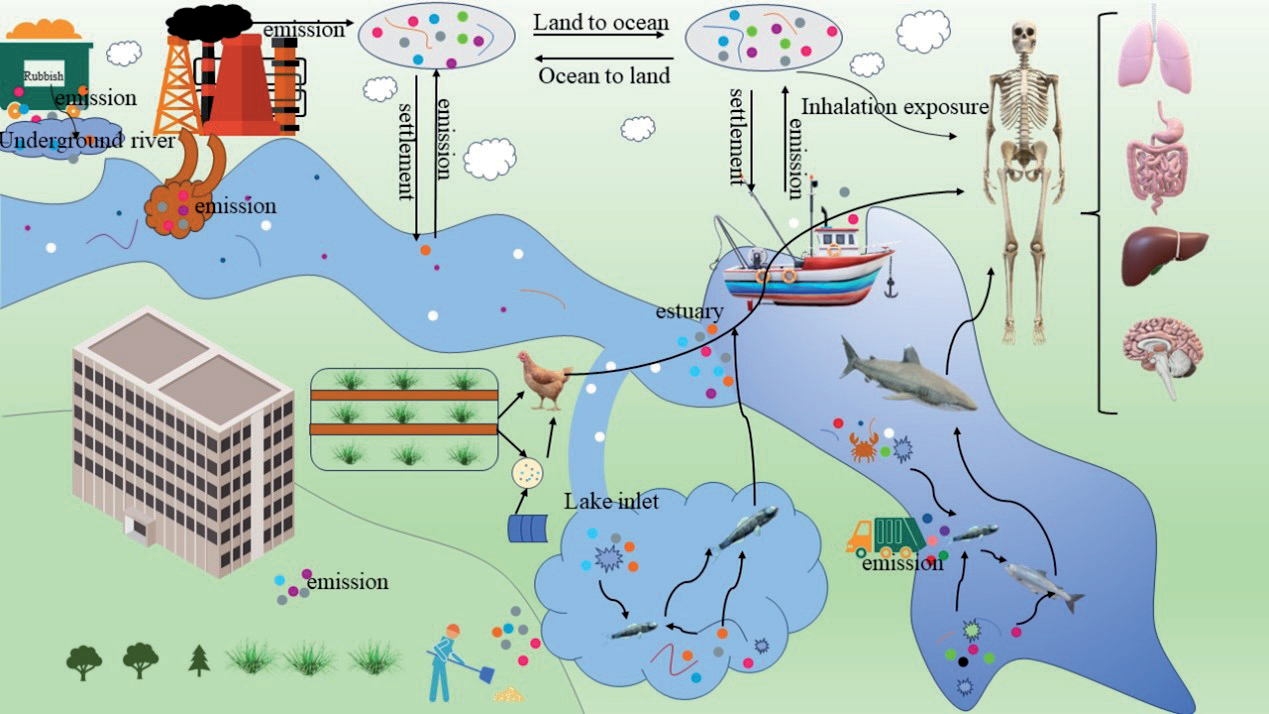
It has been shown that MPs can freely shuttle and migrate across various media. Their main migration processes in the ecological environment are as follows: primary MPs first enter water bodies and eventually deposit in sediments, whereas secondary MPs first reach the atmosphere, then deposit in soil (Fig. 1), and then eventually settle in sediments as water flows and migrates. Although MP’s sources and migration processes in sediments are complex and elusive, their fate has been clearly pointed out [42]. The majority of MPs in inland rivers and lake sediments mainly come from the transfer and aging of plastics in waters of terrestrial ecosystems, as well as their deposition in the atmosphere. Although land is the most direct and extensive area for human activities, sediments of terrestrial rivers and lakes often sink MPs in terrestrial ecosystems.
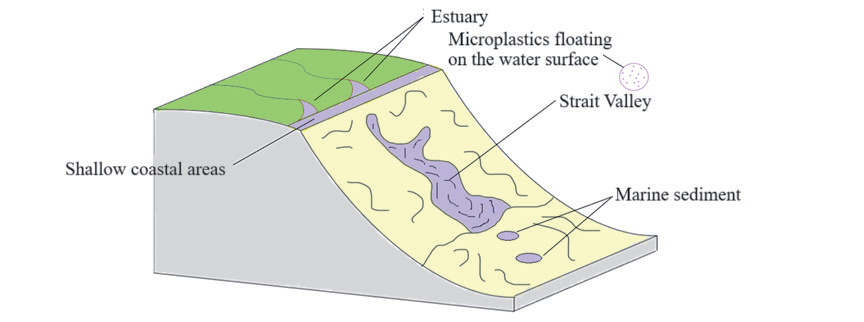
There are two main pathways for the migration and fate of MPs in marine sediments: (1) MPs with a density higher than seawater continuously sink under gravity and eventually deposit in marine sediments; (2) MPs with a density lower than seawater float on the water surface and eventually migrate to the coastline under the action of waves, or eventually sink to the seabed due to an increase in density to higher than seawater density caused by biological pollution. Therefore, marine sediments are highly likely to accumulate MPs. The MP concentration in some sediments has been discovered to be very high, even reaching 3.3% of the sediment mass. As a result, deep oceanic regions, straits, and shallow coastal regions have become gathering places for MPs (Fig. 2). In general, we agree with the theory that the distribution and migration of microplastics in sediments are mainly carried out through the media, such as water, soil, and atmosphere. Finally, microplastics are deposited in inland and marine sediments, reaching significant concentrations in some areas.
Interactions between MPs and other Pollutants in Sediments
Nowadays, MPs exist in the environment in the form of polymers. During migration, MPs will bind to various pollutants to form composite pollutants with more stable properties and stronger toxicity, ultimately migrating to the ecosystem. MPs mainly migrate towards sediments in vertical (erosion, animal transport, etc.) and lateral (runoff) directions. MP migration in sediments promotes the migration of heavy metals, organic pollutants, and other substances. Subsequently, pollutants attached to MPs will also undergo new migration with changes in sediments. In addition, the size and density of MPs are similar to plankton, so they are likely to be captured by marine organisms. Therefore, MPs can enter high-trophic-level organisms from low-trophic-level organisms along the food chain, where toxic substances may be accumulated or enriched [43]. Due to their high surface area, toxic heavy metals often accumulate on fine-grained particles (such as microplastic particles). Microplastics are easily enriched in wastewater treatment plants, and biofilms are formed under the induction of their particles. As biofilms accumulate on the surface of plastics, microbial communities change, and harmful bacteria multiply in large numbers. The adsorption capacity of MPs for heavy metals is significantly improved after wastewater treatment. As a sink for microplastic pollution in wastewater treatment facilities, sewage sludge comprises a viscous matrix of organic materials, microorganisms, and inorganic particles bound together by biopolymers, which have a high affinity for most polymer surfaces. The presence of microplastics reduces the efficiency of wastewater sludge treatment, increases sludge volume, and becomes evidence of enhanced adsorption capacity, further increasing the combined toxicity [44, 45].
High hydrophobicity and large specific surface area of MPs enable multiple heavy metals and organic matter to adsorb on MP surfaces and transport and migrate in the aquatic environment. The adsorption process is mainly affected by physicochemical factors in the environment, such as total organic carbon (TOC), pH value, electrical conductivity (EC), particle size of sediment, etc. The material of MPs, chemical properties of pollutants, etc., also affect the adsorption process. The distribution of heavy metals and organic matter in sediments is closely related to geographical location, seasonal changes, human activities, biological disturbance, and the aquatic environment, as well as being influenced by sediment type, which may lead to significant spatial differences in heavy metal contents [46]. The bioavailability of heavy metals and organic pollutants in aquatic environments can also be altered by MPs, thereby affecting physiological processes and changes, such as protein synthesis, energy storage, and biotransformation. Therefore, in recent years, the co-pollution of MPs and heavy metals and its biological effects have received widespread attention [47]. Previous studies have demonstrated that the ecological behaviors and ecotoxicological effects of heavy metals in sediments depend not only on their concentrations but also on their chemical forms. The migration capability, bioavailability, and potential ecological risks of heavy metals in sediments largely depend on their modes of occurrence. In addition to heavy metals, MPs can also adsorb polychlorinated biphenyls, polycyclic aromatic hydrocarbons, and some existing pharmaceutical preparations in the environment [48].
Influencing Factors for Migration of MPs in Sediments
MPs’ migration into sediments is influenced not only by particle motion in the sediments but also by plant roots and animal activity growth. The lateral migration of MPs is influenced by wind force, which can lead to their diffusion in sediments. Precipitation can affect the vertical migration of MPs, helping them invade groundwater and migrate to the ocean. The growth of plant roots and animal activities simultaneously determine MPs’ lateral and vertical migration. While different types of organisms have varying effects on the migration capability of MPs, there are also significant differences in the migration capability of MPs of different types and particle sizes. The distribution results of MPs in the marine environment obtained through quantitative and modeling methods indicate that large-scale forces such as wind-driven surface flow and geostrophic circulation drive the diffusion of MPs in oceanic regions. It has been found that ecosystems such as oceans, lakes, and rivers are places where MPs are widely present, and multiple factors influence their migration in sediments. In addition, the ecological risk of MPs is mainly manifested as changing the physicochemical properties of sediments, thus causing a series of problems.
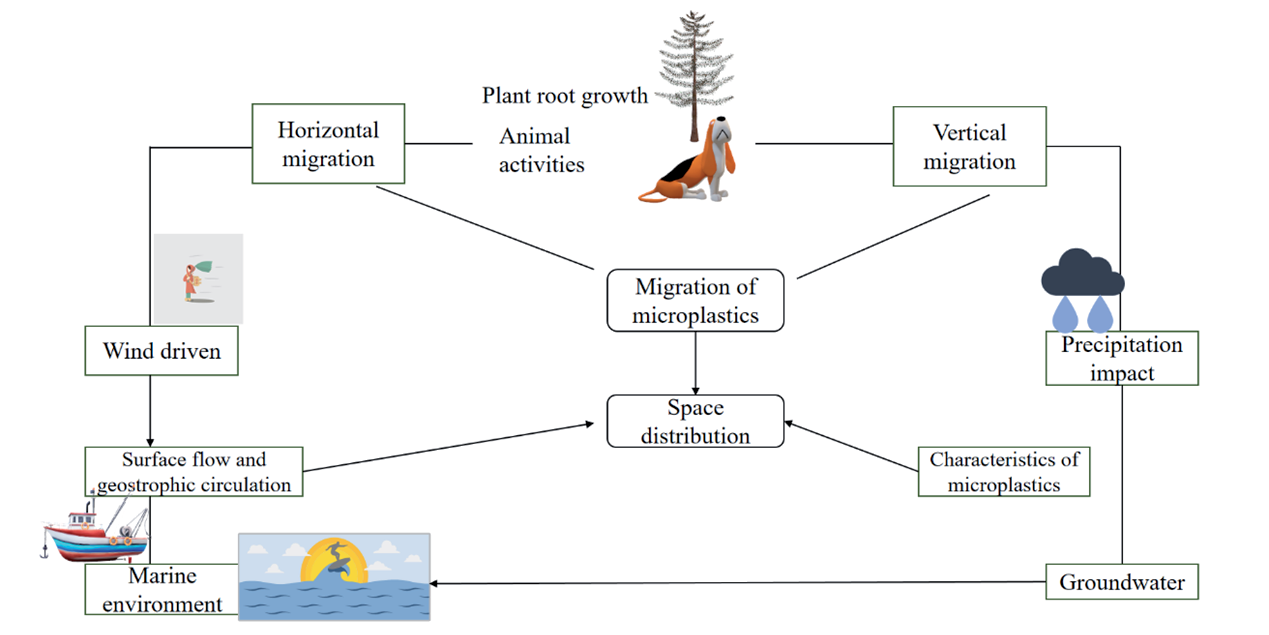
Moreover, experiments and field investigations have shown that wind driving can affect the spatial distribution of MPs at small spatial scales. The spatial distribution of MPs in aquatic environments results from the interactions between external forces driving large-scale forces and the characteristics of MPs (such as density, shape, and size) and their environments. Density is a key factor determining the transport of MPs. The density of commonly consumed plastic products is usually between 0.8-1.0 g/cm3, while the density of polymers such as polyvinyl chloride (PVC) and polyethylene terephthalate (PET) is higher than that of water. Therefore, the density of MP particles can roughly determine their stored space, distant oceans, or benthos. Low-density MP particles often occupy the surface of aquatic environments, while high-density MPs are more likely to appear in deep oceans and benthos. Furthermore, the adsorption of biofouling and other pollutants can affect the size and density of MPs, thereby affecting their distribution and diffusion (Fig. 3).
According to the characteristics of suspended sediments, the driving factors affecting the migration and diffusion of MPs from freshwater sediments are not only related to the characteristics of MPs themselves but also controlled by environmental factors such as water depth, flow velocity, and substrate type, as well as seasonal changes in bottom topography and water flow. In the Weihe River, the highest MP abundance was found in large-scale wetland parks with low flow velocity. The decrease in river flow velocity leads to easier deposition of MPs, which is the main reason for the high MP abundance in this region [49]. Storm and flood events also seem related to the abundance and distribution of MPs in sediments [50]. In the Attiya River, the abundance of MPs in sediments exhibits a significant seasonality, with the highest abundance at the end of the rainy season and the lowest abundance at the end of the dry season. Other physical factors may also impact time, such as tidal cycles at estuaries and dam flood discharge [51]. Generally, the overall deposition, retention, and transport of MPs are determined by various factors, including plant root growth, human behaviors (such as littering or recycling), particle characteristics (such as density, shape, and size), weather (such as wind, rainfall, and flooding), as well as environmental topography and hydrology, which increase the difficulty in predicting migration behavior [52].
Ecological Risks and Effects of MPs in Sediments
The plasticizers and other additives contained in MPs can be released into sediments and adsorb heavy metals and organic pollutants, resulting in more harmful combined pollution. At the same time, it changes the physicochemical properties and structures of sediments, which may affect their permeability and water permeability, reduce their organic matter content, and influence the growth, development, and reproduction of benthic organisms, as well as the community structure of microbes, thereby posing great risks and challenges to ecosystems such as oceans and lakes. Research has shown that the impact of MPs on sediments varies depending on their type, concentration, and environmental conditions. MPs can absorb harmful substances in sediments, altering the structure of sediment aggregates or directly changing the structure and physicochemical properties of sediments as a component of aggregates, which indirectly affects various sediment functions in other ways. In addition, microbes can quickly reside on MP surfaces and reproduce in large quantities to form biofilms, which can alter the physicochemical properties of MPs, thereby changing their migration and deposition in aquatic environments [53]. MPs, in turn, selectively adsorb microbes from other environmental media to form microbial communities and enter sediments, thereby enriching microbes to participate in the elemental cycling of sedimentary materials, which directly alters the biomass, community diversity, and ecological functions of benthic microbes. Moreover, it will also indirectly affect benthic microbes by altering the physicochemical properties of sediments, the gut microbiota of benthos, and the rhizosphere microbiota of plants. Meanwhile, microbes can also degrade MPs and determine their fate in sediments. Microplastics can enter groundwater systems through atmospheric deposition, agricultural activities, landfills, septic tanks, flow pathways, karst aquifers, and leachate from car tire particles. Over 1.5 billion people worldwide rely on groundwater for the drinking water supply. Drinking water can affect the digestive, endocrine, and immune systems and pose great harm to the human body [54].
After entering aquatic ecosystems, MPs are widely distributed in freshwater, seawater, and sediments due to their polymer configuration, particle size, and density differences, affecting organisms with different habitats or trophic levels. MP’s particle shape and color are similar to aquatic organisms’ food, so they may eaten by mistake. Once MPs enter aquatic organisms, their feeding, growth, and development will be affected by MP accumulation in the digestive system. Ingested MPs can accumulate in the digestive tracts of aquatic organisms and even obstruct their digestive tracts, leading to false satiety and reduced eating speed. In addition, MPs may disturb biological reproduction, resulting in a decline in the quantity or quality of generative cells. For marine organisms undergoing in vitro fertilization, the quality of their gametes may be directly affected by MPs in waters [55]. Moreover, MPs can also cause a series of stress responses in marine organisms and disrupt their immune defense system by affecting the expression of relevant genes, thus disturbing the internal environmental stability of organisms. With the increasingly prominent environmental problems caused by MPs, our research on MPs should be more in-depth.
In the past decade, many field studies have confirmed the widespread presence of MPs in sedimentary environments. However, the current research on MP pollution in sedimentary environments faces many challenges, including inconsistency in MP sampling, separation, and identification methods, and a lack of reliable qualitative and quantitative indicators to study MPs in sedimentary environments. In addition, due to the limitations of MP identification technology, the data currently acquired only represent a portion of MPs in sedimentary environments. Finally, the morphology and composition of plastic fragments may change in sedimentary environments due to external forces and biological influences, leading to difficulty in simulating their ecological behaviors and estimating their actual abundance. Overall, because of the lack of data on small-sized MPs and nanoplastics (NPs) in environments, as well as indoor toxicology experiments based on “non-environmentally characteristic MPs”, it is difficult to accurately assess the potential risks of MPs in sediments. To achieve accurate qualitative and quantitative detection of MPs in environments, it is urgent to break through the bottleneck of traditional detection methods. Breaking through the monitoring of small-sized MPs and even NPs in sedimentary environments based on establishing reliable standard monitoring methods, unifying quantification units of concentration, and achieving preliminary estimation of MP/NP stocks in sedimentary environments all require further in-depth research by scholars [56-58]. In a word, microplastics cause significant ecological risks when ingested in aquatic ecosystems, affecting organisms’ digestive systems, reproductive capacity, and immune defenses. The ecological risk has not been fully estimated due to challenges such as inconsistent microplastic sampling methods and identification technology limitations.
Conclusions
Sediments are the destination of MPs in aquatic environments. The migration behavior of MPs in sediments is closely related to their own properties, pollutant types, and the properties of sediments and aquatic environments, especially the ionic strength and pH of water bodies. In recent years, many scholars have conducted in-depth research on this topic. This article systematically elaborates on the sources, pollution characteristics, and ecological benefits of MPs in sediments. This study found that the main sources of MPs in sediments include terrestrial inputs, marine decomposition, fluvial transport, etc. They exist in various ecosystems, such as oceans, lakes, and rivers, with extensive sources and uneven distribution. Both natural and physical factors influence their depositional state in sediments: the larger the particle size and density, the more rapidly microplastics settle; microplastics with rough or charged surfaces tend to adsorb other substances, which alters their settling behavior, and such physical factors influence the movement and deposition of microplastics. Natural factors like water flow, wind, and precipitation influence the migration pathways and rates of microplastics, which, together with physical factors, shape the distribution and accumulation of microplastics in sediments. Given that current research primarily targets microplastics in aquatic environments and that there isn’t yet a thorough exploration of microplastics in sediment, this paper meticulously examines and synthesizes the origins, prevalence, movement, and interactions of microplastics within sediment layers, along with their ecological risks and benefits. This article summarizes the early research results in this field, laying the foundation for further research on microplastics in sediments. As plastic production and global usage continue to rise, microplastics in sediment are expected to increase, exacerbating pollution and posing greater ecological risks. At present, there has been progress in the detection technology for microplastics in sediments; researchers have utilized more advanced techniques to quantify microplastics and assess their degradation status, but the research on MPs in sediments is still facing issues such as the inconsistency in sample collection and analysis methods, and the need for further in-depth exploration of pollution characteristics, migration patterns, and ecological risks. It is recommended to strengthen the monitoring and assessment of MP pollution in sediments and conduct in-depth research on the pollution characteristics, migration patterns, and ecological risks of MPs in sediments in the future to provide data and theoretical guidance for subsequent investigations and control of MP pollution in sediments. However, the current theoretical knowledge is not sufficient, and relevant research is still in the exploratory stage. In the future, further in-depth research is needed on the following aspects.
1. The research on MPs in sediments still faces challenges, such as the unification of sample collection and analysis methods. To better assess and solve problems, it is necessary to unify detection methods, conduct more in-depth research, and establish a reliable monitoring system.
2. The ecological risks of MPs are mainly manifested as changing the physicochemical properties and structure of sediments, affecting the growth and reproduction of benthic organisms and microbes, and adsorbing various heavy metals and organic pollutants, thus causing combined pollution. The combined effect of MPs and pollutants requires more exploration and research to understand the toxic mechanism of combined pollution.
3. Further development is needed for numerical simulation models of MPs to optimize the prediction and assessment of their migration and transformation processes in environments, help overcome temporal and spatial barriers, accelerate research progress, and supplement key details.

