


Introduction
Recent global population growth has coincided with a rise in pollution levels. Nearly everywhere in the world, we observe this increase in pollution. New challenges and problems continue to impact environmental quality. A significant issue is emerging pollutants (EPs) [1]. Around the world, various bodies of water have revealed new contaminants, including numerous classes of man-made organic compounds. In addition, there are currently no legal regulations governing emerging pollutants. Antibiotics are a type of emerging pollutant [2-4].
Antibiotics are organic compounds that specifically cure bacterial infections [5]. Antibiotics are designed to be highly effective, even at low doses. Regrettably, the body releases all antibiotics administered intravenously. They are not biodegradable by the environment and will live for a long time [6]. Antibiotics reach the environment in unknown concentrations, although most antibiotics and their breakdown products are discharged into water resources and widely diffused in water [7]. The release of antibiotic substances into the environment could put organisms at risk. Antibiotics can lead to resistance in microbial populations even at low concentrations, which makes it difficult to treat a variety of illnesses with these germs. Antibiotics in environmental ecosystems interfere with hormone synthesis, secretion, transport, binding, action, and removal in the human body [8-9].
Many solutions for antibiotic degradation have recently been developed. Researchers are now working on photocatalytic antibiotic breakdown strategies [10–13]. Because of their high sustainability, energy efficiency, and clean, non-toxic technology, photocatalysts have sparked great interest in antibiotic degradation. Photocatalysis is a chemical reaction mechanism that uses sunlight to activate a catalyst material. To overcome the broad energy band gap and poor visible light utilization of popular photocatalysts like TiO2 and BiOCl, we have been employed intensively in recent years to develop photocatalysts with good optical characteristics that can be used in visible light [14].
According to previous research, bismuth oxide (Bi2O3) possesses exceptional optical and electrical properties, including a broad band gap of 2.3 eV–3.3 eV, a high refractive index, a high dielectric permittivity, and a high photoconductivity [15]. In addition, Bi2O3 has been shown to be a better alternative to titanium dioxide (TiO2) and zinc oxide (ZnO) as an active photocatalyst because it has a direct band gap energy. It has been discovered that the chemical and electrical properties of Bi2O3 are affected by the synthesis technique [16].
Based on its mobility, Bi2O3 has two primary forms in photocatalysts: powder and thin film. Previous research has shown that Bi2O3 powder works as well as a photocatalyst because it has a lot of surface area. This makes it better at absorbing light, binding reactant molecules, and spreading nanoparticles [17]. However, because the powder size is tiny and readily dispersed into a solution, reusing Bi2O3 powder is difficult. Immobile semiconductors in the form of thin layers are another option alongside powders. Bi2O3 thin films have the benefit of using materials that are more effective, simple to reuse, and more durable [18].
In recent years, Bi2O3 thin films have been used for photodegradation, especially for antibiotic degradation. [19] reported the use of Bi2O3 thin film to degrade tetracycline antibiotics, focusing on the process of synthesizing Bi2O3 thin film on epoxy resin. [20] investigated the sol-gel method, which produces Bi2O3 thin film with different annealing temperatures. Bi2O3 thin film has been used as a degradant for textile industry pollutants, specifically Rhodamine B dye. [21] discusses the application of Bi2O3 thin film, which was synthesized using a Spinning Disc Photo Reactor (SDPR) for the treatment of penicillin V (PV). [22] summarized the various metal oxide thin films available for the photodegradation of several organic compounds like antibiotics. Several methods of thin film synthesis were also discussed in this study. Bi2O3 is one of the metal oxides that has the potential to be used as a thin film and applied in degrading antibiotics.
Bibliometric analysis provides a deeper understanding of research patterns and growing interests, making it a valuable tool for revealing the evolution of research on a given topic. Published literature is analyzed at a macroscopic level, utilizing mathematical and statistical methods [23]. Scientists commonly use bibliometrics to study specific journals, and it has grown to be an important approach in the research process. By examining the quantity of keywords and citations, bibliometric analysis allows scientists to identify new study avenues and subjects [24].
In antibiotic degradation investigations, bibliometric analysis has recently attracted widespread research attention. Li et al. focus on the current status, research progress, and future perspective in wastewater treatment using artificial intelligence [25]. Jiang et al. also summarized the bibliometric analysis of research progress and trends of wastewater treatment using electrochemical advanced oxidation processes (EAOPs) but did not use the Bi2O3 thin film [26]. Chen et al. also studied using bibliometric analysis to summarize the wastewater treatment and emerging contaminants without studying the role of photocatalysts, especially Bi2O3 thin films, in wastewater treatment [27]. Lin et al. also used bibliometrics to describe the research trends and hotspots in mineral carbonation for carbon storage [28]. Although reviews on the relevance of wastewater treatment have been published [29–32], there are few reports on the review of the application of photocatalysts for antibiotics through bibliometric analysis.
Chen et al. examined the studies on the elimination of triclosan, ibuprofen, amoxicillin, and paracetamol utilizing organism residues using bibliometrics [33]. Madriaga et al. also used bibliometric analysis to investigate wastewater treatment and emerging pollutants [24]. Yu et al. performed a bibliometric analysis of emerging pollutants from 2001 to 2021, concentrating on hotspot evolution and research patterns [34]. Mohammad et al. also used bibliometric analysis to examine and review research trends on the use of photocatalysis for wastewater treatment [35]. Demarema et al. studied the use of metal oxide nanoparticle (MONP)-based photocatalysts for photodegradation of organic pollutants and discussed the green synthesis of the MONP-based photocatalyst [36], but did not give further discussion about the bibliometric and research trends.
Some studies have provided summaries of the application of Bi2O3 thin film for antibiotic degradation; however, there is no bibliometric analysis currently dedicated to this subject matter. A bibliometric analysis will provide a detailed analysis, indicating the most relevant aspects and future research paths. This research will look at the evolution of worldwide studies on Bi2O3 thin film use for antibiotic degradation between 2013 and 2023. This paper examines the data analysis of documents in terms of several criteria and conducts a database-driven bibliometric analysis based on a literature review, with the goal of examining indicators for future research on the topic.
Methods
Data Source
Bibliometric assessments are often performed utilizing Web of Knowledge databases. The original data utilized in this research were acquired from the Scopus collection’s online database (searched on 25th December 2023). The Scopus database is considered the largest citation and abstract database, covering a wide range of subjects compared to the Web of Science database. The literary data collected was restricted to the years 2013 to 2023. With the stages of filtering, all articles discussing antibiotic degradation were selected based on search terms for fields, titles, keywords, and abstracts using the Scopus function. The keywords selected in this study were “bismuth”, “oxide”, “thin”, “film”, “antibiotic”, and “degradation”. By gathering a total of 1033 publications, which included relevant information such as keywords, author biographies, journal sources, document types, institutional affiliations, and countries, we were able to analyze the academic standing, significant issues, and potential solutions inside the topic of Bi2O3 thin film for antibiotic degradation. Scopus citation information was then downloaded in the RIS file (.ris) format.
Data Analysis
Bibliometric analysis employs statistical methods for analyzing literature information in a quantitative design. This study uses the summary statistics of basic information (annual publication, document type, country, affiliation, etc.) in Microsoft Excel 2013. The major published journals, countries, institute affiliations, and funding organizations were only listed in the top 10. In this study, keyword analysis and co-occurrence were conducted to uncover the evolution of hot topics and their correlation with subfields.
Keyword analysis and co-occurrence were conducted to uncover the evolution of hot topics and their correlation with subfields in the study. Keyword analysis and co-occurrence are performed using bibliometrics on frequently utilized terms in literature. The VOS viewer software version 1.6.19 is used to present bibliometric data graphically [34]. VOS viewer is software that analyzes bibliographic data from several databases, such as WoS, Scopus, and PubMed. VOS viewer provides clear graphical maps that display and visualize data based on several methodologies, such as co-citation analysis, bibliographic matching, co-authorship, and keyword co-occurrence. Data processing in VOS viewer is displayed as network, overlay, and density visualizations, among three other map visualizations [37].
The data is visually represented through figures depicting institutes, authors, and keywords. The nodes represent the publication numbers and institutes, authors, or keywords, respectively. The lines connecting nodes represent their connections, with line thickness indicating the frequency of the connection.
Results and Discussion
Analysis of Publications and Research Categories
A total of 1033 articles were obtained regarding utilizing a thin layer of Bi2O3 as an antibiotic degradation agent from 2013 to 2023, as shown in Fig. 1a. In papers related to this study from 2013 to 2014, only about 50 articles were published each year. This indicates that there is still little interest in research related to this topic. In 2015–2017, this research developed slowly; about 75 articles were published annually. This indicates a growing interest among researchers in this particular area of study. Then, starting in 2018, research topics related to Bi2O3 thin films for antibiotic degradation have developed rapidly, and publications have increased significantly. This study revealed that around 65.9% (681 articles) were published between 2018 and 2023. The rise in figures may be ascribed to identifying fresh research areas of interest or increased public interest. The rapid increase in publications shows that Bi2O3 thin film for antibiotic degradation is becoming a popular topic. Continuous advancement in the scientific sector can be expected in the near future.
Fig. 1b summarizes the features of the recovered documents according to their types, which include 882 articles (85% of the 1033 documents), 8% book chapters, 3% conference reviews, 2% reviews, 1% books, and 1% conference reviews. Given that “Articles” were the dominant publication type, only “Articles” were subject to further analysis. Scopus provides insight into research topics, and it is employed for analysis. Scopus contains a broader range of journals and provides approximately 20% more exposure than the Web of Science; it also facilitates search phrases and citation analysis [38].
The number of citations related to the topic from 2013 to 2023 is about 18,077, with an h-index id of 56. The highest number of citations in the field of Bi2O3 as an antibiotic degradation agent has more than 1,000 citations. Pelgrift and Friedman occupy the first rank of the highest-cited paper titled “Nanotechnology as a therapeutic tool to combat microbial resistance”, published by Advanced Drug Delivery Reviews, which has been cited 1,090 times [39]. However, upon investigation, the article is actually a review article. The 2nd rank with the highest-cited paper is also a review article titled “Multiferroic bismuth ferrite-based materials for multifunctional applications: Ceramic bulks, thin films, and nanostructures”, published by the Progress in Materials Science journal, with 500 cited numbers [40]. The 3rd rank is an original research article with the title “The origin of slow carrier transport in BiVO4 thin film photoanodes: A time-resolved microwave conductivity study”, published by the Journal of Physical Chemistry Letters, with 488 citations [41].
Fig. 1.
Evolution of publication (a) Number of publications during 2013–2023 (b) The presentation types of documents.
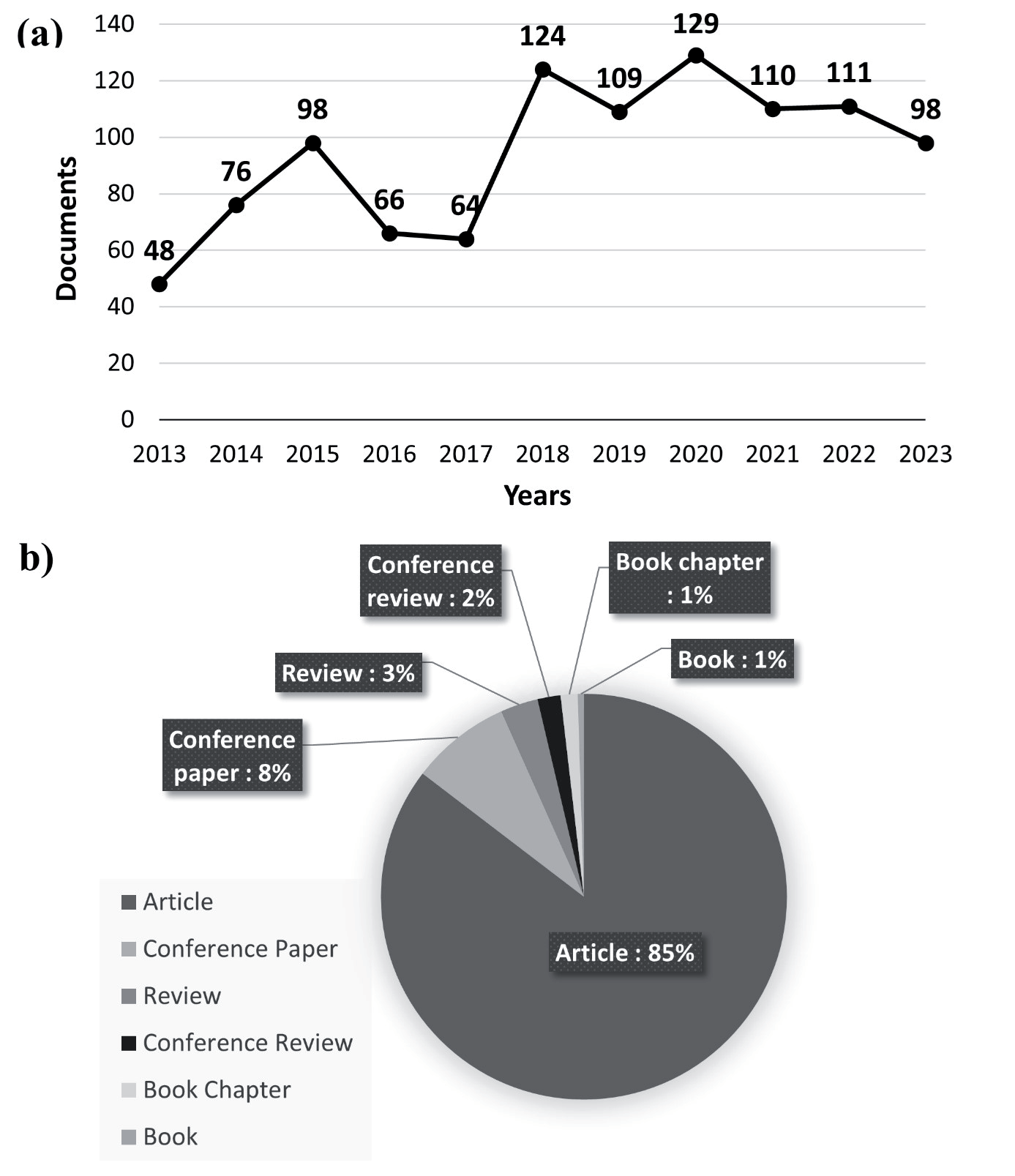
Table 1 lists the top 10 Scopus subject categories. The Scopus category of Materials Science is the leading category with 728 articles (70.47% of 1033 articles), followed by Physics with 521 articles (50.44%), Engineering with 345 articles (33.39%), Chemistry with 284 articles (27.49%), Chemical Engineering with 147 articles (14.23%), Energy with 99 articles (9.58%), Biochemistry, Genetics, and Molecular Biology with 30 articles (2.90%), Environmental Science with 28 articles (2.71%), Multidisciplinary with 20 articles (1.94%), and Computer Science with 18 articles (1.74%). The top 5 research areas agree well with Scopus subject categories. The leading category of material science can be attributed to the fact that Bi2O3 thin film is one of the semiconductor materials used for antibiotic degradation. The categories of physics because this research uses physical processes for synthesizing Bi2O3 thin film. In addition, the characteristics of Bi2O3 thin film produced were studied by physicists. Engineering indicates the engineered techniques employed for antibiotic degradation; chemistry can be ascribed to chemical reactions on Bi2O3 thin films synthesized, and chemical engineering is reaction kinetics in the antibiotic degradation processes.
Productive Journals
A total of 1033 articles are published in 149 journals. The top 10 journals are listed in Table 2. Elsevier publishes the most productive journals are published. In this regard, the first-ranked in the most productive journals that published related articles is Thin Solid Film, with 36 published articles, 3.48% of 1033 articles, which had a small gap with the Journal of Alloys and Compounds with 31 articles (3.01%) before being followed by the Journal of Materials Science Materials in Electronics with 29 articles (2.81%), Ceramics International with 27 published articles (2.61%), and Applied Physics Letters and Applied Surface Science, where all of those journals have 23 published articles (2.23%).
Table 1.
List the top 10 Scopus subject categories.
The top order is Thin Solid Film, indicating that the research topic of Bi2O3 thin films is relevant to the journal’s scope. It has a relatively high h-index (206); as such, it is not surprising that it has the highest total publications because the h-index influences the decision of researchers to find journals that suit their new findings in research. The h-index is used to quantitatively measure the performance of various journals [42]. According to the h-index report, almost all the journals have an h-index of more than 200, except for 3 journals: the Journal of Material Science Materials in Electronics, Ceramics International, and Materials Today Proceedings. Some of the top ten journals deal with materials science, implying that the topic interests material development researchers.
Analysis of Countries, Affiliate Institutions, and Funding Organizations
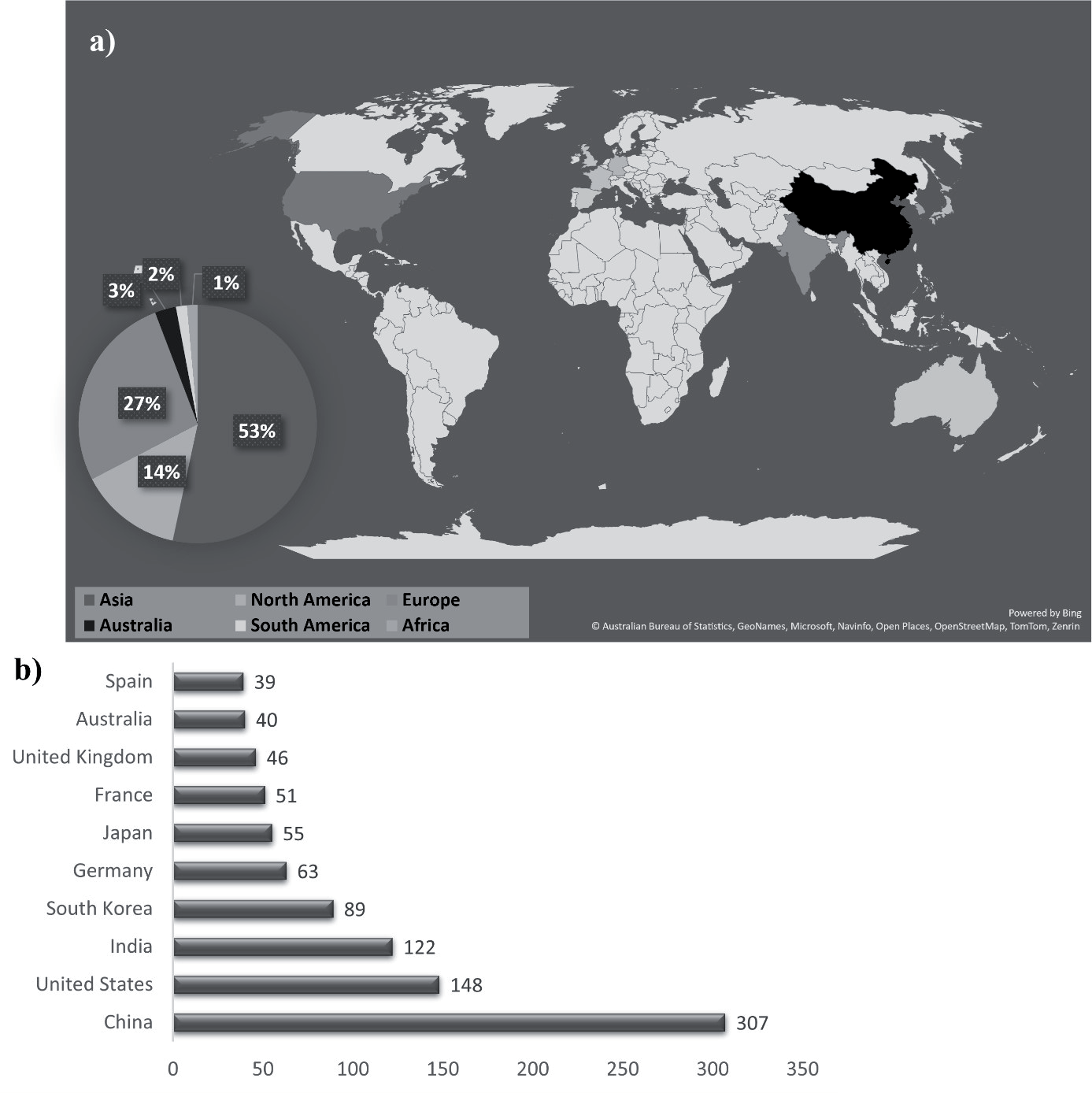
The countries participating in this study show a remarkable disparity in the continental distribution of their publications. The most country-published Bi2O3 thin film for antibiotic degradation is shown in Fig. 2a. The 10 productive countries include 4 Asian countries, 4 European countries, 1 American country, and 1 Australian country (Fig. 2b). Regarding this, Asia 53% (547 of 1033 articles), North America 14% (144 articles), Europe 27% (279 articles), Australia 3% (31 articles), South America 2% (21 articles), and Africa 1% (11 articles). China is the leading country with 307 publications (29.72%), followed by the United States with 148 publications (14.33%), India with 122 publications (11.81%), South Korea with 89 publications (8.62%), and Germany with 63 publications (6.09%). China is among the thirteen countries that lack sufficient water resources and have a very restricted amount of water available per person. Therefore, conducting research on wastewater treatment is of utmost importance. China, a developing nation, is currently grappling with severe water scarcity. Wastewater treatment and purification technology has experienced significant development in China [43]. Because certain publications may be attributed to different countries, the aggregate percentage exceeds 100%. The number of publications indicates the level of activity countries have in a specific area, along with the top authors, institutions, and funding organizations. Overall, Bi2O3 thin film for antibiotic degradation research gains more attention in developing countries.
Table 2.
Top 10 most productive journals during 2013-2023.
Fig. 2.
(a) The geographic distribution of publications, (b) Top 10 countries in the number of publications during 2013-2023.
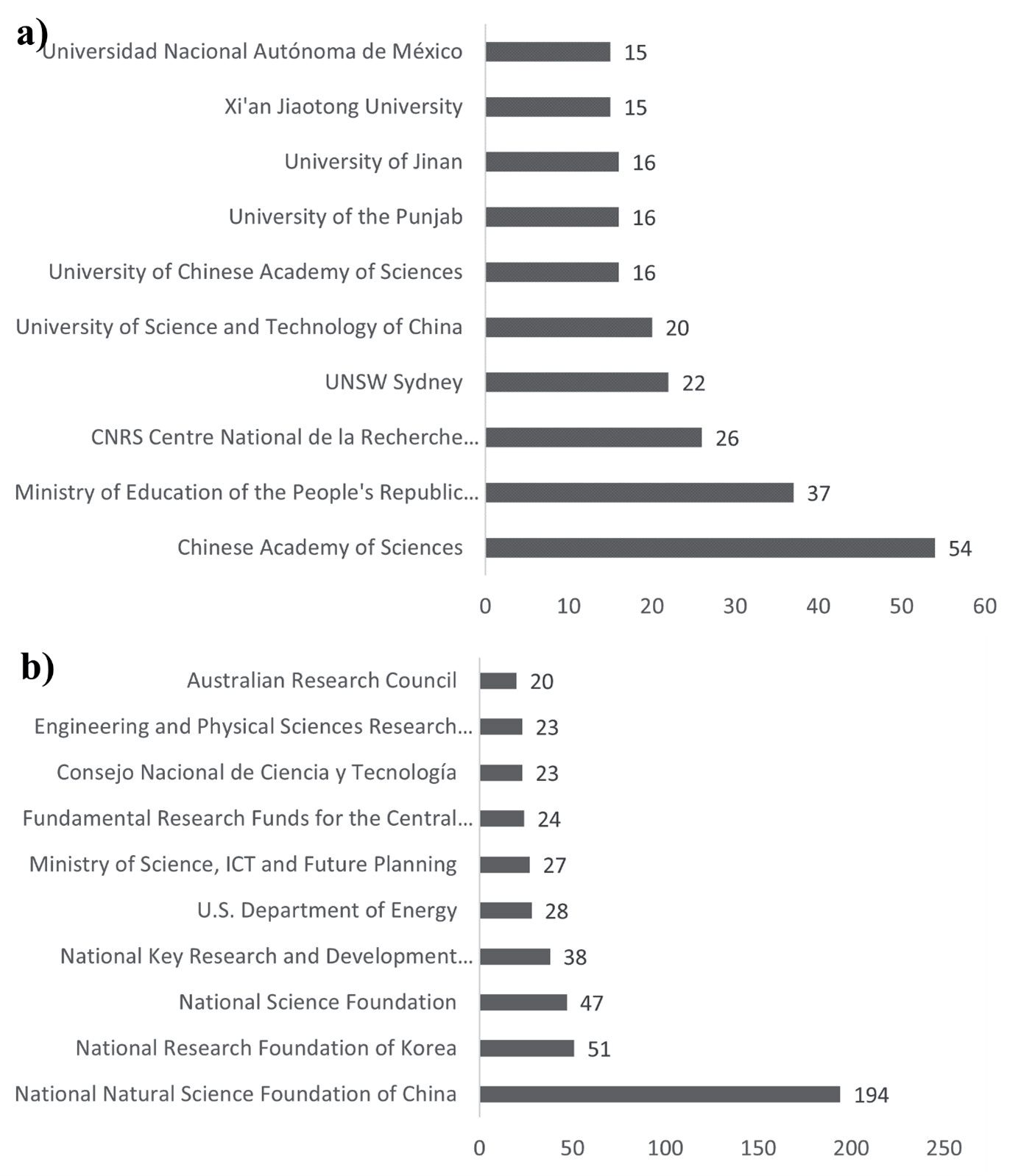
In addition to the countries, the institutions offer valuable insights into the topic’s research, including notable institutions within the field. Fig. 3a shows the top 10 productive institutions from different countries, including China (6 institutes), France (1 institute), Australia (1 institute), Pakistan (1 institute), and Mexico (1 institute). There are no institutes from the top 5 productive countries: the United States, India, South Korea, and Germany. The Chinese Academy of Science is the leading institution with 54 articles (5.23% of 1033 articles), followed by the Ministry of Education of the People’s Republic of China with 37 articles (3.58%), CNRS Centre National de la Recherche Scientifique with 26 articles (2.52%), UNSW Sydney with 22 articles (2.13%), and the University of Science and Technology of China with 20 articles (1.94%). Out of the 5 institutions, the Chinese Academy of Sciences holds the top 3 positions. The total percentage exceeds 100% due to the recognition that the authors are affiliated with distinct institutions.
In addition, the top 10 major funding organizations include China (3 organizations), Korea (2 organizations), the United States (2 organizations), Mexico (1 organization), Australia (1 organization), and the United Kingdom (1 organization) (Fig. 3b). Most of them are listed in the top 10 productive countries. The funding organization with the highest number of research publications in related topics is the National Natural Science Foundation of China, with 194 grants (18.78%), followed by the National Research Foundation of Korea with 51 grants (4.94%), and then closely followed by the National Science Foundation with 47 grants. The top 10 funding organizations that supported research on antibiotic degradation using Bi2O3 thin films are depicted in Fig. 3b.
Author Analysis Determines Co-Authorship
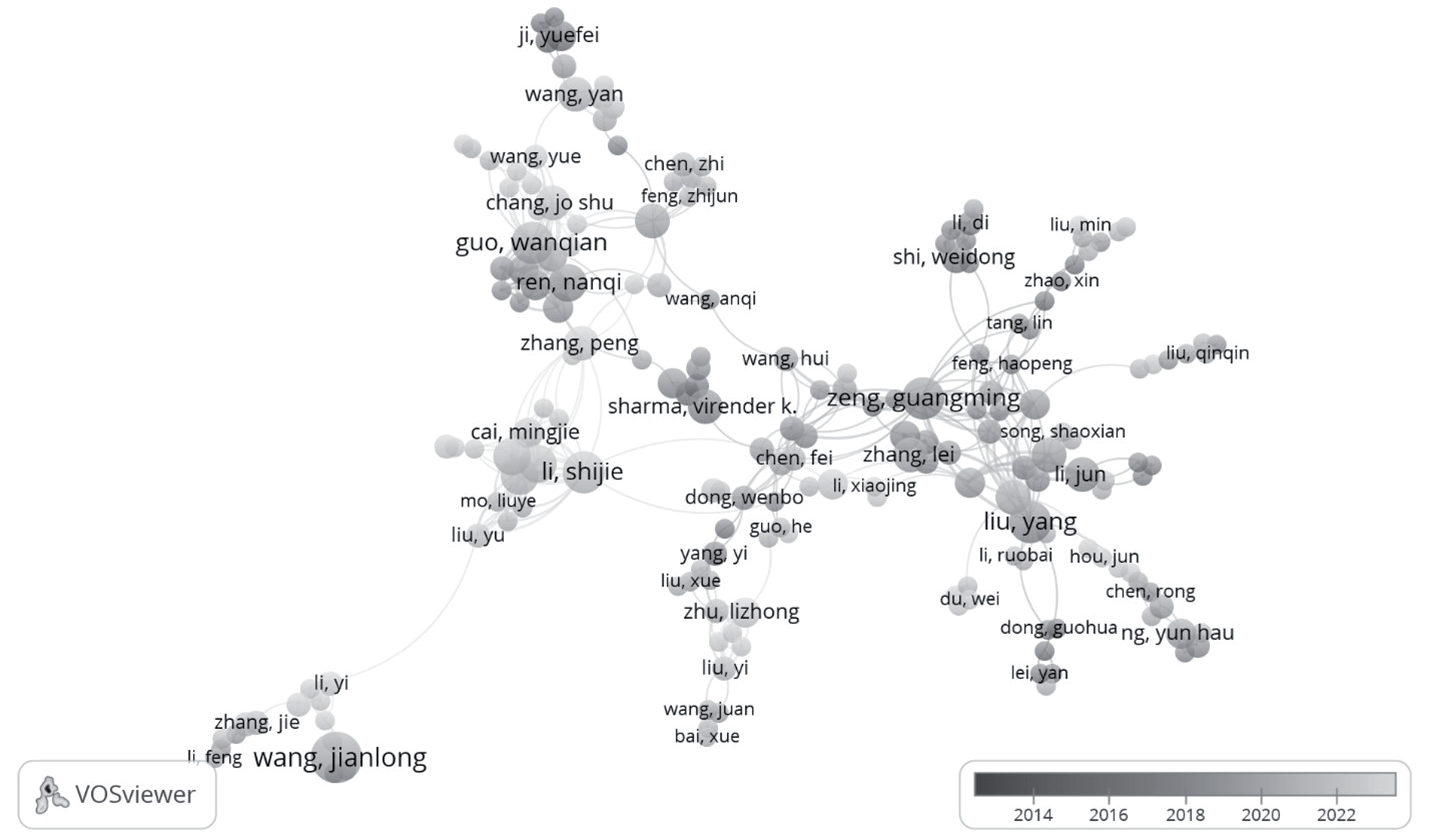
The analysis of co-authorship was performed using VOS viewer software. Fig. 4 depicts the total strength of co-authorship ties that must be calculated with other authors. The authors with the highest total link strength will be selected. The minimum number of documents owned by the author is 1, and the minimum number of citations is 1. This was discovered by 878 authors from a total of 1006 authors related to Bi2O3 thin film for antibiotic degradation research. The line between different nodes symbolizes the cooperation between authors. The presence of huge nodes, Guangming Zeng, Yang Liu, Jianlong Wang, Wanqian Guo, Shljie Li, Jun Ma, Yanping Liu, Yan Wang, Xiao Wen, and Nanqi Ren, in the field is revealed by their huge nodes. For example, Guangming Zeng cooperates with many researchers, including Yang Liu, Hui Wang, Hou Wang, Wenbo Dong, and Lin Tang.
Table 3 lists the 10 authors with the greatest total power. Guangming Zeng from China is the most productive author with 16 publications, followed by Yang Liu from China with 16 publications and Jianlong Wang from China with 15 publications. The majority of the top 10 authors are from China. This is consistent with the findings of the top 10 countries, with China being the most relevant to this study.
Analysis of Keywords
Keywords are crucial aspects of a study that provide insight into research trends and hotspots in a specific field. The frequency of publications reflects the study’s objective and direction. VOSviewer is used to construct and analyze various types of bibliometrics. Many researchers use it for co-occurrence analysis [24]. Network, overlay, and density visualization of keyword clusters analyzed using VOS viewer is shown in Fig. 5. The bubble size represents the number of co-occurrences, while the colors represent distinct co-occurrence clusters. The results revealed eight clusters containing red, blue, yellow, green, purple, orange, brown, and cyan, including various keywords. The keyword “antibiotics” has the highest occurrences (n=86), followed by “photocatalysis” (61), “tetracycline” (38), “degradation” (29), “antibiotic degradation” (24), “thin film” (18), “ciprofloxacin” (17), “sulfamethoxazole” (16), “bismuth oxide” (14), and “advanced oxidation process” (13). The keywords “photocatalysis”, “degradation”, “advanced oxidation process”, and “antibiotic degradation” reveal research on the degradation processes of antibiotics. The keywords “antibiotic”, “sulfamethoxazole”, “ciprofloxacin”, and “tetracycline” correlated with the types of antibiotics widely used in this research-related topic. The keywords “bismuth oxide” and “thin films” indicate the important role of functional materials in the antibiotic degradation process. Therefore, it can be concluded that these keywords are the main keywords used in this bibliometric analysis. Nodes that are close to the main keywords are often discussed in the articles on antibiotic degradation and Bi2O3 thin films.
Table 3.
Top 10 authors with published articles.
Fig. 5.
(a) Network visualization, (b) overlay visualization, and (c) density visualization map of keywords co-occurrence network.
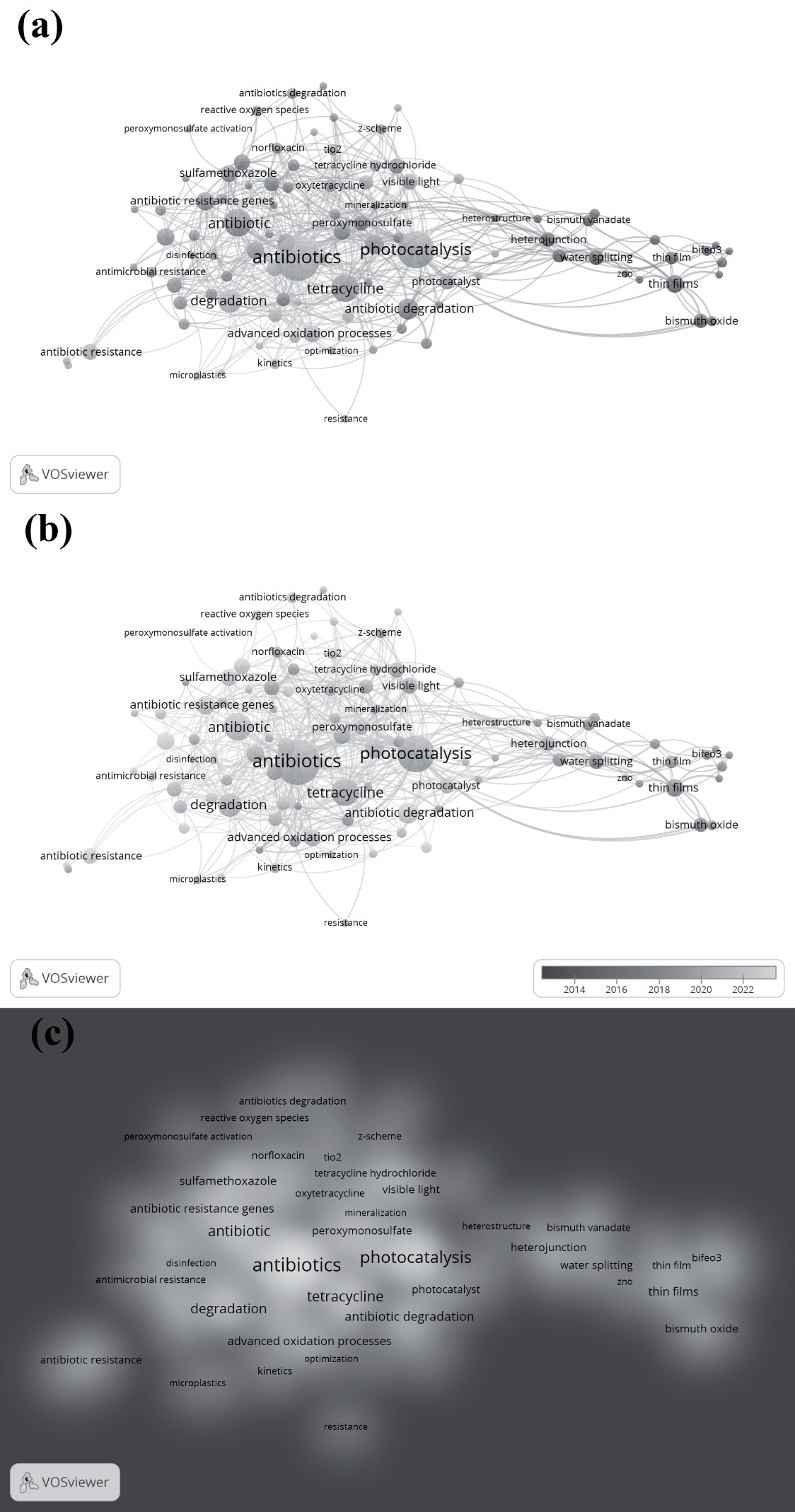
In addition, an overlay visualization map was constructed to show the annual changes in these linkages. Fig. 5b demonstrates the evolution of the research field during the 2013-2023 period. In recent years, the VOS viewer was used to display the time distribution of keyword co-occurrence. The overlay visualization shows time on the keyword co-occurrence network, with different colors representing the year in which the keyword appears the most frequently. The keywords were divided into 3 obvious clusters (yellow: cluster in the upper left; green: cluster in the center; blue: cluster on the right), representing the different stages of the research topic from 2013 to 2023.
Within the yellow cluster, the term “antibiotic” appears most frequently, indicating a close association with “antibiotic resistance”, “biodegradation”, “biofilm”, “sulfamethoxazole”, “kinetic”, “degradation product”, “wastewater treatment”, etc. Surprisingly, these keywords showed in the green cluster in an average year from 2021 to 2023. This indicates that research areas relating to antibiotic degradation have advanced rapidly in recent years. The exponential growth of antibiotic usage throughout the COVID-19 pandemic has led to the formation of environmental reservoirs containing antibiotics. Thus, scientists initiated the development of a technology for antibiotic degradation.
In the green cluster, the keywords “antibiotics”, “photocatalysis”, “tetracycline”, “ciprofloxacin”, “photocatalytic”, “water treatment”, “degradation pathway”, etc., mainly appeared from 2019 to 2020. The blue cluster presents a preference for the process synthesis of bismuth oxide thin film, where “thin film”, “bismuth oxide”, “photoelectrochemical”, “bismuth vanadate”, “bifeo3”, and “water splitting” are the most popular words. These keywords have been popular since 2016, indicating that they have become hot research in recent years.
The density visualization, as depicted in Fig. 5c, demonstrated the relationship between antibiotics and photocatalysis using Bi2O3 thin film. The density visualization map reveals which topics have received the greatest attention. In this regard, the vibrant yellow color denoted the topic that appeared most frequently in the research studies. The blurred color, on the other hand, indicated that research on the subject is still limited. The result of the density visualization map discovered three research topics with bright yellow color, including “antibiotic”, “photocatalysis”, and “antibiotic degradation”. In contrast, the topics of “thin film” and “bismuth oxide” were still blurred, indicating that there has not been much research on these topics. This indicates that the study of Bi2O3 thin film is still in its early stages and holds significant potential for originality. Recently, there have been notable advancements in developing Bi2O3 thin films and antibiotic degradation technologies. The advent and progression of technology can boost wastewater treatment management, improve antibiotic pollution treatment, and reduce costs.
Bi2O3 thin films have shown significant promise for the photocatalytic degradation of antibiotics, offering an effective solution to mitigate the environmental impact of pharmaceutical contaminants. Recent research has made significant strides in utilizing Bi2O3 thin films for antibiotic degradation, focusing on enhancing photocatalytic efficiency, optimizing synthesis methods, and exploring synergistic effects with other materials. Various doping strategies, including rare earth [44] and transition metals [45], enhanced photocatalytic activity by altering the electronic structure and reducing electron-hole recombination. For instance, doping with peroxydisulfate has demonstrated enhanced visible light absorption and increased degradation rates for antibiotics like tetracycline [46]. Constructing heterojunctions by combining Bi2O3 with other semiconductors, such as BiVO4 [47], TiO2 [48], and g-C3N4 [49], has facilitated better charge separation and extended light absorption ranges, significantly boosting photocatalytic degradation under visible light. Additionally, developing nanostructured Bi2O3 thin films, such as nanorods [50], nanoporous structures [51], and thin films [52], has improved antibiotic degradation performance due to increased light absorption and more efficient charge carrier dynamics.
Optimizing synthesis methods, such as sol-gel [53] and hydrothermal processes [54], has produced highly crystalline and uniform Bi2O3 thin films with controlled morphology, enhancing their photocatalytic properties. Chemical vapor deposition (CVD) [55] techniques have also been refined to deposit Bi2O3 thin films with precise control over thickness, composition, and crystallinity, resulting in excellent photocatalytic performance. Advanced characterization techniques, such as photoluminescence spectroscopy, electrochemical impedance spectroscopy, and X-ray photoelectron spectroscopy, have allowed for a more thorough understanding of the charge transfer mechanisms and surface interactions that occur during the photocatalytic degradation process. Thorough examinations of the degradation pathways and kinetics of antibiotics have facilitated the identification of intermediate and final degradation products, improved the efficiency of the photocatalytic process, and guaranteed the total breakdown of dangerous pollutants [56]. The progress made in Bi2O3 thin films highlights their potential in efficiently combating antibiotic contamination in wastewater, offering the prospect of a cleaner and more sustainable environment.
Conclusions
This study provides insight into the research trends using Bi2O3 thin films for antibiotic degradation based on bibliometric analysis. A total of 1033 documents were collected from 2013 to 2023 using the Scopus database. The majority of the published works (85%) were articles, while the remainder (8%) were book chapters. The Scopus category of Material Science is the leading category, followed by Physics, Engineering, Chemistry, and Chemical Engineering. Bi2O3 thin film-related studies are published in 149 journals, and Thin Solid Films is the most productive journal among 1033 publications from 71 different countries. Almost 29.72% of the total publications globally on this topic were contributed by China, followed by the United States, India, South Korea, and Germany. The majority of the most productive institutions are also likewise from China, with the Chinese Academy of Sciences ranking first. According to bibliometric analysis and visualization maps generated with the VOS viewer software version 1.6.19, the research topic concerning the Bi2O3 thin film for antibiotic degradation has garnered significant attention from researchers over the past decade, as evidenced by the increasing quantity of publications on the topic. Furthermore, the findings of this study revealed that Bi2O3 thin film can synthesize diverse materials and will continue to develop. This research provides a foundation for future research, particularly in the field of Bi2O3 thin film for antibiotic degradation.

