

Introduction
The concept of “symbiosis” originated in the field of biology, introduced by German microbiologist Anton de Bary in 1879 [1]. Initially, it described the close material relationship formed by different species cohabiting [2]. However, since the 1950s, symbiotic theory has transcended biology and extended into diverse disciplines, including sociology, economics, and tourism [3-6]. At its core, this theory advocates for establishing stable relationships of mutual dependence and harmonious coexistence among humans, nature, and between humans and nature. The tourism industry, a significant outcome of economic development, has emerged as a prominent expression of modern human activities. With its expanding scale, the tourism industry has increasingly become an intrinsic driver for fostering global economic development [7].
Meanwhile, the level of socio-economic development also provides a solid foundation for the emergence and sustainable development of the tourism industry. The relationship between the tourism industry and the ecological environment is equally inseparable. As an industry that relies on the environment and consumes resources, the healthy development of the tourism industry is closely linked to the state of the ecological environment. A high-quality ecological environment is not only an important resource for the emergence and growth of the tourism industry [8, 9], but also the fundamental guarantee for achieving sustainable development of the tourism industry [10, 11]. Considering the comprehensive, interconnected, and clustered characteristics of the tourism industry, which highly coincide with the theory of symbiosis, the relationship between the tourism industry, economic development, and the ecological environment can be viewed as a symbiotic relationship. They mutually benefit and support each other.
However, as the tourism industry continues to expand, the self-integrity of tourist destination ecosystems and their ecological service functions are threatened [12], and the negative impact of tourism industry development on the ecological environment is increasingly prominent [13]. Therefore, it becomes an urgent scientific issue to analyze the synergistic relationship among the tourism industry, economic development, and ecological environment from the perspective of symbiosis and to promote the continuous improvement of coupling coordination among the three systems as a practical approach to achieving the common goal of sustainable development. This is also one of the marginal contributions of this study.
Literature Review
As the coordinated development of tourism has become a hotspot [14], academic research on the relationship between the tourism industry, economic development, and ecological environments has gradually deepened. On the one hand, in terms of the tourism industry and economic development, research primarily focuses on the relationship between the two [15] and the pathways of influence between them. The former mainly includes two forms: the tourism-led growth hypothesis (TLGH) and the economic-led tourism hypothesis (ELTH); the latter includes studies on intermediate variables and independent variables [16-24]. Additionally, following the outbreak of the COVID-19 pandemic, the new prospects for the tourism industry under epidemic conditions [25, 26], as well as the new relationships between tourism and the economy [27, 28], have become hot topics among scholars.
On the other hand, regarding the relationship between the tourism industry and the ecological environment, with the continuous development of the tourism economy since World War II, the increasingly prominent ecological issues have led scholars to deepen their research on tourism environmental capacity and tourism carrying capacity [29]. Furthermore, with the rise of “environmental protection awareness,” the concept of “ecotourism” has gradually emerged. Since the 1980s, scholars have systematically studied the contradictions between the tourism industry, economic development, and the ecological environment [30-32], as well as issues such as sustainable tourism development [24, 33-37].
Furthermore, in the research on the synergistic effects of the tourism industry, scholars mainly focus on two aspects: research content and research methods. In terms of research content, the synergistic effects between the tourism industry and the ecological environment are a hot research topic. Scholars conduct research from perspectives such as ecological footprint [38], green development [39], natural disasters [40], and ecological resilience [41]. Additionally, with the introduction of China’s rural revitalization strategy, discussions on the synergistic relationship between the tourism industry and rural development have gradually increased [42- 44]. In terms of research methods, scholars commonly use the Haken model [41], the regression control method (HCW) [45], the fsQCA method [43], the coupling coordination model [43], and regression analysis [40].
The above research has laid the foundation for analyzing the mechanism of the interaction between the tourism industry, economic development, and the ecological environment. However, there are still gaps that persist in current research: (1) Although the academia has recognized the intrinsic connection between the tourism industry and economic development or the ecological environment, the discussion combining the three is still somewhat insufficient. (2) In the analysis of the relationships among multiple systems, scholars mostly study interactive relationships from the practical level, with few scholars exploring the dynamic relationships among the tourism industry, economic development, and the ecological environment from a specific theoretical perspective. (3) Most scholars conclude their research by assessing the degree of coupling coordination among the three systems, lacking identification of obstacle factors. In view of this, taking the symbiosis theory as the research framework, this study examines the 13 prefecture-level cities in Jiangsu Province as empirical cases and develops an evaluation index system to assess the interplay among the tourism industry, economic development, and the ecological environment. Utilizing a comprehensive approach involving the PVAR model, coupling coordination model, and obstacle degree model, the research analyzes the interactive dynamics and spatiotemporal evolution of these systems. The study aims to pinpoint the obstacles hindering the coordination among these systems in Jiangsu Province and offers actionable recommendations to promote sustainable development.
Coordinated and Interactive Mechanisms
Interactive Mechanisms between the Tourism Industry and Economic Development
The tourism industry, as a significant component of human life and a tertiary sector, plays an epoch-making role in driving modern economic growth amid the new normal of economic development [46]. Simultaneously, the regional economy forms a robust foundation for the tourism sector’s expansion and advancement, fostering continuous economies of scale and enhancing its efficiency [47]. As a labor-intensive service industry [48], the tourism sector’s extensive relevance, broad coverage, and comprehensive features have made “tourism +” a reality [49], ushering in new business models and industrial chains [50, 51], thereby generating significant economies of scale and synergy effects within the region. This has facilitated the deep integration of tourism with social and livelihood resources. Furthermore, in the post-epidemic era, the tourism industry’s robust economic resilience has revitalized and invigorated the sector, bolstering its pivotal role in driving consumption, stabilizing growth, and safeguarding employment.
Concurrently, amidst steady social and economic growth, the burgeoning desire for an enhanced quality of life has fueled the emergence and progression of the tourism industry as the cornerstone of the leisure sector, thus enhancing tourism from the supply side [52]. Moreover, modern technology and the digital economy have not only provided direction but also technical support for a new wave of innovation and transformation in the tourism industry, shaping its industrial landscape and development paradigm. This technological advancement serves as a catalyst for the tourism industry’s evolution and growth [53-55].
Interactive Mechanisms between the Ecological Environment and the Tourism Industry
As the bedrock of human life and economic activities, the ecological environment serves as the spatial foundation for all economic endeavors. Primarily, as a source of tourism resources, the ecological environment forms the bedrock for the tourism industry’s development. The economic value generated by the tourism sector crucially relies on the ecological landscapes crafted by these attractions [33]. However, existing research has shown that the environmental pollution levels of the tourism industry, such as carbon emissions, have been increasing year by year [56], and the continuous development and expansion of the industry have harmed ecological security [33, 57]. Consequently, as efforts to bolster ecological security intensify, ecotourism has emerged as a widely endorsed paradigm, marking a transition from the traditional exploitation of tourism resources to a mode emphasizing environmental protection and energy conservation [58].
Despite the rising public awareness regarding environmental preservation spurred by the promotion of ecotourism, the transformative impact of the tourism industry on the ecological environment remains limited. The societal awakening to environmental conservation requires considerable time to manifest, thus elongating the period for realizing the tourism industry’s ecological footprint and the subsequent payoff from conservation efforts.
Interactive Mechanisms between the Tourism Industry, Economic Development, and the Ecological Environment
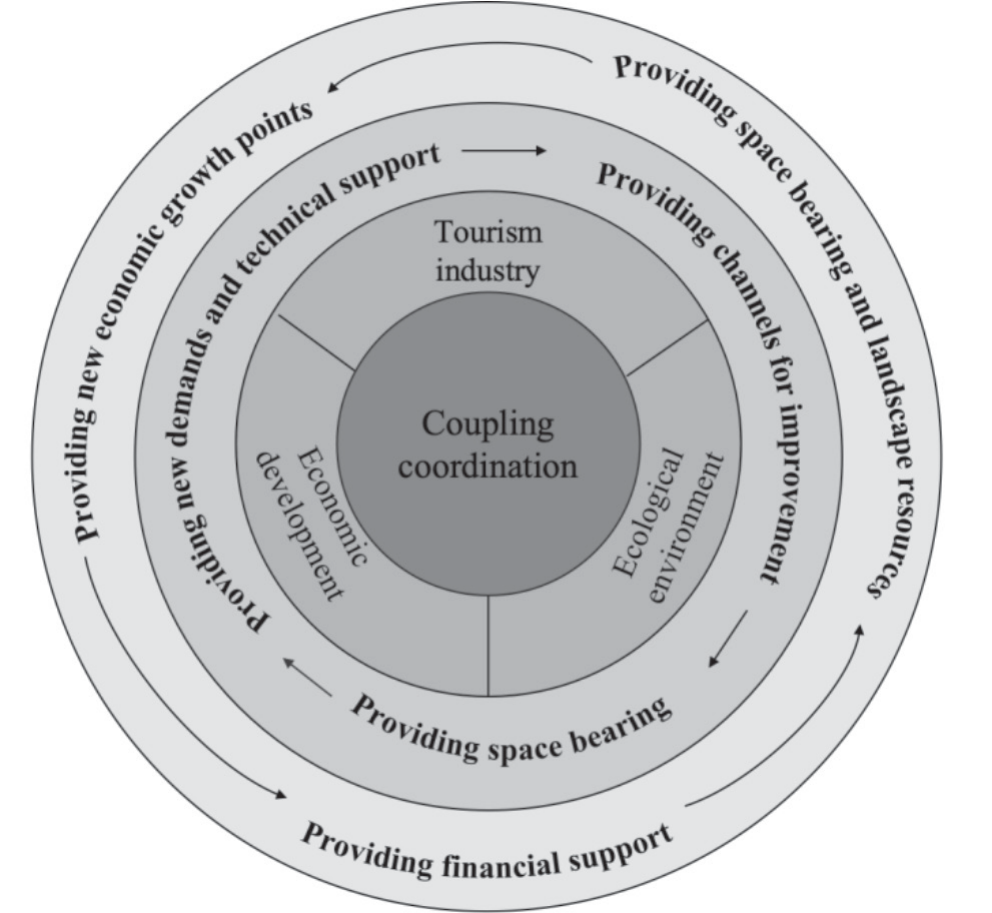
The scientific essence of the interaction among the tourism industry, economic development, and ecological environment lies in optimizing factor allocation and spatial layout through their mutual interaction, thereby enhancing the capabilities of each system and constructing an intrinsic mechanism for coordinated development. From the perspective of symbiosis theory, symbiotic units, as the basic units of energy production and exchange in symbiotic systems, their degree of interconnection is the core indicator for assessing the stability of symbiotic relationships [59-61]. In the symbiotic system constituted by the tourism industry, ecological environment, and economic development, the boundaries among them are blurred, and their interactions are significant, demonstrating a high degree of compatibility and close symbiotic relationships (Fig. 1).
However, compared to the significant two-way interaction between the tourism industry and economic development, the two-way relationships between the tourism industry and the ecological environment, and between economic development and the ecological environment are relatively weak. This is mainly because, compared to the decision-maker-led economic system, the tourism industry and ecological environment systems have limited macro-control capabilities. This results in a long feedback cycle and limited effects of the tourism industry on the ecological environment, while the natural forces of the ecological environment system make it difficult to directly change the trajectory of economic development, and their reverse effect is not significant. Conversely, economic development, by providing financial support and modern technological means for improving the ecological environment system has a more significant impact mechanism [62-64].
Therefore, in the process of promoting the coordinated development of the tourism industry, economic development, and ecological environment, it is necessary to comprehensively consider the interaction among various systems, especially strengthening the positive interaction between the tourism industry and the ecological environment and between economic development and the ecological environment, to achieve optimization and sustainable development of the overall system.
Material and Methods
The Evaluation Index System of the Tourism Industry, Economic Development, and Ecological Environment
In order to assess the level of synergistic development among economic development, ecological environment, and tourism industry under the perspective of symbiosis theory, it is necessary to construct an evaluation index system to judge the level of systematic development. In the process of selecting indicators and following the principles of scientific, accessible, systematic, and typical data, the study constructs a tourism industry-economic development-ecological environment evaluation index system (Table 1) by drawing on relevant research results [65-67].
Panel Vector Autoregressive (PVAR) Model
The panel vector autoregressive model (PVAR) was first utilized by Holtz-Eakin (1987) to analyze the interactions between endogenous variables in panel data. The PVAR model treats the study variables as endogenous and treats each endogenous variable as a function of the lagged values of all the endogenous variables in the system, which is able to capture more features of the data through the enriched structure [68]. The model equation is as follows:
where Yit are the endogenous column vectors of tourism (TI), economic development (ED) and ecological environment (EE); i denotes the region, t denotes the time (2000-2020), j is the lag order of the model; β0 and βj denote the intercept term vector and the coefficient matrix of the lagged variable; Vi denotes the individual fixed effect vector, θt denotes the time-fixed effect vector, and εit is the perturbation term.
Coupling Coordination Model
Coupling originates from physics, which consists of two or more systems or two forms of motion intertwining and interacting with each other to produce synergistic effects and synergies to accomplish specific tasks. By drawing on existing research formulations, the coupling coordination model setting is specified as follows [65, 66, 69]:
Table 1.
Evaluation index system of the tourism industry, economic development, and ecological environment.
Where, U1, U2, U3 denote the comprehensive development level of the tourism industry, economic development, and ecological environment systems, respectively, the larger the value of U means the higher the development level of the system, and vice versa, the lower it is. T denotes the comprehensive coordination index of the three systems, and α, β, and λ denote the weights of the tourism, economy, and ecological environment systems, respectively. This study draws on the results of the research of Gong Yan and Zhang Yang (2016) [65], and the final selection of the three systems’ weights is α = 0.3, β = 0.3, and λ = 0.4.
Barrier Degree Model
The barrier degree model is a model that analyzes and diagnoses with the help of three indicators: indicator deviation, factor contribution, and barrier degree and determines the primary and secondary relationship of each barrier factor and its influence on tourism-economy-ecosystem synergy by ranking the magnitude of the barrier degree [58, 69]. This study draws on the barrier degree model to investigate the degree of influence of 21 indicators under the three criterion layers on the synergy of the three systems in Jiangsu Province.
Where Axij is the barrier degree of the jth evaluation indicator of the xth city in the ith year; the larger the barrier degree is, the larger the impact is; is the dimensionless value of the jth single indicator of the xth city in the ith year; Aij is its corresponding weight, which is obtained by the entropy weighting method. Besides, due to the fact that the main content is the synergy effect between the three systems in Jiangsu Province, the barrier degree of the indicator layer of this study is determined as the average value of the barrier degree of the indicator in 13 cities of Jiangsu Province in the corresponding year; and Aj is the barrier degree of the guideline layer, which is equal to the sum of the corresponding seven indicators of each indicator layer.
Data Source and Processing
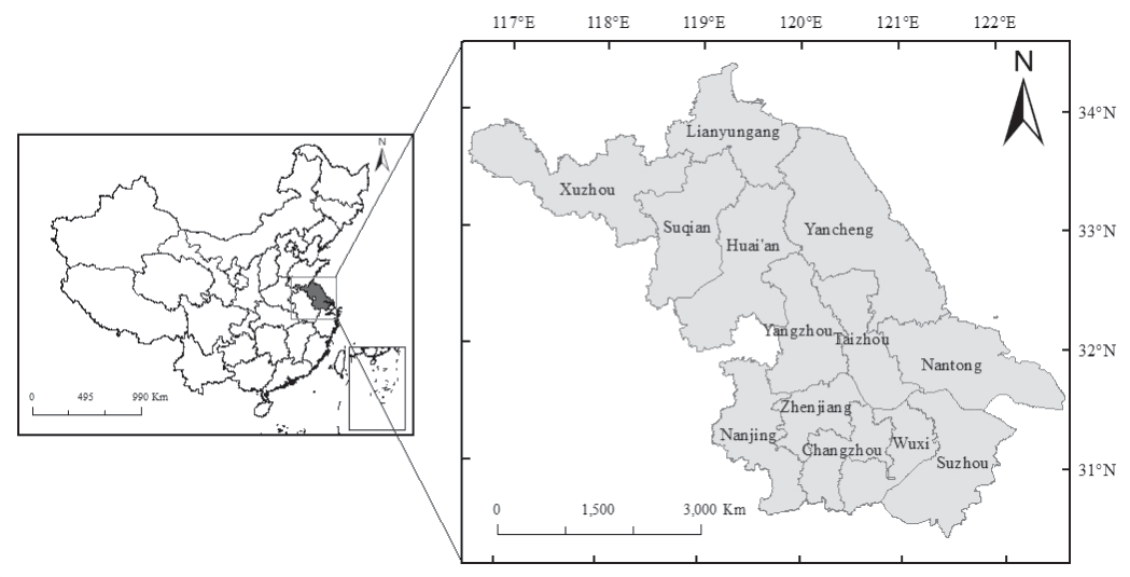
Jiangsu Province (Fig. 2), with its developed tourism industry, dense transportation network, strong economic strength, and rapid development momentum, is representative and typical as a case study. Based on the stage of economic development and the availability of data, the study period is defined as 2000-2020, and the data in the evaluation index system mainly come from the Statistical Yearbook of Municipalities and Cities in Jiangsu Province (2000-2021), the Statistical Yearbook of Jiangsu Province (2000-2021), and the Statistical Bulletin of National Economic and Social Development of Various Cities from 2000-2020. To make sure that the results are not affected by big differences in prime numbers, each indicator is defined by its per capita value, land average, or proportion of weight. The per capita value is changed based on the number of people who live in the area, and economic data like GDP, consumption, and income are changed based on the base year of 2000. At the same time, in order to eliminate the differences between the scales of different systems, this study uses the method of polar deviation to standardize the raw data.
Results and Discussion
Dynamic Evaluation of the Level of System Development
To gain a comprehensive understanding of the evolving development levels across the three systems in Jiangsu Province, the region is divided into three segments: North Jiangsu, Central Jiangsu, and South Jiangsu. The average overall development level of each region is then assessed and illustrated (Fig. 3). As depicted in Fig. 3a), the overall development level of the tourism industry in Jiangsu Province exhibits a gradual increase, punctuated by two notable fluctuations during the study period. These fluctuations were attributed to the impact of the COVID-19 pandemic during 2019-2020 and shifts in the global economy during 2012-2013. Regarding regional disparities, the comprehensive development level of tourism demonstrates a declining trend from South Jiangsu to North Jiangsu. Comparatively, the overall level of comprehensive tourism development in North Jiangsu is lower than that in the other two regions, with relatively minor regional variations observed throughout the study years.
From Fig. 3b), it’s evident that the comprehensive development level of the economic system in Jiangsu Province follows a certain pattern. Between 2000 and 2019, economic progress has consistently advanced, with the southern region of Jiangsu Province notably leading the pack. In contrast, the central and northern regions exhibit less dynamism, with their values predominantly below 0.500, indicating a significant lag behind provincial economic development. Fig. 3c) illustrates that, in comparison to the comprehensive development levels of the tourism industry and the economic system, the ecological environment system in Jiangsu Province generally maintains a higher value with smaller regional disparities. The ecological enhancement across each region shows an upward trend. In 2000, Suzhou and Nanjing in the southern part of Jiangsu Province held the top two positions, while Xuzhou in the northern part ranked third. However, by 2020, Nanjing had surpassed Suzhou, emerging as the city with the highest level of integrated ecosystem development in the province. Moreover, nearly 70% of the province’s cities have achieved an integrated ecosystem development level of 0.500 or higher.
A systematic examination of panel data on the comprehensive development levels of tourism, economy, and environment in Jiangsu Province over the study period reveals distinctive trajectories. The economic system initially lags behind the other two systems but exhibits rapid advancement over time. Conversely, the environment commences with the highest level but experiences slower development, attributed to the expansion of economic industries and limited space for overall development. Meanwhile, the comprehensive development level of the tourism industry system demonstrates gradual growth, with notable exceptions in Nanjing and Suzhou, located in the southern part of Jiangsu Province, where growth is accelerated.
Fig. 3.
Time sequence changes of tourism industry-economic development-ecological environment comprehensive development level in Jiangsu Province from 2000 to 2020.
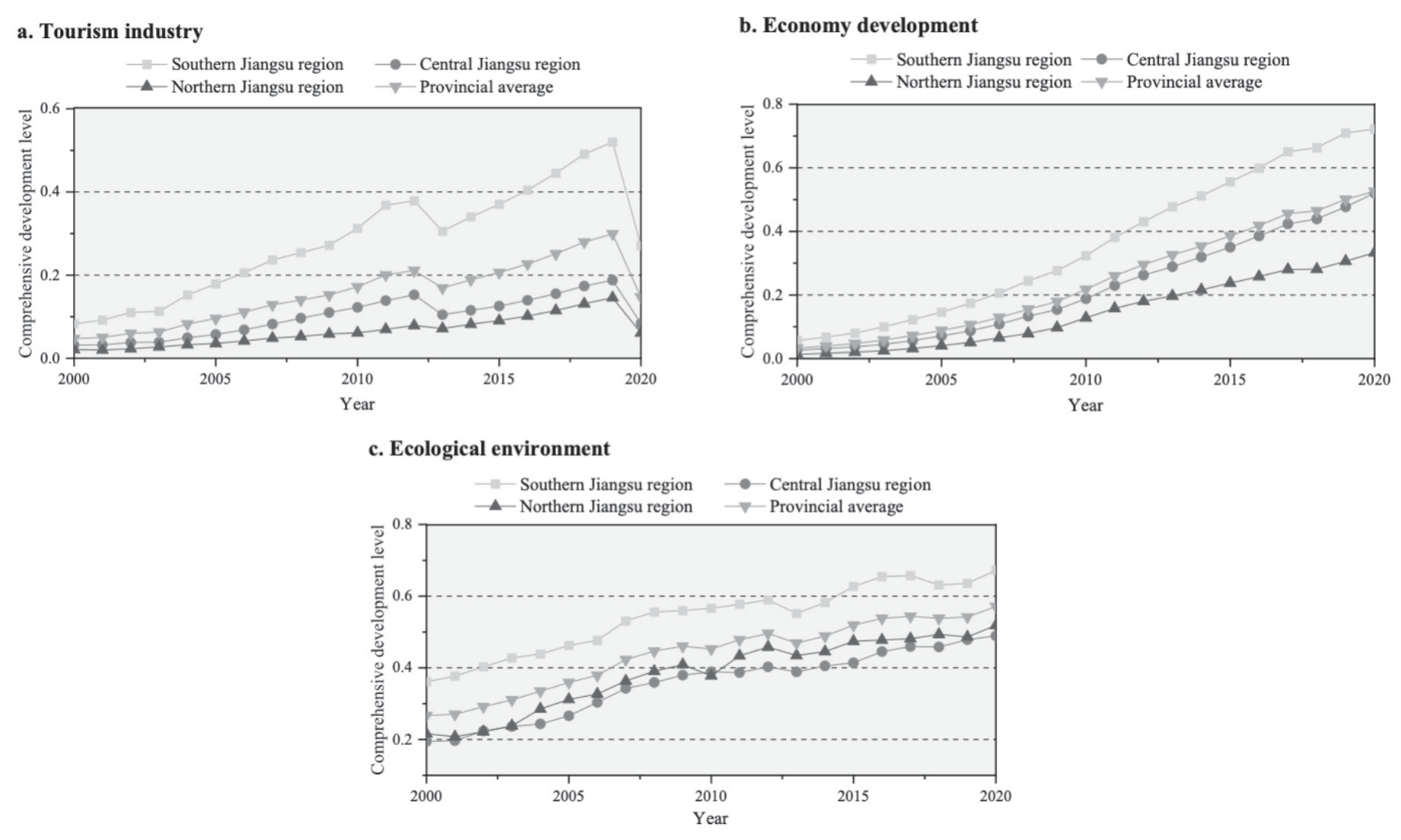
Table 2.
Results of unit root test of the tourism industry, economy development, and ecological environment.
In summary, with the exception of Suzhou and Nanjing, which maintain a semblance of coordinated development across the three systems, other cities should leverage their environmental advantages to harness city tourism resources and vigorously promote regional tourism industry development. This should be undertaken while simultaneously safeguarding the ecological environment and fostering economic growth. Such efforts aim to realize continuous enhancements in the coupling degree between human activities, the ecological environment, and economic development in the region.
Tourism Industry-Economic Development-Ecological Environment Dynamic Interaction Effects
Relationship Testing
The PVAR model is used to test whether there is a long-term equilibrium and causal relationship between the tourism industry, economic development, and the ecological environment. Firstly, the unit root test of the time series must be done before modeling. This study uses all four methods (Table 2) to make sure the results are valid: LLC, IPS, ADF-fisher, and PP-Fisher. This is to make sure that the impulse response and variance decomposition results are not distorted. As can be seen from the table, the original unit root of the urban tourism industry, economic development, and ecological environment do not pass the 10% significance test, and further differential treatment is required for testing. The results show that the data after the first-order difference tends to be stable; in other words, the variables of the tourism industry, economic development, and ecological environment are integrated into order one.
Second, according to the AIC, BIC, and HQIC criterion determinations, it can be determined that the optimal lag period is 1. Based on this, in order to avoid pseudo-regressions, a cointegration test is needed to ensure that all the variable series are smooth on the same order difference, and this study adopts the Kao method to conduct the cointegration test (Table 3). From the results, it can be seen that the results of the statistical quantities all reject the original hypothesis, indicating that there is a long-term stable relationship between the three.
Third, a Granger causality test is conducted to investigate whether the equilibrium relationship among the three constitutes a causal relationship among each other (Table 4). From the results, it can be seen that economic development affects the tourism industry at the 1% significance level, and the tourism industry is also a Granger cause of economic development at the 1% significance level; in other words, there is a bidirectional Granger causality between the tourism industry and economic development. In addition, according to the results of the Granger causality test between ecological environment and tourism and between ecological environment and economic development, there is no bidirectional Granger causality between the above two, and it can only be concluded that ecological environment is the Granger cause of the tourism industry at the 1% significance level and that economic development affects the ecological environment at the 1% significance level, which is basically consistent with the modeling of this study.
Impulse Response Analysis
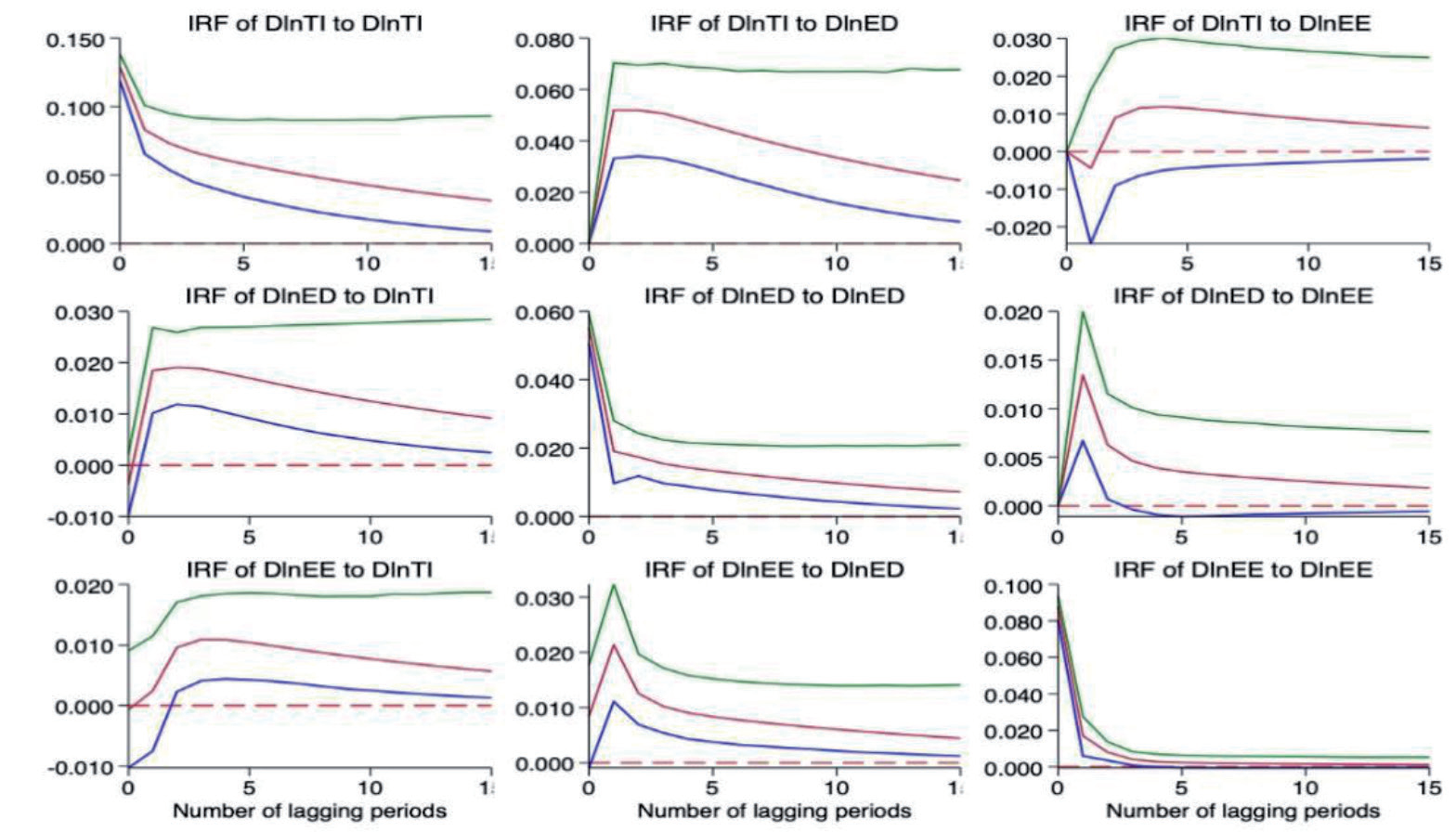
This study creates an impulse response function between the tourism industry, economic development, and the ecological environment to better show how the variables interact with each other. It then looks at the dynamic shock effect of the standard deviation of the random perturbation term of the variables on both current and future values, as well as the characteristics of the changes (Fig. 4). As shown in Fig. 4, the impulse response function is plotted after 1400 times of Monte-Carlo simulation, and the 95% confidence interval is demonstrated. The red line in the middle shows how performance changes when shocks are applied. The lines on either side show the upper and lower limits of the 95% confidence interval. The lag period is shown by the horizontal axis, and the degree of response of the endogenous variables is shown by the vertical axis.
Table 3.
Kao cointegration test results.
It can be seen from Fig. 4 that, firstly, for the ecological environment, when it is subject to its own impact, the positive impact decreases rapidly in period 0 and converges to 0. When it is subject to the impact of economic development, the ecological environment shows a positive impact response of “rising and then decreasing” and reaches its maximum value at period 1. It can also be seen that the development of the tourism industry in period 1 has a certain negative impact on the ecological environment, but with the development of tourism to a certain stage, the negative impact gradually disappears.
Secondly, for economic development, when it is impacted by one unit of the ecological environment, the response value of economic development is positive and reaches the maximum value in the first period and gradually decreases to 0 in the latter period, which indicates that the impact effect of ecological environment on economic development is not significant and its positive promotion effect is limited. When subjected to its own impact, the economic development of period 0 is of a positive impact response, followed by a rapid decline and gradually converge to 0. When impacted by the tourism industry, the impulse response function shows an inverted “V” shape of rising and then falling, indicating that with the gradual development of the tourism industry, the level of economic development is also steadily improving.
Finally, for the tourism industry, its response to the impact of the ecological environment is extremely weak, and its impulse curve always tends to be close to 0. When hit by the impact of economic development, the tourism industry shows a positive impulse response effect, and in period 1, there is a more obvious peak, which indicates that the economic development of the tourism industry in the long term has a positive driving force, and in the short term, the effect is more significant. When the tourism industry is subjected to its own shock, it shows a positive impulse effect in period 0, and in periods 1-4, it gradually converges to 0. It can be concluded that the interaction between the tourism industry and economic development is obvious, and its mutual promotion is more significant. Similarly, in the long run, the relationship between the three is stable, and the model is smooth.
Analysis of System Coupling and Coordination
Time Evolution of Coupled Coordination Degree
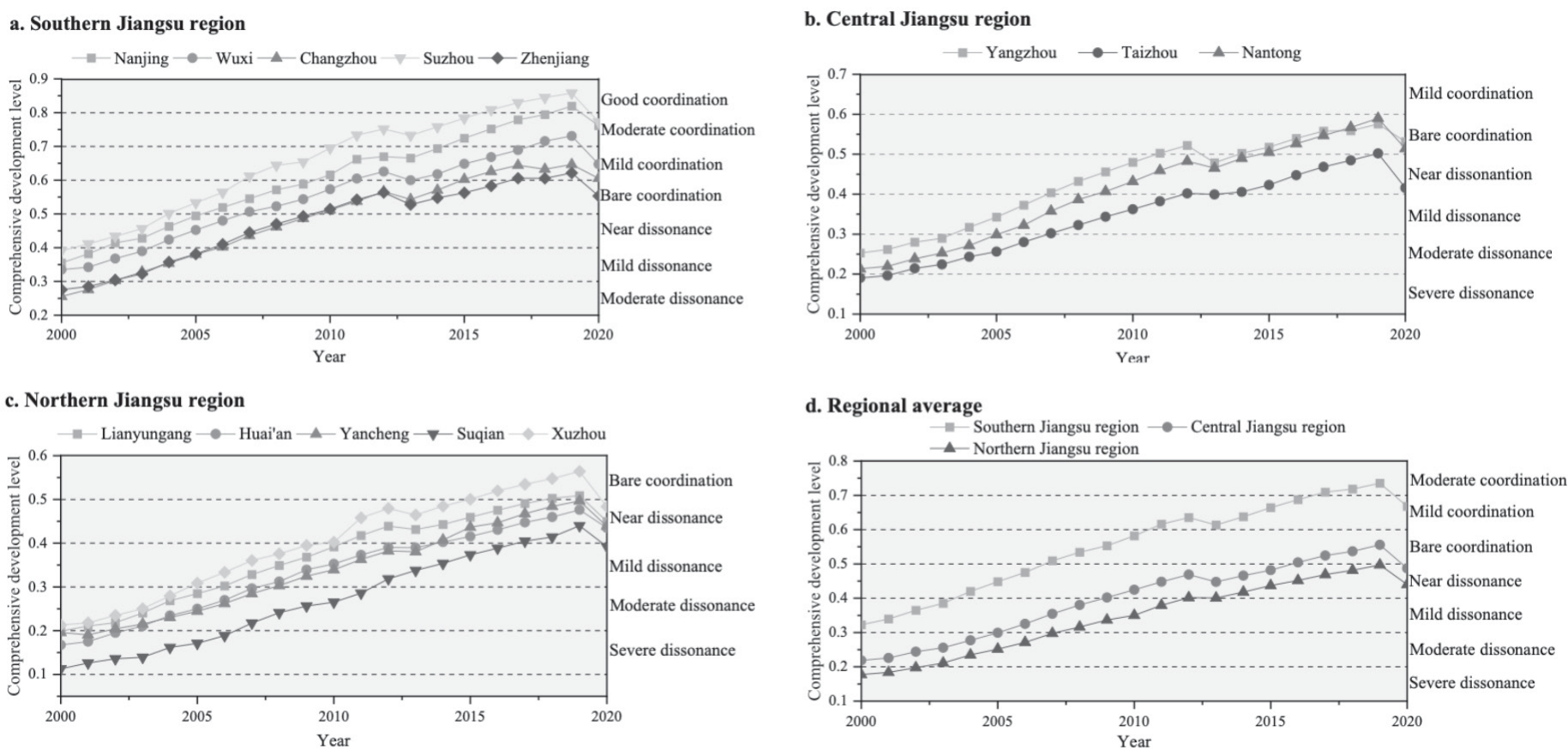
The validation analysis of the interaction model between the tourism industry, economic development, and the ecological environment shows that there is a strong interaction between tourism and economic development. The interaction model between the three systems is also stable over time. In light of this, this study uses the coupled coordination degree model and combines related research by Liao Chongbin to find the regional coupling coordination level [70]. It then shows how the three systems in Jiangsu Province are coupled by dividing the province into three parts: the northern, central, and southern regions (Fig. 5).
According to Fig. 5a), the coupling coordination degree of the five cities in southern Jiangsu exhibits a consistent upward trend over the study years. In 2000, Nanjing, Wuxi, and Suzhou displayed relatively disparate coupling coordination levels, which have since shown consistent improvement. By 2019, Suzhou had achieved a commendable coordination level of 0.850. The coupling coordination degree of Zhenjiang and Changzhou followed a similar trajectory until 2012, after which the gap between them gradually widened. Additionally, Fig. 5b) illustrates an increasing trend in the coupling coordination degree of the three cities in central Jiangsu during the study period. However, from 2007 onwards, Taizhou, Yangzhou, and Nantong witnessed a widening gap in their coupling coordination degrees, which persisted until 2012 before experiencing a decline followed by a gradual recovery.
Furthermore, Fig. 5c) reveals that the coupling coordination degree of the five cities in northern Jiangsu generally trends upward over the study years, albeit with a smaller increase compared to southern and central Jiangsu. Xuzhou has eliminated dissonant coupling coordination since 2015, while Suqian has consistently remained in a dissonant state. The coupling coordination degree of the other three cities remained relatively stable, with differences in their coordination degrees maintained within 0.100 throughout the study period.
Finally, Fig. 5d) indicates that southern Jiangsu exhibits stronger coupling coordination than central Jiangsu but is weaker than northern Jiangsu. Southern Jiangsu had transitioned out of dissonance since 2007, while northern Jiangsu remained in the dissonant category until 2019 when it reached its intra-regional peak. Notably, two fluctuations in regional coupling coordination are observed in the overall upward trend. The first fluctuation occurred between 2012 and 2013, characterized by underperformance in the tourism sector compared to economic growth and adverse effects on the ecological environment due to economic development, resulting in low coupling between the three systems. The second fluctuation occurred from 2019 to 2020, attributed to the COVID-19 pandemic, which led to stagnation in the tourism industry and a significant decline in overall tourism development. This contrasts with the slow rise in the ecological environment and economic development systems, ultimately resulting in a drop in coupling coordination degree.
Spatial Evolution of Coupled Coordination Degree
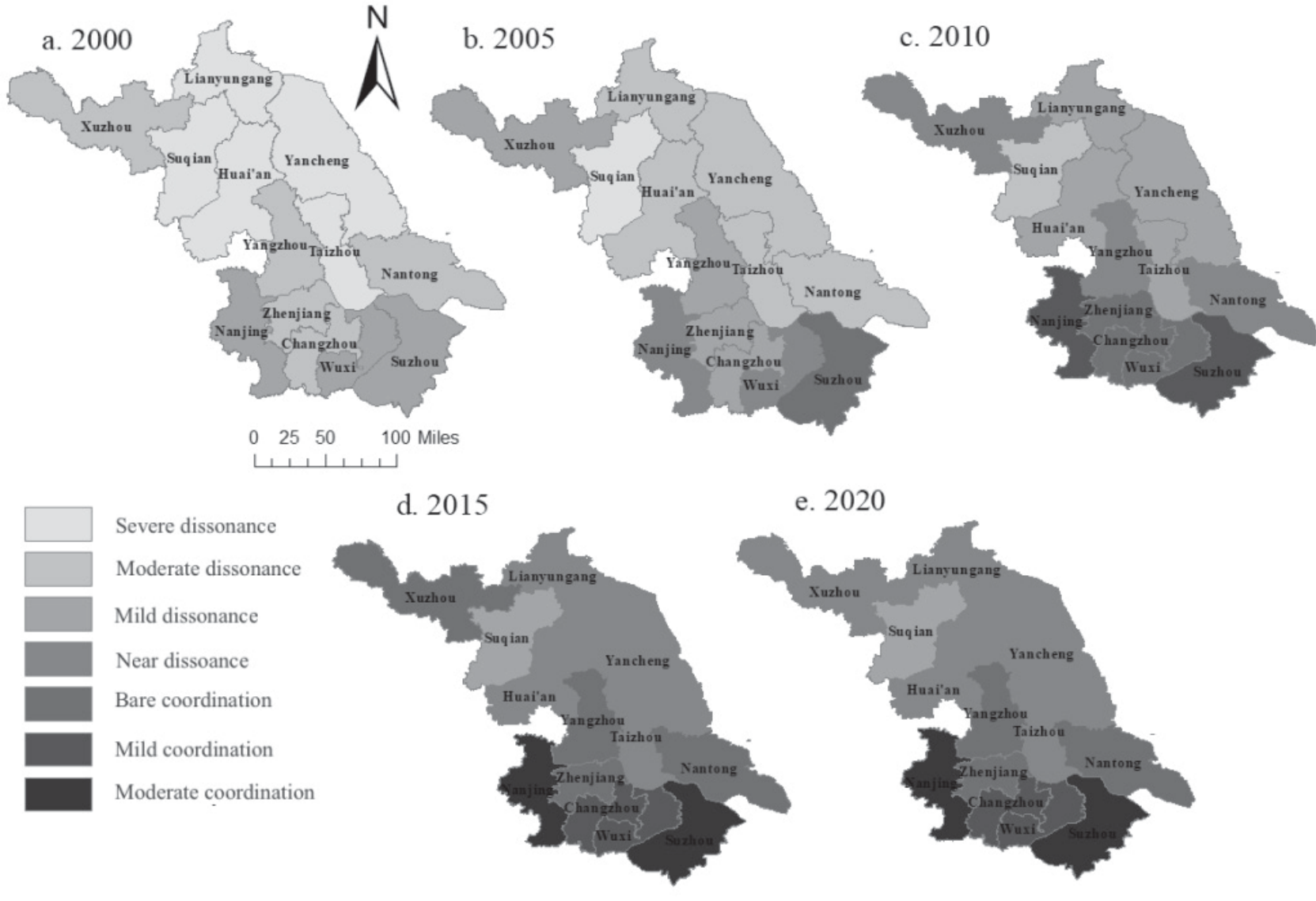
Based on the specific values of the coupling coordination degree among the tourism, economy, and ecological systems of 13 cities in Jiangsu Province from 2000 to 2020, this study utilizes ArcGIS 10.8 software to visually represent the coupling situation of the regional tourism industry, economic development, and ecological environment (Fig. 5). In Jiangsu Province, the regional differences in the degree of coupling coordination are small, and the coordination grades are all low (Fig. 6a). Nanjing, Wuxi, and Suzhou, as mildly dissonant regions, have a significant driving role in the province. As the capital of Jiangsu Province, Nanjing’s good economic situation and deep historical background have laid a good foundation for Nanjing’s ecological industry and tourism industry, while Wuxi and Suzhou have the excellent ecological advantages of having the Yangtze River and Taihu Lake at their backs as well as the geographic location of being close to Shanghai, which ultimately make the three areas become the frontline of the coordinated development in Jiangsu Province, creating a coupled coordination of the three systems. In addition, the remaining 10 cities are in states of moderate and severe dissonance, respectively, which can be seen from the obvious spatial differences in the coupling coordination grade of the 13 cities in Jiangsu province.
Fig. 5.
Temporal coupling coordination degree of the tourism industry, economic development, and ecological environment in Jiangsu Province from 2000 to 2020.
In 2005, the coupling coordination degree of the 13 cities in Jiangsu province varied significantly within the year, with the coordination grade spanning from severely dissonant to barely coordinated (Fig. 6b). In this year, Suzhou had already made a great leap forward in terms of coupling coordination, and it became the only city in the province to achieve a coordinated level. Only Suqian and Nantong remain in the province at the severe and medium dissonance levels, which indicates that the two cities are severely under-energized in terms of economic development, resulting in a lack of support for the regional tourism industry, which cannot be matched with the improvement of the ecological environment, and thus a low coupling coordination level.
Compared with 2005, the coupled coordination of tourism industry-economic developement-ecological environment tri-systems in Jiangsu province improved significantly in 2010 (Fig. 6c). The number of cities in the province with more than a mild dissonant grade has reached 12, and only Suqian remains in a moderate dissonant grade, indicating that the region invests less in economic construction, which inhibits the progress of the regional tourism industry and ecological environment, resulting in a weaker coordination status among the three systems and a lower value of the coupling coordination degree. Since then, the regions in the province have continued to make efforts.
By 2015, almost all cities in Jiangsu Province had risen one step at the coupling coordination degree level (Fig. 6d). It’s clear that Suzhou and Nanjing have a polarizing effect on coupling coordination, that they play a bigger role in driving the region, and that they have a radiation effect that makes the surrounding areas work together better. This fully shows that Jiangsu Province has put a lot of effort into building up its economy over the past five years, and at the same time, it pays more attention to the coordinated relationship between Suzhou and Nanjing.
In 2020, the coupling coordination level of the province (Fig. 6e) was basically similar to that of 2015 (Fig. 6d), and the comprehensive development level of the tourism industry in this year is drastically reduced compared with the previous one, which is mainly due to the external reason of COVID-19. Because of strict rules meant to stop epidemics, the tourism industry pretty much stayed the same. This meant that the tourism industry’s big drop happened at the same time that the economy and the environment were slowly getting better. This made the connection between tourism development-economic development-ecological environment get worse quickly, and coordination got worse too.
To summarize, the coupling coordination level between the tourism industry, economic development, and ecological environments in Jiangsu Province has transitioned from a state in which the whole province was out of tune in 2000 to a state in which the province was basically in tune in 2020. It is worth noting that due to the impact of COVID-19 in 2020, the tourism industry in the province was severely hit, resulting in a decline in the coupling coordination rank between the tourism industry, economic development, and the ecological environment. The data in 2020 are more affected by external factors and have special characteristics.
Factor Analysis of Barriers to Synergies
To further enhance the coupling coordination of the tourism industry, economic development, and ecological environment in Jiangsu Province and highlight the advantages of their symbiotic relationship, this study, based on measuring coupling coordination and analyzing the spatiotemporal evolution characteristics of coupling coordination in Jiangsu Province, utilizes the barrier degree model to analyze the obstacle factors affecting the steady improvement of synergy. Following the principle that greater barriers imply higher constraints, this study considers the evaluation indicators (C1-C21) of the tourism industry-economic development-ecological environment system evaluation system (Table 1) as barrier factors and analyzes them at two levels. The first level is the criterion level, consisting of the tourism industry system, the economic development system, and the ecological environment system. The barrier degree of the criterion level equals the sum of the barrier degrees of the corresponding indicator levels. The second level is the indicator level, comprising 21 evaluation indicators (C1-C21).
Degree of Barriers at the Criterion Level
The barrier degrees of the tourism industry system, economic development system, and ecological environment system exhibit distinct changes from 2000 to 2020, as illustrated in Fig. 7. This study divides the changes in the barrier degree of the three systems’ synergy criterion layer in Jiangsu Province into two stages: 2000-2012 and 2013-2020. This division allows for a meticulous examination of the factors impeding the growth of regional tourism industry-economic development-ecological environment synergy at different stages.
During the first stage, the barrier degrees of the three systems largely remain constant. The economic and tourism systems exhibit higher barrier degrees, while the ecological environment system displays lower ones. This suggests that changes in the economic and tourism systems from 2000 to 2013 predominantly hindered the improvement of synergy among the three systems in Jiangsu. In the second stage, the barrier degree of the tourism system and the economic system undergo significant changes compared to the first stage. The barrier degree of the tourism system shows an increasing trend over the years, while that of the economic system demonstrates a decreasing trend. This indicates that the barrier degree of the tourism system has intensified, impeding the enhancement of synergy among the three systems from 2013 to 2020, whereas the barrier degree of the ecological environment remains relatively stable during this period. In other words, ecosystem development remains relatively stable throughout the study years, exerting weak barrier effects on the enhancement of coordination among the three systems.
Degree of Barriers at the Indicator Level
In order to comprehensively show the specific changes in the degree of barriers of indicators within the study years, but considering the large number of indicator layers, this study selects three time nodes, 2000, 2010, and 2020, and extracts from them the top five indicators with the degree of barriers of the system indicator layers within the year to be ranked (Table 5). The test results show that the level of barriers is very different between the different indicator layers, especially in the tourism system. The level of barriers is higher for the indicators – the average value is 8.671% – and the lowest level of barriers is still more than 1% for all seven indicators. The relationships between the indicators in the economic system are complicated and varied, as is the level of barriers in the different subsystems. On the contrary, in the ecological environment system, the barrier degree of each indicator is relatively low, with an average value of 1.16%, and the minimum value of the obstacle degree among the seven specific indicators is close to zero. In terms of the degree of regional influence, except for Suzhou, the top three obstacle degree indicators for other cities are C5 (inbound tourism revenue), C4 (inbound tourism arrivals), and C1 (total tourism revenue), with mean values of 17.256%, 16.380%, and 10.853%, respectively.
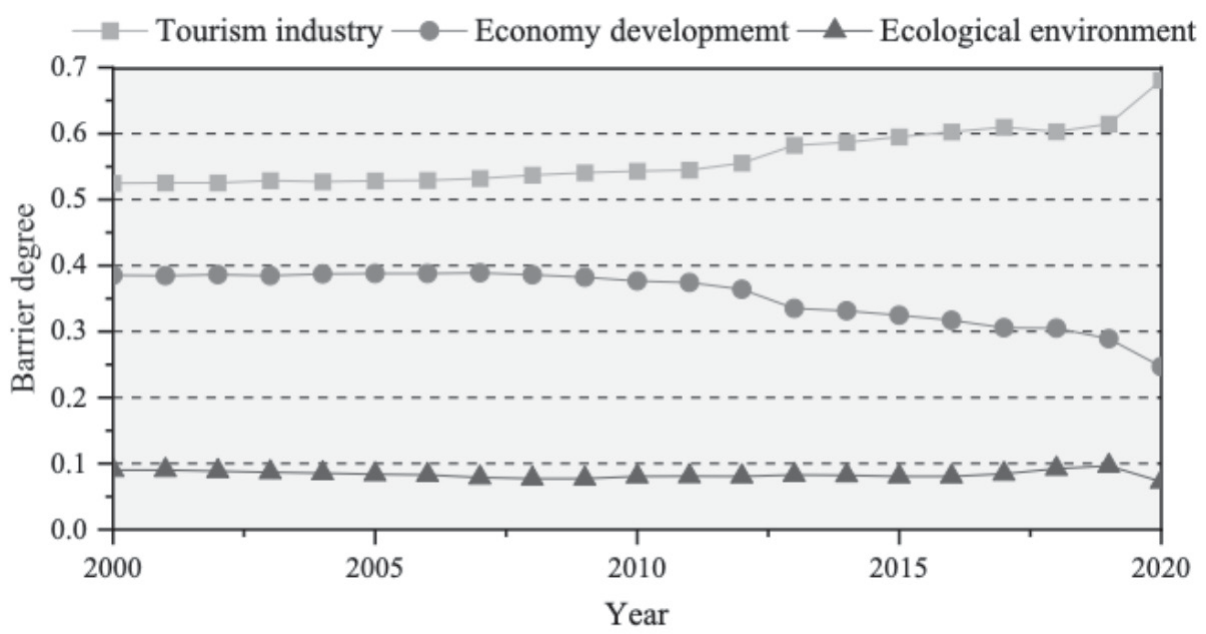
Table 4.
Granger causality test results.
Table 5.
Barrier degree ranking of system index layer.
It is worth noting that inbound tourism activities have become a key factor constraining the improvement of the coupling and coordination of the three systems in Jiangsu Province, especially under the impact of COVID-19. Tourism activities have been severely restricted, and the number of inbound tourists received in the province has drastically declined, resulting in the indicators related to inbound tourism activities being the main constraints affecting the steady growth of the three-system synergies. From the time series, the obstacle degree of each indicator shows obvious fluctuating changes. In 2010, the top three indicators of Suzhous’s obstacle degree were C5 (inbound tourism revenue), C1 (total tourism revenue), and C10 (added value of the tertiary industry), with average values of obstacle degree of 14.661%, 12.813%, and 9.991%, indicating that in addition to the inbound tourism activity, the overall development levels of domestic tourism activities and the tertiary industry’s have significant constraints on the three systems coupling in Suzhou. The top three barrier factors in Suzhou in 2020 have evolved into C4, C5, and C6, with barrier degrees of 32.270%, 27.934%, and 6.862%, respectively. This indicates that the development status of inbound tourism activities in Suzhou in 2020 is a more significant constraint to the synergistic effect.
In addition, for most cities in the province, C6 (referring to domestic tourism arrivals) and C10 (referring to the value added of tertiary industry) are the fourth and fifth ranked barrier factors in the study years, and the ranking of the barrier degree of these two indicators keeps changing with each other. In addition, C2 (the proportion of tourism income to GDP), C11 (gross regional product), and C12 (disposable income per capita of urban residents) also have some constraints on the growth of synergies among the three systems, which is due to the fact that some cities still have room for improvement in economic development and the city’s economic construction is not compatible with the current state of development of the tourism industry and improvement of the ecological environment, which leads to a higher degree of obstruction of the indicators at the level of the economic system and becomes an important factor.
Conclusions
As coordinated development gradually becomes mainstream in society, this study, based on a symbiotic perspective, analyzes the spatiotemporal changes in the coupling coordination of the tourism industry, economic development, and ecological environment in 13 cities in Jiangsu Province from 2000 to 2020. It identifies the constraints factors affecting the enhancement of synergy among the three systems. This research not only enriches the theoretical understanding of the interaction among the three systems but also extracts policy focal points for the future enhancement of coordinated development among the regional tourism industry, economic development, and ecological environment from a practical standpoint. This is crucial for achieving sustainable development and maintaining social stability.
First, in the long run, the interaction relationship between the tourism industry, economic development, and ecological environment is basically stable, which provides a reliable guarantee for the robustness of the model. This study analyzes and explores the relationship between the three by using the PVAR model. According to the results of the model test, it can be seen that the interaction between the tourism industry and economic development is more obvious, and the synergy between the two systems is quite significant; the relationship between economic development and the ecological environment is more complicated, but both have a greater impact on the ecological environment.
Second, the spatial and temporal differences in the coupled coordination degree of the three systems are obvious in the 13 cities of Jiangsu Province within the study years. An upward trend can be seen in the time series, while an upward trend can be seen in the spatial evolution. The coupling coordination degree in Jiangsu Province shows a decreasing trend in spatial change from the south to the middle to the north. The growth pole of the regional coupling coordination degree is centered on Nanjing and Suzhou, with the southern region of Jiangsu Province being the most important. However, it has a certain inhibitory effect on the northern region.
Third, having identified the factors that make it harder to improve the synergy of the three systems, we can say that the growth of the tourism industry in Jiangsu Province significantly slows down the improvement of the degree to which the three systems are coupled and work together. In particular, during the epidemic period, the number of inbound tourism activities dropped sharply due to the influence of relevant policies, which had a strong impact on the coupling between the tourism industry-economic development-ecological environment in the region.
Based on the analysis above, this study, focusing on the symbiotic relationship among the tourism industry, economic development, and ecological environment, proposes the following recommendations to enhance the coordinated development of Jiangsu Province and build a regional economic layout and land space system that is complementary and of high quality:
For the southern Jiangsu region, which has a higher level of coupling coordination, first of all, it should continue to give full play to its geographical location and economic development advantages, accelerate the construction of exemplary projects, push forward the optimization and adjustment of the industrial structure, and cultivate and grow strategic emerging industries such as bio-medicine, new energy, and so on. It should establish an ecological view of innovation, enhance the high-quality supply of high-tech innovation, and cultivate an advanced manufacturing industry cluster with international competitiveness. At the same time, it is necessary to introduce and use emerging science and technology in a timely manner, with the help of a new generation of information technology, such as artificial intelligence, to promote industrial empowerment and efficiency, digitalization, intelligent transformation, and upgrading processes, accelerate the construction of a modern industrial system of the school of safety, and achieve the high-quality development of the region. In addition to economic development, this region should focus on strengthening the ecological environment to protect joint governance, adhere to green low-carbon leadership, and make good use of scientific and technological means to solve environmental problems. Finally, it is crucial to make good use of the brand effect of the city that Suzhou represents in order to draw in more investment and talent, actively integrate into the Yangtze River Deltas integration pattern, and strengthen synergistic interaction with other regions of the province, Shanghai, Hangzhou, and other places in order to share the benefits of development.
For the central Jiangsu region, which has a medium level of coupling coordination, it should give full play to its advantages in tourism resources. First of all, rational planning should be carried out according to the actual situation of the region, and tourism should be carried out according to local conditions. Based on the consideration of environmental carrying capacity, a targeted development plan is formulated for the unique situation of the three regions to promote the development of tourist attractions. On the premise of following the ecological red line, actively promote the green development of the regional tourism industry. Secondly, for cities with better tourism development, such as Yangzhou, regional tourism marketing efforts should be strengthened, new highlights of existing attractions should be explored, social hotspots should be combined, creative tourism should be developed, and new forms such as live broadcasting should be utilized to create a new regional tourism economy. Finally, in terms of industrial development, the three cities in northern Jiangsu should make full use of their manufacturing advantages in the field of shipbuilding and offshore industry, promote the development of high-end, intelligent, and green industries, accelerate into the world’s leading ranks of shipbuilding and offshore equipment manufacturing, and build a modern marine city with river and sea characteristics.
For the northern Jiangsu region, where the level of coupling coordination is low, resource advantages should be fully utilized to drive regional development. First of all, North Jiangsu has more of the country’s top 100 counties, including Xuyi County, which has been successfully included in the National County New Urbanization Construction Demonstration Areas, so northern Jiangsu should take such counties as a template and use the county as an important carrier to strengthen the strength and breadth of urbanization construction. In terms of industrial development, it is necessary to accelerate the transformation and upgrading of traditional industries and to participate in and integrate into the advanced manufacturing clusters in the province, such as engineering machinery and green food, by combining the advantages of seniority. Secondly, it is necessary to promote the construction of the coastal economic belt and regional central cities in an integrated manner, increase the strength of the province’s north-south twinning help and cooperation, and deepen the all-round help and cooperation in many fields such as industry, science, and technology, promote the sharing of people’s livelihoods between regions, and commit to narrowing the gap between cities so as to constantly enrich the path of realizing the coordinated development of the region. Finally, accelerate the construction of a modern transportation system, improve the transportation network in northern Jiangsu Province, and provide transportation support for the realization of the deep development of the regional tourism industry.
Admittedly, there are still some shortcomings in this study. Firstly, academics have not yet reached a consensus on the three-system evaluation system of “tourism industry, economic development, and ecological environment,” and due to the availability and accessibility of research data, the selection of indicators for the development of the tourism industry and regional ecological environment assessment in this study may be biased, which can be further improved in the future. Moreover, the causes of the barriers affecting synergy enhancement and the path of influence also need to be deepened in the future in order to put forward more targeted and practical suggestions.

