

Introduction
Maize straw is a renewable green biological resource, and its nutrients are available to soil microorganisms and crops [1]. However, at present, large quantities of straw are still burned and discarded, resulting in waste of resources and environmental pollution [2]. In recent years, the animal breeding industry in China has seen significant growth in response to the growing demand for eggs, meat, and related products [3]. However, the sustainability of the breeding industry is challenged by the large amount of animal manure. If disposed of incorrectly, manure can lead to serious atmospheric, water, and soil pollution [4]. The rational utilization of straw and animal manure is closely linked to the sustainable development of agriculture. Additionally, Mollisols are regarded as a critical factor in maintaining the food basket for many countries; however, non-sustainable field management of Mollisols in Northeast China has led to a decline in soil organic carbon (SOC) content and a deterioration in Mollisol quality and health over the past few decades [5, 6]. Therefore, the return of straw and manure can mitigate these problems, increase SOC storage, and improve soil tillage quality and crop productivity [7, 8]. Ma et al. [9] confirmed that optimized nitrogen application, combined with manure, could increase yield over 7 years of continuous monitoring. Zhou et al. [10] found that straw return management and non-flooded cultivation are sustainable agricultural strategies for maintaining soil quality and crop yields. Although there are many advantages of manure and straw returning to the field, it is very important for smallholder farmers to rationally allocate straw and manure to promote increased crop yield and income. The increased SOC content and crop yield by returning straw and animal manure may be related to soil microbial activities.
Microorganisms in soil comprise the most diverse component on earth, which plays a critical role in numerous ecosystem functions (e.g., soil nutrient cycling, soil carbon sequestration, and the maintenance of soil fertility) [11, 12]. Soil microbial communities participate in crop residue decomposition and soil organic matter (SOM) transformation, which are important mediators for sequestration of organic carbon (C) through immobilization and mineralization of SOM [13, 14]. Previous studies have revealed that the application of organic wastes affected the soil microbial community. Crop residue returning to the soil might affect the diversity and composition of soil microorganisms, thus changing the SOC dynamics [15]. Li et al. [16] demonstrated that adding straw residue to the soil results in the soil obtaining a significant amount of carbon (C) and nitrogen (N) nutrients, creating favorable conditions for the growth of soil microbiota. Cui et al. [17] found that bacterial biodiversity and abundance decreased in soils applied with inorganic fertilizer but increased in soils applied with manure. Long-term application of pig manure and inorganic fertilizer could change the composition of the fungal community [18]. Organic fertilizer application enhanced the abundance of beneficial taxa, which may contribute to improved enzyme activities, soil nutrient supply, and crop yield [19].
Applying organic waste (O-W), including crop residues and animal manure, represents a widely utilized agricultural practice for enhancing soil fertility and improving crop productivity. Some studies have investigated the effects of organic waste return on the abundance and diversity of soil bacterial and fungal communities; however, the results have been inconsistent. Pan et al. [20] found that applying manure enhanced the number of differential populations in bacterial communities, whereas it decreased that of fungal communities compared with the application of inorganic fertilizers. Some studies have confirmed that straw return can increase soil bacterial diversity [21], while others have shown that it can decrease bacterial diversity [22]. These observed variations suggest that the microbial responses to organic amendments are likely to depend on the type of organic input, soil properties, and agricultural management practices. Most of these studies have focused on the individual effects of straw or manure return on soil microbial communities, soil nutrients, or crop yield. However, the synergistic mechanisms of straw and manure applications on soil microbial diversity, nutrient availability, and ultimately crop yield in a Mollisol remain poorly understood. Therefore, it is necessary to understand the biological processes that mediate the soil’s biological and physicochemical properties through microbial communities to promote crop yield.
This study aimed to determine the changes and biological processes of soil properties and microbial communities to increase crop yield under straw and manure return. To achieve this objective, a 6-year field experiment was conducted in the dryland maize cropping system on the Northeast China Plain. It is hypothesized that: (1) Incorporating animal manure and maize straw into soil can alter the dominant taxonomic groups of soil microbiota while enriching microbial communities associated with the decomposition of straw and manure. (2) Additionally, this practice accelerates the release of available nutrients from organic waste and promotes crop yields by stimulating key biological processes in the soil.
Materials and Methods
Experimental Site Description
The field experiment site was located in Gongzhuling City, Jilin Province, Northeast China (43º56′25″N, 124º89′61″E). A monsoon-predominant subtropical humid climate prevails in the experimental area. A typical continental monsoon climate prevails in the experimental area. Mean annual temperatures range from 4 to 6ºC, and mean annual precipitation ranges from 400 to 600 mm. The soil used in this field experiment was a Mollisol (classified as a Luvic Phaeozem by the FAO).
Experimental Design and Soil Sampling
A total of twelve plots (3 replicates × 4 treatments) were laid out in a randomized block design, and each microplot was 50 m2 (5 m × 10 m), with a 1 m aisle between the microplots. The four treatments were as follows: CK: no maize straw and no animal manure control; MS: maize straw only; CS: chicken manure plus maize straw; and OS: ox manure plus maize straw. The maize straw was applied to each microplot at a rate of 9000 kg ha−1. Animal waste was collected from chicken and ox farms, respectively, and composted for six months before application. The amount of chicken manure and ox manure applied was 2,104 kg ha−1 and 1,684 kg ha−1, respectively (chicken and ox manure supplying 510 kg C ha−1 yr−1). Animal manure and maize straw were evenly mixed in the furrows (about 20 cm deep) and then covered by the surrounding soil before planting. The field experiment was initiated in 2018 and cultivated in a continuous maize cropping pattern, with spring maize planted in early May and harvested in early October.
Soil samples were collected in October 2023 (six years after application). Soil samples were collected at 0-20 cm depth using a five-point method and were thoroughly mixed. The soil samples were divided into three sections. One portion of the soil samples was air-dried to measure the physicochemical properties, another was stored in a refrigerator at 4ºC for soil enzyme analysis, and the remaining portion was kept at -80ºC for DNA extraction and sequencing.
Determination of Soil Physicochemical Factors and Enzyme Characterization
Soil organic carbon (SOC) was determined by the wet modified oxidation method (K₂Cr₂O₇-H₂SO₄) [23]. Soil pH and moisture (SM) were measured using standard methods described by Zhang et al. [24] and Cui et al. [25], respectively. Total nitrogen (TN) was analyzed using the Kjeldahl digestion method, while available nitrogen (AN) was determined by alkaline diffusion. Total phosphorus (TP) was measured via the Mo-Sb colorimetric method, and available phosphorus (AP) was determined using the sodium bicarbonate method.
The activities of soil urease, catalase, and alkaline phosphatase were determined using the phenol-sodium hypochlorite colorimetric method, the titration method with potassium permanganate, and the disodium benzoic acid phosphate colorimetric method, respectively. Soil urease (URA), catalase (CAA), and alkaline phosphatase (APA) activities were expressed as mg NH4+ - N g–1 soil 24 h–1 and 0.1 mol L–1 KMnO4 g–1 soil 20 min–1, and mg of phenol g-1 soil 24 h–1, respectively [26, 27].
High-Throughput Sequencing
Soil DNA extraction was performed using the Fast DNA spin kit for soil (MP BIO, Inc., Irvine, CA, USA), and DNA quality and quantity were checked by 1% agarose gel electrophoresis. The primer pair 338F/806R (338 F, 5′- ACTCCTACGGGAGGCAGCA-3′; 806 R, 5′-GGACTACHVGGGTWTCTAAT-3′) targeting the V3-V4 hypervariable region was amplified from the bacterial 16S rRNA. The PCR reactions were conducted using the following program: 1 min at 98ºC, followed by 30 cycles of 10 s at 98ºC, 30 s at 50ºC, and 60 s at 72ºC, with a final extension at 72ºC for 5 min. Two primers (2045 F, 5′- GCATCGATGAAGAACGCAGC-3′, and R2390, 5′-TCCTCCGCTTATTGATATGC-3′) were used to amplify the ITS2 region of fungal genes. The cycling conditions for ITS2 were as follows: 3 min at 94ºC, 35 cycles of 45 s at 94ºC and 1 min at 72ºC, and 72ºC for 7 min. The PCR products were purified and sequenced by the PacBio Sequel II platform at BGI Tech Co., Ltd. (Shenzhen, China). The raw sequencing data underwent rigorous quality control processing. We used Trimmomatic-0.33 to remove low-quality reads and clustered them into operational taxonomic units (OTUs) or amplicon sequence variants (ASVs) at a 97% similarity threshold. Chimeric sequences were removed using UCHIME (v4.2.40), and taxonomic assignment was performed by leveraging reference databases, including the Gold Database (v20110519) and UNITE (v20140703). Subsequently, the clean paired-end reads were subjected to further denoising using DADA2, with taxonomic classification performed in QIIME 2 (2019.4) [28]. Microbial alpha-diversity was evaluated using the Chao1 and Shannon diversity indices, as calculated by Mothur software.
Maize Yield Measurement
During the maize harvest (October 2018-2023), the three central rows of maize were harvested, each with a length of 5 m in each plot. The grain yield was calculated at a mass of 12% grain moisture content. The sustainable yield index (SYI) and the coefficient of variation (CV) were used to evaluate yield stability. The higher the SYI value, the better the system’s sustainability, whereas the CV value is smaller, and the yields between years are more stable. The calculation formula is as follows:
where Ymean (kg ha−1) is the mean yield for each treatment during the experimental years, σ is the standard deviation, and Ymax (kg ha−1) is the maximum yield.
Statistical Analysis
Statistical analyses were conducted using SPSS 23.0. The differences in the parameters were evaluated using a one-way analysis of variance (ANOVA). A two-way ANOVA was conducted to evaluate the effects of the different treatments, years, and their interactions on yield. Redundancy analysis (RDA) was used to detect the interrelationship between soil physicochemical properties, enzyme activity, and microbial communities (at the phylum level) using CANOCO 4.5. Principal component analysis (PCA) was also conducted using CANOCO 4.5. Relevant data were organized using Microsoft Excel 2019. The relationship between soil properties and crop yield, soil properties and the Shannon index, and the Chao1 index was examined using Origin 2024 (Spearman analysis).
Results and Discussion
The Effect of the Application of O-W on Soil Parameters
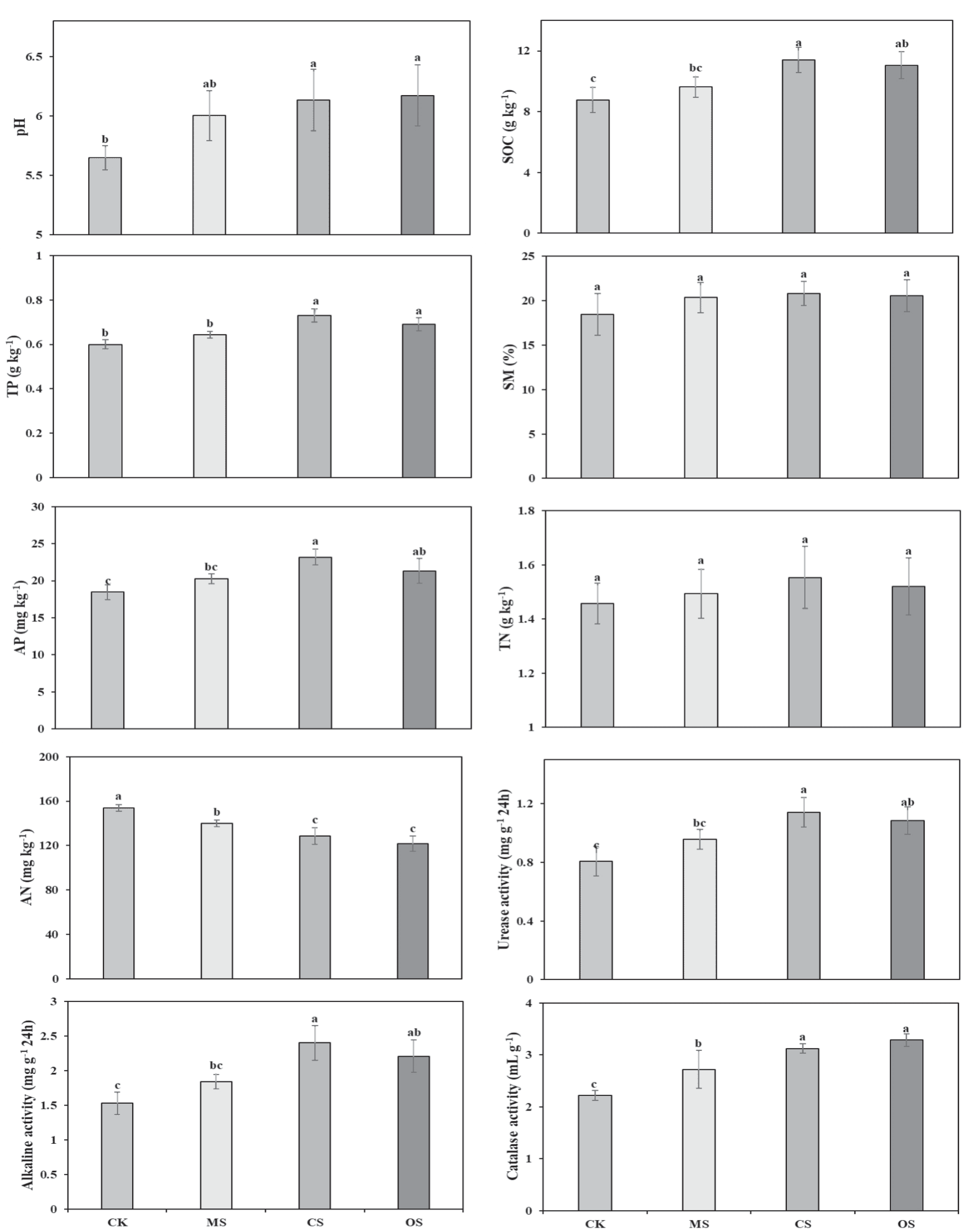
Our findings showed that the organic waste return affected soil physicochemical properties and enzyme activity (Fig. 1). Compared to CK, the O-W treatments enhanced SOC (9.56-29.98%), TN (2.52-6.64%), TP (7.22-21.67%), and AP (9.92-25.61%). Some studies have shown that incorporating organic wastes increased soil organic carbon accumulation [29, 30]. Xu et al. [31] indicated that the increase in SOC is due to adding external carbon to the soil by applying manure. The soil TN, TP, and AP were increased under straw and manure return compared to the control. This might result from maize straw and animal manure being returned to the soil as organic fertilizers, and various exogenous nutrients can be released into the soil by the action of microorganisms to maintain soil nutrient balance and reduce nutrient losses [32, 33]. This finding was also confirmed by Tang et al. [34], who found that manure input into the soil was favorable for nitrogen retention in complex organic forms. Previous studies have found that incorporating organic wastes back into the soil enhanced TN and TP contents (0-20 cm soil layer) and limited the downward leaching of inorganic nitrogen and phosphorus [35]. Furthermore, the application of organic wastes offers advantages in improving soil physical and chemical conditions, which can serve to enhance soil fertility and promote crop growth, resulting in more root residues returning to the soil and increasing N and P levels [36]. Moreover, the SOC contents corresponding to CS-treated soil were 3.17% and 18.64% higher than those of OS and MS (p<0.05), respectively. In this study, we found that higher SOC contents were recorded for CS compared to the other treatments, which is mainly related to the higher SOC protective mechanisms (improving SOC accumulation and reducing mineralization) in CS-treated soil and the higher C in its available forms in chicken manure. Similar results were verified by Gai et al. [37]. Ning et al. [38] found that a greater annual carbon addition with chicken manure increased sequestrated carbon, indicating that the experimental soil had the potential to sequestrate considerable amounts of carbon and establish organic carbon pools. Additionally, the O-W treatments significantly increased pH compared to CK (p<0.05). Xu et al. [39] reported similar findings, indicating that the decomposition of chicken and ox manure released organic anions, leading to an increase in soil pH.
The Effect of the Application of O-W on Soil Enzyme Activity
Soil enzymes act as indicators of soil health and play a vital role in regulating biodegradation of organic residues, nutrient cycling, and the energy flow process in soils [40, 41]. In our study, compared to CK, O-W return greatly increased the activities of CAA, URA, and APA (Fig. 1). This was primarily attributed to the incorporation of animal manure and maize straw to enhance soil nutrients, resulting in elevating the activity and metabolism of soil microorganisms, subsequently promoting the synthesis and secretion of soil enzymes [42]. OS had the highest CAA among the four treatments, with the order OS>CS>MS>CK. Catalase can promote the decomposition of hydrogen peroxide and prevent cells from being damaged [43]. The ox manure return can provide nutrients and a suitable environment (e.g., soil pH, moisture, and oxygen) for catalase-producing microorganism growth, thereby enhancing soil catalase activity. Urease promotes the conversion of organic nitrogen to ammonium nitrogen, which crops can easily utilize [44]. The URA and APA after the application of CS were higher than those of other treatments (p<0.05). The increase of soil urease activity in CS may be related to the high nitrogen content and a low C/N ratio of chicken manure [45].
The Effect of the Application of O-W on Microbial Diversity
Soil microorganisms are a dynamic source of soil substance transformation, which can maintain crop productivity and soil fertility [46]. Wagg et al. [47] suggested that microbial alpha diversity (Shannon and Chao1 indices) can reflect soil health conditions. We assessed bacterial and fungal diversity under varying treatments (Table 1). For bacteria, the CS treatment had the highest Chao1 and Shannon’s index. Compared to MS treatments, the CS and OS treatments exhibited higher Chao1 and Shannon’s indices of fungi, with the highest indices recorded in the OS treatment. Our study showed that, compared to the control, CS and OS treatments increased the Chao1 and Shannon’s indices of bacteria and fungi. In agreement with our results, Sun et al. [48] found that manure increased the Chao1 and Shannon indices of bacteria.
Table 1.
Soil bacterial and fungal diversity (Chao1 index and Shannon index) after O-W application (mean±standard error, n = 3).
Fig. 1.
Variations in soil properties and enzyme activities under the application of O-W. Note: The different lowercase letters above the bars among the different treatments indicate significance at p<0.05. (TP, total phosphorus; AP, available phosphorus; AN, available nitrogen; SOC, soil organic carbon; SM, soil moisture; TN, total nitrogen; CK, no animal manure and no maize straw; MS, maize straw only; CS, chicken manure and maize straw; OS, ox manure and maize straw.)
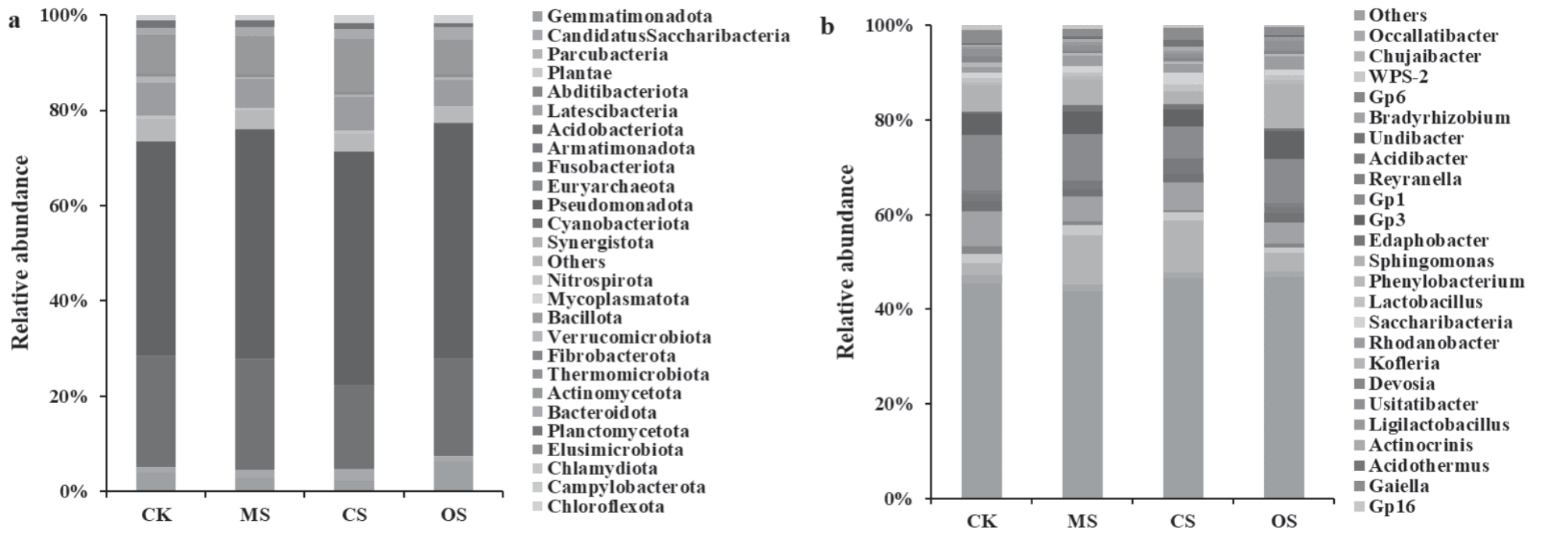
The most abundant bacterial phyla and genera in different treatments are shown in Fig. 2. Here, Pseudomonadota (44.78-49.30%), Acidobacteriota (17.32-23.18%), Actinomycetota (7.15-11.29%), Bacillota (5.43-7.12%), Gemmatimonadota (2.16-6.24%), and Bacteroidota (1.60-2.86%) were the top 6 dominant bacterial phyla (Fig. 2a)). Liu et al. [49] showed that Pseudomonadota, Actinomycetota, and Bacillota were the main bacterial communities during co-cultivation of corn straw with soils, most of which had high cellulose-degrading capability. Pseudomonas is also a major player in conferring disease suppressiveness under organic farming [50]. Relative to the control, the O-W treatments significantly increased the abundance of Pseudomonadota. In contrast, straw and manure additions decreased the relative abundances of Acidobacteria. Acidobacteria are categorized as oligotrophic taxa, slow-growing bacteria that predominate in nutrient-poor environments [51]. In this study, the abundance of Acidobacteria was negatively correlated with soil nutrient content, indicating that the members of the phylum were oligotrophic bacteria. Similar findings were reported by Kielak et al. [52]. The application of organic wastes releases large amounts of nutrients into the soil; the faster-growing microorganisms may replace Acidobacteria. Treatment CS recorded the highest percentage of Actinomycetota and Bacillota, whereas the abundances of Gemmatimonadota and Bacteroidota were highest in the OS treatment. The bacterial genus abundance was further analyzed (Fig. 2b)). The dominant bacterial genus consisted of Gp1, Chujaibacter, Sphingomonas, Bradyrhizobium, Gp3, Gaiella, Rhodanobacter, and Acidibacter, which is consistent with the finding of Liu et al. [53]. The relative abundance of Gp1 was lower in O-W treatments than in CK treatments, and the decreasing order for the relative abundance of Gp1 in the O-W treatments was MS>OS>CS. Treatment CS recorded the highest percentage of Chujaibacter (11.04%), and the percentages of Chujaibacter in CK, MS, and OS were 2.63%, 10.23%, and 4.02%, respectively.
Fig. 2.
Soil bacterial composition. Note: CK, no animal manure and no maize straw; MS, maize straw only; CS, chicken manure and maize straw; OS, ox manure and maize straw.
The relative abundance of the fungal phylum has been presented in Fig. 3a). The results demonstrate that O-W treatments significantly changed the top 12 fungal communities at the phylum level. Ascomycota (50.83-90.20%), Basidiomycota (7.07-39.34%), Chytridiomycota, Fungi_phy_Incertae_sedis, and Mortierellomycota were the dominant fungal phyla. Ascomycetes and Basidiomycetes are the most abundant fungi and are important decomposers of organic materials, which contribute sequentially or jointly to organic waste decomposition [19, 54]. Ascomycetes are primarily responsible for cellulose and hemicellulose degradation, whereas Basidiomycetes play particularly important roles in the degradation of lignin [55]. The relative abundance of Ascomycota was larger in the CS treatment than in other treatments. Treatment OS had the highest relative abundances of Basidiomycota. Chicken manure has higher nutrient content and provides more substrate utilization for Ascomycetes and is more suitable for Ascomycetes reproduction and activity, while ox manure contains higher lignocellulose, which is the main energy source of Basidiomycetes, thereby increasing the abundance of Basidiomycetes. At the genus level, Trechispora, Chrysanthotrichum, Conocybe, Arcopilus, Oidiodendron, Conlarium, Chaetomidium, Penicillium, Arachniotus, and Pseudogymnoascus constituted the top 10 dominant fungal genera (Fig. 3b)). In the OS samples, Trechispora (15.67%) and Conocybe (16.09%) were the most abundant genera. For the CS samples, Chrysanthotrichum (25.09%) was the most abundant genus. Adding ox manure and maize straw increased the abundance of Conocybe, and Tóth et al. [56] found similar findings, indicating that Conocybe is mostly found in fertile soil, herbivore feces, and plant residues.
Fig. 3.
Soil fungal composition. Note: CK, no animal manure and no maize straw; MS, maize straw only; CS, chicken manure and maize straw; OS, ox manure and maize straw.
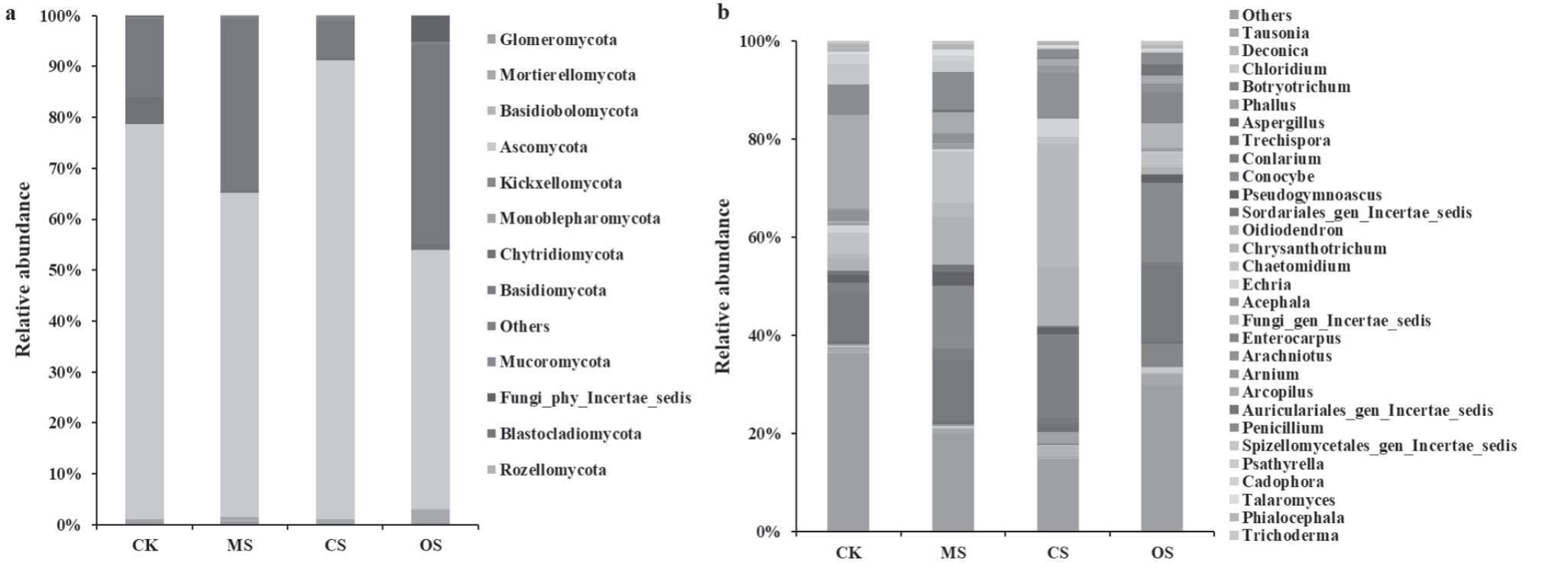
Fig. 4.
Principal component analysis (PCA) of soil bacterial and fungal community composition across different samples. Note: CK, no animal manure and no maize straw; MS, maize straw only; CS, chicken manure and maize straw; OS, ox manure and maize straw.
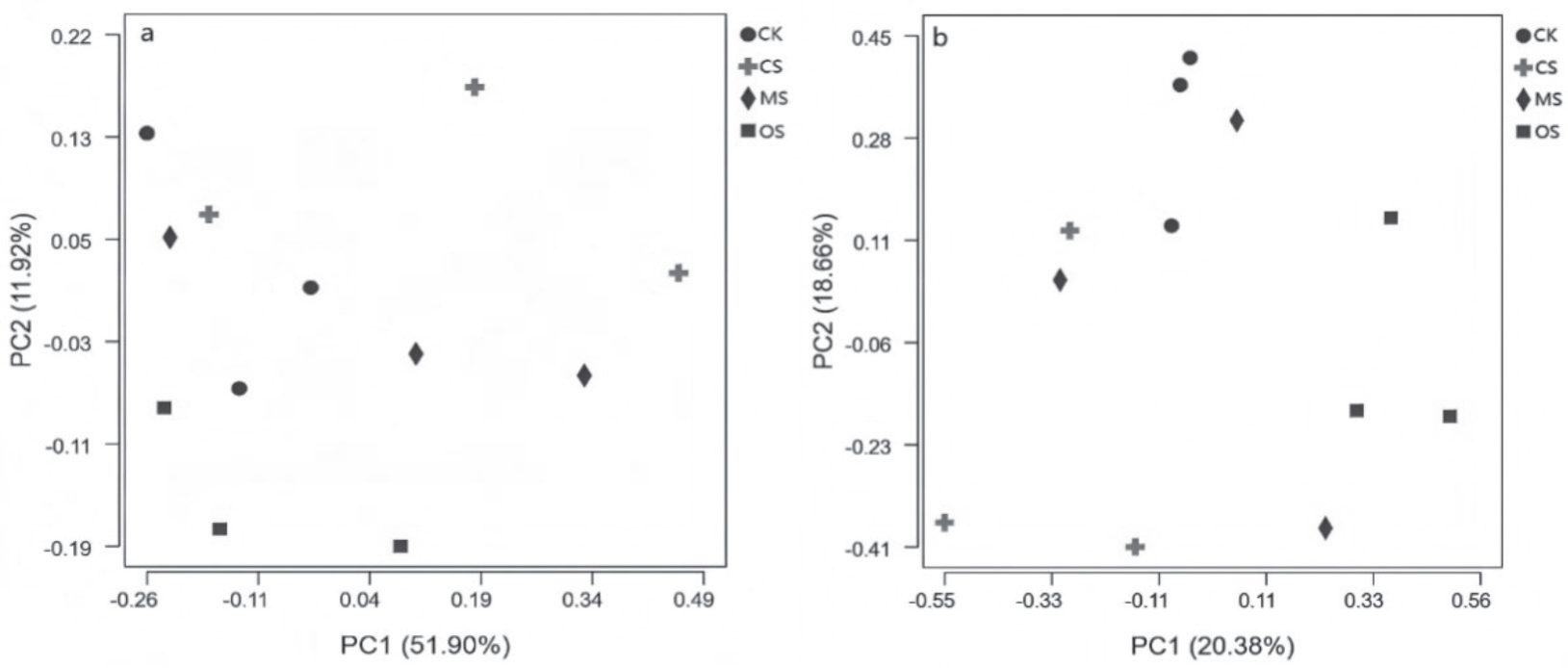
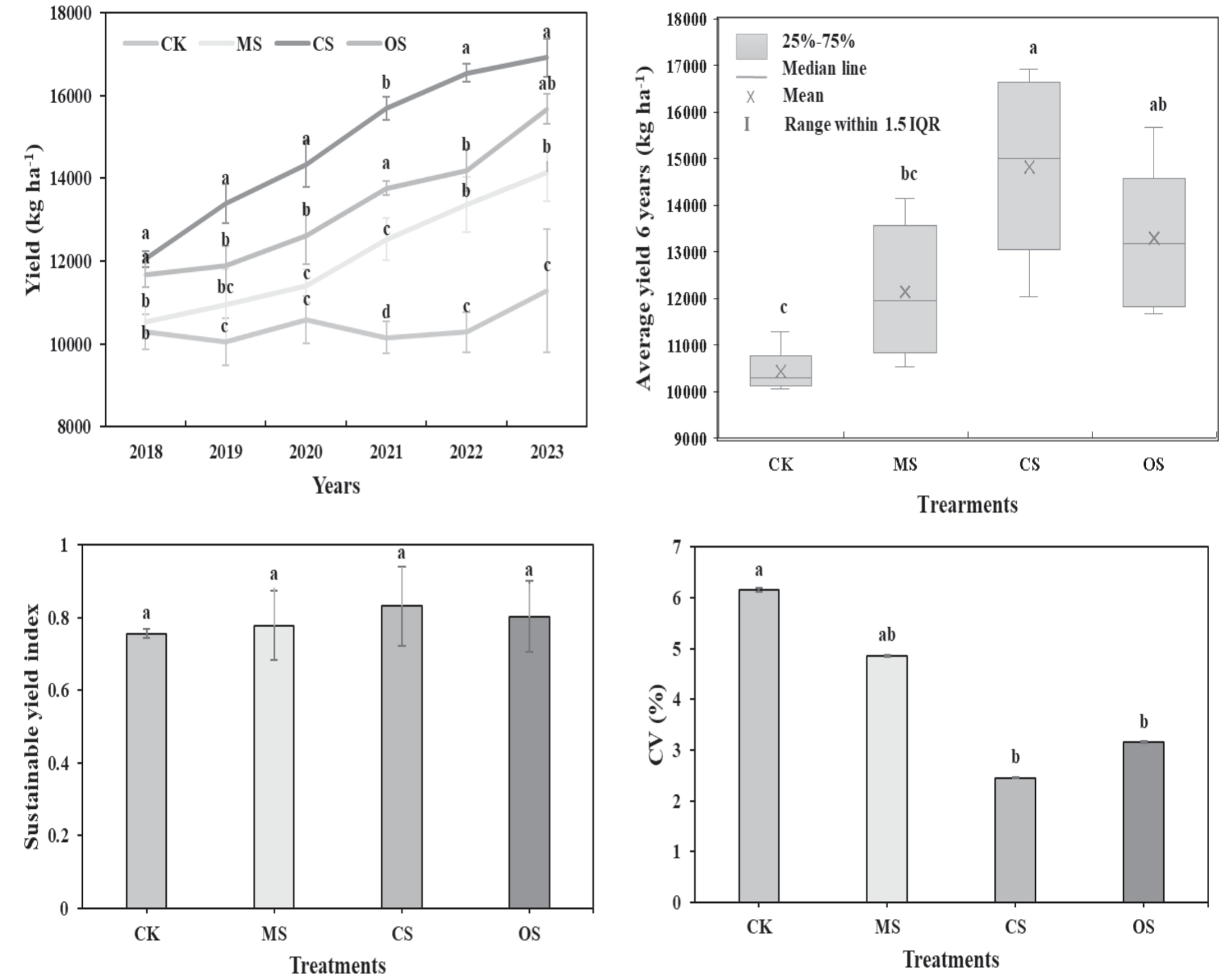
Fig. 5.
Maize yield and yield stability. Note: The different lowercase letters above the bars among the different treatments indicate significance at p<0.05. (CK, no animal manure and no maize straw; MS, maize straw only; CS, chicken manure and maize straw; OS, ox manure and maize straw.)
Principal component analysis (PCA) revealed significant separation of bacterial communities among different treatments (Fig. 4a)). The first two principal components collectively explained 63.82% of the total variance, with PC1 accounting for 51.90% and PC2 contributing an additional 11.92%. Notably, the OS treatment showed clear separation from the CK treatment, indicating distinct bacterial community structures between the two groups. Conversely, the overlapping distribution of CK and MS treatment samples indicated a certain degree of similarity in their bacterial community compositions. For fungal communities, PC1 and PC2 explained 20.38% and 18.66% of the variance, respectively, as shown in Fig. 4b). Both CS and OS treatments were distinctly separated from CK, demonstrating substantial differences in fungal community composition between the amended treatments and the control. This result indicates that manure and straw application can alter the soil’s fungal community structure.
Maize Yield
Organic waste return altered maize yield and yield stability (Fig. 5). Compared to CK, higher yields were generally observed in the treatments with O-W. They followed the order CS>OS>MS (Fig. 5a)). Consistent with our findings, Maltas et al. [57] also found that the incorporation of organic wastes into the soil increases crop yields, which is because of the increases in soil nutrient content after animal manure and straw return. Sarkar et al. [58] indicated that some small molecules from the application of organic fertilizer can delay the senescence of maize organs, increase ear grain weight, and provide balanced nutrients for crops during nutrition and reproductive growth, thereby achieving the purpose of increasing production. The six-year average yield from CS was 10.25%, 18.00%, and 29.54% higher than from OS, MS, and CK, respectively (p<0.05). Compared with other treatments, the SYI of maize yield was highest in the CS treatment, but the CV of maize yield presented an opposite trend. Two-way ANOVA showed that the treatment, growing year, and their interactions had a significant effect on maize yield (p<0.01) (Table 2).
Effects of Straw and Manure on Soil Nutrients, Enzymes, Microbial Community, and Crop Yield
Spearman’s correlation analysis revealed that the Chao1 and Shannon’s indices of bacteria were positively correlated with most of the soil nutrients (SM, SOC, TN, TP, and AP) and their enzyme activities (URA and APA) (Fig. 6). These correlations indicate that higher bacterial diversity and abundance may play a pivotal role in mediating soil nutrient cycling and availability. Specifically, diverse bacterial communities contribute to the decomposition of organic matter, thereby promoting mineralization and release of nutrients into the soil [59]. Furthermore, their metabolic activities appear to stimulate enzyme production, facilitating critical nutrient transformation processes. In addition, maize yield was significantly and positively associated with SM, SOC, TN, TP, AP, URA, and APA. These findings suggest that improved nutrient availability, microbial-mediated biochemical processes (such as URA and APA), and soil microbial diversity are pivotal in enhancing crop yield.
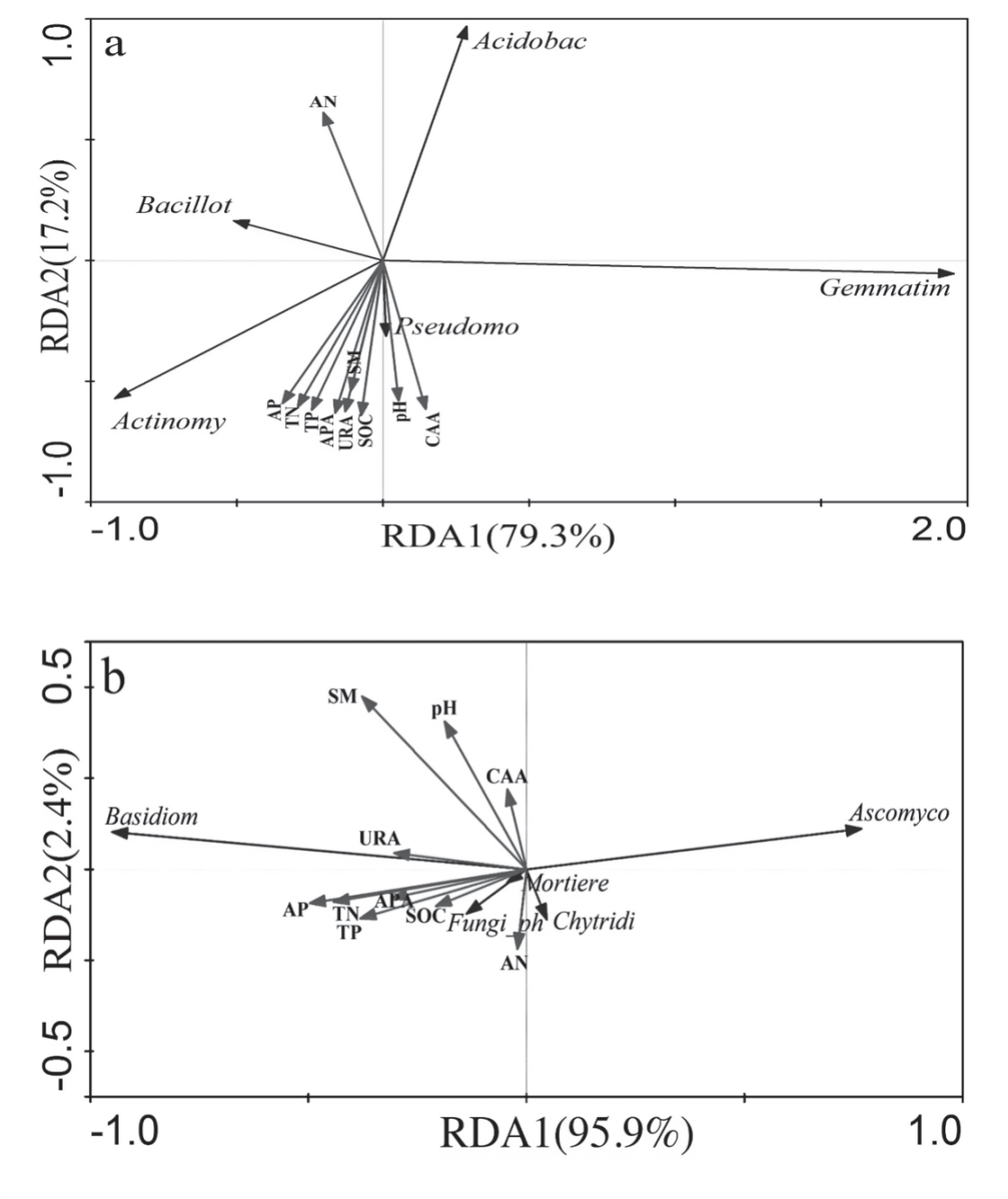
Redundancy analysis showed the relationships among the soil physicochemical factors, enzyme activity, and microbial communities (phyla levels) (Fig. 7). These soil properties explained 96.5% of the variation in bacterial communities, with the RDA1 axis explaining 79.3% of the data variability and the RDA2 axis explaining 17.2% of it. Soil AP, TN, TP, SM, SOC, pH, APA, URA, and CAA were positively correlated with the dominant bacterial phyla (Pseudomonadota and Actinomycetota), while they were negatively correlated with Acidobacteriota. Soil pH and CAA were positively associated with Gemmatimonadota. For the fungal community, RDA’s first and second axes explained 95.9% and 2.4% of the data variability, respectively. The pH, SM, AP, TN, TP, SOC, CAA, URA, and APA were positively correlated with Basidiomycota and negatively correlated with Ascomycota. The dominant fungal phylum (Chytridiomycota) was positively correlated with SOC and AN.
Table 2.
Effects of the different treatments, years, and their interactions (two-way ANOVA) on yield.
| Yield | ||
|---|---|---|
| Main effects | F value | P |
| Treatments (T) | 189.66 | 0.00 |
| Years (Y) | 60.09 | 0.00 |
| T × Y | 5.34 | 0.00 |
Fig. 6.
Correlations between soil properties and microbial diversity, as well as between soil properties and crop yield using Spearman’s method. Note: CK, no animal manure and no maize straw; MS, maize straw only; CS, chicken manure and maize straw; OS, ox manure and maize straw; TP, total phosphorus; AP, available phosphorus; AN, available nitrogen; SOC, soil organic carbon; SM, soil moisture; TN, total nitrogen; URA, urease activities; CAA, catalase activities; APA, alkaline phosphatase activities.
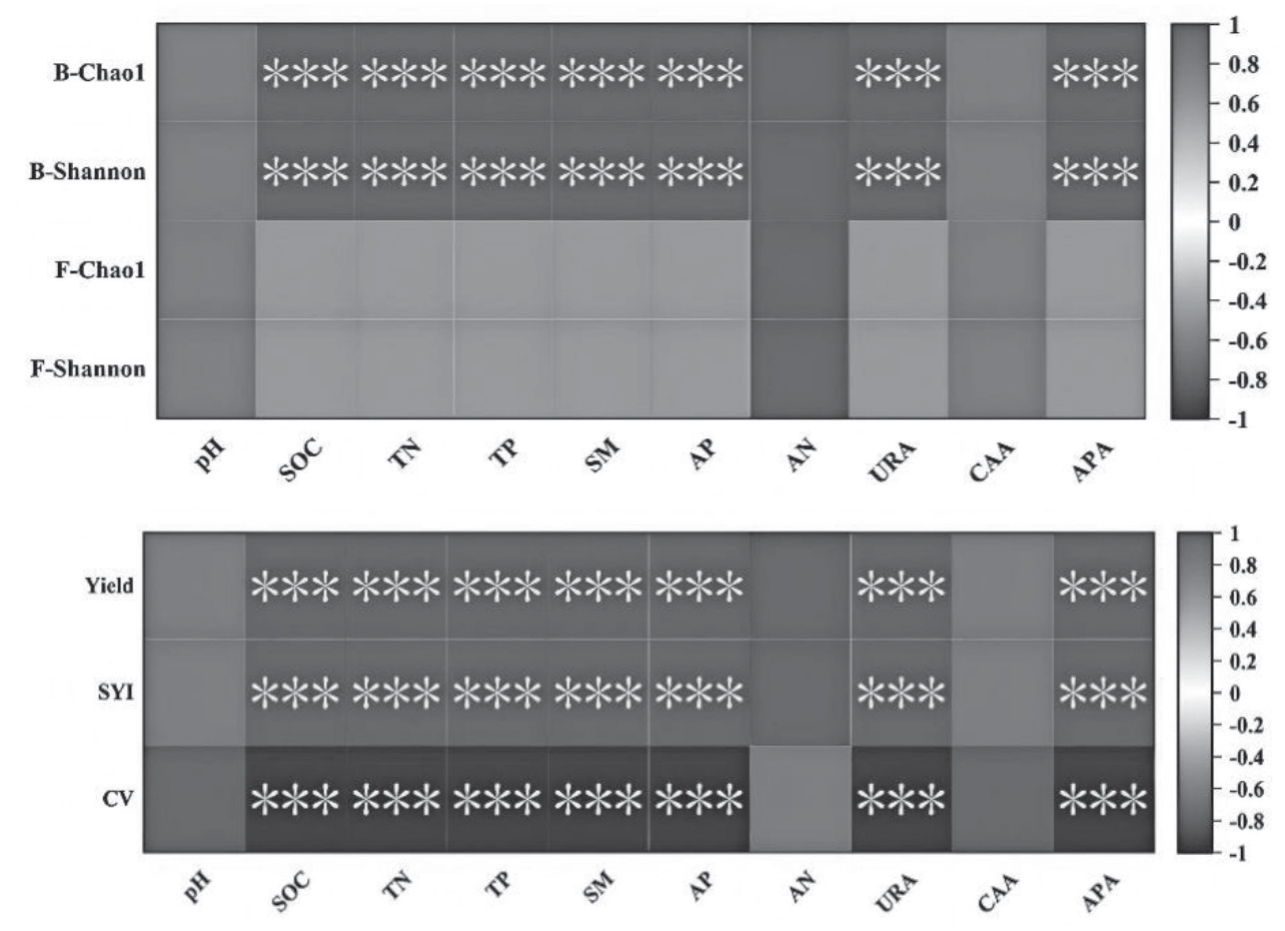
Fig. 7.
Redundancy analysis showed the relationships among the soil physicochemical factors, enzyme activity, and microbial communities (phylum levels). Note: TP, total phosphorus; AP, available phosphorus; AN, available nitrogen; SOC, soil organic carbon; SM, soil moisture; TN, total nitrogen; URA, urease activities; CAA, catalase activities; APA, alkaline phosphatase activities.
Conclusions
Our results indicated that the return of organic waste was more conducive to increasing soil nutrient content, enhancing enzyme activities, and promoting microbial community diversity, as well as enriching co-nutrient microorganisms involved in straw degradation by combining animal manure with maize straw. The abundance of Basidiomycota was higher for the ox manure plus maize straw treatment. In contrast, the highest abundances of Ascomycota, Actinomycetota, and Bacillota were recorded in the chicken manure plus maize straw treatment. Moreover, the chicken manure plus maize straw treatment had the highest maize yield, improved SOC contents, and enhanced soil urease and alkaline phosphatase activities. Therefore, we recommend the application of chicken manure plus maize straw as an effective measure for improving soil properties, enhancing the activity of soil enzymes, altering the microbial community composition, and increasing maize yields.