

Introduction
While environmental governance has been a significant tool to deal with the environmental changes in both developed and developing countries, it is variegated and locally embedded [1, 2]. Local government is essential in facilitating environmental governance because environmental problems sets the obstacles to local economic growth and social development [3, 4]. While some governments are relatively passive with regard to environmental governance, some scholars have observed government-led or government-driven models in environmental governance [5-8]. In these cases, local governments do not promote environmental improvement but have a central role in environmental governance.
The government entities at all levels of China play a leading role in formulating and implementing environmental regulations, and made improvement in environment. Environmental governance by non-state actors in China primarily depends on the role of the governments in managing environmental problems [9-11]. Moreover, with decentralized administrative power, local governments now take responsibility for the implementation of environmental policies formulated by the central state [12, 13]. Hence, it is crucial to realize the precise roles of local government in the process of environmental governance.
This paper builds on the existing environmental governance literature by engaging local environmental governance in a Chinese context. Specifically, this study examines local government responses to environmental problems in Guangzhou, as a mega-city in China, with a historical perspective, paying attention to its changing roles in the political economy at the national and local levels. What drove change in the Guangzhou municipal government’s actions toward urban environmental problems after marketization reforms began in 1978? By analyzing their motivations and management strategies for environmental problems in the past, this paper contributes to contemporary understandings of state actors’ behaviors and their impact on non-state actors’ environmental protection practices. Moreover, this case study of local environmental governance in Guangzhou has policy implications for sustainable urban development on a global scale.
This paper outlines the literature review and describes the research design and methodology adopted in this study in the following two sections. Next, this paper provides background on environmental governance and the environmental quality improvement in Guangzhou. Because air and energy are of general public concern, industrial sulfur dioxide (SO2), and industrial soot and dust emissions were used to show the environmental quality improvement in Guangzhou. In the following section, this paper examines the changing roles of the Guangzhou government in environmental governance in different historical circumstances through an analysis of official Chinese documents. Finally, the conclusion discusses the implications of this study and provides policy suggestions for environmental governance in Chinese cities.
Literature Review
After the neo-liberalization era began in 1972, reliance increased on the free market as a regulatory mechanism, with government regulation shifting towards governance in developed countries [14]. The same trend can be observed in environmental governance, where the role of the state is altered and individualism over collective responsibility is emphasized [15]. Some studies focused more on the decentralization of environmental decision-making scaling down to lower-level governments and out to extra-governmental actors under neoliberalism [16, 17]. Researchers argued that states were no longer the key decision-making source in environmental matters [18]. Rather, non-state actors (ie. local governments, private sector, social organization) have the potential to garner public support and create reformatory policies, and possibly replace state regulatory methods over time [19, 20].
Increased attention has been paid to the important role of local governments as they know the needs and desires of their constituents in local areas better than national governments and have greater access to local knowledge and expertise [17, 21]. Through an examination of Guangzhou, as a mega-city in China, this paper provides a local perspective to enrich current understandings of the role of the local government in addressing environmental problems in the era of marketization.
Recently, scholars have been concerned with the relationship between local governments and environmental governance in China. Many empirical studies demonstrated that local governments can have a significant, positive impact on environmental governance [22, 23]. City governments are critical to mediating climate change by responding to national and provincial government actions [13, 24]. Local governments offered opportunities for non-state actors’ involvement in environmental policies, representing a significant change in the nature of Chinese environmental governance [25-28].
An increasing number of studies have analyzed the government’s role in this process. For example, Zhang et al. (2021) research examined the role of Wuxi city government in solar development and indicated that Chinese local governments played a role in struggling to balance economic and environmental objectives in urban sustainability transition [29]. Huang and Yu (2021) found that the cooperation between local governments and industrial actors has promoted urban energy transitions [30]. The case study of Hongqiao Business District, Shanghai also illustrated the leading role of city government and the limited participation of public and non-governmental organizations in the low-carbon development [31]. Additionally, Ng (2019) explored the Shenzhen government’s role in implementing urban plans to respond the socioeconomic change since 1980s, and argued that the urban development limited to land deficiency drove the Shenzhen municipal government to adopt low-carbon ecocity strategies recently [32]. Some studies have come to a similar conclusion, which showed that economic interests have a more significant influence on local governments to regulate environmental actions and resort to low-carbon innovation practices rather than environmental interests [33, 34]. However, most of the literature has overlooked local governments’ driving forces and behavior dynamics regarding environmental problems. Few studies examine how and why governments dealt with environmental problems in distinct ways at different points in time.
Moreover, the concept of environmental governance has been overwhelmingly investigated within the context of Western countries and a neoliberal discourse, an ideology that is not entirely generalizable to a Chinese context. Scholars argue that the adoption of market-oriented policies in China does not constitute an embracement of Western neoliberal ideology [35-37]. Rather, the Chinese state has used neoliberalism as a tool (rather than an ideology) to solve development problems and promote economic growth [38-41]. The Chinese state treats neoliberalism in a pragmatic manner, accepting it when it can provide useful solutions to development problems. This pragmatic approach is helpful for theorizing the logic used in local responses to environmental problems. Local governments deal with environmental problems in a way that meets the primary objective of urban politics, objectives that have changed from promoting economic growth toward seeking balance between environment and economy. Therefore, this study argues that the local government is pragmatic when handling environmental problems, rather than adhering to a pathway defined by neoliberalism.
Here, we bridge a gap in the literature, by offering a historical overview of the Guangzhou municipal government’s changing role in addressing environmental problems. In contrast to the prevalence of quantitative methodologies, this study used an archival method involving the historical analysis of various documents. This enabled a nuanced understanding of the ways in which the Guangzhou government intervened in environmental issues since the start of market reforms in 1978. This article argues that urban policies shaped national and local contexts ultimately influencing the way the local government managed environmental issues.
Materials and Methods
Data Sources
Based on an analysis of official Chinese discourse including annual work reports, environmental regulations, and policy documents, this paper examines how the Guangzhou government managed environmental problems. The annual work reports summarized work accomplished from the previous year and established plans and targets for the subsequent year. In light of national environmental laws and regulations, city governments formulated local environmental regulations and policy documents. Therefore, an analysis of these documents sheds light on how the Guangzhou government addressed urban environmental issues. This study identified 39 annual work reports, 77 environmental regulations, and 88 policy documents from 1978 to 2018 for historical analysis (Table 1). The work reports were collected from the official website of The People’s Government of the Guangzhou Municipality (http://www.gz.gov.cn/) and two books [42, 43]. Environmental regulations and policy documents were collected from the official website of the Guangzhou Municipal Ecological Environment Bureau (http://www.gzepb.gov.cn/).
In addition, the researchers collected quantitative material from the Guangzhou Statistical Yearbook (various years) and Guangdong’s Environmental Statistics Compilation (Table 1) to analyze the economic development characteristics and environmental quality in Guangzhou, which illuminated environmental governance practices in Guangzhou.
Methods
Deep reading and content analysis were used to analyze above-mentioned documents for this study. First, we identified 10 keywords that related closely to ecological environmental and economic development practices by reading each work report thoroughly and using the automated content analysis computer software program NVivo 11. We analyzed the collected texts containing those 10 keywords and examined changes in the focus of the Guangzhou government regarding ecological environment and economic development through frequency analysis conducted using NVivo 11. Table 2. shows the keywords related to ecological environment and economic development, their frequency, and the total number of references made to the texts. Second, we examined various actors engaged in environmental governance, relevant local policy measures, and documents to illuminate the role of the Guangzhou government in environmental governance.
Environmental Governance and Environmental Quality Improvement in Guangzhou
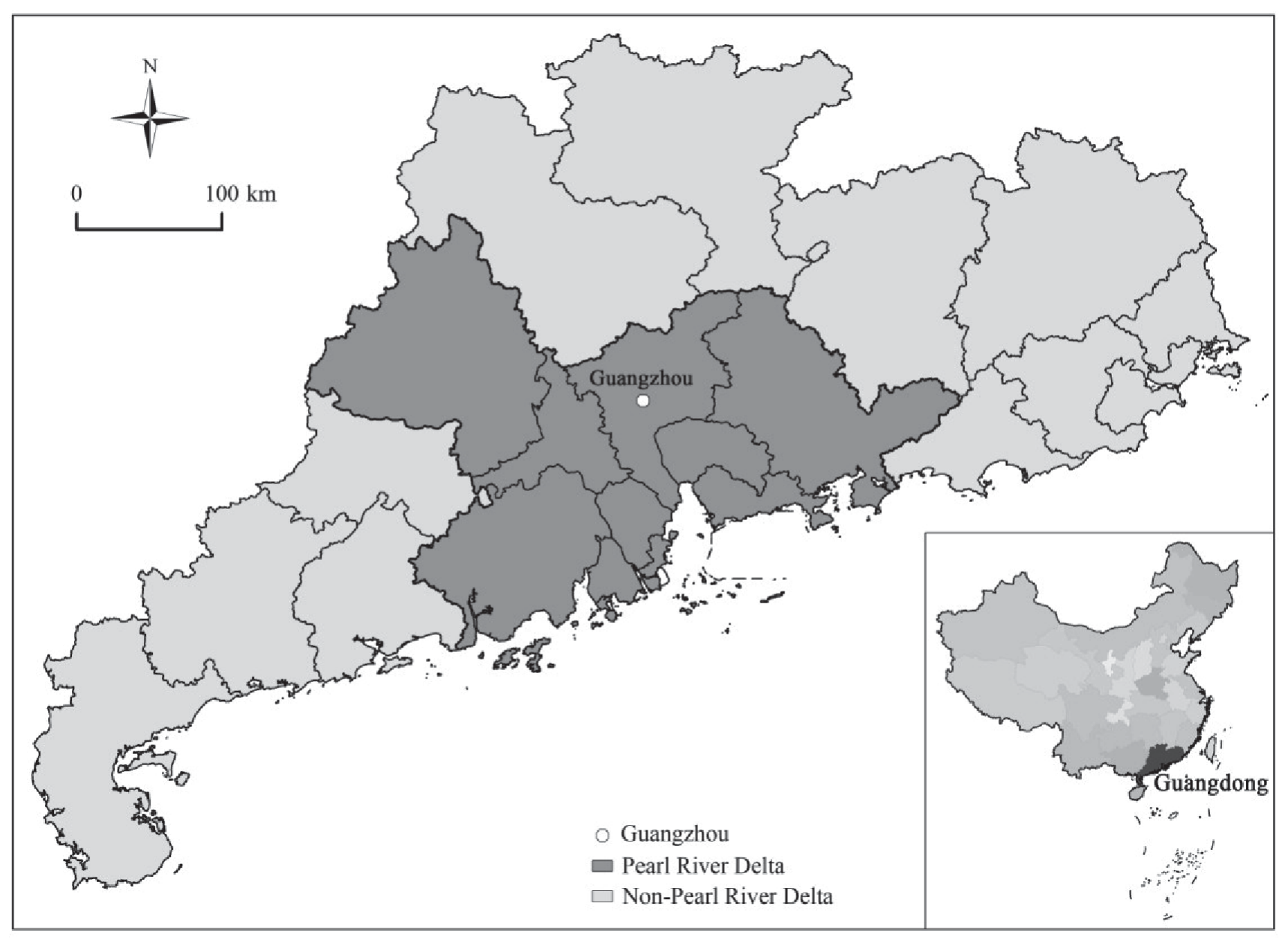
Guangzhou, located in the center of the Pearl River Delta region, is the provincial capital of the Guangdong Province, one of the most developed provinces in China (Fig. 1.). In 1949, Guangzhou’s municipal Gross Domestic Product (GDP) was only 0.3 billion yuan. Since 1978, unprecedented economic growth occurred in the Pearl River Delta region due to the open-door policy [44]. Between 1978 and 2018, Guangzhou’s municipal GDP grew from 4.31 billion yuan to 2285.94 billion yuan, and its value in 2018 comprised 28.2% of the total GDP of Pearl River Delta and 23.5% of the GDP of Guangdong Province.
Table 1.
Main research data.
Table 2.
Keywords of ecological environment and economic development.
After founding the People’s Republic of China (PRC), central and local governments aimed to promote rapid economic and societal growth without definite environmental protection measures. In the early period of the PRC, environmental degradation occurred in Guangzhou, a consequence of large-scale industrial development. During the First Five Year Plan (1953- 1957), one of the main tasks was industrial development. During that time, over 3300 industrial enterprises polluted Guangzhou [45].
China first implemented environmental protection policies in 1972 when it participated in the United Nations’ Stockholm Conference on the Human Environment. The Guangzhou government started an organized environmental protection initiative in 1973; and set up the leading environmental protection group during its first meeting on environmental protection in October 1973. Environmental protection work was codified in September 1979, when the PRC enacted the Environmental Protection Law (for trail implementation).
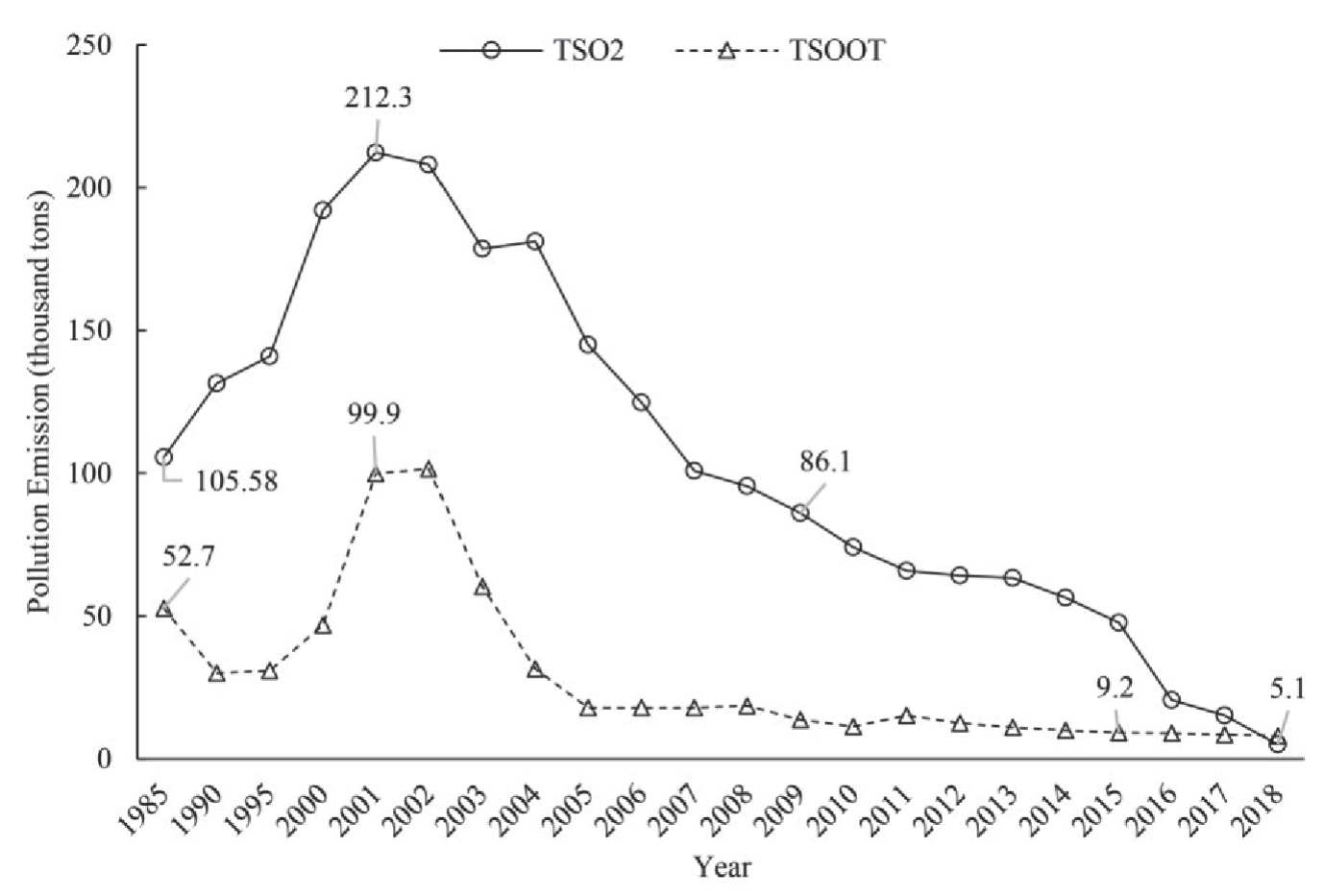
Environmental quality improved significantly in Guangzhou by implementing effective environmental governance [46]. As shown in Fig. 2., the quantity of industrial SO2, and soot and dust emissions in Guangzhou took on an inverted-U shape cure from 1985 to 2018. The environmental deterioration of Guangzhou from 1985 to 2001 is undeniable. Total industrial SO2, and industrial soot and dust emissions increased from 105.58 and 52.7 in 1985 to 212.3 and 99.9 thousand tons in 2001, respectively. After 2001, environmental governance efforts had a remarkable effect; total pollution emissions showed a massive decline since the beginning of the 21st century, especially industrial soot and dust emissions. Pollution intensities of industrial soot and dust were below 100,000 tons in 2004, but industrial SO2 emissions were still very high. A more concerted effort was made for the emission reduction in Guangzhou and total pollution emissions declined sequentially since 2009, with industrial SO2 emissions decreasing from 86.1 in 2009 to 5.1 thousand tons in 2018. Furthermore, the early regulation of industrial soot and dust emissions was successful, with the intensity kept below 10 thousand tons in 2015.
Historical Analysis of the Roles of Guangzhou Government in Environmental Governance
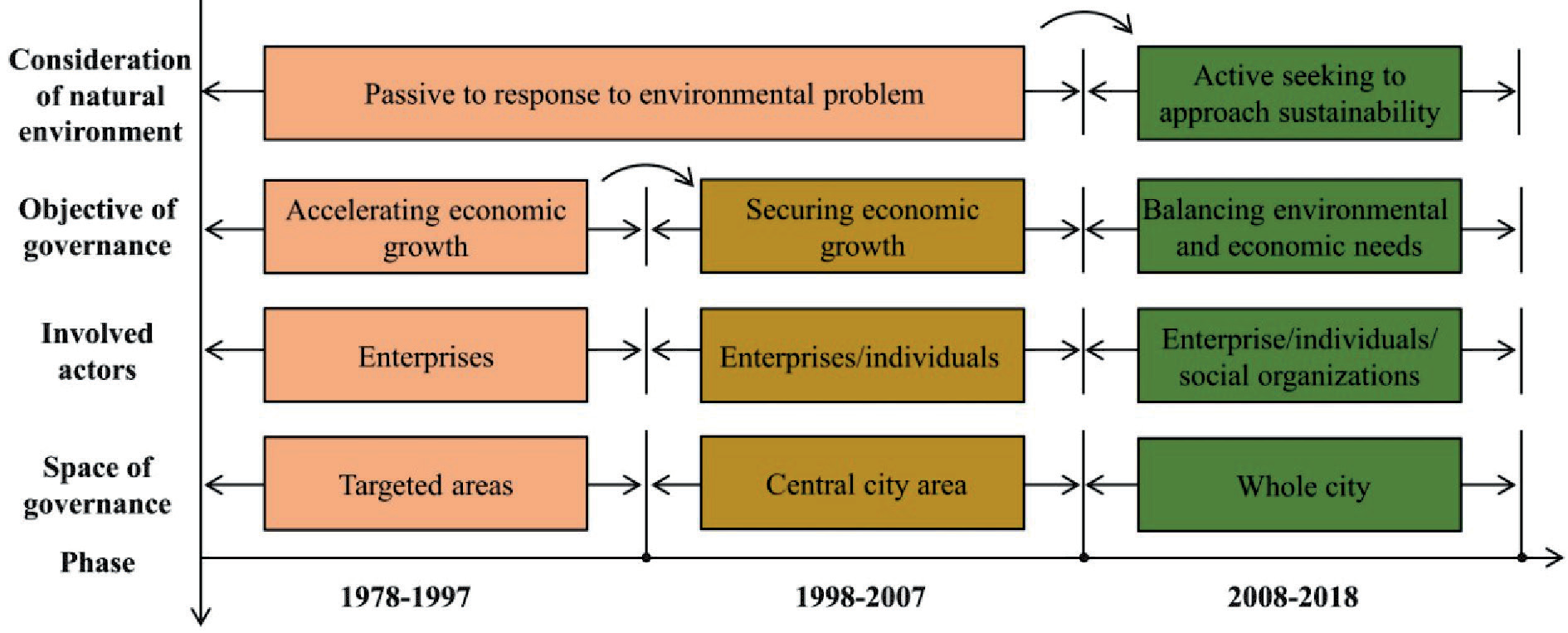
The important national and historical events in 1998 and 2008 affecting Guangzhou government’s actions can be divided into three phases: 1978 to 1997, 1998 to 2007, and 2008 to 2018. Fig. 3. displays the different characteristics of environmental governance: motivations, purposes, and management strategies adopted to address environmental issues in each phase.
Improving the Environment to Accelerate Economic Growth (1978-1997)
In an attempt to modernize the economy, the Chinese state shifted its policy focus from class struggle to economic development after 1978. The idea ‘Development is of overriding importance’ promoted in 1992 by then Party leader Deng Xiaoping led to accelerated marketization and increased governmental focus on economic growth [47]. Economic development was established as the overriding goal prior to environmental governance. As part of the reforms, development pressures were shifted to states, which were given more power and autonomy to attract foreign investment and strengthen competitiveness, bolstering economic growth [35]. The 1992 Rio Declaration & Agenda 21 increased awareness of sustainable development. The Chinese state made Agenda 21 the guideline for national economic and social development; it regarded economic development as a necessary condition for eradicating poverty, raising the standard of living, and increasing national economic strength. This intensified the importance of accelerated economic growth. This overriding political objective shaped the way the local government addressed environmental issues during this phase.
Fig. 2.
Industrial SO2, Soot and Dust emissions of Guangzhou from 1985 to 2018. Notes: TSO2 = Total industrial SO2 emission (thousand tons), TSOOT = Total industrial soot and dust emission (thousand tons).
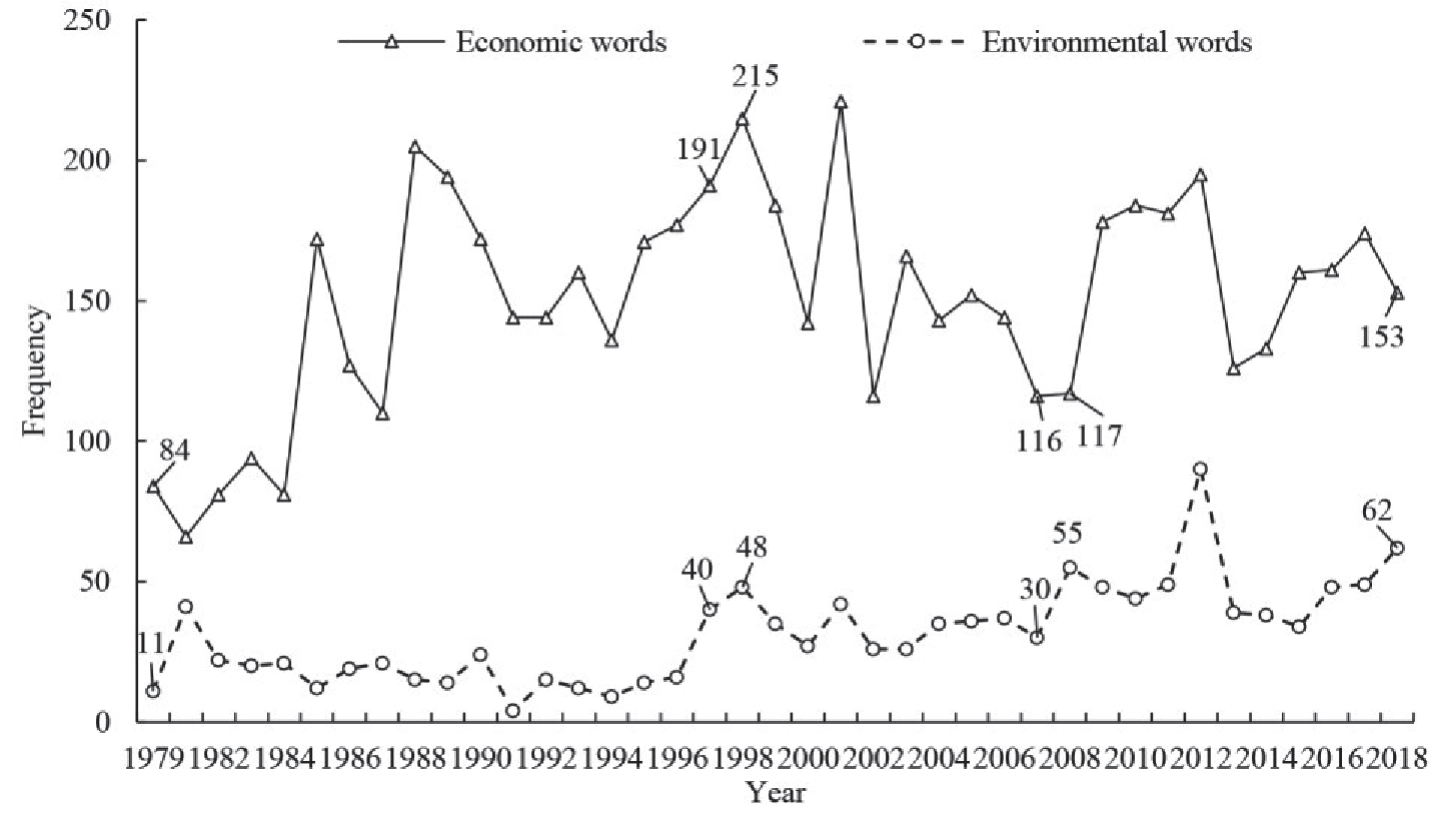
In Guangzhou, the municipal government assumed environmental improvement to improve the investment climate and accelerate economic growth. Although environmental issues were increasingly important for its government, economic issues were more important. As shown in Fig. 4., while the frequency of environment-related words in government reports increased from 11 in 1979 to 40 in 1997, the frequency of economy-related vocabulary rose rapidly from 84 in 1979 to 191 in 1997. The mean annual frequency of economy-related words was 139.39, more than 7 times that of environment-related words (18.33).
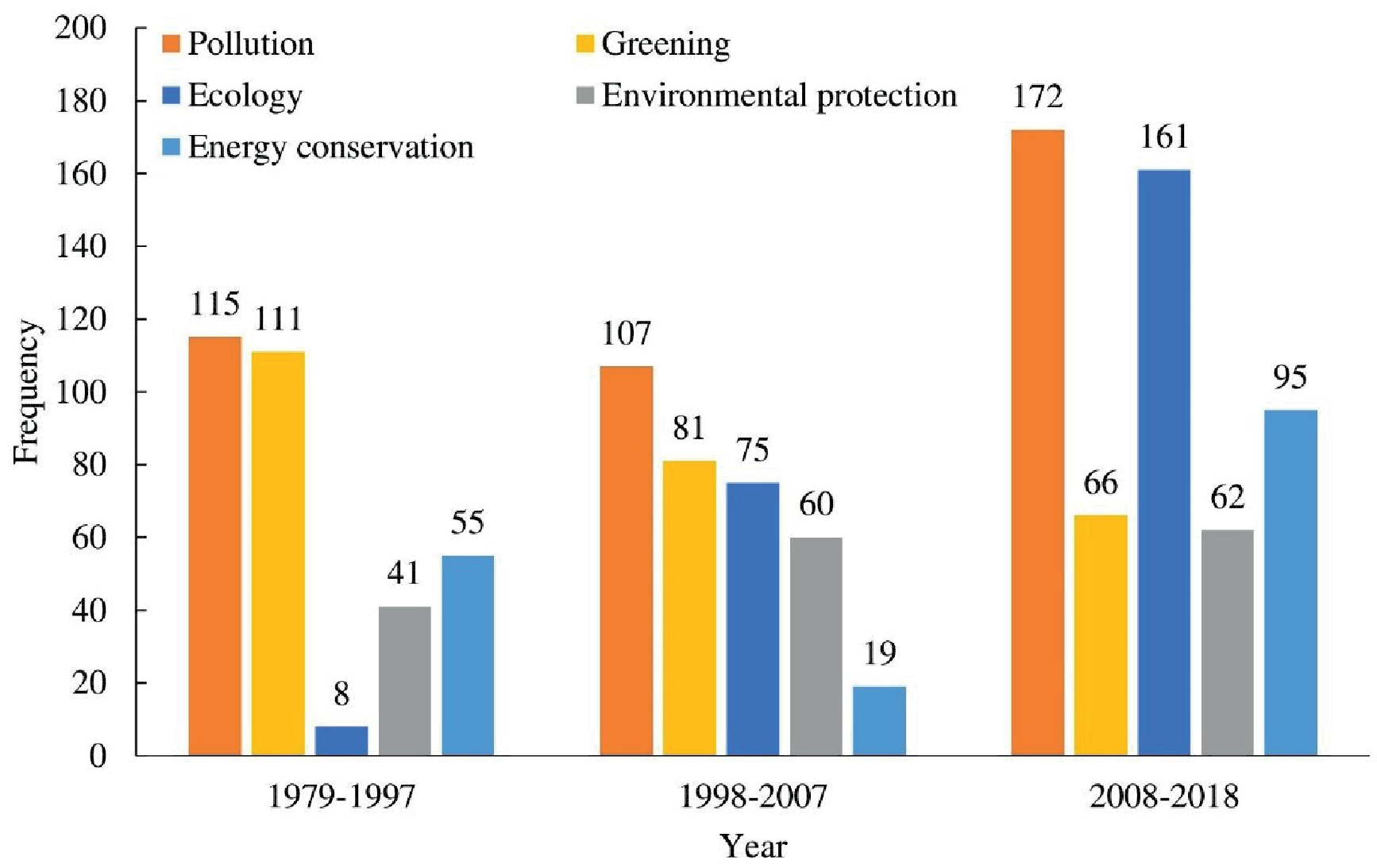
The subordination of environmental issues to economic growth determined the nature of environmental policy at that time. As shown in Fig. 5., ‘Pollution’ and ‘Greening’ were the most frequent keywords in work reports. The Guangzhou government made a greater effort to regulate the pollution from three industrial wastes that might have threatened investment, and it constructed urban green spaces to create a positive image and attract global capital. The Guangzhou government successfully finished 132 ‘three wastes’ projects and upgraded 63 gravely polluting boilers in 1983 based on the Guangzhou Government’s Work Report of 1984. Moreover, the Guangzhou government formulated a series of environmental renovation and greening tasks to build the National Sanitary City of China:
‘We should adhere to promote city purification, greening, beautification, and efficient municipal public facilities to realize the integration of urban planning, construction, and management gradually (Guangzhou Government’s Work Report of 1992)’.
‘We will strengthen sanitation and cleaning work according to the requirements of the National Sanitary City Planning of Guangzhou (...). We will do a good job in f garbage and sludge disposal and ensure the completion of construction tasks of the cityscape, sanitation, and environmental protection. We will reinforce disease control and prevention with the standards of the National Sanitary City of China (Guangzhou Government’s Work Report of 1993)’.
To attract FDI and accelerate economic growth by improving the environment, between 1978 and 1997, 30 environmental regulations were issued, and nine policy documents were released. The importance of legal approaches to environmental improvement has intensified since 1987, when the Guangzhou government took measures to enforce drinking water source regulations. It was established by Guangzhou’s first local regulation, the Drinking Water Source Pollution Prevention Regulation of Guangzhou City [48]. Command-and-control instruments were used by the Guangzhou government, such as corrective measures or the closure of companies who committed serious infringements. Those interventions directly and effectively improved Guangzhou’s urban appearance, with the goal of attracting global capital and accelerating economic growth. The Guangzhou government also used economic consequences such as fines and taxes to decrease contamination. In this phase, the Guangzhou government was the leader of environmental governance, with few non-state actors involved in the process.
Under this approach, more attention was paid to pollution regulation in targeted areas that might destroy the city’s image and impede economic growth. By controlling three industrial waste types, the government focused its efforts on regulating wastewater pollution in five sectors of the Pearl River across the city. These targeted areas were from Xicun to Jiangcun, Fangcun to Baihedong, Yuancun to Huangpu, Shixi to Zhoutouzu, and Liwanyong to Simayong. City environment improvements included 79 streets designated as smoke-and-dust-controlled areas, and 45 streets that prohibited blaring horns in 1990 [48].
Protecting the Environment to Secure Economic Growth (1998-2007)
While reforms brought about great economic progress in the two decades following 1978, this progress took place at the cost of severe environmental degradation, which emerged as a rising threat to continued economic growth during the late 1990s [47]. Maintaining rapid economic growth was still the central task of the government, as President Jiang Zemin declared in the 15th National Congress of the Communist Party of China in 1997. However, many Asian countries, including China, experienced economic recessions and foreign capital outflow after the Asian financial crisis of 1997 [49]. This made China find a way to navigate the economic dilemma and ensure sustained economic growth. Since 2003, when President Hu Jintao promoted scientific development during his tour of southern Guangdong, securing future economic growth and building a moderately prosperous society became governments’ primary concern [47]. Thus, the primary political objective of this phase was securing economic growth.
In response to environmental degradation’s impact on economic growth, a ministerial-level institution named the State Environmental Protection Administration of China (SEPA) was established in 1998 to replace the former National Environmental Protection Agency, signaling at the national level increased governmental involvement in environmental protection. After the Kyoto Protocol was passed in 1997, the need for greenhouse gas reductions reached a global consensus, raising the importance of environmental protections in China. Since 1997, energy-intensive industries in developed countries were transferred to China, aggravating the extent of environmental degradation and exerting economic pressure [50]. Additionally, after integration into the World Trade Organization in November 2001, national environmental standards had to keep up with international standards for the benefit of the economy and trade cooperation. This increased environmental and political demands on Chinese governments. Thus, in light of mounting pressures, this phase’s primary political objective - to secure economic growth - shaped local government responses to environmental problems and reduced negative environment-related influences on economic growth.
In the context of a new political economy that sought to alleviate environmental challenges, the Guangzhou government was more concerned with environmental issues during the second phase than the first phase. Indeed, during this period, the mean annual frequency of environment-related words in Guangzhou government’s work reports increased to 34.20, compared to 18.33 in the first phase. However, the mean annual frequency of economy-related words also increased from 139.39 to 159.90. This indicated local politics prioritized economic growth over the environment.
During this period, pollution control and urban green space were the primary focus of the Guangzhou government, as ‘Pollution’ and ‘Greening’ appeared most frequently, as shown in Fig. 5. Economic growth was restricted by problems related to rapid development in the first period such as severe environmental contamination and poor infrastructure. Therefore, the Guangzhou government wanted to address these problems and foster economic development. In 1998, it implemented the three changes policy: ‘One small change a year, every three years a moderate change, and a big change in 2010 (...)’ When it bid to host the 2010 Asia Games, it would need a brand-new city image, one that would highlight great opportunities emerging from Guangzhou’s social-economic growth. More importantly, ecological protections became the primary focus of the Guangzhou government, with the word ‘Ecology’ appearing more frequently in work reports (Fig. 5.). Gaining the right to host the 16th Asian Games in 2004, Guangzhou worked to protect the environment with the goal of boosting capital accumulation and stabilizing socio-political order:
‘We will strive to conceptualize the city as a continuum of mountain, city, farmland, and sea based on the proximity of the Baiyun Mountain and Pearl River (Guangzhou Government’s Work Report of 2002)’.
‘We will work hard to strengthen the construction of urban infrastructure and the ecological environment to increase the carrying capacity of economic and social development (Guangzhou Government’s Work Report of 2003)’.
‘We will strengthen the construction of urban infrastructure and environmental protection to improve the comprehensive competitiveness of cities (Guangzhou Government’s Work Report of 2004)’.
To promote economic growth, 16 environmental regulations and 28 policy documents were made public during this stage. China’s rapid integration into the world economy resulted in market-oriented environmental governance, with an increase in the use of market or incentive-based instruments. Instead of levying frequent fines for violations, as done in the first period, a series of economic support measures targeting enterprises, unemployed persons, and researchers were adopted to stimulate continued economic development. For example, to foster enterprises’ economic growth, companies that implemented cleaner production processes received funding and economic compensation through Guangzhou’s Implementation Measures for Clean Production in 2004. Enterprises employing renewable resources and recycling programs paid reduced taxes to offset production costs. Additionally, in 2005 the city implemented motorcycle restrictions in certain areas to revamp the city’s image and protect the environment. The Guangzhou government offered employment services like job search assistance and training, and unemployment benefits for unemployed persons due to motorcycle restrictions, which, in turn, bolstered Guangzhou’s economic development by providing trained labor. Moreover, research on recyclable and renewable materials was prioritized for project approval and funding.
Additionally, the local government recruited experts and the media to play a vital role in environmental governance. For example, the expert database of environmental technology assessments was built by Guangzhou’s Environmental Protection Administration (EPA) promoted standardized and scientific environmental measures. Newspaper media, such as Guangzhou Daily and Nanfang Daily, publicized national environmental protection plans to become an exemplary city. Thus, during this period, non-state actors, businesses, researchers, experts, media, etc., became involved in Guangzhou’s environmental governance.
During this period, the main space of environmental governance had been extended to the central city area from the targeted areas. The Environmental Protection Plan of Guangzhou (1995-2010) designated the downtown and the built-up areas as the spatial focus of regulation and control about 555 km2. At the same time, it discouraged secondary industry and promoted tertiary industry for the first time in the Tenth Five-Year Plan (2001-2005) for Economic and Social Development of Guangzhou, which encouraged manufacturing industries in older urban areas to move to suburban areas to solve environmental problems in the city center and create attractive environments for tertiary industry development.
Balancing Environment and Economies to Promote the Ecological Civilization (2008-2018)
Environmental problems were not fully solved during the second phase of environmental governance. The environmental threat to human beings and sustainable socio-economic development remained and worsened with the state’s continual emphasis on economic growth. The Chinese state realized the negative impact of the ‘Grow first, clean up later’ approach [51, 52] in the late 2000s. A new approach to balance economic growth and environmental protection was proposed for the first time at the 17th Party Congress in 2007 [53], called the ecological civilization (shengtai wenming). Ecological civilization aims to solve severe environmental problems and achieve sustainable development through green development, a circular economy, and low carbon incentives [54, 55], and it was emphasized at the 18th and 19th Party Congress in 2012 and 2017, respectively [56, 57]. In response to increased national government attention, SEPA was upgraded to the Ministry of Environmental Protection as a department within the State Council in 2008. At the same time, global climate conferences held in Copenhagen in 2009 and in Paris in 2015 required China to promise to cut carbon emissions. The national promise and central government policies required local governments to act on environmental issues in new ways, balancing the needs of environmental protection and economic growth, rather than privileging the latter over the former. Therefore, the political objective of this period promoted ecological civilization.
Recognizing a fundamental change in the logic behind environmental governance is important for understanding its role in Guangzhou during the most recent period. The new objective – to promote ecological civilization – required increased emphasis on both the environment and economy. The frequency of environment-related words increased from 55 in 2008 to 62 in 2018, while the frequency of economy-related words raised rapidly to 153 from 117 (Fig. 4.). The mean annual frequency of environment-related and economy-related words increased by 50.55 and 160.18, respectively.
To realize the ecological civilization goal, ecological protection and pollution prevention became the main subjects of environmental governance. As shown in Fig. 5., the top environmental words used by the Guangzhou government during this phase were ‘Ecology’ and ‘Pollution.’ In line with national initiatives, building eco-cities and promoting ecological civilization, Guangzhou identified concrete actions in its 2012 and 2013 work reports:
‘Building an ecological city with Lignan characteristics: We will improve the air quality. We will enhance the water treatment. We will strengthen waste disposal and utilization. We will increase forest conservation. We will launch pilot projects of eco-cities (Guangzhou Government’s Work Report of 2012)’.
‘Promoting eco-city construction: We will make efforts to build a flower city, a green city, and a water city. We will consolidate and improve ambient air quality (Guangzhou Government’s Work Report of 2013)’.
Additionally, pollution-prevention strategies were adopted to identify sustainable behaviors and reinforce environmental protections rather than just following the ‘Grow first, clean up later’ approach. Before and during the 16th Asian games in 2010, the Guangzhou government strived to control and supervise domestic sewage and air pollution; it ordered polluting enterprises to suspend production activities and imposed traffic restrictions on private vehicles. In addition, 19 new city-wide air quality monitoring points were implemented in 2012, and air quality data such as PM2.5, PM10, SO2, and NO2 were released to the public to promote social supervision and foster an ecological civilization.
Furthermore, the Fifth Plenary Session of the 16th Central Committee in 2005, suggested China should promote the construction of a resource-conserving and environmentally friendly society and achieve sustainable development. Afterwards, the Guangzhou government responded positively to raise resource conservation awareness and promote enterprises engaged in energy conservation. The keyword ‘Energy conservation’ appeared more often since 2008 (Fig. 5.). Many measures of energy conservation and emissions reduction were proposed to coordinate economic, social, and environmental development:
‘Intensifying energy conservation and emissions reduction: We will raise awareness of resource conservation and environmental protection throughout society. We will establish and improve the statistical, monitoring and assessment system for energy conservation and emission reduction. We will continue to upgrade energy conservation technologies (...). We will focus on supervising energy conservation and emission reduction in key projects and industrial enterprises (Guangzhou Government’s Work Report of 2008)’.
Relying on this policy, the local government introduced 31 environmental regulations and 51 policy documents. During this phase, they offered more opportunities for non-state actors’ involvement in promoting ecological civilization, including businesses, public entities, research institutions, universities and environmental organizations. Market or incentive-based instruments were the Guangzhou government’s main tool. However, compared to the second period, they implemented more incentives and preferred policies involving balanced environmental and economic goals, such as the green credit. It supported credits to enforce water protection policies and processes, such as recycling systems, wastewater treatments, and water resource saving. Simultaneously, the Guangzhou government provided loan restrictions to businesses violating environmental laws through the Implement Scheme of Water Pollution Prevention Action Plan of 2016. Furthermore, a series of measures rewarded environmentally friendly behavior to encourage public participation in regulating enterprises and report malfeasance. The public could report nine types of environmental violations through an online channel, sending letters to Guangzhou’s EPA, or visiting the EPA in person, with a maximum reward of 30,000 yuan. Further, it supported the combination of ‘Production, teaching and research’ with special funds to synchronize positive water pollution prevention efforts among firms, research institutions, and universities.
Additionally, more voluntary environmental regulations and information-based instruments were implemented during this period as important supplementary measures of environmental governance. Environmental non-governmental organizations (ENGOs) played a critical part in social supervision and social activities related to environmental protection and ecological civilization. For example, the environmental conservation committees provided reliable counsel to the Guangzhou government and were the main organizer of water protection activities and awareness. The government promoted environmental education and social supervision development by exposing illegal behaviors. In this period, more non-state actors participated in environmental governance, and a new mode of governance, combining governmental and social actors, formed in China.
Driven by the ecological civilization model, the space for environmental governance had been expanded from the primary area of approximately 555 km2 during the second period to 7434.4 km2 during the third period. The Master Plan of the City Environment in Guangzhou (2014-2030) encompassed the whole city, protecting both its central and peripheral areas. Based on Primary Functional Zones Planning of Guangdong Province (2012-2020), the city coordinated relationships between humans, the economy, and the environment, and, the whole city in Guangzhou was divided into three sections regulated according to the natural conditions and environmental functions of each region. Additionally, refined management of regulated zones, land use, air, and water will accelerate the promotion of ecological civilization in Guangzhou.
Conclusion
In this study, we examined the role played by the Guangzhou government to extend the understanding of environmental governance by shifting attention to the local government in a Chinese context through a content analysis of various materials, including reports, regulations, and policies documents. This paper contributes to the literature by differentiating the role of the government in managing environmental problems over several decades. The results of the content analysis show that the frequency of environment-related words and economic-related words increased from 11 and 84 in 1979 to 52 and 153 in 2018, respectively. The keyword ‘Pollution’ appeared most often and use of the term ‘Ecology’ increased the most over that period.
The changing role of the local government in addressing environmental problems is reflected by changes in government attitudes, interventions, and governing spaces over time. The role of Guangzhou’s municipal government changed over the past four decades, from passive responses to environmental problems driven by economic growth toward active interventions that balanced or coordinated the economy and the environment. In the first and second phase, the Guangzhou government paid more attention to pollution treatment, while shifting to pollution prevention and ecological protection during the third phase. Along with the changing logic of local environmental governance, non-governmental sectors have been mobilized by government shifts in policy orientation, giving rise to the emergence of a new mode of governance that included both government and civil actors. Moreover, the geographical focus of environmental governance was extended from strategically selected areas in the city to the city as a whole, occurring in a manner that satisfied distinct political and economic needs in different historical periods.
What caused the local government’s role in environmental governance in China to change? This study found that the way the local government addressed environmental problems was embedded in its responses to urban political objectives and its national context. As we have shown, pollution treatment for three industrial waste types and green initiatives benefited the general strategy of place promotion. This strategy attracted FDI and accelerated economic development during the reform era. This was followed by an environmental protection strategy in central urban, built-up areas to secure economic growth. That growth was at risk due to environmental degradation that occurred in the face of increased global competition. However, as urban political goals shifted toward balancing economic and environmental needs, a new governance style emerged that actively addressed environmental problems, mobilized non-governmental sectors across the whole city. This study argued that the logic of the local government’s approach to environmental problems can be understood by identifying the political economic objectives of its specific historical phase. Today, local environmental governance in China can be understood as part of the Chinese Communist Party’s overarching political project which promotes continuous economic growth while securing social and environmental stability.
To conclude, this study provided a nuanced understanding of the government’s role in environmental governance, which cannot be fully understood from the perspective of a neoliberal ideology. However, as this study is based on environmental governance discourses of the Guangzhou government, this research only considers official approaches to environmental governance. The implementation of official discourse and practice should be explored further.
This research clarified that social actors such as businesses, public agencies, and environmental organizations, not merely states, have increased roles in addressing environmental problems, thereby contributing to a new mode of governance. Thus, future research on Chinese environmental governance must take non-state actors into account.

