

Introduction
Shuang-Huang-Lian (SHL) oral liquid consists of three types of traditional Chinese medicine, namely Lonicera japonica Thunb, Scutellaria baicalensis Georgi and Forsythia suspensa (Thunb.) Vahl. It has cold-curing effects, resulting in sweating, heat-clearing and detoxification [1, 2]. It is commonly used to treat colds caused by exogenous wind-heat, of which the main symptoms are fever, cough, sore throat, etc. [3]. The SHL oral liquid, the first new drug approved in the SHL series of drugs, was formally approved for production by the Ministry of Health of the People’s Republic of China in 1991. It has been produced for more than 30 years, with definite curative effects, convenient use, and a broad market prospect [4]. The oral liquid of SHL has been reported to have various pharmacological activities, including antibacterial [5], antiviral [6] and anti-inflammatory effects [7], and has higher efficacy and safety than conventional antiviral drugs [8]. Although multiple pharmacological activities are known, the relationship between the effects and various components of SHL oral solution remains unclear. Notably, studies have shown that the quality standard of control SHL oral liquid is based on the content of three types of compounds: baicalin, chlorogenic acid, and phillyrin. To expand the efficacy and function of the drug, research on the structure-activity relationship of various pharmacological activities of SHL oral liquid is crucial.
Table 1.
The list of the purchased SHL oral liquid and experimental strains.
For exploring the crucial characteristics or constituents that contribute to the bioactivity of herbal extracts and medicines, HPLC-based statistical analysis has been widely used, and shows notable technological advantages in predicting the bioactivity of samples by data [9]. Based on the numerous reports on the antibacterial activity of SHL oral liquid, and the limited reports on antioxidant activity [10], the correlation analysis between HPLC and antioxidant antibacterial activity will be an effective quantitative approach to explore its structure-activity relationship.
The beneficial effects of compounds with antioxidant activity have become a research hotspot [11]. The efficacy of traditional medicine is manifested through a variety of ingredients [12]. The pharmacodynamic activity of the SHL oral liquid is affected by the synergy or antagonism of various compounds. Therefore, it is necessary to determine its various medicinal components. Although a single class of compounds has all antioxidant and antibacterial activities, the structure -activity relationship in SHL oral solution has not been quantified, and remains a confusing problem.
Material and Methods
Materials and Reagents
In total, 15 batches (numbered 1-15) of SHL oral liquid from different commercial manufacturers, and six strains, were purchased, as shown in Table 1. Chlorogenic acid, luteolin and scutellarin were purchased from Shanghai Ruji Biology Technology Co., Ltd. Asiatica, forsythoside A, forsythoside B, isochlorogenic acid A, isochlorogenic acid B, isochlorogenic acid C, baicalein, wogonoside, wogonin, caffeic acid, and phillyrin were purchased from Chengdu Pufei De Biotech Co., Ltd. Baicalin was purchased from Beijing Soleibao Technology Co., Ltd. Rutin was purchased from Hefei Bomei Biotechnology Co., Ltd. Neochlorogenic Acid, 4-dicaffeoylquinic acid were purchased from Chengdu Alfa Biotechnology Co., Ltd. The purity of all standards was >98% as determined by HPLC.
Sample Processing
Two milliliters of SHL oral liquid was diluted in methanol to 10 mL in a 100 mL volumetric flask, and the solution was filtered through a 0.45 μm filter.
Key Component Compound Analysis
The main compounds in the oral liquid SHL were analyzed using high-performance liquid chromatography (HPLC). All tests were carried out at room temperature. A 5 μL sample was injected, the mobile phase constituted 100% acetonitrile (solvent A), 0.1% (v/v) phosphoric acid (solvent B), and 100% methanol (solvent C). The elution gradient was programmed as follows: 0-10 min, 9% A, 90% B; 10-25 min, 13% A, 86% B; 25-35 min, 17% A, 82% B; 35-40 min, 27% A, 72% B; 40-45 min, 30% A, 69% B; 45-50 min, 38% A, 61% B; 50-55 min, 49% A, 50% B; 55-57 min, 54% A, 45% B; 57-70 min, 9% A, 90% B. C remained unchanged at 1%.
The mobile phase flow rate was 1.0 mL/min. The column temperature was maintained at 40ºC. The compound detection wavelengths were 326 nm, 277 nm, 350 nm, and 254 nm, As shown in Table 2, the quantification of each compound was performed using an external standard method with a standard curve. A calibration linear curve for each compound was constructed using the regression peak area (Y) and concentration (C). At least five points within the linear range were adopted to draw the regression curve.
Table 2.
The results of linear investigation on the components of 18 kinds of standard samples.
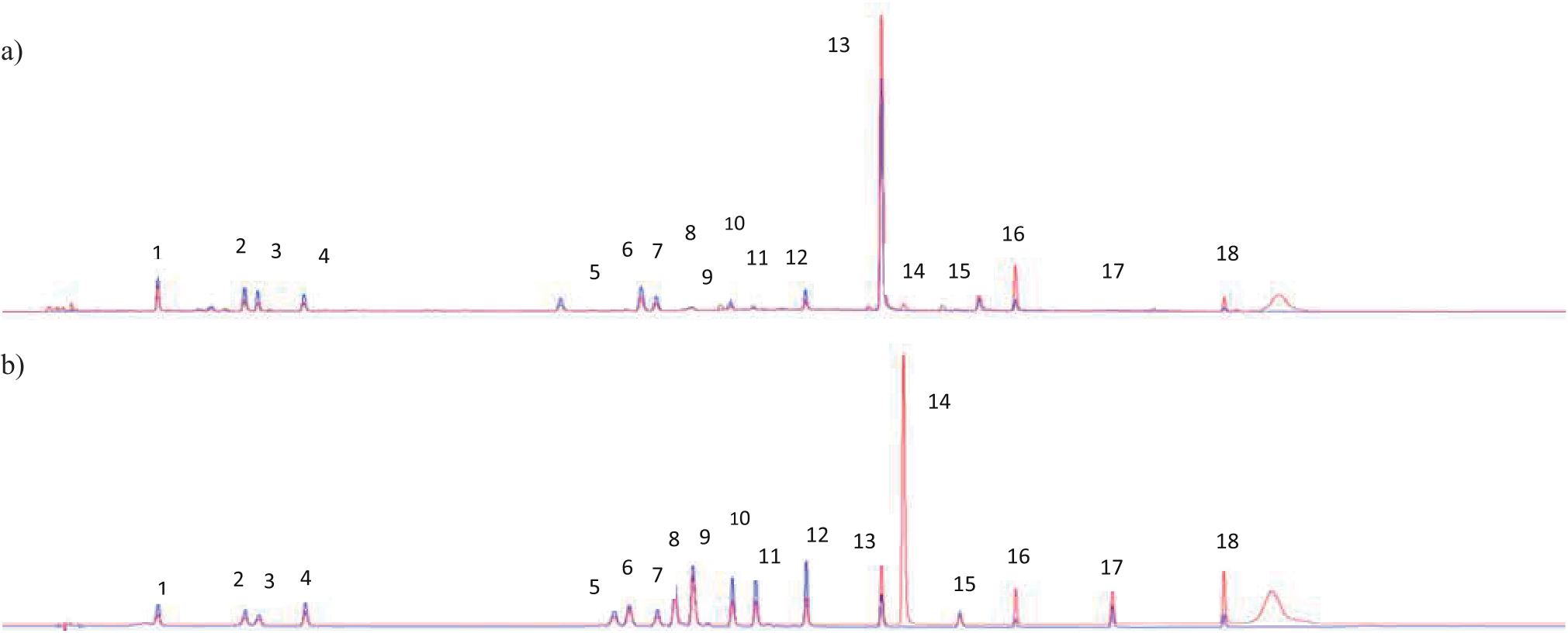
Fig. 1.
HPLC of 18 compounds. a) is the sample chromatogram and b) is the standard chromatogram. Note: The atlas shown above was observed under 326 nm and 277 nm. The numbers 1 to 18 represent neochlorogenic acid, chlorogenic acid, 4-dicaffeoylquinic acid, caffeic acid, forsythoside B, rutin, forsythiaside A, asiatica, scutellarin, isochlorogenic acid B, isochlorogenic acid A, isochlorogenic acid C, baicalin, phillyrin, luteolin, wogonoside, baicalein and wogonin
Antioxidant Assays
The radical scavenging activity of DPPH was measured as previously described, with some modifications [13]. The regression equation and the IC50 value of the free radical scavenging rate were calculated. The DPPH clearance was determined using the following equation: DPPH clearance = [A0 - (A1 – A2)] / A0 × 100 %.
The ABTS+• determination method was used with some modifications [14]. The regression equation and the IC50 value of the free radical scavenging rate were calculated. The ABTS+• inhibition rate was calculated using the formula: ABTS+• = [Ac - (Ai – Aj] / Ac × 100%.
Ferric ion reducing antioxidant power (FRAP) was used to determine the Trolox equivalent antioxidant capacity (TEAC) of the SHL oral liquid. The TEAC determination method was used with some modifications [15]. The FeSO4 solution was used as a control, and the antioxidant activity of the sample was expressed by the number of millimoles of FeSO4 required to achieve the same absorbance.
In-vitro Antibacterial Test
The minimum inhibitory concentration (MIC) was determined using 96-well plates [16]. The experimental configuration of the bacterial solution, comprised activated Streptococcus hemolyticus-β, Staphylococcus. aureus, Salmonella typhi, Shigella serogroups, Escherichia coli, and Streptococcus pneumonia on the slope of the test tube, and these were cultivated at a constant temperature incubator at 37℃ for 24 hours. The SHL oral liquid was then diluted proportionally to halve the sample concentration by grade.
Statistics Analysis
The statistical analyses were performed using analysis of variance and Pearson correlation analysis (IBM SPSS version 25). Statistical analyses of the content were based on the area of the compound in HPLC, and thereafter the data were subjected to a correlation analysis.
Table 3.
Content of principal components in different varieties of SHL oral liquid.
Table 4.
Antioxidant capacity (SC50) of 15 kinds of SHL oral liquid was analyzed (the values obtained are multiplied by 100 on the basis of the original data).
Fig. 3.
Correlation between a) phenylpropanoid (chlorogenic acid, isochlorogenic acid A, isochlorogenic acid B, isochlorogenic acid C, neochlorogenic acid, caffeic acid, 4-dicaffeoylqunic acid), b) flavonoids (wogonin, wogonoside, rutin, luteolin, asiatica, baicalein, baicalin, scutellarin), c) phenolic acid (phillyrin, forsythoside A, forsythoside A, forsythoside B) and antioxidant activity (DPPH assay, ABTS+ assay, FRAP assay).
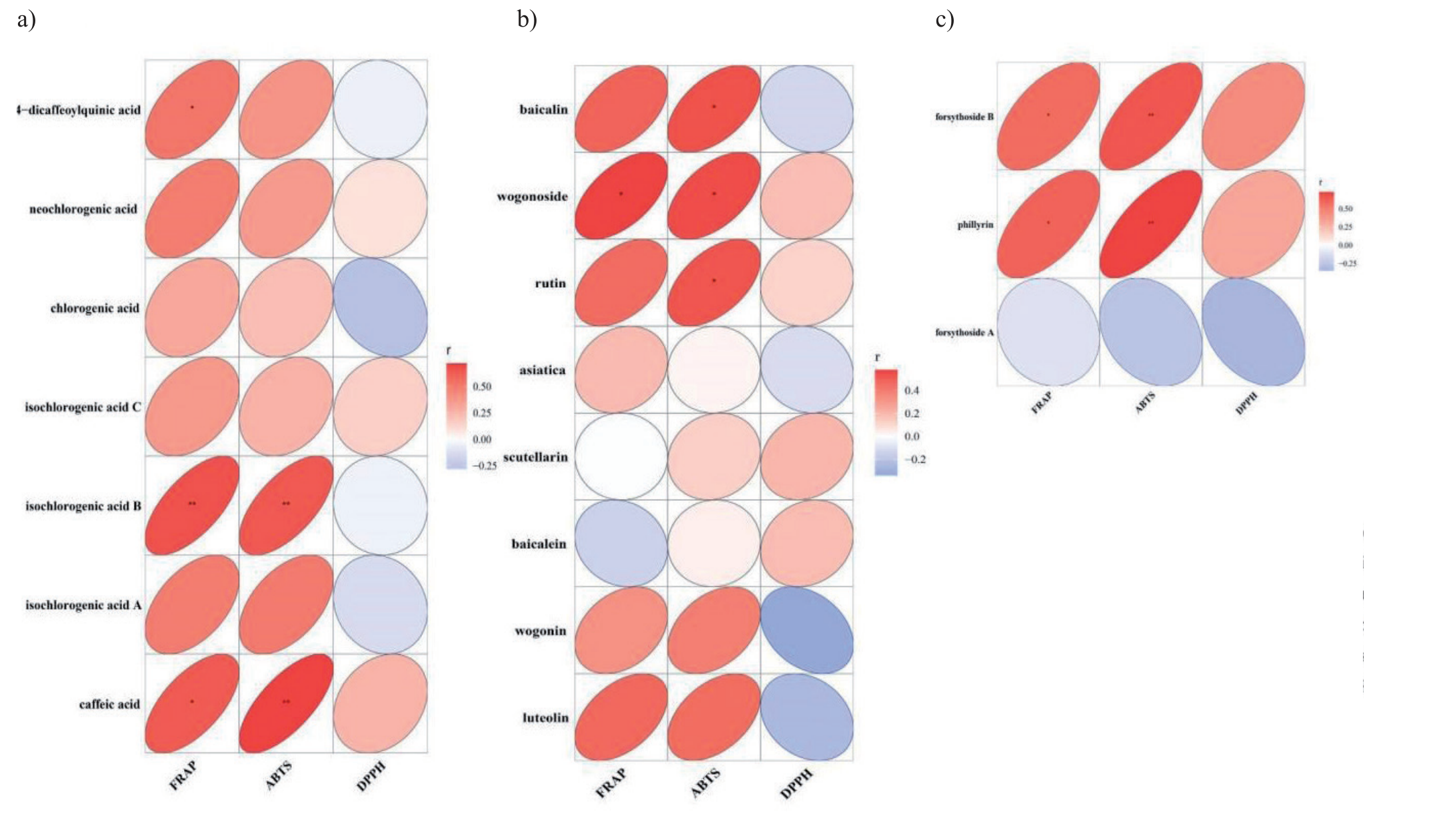
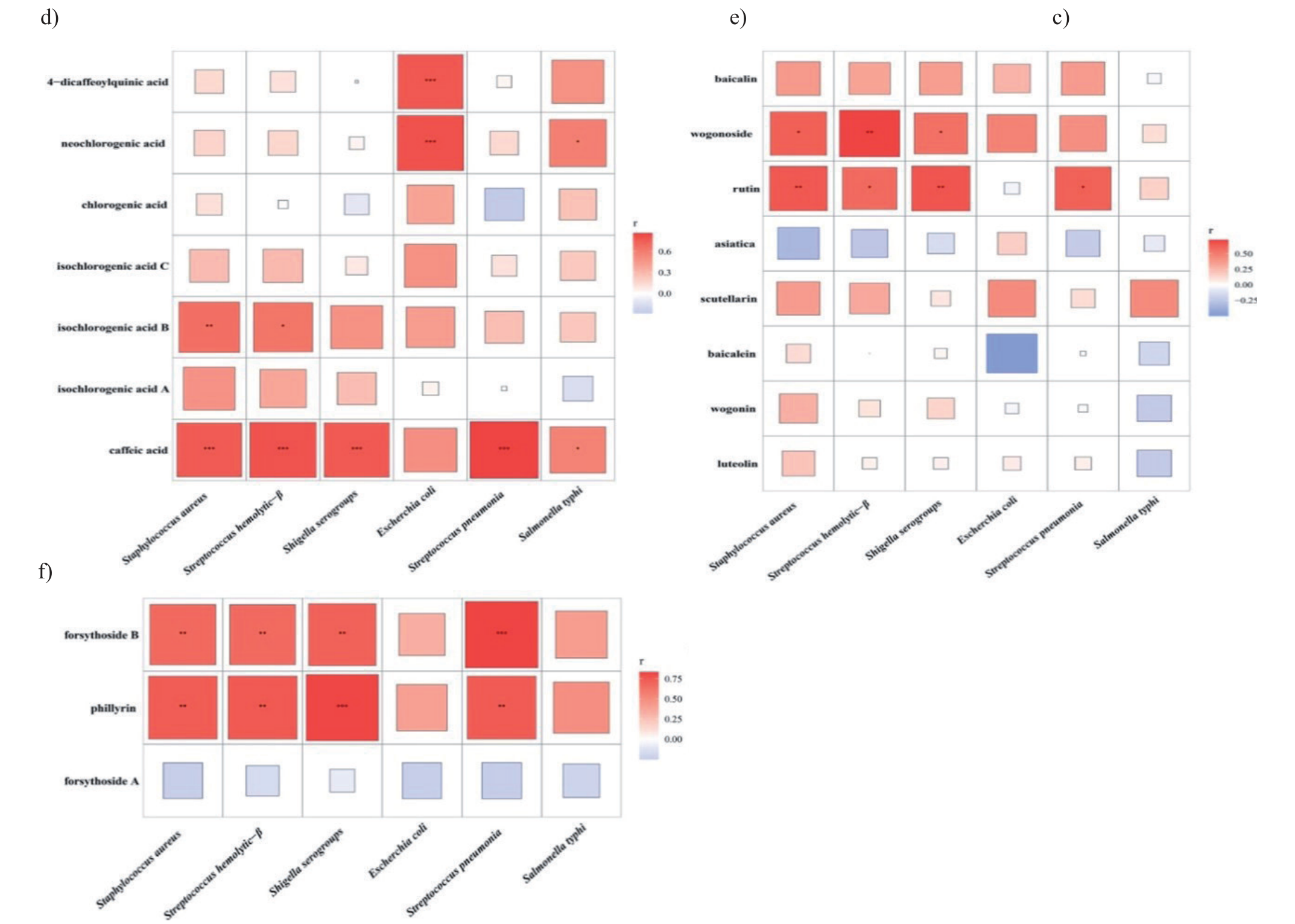
Fig. 4.
Correlation between d) phenylpropanoid (chlorogenic acid, isochlorogenic acid A, isochlorogenic acid B, isochlorogenic acid C, neochlorogenic acid, caffeic acid, 4-dicaffeoylqiunic acid), e) flavonoids (wogonin, wogonoside, rutin, luteolin, asiatica, baicalein, baicalin, scutellarin), f) phenolic acid (phillyrin, forsythoside A, forsythoside A, forsythoside B) and antibacterial activity (Streptococcus hemolytic-ꞵ, Staphylococcus aureus, Salmonella typhi, Shigella serogroups, Escherichia coli, Streptococcus pneumonia).
Results and Discussion
Determination of the Content and Composition of 18 Key Components in the SHL Oral Liquid
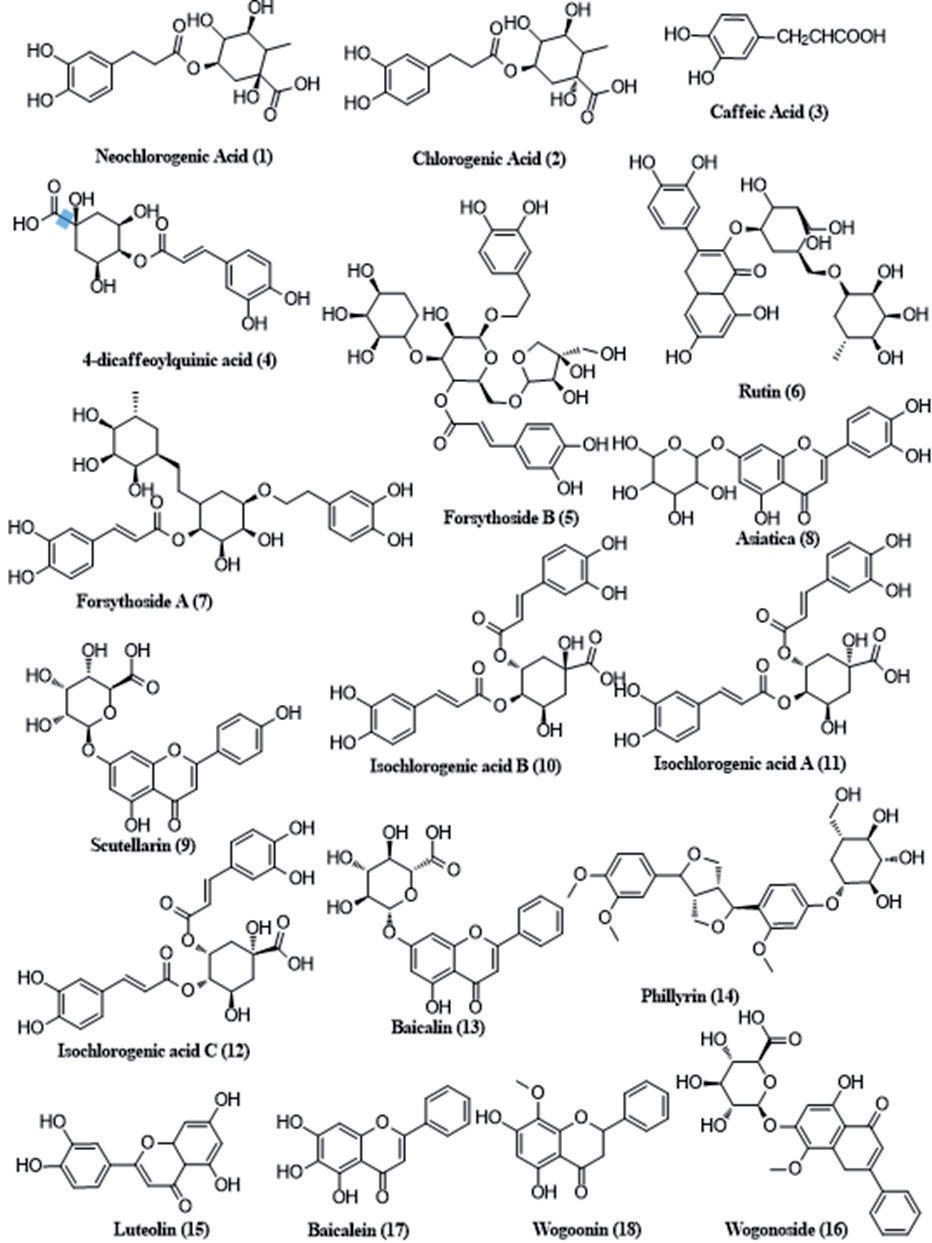
The contents of 18 compounds in 15 purchased SHL oral liquids were determined using HPLC. The content of each compound in the SHL oral liquid was statistically significant. The HPLC results for the 18 compounds are shown in Fig. 1. The chemical structures of the 18 compounds are shown in Fig. 2.
As shown in Table 3, the active ingredients of the three medicinal materials in the SHL oral liquid were also different [17]. Moreover, there were differences in the contents of 18 compounds, which may be due to the sources, varieties, and batches of medicinal materials.
Antioxidant Assay
Three antioxidant experiments were conducted, each of which yielded different levels of antioxidant activity. As shown in Table 4, the value in the table is calculated by multiplying the original value by 100, which is convenient for discussion.
To elucidate the relationship between the 18 classes of compounds and antioxidant activity, we constructed a correlation heat map. As shown in Fig. 3, the correlations between the three types of compounds and the antioxidants DPPH, ABTS+• and FRAP were compared and divided into three graphs A, B, and C. It can be seen from the figure that the 18 compounds had both positive and negative correlations with DPPH, but the homogeneity was not significant. 4-dicaffeoylquinic acid, isochlorogenic acid B, caffeic acid, wogonoside, forsythoside B, and phillyrin were significantly correlated with FRAP. Isochlorogenic acid B, caffeic acid, baicalin, wogonoside, rutin, forsythoside B, and phillyrin were significantly correlated with ABTS+•.
However, other compounds did not have significant antioxidant activity, which may be due to antagonism between different compounds [18]. Theoretically, chlorogenic acid should have significant antioxidant and antibacterial activity [19]. The results of this study may have been affected by other compounds that also have activity, but it is not significant. The antioxidant activity of SHL oral liquid may be reflected by the synergistic or antagonistic effects of various compounds. Therefore, isochlorogenic acid B, caffeic acid, wogonoside, forsythoside B, and phillyrin contributed the most to the antioxidant activity of SHL oral liquids.
Table 5.
Antibacterial ability of 15 kinds of SHL oral liquid was analyzed (the initial concentration is 1.5g/mL and the rest is diluted proportionally).
Antibacterial Assay
Among the 15 SHL oral liquids, SHL5 had the best antibacterial effect against the Streptococcus haemolyticus-β, Staphylococcus aureus, and Shigella serogroups, as shown in Table 5. The antibacterial effects of other samples were slightly different, but not significant. All samples had antibacterial activity against Salmonella typhi, Escherichia coli, and Streptococcus pneumoniae, however, the difference was not significant.
To elucidate the relationship between the 18 classes of compounds and antibacterial activity, we constructed a correlation heat map. As shown in Fig. 4(d, e, f), the correlations between the three types of compounds and the six types of strains were compared. Isochlorogenic acid B, caffeic acid, wogonoside, rutin, forsythoside B, and phillyrin have significant bacteriostatic activities against Staphylococcus aureus and Streptococcus hemolyticus-β. Except for isochlorogenic acid B, all the above compounds showed significant antibacterial activity against Shigella serogroups. 4-dicaffeoylquinic acid and neochlorogenic acid have significant antibacterial activity against E. coli. Caffeic acid, rutin, forsythoside B, and phillyrin have significant antibacterial activity against S. pneumonia. Neochlorogenic acid and caffeic acid have bacteriostatic activity against Salmonella typhi. Therefore, caffeic acid is the main antibacterial compound of SHL oral liquids.
Different compounds show different antibacterial activities against different pathogens. In this study, only six common pathogens were examined, and some compounds had significant antibacterial effects on these six pathogens. Other compounds do not show significant effects and may have significant effects on other pathogens [20, 21]. Therefore, various compounds in SHL oral liquid have various types of antibacterial activities, and their medicinal value is extensive.
Correlation Analysis between Principal Components and Antioxidant and Antibacterial Effects
According to the correlation analysis in Tables 2 and 3, all 18 compounds had antioxidant and antibacterial effects. The main medicinal effect of the SHL oral liquid is heat clearing and detoxification, which include antibacterial, anti-inflammatory, and antiviral effects. Antioxidants can enhance body functions and play an important role in many aspects [22].
This study explored the antioxidant and antibacterial effects of the SHL oral solution, according to Tables 2 and 3. It is known that the flavonoid content in the SHL oral liquid is the highest. Flavonoids are mostly derived from Scutellaria baicalensis Georgi. In this study, baicalin, wogonoside, and rutin derived from Scutellaria baicalensis Georgi showed significant antioxidant and antibacterial activities. Flavonoids are structurally diverse secondary metabolites produced by plants [23]. Some flavonoids have been reported to exhibit activity against the COVID-19 infection [24]. Furthermore, baicalin and baicalein have been shown to exhibit potent antiviral activity in cell-based systems, and also inhibit infection in vitro [25, 26].
In addition, 4-dicaffeoylquinic acid, neochlorogenic acid, isochlorogenic acid B, and caffeic acid derived from Lonicera japonica Thunb have good antioxidant and antibacterial activities. Studies have reported that L. japonica Thunb extracts have a good therapeutic effect on diseases caused by S. aureus and E. coli. L. japonica Thunb also has a good inhibitory effect on respiratory and immunodeficiency diseases. Currently in treating viral diseases, L. japonica Thunb has been found to effectively improve body immunity and has a good inhibitory effect on viruses [27]. Forsythoside B and phillyrin, derived from Forsythia suspensa (Thunb.) Vahl have significant antioxidant and antibacterial activities. The active ingredients of Forsythia suspensa (Thunb.) Vahl are effective in the treatment of respiratory syncytial virus, adenovirus, influenza virus, herpes simplex virus, etc., and have important exploration value and significance [28]. According to recent research reports, based on network pharmacology analysis, the SHL oral liquid and various components of COVID-19 have multiple targets. SHL oral liquid may inhibit viral infection and interfere with viral replication and proliferation [29, 30]. Clinical studies and multiple parallel trials have shown that SHL oral liquid has antiviral effects against COVID-19 [8].
In this study, based on the content and activity of the above-mentioned compounds, the antioxidant and antibacterial efficacy of SHL oral liquid were predicted, which will provide a reference direction for the quality evaluation of SHL oral liquid in the future. To some extent, the antibacterial effect of SHL oral liquid may be reflected by the death of pathogenic bacteria due to its antioxidant effect. The results of this study may provide a research direction for clarifying the site of action and mechanism of SHL, and offer data support for the multifaceted application of SHL.
Conclusions
Overall, 18 main compounds were detected in SHL oral liquid from different manufacturers, and their antioxidant and antibacterial activities were evaluated in vitro. Among them, isochlorogenic acid B, caffeic acid, wogonoside, rutin, forsythoside B and phillyrin showed strong antioxidant and antibacterial activities. To some extent, compounds with more pronounced antioxidant effects also showed significant antibacterial effects. Therefore, the antibacterial effect of SHL oral liquid is partly reflected by its antioxidant activity. This study explored the structure-activity relationship between 18 compounds detected using HPLC and their antioxidant and antibacterial effects. Our findings not only explored the relationship between compounds and their antioxidant and antibacterial effects, but also provided theoretical support for the complex structure-activity relationship between compounds and other efficacies, such as heat-clearing, detoxification, and antiviral effects.

