

Introduction
Coal is a key resource that provides stability in the energy supply and ensures energy security. As the cheapest source of energy, it is second only to oil, which is used to produce 40% of the world’s electricity [1]. The mining process can endanger human health by contaminating the air and water, damaging the soil, and contributing to global warming. Impacts associated with coal mining methods can affect all aspects of the environment, and these impacts can be beneficial or harmful, permanent or temporary, reparable or irreparable, and reversible or irreversible for the environment, i.e. surface water near coal mines. [2]. The problem that motivates this research lies in the ubiquitous need to preserve ecosystems near brown coal mines.
Mines are often potential sources of pollution, while wastewater is a key vector of this pollution [3]. Every form of mining represents a potential threat to the environment. The extent of environmental degradation depends on the status of the mine, that is, whether it is a working or abandoned mine, on the type of deposit, the method of exploitation, as well as on processing and geo-atmospheric conditions [4]. Coal mining has an impact on local water resources, i.e. underground and surface water in the vicinity of coal mines. Surface waters are contaminated by the discharge of mine water, which is also called mine drainage [4]. Extraction of coal from the coal seam creates produced water (wastewater) that, if not treated appropriately, will contaminate surface and groundwater systems [5]. A study by Ali et al. (2017) reported on the impact of coal mine wastewater located within or discharging into high conservation environments, such as national parks, in the outer region of Sydney, Australia. The results were evaluated based on a water quality index that takes into account pH, turbidity, dissolved oxygen, biochemical oxygen demand, total dissolved solids, total phosphorus, and nitrate nitrogen [6]. The biggest deviations from the guidelines were aluminum, iron, manganese, nickel, and zinc. The approach used in the study was used as a starting point for the development of the model used in the subject research to assess the environmental impact of a brown coal mine and provide a basis for assessing the anthropogenic contribution of industrial and mining activities to the environment. A similar study was conducted by Singh et al. (2019) who investigated the Damodar River and its tributaries, which are polluted by human activities, deforestation, agriculture, mining, industrial and domestic wastewater, etc. [7]. The study assessed water quality through various physicochemical parameters such as pH, TDS, EC, sulfate, nitrate, chloride, fluoride, zinc, and iron. Pollutant concentrations observed at these study sites were generally around the prescribed tolerance limits or higher. The maximum nitrate content of 43.4 mg/l was found in the Khudia River, and the maximum fluoride concentration of 0.55 mg/l was found in the Kari Jore and Barakar rivers. What is a potential shortcoming of this research is the impossibility of examining the mentioned parameters in the observed waters before industrial activities, in order to see the exact impact of them on the examined waters. Research conducted by Li et al. (2017) focused on the Zhijin Coal Mining District, located in Guizhou Province in the Midwest [8]. The discharge of coal mine wastewater posed a threat to water quality. In order to examine the water quality, wastewater, surface water, and groundwater were sampled in the vicinity of the coal mine. The results of hydrochemistry and isotopic composition indicate that the regional surface and partially underground waters are clearly influenced by mining activities, which is mainly manifested in the increase in the concentration of dissolved substances in the water and the change in hydrochemical types. The research results isolated specific parameters that had an impact on wastewater. By combining the approaches of the studies of Ali et al. (2017) and Li et al. (2017), the authors decided to develop the subject model.
The central problem of the research is related to the identification of specific changes that occur after the inflow of wastewater into surface waters. The analysis of specific parameters is set as a key step towards understanding pollution mechanisms. The importance of this problem stems from the need for sustainable management of natural resources and ecosystem protection. Coal mines, as key resources for numerous industries, face the challenges of balancing economic efficiency and environmental sustainability [9]. The research aims to identify key changes in surface water quality caused by mining activities, which will potentially serve as a starting point for future preventive and corrective measures aimed at preserving the ecological balance in the Štavalj brown coal mine.
The analysis of statistically significant differences through the applied statistical test aims to identify the differences in parameter concentrations before and after the inflow of wastewater into surface waters. The goal is to determine if there are significant changes that can be linked to the mining activities themselves. Another goal of the research is the identification of key parameters that show significant changes in the chemical composition of surface waters, which enables focusing on specific elements that are potential indicators of pollution. Based on the obtained results, the aim is to formulate concrete recommendations for the improvement of wastewater management practices in brown coal mines.
In the following chapters, the results of the research and the discussion about them will consider in more detail the identified changes and their implications for surface water quality. This approach allows for a holistic view of the problem, simultaneously taking into account both the economic and environmental aspects of mining activities.
Materials and Methods
The subject research was carried out in the Štavalj brown coal mine. The oldest data on the coal exploitation of the “Štavalj” mine date back to 1936, while more detailed research became more intensive only after the Second World War and enabled the opening of the mine at the Stupsko Polje location in 1955. The pit “Stupsko polje” was abandoned when the new pit “Nada” was opened in the village of Štavalj and was in operation until 1976, when it was forced to close due to a fire [10]. In 1976, a new pit “Štavalj” was opened, where coal is still exploited today. The “Štavalj” mine is engaged in the exploitation of brown-lignite coal. Mining and geological works are now being carried out at the “Centralno Polje” deposit of the “Štavalj” coal mine, where underground coal mining is organized. Fig. 1 shows the geographical location of the Sjenično- Štavaljski coal-bearing basin and the location of the Centralno polje deposit, which are marked on the map under the location “Rudnik uglja Štavalj”.
Fig. 1.
Geographical location of the Sjeničko-Štavaljski coal basin and the location of the Centralno polje of the “Štavalj” coal mine.
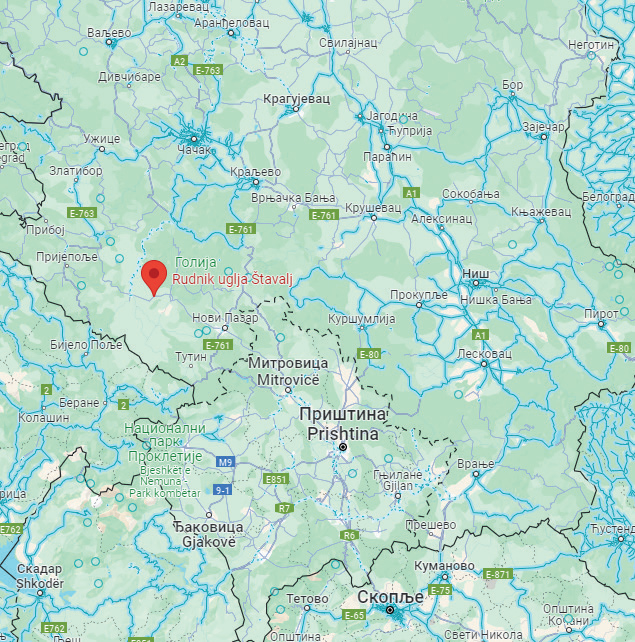
Coal exploitation in the dark coal mine “Štavalj” is carried out in the Central part of the deposit, where the opening facilities and surface mining infrastructure facilities were built. The reservoir covers the atar of the village Štavalj. From a morphological point of view, the Sjenica basin is a basin within the Dinaric mountain system, bounded on the east and northeast by the branches of Mount Golija, on the north by Mount Javor, on the northwest by the branches of Zlatar and Jadovnik, and on the south by the branches of Mount Giljeva. From a hydrographic point of view, this area abounds with numerous streams and rivers.
Since 2000, production has stabilized at the level of 50,000 to 60,000 tons and is constantly increasing slightly, reaching 74,000 tons in 2009 with a tendency to further increase.
The historical development of the “Štavalj” mine reflects continuous adaptation and evolution in order to more efficiently exploit brown coal. The stability and gradual increase in production since 2000 suggest the significant role of mines in energy supply, but at the same time, they impose challenges of sustainability and ecosystem preservation. Over the decades, the mine has become a key part of the local economic structure, research, and resource exploitation practices. Continuing to balance carefully between economic efficiency and environmental preservation remains a key challenge for mining operations at Štavalj mine.
The non-parametric Wilcoxon test for dependent samples is used to compare means in pairs of related data when assumptions of normal distribution are not met [11]. The Wilcoxon test is based on ranking the differences between pairs of data, thus eliminating the need for the normality assumption. The Wilcoxon test was used because it helps detect the potential existence of statistically significant differences between pairs of data, before and after the interventions. The Wilcoxon test was applied in the analysis of the subject research because the parameters were compared before and after the discharge of wastewater into surface water. The non-parametric Wilcoxon test for dependent samples is a key tool in the subject research on the impact of mining activities on surface water quality. This method, which does not require assumptions about normal distribution, enabled a precise analysis of changes in parameter concentrations before and after wastewater discharge [12]. Ranking the differences between pairs of data eliminates the need for assumptions about the normality of the distribution, thus providing a robust statistical approach, especially in situations where the data are not normally distributed. This approach enabled the identification of potentially statistically significant differences in concentrations of key parameters, providing a deeper understanding of the impact of mining activities on surface water quality. Its application in the subject research contributes to reliable results and making informed conclusions about the ecological consequences after the inflow of wastewater into aquatic ecosystems.
As emphasized above, parameters were analyzed in surface water before the inflow of wastewater and in surface water after the inflow of wastewater into the surface water. If the concentration of the observed parameters is lower in surface waters before the inflow of wastewater into them than after the inflow of wastewater into them, it indicates that the inflow of wastewater from coal mines has a negative effect on the quality of surface water, according to the analyzed parameters.
On the other hand, if the concentration of certain parameters is higher in surface waters before the inflow of wastewater into them than after the inflow of wastewater into them, this may indicate that the coal mine has an efficient treatment of wastewater, according to the analyzed parameters.
The measurements that are included in the experimental analysis were done quarterly, from 2019 to 2023, that is, 20 identical measurements were repeated, comparing the values of the parameters in surface water before the inflow of wastewater and after the inflow of wastewater into it. The parameters that were examined were divided into basic and specific parameters. Basic parameters include temperature, pH value, oxygen content, electrical conductivity, chemical consumption of oxygen, biochemical consumption of oxygen, sediments, dry residue, calcined residue, loss on ignition, and suspended matter, while specific parameters include ammonia nitrogen, nitrates, nitrites, sulfates, chlorides, orthophosphates, total phosphorus, iron, zinc, lead, chromium, and copper.
The Wilcoxon test determined that there is a statistically significant difference between the surface water before the inflow of wastewater and the surface water after the inflow of wastewater when analyzing the following parameters:
annealed residue (p-value = 0.003),
suspended matter at 105ºC (p-value = 0.001),
ammonia nitrogen (p-value = 0.003),
nitrates (p-value = 0.000),
nitrites (p-value = 0.000),
sulfates (p-value = 0.047),
zinc (p-value = 0.034),
lead (p-value = 0.003),
chromium (p-value = 0.046).
In cases where no statistically significant difference was found when observing certain parameters before and after the inflow of wastewater into surface water, this implies that the change in the value of those parameters is not large enough to be considered significant in a statistical sense. In other words, the differences in parameter values observed before and after wastewater inflow are not consistent or significant enough to be considered as a result of the effect of wastewater inflow on that parameter. In the context of the goal of the work, how to analyze the cause-and-effect relationship of surface waters before and after the inflow of wastewater into them, if there is no statistically significant difference in the values of the observed parameter before and after the inflow of wastewater, this indicates that the treatment of wastewater does not significantly affect observed parameter. Other factors or natural processes can also affect the values of the observed parameter, so the inflow of wastewater is potentially not the main cause of changes in that context. The absence of statistically significant differences indicates that a certain parameter is not significantly affected by the inflow of wastewater, which can be important for understanding the impact of wastewater treatment on surface water quality and maintaining the ecological balance in the observed area.
The parameters annealed residue and suspended matter at 105ºC are parameters whose concentration is higher in surface waters before the inflow of wastewater than after the inflow of wastewater into them. This is a positive indicator, because, as these parameters are indicators of water pollution, their reduction or maintenance at a low level after wastewater inflow into surface waters implies that wastewater treatment has a positive effect on water quality in the observed area.
On the other hand, ammonia nitrogen, nitrates, nitrites, sulfates, zinc, lead, and chromium are parameters with higher values after the inflow of wastewater into surface waters, where the Wilcoxon test determined that there is a statistically significant difference between their values in surface waters before the inflow of wastewater into the same and surface waters after the inflow of wastewater into the same.
The next step in the research is to determine in which measurement, i.e. period, the parameters were above the limit values during the test, and whether a statistically significant difference was found between their concentration before the inflow of wastewater and after the inflow of wastewater into the surface water. The parameters whose concentration in surface water is lower before the inflow of wastewater than after the inflow of wastewater into surface water are observed.
The following were used for the measurements: – atomic absorption spectrometer, manufactured by
Varian, model AA220 (Australia), – ICP-OES, produced by Shimadzu, model E-9000
(Japan), – spectrophotometer, manufactured by Varian, model
Cary 50 AA (Australia), – pH/ion meter, manufactured by WTW, model Inolab
pH (Germany), – analytical balance, manufactured by Kern, model
ABJ 120-4M (Germany), – technical scale, manufactured by Denver instrument,
model SI-2002 (USA), – dryer, manufactured by Elektron, model DHG-
9023A (Serbia), – glass mercury thermometer, manufactured by TLOS,
model HRK-4-1002 IMM (Croatia), – HQd portable meter, manufactured by Velp, model
FTC 90 (USA) and – Incubator, manufactured by Velp, model FTC 90
(USA) [13]. – During the measurement, the following regulations
were respected: – Rulebook on the method and conditions for
measuring the quantity and testing the quality
of wastewater and the content of the report on the
performed measurements (“Official Gazette of RS”
33/2016), – Regulation on limit values for the emission of
polluting substances into water and deadlines for
their achievement (“Official Gazette of the RS”, no.
67/2011, 48/2012 and 1/2016) which refer to limit
values for the emission of wastewater from plants
and facilities for coal washing and separation, as well
as emission limit values at the point of discharge into
surface waters, – Decision for physicochemical tests of the quality of
wastewater, water sensor tests, and water sampling,
number 325-00-1707/2019-07 dated 09/30/2019. of
the Ministry of Agriculture, Forestry and Water
Management, – Certificate of Accreditation of the testing laboratory
number 01-174 of the Accreditation Body of Serbia
[13].
The results of the research, analyzed using the non-parametric Wilcoxon test, indicate statistically significant differences in the concentration of various surface water parameters before and after the inflow of wastewater from coal mines. The parameters ammonia nitrogen, nitrates, nitrites, sulfates, zinc, lead, and chromium showed significant changes. These results suggest the impact of wastewater inflow on surface water quality. The research identified key parameters in the period from 2019 to 2023, which show statistically significant differences. These results provide a significant contribution to the understanding of the impact of industrial activities on the ecosystem and can be a starting point for making informed decisions to preserve the quality of surface waters.
By applying the Wilcoxon test in the analysis of the subject research, the obtained results are significant because they confirm statistically significant differences in the concentration of key surface water parameters before and after the inflow of wastewater from coal mines. This approach enables precise identification of the impact of mining activities on water quality, which is essential for the preservation of ecosystems. Therefore, the Wilcoxon test not only enables statistically significant confirmation of changes in the concentration of parameters but also precisely singles out the key parameters that are most sensitive to the influence of wastewater [14]. This information is the basis for making informed decisions and implementing measures to preserve surface water quality in industrial areas.
In the research, the Wilcoxon test for dependent samples was used to analyze changes in the concentration of key surface water parameters before and after the discharge of wastewater from coal mines. This non-parametric method enabled the precise identification of statistically significant differences in parameter concentration, eliminating assumptions about normal distribution and providing a robust statistical approach. The results confirmed statistically significant changes in the concentration of key parameters, which is essential for understanding the impact of mining activities on water quality and making informed decisions to preserve the ecosystem.
Results
After performing the statistical test, it is necessary to determine in which periods, that is, measurements, there is a deviation from the determined limit values.
The periods in which there is a deviation from the established limit values will be listed below: – ammoniacal nitrogen - there are no periods in
which deviations from the established limit values
occurred, – nitrates - sampling from May 28, 2020 [15],
sampling from September 1, 2020 [16], sampling
from September 14, 2021 [17, 18], – nitrites – sampling from May 28, 2020 [15], sampling
from September 1, 2020 [16], sampling from October
12, 2022 [19], – sulfates - sampling from September 1, 2020 [16],
sampling from September 14, 2021 [17, 18], sampling
from October 12, 2022 [19], – zinc - there are no periods in which deviations from
the established limit values occurred, – lead - there are no periods in which deviations from
the established limit values occurred, – chromium - sampling from September 14, 2021 [17,
18].
In Fig. 2, it can be seen that there is no deviation from the established limit values, which is 1 mg/L for the first class of water when looking at ammonia nitrogen. Although the concentration of ammonia nitrogen is higher in surface waters after the inflow of wastewater than before the inflow, it is significant that it is lower than the legally established limit value.
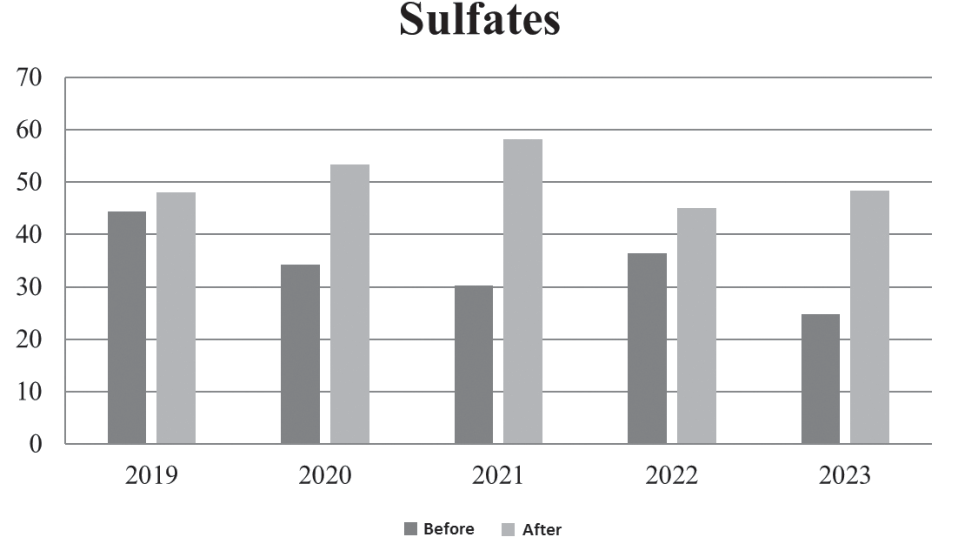
Certainly, no measurement should be ignored in which it was determined that there is a deviation from the limit value of the parameter after the inflow of wastewater into the surface water; however, in the following, the focus will be on the parameters that in the largest number of measurements are above the legally determined limit value. In Fig. 3, 4, and 5, it can be seen that the concentration of nitrates, nitrites, and sulfates is higher after the inflow of wastewater into surface water than before the inflow of wastewater into surface water.
Fig. 2.
Comparative presentation of the concentration of ammonia nitrogen before and after the inflow of wastewater into surface waters.
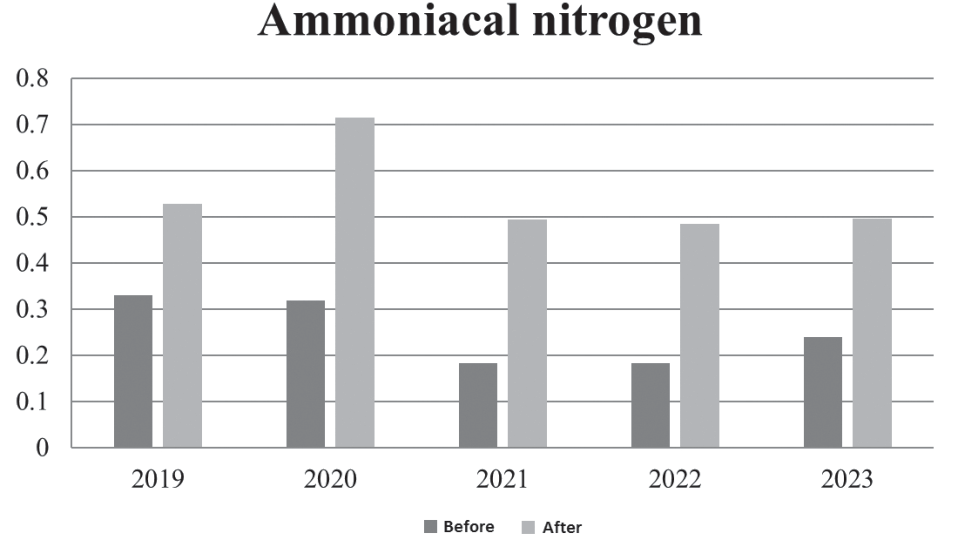
Fig. 3.
Comparative presentation of the concentration of nitrates before and after inflow of wastewater into surface waters.
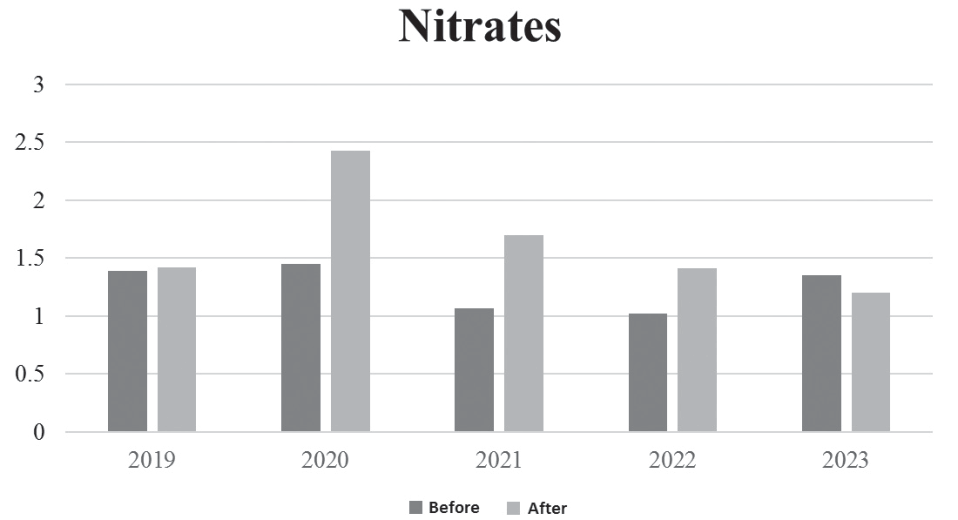
Table 1 shows the values of nitrates, nitrites, and sulfates, by time periods in which it was determined that there was a deviation of the values of the observed parameters from the legal limit values, with an emphasis on highlighting the values of the observed parameters before the discharge of wastewater into surface waters and after the discharge of wastewater into surface waters. In the table, the fields marked with the sign “/” provide information that in that measurement no deviation of the value of the observed parameter from the limit value defined by law, which is listed after the table, when the results from it are commented on, was determined.
Fig. 4.
Comparative presentation of the concentration of nitrites before and after inflow of wastewater into surface waters.
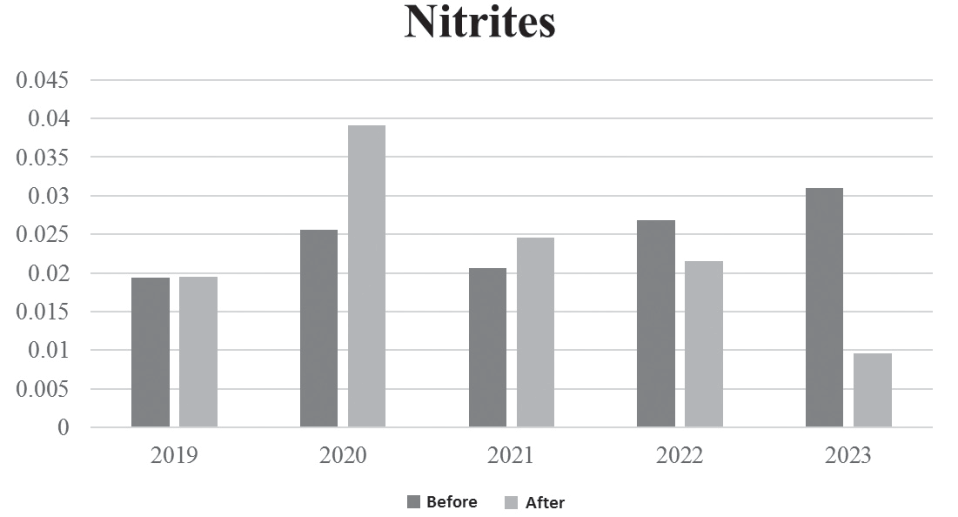
Fig. 5.
Comparative presentation of the concentration of sulfates before and after inflow of wastewater into surface waters.
Based on the information from the measurement of nitrates in surface water samples before and after the inflow of wastewater from May 28, 2020, it can be seen that the nitrate level before the inflow of wastewater is 4.5 mg/L (with a deviation of ±1.1), which is above the limit values of 1.5 mg/L for the first class of water. Before the inflow, the nitrate concentration significantly exceeds the permitted limit, indicating nitrate pollution before the wastewater is discharged into the river. After the inflow of wastewater, the nitrate level is 10.8 mg/L (with a deviation of ±2.6), which is also significantly above the limit value of 1.5 mg/L for the first class of water [15]. After the inflow of wastewater, the concentration of nitrates increases, which further increases pollution. Observing the concentration of nitrates before the inflow of wastewater into the surface water, during the measurement carried out on September 1, 2020, the concentration of nitrates is within the permissible limits, indicating relatively good water quality before contamination with wastewater. The nitrate concentration after the inflow is 2.7 mg/L, which exceeds the limit value of 1.5 mg/L for the first class of water. After the inflow of wastewater, the nitrate concentration increases, indicating nitrate pollution [16]. The sampling that was carried out on September 14, 2021, was made in two reports; the first report refers to surface water before the inflow of wastewater [17], while the second report refers to surface water after the inflow of wastewater [18]. It was determined that the amount of nitrates is 0.60 mg/L, while the limit value for the first class of water is 1.5 mg/L. Using the same measurement method, it was determined that the amount of nitrates after the inflow of wastewater into surface water is 3.27 mg/L, while the limit value for the first class of water is 1.5 mg/L, for the second class 3 mg/L, and for the third 6 mg/L. The positive side is that the concentration of nitrates before the inflow of wastewater into surface water is below the limit value for the first class of water, the concentration of nitrates is low and meets the prescribed standards for water. On the other hand, the concentration of nitrates in surface waters after the inflow of wastewater exceeds the value for both the first and second classes of water. There is a significant increase in nitrate concentration after the inflow of wastewater, indicating a high degree of pollution. Based on these data, it can be concluded that there is a problem of nitrate pollution in surface water after the inflow of wastewater.
Table 1.
Values of nitrates, nitrites, and sulfates, in time periods in which the deviation of their value from the legal limit was identified.
The amount of nitrite that was examined in the measurement from May 28, 2020, does not correspond to the first class of water according to the Regulation on limit values of pollutants in surface and underground waters and sediment and deadlines for their achievement (Official Gazette RS 50/12), from where the limit values were taken [15]. The level of nitrite in surface water before the inflow of wastewater is 0.030 mg/L (with a permissible deviation of ±0.003), while the level of nitrite in surface water after the inflow of wastewater is 0.080 mg/L (with a permissible deviation of ±0.008), at the limit value for the first water class 0.01 mg/L. Sampling of the surface waters of the Kneževica River was carried out to analyze the amount of nitrite before and after the inflow of wastewater from RMU Štavalj. Based on the measurement results, a statistically significant difference was found between the amount of nitrite before and after the inflow of wastewater, which indicates a real change in water quality. The level of nitrite in surface water before the inflow of waste water is 0.030 mg/L, which already exceeds the limit value for Class I waters of 0.01 mg/L. After the inflow of wastewater, the nitrite level increases significantly to 0.080 mg/L, which further indicates the serious impact of industrial wastewater on the nitrite concentration in the river. The measured values in the surface water sample in the measurement that was carried out on September 1, 2020, show that the measured values in the surface water sample after the inflow do not correspond to the first class of water according to the Regulation on limit values of pollutants in surface and underground waters and sediment and deadlines for their reaching (Sl. glasnik RS 50/12) from where the limit values were taken, where the amount of nitrite in surface water before the inflow of waste water is 0.09 mg/L (with a permissible deviation of ±0.01), while the amount of nitrite in surface water after the inflow of waste water is water 0.05 mg/L (with a permissible deviation of ±0.01), at a limit value of 0.01 mg/L [16]. There is a significant decrease in the amount of nitrite in the surface water sample after the wastewater inflow compared to the previously described measurement. This may indicate improvements in wastewater treatment or natural processes that contribute to the reduction of nitrite concentrations. There is an obvious decrease in nitrite concentration in the surface water sample after the wastewater inflow in the previously described sampling and this one. Sampling that was carried out on October 12, 2022, shows that nitrite in surface water before the inflow of wastewater is 0.01 mg/L, while after the inflow of wastewater, it is 0.05 g/L [19].
Sampling carried out on September 1, 2020, shows that the amount of sulfate in surface water before the inflow of wastewater is 6mg/L (with a permissible deviation of ±0.03 mg/L), while the amount of sulfate in surface water after the inflow of wastewater is 78.4 mg/L (with a permissible deviation of ±7.1 mg/L), at a limit value of 50 mg/L [16]. The discharged wastewater itself may contain high concentrations of sulfates. According to sampling from September 14, 2021, the amount of sulfate in surface water before the inflow of wastewater was 8.22 mg/L, while the amount of sulfate in surface water after the inflow of wastewater was 96.62 mg/L, at a limit value of 50 mg/L. L for the first class of water, that is, 100 mg/L for the second class of water [17, 18]. A high concentration of sulfates, especially above the limit values for class I and II waters, represents a serious risk for aquatic ecosystems. This can lead to disturbance of aquatic organisms and long-term problems for the ecosystem.
In Fig. 6, it can be seen that there is no deviation from the established limit value, which is 0.02 mg/L for the first class of water when zinc is observed, and in Fig. 7, when lead is observed, whose limit value is 14 mg/l for first-class water.
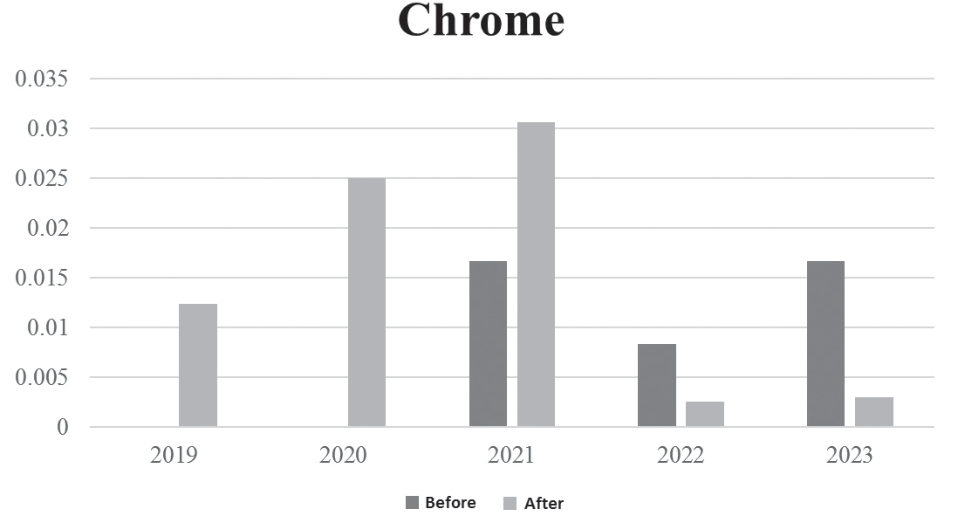
The only sampling in which chromium was observed to be above the established limit values of 25 mg/M was the sampling from September 2021 [17, 18] and it is also the sampling with the highest chromium concentration, analyzing the sampling from 2019 to 2023 (Fig. 8). This exception potentially indicates a particular failure or situation, which temporarily impaired the efficiency of wastewater treatment in a lignite mine. What can be a factor is the variability of the composition of wastewater, which is reflected in the result of changing conditions in the process of mining exploitation or coal ore processing. On the other hand, the maintenance and efficiency of water treatment plants are important factors for maintaining the quality of wastewater. Technical failures or irregularities in the operation of the plant can lead to an increase in the concentration of chromium in the discharged water. Also, an increase in the volume of exploitation, changes in chemical processes in the mine, or changes in the type of processed ore can affect the composition of wastewater.
Fig. 6.
Comparative presentation of the concentration of lead before and after the inflow of wastewater into surface waters.
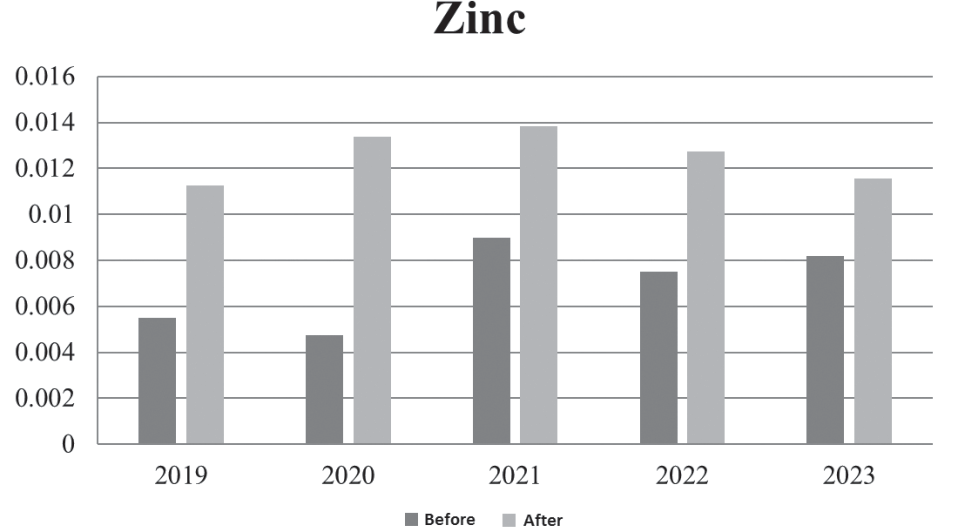
Fig. 7.
Comparative presentation of the concentration of zinc before and after the inflow of wastewater into surface waters.
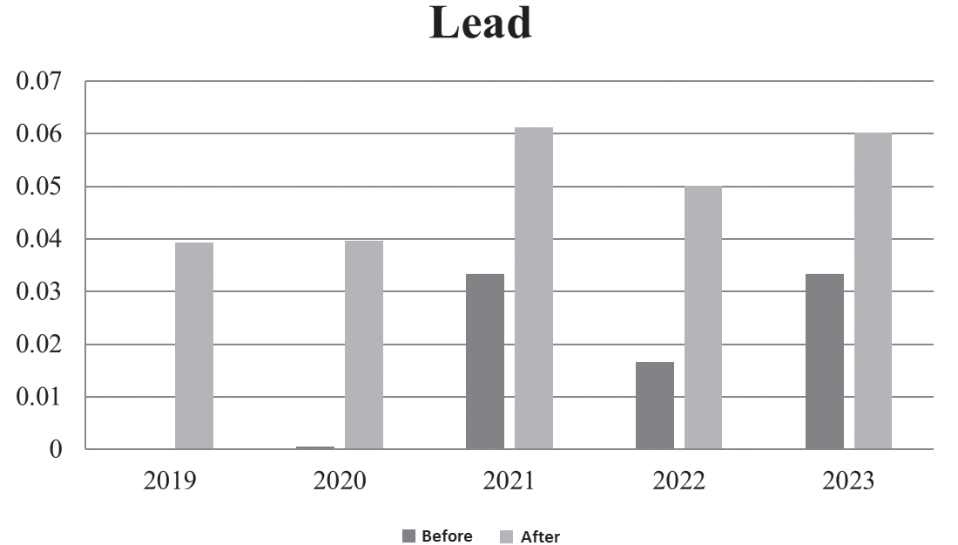
Fig. 8.
Comparative presentation of the concentration of chrome before and after the inflow of wastewater into surface waters.
The identification of parameters that in the largest number of measurements deviate from the determined limit values represents a key phase of the research because it provides concrete guidelines for the improvement of surface water treatment in brown coal mines.
Discussion
It can be seen that in the conducted analysis, nitrates, nitrites, and sulfates are singled out as parameters that primarily showed a statistically significant difference between their concentrations in surface waters before the inflow of wastewater and after the inflow of wastewater, and then the parameters that showed that they have the most periods in which they deviate from the legally established limit value. It is important to note that the months in question are May, September, and October.
High levels of nitrates in water, the moment they reach water courses, can cause eutrophication [20]. Eutrophication in the aquatic ecosystem causes significant changes in biodiversity, by causing an increase in plant biomass, the frequency of algal blooms, the growth of rooted plants, and a decrease in species diversity [21, 22]. This research makes it possible to see a direct link between mining activities and increased nitrate concentrations, providing a basis for targeting water treatment measures. Analyzing the movement of nitrite concentration in surface waters, it is possible to conclude that there is a significant influence of wastewater treatment on this parameter. A periodic increase in nitrite concentration suggests leaching of ore into waterways. In coal mines, chemicals are often used for various processes, which include coal washing, mineral separation, or flotation processes. These chemicals can contain nitrogen compounds that can potentially become nitrites, and in waters that come into contact with coal seams, biological processes, especially nitrification, can cause the conversion of ammonia to nitrites [23]. As for implications, it is necessary to increase the frequency of monitoring the nitrite concentration, especially during the rainy season, in order to better understand the dynamic movement [24]. Also, revision of the existing wastewater treatment plants is needed, in order to ensure more effective elimination of nitrites.
Coal seams often contain naturally occurring sulfates. When the soil in a mine is broken up to extract the coal ore, sulfates from the coal can get into the water. In washing, separation, or flotation processes, chemicals containing sulfate ions can be used [25, 26]. These chemicals are used for a variety of purposes, including the separation of coal particles from impurities. Also, natural sources of sulfate, such as sulfide-bearing rocks, can contribute to increased concentrations. If such sources are present in the environment, it may be necessary to take certain measures to minimize their impact, however, investing in improved treatment technologies may be key. A wastewater treatment plant should be able to effectively remove sulfates. If there is an amount of sulfate in the wastewater that is above the limit value due to the production process, consideration of changes in the production process itself may be necessary, in order to reduce the amount of sulfate in the wastewater.
This knowledge is of essential importance because it allows directing water treatment towards specific processes and chemical compounds that contribute the most to pollution. The identification of these key parameters provides the basis for efficient directing of resources and efforts in the treatment of surface water, targeting the reduction of nitrate, nitrite, and sulfate concentrations. This targeted strategy, based on scientific results, makes it possible to increase the efficiency of water treatment in brown coal mines, thereby achieving a balance between industrial needs and ecosystem preservation. Thus, the research provides an important contribution to the sustainability of mining operations and the long-term protection of water quality in the vicinity of the mine.
The subject research is focused on the analysis of surface water before and after the inflow of wastewater from a brown coal mine. It is important to point out that the subject research was conducted within a broader, more complex research model that aims to understand the impact of mining activities on water quality. Such model development enables a comprehensive analysis of changes in the concentration of key parameters, thereby gaining a deeper understanding of the ecological consequences of the inflow of waste materials into surface waters. The advantage of such a research model is its ability to precisely identify key parameters that show statistically significant differences before and after wastewater inflow. Focusing on nitrates, nitrites, and sulfates, as the parameters that most often deviate from the legal limit values, provides concrete guidelines for improving the treatment of wastewater in brown coal mines. This research model can be essential in more complex analyses, as it enables the identification of specific parameters and their changes over time. The implementation of such a model enables the discovery of cause-and-effect relationships between mining activities and changes in water quality, which can serve as a basis for making informed decisions in order to preserve the environment. In addition, the development of such a model facilitates the monitoring of the dynamics of changes during different periods and the identification of key months (May, September, and October) that show significant deviations from the threshold values. This enables the adjustment of water treatment measures in accordance with the specifics of individual periods.
A complex research model before and after the influx of waste materials from brown coal mines, as presented in the research, provides a thorough approach to identifying key issues in water conservation. Its advantages are reflected in the precision of change detection, the identification of key parameters, and the ability to adapt water treatment measures in order to achieve a sustainable balance between industrial needs and ecosystem preservation.
Conclusions
Research on the impact of wastewater on surface water in the “Štavalj” brown coal mine lays the foundation for sustainable management of water resources, where the key element is the clear identification of parameters that reflect water quality. This process is achieved through precise statistical analysis, which provides a valid database that allows monitoring of changes in water quality from quarter to quarter.
Although the influence of coal mine wastewater on surface waters is quite clear, it is necessary to single out the parameter that has the greatest impact, by applying an adequate statistical test, which is necessary, and to see in which months their influence is most pronounced. In this way, with adequate planning based on previously conducted research, it is possible to predict which parameters will deviate from the legally established limit values in different periods of the year, and implement adequate preventive measures. The lack of such research leads to the implementation of corrective measures that are often not adequate, due to the lack of necessary information about parameters that deviate from the established limit values, which leads to treatment that is not adequate for a certain time period and a certain parameter.
The key results indicate significant changes in the quality of surface water caused by the discharge of wastewater from brown coal mines. The most important conclusions of the subject research include the identification of nitrates, nitrites, and sulfates as key parameters that, in the largest number of measurements, deviate from the legally established limit values. These results not only indicate the need to improve wastewater treatment in brown coal mines but also enable the formulation of specific recommendations aimed at reducing the concentration of these significant pollutants. It is important to note that the identified periods of deviation provide a basis for the precise targeting of preventive and corrective measures. Nitrification and the use of chemicals containing sulfate ions during mining processes have been singled out as key causes of deviations, emphasizing the need for careful management of chemical processes to limit water pollution [27]. These results are of great importance not only for the mining industry but also for the preservation of ecosystems in the vicinity of brown coal mines. Targeting water treatment according to identified parameters provides operational teams with practical guidelines for increasing treatment efficiency, which has long-term positive effects on water quality and biodiversity conservation.
The subject research contributes to a better understanding of the impact of mining activities on surface waters, providing scientifically based data to inform decision-making aimed at the sustainability of mining operations and the preservation of aquatic ecosystems.
Mining waters, the result of the exploitation of mineral resources, have a significant impact on the surrounding ecosystems and the environment. These waters often contain various chemicals and heavy metals that can be harmful to living things and human health [28]. The impact of mine waters on surrounding ecosystems can be diverse and long-term, including water, soil, and air pollution, as well as changes in biodiversity and reduction of soil fertility. The importance of research that deals with reducing the impact of mining wastewater on the surrounding ecosystems plays a key role in environmental protection. These researches include various aspects, such as technologies for efficient purification of mining waters before they reach the environment, strategies for remediation of polluted areas, as well as monitoring and evaluation of long-term environmental consequences of mining activities.

