

Introduction
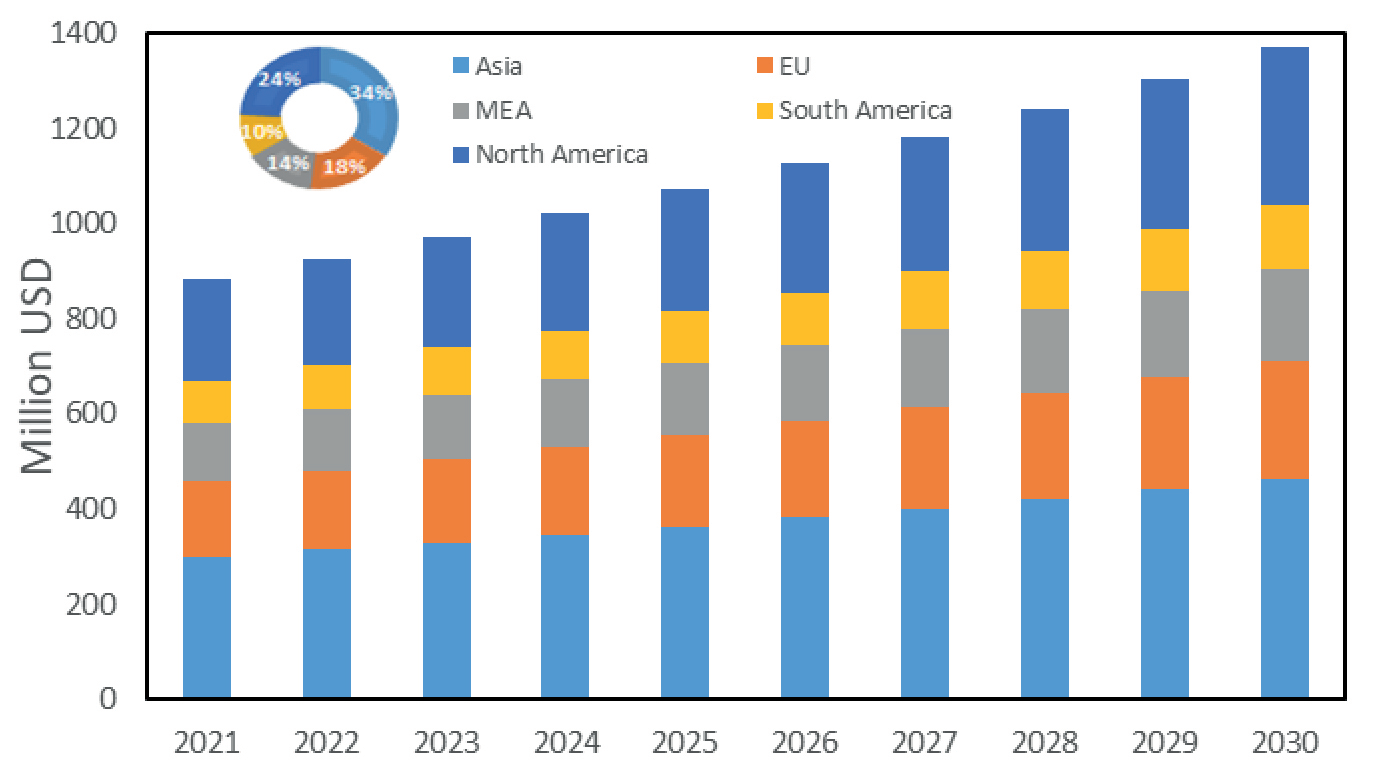
Since the ancient times of the Neolithic period, dyeing with indigo (hydroxy indole), i.e., extracted from the leaves of the Indigofera plant, has been reported [1- 3]. The global indigo dye market size was ~973 million USD in 2024 and is projected to be 1368 million USD by 2030, expanding at a growth rate of ~5% annually, as shown in Fig. 1 [4]. In the Asia-Pacific region, indigo dye demand is continuously increasing due to the high population and growing textile industry (dyeing denim clothing), paint, ink, cosmetics, food products, and medicines [5, 6]. A major portion of indigo is chemically synthesized today using petrochemical feedstocks such as aniline, hydrogen cyanide, and formaldehyde. It produces toxic byproducts from strong reducing agents and metal catalysts and is energy intensive [3, 7, 8]. The key producers of indigo dyes today are BASF (~40% of the market), DyStar Group, Mitsui, Archroma, Huntsman Corporation, Imperial Chemical, Zhejiang Runtu, Kiri Industries, Jiangsu Taifeng, Atul Ltd., etc. [7]. However, these synthetic dyes are potentially harmful to both human health (e.g., carcinogenic) and the environment [9].
Sustainability in textile dyes (colorants) existed even before the Industrial Revolution when production procedures were written to optimize resources and cost [10]. Later, synthetic dyes and synthetic fibers allowed the textile industry to grow, making textile products affordable. In the race for industrialization and profitability, like other industrial sectors, textile manufacturers were least concerned about the environmental impacts of synthetic dyes. Recently, the United Nations (UN) heavily emphasized achieving net zero by 2050 in all industrial sectors. In the current paradigm, the denim industry is one of the major polluting subsectors in industries, and dyes play a significant role in ongoing environmental degradation within this subsector. Global, national, and export regulations collectively establish pressure in this sector to look for better solutions to become greener, circular, and decarbonized to net zero level, etc. [11]. Therefore, awareness was provided to the consumers/customers regarding every product to be selected based on life-cycle assessment (LCA) and/or product carbon footprint (PCF). At the same time, they bound the manufacturers to publish/label such information after third-party audits. The well-accepted LCA philosophy in most industrial products is Cradle-to-Gate, where LCA encompasses production, starting from raw materials (feedstocks) and manufacturing processes until the final product is formed; this is close to the PCF concept [12]. Therefore, embracing sustainable dyes is the way to reduce its environmental footprint by utilizing green chemistry principles, eco-friendly methods like bio-based materials and circular economy concepts, and minimal environmental impact [13, 14].
Natural indigo extracted from I. tinctoria belongs to the flowering plant family Fabaceae, subfamily Faboideae, genus Indigofera. The large-scale cultivation of I. tinctoria began in East Asia in the 16th century and spread to other regions [15]. In the conventional fermentation process, stems and leaves from indigo-containing plants were soaked for 6-8 days to obtain indican, which is the indigo precursor [6, 16]. The biomass was removed, and calcium hydroxide was added. In an alkaline environment, an indoxyl free radical is formed and converted into indigo [17]. Some amounts of indoxyl may undergo oxidation to produce isatin, which condenses to produce indirubin as a byproduct [18]. Unlike many natural dyes, such as quinones, carotenoids, and flavonoids, indigo pigment is a degradation product by hydrolysis, not a metabolite directly produced by any indigogenic plant [19]. Several indoxyl-glucoside precursors have been identified, mainly indican, isatan A, and isatan B; they are hydrolyzed into indoxyl moieties with certain plant enzymes and air and then dimerized to form indigo [19].
Significant sustainability issues with bio-indigo production include using fresh indigo plant leaves, which restricts its seasonal availability; a very poor extraction yield; a lengthy processing time; higher consumption of bio-feedstock; and low purity [8, 18, 20]. There is increasing interest in investigating sustainable alternatives for producing indigo from bio-feedstock in order to overcome these problems. In 1928, it was first reported that a soil bacterium (Pseudomonas indoloxidans) converts indole into indoxyl and subsequently into indigo [8]. Since then, extensive efforts have been undertaken to enhance indigo production from plant biomass. Some researchers have studied the application of recombinant Escherichia coli bacteria, NDO enzyme, flavin-containing monooxygenases (FMOs), phenol hydroxylase, xylene oxidase indole oxygenase, and cytochrome P450 monooxygenase (CYP), etc., with the highest indigo concentrations obtained being 3.8 g/L [21, 22]. One example is the Colorifix technology that uses genetically engineered microorganisms to produce bio-dyes with better environmental impact [23]. This work extends research on structured enzymatic hydrolysis concepts to produce indigo from bio-feedstock (i.e., I. tinctoria leaves powder) using a commercially available Trichoderma cellulase with comparative LCA and economic analysis.
Comparative LCA is an interesting technique that can help benchmark and evaluate products and processes, among others [24]. It further allows for the identification of opportunities to develop sustainable products and/or production systems, such as superior greenhouse gas (GHG) intensity, etc., to support the UN 2030 Agenda for Sustainable Development (UN 2022). Recently, a comparative LCA was presented for synthetic and natural indigo produced via traditional methods [7]. This study further leads it to benchmark the bio-indigo production routes to look deeper into potential sustainable processes and identify environmental hotspots, improvement opportunities, and their impacts [24-26]. Choosing natural dyes with lower PCF contributes to the overall reduction in the carbon footprint of denim manufacturing. The present study aimed to evaluate environmental sustainability and economic benchmarking for 1 ton of bio-indigo production from conventional vs. enzymatic processes. Cradle-to-Gate LCA was conducted to ensure professional practices meet the criteria of reliable and credible results for decision support, follow standards and guidelines, and provide fact-based quantitative information to customers. The current work concludes by stressing the importance of sustainable dyeing production with effective feedstock utilization, considering water and energy usage, waste generation, and emissions to minimize the denim industry's environmental impact and achieve sustainability objectives.
Materials and Methods
Materials
I. tinctoria leaves were obtained from plants grown in September 2024 at Chulalongkorn University, Bangkok. Trichoderma cellulase powder was purchased from Reach Biotechnology, Pathum Thani, Thailand; DMSO (dimethyl sulfoxide) from Sigma Aldrich for FTIR and UV analysis; and standard indigo (GT6891; C.I.73000) was purchased from Glentham Life Sciences, UK.
Bio-Indigo Production via Conventional Fermentation
Fresh I. tinctoria leaves were submerged in water and allowed to ferment for 72 h, where the solid-to-liquid ratio was set to 1:10. The liquid containing indoxyl was drained into a separate container on appearing liquid color yellowish green. At this stage, lime (calcium hydroxide) is added to the solution and aerated, allowing indoxyl to react with oxygen and form insoluble indigo. The addition of lime helps to adjust the pH and improve the precipitation of indigo particles. Later, the supernatant was filtered and precipitated crude indigo was collected and washed multiple times to remove unwanted residue. The crude indigo dried overnight, and the reported yield was based on dry (g/kg) [27].
Enzymatic Process for Bio-Indigo Production
I. tinctoria dried leaf powder was mixed with 0.2% aqueous cellulase solution, keeping the solid-to-liquid ratio of 1:10. Subsequently, the reaction mixture was incubated in a water bath at 50°C for 2 h, and the solid residue was immediately separated through vacuum filtration to get a greenish-yellow aqueous extract. Oxidation of aqueous extract was carried out at a temperature of 28±2°C with bubbling air for 30 min [18]. Once the solution color turned greenish yellow to greenish blue, the mixture was centrifuged for 5 min, and the supernatant was separated. The solid was washed with deionized water and dried at 100oC for 5-6 h. The crude indigo yield (g/kg) was determined.
Bio-Indigo Characterization
UV-Visible Spectroscopy
Extracted indigo was dissolved in DMSO and analyzed by UV-visible spectroscopy (Agilent HP– 8453) for maximum wavelength (λmax). Absorbance was recorded in the range of 200-800 nm.
FTIR spectroscopy
Extracted indigo was ground, mixed with KBr, and pressed into a pellet for FTIR Nicolet iS50 spectrometer (ATR mode) analysis for their functional group detection.
1H-NMR Spectroscopy
Extracted indigo was dissolved in DMSO-d6, and NMR spectroscopic data were recorded on 1H-NMR (JEOL JNM-ECZ 500 MHz). Indigo was quantified using dimethyl sulfone as an internal reference. The spectra were processed by MestReNova software. The concentration of crude was calculated according to the following formula:
Where Is is the integral of the sample, Istd is the integral of DMSO2, Ns is the hydrogen number of the sample, Nstd is the hydrogen number of DMSO2, MWs is the molecular weight of the sample, MWstd is the molecular weight of DMSO2, ms is the calculated concentration of the sample, and mstd is the standard concentration of DMSO2.
Life Cycle Assessment (LCA) Tool
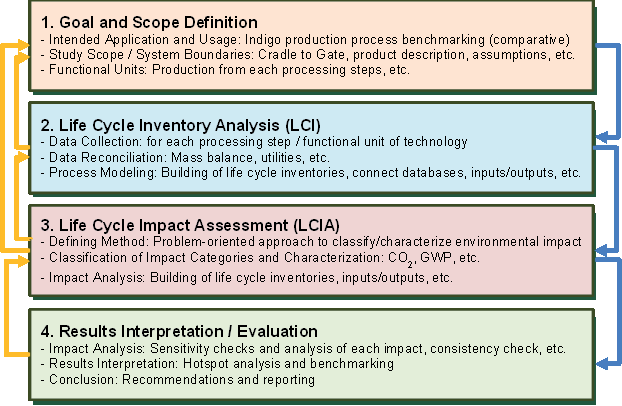
Current work used Sphera’s LCA for Experts (LCA FE) software, which has one of the most reputable life cycle inventory (LCI) databases, including Managed LCA Content (MLC) Databases (formerly known as the GaBi Software and Databases - solutions by thinkstep). The LCA methodology used for compiling and evaluating inputs, outputs, and potential environmental impacts is herein consistent with ISO 14040:2006 (LCA - Principles and framework), ISO 14044:2006 (LCA - Requirements and guidelines), and ISO TS 14071:2014 (LCA - Critical reviewer competencies: additional requirements and guidelines to ISO 14044). Additionally, the current work also considers the consistency of fulfilling ISO 14067:2018 (Greenhouse gases: The carbon footprint of products - Requirements and guidelines for quantification and communication), ISO 14020:2000 (Environmental labels and declarations - General principles), Greenhouse Gas Protocol - Product Life Cycle Accounting and Reporting Standard (WRI, 2011b), and guidelines of TfS PCF were followed for Carbon Footprint (CF). The current effort extended to study the Cradle-to-Gate LCA methodology of bio-indigo production for conventional and proposed enzymatic processes to benchmark eco-superiority, using CML 2001, EF 3.0, ReCiPe 2016, and TRACI 2.1 as the characterization methodologies with a defined location of Thailand. An LCA study consists of four distinct steps: goal and scope definition, life cycle inventory analysis (LCI), life cycle impact assessment (LCIA), and life cycle interpretation; their brief descriptions and relationships are shown in Fig. 2.
Goal and Scope Definition
In goals and scope, the system’s functions were explained with system boundaries using input and output flow diagrams [24]. The functional unit (FU) provides a reference unit for normalizable inventory data, such as product volume.
Fig. 3.
LCA system boundaries: Cradle-to-Gate for 1 ton of bio-indigo production from conventional and enzymatic processes (flow diagram).
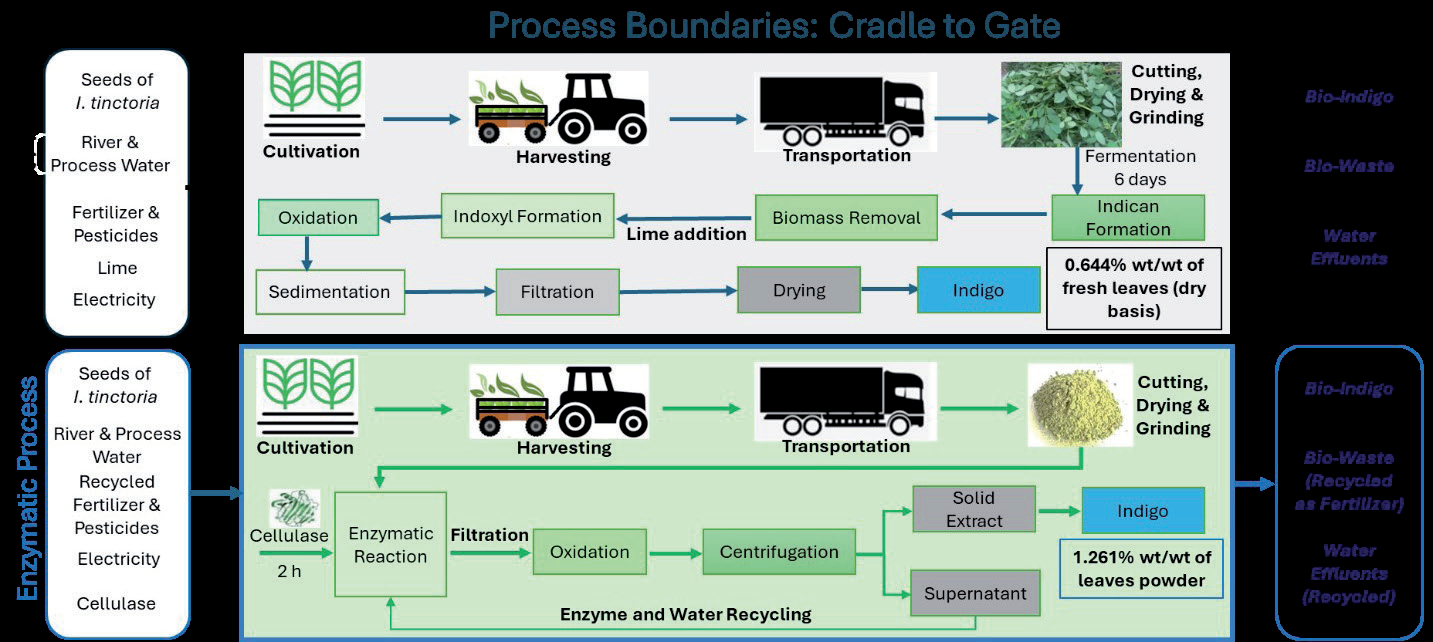
Goals and functional unit: In this study, LCA methodology has been employed in order to explore the environmental profiles associated with selected pathways for the 1-ton (1000 kg) bio-indigo production from I. tinctoria. Functional units of both conventional fermentation and enzymatic processes were defined and modeled with inventory, whereas crop cultivation and harvesting bases were kept identical. This defined functional unit was considered for benchmarking both production routes.
Product systems: Conventional fermentation methods of indigo extraction from I. tinctoria plant leaves were set as a baseline, i.e., also a well-known bio-based pathway and commercially in practice. For both approaches to bio-indigo, yields were experimentally obtained. Standard growth of I. tinctoria plant cultivation is considered concerning agricultural land in Thailand; therefore, identical conditions for biomass feedstock supply chains exist. Defined bio-indigo production system boundaries cradle-to-gate, from feedstock to manufacturing steps (see Fig. 3).
Table 1.
Inventory data of production systems (1 ton bio-indigo production).
Scope: Thailand is the chosen geographical location for feedstock cultivation (I. tinctoria crop) and extraction of bio-indigo (conversion processes). Cradle-to-Gate LCA considers process steps from the material obtained (crop cultivation) to the production of the final product, i.e., bio-indigo. As per the guidelines of ISO 14041, recycled material from one product system can be used as a substitute for virgin material in an adjacent product system within the boundaries, and allocation can be avoided.
Life Cycle Inventory Analysis (LCI)
Inventory analysis involves data collection and the operations’ material and energy balances. This includes data collection/placement, detailed process flow tracking, model development, and categorization of inputs/outputs. The process tree or flow diagram (see Fig. 4) represents the interrelationship among unit processes in the product system and the inventory listed in Table 1.
Therefore, one can say that process efficiency or desired product yield has a major impact on process utilities. Besides unified inputs, conventional extraction requires fertilizer (inorganic) and lime, whereas the enzymatic process involves grinding power, cellulase, and recycled water.
Life Cycle Impact Assessment (LCIA)
Given the aim to support the customer or manufacturer in technology selection decision-making based on relevant impact categories, LCIA is needed to characterize the significance of environmental impact. This study will help identify the most impactful categories to benchmark both processes (see Table 2). Normalization was performed by considering the conventional fermentation process as the base case, therefore considering it 100%. At the same time, some categories were compared using different methods to identify the impact of the methodology itself on a particular category. This study self-generated experimental data to avoid inconsistency in life cycle inventories.
Table 2.
Impact categories and methodologies.
For a comparative LCA, it is not mandatory to present weighting results, as per the standard ISO14044 practicing guideline; however, said evaluation is for process benchmarking and highlighting hotspots. Some categories overlapped in LCAI methods, whereas some are method-specific, as shown in Table 2.
Product Carbon Footprint (PCF)
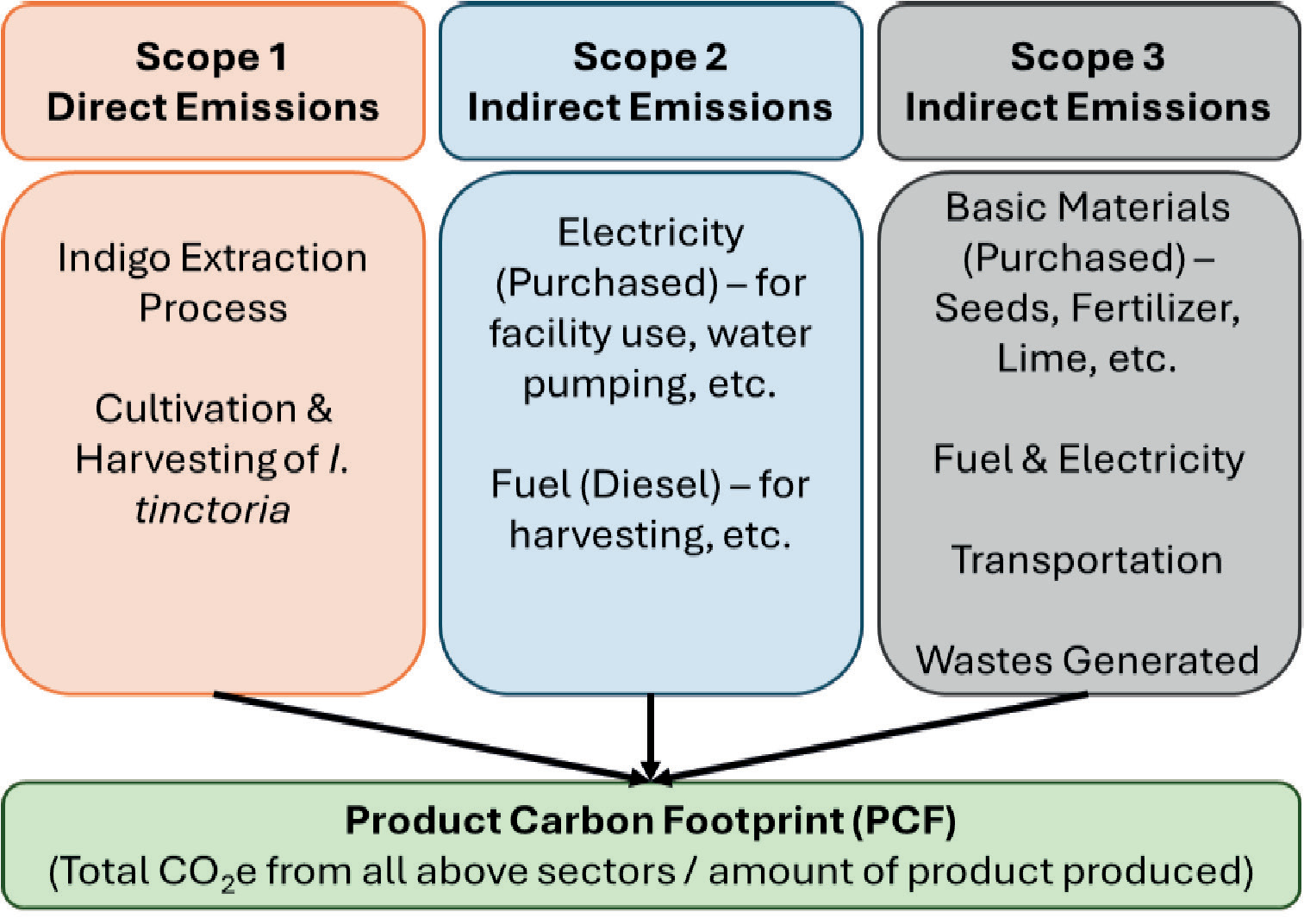
The study also covered the minimum guidelines for Product Carbon Footprint (PCF) and business case evaluation for both traditional and enzymatic processes. The product system Cradle-to-Gate model was adopted in a way to meet Product Carbon Footprint (PCF) demand as per Greenhouse Protocol and Together for Sustainability (TfS) guidelines [26, 28], where all other emissions were also presented in absolute CO2 equalizations. PCF accounts complete Scope 1 and Scope 2 and partially Scope 3, as shown in Fig. 4.
Economic Evaluation Methodology
The mass and energy balance presented in Table 1, based on the experimental yield of bio-indigo obtained in this study, served as the basis of economic evaluation. Primary raw material price data was gathered through open sources [29, 30]. Facility and equipment CAPEX (capital expenditures) was assumed to be the same for both processes’ investment rate of return (IRR) calculation. However, it’s a fact that at a commercial scale, the costs of holding time and facilities for the conventional process are much higher than for the enzymatic process. On the other hand, OPEX (operating expenditures) were used in the study as per actual.
Results and Discussion
Indigo Production from Conventional and Enzymatic Processes
Indigo production from fresh I. tinctoria leaf powder was experimentally performed using conventional fermentation and dried leaves for enzymatic methods. An increment in indigo yield was obtained using Trichoderma cellulase from the proposed enzymatic method. This enzymatic process has experimentally demonstrated significant improvement in yield, 12.6 g/kg after 2 h of enzymatic reaction, compared to the traditional water-based fermentation method, 6.4 g/kg. Results of conventional fermentation were also found to be consistent with the literature [15, 31-34]. In the enzymatic process, the integrated action of Trichoderma cellulase first efficiently breaks down the cell wall of I. tinctoria leaves, which helps in the release of indican and simultaneous hydrolysis into indoxyl, which could then be oxidized and condensed to form indigo [33, 34]. On the other hand, the conventional water-based fermentation method relies on the natural activity of microorganisms, which are less specific in releasing indigo precursors and, consequently, a lower yield of indigo [32].
Characterization of Bio-Indigo
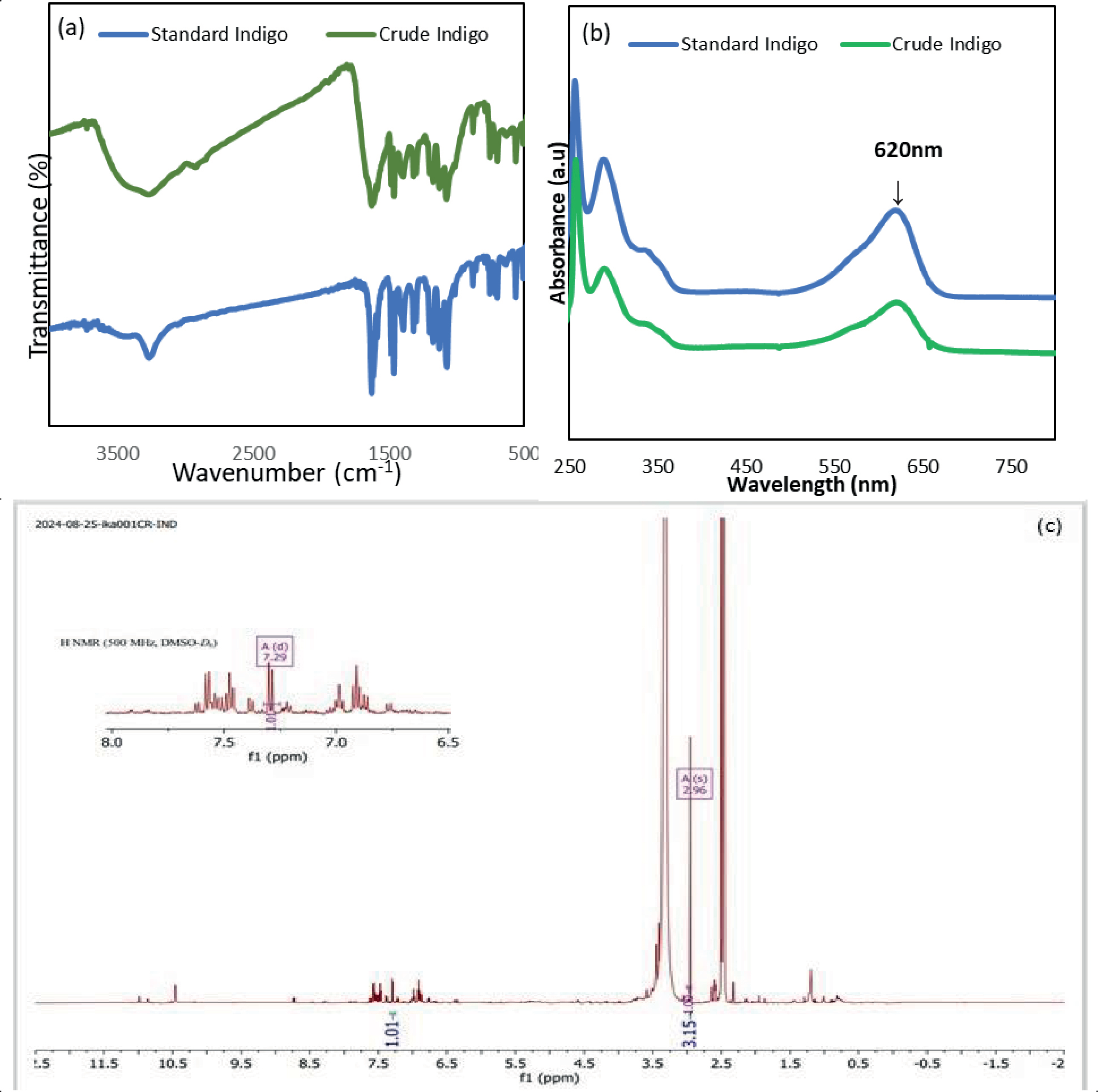
FTIR spectra shown in Fig. 5a) of indigo and crude indigo were similar and indicated N-H stretching vibration (3268.08 cm−1), N-H bending vibration (1625.65 cm−1), C-H in-plane bending vibration (1461.94 cm−1), and C-O stretching vibration (1298.75 cm−1) [33]. These were consistent with the standard indigo reference FTIR spectrum and revealed a high degree of chemical resemblance and purity. The characteristic absorption peaks confirmed the presence of key functional groups of indigo, such as the indole ring structure (C=C and C-N bonds) and the carbonyl group (C=O).
UV-visible absorption spectra of the standard indigo and the crude indigo (Fig. 5b)) were similar, where λmax was 620 nm [32]. In addition to the identification and validation, this similarity emphasizes that the obtained indigo from the enzymatic process has a comparable quality to the reference indigo.
The purity determination of indigo was carried out using DMSO2 as an internal standard in DMSO-d6. The qHNMR spectrum (Fig. 5c)) showed integral values of 3.15 for the reference signal (6 H) of DMSO2 at δH 2.96 ppm and 1.01 for the sample signal at δH 7.29 ppm (2H, d, J = 8.2 Hz, H7 and H7′). The qHNMR experiment demonstrated that the crude indigo extract has a purity of 42.87%.
Cradle-to-Gate LCA of Bio-Indigo
The elementary and non-elementary flows for the defined Cradle-to-Gate LCA boundaries of the production processes were listed in Table 1, calculated for the selected FU (1000 kg or 1 ton of bio-indigo) to enable a proper comparison [35]. As per the defined goal and scope, the first category-wise results were obtained using different LCA methodologies, as shown in Fig. 6. Results include the enzymatic process compared to the conventional fermentation process outcome in terms of the impact categories. However, the obtained results from each methodology vary based on the calculation philosophy and considerations.
Fig. 6.
Environmental impacts obtained from various LCIA methods: a) Acidification Potential (AP), b) Global Warming Potential (GWP 100y), c) Eutrophication Potential (EP), d) Ozone Depletion, e) Photochemical Ozone Formation, f) Freshwater Ecotoxicity, g) Human Toxicity (cancer), and h) Human Toxicity (non-cancer).
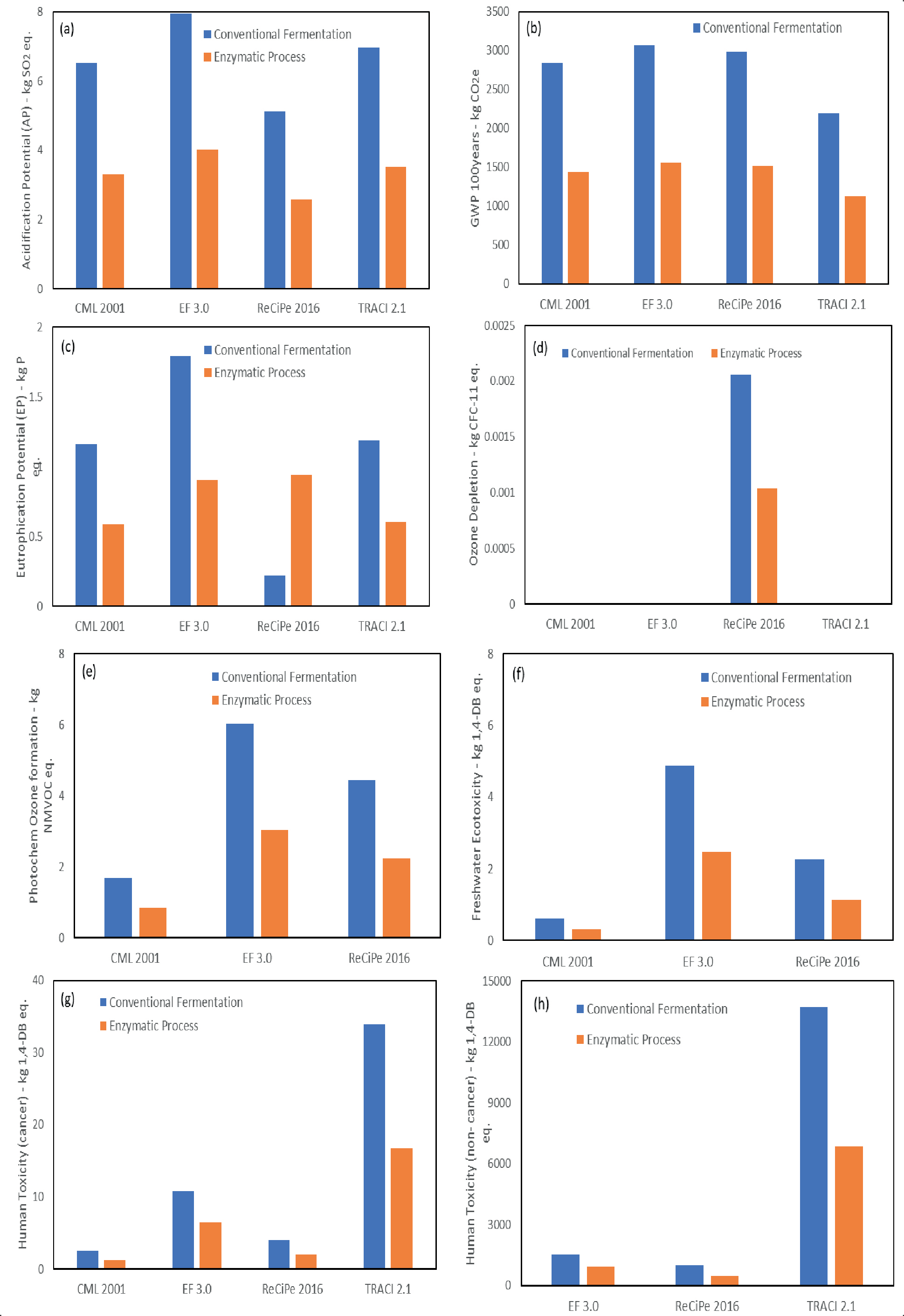
Fig. 7.
a). Relative benchmarking of environmental impact categories obtained for FU: 1000 kg of bio-indigo production from different processes using the LCAI method ReCiPe 2016 by keeping the conventional fermentation process as the base case, i.e., 100%; b) Comparison of synthetic, the conventional and enzymatic indigo production processes’ relative impact on selected categories, keeping the synthetic process as the basis.
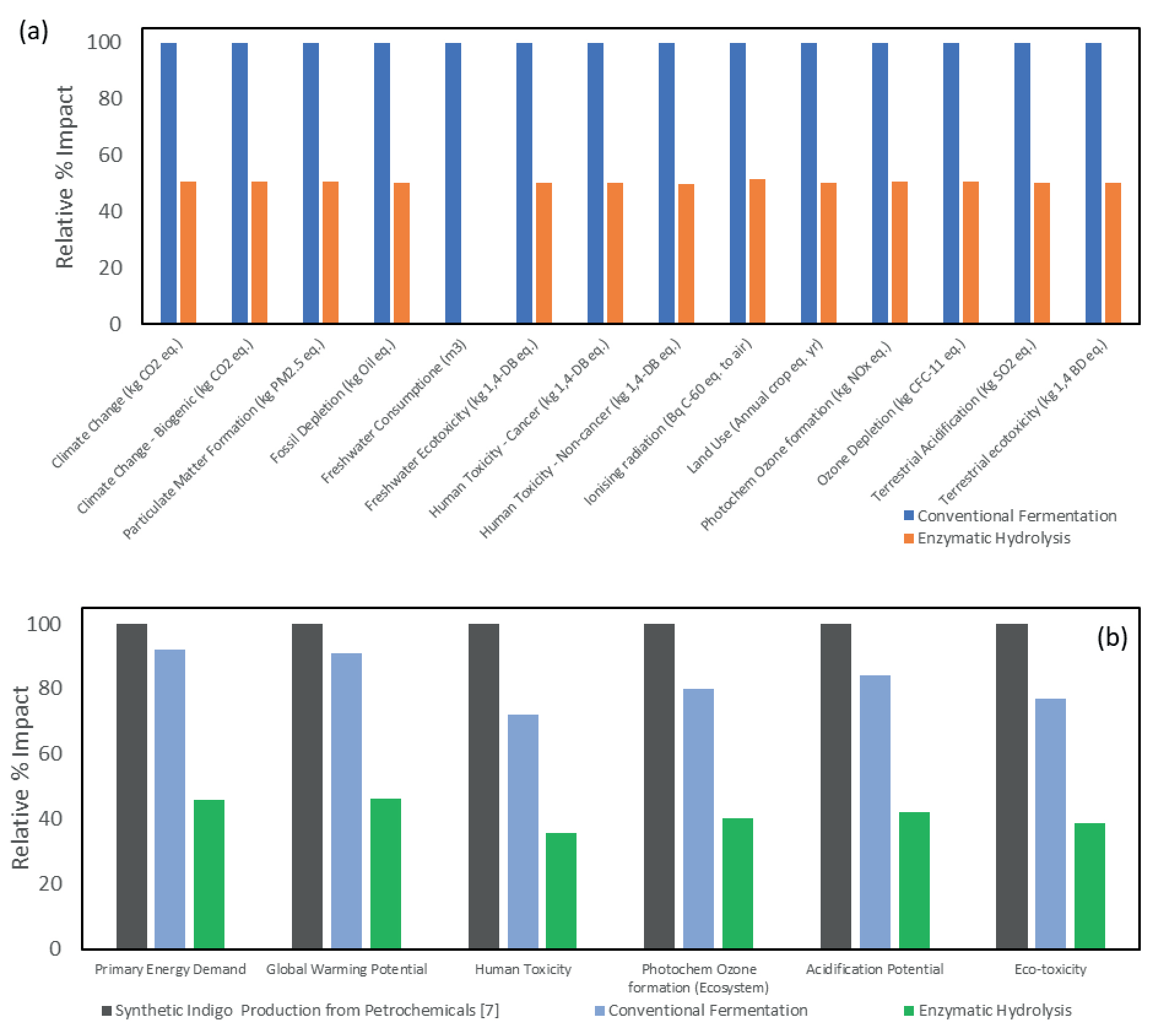
Fig. 6a) presents Acidification Potential (AP), depicting both processes’ impact on LCA methodologies. It is obvious that the AP of the enzymatic process is, on average, 49.57% lower than the conventional process. Where results obtained via ReCiPe were comparatively lower. Fig. 6b) presents the results of Global Warming Potential (GWP100 years), demonstrating that the enzymatic process constitutes 49.14% less GWP than the conventional process. Fig. 6c) presents Eutrophication Potential (EP) results, depicting the overall contribution from both processes. The EP for the enzymatic process contributes 30.5% less than the conventional process. In EP results, ReCiPe concludes the opposite trend, declaring lower results for conventional processes. This is owing to negative accounting of comparatively larger cultivation of crops. The characterization results for Ozone Layer Depletion Potential (OLDP) are shown in Fig. 6d), which shows a comparatively 49.62% lower contribution from the enzymatic process. Moreover, ReCiPe concludes that OLDP has a far higher impact than other methods, while the trend is the same, i.e., lower impact for enzymatic processes.
Fig. 6e) shows results regarding Photochemical Ozone Creation and Formation Potential (POCP) for both processes, illustrating a 49.52% lower POCP for the enzymatic process. For POCP results, using CML 2.0 scores was lower than other methods, while it was found reasonable. The characterization results of Freshwater Ecotoxicity for both processes are presented in Fig. 6f), and this also demonstrates a 49.3% lower impact from the enzymatic process. It can be seen in Fig. 6g) that Human Toxicity – Cancer for the enzymatic process has 48.22% less impact than conventional processes. Similarly, Human Toxicity – Non-Cancer is 48.93% less for the enzymatic process (Fig. 6h)).
Table 3.
Cost comparison of conventional fermentation vs. enzymatic process for bio-indigo from 1 ton of I. tinctoria
This study presented a comprehensive LCA of bio-indigo production, demonstrating the percentage impact, where the traditional process values were set as the base case, i.e., 100% (Fig. 7a)). The overall impacts from 14 environmental categories were analyzed and compared for bio-indigo production from conventional fermentation and enzymatic processes using the ReCiPe 2016 method. There was a consistent trend of around 49% reduction in every category except freshwater usage; as for enzymatic process wastewater containing spent enzymes, it was reused. Therefore, the freshwater utility in the enzymatic process is 99.3% lower than the conventional process. Moreover, for CML2001 calculated, the Ozone Depletion Potential (ODP, study state) for the enzymatic process is also quite low, i.e., 99.49%, compared to conventional fermentation. However, no surprise was noticed in the results obtained from EF 3.0 and TRACI 2.1 for the same system.
Some unique results were obtained, such as land-use emissions (kg CO2e) from EF 3.0, which were 69.5 and 34.8, and fossil depletion (kg oil eq.) from ReCiPe, which were 4120 and 2070 for the conventional and enzymatic processes, respectively. Both land use in the first step of cultivation and process water utility significantly impacted the sensitivity. While land utilization during the extraction process is assumed to be identical for both processes, it’s not the same in practicality. This leads to effective resource utilization in addition to effective feedstock utilization, as it achieves almost double production intensity. The waste produced from conventional processes is another factor that implicates a comparison [7]. Fig. 7b) presents a comparison in selected environmental categories for all these routes to indigo, such as synthetic indigo production from petrochemical feedstock [7] and bio-indigo production from I. tinctoria biomass feedstock via conventional fermentation and enzymatic processes. At the same time, synthetic indigo production was set as the base case (set as 100%) for benchmarking indigo production processes. Relative percentage impact comparison demonstrated a ~60% lower environmental sustainability impact for bio-indigo production via enzymatic process, whereas the conventional fermentation process had a 10-20% lower impact than the synthetic indigo production process.
PCF of Bio-Indigo
The Cradle-to-Gate LCA approach is common in environmental product declarations (EPD), considering only the emissions assessment of a product until it leaves the manufacturing facility [26, 28]. PCF of bio-indigo routes have obtained values of 2.99 and 1.52 kg CO2e. per kg bio-indigo for conventional fermentation and enzymatic processes, respectively [24, 25]. This demonstrates that an efficient extraction process significantly impacts PCF, therefore easily leading to labeling it as a low-carbon product. The CO2 sources in the supply chain and production train were mostly associated with using grid electricity and fossil fuels (diesel for transportation) that can be improved by using renewable electricity, renewable fuels, and/or electric vehicles. Currently, variation appears mainly due to lower feedstock consumption, or in other words, better productivity that leads to reduced cultivation burden, land preparation, process utilities, etc. In both cases, bio-waste contributions were also considered with due credit. The comparison shows interesting results, where bio-indigo produced from the enzymatic process generates about 49.16% lower PCF than the traditional fermentation process.
Economic Potential of Enzymatic Processes
The economic potential for both conventional and enzymatic bio-indigo production was explored based on the experimental results. Cost analysis considered a feedstock market price of $37.5 per ton, which includes cultivation of I. tinctoria, per hectare seed sowing, land preparation, fertilizer, pesticide, harvesting, drying, transportation, labor, etc. [29, 30]. Raw material prices are the bulk average prices (in USD) from open sources. The economic calculation basis was set to 1 ton of bio-indigo production from I. tinctoria (bio-feedstock) and assumed that the economy of cultivation scale is linear. Bio-indigo sales vary from region to region, whereas the current economic study took an optimistic lower average sales price, i.e., $50/kg. Raw material prices were identified as a major contributor to overall production costs, dominating product yield, purity, and other operational costs. Therefore, it is one of the potential cost-reduction measures. The profitability of both routes was tabulated in Table 3, where the enzymatic process is profitable even after considering enzyme cost as additional operating expenditures (OPEX). OPEX includes material processing steps; for enzymatic processes, compared to conventional fermentation, there was lower processing time, energy, compact production area, water consumption, etc. [29]. CAPEX (capital expenditures) for both processes were estimated values as desired for the Investment Rate of Return (IRR) calculations; those may vary based on regions, scale of production, and other considerations [30]. An attractive IRR (%) was obtained for the enzymatic process, demonstrating its potential for commercial application for bio-indigo production.
Conclusions
The current study experimentally demonstrated that the bio-indigo extracted by enzymatic process (using Trichoderma cellulase) has a superior yield, i.e., 12.6 g/ kg of I. tinctoria leaves, compared to the conventional fermentation yield of 6.4 g/kg. A detailed Cradle-to-Gate LCA for process benchmarking was conducted to provide valuable insights into environmental impacts. The qualifications of 14 environmental categories were investigated using four different methodologies, not only to review the impact but also, at the same time, methodological implications. The cross-functional LCA showed the hotspots in the design of process routes to obtain 1 ton of bio-indigo; that is, extraction efficiency leads to effective feedstock (biomass) utilization. Enzymatic processes have added advantages of process water recycling over conventional processes. LCA comparison emphasizes that the enzymatic process has a far superior environmental footprint over the traditional process, with a 49.16% comparatively lower impact. This evidence shows the importance of an appropriate choice of production process with fact-based decisions for consumers for bio-indigo selection. The study concludes with an interesting finding: A natural product (bio-indigo) has different PCF and environmental consequences for extraction using different production processes. In addition to alternative eco-design scenarios, enzymatic processes have promising economic feasibility with attractive IRR and USD/kg profitability that can promote their commercialization towards sustainable indigo dye.

