

Introduction
As the issue of global climate change grows increasingly urgent, China has positioned “dual-carbon” objectives – carbon peak and carbon neutrality – at the core of its national development strategy [1, 2]. The Science and Technology Support Program for Peak Carbon and Carbon Neutrality Implementation (2022–2030) underscores innovation as the principal catalyst for development, pursuing a dual strategy of goal- and problem orientation. It aims to establish a technological innovation system that includes low-carbon, zero-carbon, and carbon-negative technologies. The program outlines various science, technology, and innovation actions and supportive measures to ensure China meets its carbon-peaking goal by 2030 [3, 4]. Concurrently, the program underscores the necessity of a robust technology research and development (R&D) pipeline to achieve carbon neutrality by 2060. This program is a comprehensive and forward-looking roadmap for integrating science, technology, and innovation within China’s sustainable development and environmental policies. It reflects a national strategic vision that aligns with the pressing nature of global climate action and underscores China’s role in the international endeavor to mitigate climate change impacts [5, 6].
Urban innovation activities are instrumental in China’s response to the challenge of environmental pollution. Within the array of theories concerning the role of innovation, the Porter Hypothesis stands as a pivotal perspective. The hypothesis is subdivided into two core components: “Innovation Offset” and “First Mover Advantage” [7–9]. The ‘innovation offset effect’ posits that well-crafted environmental regulations not only spur firms to adopt innovative strategies, thereby reducing compliance costs, but also that these innovations can diminish firms’ environmental footprint by enhancing productivity and product quality. Moreover, this effect may enable firms to derive economic benefits from innovation that surpass the expenses incurred in meeting environmental regulations [10, 11]. Concurrently, the ‘first mover advantage’ posits that firms that proactively comply with environmental regulations and innovate before market trends will have the opportunity to gain market share priority. Such firms tackle environmental challenges through innovation, potentially gaining a competitive edge by enhancing their industrial structure and energy efficiency to meet evolving market demands [12, 13]. These two facets of Porter’s hypothesis offer a conceptual framework for comprehending the intricate relationship between environmental regulation and innovation, particularly within China, where rapid growth and environmental pressures are intertwined. Using this theoretical perspective, we can delve into how urban innovation activities, driven by the incentives of environmental regulation, foster technological innovation by firms, thereby reaping dual benefits in both economic and environmental domains.
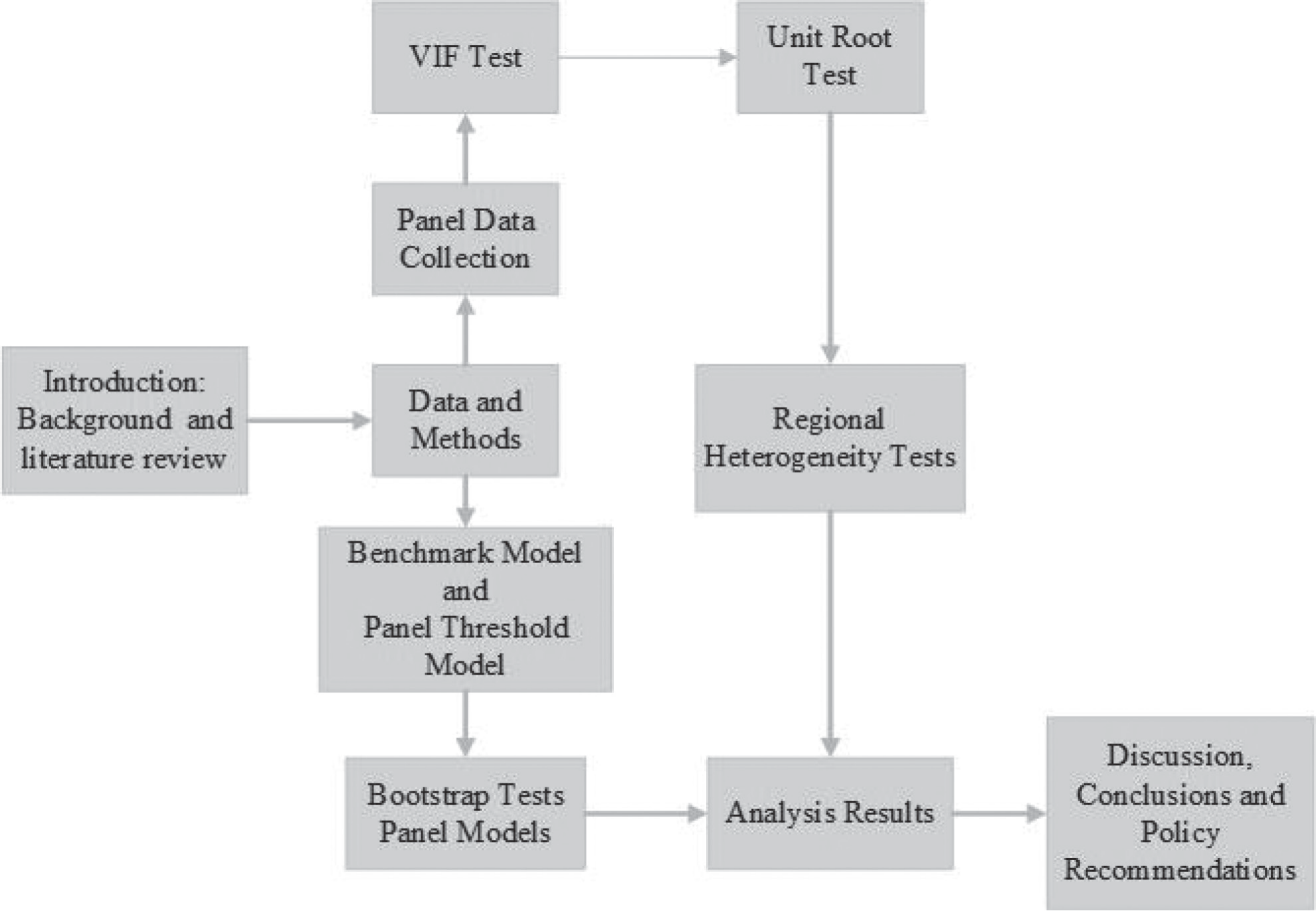
This paper begins by applying the Super-SBM model to quantify the carbon emission efficiency of 257 prefectural-level cities and municipalities directly under the central government in China from 2003 to 2019. It integrates environmental regulation, urban innovation index, and carbon emission efficiency within a unified analytical framework, constructing a bidirectional fixed-effects model to examine these variables’ functional mechanisms and marginal effects. Next, the study investigates the threshold mechanism of the urban innovation index on carbon emission efficiency using a threshold regression model viewed from the perspective of the urban innovation index. Lastly, the paper discusses the varying effects of the variables across different contexts, accounting for the heterogeneity in regional economic development and policies. This research aligns with national macro-policy orientations and seeks to reconcile urban innovation, environmental regulation, and carbon emission efficiency, offering practical strategies for achieving green transformation and sustainable development. (Refer to Fig. 1 for the structural framework of this paper.)
The structure of the paper is outlined as follows: Section 2 provides a literature review; Section 3 delineates the research design, encompassing variable selection, model development, data sources, and descriptive statistics; Section 4 presents the empirical analyses; Section 5 advances the discussion; and Section 6 concludes the study.
Literature Review
Environmental Regulation and Carbon Efficiency
Scholars worldwide have investigated the relationship between environmental regulatory measures and carbon emission efficiency across regions and nations from diverse theoretical and empirical perspectives [14]. Consequently, the conceptualization and significance of environmental regulation have evolved. Environmental regulation predominantly functioned as an ex post facto strategy, involving intervention and rectifying post-environmental issue emergence [15]. This approach featured limited means, predominantly command-and-control measures, where the government-imposed standards and restrictions compelled enterprises to undergo industrial upgrading and enhance energy efficiency [16]. With economic development and the growing public consciousness of environmental protection, environmental regulation has transitioned towards a more proactive approach, emphasizing the integration of environmental considerations during the project design and assessment stages through environmental impact assessments [17, 18]. In recent years, market-driven environmental regulation has garnered increasing scholarly interest for its flexibility, innovative incentives, dynamic adaptability, and policy integration. Examples include the government’s coordination in establishing a carbon emissions trading market [19–21], the imposition of a carbon tax on corporate or personal carbon emissions [22, 23], and the provision of green credit or investment for corporate industrial transformation [24, 25]. Additionally, public monitoring of environmental issues, such as information disclosure, complaint letters, and public reporting, is crucial to market-based environmental regulation [26]. Scholars worldwide commonly categorize environmental regulations into three distinct types: command-and-control regulations, which are based on the promulgation of laws, regulations, and emission standards by administrative bodies [27, 28]; market-incentivized regulations, which rely on the establishment of market trading mechanisms and platforms [29, 30]; and public-participation regulations, which are founded upon public oversight and environmental consciousness [31]. Certainly, from various research perspectives and contexts, alternative categorizations of environmental regulatory instruments exist, including voluntary and economic incentive-based regulations [32, 33]. At their core, environmental regulations, regardless of their specific form, aim to enhance carbon emission efficiency and curtail carbon emissions by incorporating undesirable output costs into enterprises’ operational expenses [34, 35]. This, in turn, influences polluting enterprises, impacting aspects such as energy consumption and industrial composition. Policymakers and implementers must consider the local economic development level, industrial structure, resource endowment, and competitive pressures from neighboring regions. Consequently, the design of environmental regulatory strategies should be holistic, aligning various regulatory types with specific problems to be addressed [36].
Urban Innovation and Carbon Efficiency
Several studies have offered diverse insights from various perspectives within the academic field, examining the correlation between urban innovation levels and carbon emissions. Chen and Zhang’s analysis underscores the sustainability of carbon emission reduction through heightened urban innovation, highlighting the effectiveness of such innovation in reducing carbon emissions in both the short and long term [37, 38]. Researchers contend that urban innovation is a critical strategy for emission reduction in developing countries and contributes to advancing emission reduction technologies and the efficacy of green energy at the regional level. Additionally, it aids in the optimization of the economic development model and industrial structure. Borghesi and Crespi, employing time series data from the European Union from 2000 to 2012, underscore integrating technological, organizational, behavioral, and educational innovations to meet future carbon emission reduction targets for 2030 and 2050. This underscores the imperative of multidimensional innovation integration [39]. In contrast, Yuan and Bai’s research establishes a theoretical framework for examining urban low-carbon development trajectories, leveraging systemic innovation theory and sustainable development case studies. Their findings endorse a synthesis of top-down policy formulation and bottom-up innovation initiatives, offering a novel theoretical lens on urban low-carbon transition [40]. Moreover, Hashmi and Alam’s data analysis from OECD nations between 1999 and 2014 uncovered a positive correlation between the uptick in environmentally friendly patent filings and the decline in carbon emissions. This discovery underscores the pivotal role of innovation in fostering environmental sustainability. In addressing regional disparities, Fang and Gao, using urban panel data from the Yangtze River Economic Belt, discovered that green innovation within the middle and lower reaches of the Yangtze River exerted a more substantial positive influence on urban environmental efficiency (CEE) [41]. This indicates that geographical location and region-specific economic conditions influence innovation and ecological efficiency. Feng and Wang’s research further illuminates the variability in the impact of control variables on urban innovation across different regions. For instance, they uncovered that labor costs in the eastern and central areas, government intervention in the central location, and the share of the western region’s tertiary sector hinder urban innovation. This highlights the substantial disparities in the requirements for and factors driving the advancement of urban innovation at various stages of development across regions [42].
Environmental Regulation and the Urban Innovation Index
The influence of environmental regulations on urban innovation is a subject of extensive discourse in contemporary environmental economics [43, 44]. Environmental regulations are pivotal policy instruments for combating environmental degradation and exhibit a pivotal two-way role in fostering urban innovation. As an incentive mechanism to stimulate technological advancement and industrial transformation [45, 46], urban innovation demonstrates its intricate dynamics within the environmental regulation framework, which can foster regional economic growth and enhance the efficacy of environmental governance. Zhang et al. exemplify this with an analysis of Xi’an, China, and reveal that various types of environmental regulations exhibit significant heterogeneity in stimulating green innovation. Market-based and resource-oriented regulations outperform command-and-control regulations in incentivizing green innovation [47]. Fan et al. echoed similar findings based on the analysis of green innovation in 235 cities across China. The overall trend revealed regional heterogeneity: “increasing in the east, remaining stable in the center, and decreasing in the west.” Additionally, they uncovered a positive “U-shaped” relationship between environmental regulation and urban innovation efficiency, as evidenced by a spatial error model [48]. According to Zhou et al., implementing the low-carbon pilot city program greatly inhibited urban innovation [49]. Feng et al. determined that the interaction between foreign direct investment and environmental regulation positively influenced urban innovation. This corroborates the applicability of Porter’s hypothesis in the Chinese context and underscores the substantial disparities in the advancement of urban innovation across different regions within China. Li and Wang identified a significant threshold of the digital economy’s influence on carbon emissions, suggesting a notable urban innovation capacity threshold. They emphasize that green technological advancements and industrial restructuring are pivotal pathways for attaining carbon emission peaks, as panel threshold modeling shows [50].
The extant literature reveals a disparity in academic research on the nexus between environmental regulations, the urban innovation index, and carbon emission efficiency, with no consensus on the interaction between ecological rules and carbon emissions. Against this backdrop, this paper employs the urban innovation index as a pivotal threshold variable to investigate its influence on carbon emission efficiency amidst ongoing socio-economic development, heightened public environmental awareness, and escalating ecological regulatory stringency. The inquiry focuses on whether the urban innovation index fosters the “Green Paradox Effect” or the “Innovation Compensation Effect.” By examining the potential moderating role of the urban innovation index in carbon emission efficiency under environmental regulation, this study seeks to understand how ecological regulatory instruments can be strategically leveraged to enhance carbon emission efficiency. The findings are intended to furnish policymakers with actionable insights for designing and implementing effective environmental regulation policies, thereby contributing to the objectives of carbon emission reduction and sustainable economic growth.
Material and Methods
Modelling
Benchmark Modelling
To examine the impact of environmental regulation on urban carbon emission efficiency, this paper establishes a panel benchmark regression model (1), which is constructed as follows:
Where i denotes city, t denotes time; the explanatory variable CEE denotes the carbon emission efficiency; ER is the core explanatory variable, denoted as the comprehensive environmental regulation intensity; CV is the other control variable affecting the carbon emission efficiency; α is a constant term, α1 is the focus of this paper focuses on the coefficient of concern, which, if it is significant and positive, suggests that the intensity of environmental regulation can effectively improve the efficiency of the city’s carbon emissions; λ is the time fixed effect; μ is the area fixed effect; and ϵ is a random perturbation term.
Table 1.
Carbon efficiency input-output indicator system.
Panel Threshold Modeling
The panel threshold model enables the examination of non-linear relationships between variables, particularly when an explanatory variable, such as environmental regulation, crosses unspecified thresholds. At these thresholds, the influence of the explanatory variable on the dependent variable, such as carbon emission efficiency, may shift. Drawing from prior theoretical insights, it is evident that the impact of environmental regulation on carbon emission efficiency varies with shifts in industrial structure, urban innovation levels, and other factors. To elucidate the effect of environmental regulation on carbon emission efficiency across varying levels of the urban innovation index, this paper employs the panel threshold model as developed by Hansen [51], which has the advantage of being able to accommodate multiple thresholds and the threshold variables do not have to be known or observed in advance, and therefore constructs a panel data multi-threshold model of environmental regulation and carbon emission efficiency as follows:
where i denotes city, t denotes time; II is the threshold variable (level of city innovation index); β is the coefficient of influence of the explanatory variables in different zones; γ is the threshold value, and I(·) is an exponential function, taking 1 when there is a threshold value and 0 when there is no threshold; μ is the area fixed effect; and ϵ is the random perturbation term.
Variable Definition
Explained Variable
Urban Carbon Emission Efficiency (CEE), given that the traditional DEA model cannot further distinguish its efficiency differences when some decision-making units have an efficiency score of 1, this paper adopts the Super-SBM model that can differentiate between non-radial measurements and slack variables and, based on the existing literature, defines carbon emission efficiency as the ability of a firm or individual to achieve the maximum, with constant capital, labor and energy inputs, of the economic output (desired output) with the least CO2 emissions (undesired output). For the capital element, fixed capital was measured with 2003 as the base period by referring to the perpetual inventory method adopted by Zhang Jun et al. The labor element was obtained by summing up the number of people employed in each city’s primary, secondary, and tertiary industries from 2003 to 2019 by referring to the study of Zhang et al. [52]. The energy element characterizes the annual electricity consumption. The non-desired output CO2 emissions were obtained by summing the carbon emission data at the county level. The desired output regional GDP was calculated by adjusting the base period 2003, and the carbon emission efficiency measurement index system was constructed (see Table 1).
Explanatory Variable
Environmental regulation (ER) is a pivotal research focus to assess ecological policy’s efficacy. This study endeavors to develop a comprehensive index of environmental regulation, with a specific emphasis on command-and-control regulation and market-oriented regulation, which are commonly employed and have well-defined measurement metrics. The present research investigates two principal instruments of environmental regulation: command-and-control (CAC) and market-oriented environmental regulation. As a conventional environmental management approach, CAC regulation necessitates that the government establish explicit measures and technical benchmarks to which polluters must adhere via legislative or administrative decrees. In contrast, market-oriented environmental regulation harnesses market mechanisms to mitigate pollution, encompassing the deployment of instruments like carbon taxes, environmental levies, and emissions trading schemes. Recognizing that applying a single regulatory type may be insufficiently flexible to suit all enterprises, this study attempts to construct a holistic assessment framework for gauging the stringency of environmental regulatory measures. Consequently, referring to Pei et al.’s study [53], this paper constructs a comprehensive evaluation system of environmental regulation with industrial wastewater emissions, industrial sulfur dioxide emissions, industrial smoke (dust) emissions, and the proportion of industrial pollution control investment in the value added of the secondary industry, and adopts the entropy method for objective quantification (see table 2 for details).
Table 2.
Environmental Regulation Evaluation System.
Threshold Variables
The urban innovation index (II) construction is a multifaceted evaluation process. In formulating the urban innovation index, this study adopts the methodology of Kou Zonglai et al., basing the index on the correlation between the number of invention patent applications and newly established enterprises [54]. This approach culminates in developing an index system that quantifies the intensity of a city’s innovation activities. The index serves as a quantitative tool for comprehending a city’s innovation potential and evaluating its innovation ecosystem, thereby informing the formulation of innovation policies and optimizing economic development strategies.
Control Variable
Infrastructure level (IL) is a critical indicator of a region’s or country’s development. The optimization and integration of intelligent infrastructure are pivotal strategies for energy conservation and carbon emission reduction. Scientific and technological importance (STF) is intrinsically linked to discovering and implementing technological avenues and solutions for carbon emission mitigation. It represents a technological path toward carbon emission reduction and a strategic approach to fostering synergistic advancements in environmental sustainability and economic development. Urbanization level (UR) typically entails establishing more efficient public transport systems and centralized energy supply networks, which can substantially diminish individual transport needs and energy loss during transit. Industrial structure advanced (IS) denotes the upgrading of economic sectors. In this paper, the ratio of the tertiary sector’s value added to the secondary sector’s value added is utilized to reflect the alteration in industrial structure. To gauge the city’s openness to the outside world, this study employs the city’s total import and export volume relative to regional GDP. Higher openness signifies greater accessibility to advanced production technologies and management practices. The Green Finance Index (GFI) is a metric for quantifying investment in environmental conservation and sustainable development within the financial sector. Encouraging low-carbon investments fosters the allocation of financial capital towards sustainable development and a low-carbon economy, thereby reducing carbon emissions. Population density (PD), a measure of the number of individuals per square kilometer, correlates with increased energy consumption, leading to greater carbon emissions. In this study, the variables are logarithmically transformed to address skewness issues and ensure the normality of their distributions. The methodologies for data collection and the results of these transformations are detailed in Table 3. A comprehensive statistical overview of all variables is provided in Table 4.
The study sample consists of 257 prefecture-level cities and municipalities in China from 2003 to 2019, with data from the China Urban Statistical Yearbook, the National Bureau of Statistics, CSMAR, the CEADs database, and the Cathay Pacific database. The GDP series was transformed into 2003 constant prices to eliminate the effects of price changes generally. The variables used were subjected to natural logarithmic treatment to reduce the relationship between the variance of the scalar and the mean, thus mitigating heteroskedasticity. Table 4 reports descriptive statistics for the variables used in this study.
To uphold the statistical robustness of the regression analysis outcomes within this study and mitigate the likelihood of multicollinearity and endogeneity issues among the variables, the Variance Inflation Factor (VIF) was calculated for each variable (as detailed in Table 4). Additionally, tests were conducted to assess endogeneity (as outlined in Table 5). The analyses yielded an average VIF of 1.380, notably lower than the conventional threshold of 10, suggesting that multicollinearity is not a concern within the variables selected for the model [55]. In addition, the significant correlation index between the variables further validates this, providing a solid foundation for further statistical analyses.
Table 3.
Variable definitions and calculations.
Table 4.
Descriptive statistics of the main variables.
Table 5.
Results of Pearson’s correlation coefficient test for variables in the study.
Table 6.
Results of panel unit root tests.
Panel Unit Root Cointegration Test Results
In the framework of this study, to assess whether there is a long-run robust cointegration relationship between the variables in the panel data based on Wang et al., this paper uses the IPS test and the HT test [56]. The test results show (Table 6) that there is no unit root in the data, i.e., the data are smooth. This provides a stable foundation for further analyzing the effects between the variables.
Empirical Analysis
Trends in the Evolution of Core Variables
In this study, we utilize data visualization software ArcGIS 10.2 to depict the evolution of carbon emission efficiency (CEE) for 257 Chinese cities from 2003 to 2019 (as visualized in Fig. 2). Additionally, we employ Origin 2022 to visualize and analyze the regional disparities in carbon emission efficiency (as depicted in Fig. 3). During this study period, regions with notably lower CEE were primarily located in Eastern and Central China, and certain less industrialized inland cities.
For instance, provinces like Henan, Hubei, and Hunan are characterized by substantial populations, high densities, and their status as the nation’s industrial and agricultural centers and key transport hubs. These regions utilize significant resources, and their economic growth heavily depends on energy-intensive practices, leading to inefficient energy consumption and associated environmental pollution and carbon emissions. Similarly, in the developed coastal regions, such as Zhejiang, Shanghai, and Shandong, high population densities contribute to elevated carbon emissions despite their wealth of resources, advanced industrial sectors, and China’s most sophisticated technological capabilities. Analysis from a spatial perspective reveals that carbon emission efficiency in China exhibits pronounced spatial distribution patterns: “the southern region generally outperforms the north,” “the eastern region exceeds the western region,” and “the coastal region surpasses the inland region.” These findings indicate substantial carbon dioxide emission efficiency disparities across Chinese regions, underscoring the intricate interplay of geographical, economic, and social factors that shape regional differences.
Benchmark Regression Analysis
To ensure the accuracy of this study’s findings, the LM test and Hausman test were employed to select a more appropriate model. The fixed effects model was found to control individual effects more effectively than the mixed regression and random effects models, thus providing a more precise estimation of the impact of explanatory variables. Consequently, the two-way fixed effects model was utilized for the regression analysis of the variables in this study.
Table 7 presents the outcomes of the benchmark and heterogeneity regression tests. Initially, Model 1 excludes all control variables to isolate the net effect of the primary explanatory variables. The findings reveal that environmental regulation (ER) significantly positively influences urban carbon emission efficiency (CEE), with a coefficient of 0.702, which is statistically significant at the 1% level. This suggests that enhancing environmental regulation can effectively enhance a city’s carbon emission efficiency. Subsequently, with the incorporation of a range of control variables in Model 2, the impact of ER on CEE is observed to diminish as the coefficient for ER decreases from 0.702 to 0.426. This reduction in impact may be attributed to the direct or indirect effects of the control variables on CEE, which mitigates the individual impact of ER. Among the variables examined, STF, IS, and GFI exhibit statistically significant positive correlations with CEE at the 1% confidence level, suggesting a favorable impact on carbon emission efficiency. However, the influence of IL and PD on CEE is not statistically significant. This lack of significance may be attributed to the time lag effect in their effects on CEE, implying that the short-term impact might not be pronounced. The coefficient for the effect of Openness on CEE is -0.057, which is statistically significant at the 1% level. This finding further supports the pollution haven hypothesis, indicating that developing countries with more lenient environmental policies may serve as pollution havens, attracting firms that face high environmental costs in other, more stringently regulated countries. Furthermore, it is indicated that ER may indirectly influence CEE through its effects on the other control variables. Consequently, the direct impact of ER might be counteracted by the indirect influences of these other variables.
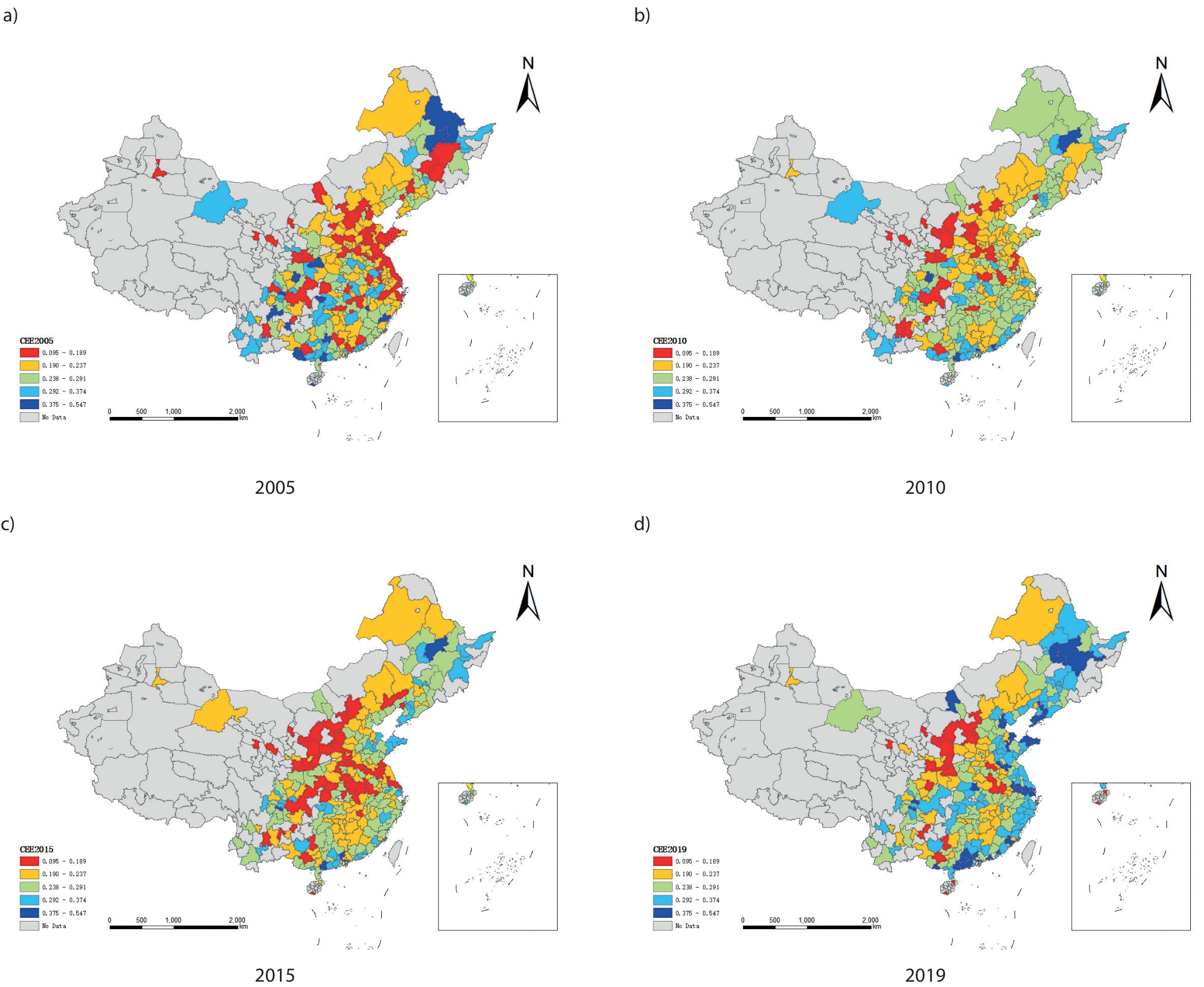
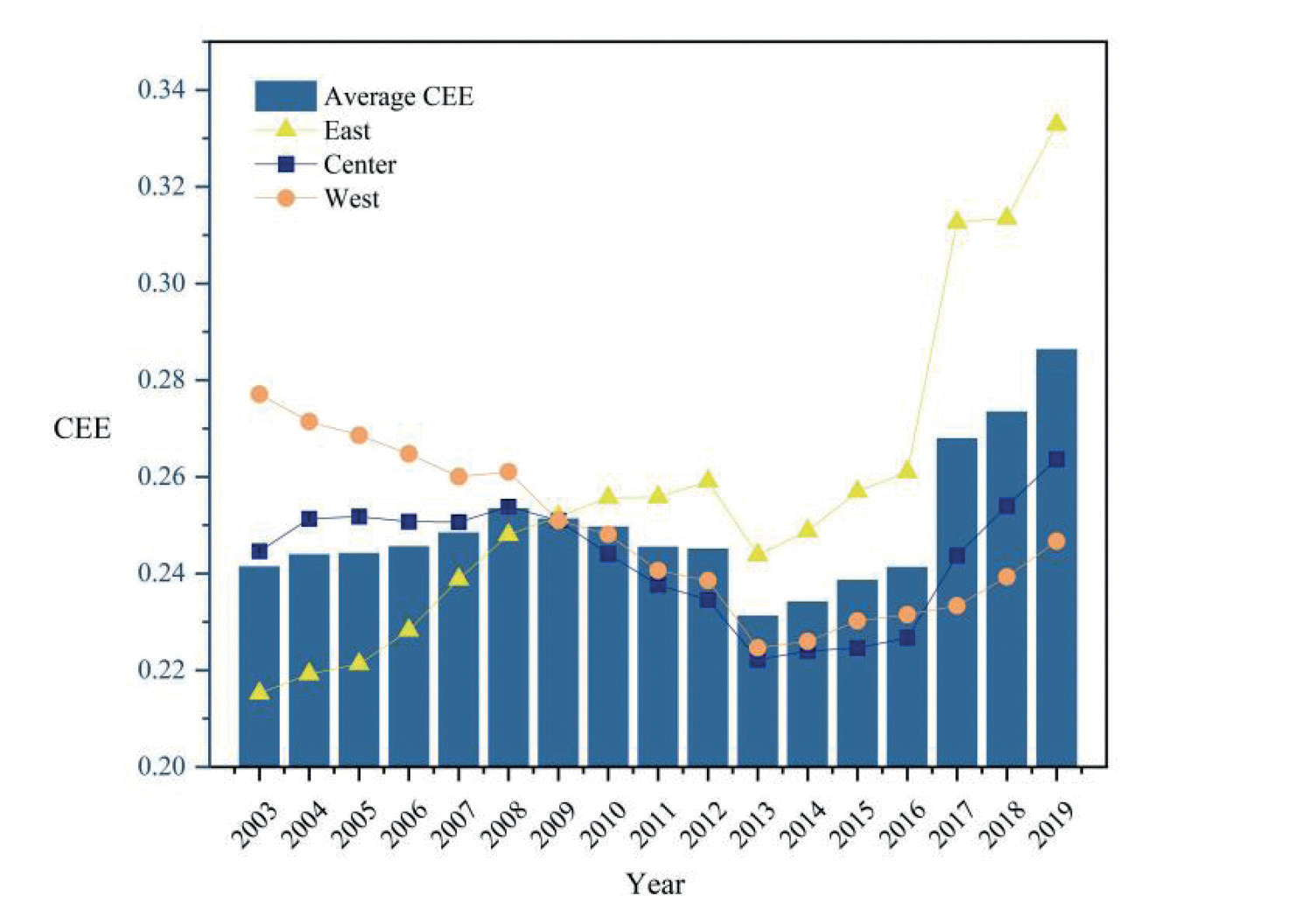
Table 7.
Results of benchmarking and heterogeneity regression tests.
To delve into the regional variations in the impact of these factors, this study performed a heterogeneity regression analysis across the eastern, central, and western regions. The findings reveal that environmental regulation (ER) significantly positively affects carbon emission efficiency (CEE) across all three regions. Specifically, the ER coefficients are 0.470 for the eastern region, 0.453 for the central region, and 0.537 for the western region, with all coefficients statistically significant at the 1% level. The ER coefficient of 0.470 in the eastern region suggests that enhanced environmental regulation substantially improves carbon emission efficiency, potentially due to the region’s more advanced economic development and firms’ technological innovation capabilities. The slightly lower ER coefficient of 0.453 in the central region may reflect the more significant economic pressures enterprises face, which constrain environmental regulation’s efficacy in boosting carbon emission efficiency. The western region exhibits the highest ER coefficient of 0.537, implying that environmental regulation has the most pronounced effect on carbon emission efficiency. This may be associated with the region’s resource abundance and industrial optimization and upgrading potential.
Threshold Effect Test Analysis
Threshold Effect Test
In this study, we implement a threshold panel model, validated through bootstrap testing, to estimate and confirm the threshold effect of the Urban Innovation Index (II). The model assumes that the threshold value may be unknown and is designed to ascertain the existence of a threshold beyond which the relationship between the variables undergoes a substantial shift. The findings indicate that the threshold panel model, based on the F-statistic and its p-value, rejects the null hypothesis of the absence of a threshold effect at different threshold levels. This rejection is statistically significant at the 1% level of significance. This outcome suggests that a threshold effect is present in the model, thereby confirming that the urban innovation index significantly influences the research variables under specific threshold value conditions. The precise threshold values and their 95% confidence intervals are in Table 8 of the text.
Table 8.
Threshold values and their confidence interval.
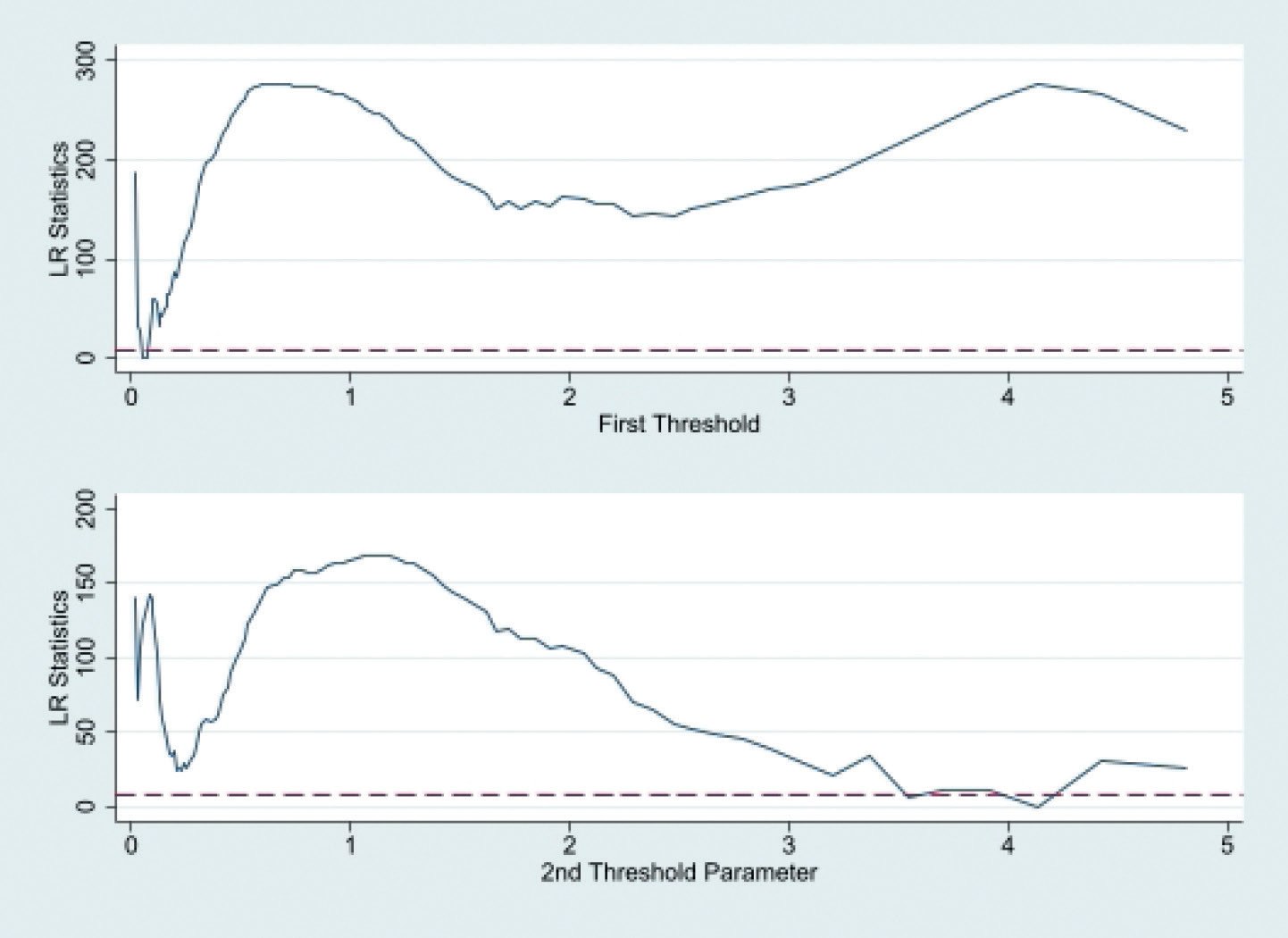
As depicted in Fig. 4, the thresholds identified via low dimensional rate (LR) plot analysis are situated at the nadir of the LR plot, indicating two critical thresholds for the urban innovation index. This implies that when the urban innovation index surpasses these threshold levels, carbon emission efficiency is expected to experience a substantial linear or non-linear transition. Given the potential advantages of the innovation index in expediting technological advancement and adoption, we hypothesize that as a city’s innovation index surpasses these thresholds, a concomitant rise in carbon efficiency is anticipated. This hypothesis is founded on recognizing the relationship between urban innovation endeavors and their environmental advantages, particularly in fostering energy efficiency improvements and embracing low-carbon technologies. Consequently, the results of this study underscore the substantial potential of the urban innovation index as a moderating factor in fostering environmental sustainability.
Estimated Results
Table 9 outlines the regression outcomes derived from the panel threshold model, which aims to elucidate how environmental regulation impacts carbon emission efficiency across varying stages of the urban innovation index. Specifically, the positive effect of environmental regulation on carbon emission efficiency attains statistical significance at the 1% level, with a regression coefficient of 0.321, for urban innovation indices below 0.0699. This indicates that enhanced environmental regulation can substantially enhance carbon emission efficiency in the early stages of urban innovation. When the urban innovation index falls within the range of 0.067 to 4.134, the impact of environmental regulation on carbon emission efficiency is somewhat diminished, with the coefficient adjusting to 0.238. Conversely, when the urban innovation index surpasses 4.134, the positive effect of environmental regulation on carbon emission efficiency is once more significantly amplified, with the regression coefficient increasing to 0.329.
Table 9.
Panel threshold model regression results.
| Variable | Model (6) |
|---|---|
| ER(II<0.067) | 0.321*** (3.667) |
| ER(0.0670<II<4.134) | 0.238*** (2.825) |
| ER(II>4.134 | 0.329*** (3.793) |
| CV | Control |
| N | 4369 |
| R2 | 0.247 |
| F | 19.795 |
The analysis of causal factors reveals that implementing stringent environmental regulations and environmental protection policies during the initial stages of urban innovation can effectively motivate enterprises to restructure their industrial frameworks and engage in green technological innovation, thereby enhancing carbon emission efficiency. Nevertheless, excessive government intervention may lead enterprises to prioritize conservative investment strategies and carbon emission reduction measures over more innovative approaches at this phase. As the market matures, firms can leverage government macroeconomic policies to utilize the “innovation compensation effect” more effectively, further enhancing carbon efficiency through technological advancements and industrial restructuring. These findings underscore the importance of considering the stage of urban innovation capacity and its intricate dynamic relationship with environmental regulatory effects when formulating policies. This approach enables the design of integrated policy strategies that foster technological innovation and enhance carbon efficiency.
Robustness Check
In light of the snowball effect [57], we observe a notable trend: firms are more inclined to invest in regions with a high urban innovation index. These areas are perceived as more appealing to firms due to their advanced level of innovation. However, the challenge lies in these firms prioritizing short-term economic gains over sustainable development and environmental protection. This inclination makes firms reluctant to bear higher ecological costs, which may exacerbate ecological issues, particularly those related to increased carbon emissions. Concurrently, this trend exerts pressure on governments to formulate policies that strike a balance between economic and environmental objectives. To entice business investment and boost local economic growth, governments may be tempted to ease business access standards and foster an investment climate more conducive to corporate interests [58]. While such a policy may promote economic growth in the short term, it can also result in neglecting environmental protection, leading to increased ecological costs in the long term. Consequently, in this intricate scenario, governments must strive to balance fostering economic growth and ensuring environmental sustainability.
To ensure the reliability of the results of the threshold regression analysis in this paper, this study considers the establishment of a fixed-effects model with an interaction term to test the robustness of the results, incorporating the threshold variable urban innovation index (II), the interaction term between the explanatory variables and the threshold variable (ER×II) into the model, and establishing model (7) based on model (6):
Table 10.
Robustness test results.
Table 11.
Panel Threshold Model Heterogeneity Estimation Results.
In the analysis of Model 7 presented in Table 10, the impact of environmental regulation on carbon emission efficiency is further refined by introducing the interaction term between the urban innovation index and environmental regulation intensity. The results indicate that the integrated impact coefficient of ecological regulation on carbon emission efficiency spans a range of “-0.2682 to 0.9065,” aligning with the findings of Model 2 when the second threshold is not surpassed. This consistency further corroborates the robustness of the threshold regression model employed in this study.
Analysis of the potential correlation between the urban innovation index and the intensity of environmental regulation necessitates careful consideration to avoid the issue of multicollinearity. Multicollinearity can compromise the estimated regression coefficients, rendering them unstable and potentially leading to increased standard errors. Such a scenario undermines the accuracy of statistical inference and may compromise the reliability of hypothesis testing. To address multicollinearity, this study employs the decentring process, which involves subtracting the observed value of each variable from its mean. This approach aims to rescale the variables such that their means become zero while preserving their variances and maintaining the correlations between them. The analysis of the coefficients in Model 8 reveals that the model estimates remain consistent following the decentring treatment compared to when the treatment is not applied. This consistency underscores the robustness of the model.
Heterogeneity Test
Concentrating solely on the national level to assess the impact of ER on CEE may restrict the depth of analysis regarding regional disparities. Consequently, this paper categorizes Chinese cities into three economic-geographical zones to achieve a more nuanced comprehension: eastern, central, and western. This categorization is based on a composite of factors such as population size, economic development levels, and geographical characteristics across different regions of the country, providing a comprehensive assessment of these factors (which aligns with the methodology outlined above). This regional classification aims to enhance our understanding of the regional variations in the effects of ER on CEE. This approach enables a more precise identification and evaluation of whether threshold effects are present in each region and whether there are substantial discrepancies in the impacts of ER on CEE between different areas. This study aims to provide scientific evidence and a theoretical foundation for formulating more targeted regional environmental policies by delving into the potential reasons for these disparities.
The outcomes of the threshold heterogeneity regression are presented in Table 11, revealing a double threshold effect across the three primary regions of China: east, center, and west. ER’s impact on CEE is not statistically significant in the eastern areas until the second threshold is surpassed. When the urban innovation index (II) exceeds the second threshold of 5.118, the coefficient of ER’s positive effect on CEE is 0.363, which is significant at the 10% level. This indicates that ER significantly influences CEE when the threshold is reached.
Significant model variations were observed in the threshold effect tests conducted for Central China. Specifically, a significant single-threshold effect was identified at the 5% significance level in the single-threshold model test, with a threshold value of 0.401. Subsequent double-threshold testing revealed the presence of a double-threshold impact at the 10% significance level, with a second threshold value of 4.002. These findings suggest a multifaceted interaction between the urban innovation index (II) and the effects of environmental regulation (ER) on carbon emission efficiency (CEE). Specifically, when II is below 0.401 (the first threshold), the coefficient of ER’s impact on CEE is 0.328, which is statistically significant at the 10% level. Conversely, when II falls within the range of 0.401 to 4.002 (between the first and second thresholds), the coefficient of ER’s effect on CEE becomes statistically insignificant. However, when II surpasses 4.002 (the second threshold), the coefficient of ER on CEE increases to 0.379, which is again significant at the 10% level.
This phenomenon may stem from the geographical and economic interconnectivity between the central and eastern regions, which share a more developed industrial and energy structure shaped by financial and technological spillovers from the east region [59]. In the nascent stages of urban innovation, enterprises’ investment in innovation, as a proportion of total investment, is relatively low, thus failing to influence their development decisions significantly. As the urban innovation index (II) improves, enterprises are compelled to allocate more of their investment to innovation, leading to a preference for a more cautious development strategy that can hinder the enhancement of carbon emission efficiency (CEE). However, as the II advances, the “innovation compensation effect” takes hold, with firms adopting more efficient technological methods that bolster CEE and amplify the positive impacts of environmental regulation (ER). This intricate dynamic relationship underscores the evolving effects of the II on ecological policy across different stages, indicating that policymakers must be mindful of the stage of urban innovation development to devise more effective environmental governance strategies.
The threshold analysis for the Western China innovation index detected significant variations in threshold effects. Specifically, the single-threshold model test revealed a single-threshold considerable impact at the 1% significance level, with a threshold value of 0.032. Further tests confirmed a double-threshold effect at the 1% significance level, with a second threshold value of 0.049. When the urban innovation index (II) is below 0.032 (the first threshold value), the coefficient of ER’s effect on CEE is 0.555, and this result is statistically significant at the 0.1% level. In contrast, when the urban innovation index (II) lies between 0.032 and 0.049 (between the first and second thresholds), the coefficient of ER on CEE is 0.460, which is significant at the 1% level. When II surpasses 0.049 (the second threshold), the coefficient of ER on CEE is 0.406, which is important at the 5% level. This suggests that the increase in II may counteract the effect of ER in enhancing CEE.
This phenomenon may be associated with the reallocation of resources, as fostering innovative activities in cities typically necessitates the concentration of substantial resources, including capital, human capital, and policy support. Although intended to bolster long-term environmental and economic sustainability, this resource concentration might lead to a relative decrease in government focus on environmental protection and carbon efficiency in the short term, potentially causing a temporary diminution or disregard of the positive impacts of environmental regulations. The role of technological innovation in enhancing carbon emission efficiency is intricate and multifaceted. On one hand, it can improve energy efficiency and reduce carbon emissions per unit of energy consumed, thereby contributing positively to environmental goals. On the other hand, technological innovation may also increase overall energy demand due to industrial upgrading and economic expansion, potentially undermining the intended environmental benefits. This increase in energy demand can result in the “rebound effect,” where the carbon emission reductions expected from improved energy efficiency in ecological regulations are offset partially or entirely by increased energy consumption, leading to suboptimal improvements in carbon emission efficiency.
Discussion
This section presents the findings of the empirical analysis, which employed a threshold effect model to explore the relationship between the urban innovation index (II), environmental regulation (ER), and carbon emission efficiency (CEE). The variables included in the analysis were the dependent variable CEE, the independent variable ER, and the control variables infrastructure level (IL), scientific and technological importance (STF), urbanization level (UR), industrial structure advanced (IS), openness to the outside world (Open), green finance index (GFI), and population density (PD). The study was conducted using a baseline test. The impact of ER on CEE was found to be significantly positive at the 1% level, with a coefficient of 0.702, indicating that ER can effectively enhance CEE without the influence of the control variables [60]. In parallel, as evidenced by the studies by Chen and Huang et al., a high level of scientific and technological emphasis is associated with carbon emission efficiency [61, 62]. Some studies also found a significant negative correlation between the level of urbanization and carbon emission efficiency [63, 64]. Industrial structure advancement and a green financial index can effectively enhance carbon emission efficiency [65, 66]. The nexus between a region’s openness to the outside world and its carbon emission efficiency has garnered considerable attention in contemporary academic discourse. Ma et al. conduct meticulous empirical analyses demonstrating how pilot policies for carbon emissions trading systems can effectively reduce carbon emissions in pilot cities, with import and export two-way foreign direct investment (FDI) as a transmission mechanism. The findings of this study are both significant and policy-relevant, underscoring the dual role of FDI in local carbon emission mitigation strategies [67]. During this period, Wei et al. utilized quantitative methods [68], such as the spatial Durbin model, to investigate the intricate interplay between foreign direct investment (FDI) and carbon emissions from a spatial econometric perspective. Their research uncovered a multifaceted evolution of the impact, indicating that FDI initially spurs an increase in carbon emissions in the host country’s home region. However, the direct adverse effects begin to subside over time as high technology is adopted and applied. Moreover, the study validated the beneficial influence of FDI on reducing carbon emissions in neighboring regions. This insight provides an empirical foundation for developing targeted, regionally integrated environmental policies [69, 70]. Collectively, these studies broaden our comprehension of the intricate interactions between open economies and ecological sustainability from diverse perspectives and methodological approaches.
Furthermore, in examining the influence of environmental regulation on carbon emission efficiency, several academic researchers have posited that this relationship exhibits complex non-linear traits [71–73]. Building upon this insight, this paper employs threshold effect testing to delineate the dynamic relationship between environmental regulation and carbon emission efficiency under the influence of the urban innovation index. This study identifies two critical threshold values through meticulous statistical analyses: 0.067 and 4.134. Before the first threshold of 0.067, the influence coefficient for environmental regulation on carbon emission efficiency was 0.321, suggesting that environmental regulation exerts a significant positive impact on carbon emission efficiency at lower levels of the urban innovation index. The positive effect of environmental regulation on carbon emission efficiency diminishes slightly when the urban innovation index falls within the range of 0.067 to 4.134. However, when the urban innovation index surpasses the second threshold of 4.134, the promotional effect of environmental regulation on carbon emission efficiency increases significantly, with the coefficient rising to 0.329. This observation of a non-linear threshold effect implies that the impact of environmental regulation on carbon emission efficiency is contingent upon the city’s innovation capacity level and undergoes a marked shift as the city’s innovation index evolves. Environmental regulation in the innovation index’s initial stages effectively fosters carbon emission efficiency. As the innovation index reaches a certain threshold, this positive effect diminishes. However, once the innovation index exceeds a certain threshold, the role of environmental regulation in promoting carbon emission efficiency intensifies once more. This underscores the significance of accounting for the current state of urban innovation when formulating environmental policies to ensure that environmental regulations effectively enhance carbon efficiency. The relationship between environmental regulation and the level of urban innovation does not follow a linear path but exhibits a “U-shaped” dynamic. This may be attributed to the fact that, at a low innovation index stage, the technological innovation capabilities of a city or firm are limited. Consequently, environmental regulations can directly incentivize firms to adopt existing low-carbon technologies and management practices, thereby swiftly enhancing carbon efficiency. As the innovation index advances, firms and cities invest in new technologies and innovative processes. However, it may take time for these innovations to be integrated into production and living practices, and with higher initial costs, efficiency gains may not be immediately evident. When the innovation index surpasses a certain threshold, cities and enterprises often possess a more developed technological innovation system and experience in environmental management. At this juncture, environmental regulations can be effectively adhered to and leverage higher levels of technological innovation and more efficient resource allocation, thereby significantly enhancing carbon efficiency.
Consequently, the relationship between technological innovation and environmental regulation is not static; it is shaped by urban policymakers’ ability to navigate trade-offs and balance resource allocation, environmental protection, and economic development objectives. This necessitates policymakers to focus not only on the innovation activity itself but also on its broader environmental and social impacts. By refining and adjusting policy measures, policymakers can ensure that technological innovation fosters economic growth while concurrently enhancing, rather than undermining, the effectiveness of environmental regulation.
Conclusions and Policy Implications
This study employs panel data from 257 prefecture-level cities in China from 2003 to 2019 to investigate the influence of ER and CEE. Additionally, a threshold variable, the urban innovation index, is incorporated to examine the non-linear impact of ER on CEE. The research yields the following findings:
Firstly, the analysis of CEE and ER levels for 257 prefecture-level cities in China from 2003 to 2019 reveals their notable spatial and temporal evolution characteristics. Time-series analysis demonstrates that, by 2019, the CEE of most cities had notably improved compared to 2005, reflecting the phased progress in carbon emission reduction in China. Regarding spatial distribution, CEE among cities demonstrates significant geographical heterogeneity, with high CEE regions primarily located in the central and eastern parts of the country. This distribution pattern is distinctive: the southern region generally outperforms the northern part of the country, the east region exceeds the western region, and the coastal area surpasses the inland region.
This trend indicates that, while China has achieved positive results in enhancing carbon emission efficiency, a notable developmental disparity remains between the western and eastern regions. Consequently, it is recommended that the western region proactively absorb high-tech and industrial transfers from the east region and bolster infrastructure development to establish conditions conducive to fostering economic growth and enhancing carbon emission efficiency. Concurrently, the government should implement targeted policy measures, including establishing industry access thresholds to exclude high-pollution and high-emission enterprises, imposing environmental protection taxes on medium-pollution and emission enterprises, and offering preferential policies and financial subsidies to low-pollution and low-emission enterprises. These strategies aim to incentivize and guide enterprises towards green and low-carbon development, promoting a balanced enhancement in carbon emission efficiency nationwide and narrowing the gap between the eastern and western regions.
Secondly, panel threshold regression analysis reveals that the impact of ER on CEE exhibits a significant double-threshold effect across different stages of the urban innovation index. This indicates that the relationship between ER and the level of urban innovation is not a straightforward linear correlation but follows a “U-shaped” pattern. Notably, the promotion effect of ER on CEE is most pronounced when the urban innovation index reaches the third interval.
Given this intricate dynamic relationship, a unilateral strategy, such as solely increasing environmental tax rates or curbing medium- and high-polluting enterprises, may not effectively surpass the second threshold. Consequently, policymakers should devise and implement region-specific policies that align with the realities and needs of specific regions. This approach includes offering targeted preferential policies, fostering the establishment of open innovation and knowledge-sharing systems, reducing the threshold for accessing high technology, and enhancing international collaboration to introduce advanced environmental protection technologies and management practices from a global perspective. Concurrently, the region should proactively revise its development strategy, increase investment in research and development of new products and processes, and actively embrace clean energy, energy-saving technologies, and circular economy models. Such a transition will enhance the region’s energy and resource utilization efficiency, leading to long-term sustainable development. In summary, to optimize the role of ER in promoting carbon emission efficiency, governments and regions must collaborate and engage in dialogue more closely to jointly explore and implement more scientific and efficient green innovation strategies. This collaborative approach will foster the enhancement of carbon emission efficiency and establish a robust foundation for achieving the objectives of green development and environmental sustainability.
Third, our analyses of double-threshold effects for China’s Eastern, Central, and Western regions reveal intricate regional heterogeneity. Specifically, the empirical results for the Eastern region indicate that the impact of ER on CEE is not statistically significant when II is in the low to medium stage. This suggests ER effectively enhances CEE only when II reaches a more advanced stage in the Eastern region. The Central region presents a more intricate pattern: as II increases, the relationship between ER and CEE exhibits a distinct U-shaped trend. Initially, ER significantly contributes to CEE, but this effect diminishes as II reaches a certain threshold. However, as II progresses, the facilitating effect of ER on CEE gradually diminishes or becomes insignificant until II reaches a higher stage, at which point the enhancing effect of ER on CEE becomes evident once more. This suggests that in the Central region, the impact of ER on CEE is significantly moderated by II, and this moderating effect is non-linear. In the Western region, the analyses indicate that the positive influence of ER on CEE diminishes with the advancement of II. The reasons for this may be multifaceted, encompassing various dimensions such as technology, resources, industrial structure, governance, and policy. Comprehending these factors is crucial for designing environmental policies tailored to the specific circumstances in the Western region.

