

Introduction
In recent years, continuous coal mining activities have led to a series of environmental issues, of which land subsidence in mining areas is one of the most prevalent. Land-filling reclamation technology has been used to restore subsided ground in the Huainan coal mining subsidence area since 2003. Coal gangue, fly ash, and other coal-based solid waste materials have been used as reclamation filling materials to restore subsided areas. Specifically, the full-thickness filling method has been used to restore subsided areas with coal gangue and fly ashes to original surface elevations, thereby effectively reusing subsided land. However, as the Huainan mining area is characterized by high groundwater levels, large coal gangue amounts were accumulated and used to fill subsided areas, influencing the surrounding soil environment. The quality of reclaimed soils in mining areas is related to the healthy and orderly development of entire mining area ecosystems [1]. Repeated mechanical stabilization of reclaimed soils can disturb and destroy original soil profiles. In fact, these measures can reduce soil porosity and increase soil bulk densities, thereby resulting in weaker soil water-holding capacities than those of naturally cultivated soils. Furthermore, soil nutrient contents at early soil reclamation stages are often low, affecting the survival and development of plants [2-5].
Low-molecular-weight organic acids (LMWOAs) are a type of low-molecular-weight hydrocarbons with one or more carboxyl functional groups. Indeed, LMWOAs are widespread in the rhizosphere and soil environments. They are generally derived from plant root exudates, animal and plant decomposition, microbial metabolisms, and soil organic matter transformations [6]. These acids exist in plant tissues in molecular forms, playing an important role in some biochemical pathways, such as photosynthesis, cellular respiration, cation transport, amino acid biosynthesis, and pollutant neutralization [7]. Organic acids are natural chelating agents that can degrade easily in soils without causing secondary pollution. In addition, they can influence the fixation and migration behaviors of heavy metals in soils through complexation or chelation between functional groups and heavy metal elements [8, 9]. Organic acids can also activate or convert soil insoluble nutrients by soil acidification through the liberation of H+ or exchange and reduction reactions, thereby enhancing the solubility and mobility of potentially important nutrients in soils and, consequently, increasing their bioavailability [10, 11]. Previous related studies have demonstrated the key role of organic acids in the growth and development processes of plants and environmental adaptation [12]. Yu et al. [13] studied the composition of weathered coal gangue and the impacts of organic acid additions on the contents of soil available nutrients, highlighting the promoting effects of organic acids on the release of alkali-hydrolyzed nitrogen and available phosphorus from coal gangue. Pan et al. [14] assessed the relationships between seasonal changes in soil organic acid contents and nitrogen/phosphorus availability at different vegetation restoration stages in karst areas, highlighting the important roles of organic acids secreted by plants in improving soil nutrient availability [15].
At present, there are few studies on the content and species characteristics of LMWOAs in coal gangue-filled reclaimed soils. In addition, the relationships between LMWOAs, nutrient contents, and pH values of reclaimed soils are still unclear. The contributions of coal gangue-based filling materials to the variation characteristics of LMWOAs in soils are still poorly understood. In this context, the present study aims to assess the distribution characteristics of LMWOAs in coal gangue-filling reclaimed soils in a coal mining subsidence area and to evaluate the relationships between the regulation of LMWOAs, nutrient contents, and pH values of the studied soil. The current study provides a useful reference for improving the fertility levels of reclaimed soils and enhancing the effectiveness of ecological restoration technologies in coal mining subsidence areas.
Materials and Methods
Overview of The Study Area
The Huainan mining area is located in the central part of Anhui Province in the middle reaches of the Huaihe River, belonging to a warm temperate semi-humid continental monsoon climate. The Panyi reclamation area is located approximately 1.0 km east of the Panyi Mine in the Panji District of Huainan City. In addition, there was a coal gangue hill in the southern part. In 2006, topsoil stripping coal gangue backfilling processes with 1m-thick clay overlying was adopted in the study area as a part of the Panyi reclamation project [1]. Lime concretion loess is the main soil type in the study area, which is derived from ancient fluvial loess sediments. The average annual temperature and precipitation in the study area are 15.3ºC and 926 mm, respectively [16].
Sample Collection and Analysis
Sampling Collection
In this study, soil samples were collected from the coal gangue reclamation area of the Panyi Coal Mine in the Huainan Mining Area according to a random sampling design in 2021. Specifically, four sampling sites were set up in total, and three 1 m×1 m quadrats were set up at each sampling site. The soil samples were collected from each 10 cm soil layer until the coal gangue filling layer was completely collected. The collected samples from each soil layer were mixed and sampled according to the quartering method. In addition, the coal gangue and coal gangue weathering matter at the bottom of the overlying soil were collected, and the surrounding farmland soil was collected as the soil sample control group. All soil samples were collected and numbered in polytetrafluoroethylene sterile sampling bags and then rapidly stored in an incubator ice bag at 4℃ to prevent changes in the soil and microbial characteristics for further analyses. The collected soil samples were subsequently separated from plant root debris at the laboratory, fully mixed, and divided into two parts. The first part was naturally dried, ground, and sieved to determine the pH values and the available phosphorus, alkali-hydrolyzed nitrogen, available potassium, and organic matter contents; the second part of the soil samples was immediately stored in a refrigerator at -20℃ to determine the soil organic acid contents. In addition, coal gangue and weathered coal gangue were analyzed for the organic acid, available phosphorus, alkali-hydrolyzable nitrogen, available potassium, and organic matter contents.
Analytical Methods
The soil organic matter contents were determined using the potassium dichromate oxidation-external heating method. Whereas the available potassium, phosphorus, and alkali-hydrolyzable nitrogen contents in the soil samples were determined using the ammonium acetate extraction-flame photometric, sodium bicarbonate extraction-molybdenum antimony colorimetric, and alkali hydrolysis-diffusion methods, respectively. On the other hand, the soil pH values were determined using a potentiometric method at a water-soil ratio of 2.5:1.
To determine the LMWOA contents in this study, 5.0000 g soil samples were accurately weighed and placed in 50 mL centrifuge tubes before adding 10 mL of 0.1% H3PO4 aqueous solutions. The soil solutions were first mixed with glass rods and then stirred for 10 min. In addition, the soil mixtures were centrifuged at a speed of 3000 r/min for 5 min and then passed through 0.45 μm microporous membrane filters [17]. The organic acid types and their contents were determined in triplicate using high-performance liquid chromatography (LC-2000 series). The LMWOA types were identified based on their retention times and addition methods. The mobile phase consisted of 0.1% phosphoric acid and acetonitrile (volume ratio of 98:2), with a flow rate of 1 mL/min. The solvent was filtered through a microporous membrane with a pore size of 0.45 μm and degassed by ultrasound before subsequent uses. The separations were performed using the Sepax Bio-C18 chromatographic column (4.6 mm×250 mm, 5 μm) at temperature, detection wavelength, and injection volume of 35ºC, 210 nm, and 20 μL, respectively [18]. Typical chromatograms of nine LMWOA standard solutions are shown in Fig 1.
Data Analysis
In this study, all statistical analyses were performed using SPSS 25.0. Specifically, a one-way analysis of variance (ANOVA) test was performed to determine whether the differences between the variables were statistically significant at the p<0.05 level. In addition, the relationships between the variables were assessed using Pearson correlation analysis. All line charts, cluster heat maps, and Pearson correlation maps were generated in this study using Origin 2021 software.
Results
Chemical Properties of the Soil and Coal Gangue Samples
The observed nutrient contents in the collected soil samples are reported in Table 1. The observed organic matter contents in the coal gangue and weathered coal gangue samples were greater than 40 g/kg, corresponding to grade I of the soil nutrient classification standards established through the second national soil survey in China [19]. This finding indicates high levels of organic matter contents. In addition, the coal gangue-filling reclaimed soil samples exhibited higher organic matter contents than those in the farmland soil samples. However, the results revealed a decrease in the organic matter contents with increasing soil depth. The organic matter contents in the 0-10 cm and 10-20 cm soil layers in the reclamation area ranged from 20 to 30 g/kg, reaching fertility grade III and thus indicating a medium organic matter level. The organic matter contents in the remaining farmland and reclaimed soil samples were below 20 g/kg, corresponding to fertility grades IV, V, or even VI. This finding indicates poor organic matter contents. The available potassium contents in the reclaimed soil, coal gangue, and weathered coal gangue samples were over 200 mg/kg in all soil layers, except the 10-20 and 30-40 cm soil layers of the farmland, indicating extremely high available potassium contents (grade I). On the other hand, the available phosphorus contents in the reclaimed soil, coal gangue, and weathered coal gangue samples from the farmland and reclamation areas ranged from 3 to 5 mg/kg, indicating poor available phosphorus levels (grade V). Whereas the alkali-hydrolyzable nitrogen contents in the reclaimed soil, coal gangue, and weathered coal gangue samples from the farmland and reclamation areas ranged from 30 to 60 mg/kg, showing poor content levels (grade V). In summary, the available potassium, available phosphorus, and alkali-hydrolyzed nitrogen contents in the farmland soil were sufficient. In contrast, available phosphorus, and alkali-hydrolyzed nitrogen contents in the reclaimed area were deficient, even though the nutrient contents in the coal gangue and weathered coal gangue were at high levels, influencing the fertility level of the reclaimed soil to some extent. The results showed significant differences in the organic matter contents between the different soil layers in the farmland area. However, there were no significant differences in the other cases.
Fig 1.
Chromatogram of 9 organic acid standards. 1. Tartaric acid; 2. Oxalic acid; 3. Formic acid;4. Malonic acid; 5. Lactic acid; 6. Acetic acid; 7. Citric acid; 8. Succinic acid; 9. Propionic acid.
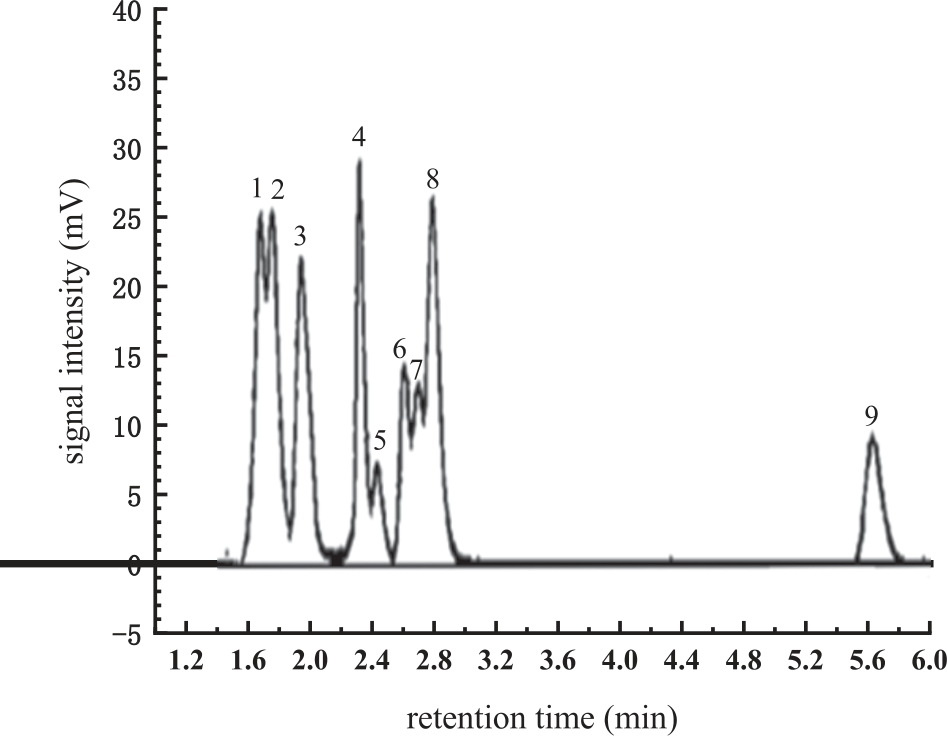
Table 1.
Physical and chemical properties of soils.
The acidity and alkalinity of soils are closely related to heavy metal contents, microbial activities, and organic matter decomposition. In this study, the average pH values of the different soil layers in the reclamation and farmland areas ranged from 7.95 to 8.08 and 5.78 to 6.59, respectively (Table 1). Zheng et al. [16] highlighted weakly alkaline pH values of soil layers in the coal gangue reclamation area of Hainan City, with an average pH range of 7.95-8.04. The results of this study revealed higher pH values of the coal gangue-based reclaimed soil than those of the farmland soil (control group). However, it is worth noting that the structure of alkaline soils can be easily destroyed, negatively affecting soil water, air, and heat conditions and, consequently, affecting nutrient transformations and their effectiveness [20]. Our results revealed a lack of significant differences in the reclaimed soil pH values in the different soil layers, showing weak stratification patterns of the soil pH values.
Organic Acid Characteristics in the Reclaimed Soil
In this study, a total of nine LMWOA types were detected in the samples from the different soil layers (Table 2). The results showed different compositions and contents of the nine LMWOA types from the different sampling sites in the same soil layers; the compositions and contents of the nine LMWOA types at different soil layers in the same sampling sites are also different. The farmland soil samples exhibited five LMWOAs, namely tartaric, oxalic, malonic, acetic, and succinic acids. On the other hand, tartaric, oxalic, formic, malonic, lactic, acetic, citric, succinic, and propionic acids were detected in the reclaimed soil samples. In fact, oxalic acid was the most dominant LMWOA in the farmland and reclaimed soils, showing higher contents in the different soil layers than those of the other eight LMWOA types. Tartaric and succinic acids were detected in the coal gangue samples, while tartaric, acetic, and succinic acids were identified in the weathered coal gangue samples.
The observed oxalic, tartaric, malonic, and acetic acid contents in the farmland soil samples were relatively high. The soil oxalic, malonic, and tartaric acid contents at sampling site 1 in the reclamation area were relatively high. The soil oxalic, formic, malonic, lactic, and succinic acid contents at sampling site 2 were relatively high. The soil oxalic, formic, lactic, and malonic acid contents at sampling site 3 were relatively high. The soil oxalic, lactic, malonic, and tartaric acid contents at sampling site 4 were relatively high. On the other hand, the succinic acid contents in the coal gangue samples were relatively high, while the content of tartaric acid and acetic acid in the weathered coal gangue are relatively high. The coal gangue-filled reclaimed soil had more LMWOA types than those in the farmland soil.
Table 2.
Composition and content of low molecular organic acids in soils at different depths.
The results showed differences in the LMWOA contents between the different soil layers in the reclamation area. In fact, only the contents of citric acid at sampling site 1, lactic, tartaric, and propionic acids at sampling site 2, and malonic, citric, and propionic acids at sampling site 3 were significantly different between the different soil layers.
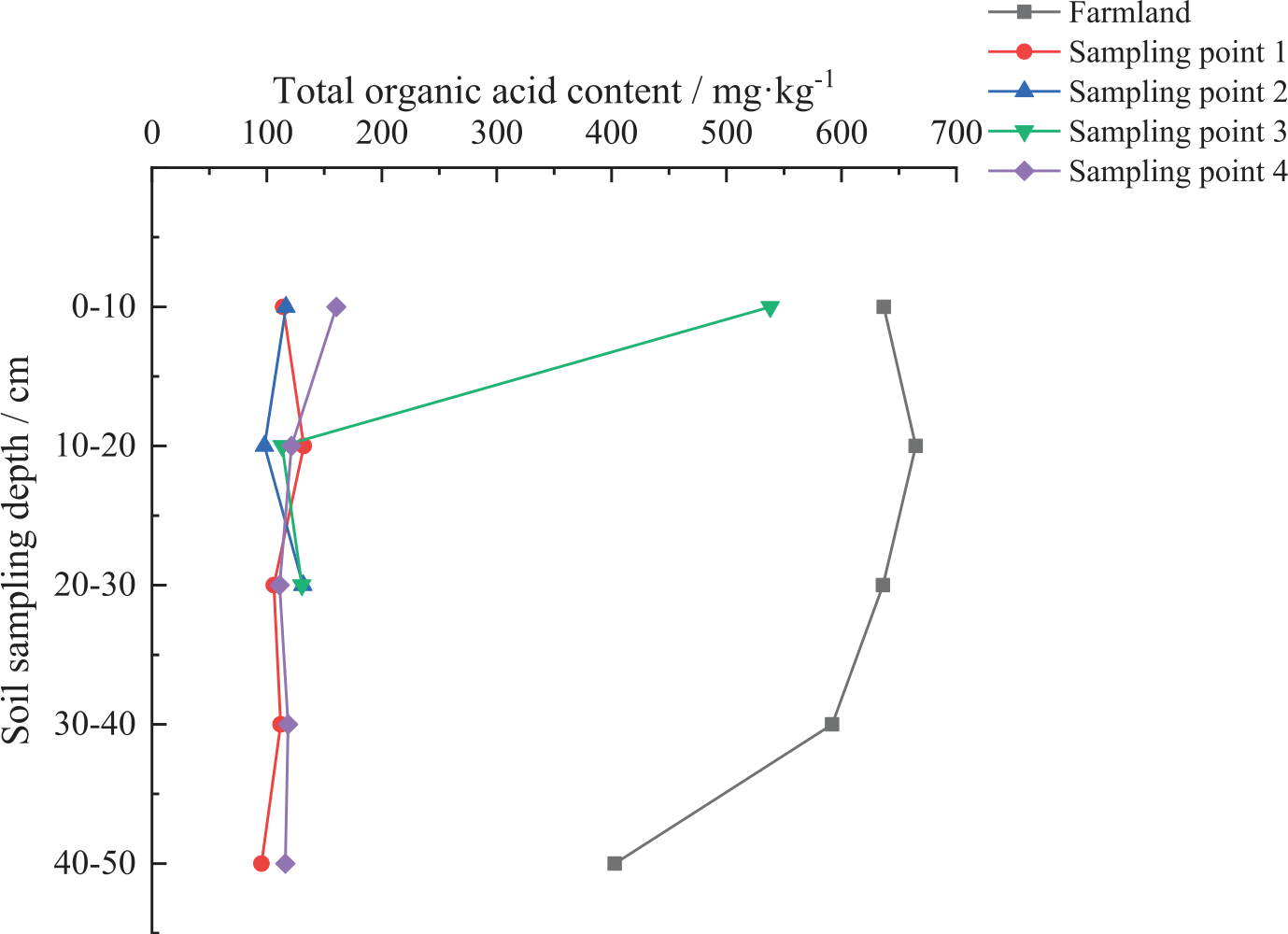
The LMWOA contents in the soil layers are shown in Fig 2. The results showed higher total LMWOA contents in the farmland soil than in the reclaimed soil. The average LMWOA contents were 586.48, 111.90, 115.30, 260.61, and 125.49 mg/kg, respectively. At sampling sites 1, 4, 5, and 3, the total organic acid contents in the reclaimed soil showed gradually decreasing trends with increasing soil depths from 0 to 50 cm and 0 to 30 cm, respectively. There was no obvious trend at sampling sites 2. This finding might be due to the destruction of the initial soil structure through mechanical rolling and disturbance associated with soil reclamation in the study area. These activities have affected not only the contents of the LMWOAs but also other soil nutrients, including organic matter, nitrogen, phosphorus, and potassium, which may negatively affect the productivity of the soil [1, 21]. Furthermore, some practices, such as fertilization, crop stubble, and straw mulching, might increase the LMWOA contents in the farmland soil [22], explaining the lower total LMWOA contents in the reclaimed soil. The results showed higher LMWOA contents in the surface soil layers than those in the deeper soil layers due to the continuous release of these organic acids from litter cover on soil surfaces.
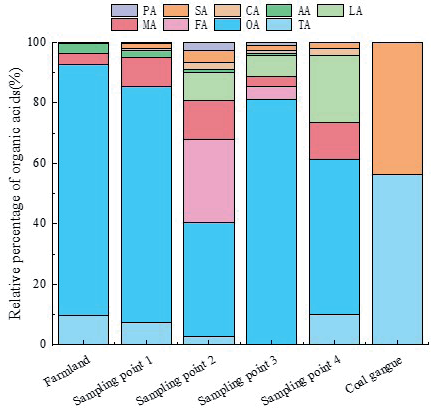
Fig 3 shows the proportions of the nine LMWOA contents in the different soils. According to the results, oxalic acid was the most abundant LMWOA at the different soil sampling sites. The oxalic acid content in the farmland soil accounted for 83% of the total LMWOA content.
Sampling sites 1, 2, 3, and 4 exhibited oxalic acid proportions of 78%, 38%, 81%, and 51%, respectively. On the other hand, the proportions of the acetic, citric, succinic, and propionic acid contents in the farmland soil layers were low, accounting for up to 10%. In the coal gangue samples, on the other hand, tartaric acid accounted for the highest proportion (56%), while succinic acid accounted for 44%. In the weathered coal gangue, the proportion of the tartaric acid content was 48%, while the acetic and succinic acid contents accounted for 52% of the total organic acid content.
Analysis of the Dominant Organic Acids in the Reclaimed Soil
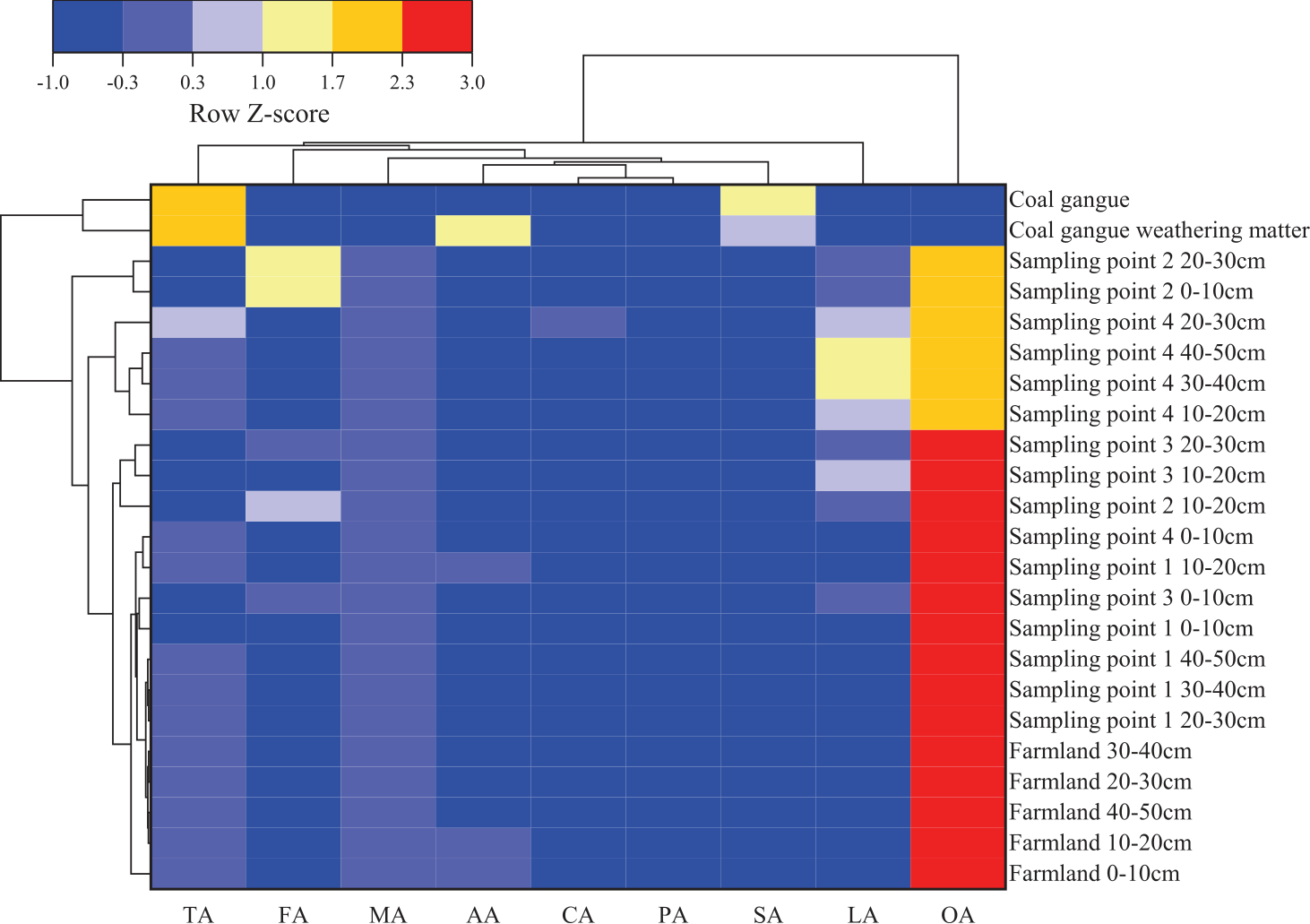
Heat maps are common visualization methods that can be used to represent intuitively multiple data points in a two-dimensional dimension using different color gradients and sizes. Hierarchical clustering analysis is based on the degrees of similarity between variables or samples. Similar features of samples or variables can be clustered into a single class to facilitate the interpretations of their relationships [23]. In this study, the detected LMWOAs in the farmland soil, reclaimed soil, coal gangue, and weathered coal gangue were further analyzed using hierarchical cluster analysis in Origin software to generate a cluster heat map (Fig 4). The obtained results revealed two distinct clusters in the longitudinal direction of the heat map. The first cluster consisted of eight LMWOAs, namely tartaric, malonic, acetic, citric, succinic, propionic, formic, and lactic acids. These LMWOA types are characterized by low contents in the soils, except formic acid at sampling 2 of the reclaimed soil, lactic acid at sampling 4 of the reclaimed soil, tartaric acid in the coal gangue, and succinic and tartaric acids in the weathered coal gangue. Acetic acid exhibited a higher content than the average value. The second cluster included oxalic acid, with substantially higher contents than the average value. As mentioned above, oxalic acid was the dominant LMWOA at all soil sampling sites.
The sampling sites were further clustered according to the observed LMWOA contents in the different soil layers using the heat map, showing three distinct clusters in the horizontal direction. The first cluster consisted of sampling site 2 in the reclamation area, where high oxalic and formic acid contents were observed. In contrast, the contents of other LMWOAs at sampling 2 were lower than their corresponding average values. The second cluster included sampling site 4 in the reclamation area. This sampling site exhibited high oxalic and lactic acid contents, with comparatively lower contents of the other LMWOAs than their corresponding average values. The third cluster consisted of reclamation sampling sites 3 and 1 and farmland areas, where high oxalic acid contents were observed. These sampling sites, on the other hand, showed lower contents of the other LMWOAs than their average values. In contrast, the coal gangue and weathered coal gangue showed high tartaric and succinic acid contents, which is inconsistent with those observed in the reclamation soil area.
Fig. 3.
Soil organic acid composition ratio. Tartaric acid (TA); Oxalic acid (OA); Formic acid (FA); Malonic acid (MA); Lactic acid (LA); Acetic acid (AA); Citric acid (CA); Succinic acid (SA); Propionic acid (AA).
Relationships between the Organic Acid Contents and Chemical Properties of the Soils
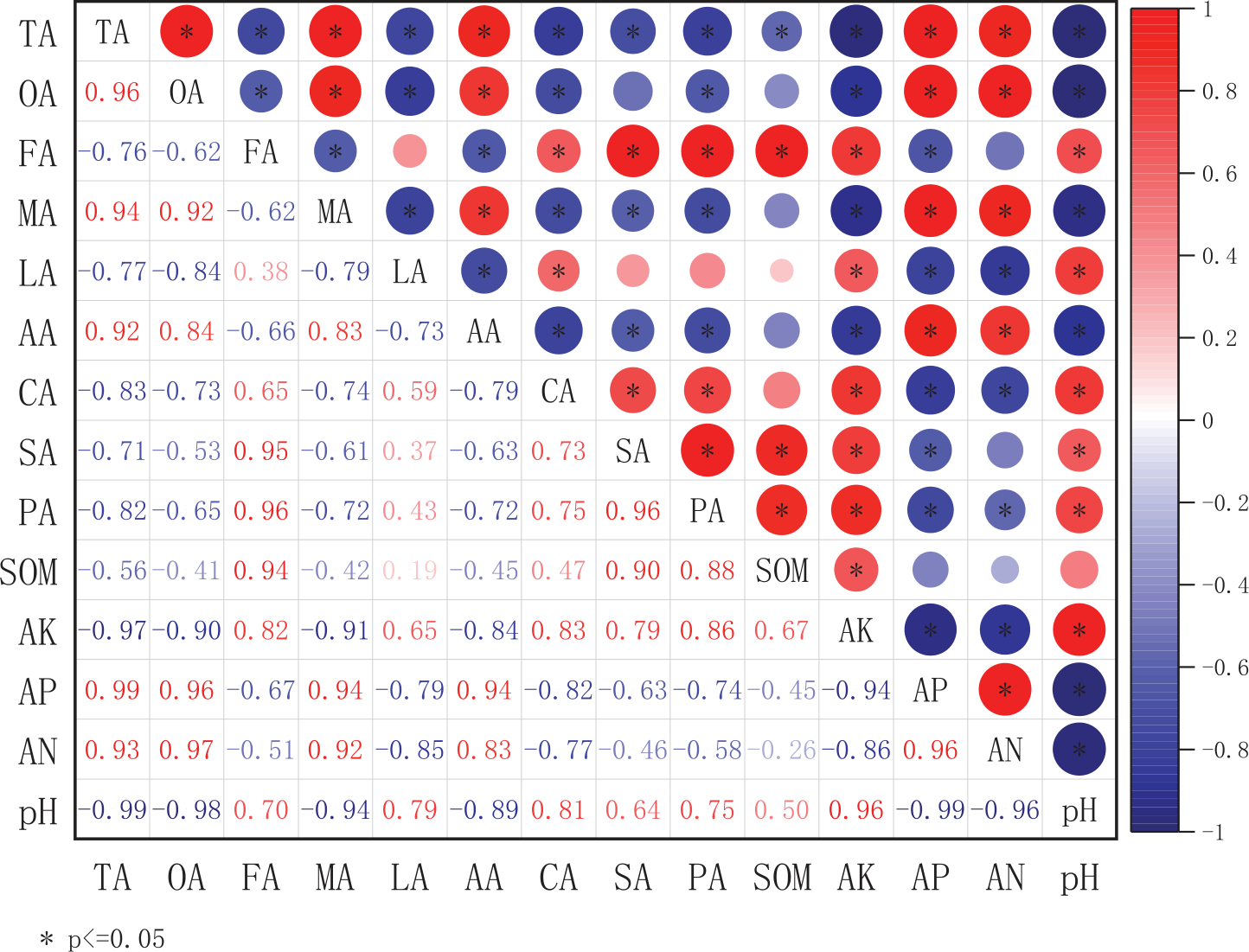
In this study, the relationships between the LMWOA contents and chemical properties of the soils were further assessed (Fig. 5). The results showed correlations between soil available nutrients, pH values, and LMWOAs in the soils to some extent. Specifically, the soil organic matter contents were significantly and positively correlated with the formic, succinic, and propionic acid contents (P<0.01), as well as significantly and positively correlated with the available potassium contents (P<0.05). The observed soil’s available potassium contents were significantly and negatively correlated with the tartaric acid (P<0.01), oxalic acid, malonic acid, and available phosphorus (P<0.05) contents, as well as significantly and positively correlated with soil pH (P<0.01) and formic, citric, succinic, and propionic acids (P<0.05). The soil available phosphorus and alkali-hydrolyzable nitrogen contents were significantly and positively correlated with the tartaric, oxalic, malonic, and acetic acid contents (P<0.01), as well as significantly and negatively correlated with soil pH (P<0.01). The soil alkali-hydrolyzable nitrogen contents exhibited significant positive correlations with the tartaric, oxalic, and malonic acid contents (P<0.01), and a significant negative correlation with soil pH (P<0.01). The observed soil pH showed significant negative correlations with the tartaric, oxalic, and malonic acid contents at the P<0.01 level, as well as a significant negative correlation with the acetic acid contents at the P<0.05 level. These findings demonstrate the regulatory effects of the exogenous LMWOA additions on the pH values and available nutrient contents, thereby enhancing the fertility levels of the reclaimed soils.
Discussion
Sources and Effects of the Organic Acids in Coal Gangue and Weathered Coal Gangue
Coal gangue is a dark-gray rock type with low carbon content. This rock type is, in fact, harder than coal and is associated with coal seam deposits derived from the coal formation process. Organic acids can be derived from soil humus (e.g., humin and humic acid) through the reactions of various functional groups under the action of microorganisms. Sedimentary organic matter is the main source of kerogen amounts. Indeed, the thermal maturity of kerogen with a large number of aromatic structures and oxygen-containing functional groups can lead to the formation of organic acids through decarboxylation [24, 25]. Although a few LMWOA types were detected in this study in the coal gangue and weathered coal gangue samples, they exhibited high contents. In addition, the results showed higher contents of three LMWOAs in the weathered coal gangue than those in the coal gangue. Previous studies have highlighted the effects of LMWOAs on mineral dissolution through their ionized H+ and acid radical ions. The release of H+ ions from organic acids can consequently promote the release of heavy metal ions from minerals and, consequently, react with organic acid-derived carboxyl groups to form insoluble acid salts. The chemical adsorption of formed organic complexes on the mineral surface can promote the migration of mineral electrons to the edge, further enhancing the mineral weathering process. Furthermore, besides the mineral weathering process, other external factors, such as rainfall events, atmospheric deposition, and microbial growth, can increase the abundance and contents of LMWOAs [26, 27]. The use of the coal gangue material in soil reclamation may lead to the continuous release of the LMWOAs from the coal gangue and weathered coal gangue materials into the soils with increasing reclamation period, thereby further increasing the LMWOAs contents in the soils, particularly the tartaric acid contents. In fact, this LMWOA type has higher desorption effects on soil heavy metals, thereby enhancing the effectiveness of heavy metal phytoremediation processes [28, 29]. Other LMWOAs can also promote the release of coal gangue nutrients to some extent [11], thereby ensuring ecological coal gangue-based restoration processes.
Effects of the Organic Acids on the Soil Nutrient Contents and pH Values
The results of this study showed strong relationships of the LMWOAs with the organic matter, available potassium, available phosphorus, and alkali-hydrolyzable nitrogen contents in the soils (Fig 5). In fact, the LMWOAs might exhibit improvement effects on organic matter, available phosphorus, and alkali-hydrolyzable nitrogen in the soils, which is consistent with the results revealed by Heng et al. [30]. Indeed, they revealed significant increases in soil nutrient contents, particularly available phosphorus, following the application of organic acid conditioners in pot experiments. Organic matter, such as LMWOAs and hydrolases secreted by plants in the rhizosphere, can undergo redox reactions, chelation, and catalysis with various soil anions and cations, thereby increasing the availability of nitrogen and phosphorus [14, 31]. This is of great significance for ecological coal gangue-based soil reclamation processes.
Our results showed different spatial accumulation patterns of the LMWOAs in the soils. Tartaric, oxalic, malonic, and acetic acids were significantly and negatively correlated with the soil pH values. The pH values of the farmland soil were significantly lower than those of the reclaimed soil, which is consistent with the results revealed in previous related studies [32]. Previous studies have revealed decreases and increases in soil pH values due to the effects of organic acids and organic anion decomposition, respectively [33]. Soil exchangeable base cations play a key role in regulating soil pH after organic acid leaching [34, 35]. Li et al. [36] simulated the effects of acid rain, citric acid, malic acid, and oxalic acid on base cation leaching in red soil, showing stronger decreasing effects of the organic acids on the soil pH values after leaching than that of acid rain. In addition, they indicated that the total leaching amounts of base cations under the organic acids were 1.58 to 9.27 times higher than those observed under acid rain. Therefore, the LMWOAs were more likely to promote soil acidification than acid rain.
Conclusions
(1) A total of nine, two, three, and five LMWOA types were detected in the reclaimed soil, coal gangue, weathered coal gangue, and farmland soil, respectively. The reclaimed soil exhibited more LMWOA types than those in the farmland soil, with relatively low contents. The total amounts of the LMWOAs in the farmland soil, reclaimed soil, weathered coal gangue, and coal gangue were 2932.43, 578.67, 46.55, and 17.78 mg/kg, respectively. The total amounts of LMWOAs in the reclaimed soil followed the order of oxalic acid>lactic acid>malonic acid>formic acid>tartaric acid>succinic acid>citric acid>acetic acid>propionic acid. Indeed, oxalic and propionic acids exhibited the highest and lowest total amounts of 1523.35 and 19.63 mg/kg, respectively. On the other hand, the total LMWOA contents in the reclaimed soil showed decreasing trends with increasing soil depth at the different sampling sites.
(2) The cluster analysis results classified the LMWOAs in the reclaimed soil into two distinct clusters. The first cluster included tartaric, malonic, acetic, citric, succinic, propionic, formic, and lactic acids, with low contents in the reclaimed soil. The second cluster consisted of oxalic acid, with significantly higher contents than the average value. Indeed, oxalic acid was the dominant LMWOA type in the reclaimed soil. The results of this study showed spatial differences in the LMWOA types between the sampling sites of the reclaimed soil. These sampling sites were classified into three clusters. The first cluster included sampling site 2 of the reclaimed soil, where high oxalic and formic acid contents were observed. The second cluster consisted of sampling site 4 of the reclaimed soil, which was mainly characterized by high oxalic and lactic acid contents. The third cluster included reclamation sampling sites 1 and 3 and farmland soils, mainly characterized by high oxalic acid contents. The LMWOA contents in the coal gangue and weathered coal gangue were different from those observed in the soils, showing comparatively higher tartaric and succinic acid contents.
(3) The accumulation of LMWOAs in soils can affect the soil nutrient contents and pH values. The correlation analysis results show that the LMWOA contents were negatively correlated with the pH values and positively correlated with the organic matter, available phosphorus, and alkali-hydrolyzable nitrogen contents. In addition, the LMWOA contents were negatively correlated with the available potassium contents in the soil, except for citric and formic acids. Therefore, exogenous LMWOA additions can effectively regulate the pH values and available nutrients of the reclaimed soil, thereby enhancing soil fertility levels.
The results of this study provide a theoretical basis and technical support for the restoration of soil ecological functions in coal mine reclamation areas.

