

Introduction
The invasion of marine organisms has posed a severe threat to the marine environment and ecological security, which has been of worldwide concern [1]. Ships’ ballast water and its sediments are global transfer vectors for marine organisms, including harmful marine organisms and pathogens [2-4]. This mechanism allows marine organisms to cross geographical barriers in ecosystems and thousands of species are transported through ballast water every day, of which more than 100 are considered potentially harmful alien species [5-7]. In new environmental conditions, exotic species will increase and become dominant, which may lead to periodic invasion catastrophes [3]. Since the 1990s, China has been concerned about and studied the invasion of species carried by ballast water. WU et al. measured the diversity and abundance of phytoplankton in ballast water of 26 ships in Yangshan Deepwater Harbor, Shanghai, from April 2015 to January 2016, and identified 84 species of phytoplankton, of which nine species were potentially harmful [8]. WANG et al. investigated the abundance and diversity of species in red tide due to ballast water from ships in Yangshan Deepwater Harbor. They concluded that as many as 21 red tide species existed in 10 study areas [9]. Climate change dramatically impacts species distribution and regional ecosystems [10-14]. Modeling species through appropriate scientific means and identifying areas where sensitive species may be present is an effective means of determining the impact of climate change on ecosystems [15, 16]. Invasive plants have a significant effect on many aspects of the ecosystem. In recent years, with the rapid development of marine transportation, many aquatic organisms, including harmful aquatic organisms and pathogens, have entered Chinese waters by crossing the geographic barriers through ships’ ballast water [17]. The invasion of marine microorganisms is severe, threatening China’s environmental and ecological security. However, the dominant environmental factors and their thresholds affecting the geographic distribution of typical invasive algae in China at the macro level are less reported, so it is necessary to carry out such studies.
In this study, Nitzschiella closterium was used as a research object, and its detailed geographical distribution record was obtained through field survey and monitoring. The geographic survey data and environmental factors of Nitzschiella closterium were screened based on GIS technology and R Language. The ENMeval data package in R was used to analyze the geographic distribution of Nitzschiella closterium in the current habitat area by adjusting the default parameters of the MaxEnt model. Person correlation analysis and the VIF variance inflation factor method were used to screen out the required factors involved in modeling. The knife-cut method was used to screen out the dominant environmental factors in this habitat area. Drawing from the Fifth Assessment Report on Climate Change by the IPCC, this study predicts the potential geographic distribution of Nitzschiella closterium, and its distribution changes in different periods in the future and illuminates the principal environmental factors influencing its geographical spread. By proposing countermeasures against Nitzschiella closterium, it provides a scientific basis for the prevention and control of the invasion of Nitzschiella closterium.
Materials and Methods
Sources of Species Data
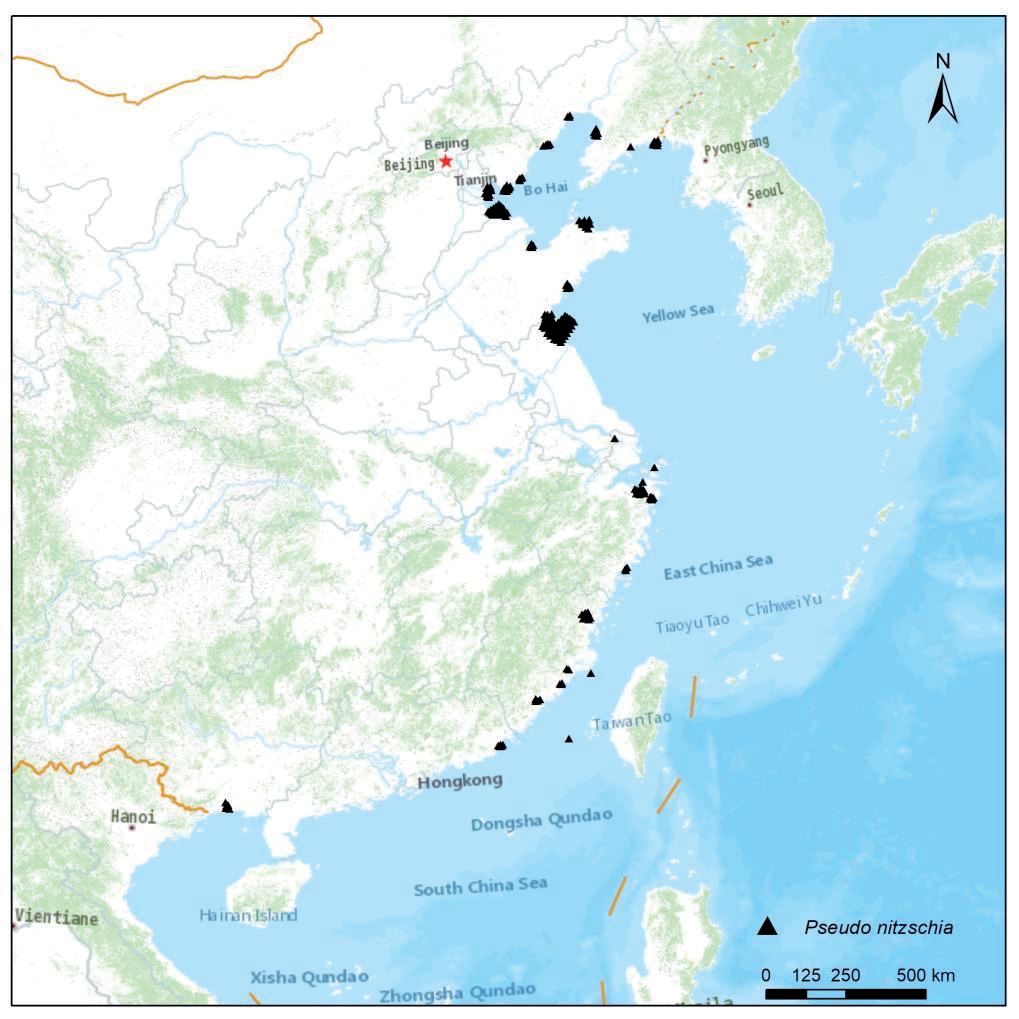
In this study, a total of 95 project data were collected from 42 ports of China’s Ministry of Transportation in eleven coastal provinces and cities, including Guangdong Province, Hebei Province, Guangxi Zhuang Autonomous Region, and Tianjin City, and then combined with the field survey data from China’s terminals in 2017, a total of 722 Nitzschiella closterium distribution points were collected. Microsoft Excel (2010) was used to remove duplicate item records. Each distribution point with the center of the computational cell grid only retained the distribution point closest to the center in each grid. Finally, 228 Nitzschiella closterium distribution points were acquired for MaxEnt modeling (Fig. 1).
Selection of Environment Variables
Environmental variables were obtained from the Global Ocean Biodispersal Modeling Environmental Database Bio-OR ICLE (ttp://bio- oracle .org). The climate data of three emission scenarios, current and future (RCP8.5, RCP4.5, RCP2.6), were downloaded respectively with a spatial resolution of 5 arcmin (about 9.2 km) in *.asc format, and the 24 environmental parameters selected to affect the distribution of marine algae are shown in Table 1.
Handling of Environment Variables
To avoid the overfitting of the model predictions due to the covariance among the environmental factors when simulating the species distribution using the species distribution model, the environmental variables based on the variance inflation factor (VIF) were screened and tested for Person correlation in R Language, which improved the accuracy of the ecological niche model by reducing the complexity of the model. Relevant studies have shown that when the VIF value between environmental factors is less than 10, there is no multicollinearity, which is conducive to model transfer [18]. In this study, the R Language correlation program package was initially used to screen the factors with correlation less than 0.8. Then, based on preliminary screening, the factors with variance inflation factor VIF value less than 10 were selected. Using the R Language correlation code to carry out the Person correlation test, the factors with correlation coefficients less than 0.8 were retained. In contrast, only the factors with ecological significance were more important retained for those with correlation coefficients greater than 0.8 [19]. Finally, Current.Velocity.Lt.min (Bio2), Current. Velocity.Min (Bio5), Current.Velocity.Range (Bio6), Ice.thickness.Mean (Bio10), Salinity.Max (Bio15), Salinity.Range (Bio18), Temperature.Lt.max (Bio19), Temperature. Mean (Bio22), and Temperature. Range (Bio24) was used to build the final model.
Modeling Species Distributions
The data from 228 distribution samples and 9 environmental factors were imported into the MaxEnt model and modeled using MaxEnt 3.4.1 software. Seventy-five percent of the sample points were randomly selected as the training dataset for modeling, and the remaining 25% of the distribution sample points were used as the test dataset to validate the model. Set 10 repetitions, choose Bootstrap for the repetition type, and output the distribution values in Logistic form. In the environmental parameter settings, Jackknife was turned on to evaluate the weight of each environmental factor. The dominant environmental factor was determined by combining the percentage contribution of each environmental factor and the replacement importance value.
Table 1.
Marine hydrological environmental variables.
The knife-cut method is a highly reliable method to evaluate the model, which can accurately analyze the contribution of environmental factors and evaluate the accuracy of the model by using the AUC value of the area under the ROC curve of the work characteristics of the subjects. The range of AUC value is 0.5~1.0. The more significant AUC value means the more accurate prediction. An AUC value of 0.5~0.7 indicates poor prediction, 0.8~0.9 indicates good prediction, and 0.9~1.0 indicates perfect prediction [18-19].
Optimization Models
Referring to Robert Muscarella’s latest optimization method, the study area was divided into 4 bins by using the Checkerboard2 method, a masked geostructuring method that better adjusts the model regularization level. The MaxEnt model regularization level contains two parameters, modulation multiplicity (RM) and feature combination (FC), which are optimized by visiting the ENMeval packet in the R Language. The MaxEnt model provides 5 types of features, namely linear features (L), quadratic features (Q), fragmentation features (H), product feature s (P), and thresholding features (T). In this study, the default parameters of MaxEnt software were RM = 1 and FC = LQHPT.To optimize the MaxEnt model, RM was set to 0.5~4, increasing by 0.5 each time for a total of 8 modulation octaves. Six combinations containing one or more features (L; L and Q; H, L, Q, and H; L, Q, H and P; L, Q, H, P, and T) were used, resulting in 48 parameter combinations based on permutation calculations. The ENMeval packet will test the above 48 parameter combinations and the model’s complexity based on the delta. AICc value and 10% test omission rate, the lower these two values, the more accurate the model prediction results [20].
Classification of Potentially Suitable Areas
Referring to the previous method [21], ArcGis 10.4.1 software was used to classify and visualize the suitability of Nitzschiella closterium. Based on the MaxEnt model to predict the suitability threshold of Nitzschiella closterium, the habitat suitability index of Nitzschiella closterium was classified using the natural breakpoint method. The habitat suitability of Nitzschiella closterium was categorized into unsuitable area (0~0.1), low suitability area (0.1~0.29), medium suitability area (0.29~0.5), and high suitability area (0.5~1).
Results and Discussion
Model Optimization and Accuracy Evaluation
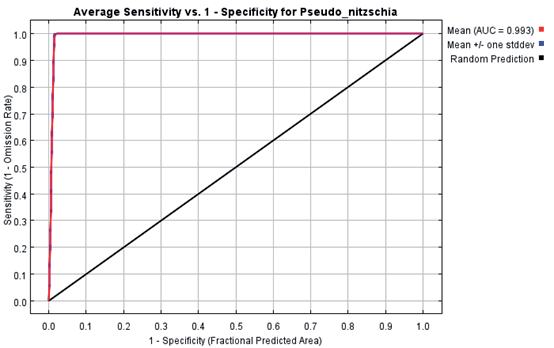
Based on 228 distribution points of Nitzschiella closterium and 9 layers of environmental variables and the AIC information criterion, the MaxEnt model was used to simulate and predict the potential distribution area of Nitzschiella closterium. Under MaxEnt default parameter settings, the modulation multiplicity RM = 1, the feature combination FC = LQHPT, and delta.AICc = 403.13. When RM = 3.5 and FC = LQH, delta.AICc = 0, the model is optimal at this time, and the value of the 10% training omission rate is lower than that of the model under the default parameters (Table 2), which is a decrease of 30.90% compared to the default values. Therefore, the modulation multiplier RM = 3.5 and the feature combination FC = LQH were selected as the final parameters of the model, and the AUC value of the simulated training under this parameter was 0.993 (Fig. 2), which indicates that the prediction results are accurate and credible.
Evaluation of Environmental Factors
The current researchers’ views on determining the number of dominant factors are inconsistent, and determining the dominant factors based on the contribution rate is the current majority view. Environmental factors that reach a certain degree are selected as dominant factors, but the degree selection is subjective, so different criteria appear. The results of the Jackknife method analysis are shown in Table 3. The top four environmental factors contributing to the potential geographic distribution of Nitzschiella closterium were Temperature.Range (Bio24), Salinity.Range (Bio18), Temperature.Mean (Bio22 and Salinity.Max (Bio15). The total contribution of these four environmental factors was 96.4%, and the importance value of these four environmental factors was 96.3%, so these four environmental factors were taken as the dominant environmental factor combinations.
Table 2.
Evaluation results of MaxEnt model under different parameter settings.
| Model evaluation | Feature combination | Regularization multiplier | Value of delta akaike information criterion corrected | 10% training omission rate |
|---|---|---|---|---|
| Default | LQHPT | 1 | 403.13 | 0.170 24 |
| Optimized | LQH | 3.5 | 0 | 0.117 64 |
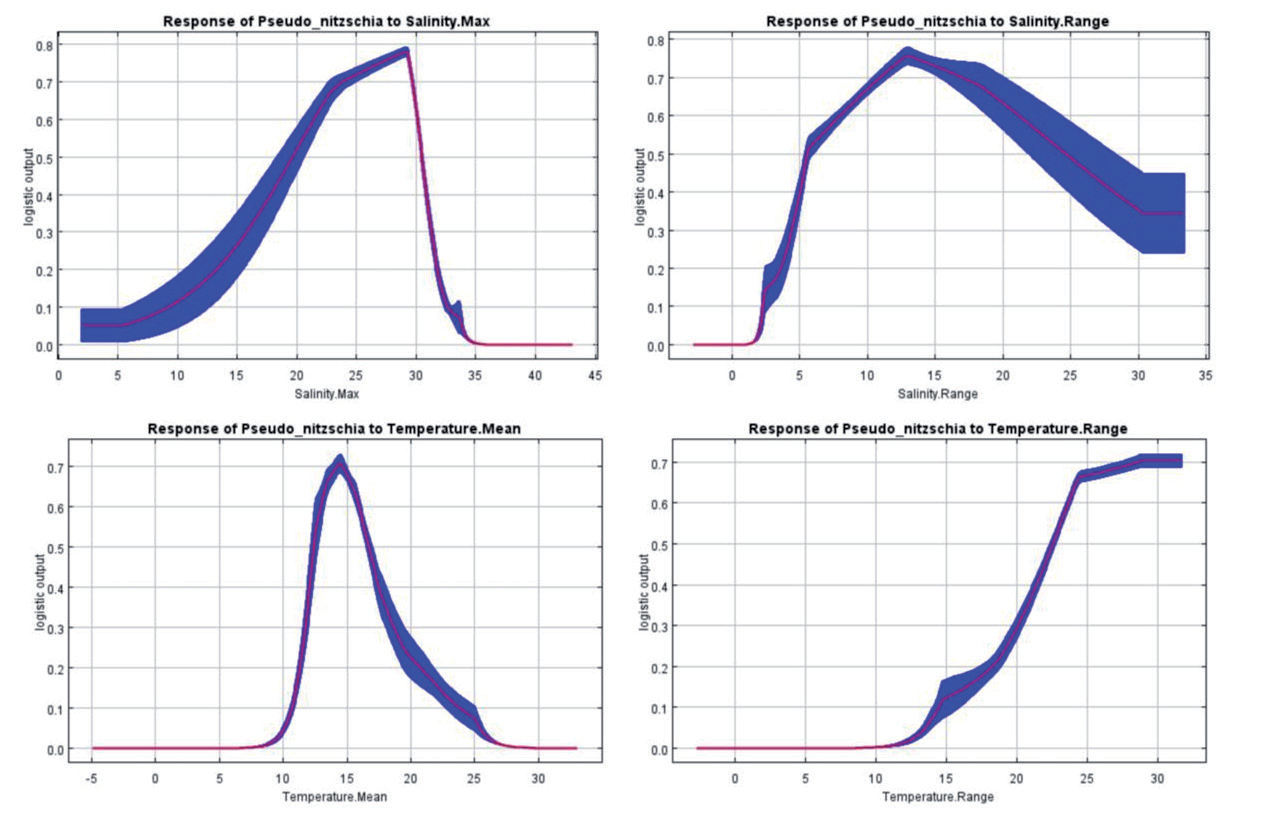
The response curves of species survival probability to environmental factors in the results of MaxEnt model runs are often used to determine the relationship between the existence probability of a species and environmental factors (Fig. 3). In this study, concerning the previous study [11], when the existence probability of Nitzschiella closterium is greater than the threshold of highly suitable habitat, its corresponding environmental factor interval is the suitable interval for the survival of Nitzschiella closterium. The relationship between the change in the distribution probability of Nitzschiella closterium and the environmental factors is also consistent with its growth habit as can be seen from Fig. 3, while further illustrating the accuracy of the predictions.
Water temperature can affect the physiological processes of algal plants and determine the distribution status of algal plants in different vertical depths and large-scale geographic scales. The effects on the physiological roles of algae are mainly manifested by affecting enzymatic reactions that directly interfere with the metabolic processes of algae and indirectly affecting algal proliferation by acting on the solubility of nutrients in the water [22]. Analysis of the significance of environmental variables showed that temperature is an essential factor influencing the distribution of Nitzschiella closterium. The mean annual temperature variation (bio24) range had the highest contribution and replacement importance of 81.9% and 69.1 %, respectively, during Temperature.Mean (Bio22) ranked 2nd (8%) and 4th (2.9%) in terms of replacement importance. Several other studies have also demonstrated that temperature variables are critical to the distribution of marine phytoplankton. Sun Xin et al. [23] used MaxEnt to analyze the geographic distribution of the extreme northern kelp in the Yellow Bohai Sea region of China, and the results showed that temperature was one of the most critical variables in determining its distribution. Pauly et al. [24] constructed a MaxEnt model for macroalgae. They found that temperature and light intensity were the key variables affecting their distribution by analyzing the correlation and contribution of environmental variables. Pauly et al. [25] used MaxEnt to study the global risk zoning of the harmful alga Trichosolen. They proved that the temperature and chlorophyll concentration variables were essential factors determining its distribution. Han Qiuying et al. [26] studied the relationship between macroalgae species composition, biomass, and the environment in the Bohai Sea waters, and the results showed that temperature, salinity, and PH had a significant effect on macroalgae. Zhao Yue et al. [27] investigated and studied in the Beibu Gulf sea area and showed that a significant decrease in seawater temperature occurs during red tide. The response curves showed that the average annual temperature variation interval suitable for the survival of Nitzschiella closterium was significant, indicating that Nitzschiella closterium is extremely adaptable to temperature changes. The present study showed that the distribution of Nitzschiella closterium in the Yellow Sea and East China Sea was significantly higher than that in the South China Sea and the Bohai Sea under contemporary climatic conditions, which is more in line with the above findings. According to the data published by China Marine Geography, the salinity of the Bohai Sea waters is about 30, the average salinity value of the Yellow Sea waters is about 31-32, the average salinity value of the East China Sea waters is about 31-32, and the maximum salinity value of the South China Sea is about 35. The response curves of salinity variables indicated that Nitzschiella closterium had relatively fewer suitable areas in the South China Sea, consistent with the changes in salinity.
Table 3.
Contribution and significance of environmental factors.
Evaluation of the Potential Distribution and Suitability of Nitzschiella closterium
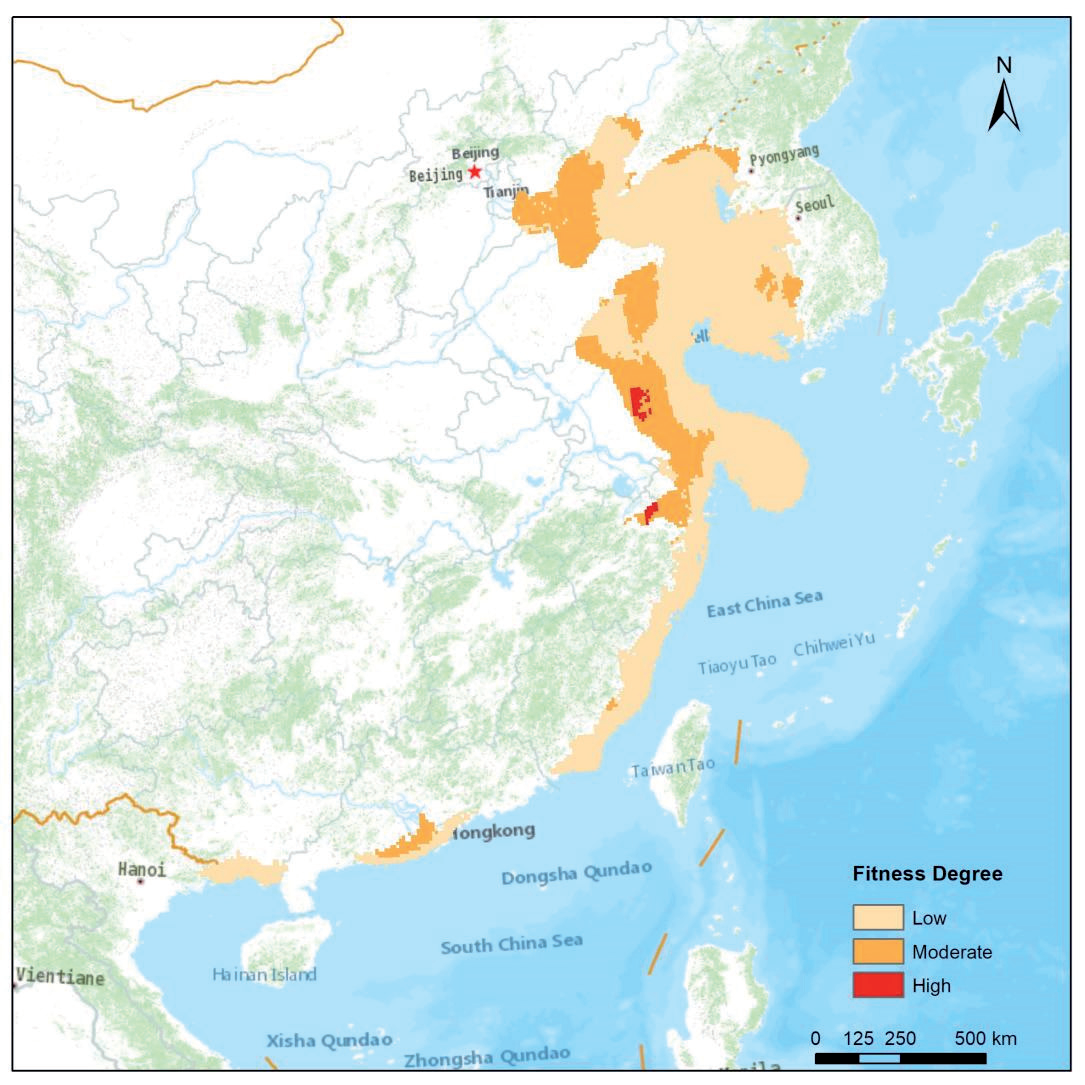
The prediction results show that the prediction model of Nitzschiella closterium’s potential fitness zone is well-fitted, and the results are shown in Fig. 4.
Fig. 4 and Table 4 reveal that the suitable habitats for Nitzschiella closterium predominantly span across the coastal regions of Liaoning, Shandong, Hebei, Jiangsu, and Zhejiang provinces, as well as Tianjin and Shanghai cities in China. The total suitable area amounts to approximately 59.56×10⁴ km2. The highly suitable area accounts for 0.74% of the total suitable area, with an area of 0.44×10⁴ km2, mainly distributed in the coastal waters of Jiangsu Province, Shanghai City, and Zhejiang Province. The medium suitable area accounted for 25.82% of the total suitable area, with an area of 15.38×10⁴ km2, mainly surrounded by the periphery of the high suitable area in a strip-shaped distribution, and part of the other part was also distributed in the coastal waters of Hebei, Shandong Provinces, and Tianjin city, in a strip-shaped distribution. The rest of the medium suitable area was distributed sporadically in the sea area of China. The low suitable area accounted for 73.44% of the total suitable area, with an area of 43.74×0.44×104 km2, which was mainly distributed in the periphery of the medium suitable area in the shape of a strip, and the remaining low suitable area was distributed along the Chinese sea area. According to the field survey of our group, Nitzschiella closterium is mainly distributed in the Bohai Sea, Yellow Sea, and East China Sea, which is consistent with the simulation results. In conclusion, the corresponding sea areas of Jiangsu, Zhejiang, and Shanghai need to pay attention to preventing and controlling Nitzschiella closterium.
The study of global climate and environmental change has been increasingly emphasized in the past decades. Many scholars have carried out studies on the habitat areas of invasive plants. For example, RU et al. explored the distribution pattern of the invasive plant Cryptomonas sp [4]; RU et al. explored the dispersal risk of the invasive alga Alexandrium [3]; Chen et al. [28] predicted the distribution area for the invasive plant Tithonia diversifolia. However, the long-distance transfer of ballast water and sediment allows aquatic organisms to spread across natural biogeographic barriers, especially algal plants. The survival of alien plants in another ecosystem and the development of dominant species can easily lead to invasive alien species [1, 3]. In this study, we analyzed the potential distribution area of Nitzschiella closterium in Chinese waters. The results showed that Nitzschiella closterium has a strong adaptive ability in Chinese offshore waters. Quarantine authorities should pay attention to the risk of Nitzschiella closterium being imported with ballast water. Do the following:
Table 4.
Area of potential habitat for Nitzschiella closterium at different times (104 km2).
(1) Strengthen scientific research, enhance ballast water monitoring technology research, and improve the monitoring capacity. Attention should be paid to identifying red tide algae species carried by ballast water, especially the use of rapid identification technology of molecular biology. Accelerate the development of the list of some common alien red tide algae in ballast water and the improvement of the morphological characterization atlas. Clarify the treatment methods for different genera of Nitzschiella closterium.
(2) The monitoring efforts for red tides should be intensified, with a clear focus on crucial detection points. Employing specific molecular markers to identify species prone to triggering red tides is recommended, facilitating rapid detection. In the protracted battle against invasive species, we have affirmed that early detection and swift response are particularly crucial, especially in controlling invasive pests. Therefore, emphasis should be placed on pivotal monitoring points to seize the optimal opportunity for controlling the invasion of Nitzschiella closterium.
(3) Refine the legal framework. China should devise a comprehensive legal system for ballast water monitoring and control that aligns with international standards. Enhanced measures should be implemented to regulate ballast water discharge from ships to prevent such biological invasions.
(4) Develop sophisticated processing techniques. The judicious management approach is paramount for effectively regulating various organisms in ballast water, including algae. However, given the intricate and unique structure of vessels, products directly applicable have not yet emerged in the market, necessitating multi-departmental collaboration for development.
Impacts of Future Climate Change on the Distribution of Nitzschiella closterium
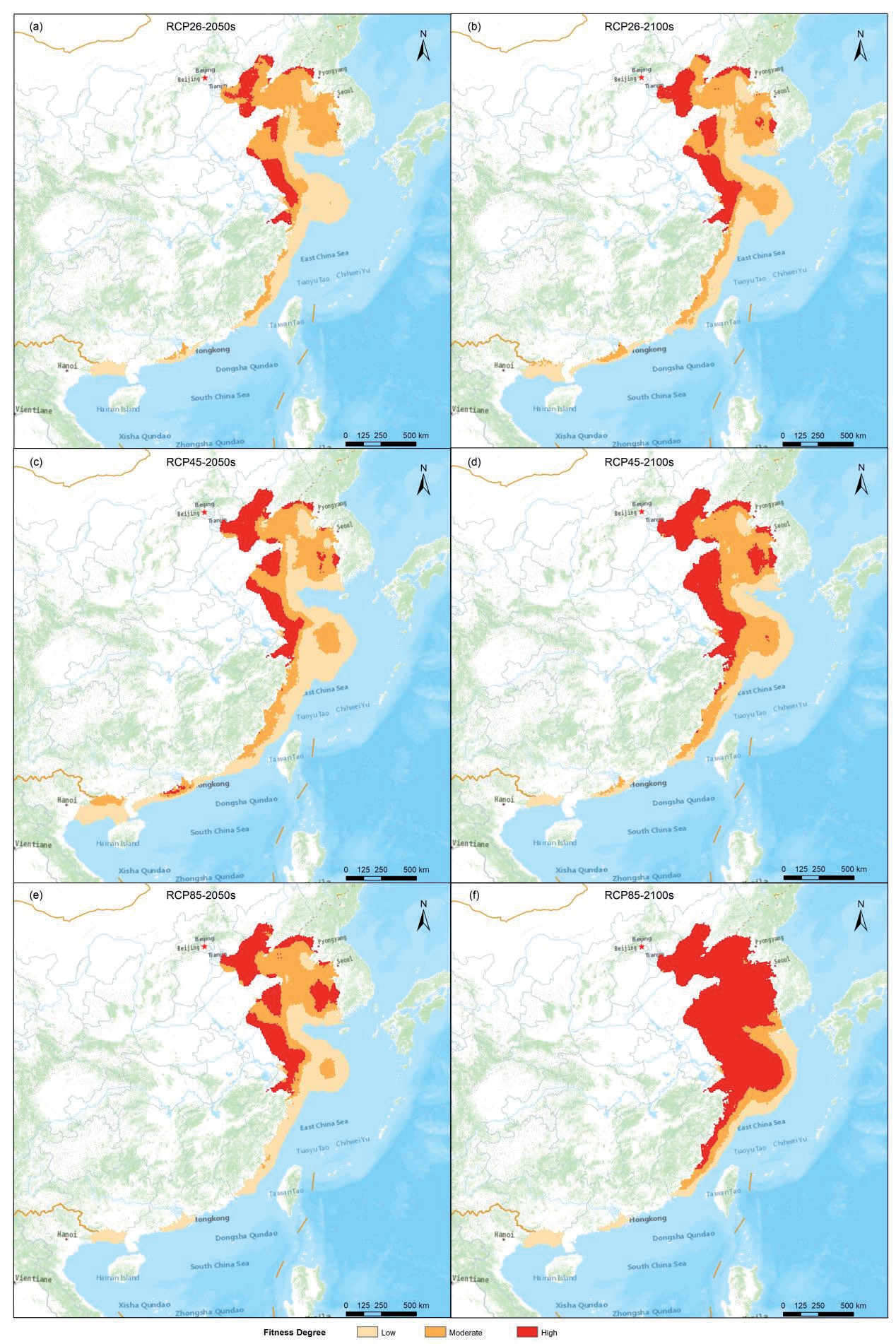
In this study, the Maxent model was used to predict the potential habitability zones of Nitzschiella closterium under three different emission scenarios (RCP2.6, RCP4.5, RCP8.5) in two time periods (2050s and 2100s) to obtain the potential habitability zones of Nitzschiella closterium under different climate change scenarios (Fig. 5) and the areas of different classes of potential habitability zones (Table 4) and the areas of different classes of potential habitability zones (Table 4). closterium under different climate change scenarios (RCP2.6, RCP4.5, RCP8.5), the areas of different classes of potentially suitable zones (Table 4), and three different emission scenarios (RCP2.6, RCP4.5, RCP8.5), the area of the total suitable zones of Nitzschiella closterium increased to a greater extent in the 2050s and 2100s, and the area of its high suitable zones increased in the 2050s and 2070s., and the most significant increase in the highly suitable area was in the 2100s.
In summary, under the background of future climate change, the total suitable area of Nitzschiella closterium in Chinese waters shows an increasing trend; the area of high and medium suitable areas also shows an increasing trend; and the area of low suitable areas shows a decreasing trend. The changes in the habitability zones at all levels are apparent, and the response to climate change is drastic, so special attention should be paid to preventing and controlling Nitzschiella closterium in the future.
Research by Thomas et al. [29] suggests that some species will face extinction in global warming, while a significant portion will experience varying degrees of growth and redistribution. Climate change is a double-edged sword regarding species growth and distribution. Evidently, under these warming conditions, Nitzschiella closterium has thrived in its growth and distribution in Chinese waters. Studies have confirmed that climate change and human activities are pivotal factors causing shifts in marine populations [4-6]. With international shipping operations, accompanying non-native marine species have imparted substantial impacts on ecosystems and biodiversity, leading to grave repercussions for local fisheries and aquaculture [24].
This study examines the distribution and alterations of Nitzschiella closterium in Chinese waters under prospective climate change scenarios. The findings indicate a notable expansion in the habitat suitability for Nitzschiella closterium as global warming intensifies, aligning with research on numerous other invasive species. Fu Liao et al. [30] modeled the distribution of the quarantine pest, Dysmicoccus neobrevipes Beaidesley, in China under future climate scenarios, revealing a substantial increase in its suitable regions by 2050. He Jia Yao et al. [31] employed MaxEnt to analyze the invasive pest Rhagoletis batava obseuriosa, predicting its habitat expansion in China under two 2050 climate scenarios. These studies underscore the urgency of heightened vigilance regarding the shifts in habitat suitability for invasive species in China due to climate change to preempt immeasurable damage and loss to our ecosystem.
Due to the inherent uncertainty of climate change, the uncertainty in the effects of climate change on the adaptive distribution of Nitzschiella closterium will increase if other conditions suitable for Nitzschiella closterium growth are considered. Given the vast population of Nitzschiella closterium, control measures should reference the distribution of potential suitable areas and consider factors such as ecosystem development and systematic geography to prevent its invasion. This poses a more significant challenge in managing the Nitzschiella closterium population in the 21st century.
Conclusion
This study focuses on the invasive algae, Nitzschiella closterium, in China, exploring its distribution responses to current and future climatic conditions. Using field survey data on algae distribution and an optimized MaxEnt model, we forecasted its potential distribution in Chinese marine areas. We identified dominant environmental factors and proposed appropriate preventive measures, offering robust support for controlling Nitzschiella closterium. Key findings include: The annual temperature range variation (bio24) stands out as the most pivotal environmental variable affecting the geographical distribution of Nitzschiella closterium. Potential distribution area in Chinese waters combined with field investigations indicate areas in Jiangsu, Zhejiang, and Shanghai requiring vigilant control against Nitzschiella closterium. Under future climate scenarios, both the total suitable area and the high suitable area for Nitzschiella closterium in Chinese marine areas display a notable increasing trend, underscoring an even more pressing need for preventive measures in the future.

