

Introduction
In recent years, global environmental problems caused by anthropogenic activities (agriculture [1-5], industry [6-9], etc.) have become more pronounced. For example, excessive use of chemical fertilizers and extensive deforestation in agricultural practices can lead to severe water pollution [10-12], the high-intensity noise caused by factory machinery and transportation has led to severe sound pollution of the atmospheric environment [13, 14], the burning of fossil fuels releases a large amount of carbon dioxide, exacerbating the phenomenon of climate warming [15-20]. These environmental pollution problems will also further lead to human health problems [21]. Therefore, in order to reduce environmental pollution, the United Nations issued the “Paris Climate Agreement” in 2016, aiming to set a long-term goal of keeping the global average temperature rise well below 2 degrees Celsius, effectively alleviating the trend of global temperature increase [22], to assess the impact of the current national self-commitments on reducing the total amount of greenhouse gas emissions, and to achieve the temperature control targets set out in the Paris Climate Agreement, in order to prevent the further deterioration of the climate issue [23].
Accompanied by the vigorous development of sports, the role of sports in daily life has become more and more important. For example, by analyzing the overall carbon footprint of campus sports events and simulating the transportation methods and mileage of spectators, it was found that the number of participants in sports activities has been gradually increasing [24]. Moreover, as the frequency of the Olympic events increases, the energy intensity of the industrial sector also rises [25]. However, at the same time, because of the development of sports, a lot of unnecessary environmental pollution problems have been caused, especially in terms of sports carbon emissions, which is a particularly significant issue. The long-distance travel of spectators [26] or the power consumption of stadiums [27] are important factors in carbon emissions. Specifically, taking the 2014 Nanjing Youth Olympic Games (NYO) as an example, since Nanjing announced its bid for the NYO, the carbon emissions in Nanjing during the period from 2010 to 2019 have gradually increased, resulting in a total increase of approximately 584.63 million tons [28]. Furthermore, active sports participants also have an impact on carbon emissions, with an average annual carbon footprint of 844 kg of carbon dioxide equivalent emissions [29]. In this regard, we cannot ignore the impact of sports’ carbon emissions on the environment. In recent years, the global climate has fallen into a warming trend, and there is a possibility of further deterioration. Thus, our study pays more attention to the impact of sports carbon emissions on climate change, and we hope to summarize the current research dynamics of scholars in this field through the existing studies, as well as look for the shortcomings in the research. The impact of carbon emissions from sports on climate change is mainly concentrated on transportation-related aspects. This includes carbon emissions generated by individuals or teams when they travel to participate in competitions or when spectators travel to the venues. Additionally, the increased carbon emissions caused by the construction, operation, and maintenance of sports venues, as well as the waste produced by spectators, have exacerbated the occurrence of climate change [30].
Compared with previous studies and reviews, this study has a unique research perspective and innovation. First, this study adopts a bibliometric approach [31, 32], which is able to visualize the research dynamics and development trends in the field of sport event environment research through quantitative analysis and visualization. This method of analysis not only helps readers easily understand the current research focus in the related field but also clearly reveals the key information in the field. Secondly, this study is based on the analysis of existing literature data from authoritative journals such as SSCI, A&HCI, and SCIE, which ensures the objectivity and scientificity of the research results. Through this method, we avoided the influence of subjectivity and provided more reliable data support for research in related fields.
In order to make our study more intuitive and convenient in the process of statistical analysis, we chose Citespace software to further explore the research on the environment of sports events. Citespace is a commonly used software in bibliometrics that integrates data analysis and visualization functions and can help us present the results of our study in a more objective way. By using Citespace, we were able to clearly define the start and end time of the study, so that we could easily grasp the focus of each phase of the study. This not only improves the efficiency of the study but also effectively reduces the workload. In addition, Citespace’s visualization tools help us identify key trends and hot issues in the research field, providing valuable references and guidance for subsequent research.
Materials and Methods
Data Sources and Selection Process
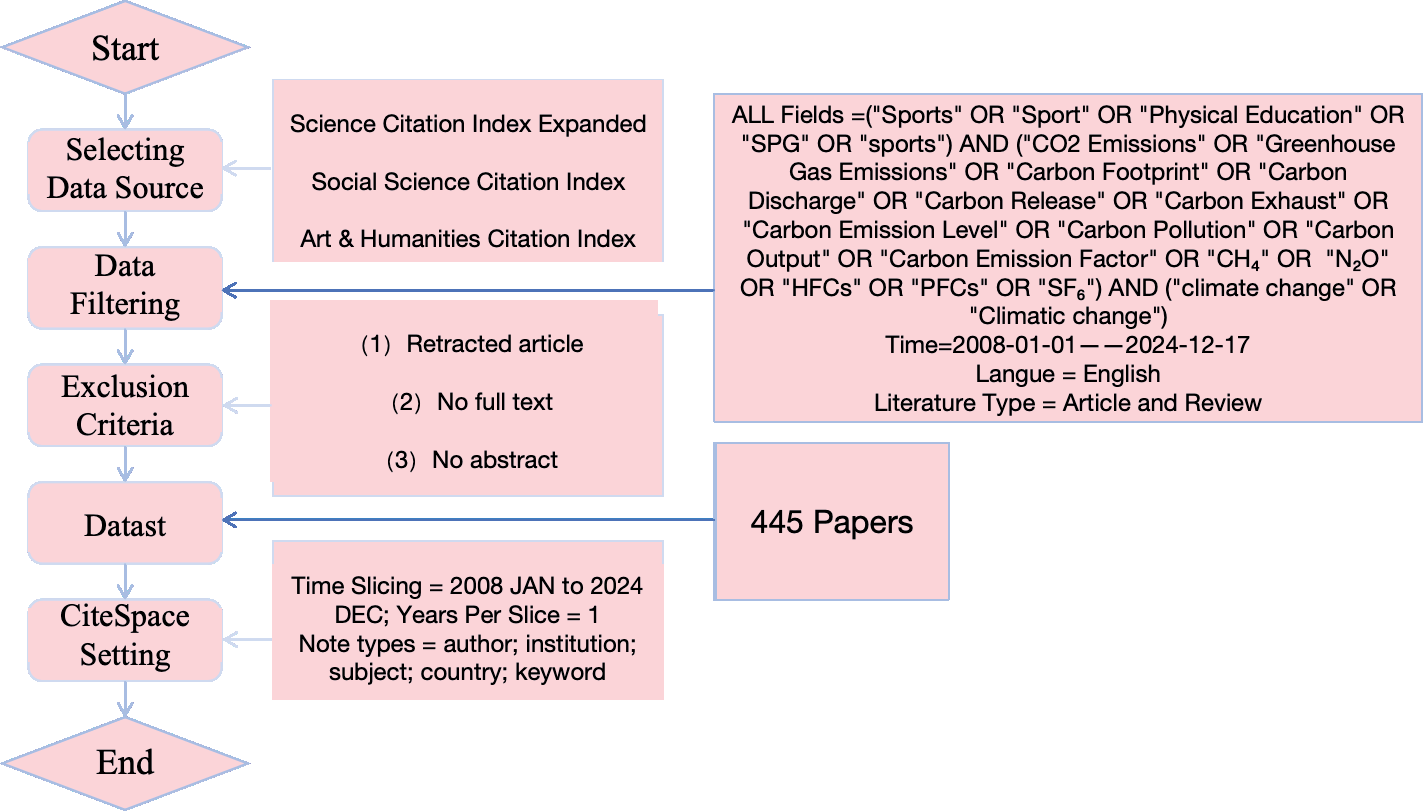
We selected documents from the Social Science Citation Index (SSCI), Arts and Humanities Citation Index (A&HCI), and Science Citation Index Expanded (SCIE) in the Web of Science Core Collection (WOS-CC) as our data source. The reasons for our choice are as follows: (1) The articles retrieved from the three databases are peer-reviewed and have received significant international attention. (2) The three databases provide detailed information about the articles, including title, keywords, abstract, authors, institution, country, journal, and references, which enabled us to perform a more detailed analysis.
During the data retrieval process (Fig. 1) (the retrieval date was December 17, 2024), the search was conducted by selecting “All Fields” in WOS-CC for the literature search. During the search, we determined the final search formula using a Boolean search formula in order to ensure that as many relevant documents as possible were included. The final search formula was: (“Sports” OR “Sport” OR “Physical Education” OR “SPG” OR “sports”) AND (“CO2 Emissions” OR “Greenhouse Gas Emissions” OR “Carbon Footprint” OR “Carbon Discharge” OR “Carbon Release” OR “Carbon Exhaust” OR “Carbon Emission Level” OR “Carbon Pollution” OR “Carbon Output” OR “Carbon Emission Factor” OR “CH₄” OR “N₂O” OR “HFCs” OR “PFCs” OR “SF₆”) AND (“climate change” OR “Climatic change”). The search deadline was 17/12/2024. We limited the type of literature to articles and reviews, and included only literature in English. There was no fixed restriction on the specific topics of the articles, which included all possible studies, such as those dealing with emissions of CH₄, N₂O, HFCs, PFCs, SF₆, and other related gases. After deleting a portion of the literature after reading the titles and abstracts of the initially included literature, further screening criteria were set: literature with (1) a retracted article, (2) No full text, (3) No abstract, were excluded.
Analytical Methods and Methodology Process
There are many analysis software programs for conducting visualization studies, and we chose the Citespace software in this study for the following reasons: (1) It can be used for directness analysis based on the included literature. (2) The scope of use is wider, and will not be limited to the research content and research object. (3) The application method is simpler and easier for scholars to use. The version used in this study is 6.4.1.
Finally, 445 target documents were included.
(2) Set the parameters in Time Slicing from January 2008 to December 2024, with Years Per Slice = 1.
(3) In Node Types, parameters include author, institution, subject, country, and keyword.
Results and Discussion
Number of Publications by Year
Table 1 shows the number of annual publications on carbon emissions and climate change in sport, and it can be seen that there is an overall increasing trend in the number of publications on carbon emissions and climate change in sport from 2008 to 2024, with the number of publications reaching a peak in 2021 (61, or 13.70% of the total number). Although there has been a decrease in the number of annual publications from 2021 to the present, there has been a significant increase from 2008, when there was only one annual publication. The number of publications in the last five years is 232 (2020-2024, 52.13% of the total), which shows that more and more scholars have paid attention to the research related to carbon emissions and climate change in sports in recent years. With the rapid form of climate change, we suggest that scholars from all countries should study sports carbon emissions and climate change research in depth, explore its value, and apply it widely.
Author Collaboration
Table 2 visualizes the top ten authors in terms of the number of collaborations in the study of carbon emissions and climate change in sports. The top three authors in terms of number of collaborations are Hasegawa, Tomoko, Fujimori, Shinichiro, and Managi, Shunsuke (11, 11, and 9 collaborations, respectively). We found that there are more authors studying carbon emissions and climate change in sports, but the collaboration between authors is not strong. The centrality of the top ten authors’ collaborations remains at a low level (centrality of 0.01). We found that the authors’ research directions are slightly different, but all of them fit with the field of environmental science. For example, Hasegawa, Tomoko focused on more land use mitigation studies of climate change [33-35], while Managi, Shunsuke’s study focused on the impacts of climate change on various fields as well as studies related to carbon emissions [36-38].
Mechanism Co-Occurrence
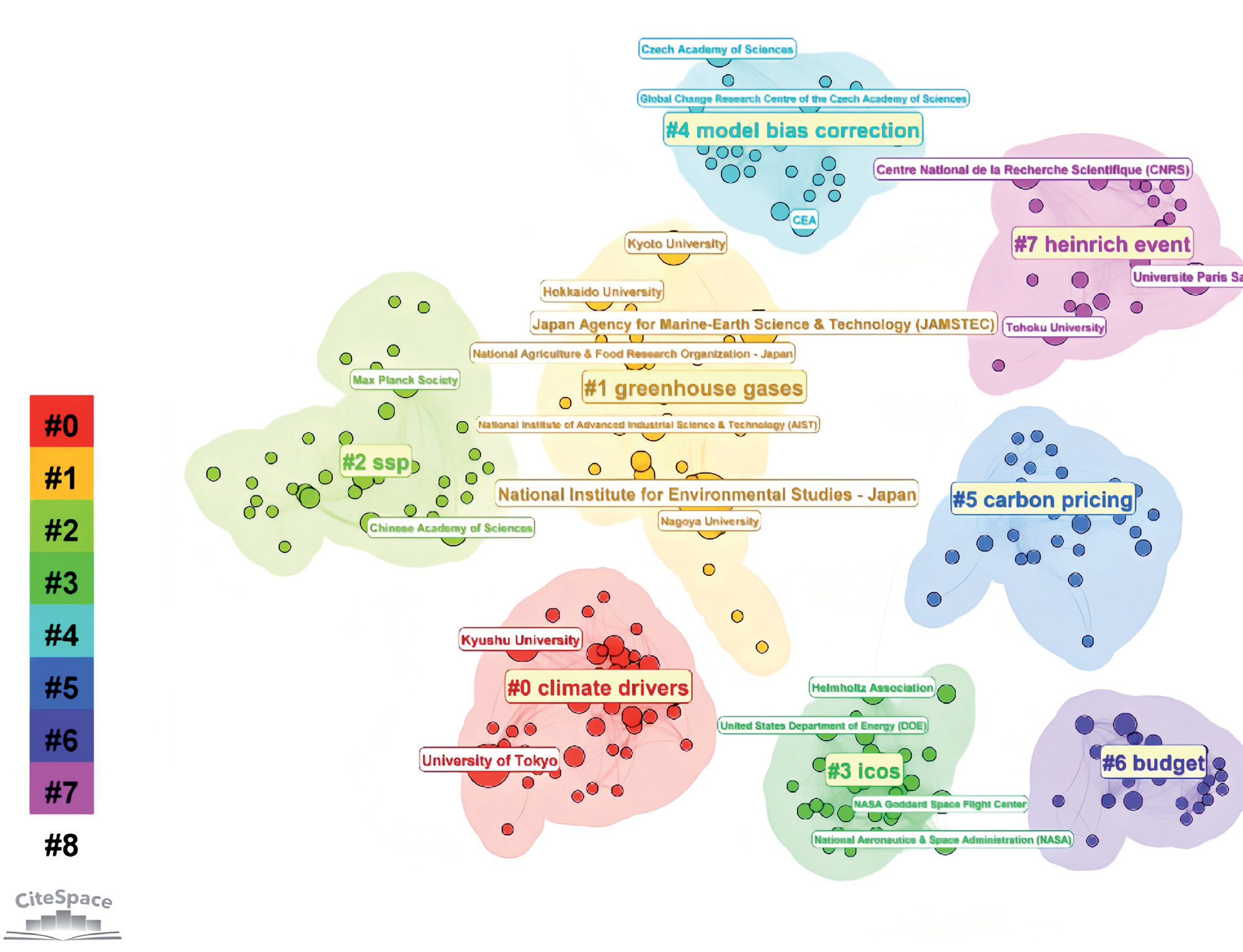
Fig. 2 shows the clustered co-occurrence of institutions in the literature related to carbon emissions and climate change in sports. It is worth noting that the top five institutions in the institutional cohort are all from Japan. Specifically, the National Institute for Environmental Studies - Japan published 99 papers, the University of Tokyo published 57 papers, Japan Agency for Marine-Earth Science & Technology (JAMSTEC) published 48 papers, Kyushu University published 38 papers, and Kyoto University published 33 papers. Japan, as a country with frequent earthquakes and volcanoes, has established a series of policies and laws for environmental protection, and environmental and other related research occupies a very important position. At the same time, we found that different organizations have different tendencies in studying carbon emissions and climate change in sports. For example, in “#0 climate drivers”, Kyushu University and the University of Tokyo published the largest number of papers, with Kyushu University focusing on the drivers of Arctic climate change and exploring the drivers of household carbon footprints.
Regional Co-Occurrence
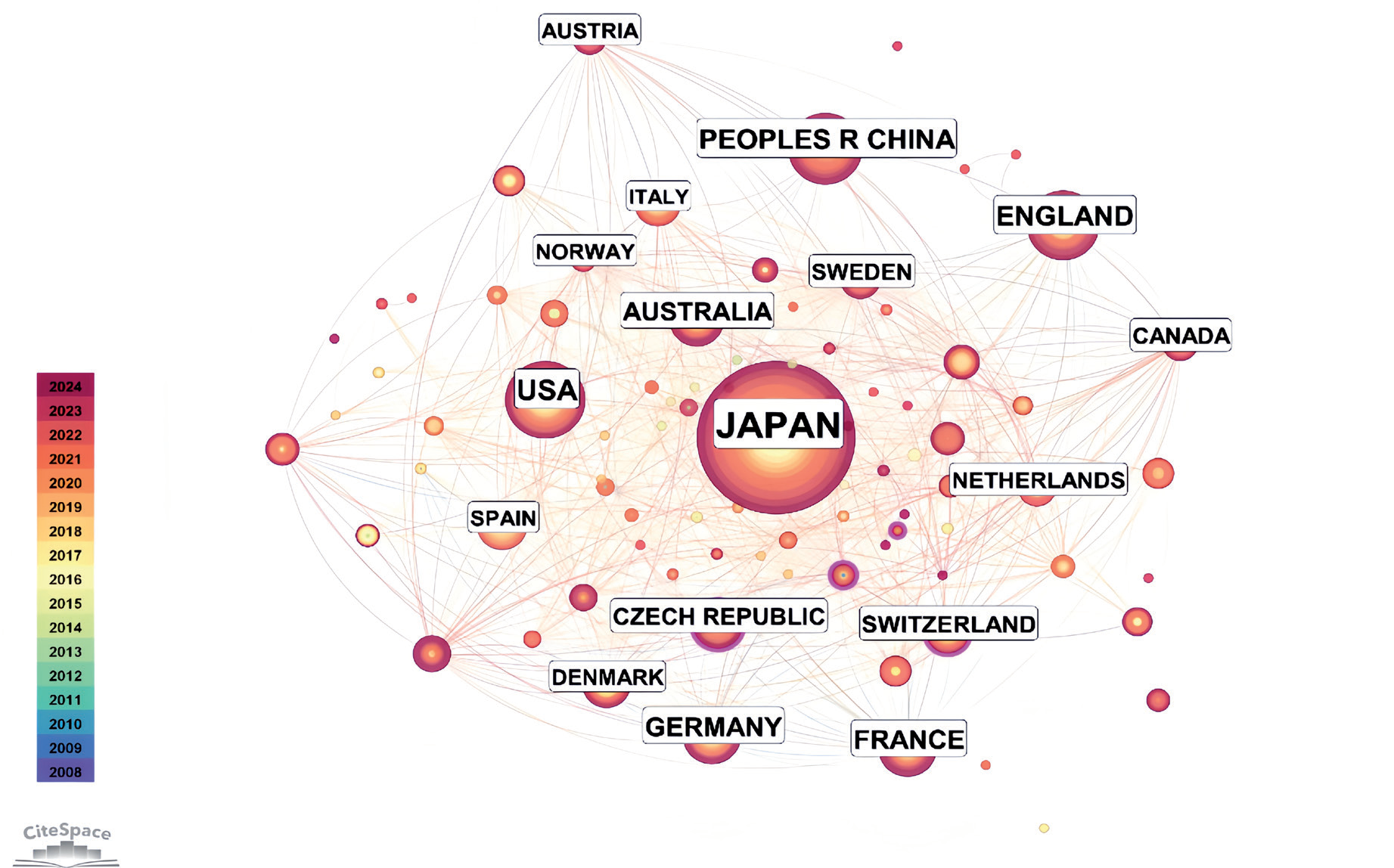
Fig. 3 shows a visualization of the regional cooperation network for research related to carbon emissions and climate change in sport, and the image only shows regions that have published ≥20 publications on research related to carbon emissions and climate change in sport. The node size reflects the number of collaborations in the region, and the connectivity of the nodes reflects the trend and direction of the collaborations in the region. We can find that the number of nodes of regional cooperation in researching sport carbon emissions and climate change is 87, and the number of connecting lines reaches 701 (N = 87, E = 701). It can be seen that multiple regions carry out research related to studying sports carbon emissions and climate change, and there is close cooperation between regions. In addition, we can visualize several prominent nodes, specifically, Japan occupies the first place with 306 collaborations in terms of the number of articles, USA has 86 collaborations, and China follows with 76 articles.
Table 2.
Author cooperation.
Subject Co-Occurrence
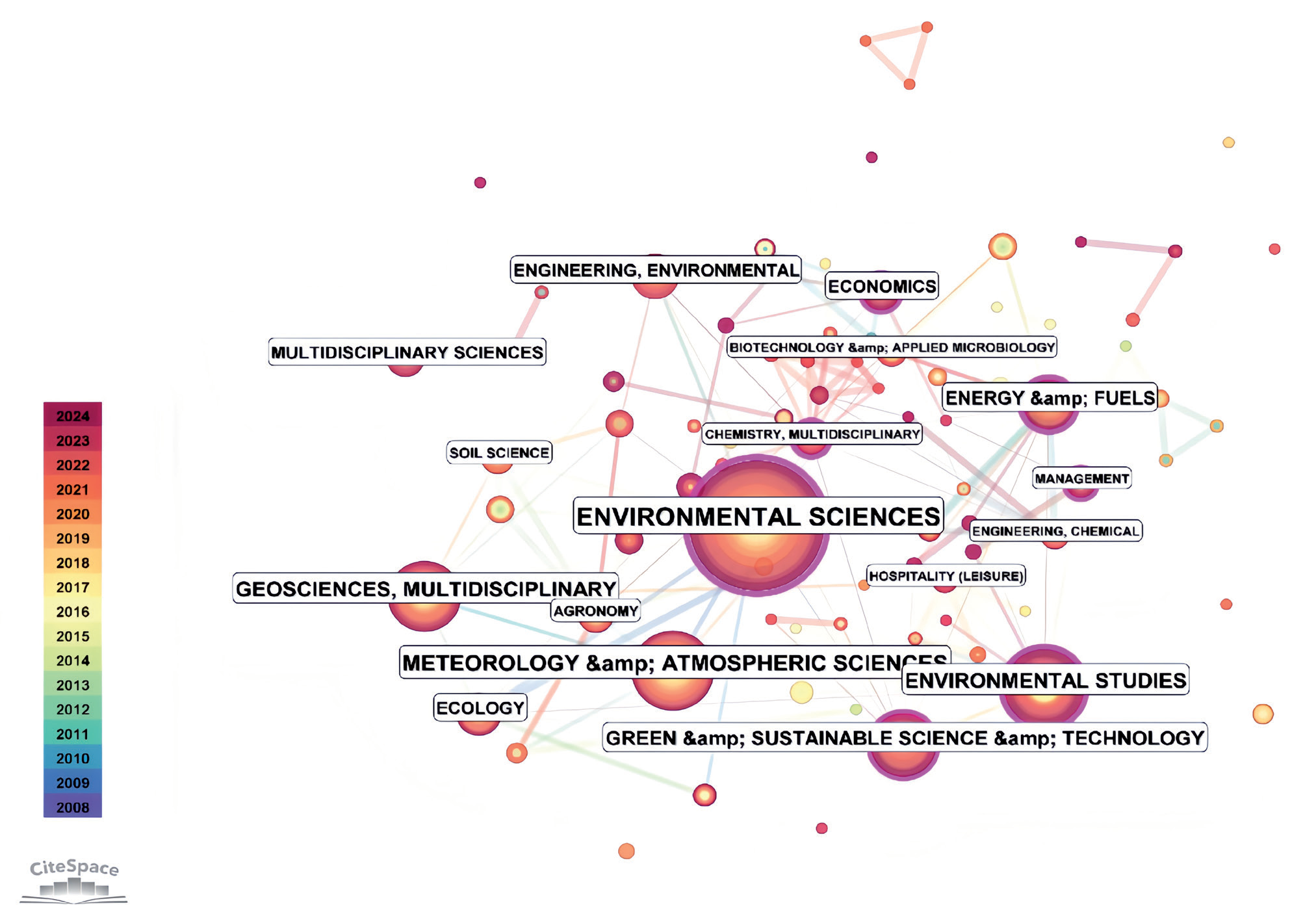
Fig. 4 shows the co-occurrence of disciplinary categories on the publication of sports carbon emissions and climate change-related literature. The node size and color represent the frequency and publication time of literature related to sports carbon emission and climate change published by this discipline. We found that most of the literature on sports carbon emissions and climate change is related to existing environmental issues and measures. The largest node size can be found in Environmental Science. Specifically, the literature on sports carbon emissions and climate change in Environmental Science reached 173, accounting for 38.87% of the total. Seventy-three papers related to Meteorology and Atmospheric Sciences were published, accounting for 16.40% of the total, and 55 papers related to Environmental Science were published, accounting for 12.35% of the total. We believe that sports carbon emissions and climate change involve various disciplines, but from the co-occurrence map, we still prefer Environmental Science.
Keyword Timeline
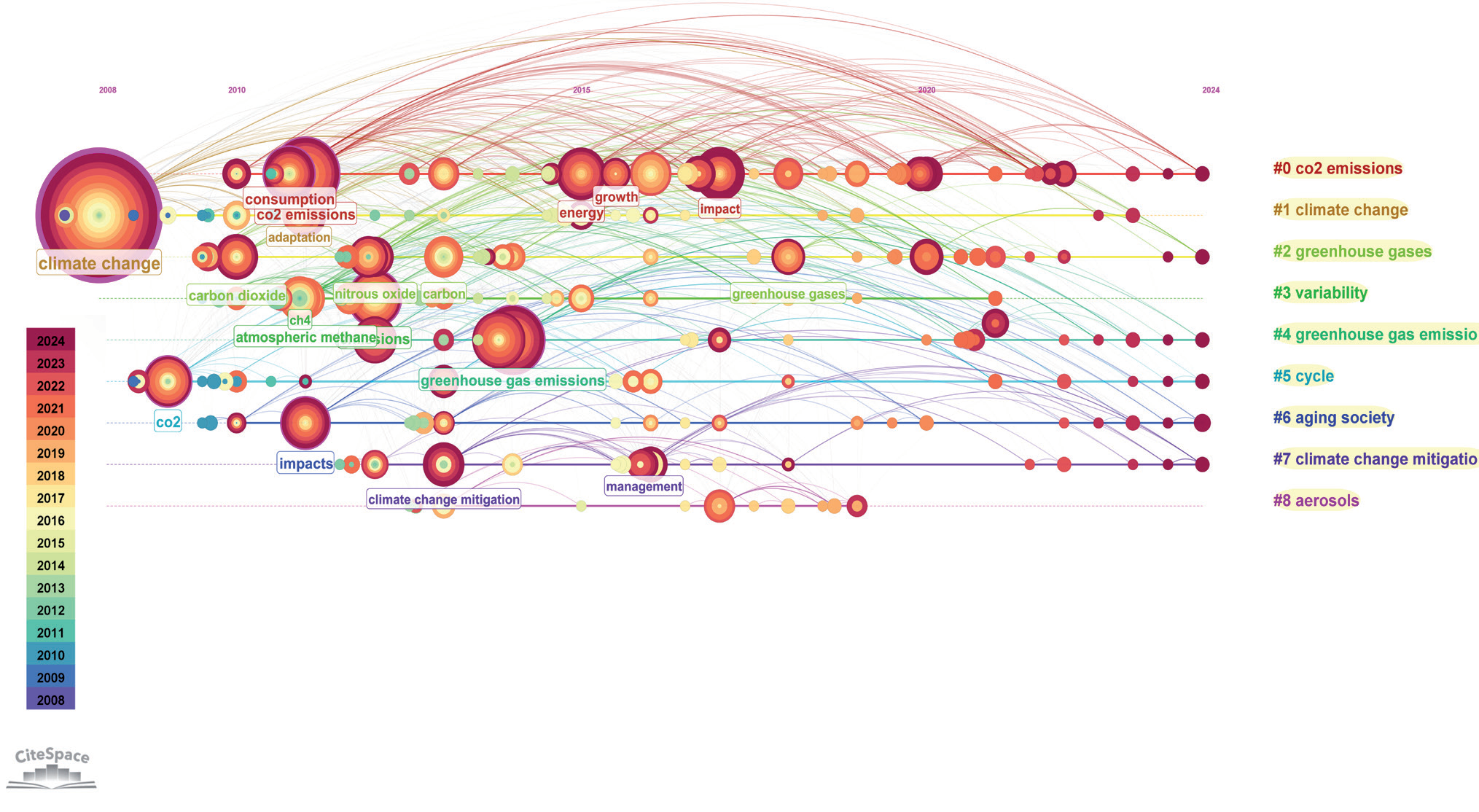
Fig. 5 shows a cluster timeline graph for keywords. We find that studies in different clusters have different levels of importance and vary in size and number of nodes. For example, it can be intuitively found that the node climate change is the most prominent, the longest duration and dense cluster is the cluster “#0 CO2 emissions” (2008-2024), which has a dense connecting line and a prominent node, indicating that this subject occupies a major position in the carbon emissions and climate change in sports. major position. Specifically, CO2 emissions, impact, consumption, and growth (frequencies of 50, 30, 27, and 26, respectively). Scholars have paid early attention to the research related to sports carbon emissions and climate change, and have proposed a series of measures, mitigation, and table measures.
Keyword Emergence Analysis
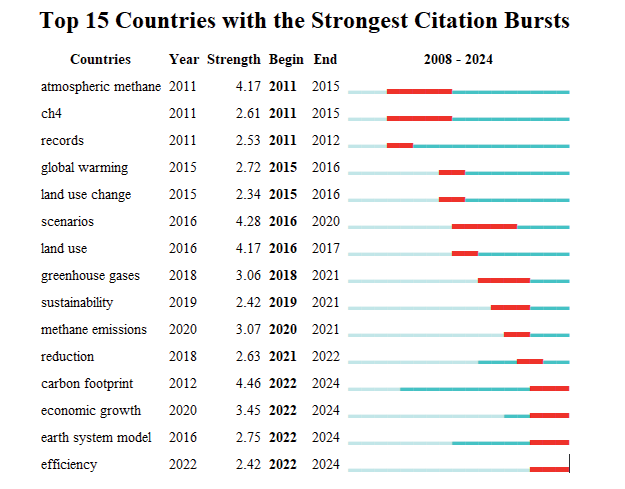
Fig. 6 highlights the emergence of the top 15 keywords of sports carbon emissions and climate change research, showing current research hotspots and emerging trends. It can be found that the start time of atmospheric methane and CH4 is the same as the second place of the end time, but the intensity of atmospheric methane is as high as 4.17. Keywords with the highest emergent intensity include “carbon footprint” (4.46), “scenarios” (4.28), “atmospheric methane” (4.17), and “land use” (3.09). It is worth mentioning that the keywords “carbon footprint”, “economic growth”, “earth system model”, and “efficiency” all emerged from 2022, and continue to be the research hotspots of sports carbon emission and climate change.
Conclusions
Main Findings of this Study
This study focuses on analyzing the current research status and evolutionary trends of sports carbon emissions and climate change through Citespace to provide a bibliometric perspective for systematically organizing the relationship between sports carbon emissions and climate change. During the research process, we mainly found the following. (1) Since 2008, the number of related research articles has been on the rise, especially in the last five years. (2) The National Institute for Environmental Studies - Japan has the largest number of publications in the field, up to 99 documents. This may be related to the environmental reasons in the Japanese region. (3) Japan (306) has the largest number of publications in this field, followed by the USA (86) and China (76). (4) In terms of disciplines, the main focus is on Environmental Science, which shows that there is relatively little research in the field of physical education and sports, and that environmental and atmospheric sciences are more concerned with this topic.
Future Research Directions
Based on the topic of carbon emission and climate change in sports, we propose future research suggestions and views on the current development, which will provide some theoretical references for future researchers.
(1) Interdisciplinary cooperation: With the deepening of the research on carbon emission and climate change in sports, more and more disciplines will be accommodated. Currently, the main focus on this topic is still dominated by Environmental Science, which lacks the participation of other disciplines such as sports science, economics, and management. We believe that the research theme should not be limited to Environmental Science, but should be combined with multidisciplinary research methods to make the research more diversified.
(2) Complexity of research themes: Through reading the included literature, we found that the current research themes of carbon emission and climate change in sports are gradually becoming more comprehensive, and the research methods involved are also more diversified. There are also research methods in economics, management, and even sociology. Qualitative and quantitative research is also included.
Contributions and Innovations
This study contributes to the overall grasp of the research on topics related to carbon emissions and climate change in sports, and has some innovations in the following aspects. (1) Embodied in literature mining. Our study selects the literature published in authoritative journals such as SSCI, SCI, and A&HCI as the main research object. To ensure the objectivity and science of the research content. (2) Embodied in the research method. Our study provides a new perspective for related research through the method of bibliometrics. This method can reveal the research trends in the field more intuitively, help readers better understand the current research dynamics, and provide a more comprehensive perspective for future research.
Limitations of this Study
There are some limitations to this study. (1) The time span of the study data only includes journals after 2008, which means that we did not include all valuable literature. (2) Our study only includes English publications. Publications in other languages, such as Japanese and Chinese, were ignored. In particular, as Japan is a major research country in this field, there are bound to be topics in this field that are worth studying in depth.
To address the above shortcomings. Our future research will be accomplished in the following ways.
(2) Expanding publications in other languages as much as possible. In order to improve the systematicity and completeness of the research.

