

Introduction
“Black swan” events such as the British referendum to withdraw from the European Union, the coronavirus epidemic, and the conflict between Russia and Ukraine have exacerbated the uncertainty of global economic policies; my country’s economy is in a period of shifting economic growth, structural adjustment pains, and early stimulus policies. The state of “three-phase superposition” occurs intensively at the same time during the digestion period. As an economic format in the new era, the digital economy has penetrated into the development of all walks of life. With its advantages of unlimited derivatives, it can alleviate the shortage of environmental resources and promote the improvement of economic structure. It is a powerful engine for China’s economic development. The world economy is witnessing the rapid digitization of the production, trade, and consumption of goods and services across the globe [1]. From a global perspective, the scale of the global digital economy will reach US$32.6 trillion in 2020, accounting for 43.7% of GDP. From a domestic perspective, the scale of my country’s digital economy has reached US$5.4 trillion, accounting for 38.6% of GDP, ranking second in the world; with a year-on-year increase of 9.6%, the growth rate ranks first in the world.
The environmental issues are causing serious health concerns for humans and affecting the economic growth of countries. Similarly, the economic growth of countries is also becoming the cause of environmental pollution [2-3]. Due to the severe deterioration of the environment, and the uncertainty of environmental policies, economic growth is impacted. It is affecting all income groups, elevating the stress on countries to take effective control measures. This issue is significantly considerable for the countries to develop as the Environmental Kuznets curve hypothesis showed a significant decline in economic growth with the environmental uncertainties [4].
There is a prominent increase in environmental uncertainty especially with the economic growth which is causing resource depletion, a polluted environment, and higher consumption of energy. The controlled environmental uncertainty in the form of a green environment is a factor of digital economic growth i.e., technological innovations. The operational performance is also improved through these green technological innovations. The Porter hypothesis also supports the idea that a win-win situation is created by imposing strict regulations on the environment and dealing with environmental uncertainty [5].
The outstanding feature of the development of the digital economy is that practice is ahead of policy, and policy is ahead of theory [6] my country’s macroeconomy is showing a trend of “moving from the real to the virtual”, and the development model of the digital economy presents the characteristics of a virtual economy with financial deepening. Studies at home and abroad have shown that the rise of economic policy uncertainty significantly inhibits investment in the real economy. Will economic policy uncertainty also affect the development of the digital economy that presents the characteristics of a virtual economy? On this basis, the relationship between policy changes and the digital economy has aroused extensive discussion in the academic community.
Although the academic community has extensively studied the impact of industrial policy on economic development, few scholars have studied the impact of economic policy uncertainty on the development of the digital economy, and the impact of economic policy changes has been ignored. Moreover, the studies have not yet discussed in detail the impact of environmental policy uncertainties on the digital economy specifically in the worldwide context. This study for the first time raises the issue that has remarkable importance for countries’ growth and progress. Therefore, based on the panel data of 30 provinces in China from 2011 to 2020, this paper incorporates Baker’s “China Economic Policy Uncertainty Index” into the bilateral stochastic frontier model to explore the bilateral impact of economic and environmental policy uncertainty on the development of the digital economy. On the basis of the existing research, the contributions of this paper are as follows (1) Analysis of the impact mechanism of economic and environmental policy uncertainty on the development of the digital economy (2) Decomposition of the positive, negative, and net effects of economic and environmental policy uncertainty on the development of the digital economy. (3) Analyze the spatial and temporal distribution characteristics of the impact of economic and environmental policy uncertainty on the digital economy.
Compared with the previous research, the innovative contributions of this paper are as follows: (1) This paper chooses the entropy method to measure the digital economic indicators to make up for the possible bias defects of the single indicator and related variable substitution method. (2) This paper has identified the environmental policy uncertainties, and their importance and in an innovative way also investigated their impact on the digital economy. The changes that are needed in the digital infrastructure as well as the environmental concerns are widely researched.
(3) This paper incorporates the economic and environmental policy uncertainty index into the bilateral stochastic frontier model, studies its impact on the digital economy, and enriches the relevant theories. The rest of this paper is as follows: the second part is a literature review and research hypothesis, the third part is model construction and variable selection, the fourth part is empirical results analysis, the fifth part is a robustness test, and finally the conclusion.
Literature Review and Research Hypothesis
In fact, many scholars have studied its impact on macroeconomics from the perspective of political instability. Aisen [6] argues that political instability may shorten policymakers’ horizons, leading to more frequent policy shifts, causing volatility and thus negatively affecting the macroeconomy. Baker [7] provides an Economic Policy Uncertainty Index consisting of three components that quantify newspaper coverage of policy-related economic uncertainty, the number of expiring federal tax code provisions, and disagreement among economic forecasters, used to measure economic policy uncertainty. Huang [8] constructed a new monthly index of China’s economic policy uncertainty using information from several newspapers. Look at the impact of economic policy uncertainty from a micro perspective [9]. Zheng et al., [10] show that EPU leads enterprises to significantly reduce inventory holdings, and this effect is particularly evident in non-state-owned enterprises. Xu et al., [11] showed that when economic instability is high, firms engaged in R&D are most affected by restrictive governance policies. Looking at the impact of economic policy uncertainty from a macro perspective, [12] found in his research on the economies of EU countries that economic policy uncertainty not only leads to a higher probability of economic recession but also a longer recession. PHAN DH [13] showed that EPU has a significant negative impact on financial stability. Balcilar [14] showed a non-linear relationship between EPU differences and exchange rate fluctuations. Sin [15] studied the economic fundamentals and economic policy uncertainty in Mainland China and their impact on Taiwan and Hong Kong. When economic policy uncertainty increases, the impact on mainland China is only short-term. Moreover, the short-run impact does not affect output in Taiwan and Hong Kong. Regardless of whether it is from a micro perspective or a macro perspective, there is no consensus on the impact of economic policy uncertainty on the economy. Existing studies have discussed the impact of policies on the digital economy, and the digitalization of the economy has created new conditions for the formation and implementation of industrial policies. When formulating modern policies, it is necessary to consider the specifics of the digitization of economic processes and relationships. [16] studied the impact of smart city planning policies on the development of the digital economy, and the results showed that smart city planning policies brought huge economic benefits. Атурин, after analyzing the avenues of digital transformation, identified areas of high uncertainty: job market, data control, security, environment, etc. Scholars such as [17] study the relationship between a specific policy or uncertainty and the digital economy.
Environmental policies are necessary in order to ensure sustainability, but these policies are uncertain, including inadequate governance and imperfect systems. For the growth of the economy, a country’s sustainable development is essential and needs to rectify the uncoordinated, and unbalanced environmental policies. Moreover, scholars such as Teng et al., [18] debated the intricate interplay of environmental policies, the digital economy, and its development. There is a negative as well as positive association between environmental sustainability and the digitization of the economy. Environmental policy uncertainty (EPU) is common throughout the world and is causing various issues. The environmental policy decisions are often delayed, and their content, impact, and timings are also uncertain, thus, affecting the economy [19]. Digitalization is positively influencing the environmental sustainability policies implementation as then it becomes more feasible to adopt safety measures. Green technologies are endorsed widely through the digitalization of economies that alleviates the uncertainty and upsurge of environmental policies [20].
To sum up, most of the existing literature focuses on the impact of economic and environmental policy uncertainty on the macroeconomy and micro-enterprises or the impact of specific policies on the digital economy. At present, there are few studies on the impact of economic and environmental policy uncertainty on the development of the digital economy. The following is an analysis of the mechanism of economic and environmental policy uncertainty affecting the digital economy:
Economic policy uncertainty has an inhibitory effect on the development of the digital economy:
(1) During the transition from traditional industries to the development of the digital economy, enterprises need to weigh the current investment income and the opportunity cost of waiting for better investment opportunities in the future, when there is uncertainty in economic policy, the development of the digital economy is affected by the increase in the investment risk coefficient, economic entities will postpone their investment plans, and development will lack motivation.
(2) The development of the digital economy requires a large amount of information input and high input and output costs, and some traditional industries often do not have the technical level and facility conditions for the development of the digital economy, and require government tax relief, financial subsidies and other policies [21], when economic policy uncertainty is high, it will become difficult for enterprises to obtain credit and other resources, and the transition to the digital economy lacks stamina. Based on the above analysis, this paper proposes Hypothesis 1:
Hypothesis 1: Economic and environmental policy uncertainty has an inhibitory effect on the development of the digital economy.
The emission of pollutants is an important strategic objective that shapes countries’ economic development. The carbon neutrality targets are also set for economic growth, considering it a viable approach. The competitive advantage is achieved through reducing environmental costs, incorporating clean production, and introducing green innovations through digitization such as big data, cloud computing, and artificial intelligence. The green economy transformation is a key step taken by governments realizing the importance of sustainability and digitalization. In short, environmental policies are developed and encouraged through the digitalization of the economy, such as ICT could cut pollution/emissions [22]. However, few articles are available that debate the negative association between environmental policy uncertainty and the digital economy.
Economic policy uncertainty has a positive effect on the development of the digital economy: (1) the rise of economic policy uncertainty makes future market conditions even more unpredictable and economic entities tend to use working capital management to deal with the adverse impact of the external environment on their main business. This further reduces business risk, and digital resources can be infinitely derived, which will make capital adequacy stronger, which stimulates economic entities to promote the digitization of physical production materials and achieve resource doubling. (2) With the rise of economic policy uncertainty, companies lack complete information on customer needs, which brings greater competitive pressure to companies. At this time, companies will tend to increase R&D expenditures to get rid of the dilemma of incomplete information [23], and turn passive into active, thereby further promoting the transformation of digital economy innovation achievements. Based on the above analysis, this paper puts forward Hypothesis 2:
Hypothesis 2: Economic and environmental policy uncertainty can promote the development of the digital economy.
Based on the above analysis, two opposing hypotheses 3 and 4 are proposed for the net effect of the positive and negative effects of economic and environmental policy uncertainty on the development of the digital economy.
Hypothesis 3: Economic and environmental policy uncertainty has a negative net effect on the development of the digital economy, which generally inhibits the development of the digital economy.
Hypothesis 4: Economic and environmental policy uncertainty helps the digital economy to grow. (The positive net effect is evident in digital economic development through both economic and environmental policy uncertainty. The smooth operations of the digital economy are dependent upon a good institutional environment that not only encourages improvements but also green innovations and the risk of uncertainty is also reduced. However, these policies require more resources i.e., funds for implementation thus they could cease digitalization.)
Model Construction and Variable Selection
Model Setting
Compared with the traditional stochastic frontier model, the bilateral stochastic frontier model proposed by [24] has the main progress in overcoming the deficiency that the actual level is always lower than the theoretical level for the traditional stochastic frontier model. The variables of the two-sided stochastic frontier model can be above or below theoretical boundary values. In recent years, many scholars have used the bilateral stochastic frontier model to analyze the bilateral impact on practical problems: Hongyou [25] studied the impact of information asymmetry between doctors and patients on medical prices; [26] research on bank risk-taking under the background of interest rate liberalization; [27] analyzed the impact of financing constraints on government subsidies on corporate investment efficiency; Shi [28] studied the two opposing effects of FDI on corporate innovation.
Since the positive and negative bilateral effects of economic as well as environmental policy uncertainty on the development of the digital economy may exist at the same time, this paper introduces a bilateral stochastic frontier model to identify the bilateral effects and deal with its endogenous problems as follows:
Among them: digit represents the digital economy, is xit the eigenvector of ξit each province, and is the composite interference item; this paper adopts the main influencing factors that can reflect the characteristics of the province and can affect the digital economy, including variables such as industrial structure and human capital level. μ(xit) Indicates the development level of the frontier digital economy, that is, the development level of the digital economy in a perfectly competitive market when the characteristics of each province are given. μ(xit) = xit'β, β is the parameter vector to be calculated. vit is a random disturbance item in the usual sense. The effective OLS estimation results need to satisfy the classical assumptions of the model. If vit the expected mean is not equal to zero, it indicates that there is a “deviation” in the residuals. Among them, ωit represents the upward deviation, indicating the upward bias effect caused by economic and environmental policy uncertainty on the promotion of digital economy development. uit Represents the downward deviation, indicating the downward bias effect ωit≥0 caused by economic and environmental policy uncertainty on the development of the digital economy, and satisfies, it≥0. When ωit = 0, it means that there is only an inhibitory effect, and when uit = 0, it means that there is only a facilitative effect. Moreover it≠0, it uit≠0 means that economic policy and environmental policy uncertainty have both an upward bias effect and a downward bias effect on the development of the digital economy, showing bilateral characteristics.
For β estimating parameter vectors and two-sided effects, maximum likelihood estimation (MLE) can be used. From these theoretical analysis methods, it can be concluded that both ωit and uit have the characteristics of unilateral distribution. Therefore, assume uᵢₜ~i.i.d.exp(σu, σu2) that, ωᵢₜ~i.i.d.exp(σω, σω2), that obeys the exponential distribution. For the interference item it, it is assumed that vᵢₜ~i.i.d.N(0, σv2), that is, obey the normal distribution, and vᵢₜ, ωᵢₜ and uᵢₜ are independent of each other, and are completely independent of the characteristic variables xᵢₜ.
Based on these assumptions, the available ξᵢₜ probability density function:
Among them, ϕ(∙) represents the cumulative distribution function and the standard normal distribution, ϕ(∙) represents the probability density function and the standard normal distribution, and other parameters are set as follows:
For n a sample containing observations, log-likelihood functions can be established to obtain parameter estimates:
Among them, θ = [β, σv, σω, σu]'. This paper focuses on the bilateral impact of economic and environmental policy uncertainty on the development of the digital economy. Therefore, uᵢₜ the conditional density functions for further derivation f(uᵢₜ|ξᵢₜ) and sum are respectively recorded as ωᵢₜ as follows:
Among them,
(8)
Through the above formula, the promoting effect and inhibiting effect can be specifically measured, so as to finally obtain the comprehensive effect of economic and environmental policy uncertainty on the development of the digital economy:
Both parameters are recognizable since the parameter σu appears αit only in and γit in and σω only bit in and ηit. Therefore, in the process of using the two-sided stochastic frontier for empirical testing, there is no need to make assumptions about the relative size of the two effects in advance, because the size of the effect in this model is completely determined by the measurement results. This feature also makes the two-sided stochastic frontier model Compared with the traditional regression analysis method; the analysis has the advantage of objectivity.
Data Source and Variable Description
Data Source
This paper selects the panel data of 30 provinces in China from 2011 to 2020 as samples and fills in the missing data of individual years through linear interpolation. The index data comes from the “China Statistical Yearbook”, the “China Science and Technology Statistical Yearbook”, and China Digital Pratt & Whitney Financial Index (the index is jointly compiled by the Digital Finance Research Center of Peking University and Ant Financial Services Group). China’s economic policy uncertainty data comes from http://www.policyuncertainty.com/index.html. Additionally, China’s environmental policy uncertainty data comes from the China Industrial Enterprise Database. The monthly data is calculated using the arithmetic mean method to obtain the annual average and then take the logarithm for measurement.
Variable Description
Digital economy (dig) [29]: refers to the use of digital knowledge and information as key production factors, modern information networks as an important carrier, and the effective use of information and communication technology as an important driving force for efficiency improvement and economic structure optimization for a range of economic activities. This article draws on the practice of Zhao Tao [30], in order to solve the one-sidedness when evaluating with a single index or a single substitution variable, the entropy method is used to construct the digital economy development index in Table 1, and the indicators used are as follows:
Table 1.
Variables of entropy value method for digital economy development.
The specific performance of the measurement method is as follows: first standardize the data:positive index calculation method
Economic policy uncertainty (epu): It means that market players cannot accurately predict whether, when, and how the government will formulate or change the current economic policy [31]. This paper chooses China’s economic uncertainty index to measure economic policy uncertainty. Climate Policy Uncertainty (cpu): It means the measures through which any change in the environmental policies by the government can be calculated. In this particular study, the CPU of China is selected for further analysis.
Control variables: 1) Industrial structure (ind). Changes in industrial structure affect production efficiency and the flow of manpower and capital. This article uses the added value of the tertiary industry as a percentage of GDP. 2) level of economic development (eco). This article uses per capita GDP to express. 3) Government intervention (gov). This paper uses the proportion of general budgetary expenditure to regional GDP to express. 4) Urbanization level (urb). This paper uses the proportion of urban population to the total population to express. 5) human capital level (edu). This paper uses the ratio of the number of students enrolled in ordinary institutions of higher learning to the total population to represent it. 6) environment policy uncertainty (cpu). This article uses CO2 emissions as a crucial element of environment policy uncertainty [32].
Table 2.
Descriptive statistics.
In order to eliminate the influence of heteroscedasticity on data stationarity, logarithms were taken for all variables. The statistical description of related variables is shown in Table 2.
Results Demonstration and Analysis
Influencing Factors of the Digital Economy
This part of the model estimation is carried out in two steps: on the basis of establishing the bilateral stochastic frontier model in Chapter 3, first estimate the effects of economic development level and government intervention on the digital economy, and then further estimate the impact of economic and environmental policy uncertainty on the bilateral digital economy. The specific size of the effect. Table 3 shows the estimated results:
As shown in Table 2: model m 1 is the result of OLS estimation, model m 2 to model m 5 are the results of MLE estimation under bilateral stochastic frontier, and model m 2 is lnσu = lnσω = 0 the result under constraints. Model 3 and Model 4 add economic and environmental policy uncertainty to identify the promoting effect and inhibiting effect, and Model m5 adds both effects of economic and environmental policy uncertainty. From the statistical results, the regression results of the variables under the OLS method show that the level of urbanization is negatively correlated with the level of digital economy development, while the level of human capital, government intervention, industrial structure, environmental policy uncertainty and economic development level are all positively correlated with the level of digital economy development. The regression results of the model m 2 -model m 5 bilateral stochastic frontier model are close, reflecting the robustness of the model. With the addition of economic and environmental policy uncertainty variables, the model fitting effect gradually improves, and the model m 5 is better than other models, so the follow-up analysis is mainly based on the model m 5. From the model m5, it can be seen that both the inhibitory effect and the promoting effect coefficient of economic and environmental policy uncertainty are significant, that is, the positive and negative effects of economic and environmental policy uncertainty on the digital economy exist at the same time. If a one-sided estimation method is used, that is, only considering the promoting effect or only considering the inhibitory effect may cause model design bias.
Variance Decomposition
Table 4 reports the inhibition effect, promotion effect, and net effect of economic and environmental policy uncertainty on the digital economy. The results show that the promotion effect and inhibition effect of economic policy uncertainty exist at the same time. The coefficient of the inhibition effect is 0.2779, and the coefficient of the promotion effect is 0.0560, the net effect under the joint action is E(ε – U) = – 0.2219. The results show that the inhibitory effect of economic policy uncertainty on the digital economy is greater than the promotion effect, that is, economic policy uncertainty inhibits the development of the digital economy, making the actual digital economy development level lower than the optimal level. Similarly, the results of environmental policy uncertainty are also the same as its promotion effect (0.2600) is greater than that of its inhibitory effect (0.0700).
From the perspective of the impact ratio, environmental and Economic Policy Uncertainty accounts for 97.98% of the final digital economy development level, which has an important impact. Among them, the proportion of inhibition effect is 96.09%, and the proportion of promotion effect is 3.91%. Therefore, the results show that in the process of digital economy development, because the inhibitory effect of economic policy uncertainty obviously offsets the promotion effect, environmental and Economic Policy Uncertainty generally inhibits the development of the digital economy, and makes the actual level of digital economic development deviate negatively from the frontier.
Table 5 makes a unilateral estimate of the promoting and inhibiting effects of economic as well as environmental policy uncertainty. The risks and incomplete information brought about by the uncertainty of economic policies have prompted economic entities to increase R&D expenditures and promote the digitization of physical production materials, making the development level of the digital economy 4.85% higher than that of the frontier digital economy. These results are aligned with some previous studies. For example, Peng et al., [32] discovered a positive relation between EPU and digital and green innovations. They also found that the impact of economic policy uncertainty is different in each province of China, depending on how much they participate in markets and trade. In simpler terms, regions that are more open to trade and have more freedom in their markets have seen more benefits from economic policy uncertainty in promoting green innovations and digital technologies. Another study by [33] found that companies are more motivated to innovate when facing EPU in order to stay competitive. This suggests investing in research and developing innovative technologies. In addition, [34] businesses are inclined to utilize digital technology during uncertain times to increase productivity. Employing this strategy generally fosters the creation of new goods, services, and business ideas which enhance company effectiveness and promote economic development. Due to uncertainty about government policies, business is driven to make quick and effective decisions [35]. In contrast, Lou et al., [36] argued that firms experiencing high EPU levels are associated with decreased innovations. In addition, it was found that the relationship between EPU and innovation is most prominent in companies where the executives exhibit caution and have a limited appetite for risk. There are uncertainties in economic policies, it becomes difficult for enterprises to obtain resources such as credit, and economic entities will postpone their investment plans, making the development level of the digital economy 19.55% lower than the development level of the frontier digital economy. In addition, environmental policies, if properly implemented, are a way towards digital economy growth, while their uncertainty could cease digital economic development in different ways. Such uncertainty can obstruct the digital economy’s progression, driving expanded energy utilization, preventing advancement, and disintegrating consumer trust. Striking a balance between technological advance and natural obligation, upheld by strong and steady administrative measures, is basic for guaranteeing the long-term and steady improvement of a digital economy that adjusts to sustainability objectives.
Table 3.
Bilateral stochastic frontier estimation results.
Table 4.
The facilitating and repressing effects of economic policy uncertainty.
Table 5.
The promoting and inhibiting effects of economic and environmental policy uncertainty on the digital economy.
The last three columns in Table 5 show the specific situation of the promotion and inhibition of economic and environmental policy uncertainty on the level of digital economy development in the first quartile, second quartile, and third quartile. Specifically, at the first quartile (25th percentile), the promotion and inhibition of the digital economy development level make the actual digital economy development level of a quarter of the provinces drop by 28.15%. This part of enterprises is affected by changes in economic and environmental policies, increasing related costs to deal with related risks, increased operating costs, and future uncertainties often lead to conservative behavior of enterprises, although the development of the digital economy has long-term significance for enterprises. Moreover, Uncertainty in environmental and economic policies in the digital economy can cause problems like slower technological progress, reluctance to invest, and market changes. Outdated regulations can hinder the advancement of new technologies and hinder the ability of digital companies to innovate. The government’s economic decisions can cause investors to hesitate in supporting startups with funding. This means that the startups might not be able to grow and develop as much as they could. Moreover, changes in the market caused by economic uncertainties can make the digital industry unpredictable. However, enterprises need to solve the immediate problems caused by the uncertainty of economic and environmental policies, and the financial constraints faced by enterprises have increased, which has led to the suspension or delay of digital economic development activities. Moreover, the implementation of straightforward and adaptable regulations for emerging technologies, as well as incentives for employing environmentally sustainable practices, can stimulate the generation of innovative concepts and support the growth of our economy in an environmentally conscious manner. In the third and fourth quartiles (75th percentile), the net effect is positive 2.53, that is, the development level of the digital economy is 2.53 % higher than the frontier level. These enterprises have a certain scale and have high-quality basic software facilities, and it is more convenient to integrate with common technologies of the digital economy. Uncertainty in economic policy also means new market opportunities. These companies will work hard to carry out digital economic development activities to seize market opportunities and improve their market competitiveness. The uncertainty in environmental policy also influences the digital economy, while if the digital economy is developed, it could help in the easy implementation of environmental safety actions. Environmental policy instability poses a considerable challenge to the digital economy, affecting different aspects of trade operations. The uncertainty encompassing environmental directions can specifically discourage ventures in green advances and prevent advancement as companies hook with capriciousness in compliance prerequisites. Planning becomes difficult because companies have a hard time following rules that are not clear. This could cause problems with following rules. Inconsistent policies can confuse people and make them lose trust in sustainability. This can change how markets work and how people buy things. Additionally, if regions have strong and clear environmental policies, they may have an advantage in global competition. In this situation, businesses have trouble managing global supply chains, which makes it hard for them to be strong and flexible. To help the economy grow, it is important for leaders to make rules that support businesses that are environmentally friendly. This will also help them to come up with new ideas.
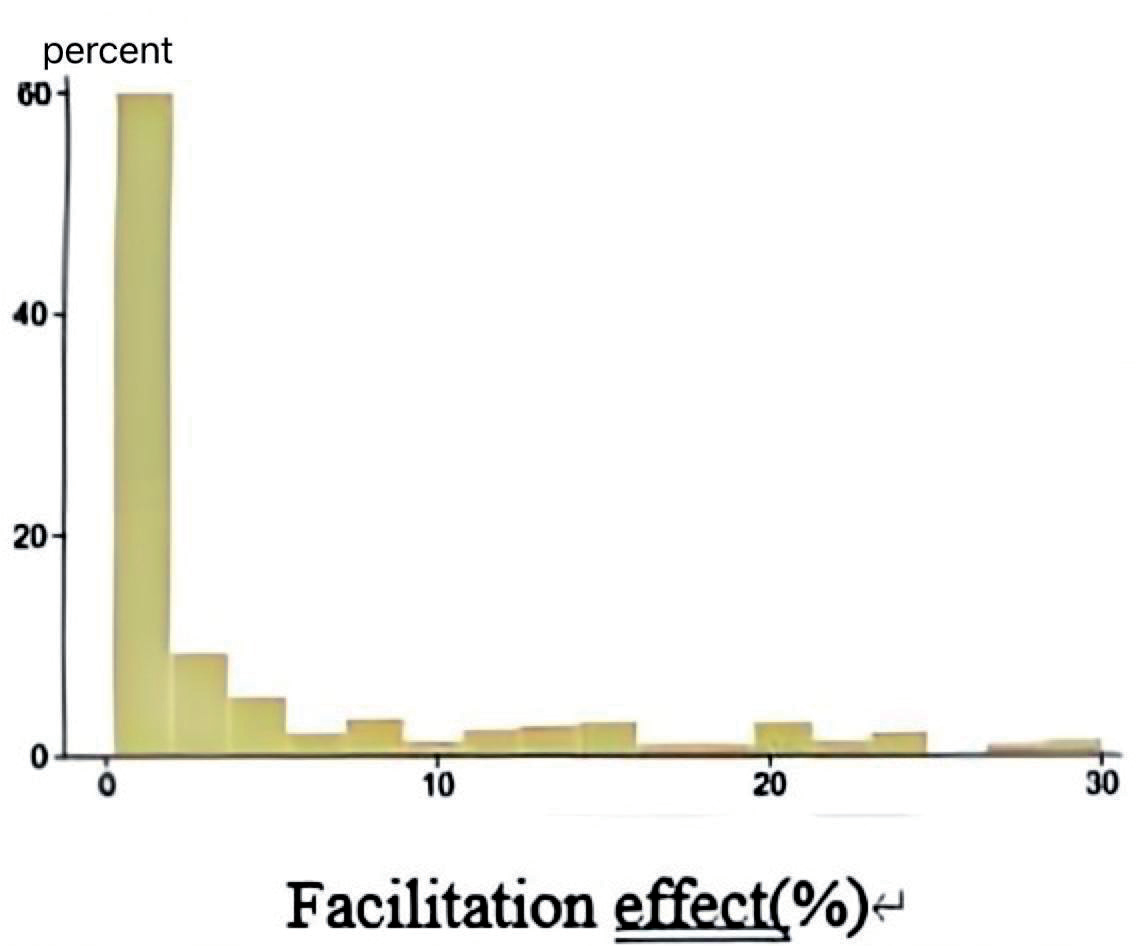
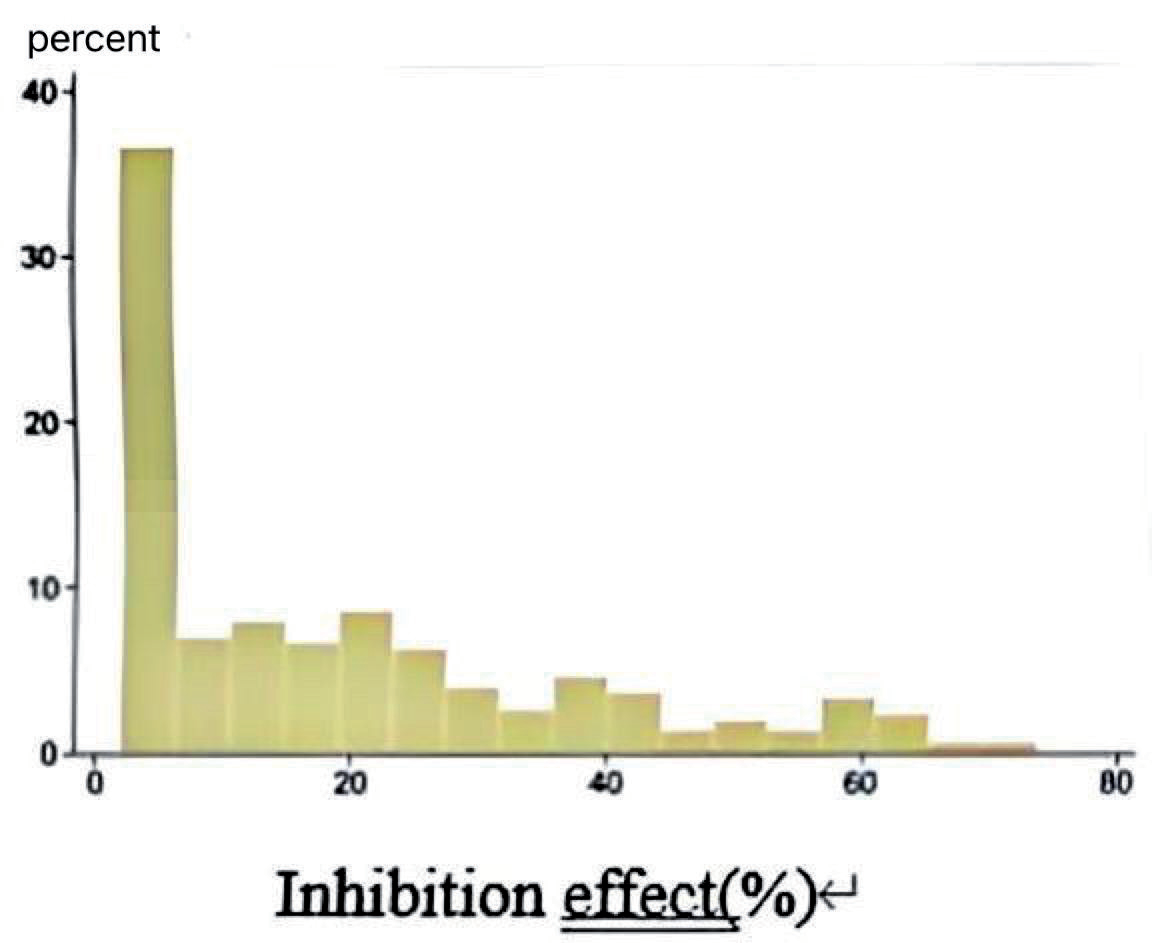
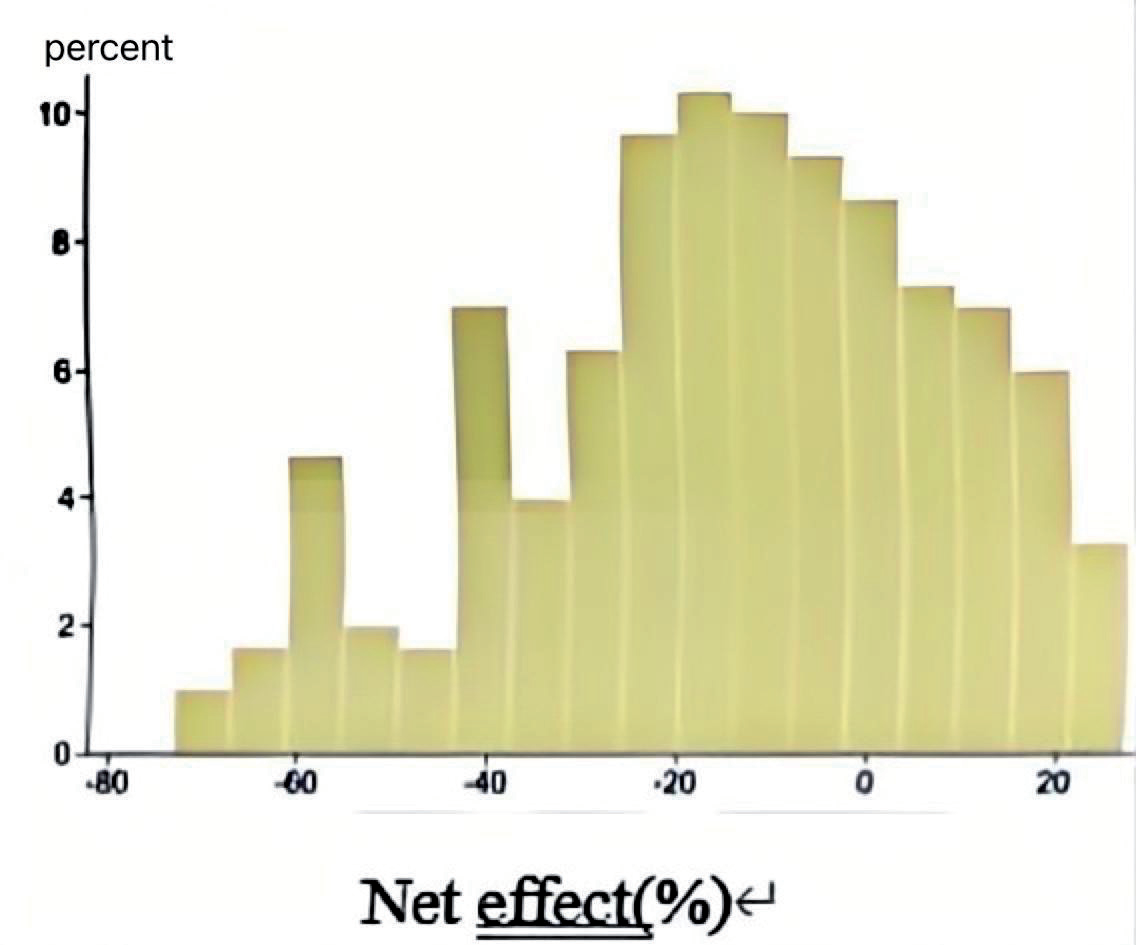
Fig. 1 – Fig. 3 more directly presents the frequency distribution of the suppression, promotion, and net effects of economic and environmental policy uncertainty on the development of the digital economy. Trailing features. In Fig. 1, the promotion effect of economic and environmental policy uncertainty on the development of the digital economy disappears at about 30%, but in Fig. 2, the inhibitory effect of economic and environmental policy uncertainty on the development of the digital economy disappears at about 70%. This shows that economic and environmental policy uncertainty has a more inhibiting effect on the development of the digital economy than a promoting effect. Fig. 3 shows the distribution of the net effect. Most provinces are distributed on the left side with a negative net effect, and their digital economy development level is lower than that of the frontier digital economy. Develop a level of digital economy that is higher than the frontier.
Time Distribution Characteristics of Economic Policy Uncertainty and Environmental Policy Uncertainty on Digital Economy Development
The statistical results of the effects of economic policy uncertainty on the development of the digital economy by year are presented in Table 6. With the passage of time, the role of economic as well as environmental policy uncertainty in promoting the development of the digital economy has increased rapidly since 2017 and reached its peak in 2019. The inhibitory effect of economic and environmental policy uncertainty on the development of the digital economy has been declining year by year, accompanied by small fluctuations. The net effect of economic and environmental policy uncertainty on the development of the digital economy has turned from negative to positive since 2018.
Table 6.
Annual distribution of bilateral effects of economic policy uncertainty.
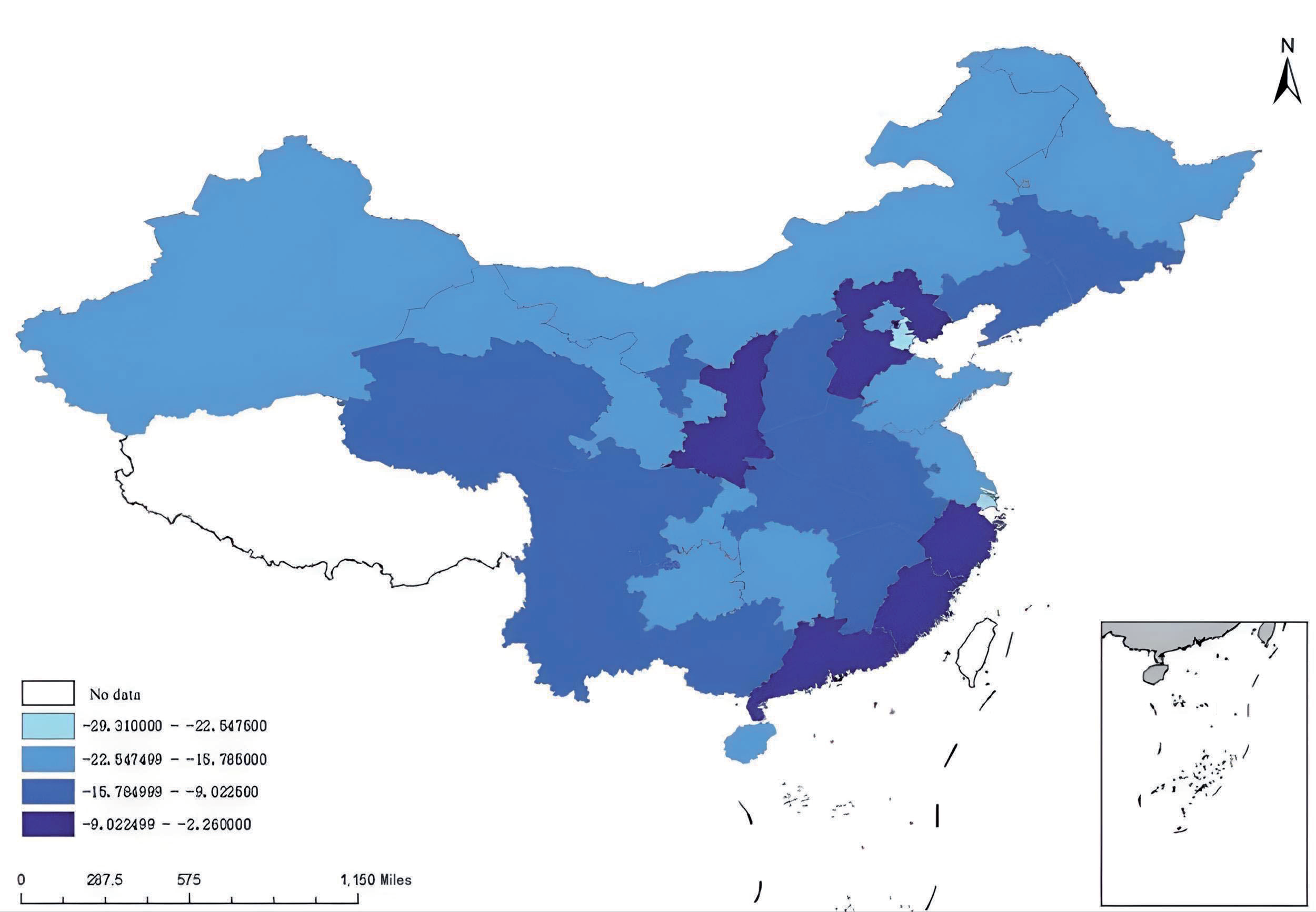
As shown in the Table 7, there are obvious spatial differences in the bilateral effects of economic and environmental policy uncertainty on the development of the digital economy. Tianjin, situated in the eastern region of China, has the most significant influence on economic policy uncertainty. A significant impact was seen in six regions, including Hainan, Shanghai, Beijing, Gansu, Chongqing, and Hunan [37]. Tianjin was the biggest at 29. 31%. Additional studies have shown that the industrial strategies in Hunan and Hainan Province are not beneficial for the digital economy. Zhejiang Province, located in the eastern part of the country, likewise has minimal negative impact. Guangdong and Fujian provinces experienced the least adverse impact, with a decrease of less than 6 %. It can be seen that the region with a higher level of economic development does not have a higher inhibitory effect of economic policy uncertainty. The eastern region is an important engine for my country’s development. With a certain level of economic policy uncertainty in the eastern region, its inhibitory effect on the digital economy varies greatly. The reason may be that enterprises in the eastern region perceive economic policy uncertainty. There may be differences. The prediction of economic policy uncertainty by relevant economic entities is subjective, and during the economic downturn, the divergence of forecasters will increase sharply [38].
The results of environmental policy uncertainty are also quite similar to the economic policy uncertainty showing more inhibitory effect than promotion effect in different provinces. Both types of uncertainty make businesses unsure about what to do, so they do not want to invest and grow. When the rules about the environment are not clear, it can make it hard for people to do things in a way that helps the environment. This can slow down progress in making technologies that are good for the environment and following the rules. This not knowing can have a bad effect on businesses, and it can harm industries that are connected to the environment. In changing economies, it is normal to have some uncertainty about rules. Too much of it can make risks bigger and make businesses and investors more careful. The uncertainty that arises from this can hinder the development of fresh ideas, lead to difficulties in delivering products to people, and create uncertainty for businesses and customers. This can slow down how well the economy is doing in different areas. Decision-makers have to find a good way to make rules that help the environment and the economy at the same time. It is important for them to ensure that the rules are transparent and just in order to avoid any negative consequences.
Table 7.
Spatial distribution of two-sided effects.
China has experienced the severe situation of the Sino-US trade war, and the economy is still in the process of adjustment. The forecaster understands the impact of macro uncertainty and the impact of uncertainty at the level of industry and individual enterprises will directly affect the decision-making of enterprises. If the policy makes enterprises feel at a loss about possible changes in the future, the policy effect may be in line with the expected goal. From the net effect of economic policies on the development of the digital economy, as shown in the figure, Shaanxi, Hebei, Guangdong, Fujian, and Zhejiang have the largest net effects, while Tianjin and Shanghai have the smallest net effects. From the perspective of Tianjin and Shanghai, in recent years, the two cities have taken multiple measures to promote digital development. In the 2018 “White Paper on China’s Urban Digital Economy”, Shanghai ranked first in the level of the digital economy. Government management and policy implementation pose challenges. Policy changes reflect that the country is actively promoting the reform of management methods from a top-level perspective and grasping long-term goals. However, due to the influence of the government’s traditional management concepts, the lagging of digital economy supervision and governance methods has become more and more prominent. The contradiction between the planned command mode of policy formulation and the demand for digital development has become more and more prominent, hindering the development of the digital economy.
Table 8.
Variance decomposition results.
Robustness Check
This paper replaces the explanatory variable indicators, and uses the same econometric method as the above model for robustness testing: the Internet penetration rate, mobile phone penetration rate, and the Peking University digital financial inclusion index are selected to explain the development of the digital economy, and to estimate the economic and environmental policy again the bilateral influence effect of uncertainty on the development of the digital economy. Due to the limited space of the article, this article only presents the variance decomposition results in Table 8. The results are shown in the table. Economic and environmental policy uncertainty has a greater inhibitory effect on the development of the digital economy than its promotion effect. From the perspective of the net effect, the result of the combined effect of bilateral effects makes the actual digital economy development level 23% and 22% lower than the frontier development level, and economic and environmental policy uncertainty inhibits the development of the digital economy. This result is consistent with the previous estimated results.
Results also predicted that in terms of digitalization, the performance of both underdeveloped and developed provinces of China is different. Research also supported the fact that in recent years developed countries have ranked even higher in their digital economy indices including Beijing, Guangdong, Tianjin, and Zhejiang. The low development of the digital economy in underdeveloped provinces is due to scarce resources, gaps in income levels, poor governance, and other issues [39].
Conclusions and Recommendations
This paper proposes that there is a bilateral effect of economic policy uncertainty on the development of the digital economy. Based on the provincial panel data from 2011 to 2020, the bilateral stochastic frontier model is used to test the bilateral effect of economic policy uncertainty on the development of the digital economy, thus answering the questions of whether there is a bilateral effect of economic policy uncertainty on the development of the digital economy, what is the specific size of the two effects, and what is the size of the net effect under the combined effect. Moreover, it also suggested that environmental policy uncertainty has a positive impact that is also shown to be implemented in the digital economy. The digitalization of the economy further intensifies environmental policy uncertainty.
The research conclusions show that:
(1) The promotion effect of economic policy uncertainty makes the digital economy development level 4.85% higher than the frontier level, and the promotion effect of economic policy uncertainty makes the digital economy development level 19.55% higher than the frontier level. The two effects combined effect of the actual digital economy development level is 14.7% lower than the frontier level. (2) The promotion effect shows the positive association of digital economy development with the increasing environmental policy uncertainties.
(3) The role of economic policy uncertainty in promoting the development of the digital economy has increased rapidly since 2017 and reached its peak in 2019. The inhibitory effect of economic policy uncertainty on the development of the digital economy has been declining year by year, accompanied by small fluctuations. The net effect of economic policy uncertainty on the development of the digital economy has turned from negative to positive since 2018.
4) There are obvious spatial differences in the bilateral effects of economic policy uncertainty on the development of the digital economy. Regions with greater inhibitory effects of economic policy uncertainty are mostly located in the eastern region, and regions with smaller inhibitory effects of economic policy uncertainty are also located in the eastern region. Under the condition of a certain level of economic policy uncertainty, the size of the inhibitory effect is quite different. The reason may be that enterprises may have different perceptions of economic policy uncertainty.
In recent years, my country’s digital economy has maintained a vigorous development trend, the top-level design of the digital economy is being continuously improved, and the east-to-west calculation project is in the process of advancing. Various localities have taken multiple measures to seize opportunities for the development of the digital economy. Against this background, economic policy uncertainty has become more prominent. Understand the promotion and inhibition effects of economic policy uncertainty on the development of the digital economy, focus on economic policy uncertainty, and reverse the situation. Based on the above research conclusions, this paper gives the following policy suggestions: (1) Formulate more precise and correct policies. The digital economy is a new industrial form in which management regulations are introduced after application. The relevant strategies are not forward-looking enough. The government needs to look forward and backward when formulating policies. It must have both long-term and short-term goals to ensure long-term consistency of policies. In order to meet the needs of digital development, development, and supervision need to be coordinated and balanced. (2) Optimizing the development environment of the digital economy. Increase the financial subsidies for digital development, promote the active transformation of traditional industries to digital, strengthen the renewal of local management concepts, and strengthen digital security supervision. Realistically understand the situation at the grassroots level, avoid one-size-fits-all governance methods, and give full play to the regulating role of the market.
(3) Effectively promote the steady development of the digital economy. The risk expectations brought about by the uncertainty of economic policies have inhibited the development of the digital economy. It is necessary for all localities to cooperate to formulate authoritative policies, clarify the future development direction, pay attention to the irregular digital economic policies that may appear in various places, and reduce the expected uncertainty of enterprises. (4) Environmental policies are greatly influencing the digital economy, thus policy recommendations include environmental pollution control and prevention. Moreover, it is suggested that the digital infrastructure should be strengthened with improved service capabilities as well as maintaining digital governance through governmental actions. Additionally, consumer rights should be protected and new energy policies should be inaugurated replacing the conventional ones for the development of the digital economy.

