

Introduction
Currently, unsustainable consumption behaviors such as environmental pollution and resource utilization imbalances, have become obstacles to quality economic development, in order to cope with the new requirements for the survival of mankind and nature in perpetuity [1–4], promote sustainable development, industrial transformation, and upgrading. In 2013, the Chinese government established 100 national ecological civilization advance demonstration zones across the country, aiming to promote the harmonious development of the economy and environment and create opportunities for comprehensive economic growth [5], which provides opportunities for the comprehensive development of the economy; ecological environmental protection coordination provides an opportunity to reduce carbon emissions, domestic sewage, and other non-desired outputs [6], minimize the waste of underutilized resources, and facilitate the sustainable and efficient growth of both the economy and the environment [7].
Sustainable development originates from a reflection on traditional development construction, which refers to the new development method of rational allocation of limited resources and improvement of green efficiency. The introduction of the concept of sustainable development represents the exploration of a new type of development. Exploring the coordination of economic development and environmental efficiency of development is the focus of attention in this study, which helps to view the harmonious coexistence of man and nature from a new perspective of economics [8-10]. Recently, how to effectively implement sustainable development has become an important issue facing global green development. EDC is an important tool for cracking the constraints on resource utilization and supporting the transformation of economic development [11-13], aiming to resolve the contradictions between green development and economic growth. Clarifying the current state of coordination between the ecological environment and regional economic development and grasping the differentiated problems and constraints between the two is a must for balancing the synergies between sustainable regional development and high-quality development [14].
Environmental efficiency was proposed by foreign scholars in 1990 and is intended to maximize the efficiency of economic development while minimizing damage to the environment. Some scholars have explored environmental efficiency from the perspectives of the digital economy and carbon tax [15–17]. Based on this, from the perspective of environmental regulation, the study constructed the EER indicator to represent the environmental and economic development status of the ecological civilization construction area. EER refers to the response to the degree of interdependence that exists between multiple systems or organizations, which can fully reflect the efficiency of the environmental and economic development of a place. EER refers to the response to the degree of interdependence that exists between multiple systems or organizations [18]. Analyzing the EER index in the EDC can provide quantitative insights into the current state of sustainable development and the balance between economic and environmental factors. This approach allows for a deeper understanding of their interactions and interdependence within the pilot area and is an important basis for assessing the effectiveness of the mechanism of the EDC. The study covers the dual-factor indicators of pollutant emissions, waste recycling efficiency, and economic development level within the pilot cities to measure the EER [19] which comprehensively responds to the overall situation of the environment and economy in the pilot sites. The degree of coordination is a guide to the center of gravity of ecological civilization construction, and its core concept of “same efficiency, same development” coincides with the purpose of ecological civilization construction, which makes the enhancement of pilot cities’ EER a key to ecological civilization construction that cannot be ignored [20].
Studies have shown that EER integrates efficiency indicators and can better assess the degree of interactions between systems and the development of virtuous cycles [21]; some studies have measured the EER of multifactorial systems, reflecting the overall concept of efficiency; and appropriate environmental policies can help to improve the EER of the region so that the benefits of pollution reduction and EER can be at the desired level. From the existing studies, there are fewer studies on the impacts of EDC on the EER, and there is a lack of differentiated studies on this policy, mostly limited to the assessment but not in-depth. Research on this policy is mostly limited to the assessment, but not in-depth; its mechanism of action is not clear [22], and there is a lack of differential research. Many researchers use DEA or SBM to evaluate the influence of environmental construction on the efficiency of regional green economies and ecological effectiveness [23]. Although the existing research on measuring EDC on EER is obviously insufficient, there have been studies that provide a reference path for determining the impact of EDC on EER.
Given the above background, this study aims to assess whether EDC can help China achieve EER improvement using data from China’s 213 given prefecture-level cities from 2008–2019. This study answers three main questions:
(a) Can EDC improve environmental eco-efficiency? (b) Can enhancing green innovation capacity and promoting industrial upgrading reduce pollution levels? (c) Does increasing governance inputs affect the level of governance in that environmental mechanism? The possible marginal contributions of this study are compared to the traditional statistical indicators adopted in previous studies. Firstly, this study uses principal component analysis instead of the entropy weighting method for indicator statistics. Based on the existing environmental conditions in China, the environmental impact of each variable on the total macrofocus is analyzed. Second, this study uses EER to represent the level of environmental economic development instead of SBM. However, the main novelty of this study is that it creatively combines the EDC with the EER, which provides a reference for innovative assessment of the EDC and fills the gap of previous studies. The study innovates the measurement method for comprehensive indicators. Existing literature adopts the entropy value method to establish comprehensive indicators and uses the AHP hierarchical analysis method to judge and score the indicators through a combination of two-by-two comparisons of evaluation factors and scoring by experts. A total of five experts in environmental science and environmental economics with doctoral degrees and some research on the content of this study were invited to score the importance of the indicator system, and the judgment matrix was constructed using the 1–9 scale method proposed by T.L. Saaty, which effectively excludes subjective factors. The position of the indicators in the subsystems was comprehensively considered through the arithmetic weighting, and the judgment matrix was tested by the CI test to determine the weights of the indicators in the subsystems. The judgment matrix passes the CI test to finally determine the weight of each indicator in the subsystem. Being able to consider in detail the position and role of each indicator in the construction of ecological civilization according to the current situation and characteristics of China’s resources and economic development helps to explore new environmental regulation, helps to explore new modes of environmental regulation, and the focus of hierarchical governance, and provides a reference for balancing economic development and environmental benefits. At the same time, this study also tests the potential impacts in terms of the effects generated in different geographical areas, differences in technological endowments, and differences in the degree of resource endowments. The findings of the research offer a fresh perspective for the creative advancement of environmental systems and offer a benchmark and theoretical groundwork for government agencies to effectively harness the potential of ecological EDC.
Rationale Analysis and Research Hypotheses
The EDC is an important initiative to strengthen the construction of ecological civilization and promote the structural transformation of economic development. It should have the ideal expectation of balancing economic development and the ecological environment among regions, which can bring about the macroeconomic benefits of sustainable development of the country’s economic environment. Through the creation of an ecological construction and protection mechanism, it has vigorously promoted green technological innovation, strengthened the sustainable use of resources and environmental governance, and promoted the construction of an ecological civilization. Other measures, the environmental efficiency of the region’s economic development will be improved, the utilization of resources and environmental contamination during production will be minimized, leading to a new phase of sustainable development [18], aligning with the requirements of sustainable development for mankind, the establishment of ecological civilization demonstration zones can play the energy efficiency of the environmental mechanism, promote the technological transformation and upgrading of small and micro enterprises, enhance the intensity of green innovation, reduce the degree of abuse of public resources, and help to improve the efficiency of the ecological environment and raise public attention. On the other hand, the transformation of the industrial structure of individual enterprises stimulates the whole industry to grasp the new development direction, promotes the optimization of the transformation of the national economic body, achieves the goal of energy saving and emission reduction and green economic development [24], announces the coordinated development of the regional economic system and the ecological environment, and avoids the staging of the “tragedy of the commons [25, 26].”
H1: EDC can significantly enhance the coupling and coordination of the ecological environment and economic development.
Furthermore, the ecological first civilization demonstration areas in China serve as a successful means of environmental regulation, prompting enterprises to drive innovation and growth during policy implementation. The production cost of enterprises to produce the innovation compensation effect enhances the competitiveness of enterprises and ultimately forms a win-win situation for environmental protection and economic benefits, i.e., Porter’s Hypothesis and the Innovation Compensation Benefit. The policy of demonstration zones for the advancement of the ecological civilization can force enterprises to innovate in a green way, use big data, blockchain, and other technological means in conjunction with industrial characteristics, develop a digital economy, reduce resource and energy consumption, and improve enterprise productivity. At the same time, enterprises can also improve pollution control technology, adopt clean energy, and change their business philosophy, which will play an obvious catalytic role in improving EER. The core construction concept of the Ecological Civilization Advance Demonstration Zone guides the optimization and transformation of the industrial structure, promotes the industrial structure towards environmentally friendly and resource-friendly industries, creates more enterprises relying on new energy development, gradually reduces and bans highly polluting and energy-consuming enterprises, and innovates the new development of the recycling system. At the early stage of the policy, society needs to increase its investment in the ecological civilization demonstration zone in order to combat pollution and provide a “basic paradigm” for governance, and at the mature stage of the policy, the benefits brought by the green economy can ultimately exceed the cost of coping with environmental regulations and bring macroeconomic benefits to society. Ultimately, the above path will enhance the coupling and harmonization of economic development and the ecological environment.
H2: EDC has the potential to improve integration, environmental synchronization, and economic progress through eco-friendly innovation, industrial structure optimization, and increased capital investment.
Empirical Design
Modeling
Multi-Period Double Difference Model
As this paper focuses on evaluating the advantages of implementing policies over multiple time periods and EDC is designated as a “quasi-natural experimental zone”, DID is chosen as the empirical model of this paper. DID can effectively eliminate possible individual fixed effects and time fixed effects and effectively control for potential other variables so as to derive more accurate causal effects. As far as the research content of this paper is concerned, the establishment of ecological civilization advance demonstration zones may have a positive promotion effect on EER. On the other hand, there may be a significant differential effect in the pilot cities in comparison with the cities that have not implemented this policy. Therefore, this paper presents DID as depicted in the subsequent equation:
Where i, t indicates city and year; EERit is an explanatory variable indicating the degree of coordination between urban eco-efficiency and economic development coupling; Treati · Postt is a dummy variable for EDC policy; β is the core concern coefficient, responding to the effect of EDC on the degree of coupling and coordination of EERit effects; Xit is the control variable µi,γt sample city individual effects and time fixed effects, εit is a random perturbation term.
Coupled Evaluation Model
This paper constructs a coupling evaluation model of ecological efficiency and economic development. The EER is determined through a comprehensive assessment of various indicators. In this study, we employ AHP hierarchical analysis to establish the weighting for each characteristic indicator and assess the EER through a series of steps. As the sample areas are widely spread, the ecological basis and stock changes of the selected indicators have resource basis and governance differences. Using the AHP hierarchical analysis method, the problem can be qualitatively and quantitatively decomposed into multiple levels for processing, and the study starts from the national situation of China’s resource and environmental development, combines with the hotspot of future work on sustainable development, and is more practicable and scientifically significant.
(1) Integrated assessment modeling
An important prerequisite for conducting coupling measurement is to construct a comprehensive evaluation model, and the indicator values in this evaluation model need to be standardized to remove the influence of the scale on the indicators. Based on this, this paper adopts the method of extreme deviation to standardize the indicator data, as shown in Equations (2) and (3).
In the above equation, xi' denotes the standardized value; max xi', min xi' denote the maximum and minimum values of indicator i, The comprehensive evaluation model is developed based on the indicator values and weights of each indicator characteristic, as illustrated in Equations (4) and (5).
In the above equation, F(x), F(y) represent the combined benefits of environmental efficiency and regional economic subsystems, respectively. ai, bi are the weights of the indicators in the environmental efficiency and economic development subsystems, respectively, which are derived from the AHP hierarchical analysis method. xi', yi' are the values of the indicators standardized using the extreme variance method.
(2) Measuring Coupling and Coupling Harmonization
EER can be used to illustrate the degree of mutual influence between the two subsystems of environment and economy [27]. Still, the results of its measurement may cause “pseudo” coupling results due to the low evaluation index of the subsystems and the similarity of the results. Therefore, this paper eliminates the misestimation due to the “pseudo” coupling results by introducing a comprehensive evaluation index and carries out the measurement of the level of coordination of the coupling of eco-efficiency and economic development so as to reflect the extent of coordinated development of the various subsystems. The process of measurement is shown in Equations (6), (7), and (8) [28].
In the above equation, K is the systematic coupling of environmental efficiency and economic development. K∈[0,1], K larger represents a higher degree of coupling and vice versa; T is the value of the combined evaluation index for environmental efficiency and economic development; and D is the coupled harmonization degree of environmental efficiency and regional development.
Table 1.
Composition of indicators of EER.
Indicator Selection and Descriptive Statistics
Explained Variable
EER as an explanatory variable. The selection of indicators for the system coordination ratio includes both the economic development subsystem [29], the environmental efficiency subsystem, in which the economic development system is measured in terms of the quality of economic development, the quality of the industrial structure, and the living standard of the people, and the environmental efficiency system is measured in terms of the utilization rate of waste and energy treatment and the level of ecological protection. This paper refers to the “National Ecological Civilization Construction Demonstration Zone Construction Program (Trial)” (2013) formulated by China’s government branch in conjunction with six ministries and commissions for the selection of indicators, it explains regional economy development quality is illustrated by the GDP per capital, the GDP growth rate of each prefecture-level city is indicative of the extent to which the secondary industry contributes to industrial pollution in the region, measures the people’s living standard in terms of the retail sales of consumer goods and the local financial expenditures; at the same time, solid waste recycling rate and sewage treatment rate are used to explain the utilization rate of waste energy treatment, and the sulfur dioxide emission, industrial soot emission and per capital green space rate are used to explain Urban eco-efficiency. The nature of each indicator is explained and weighted, as shown in Table 1.
Core Explanatory Variables (Civ)
The primary explanatory factor examined in this study is the application of EDC “Treat·Post”. If the city is EDC and the observation time is after realizing policy, the interaction term between Treat and Post takes the value of 1, and vice versa, it is zero.
Control Variable
(1) Refer to the literature on relevant EDC mechanisms of action, this paper controls the impact of the following variables on EER in each city:
(2) The total amount of urban GDP and economic development may result in a situation where “development is emphasized over ecology,” and therefore GDP development may have negative externalities on the ecosystem.
Science expenditure and the government’s increased investment in scientific research may promote the construction of the ecological civilization advance demonstration zone, which in turn will lead to green innovation and improve the efficiency of energy use.
(3) The actual amount of foreign investment may cause the transfer of highly polluting industries to China, resulting in environmental degradation, but also the transfer of high-tech industries to enhance the efficiency of China’s environmental utilization. The increase in foreign investment may also contribute to the enhancement of the comprehensive strength of China’s economic development and put more funds into the construction of ecological civilization.
(4) Domestic waste disposal rate: the rise in its value contributes to enhancing people’s quality of life, thus promoting the simultaneous advancement of the ecological economy.
(5) The park green space area is an important indicator of the ecological development of the city and the well-being of the people, and the expansion of the green space area represents the mutual promotion and coordinated development of the economy and the environment.
Table 2.
Descriptive statistics of variables.
Descriptive Statistics
The descriptive statistics of the variables selected for this research are shown in Table 2, where the sample observations for each variable are N*T=2556.
Empirical Results and Analysis
Baseline Regression Test
Baseline Regression Findings for EDC on EER, see Table 3, Column (1) in the table shows the estimation results of the core explanatory variable Treat·Post without adding control variables, and its regression coefficient is positive, which indicates that the cities implementing the policy of Ecological Civilization Advance Demonstration Zone have a higher EER relative to non-policy cities. According to the estimation, when the degree of the city’s ecological civilization advance demonstration zone increases by one standard deviation, the degree of coupled coordination of ecological environment and economic development increases by about 0.6 percentage points, and this increase accounts for 0.841% of the average value of coupled coordination of ecological environment and economic development. After adding control variables one by one, the estimated coefficients of the core explanatory variables are still significant at the 1% level, and the degree of fit shows an increasing trend, which can indicate EDC takes into account economic development and environmental governance, has a significant policy benefit to improve EER and economic development, and the assumption that hypothesis 1 is established. Meanwhile, the estimation results for each control variable are as expected. In all columns, the logarithm of science expenditure, the logarithm of actual utilization of foreign capital, and the logarithm of the green space area of parks show positive significance. These positive coefficients indicate that cities with large scientific expenditures, large amounts of actual foreign investment, and large areas of parks and green spaces, in addition to the implementation of the policy of ecological civilization, advance demonstration zones to enhance the degree of coordination of EDC coupling. There are several possibilities for this explanation: First, more R&D investment and the inflow of high-quality capital promote technological progress, which leads to a higher level of coordination between environmental efficiency and economic development. Second, it represents the improvement of people’s living standards, and the increase in environmental protection awareness makes people pay more attention to environmental development when engaging in economic development work.
Robustness Test
Parallel Trend Test
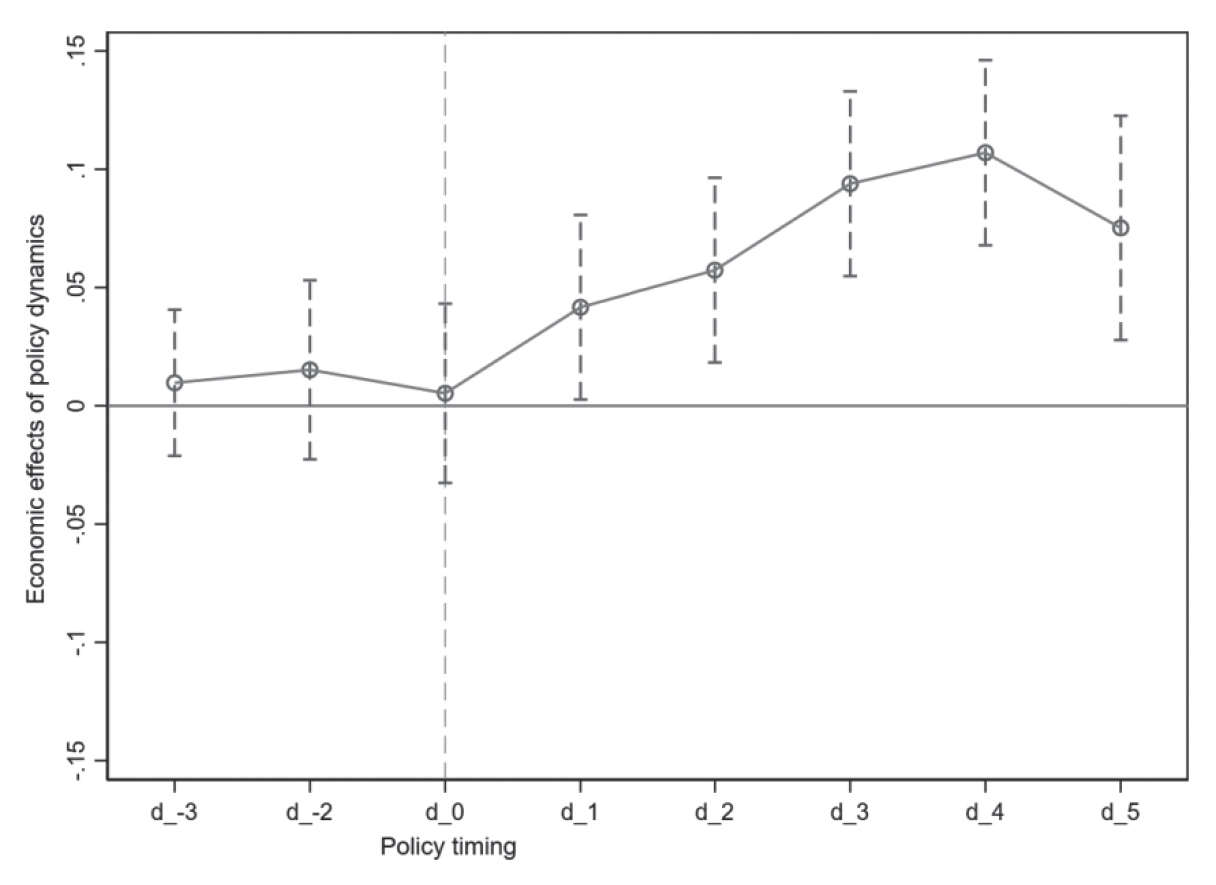
To further verify whether the implementation of the policy of EDC has had a significant impact on the explanatory variables, this paper carries out the test of the parallel trend for all the samples before and after the implementation of the policy. As shown in Fig. 1, the figure uses the policy implementation year (2014) as the policy point in time (d_0) and the year before the policy implementation as the base period (d_-1), and the event study method is used to test for parallel trends.
As can be seen from Fig. 1, none of its coefficient estimates were significant before the implementation of EDC. The study found that there was no significant difference between the cities in the control and experimental groups before the policy was implemented. In the year of policy implementation (d_0), the construction of ecological civilization’s first demonstration zone did not immediately play a policy effect; there is a lag. In the second year of policy implementation (d_1), the policy effect gradually appeared and has been there since then. There has been a clear upward trend between the policy cities and the control group of cities, appearing with obvious differences. The policy is confirmed to be effective and passes the parallel trend test.
Table 3.
Benchmark regression results.
Placebo Test
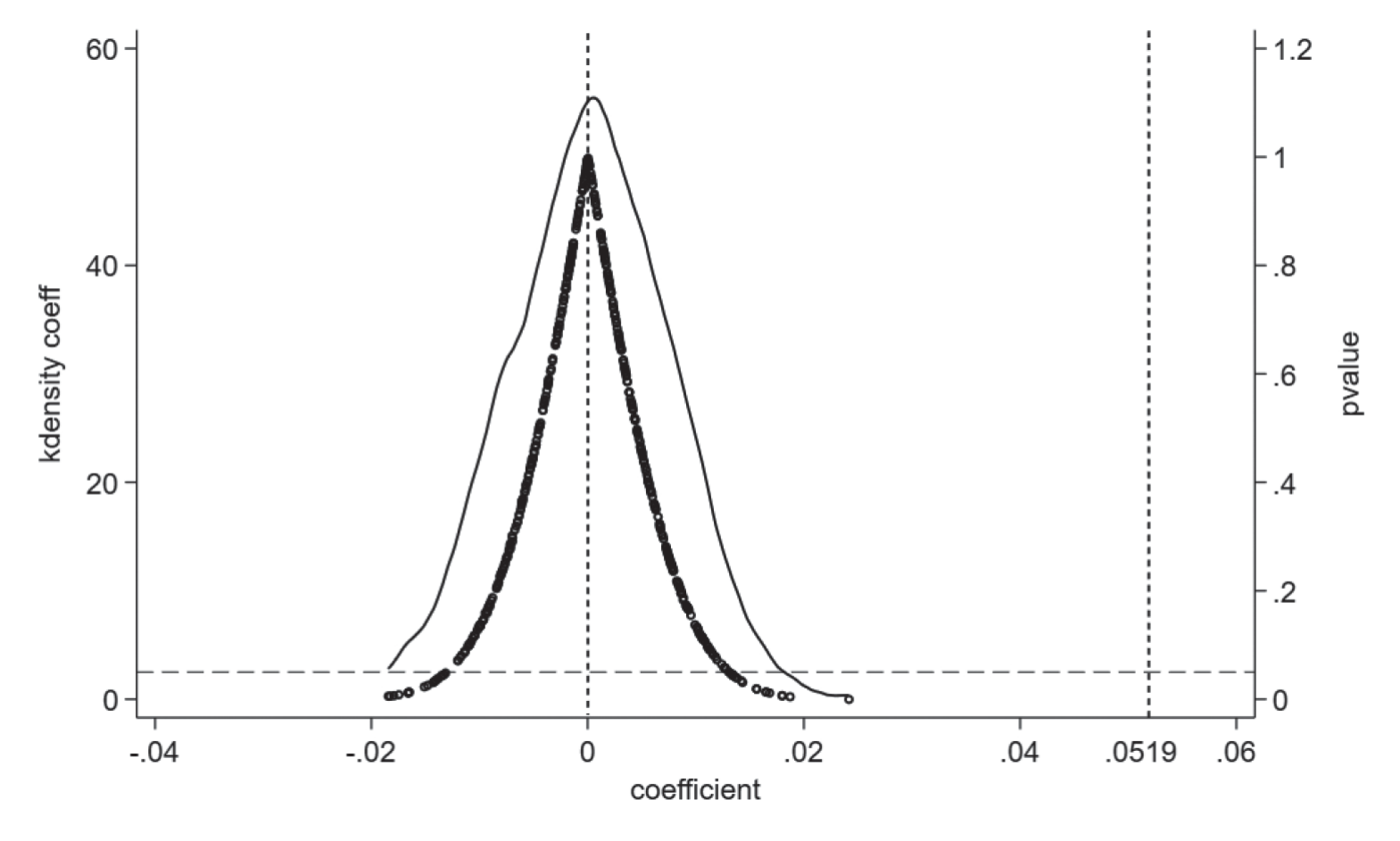
As there may be potential influencing factors in the estimation results, the baseline regression may also be biased. To further validate the accuracy of the study findings, the paper conducted individual placebo tests on the research subject. That is, a random sample is drawn to observe the impact of EDC on EER and the extent to which policy impacts are coordinated. If the regression coefficient is centrally distributed around 0, i.e., the randomly selected cities will not be significantly affected by EDC, then it proves that the policy can be excluded from the potential interference influencing factors, and the regression results are credible. Otherwise, it is considered that there is an error. In this paper, 46 randomly selected city samples were selected as a „pseudo-experimental” group, randomly repeated 500 times, and the results shown in Fig. 2 were obtained. The figure indicates that the estimated coefficients of the pseudo-experimental group are centrally distributed around 0, and the results are not significant. In addition, the distribution of the baseline regression coefficients for the pseudo-experimental group is at the high point of the distribution of the spurious regression coefficients, and the true estimated coefficient (0.0519) is in the range of small probability events in the distribution plot. All the above results prove that the benchmark regression results of this paper are reliable, and the coupling and coordination degree of the ecological environment and economic development in EDC is not much affected by potential factors.
Other Robustness Tests
(1) Replacement of explanatory variables [30–32]. Considering that the coupling and coordination degree of ecological environment and economic development integrates the two aspects of environment and economy, this paper replaces the explanatory variables with real GDP and non-green energy intensity, in which the non-green energy intensity is measured according to the city’s total tonnage of coal use and then taken as the logarithm of it. According to columns (1) and (2), it can be seen that after the replacement of the explanatory variables, the real GDP is positively significant at the level of 1%. It shows that after the implementation of the policy of ecological civilization advance demonstration zone, the pilot city insists on the synergistic development of economy and environment, abandons the situation of „wanting economy but not green, and strengthens investment in ecological management while the level of economic development is improving. The intensity of non-green energy use is negatively significant at the 10% level, indicating that the structural upgrading of the energy industry is being gradually implemented under the influence of the policy and that the dependence on non-green energy is gradually decreasing.
(2) Removing provincial capital cities. As the provincial capital city focuses on more high-quality resources in the province and is the leader of a province’s development, it may itself have a good ecological and economic foundation. This paper removes the provincial capital city from the sample after the analysis, and Column (3) of Table 4 shows that the multi-period double-difference coefficients of the pilot policy on the basis of the removal of the provincial capital city are positively significant at the level of 1 percent, which indicates that EDC does produce policy benefits for the pilot cities.
(3) Excluding other policy interference, Ecological civilization’s first demonstration zone implementation period, there are other environmental policies (such as a low-carbon pilot city) implementation of superposition [33]. In order to further exclude the impact of interference policies, this paper excludes the sample period implementation of low-carbon pilot policy cities and excludes other policy cities, The pilot policy of DID is still at the level of 1% positive and significant, indicating that the ecological civilization’s first demonstration zones have a robust effect.
(4) The counterfactual test. In order to further test whether EDC policy played a role during the policy implementation period and to exclude the progressive role brought about by the city’s development, the study assumes that the policy occurred in 2009. Pseudo-dummy variables are set, indicating that EDC plays a robust role in improving EER.
Table 4.
Other robustness tests.
Endogeneity Test
There may be reverse causality in the bidirectional development between EER and EDC, and when the EER of a place continues to rise, it may stimulate investment efforts in ecological civilization construction. In order to circumvent the problem of endogeneity, the study introduces instrumental variables, and in order to satisfy the characteristics of exogenous and correlation of the instrumental variables, the study selects the instruments that have a strong correlation with the core explanatory variable EDC, but do not have a path effect on the interpreted variable EER variables.
To ensure the usability of the indicator, the study selects instrumental variables from a geographic perspective, and by measuring the degree of terrain undulation from Feng’s experience [34], the interaction term between the degree of terrain undulation and the time lag of one period is used as an instrumental variable for EDC, which can be used to more scientifically verify whether EDC works effectively in the enhancement of EER. On the one hand, geographic indicators are naturally formed and are the core indicators for assessing regional environmental suitability and resource and environmental carrying capacity, and areas with greater topographic relief are rich in ecological resources and have a better ecological foundation, which is closely related to the construction of ecological civilization. At the same time, the historical natural formation of terrain undulation is far away from the current stage of development and does not change with the passage of time, which will not have a direct impact on the explained variable EER in the experiment and can meet the basic conditions of instrumental variables. On the other hand, since there is a time-lag effect on the utility of the EDC generating mechanism and terrain undulation as fixed cross-section data that does not change, the study draws on Sun’s practice [35] of interacting the degree of terrain undulation with a time-lagged period in a 2SLS regression.
The results of the experiment are shown in the Table 5, where IV is the interaction term between the degree of relief and the time lag for one period. The experimental results show that in the first period, the coefficient of instrumental variable IV is significant and the LM statistic is significantly positive; the Cragg-Donald Wald F statistic of 167.308 is greater than the critical value at the 10% significance level, and the experimental results indicate that there is no weak instrumental variable problem. The second stage of the experiment shows that EDC has a significant promotion effect on EER, and the growth of EDC inputs is 0.1588 per unit of enhancement, which is a significant enhancement compared with the benchmark regression. All of the above analyses indicate that the instrumental variables selected in this paper are reasonable and effective, so the benchmark results have a certain degree of robustness.
Heterogeneity Analysis
In order to get more comprehensive research conclusions, this paper explores different resource endowments and different resource-rich and technology-endowed cities, and whether there are also different differences among different categories of cities being affected by policies [36]. This paper analyzes the heterogeneity of different categories of cities to explore in depth the stimulating effect and direction of EDC for different categories of subjects [37].
Analysis of Urban Location Heterogeneity
China has a vast land area and suffers from unbalanced regional development, with a wide development gap between the eastern and western parts of the country. In terms of China’s current national conditions, the eastern part of the country has a superior geographic environment, a solid economic foundation, a good business environment, and is new and high-tech; the central part of the country is industrially developed, rich in human resources, and sufficiently motivated to enhance the ecological environment and economic development; while the western part of the country is relatively backward in development, with overexploitation of resources, and may be insufficient in its ability to enhance the degree of coordination of the coupling of the ecological environment and economic development. The results of the previous study divide all the samples into a whole, and the results may be affected by the radiation of the developed areas. In order to further refine the results, this paper divides the 213 sample cities into three regions of the center, east, and west based on the location of their geographical neighbors for the analysis of heterogeneity. This paper constructs location dummy variables (area), assigns values to the Central and Western Cities for regression, respectively (each regression of the research point city assigns the value of 1), and brings the location dummy variables into the model after interacting with the policy multi-period double-difference terms to get the results in columns (2)-(4) of Table 5, it shows that the estimated coefficients of the interaction terms of the policy of EDC for the cities in the central and western regions are significant at the levels of 1% and 5%, respectively, and they are significantly affected by the policy of ecological civilization construction. In contrast, the interaction term coefficient of EDC policy for eastern cities is significant at the 10% level, and the coefficient of the core explanatory variable is also smaller than that of the west and similar to that of the central part of the country. The explanation for this phenomenon may be due to the fact that the eastern region itself has a good economic and ecological foundation, with less room for progress, and is not significantly affected by the construction of ecological civilization.
Heterogeneity Analysis of City Types
(1) Distinguish according to resource abundance.
The degree of urban resource abundance will produce different responses to the ecological construction according to the degree of urban dependence on local resources for the division, the construction of the dummy variable resource, the strong degree of resource dependence of the city assigned a value of 1, and the non-resource-oriented cities assigned a value of 0. After interacting the dummy variables with the policy multi-period double-difference term and bringing them into the model, which show that the estimated coefficient of the interaction term of resource-dependent cities is significant at the level of 1%, which indicates that EDC has a significant effect on the promotion of the optimization and rational use of resources, and it has a positive externality on resource-dependent cities, which significantly enhances the degree of coordination of the coupling of the ecological environment and the economic development of the resource-dependent cities, whereas for the cities with weaker resource-dependence, the change of the level of resources doesn’t affect the development of the cities directly, and therefore, the effect of EDC on this is relatively minor.
(2) Differentiation according to the degree of technological endowment
Cities with a high degree of technological endowment are those with advanced science and technology industries and innovation capabilities. These cities usually have high-level scientific research institutions, a large number of high-tech enterprises, and human resources, and are able to attract and cultivate high-quality scientific and technological talents to promote scientific and technological innovation and industrial development. 213 cities are divided into two categories; cities with a high degree of technology endowment and cities with a low degree of technology endowment. They construct the dummy variable technology, assign a value of 1 to the cities with a high degree of technology endowment, and assign a value of 0 to the cities with a low degree of technology endowment. They interact the dummy variable with the policy multi-period double-difference term, bring it into the model, and get the regression results of the (5) columns in Table 5. The results show that cities with higher degrees of technological endowment are significantly affected by the policy of ecological civilization advance demonstration zone, which indicates that under the influence of the policy of ecological civilization advance demonstration zone, cities with a high degree of technological endowment can be effectively pushed to carry out the industrial transformation, technological innovation, and reduce the proportion of sewage-emitting industries, so as to stimulate the efficacy of promoting the degree of coordination of the coupling between the ecological environment and the economic development, whereas, for the cities with an insufficient technological endowment, the response to the influence of the policy is obviously lagging behind.
Mechanism of Action Analysis
Through the above test, it can be seen that the policy of the ecological civilization advance demonstration zone significantly improves the degree of coordination of the coupling of ecological environment and economic development, on the basis of which this paper further explores the influence mechanism of the ecological civilization advance demonstration zone through the role of energy-saving innovations, the transformation and optimization of industrial composition, the degree of financial investment, and other effects. Table 6 illustrates the experimental results.
Table 6.
Heterogeneity analysis.
Selection of Mediation Effect Indicators
The annual number of green patents obtained in each region was selected to measure the degree of green innovation in each region and expressed on a logarithmic scale. In this paper, we measure the degree of advanced industrial structure and overall upgrading of industries by the value added by each industry [38], reflecting the degree of coordination between industrial development and the degree of rational utilization of resources. By measuring the actual GDP development level of the sample cities and using it as a mediating variable, the possible mechanism of influence lies in the fact that as the construction of EDC improves, the governance costs invested in the initial stage of the policy may be transformed into economic benefits.
Influence Mechanism Analysis
The study reveals the influence of EDC on promoting green innovation, and the regression findings demonstrate a significantly favorable effect, suggesting that the adoption of the policy considerably boosted the level of green innovation in the experimental area, proving that the establishment of EDC can enhance the level of green innovation in the pilot site, improve energy efficiency, Table 7, column (2) for the industrial structure effect: this paper selects double indicators to more comprehensively respond to the industrial structure situation. The did coefficient is significantly positive, indicating that the establishment of ecological civilization advances demonstration zones to promote the pilot region’s industrial structure transformation and the development of industrial seniority. The optimization of the industrial structure can reduce the process of economic development of the high-energy-consuming industrial system, stimulate the growth of the new energy industry, and effectively reduce industrial pollution. Column (3) in Table 7 shows the real GDP of the sample cities, indicating the impact of the ecological civilization advance demonstration zones on real GDP growth, and the did coefficient is not significant, indicating that the promotion effect of the ecological civilization advance demonstration zones on the level of economic development has not yet been proved, which may be attributed to the fact that the construction of the ecological civilization advance demonstration zones has not yet been developed to the stage of full maturity and the impetus of the transformation of governance inputs into economic benefits is not yet sufficient. 2. On the one hand, the level of development of Chinese cities varies, and the ecological foundation of some regions is weak, still requiring a large amount of support and investment, and the realization of benefits is not yet obvious. On the other hand, in the early stages of ecological civilization construction, the gradual banning of high-energy-consuming and polluting industries may lead to the untimely transformation of some cities, which will have a negative impact on the income sources of such cities. At the same time, the outlawing of some industries may result in an oversupply of labor, which may lead to unemployment, further expanding the negative impact on output levels. As a result, the construction of EDC has not yet become a powerful tool to promote real GDP growth. The mechanism test above proves most of H2.
Table 7.
Mechanism of action analysis.
Table 8.
Spatial correlation analysis.
Further Tests: Spatial Spillover Effects
In order to further verify the role of environmental mechanisms on radiation effects [37], the article introduces a 0–1 neighbor (Wx1) weight matrix. The empirical results based on the spatial correlation analysis (see Table 8) show that Moran’s I is lower than 1 in 2011, 2015, and 2018, while it is higher than 1 in other years. In addition, the p-values all significantly exceed the critical level of 5%, proving that EER exhibits a significant positive spatial correlation under the influence of environmental mechanisms.
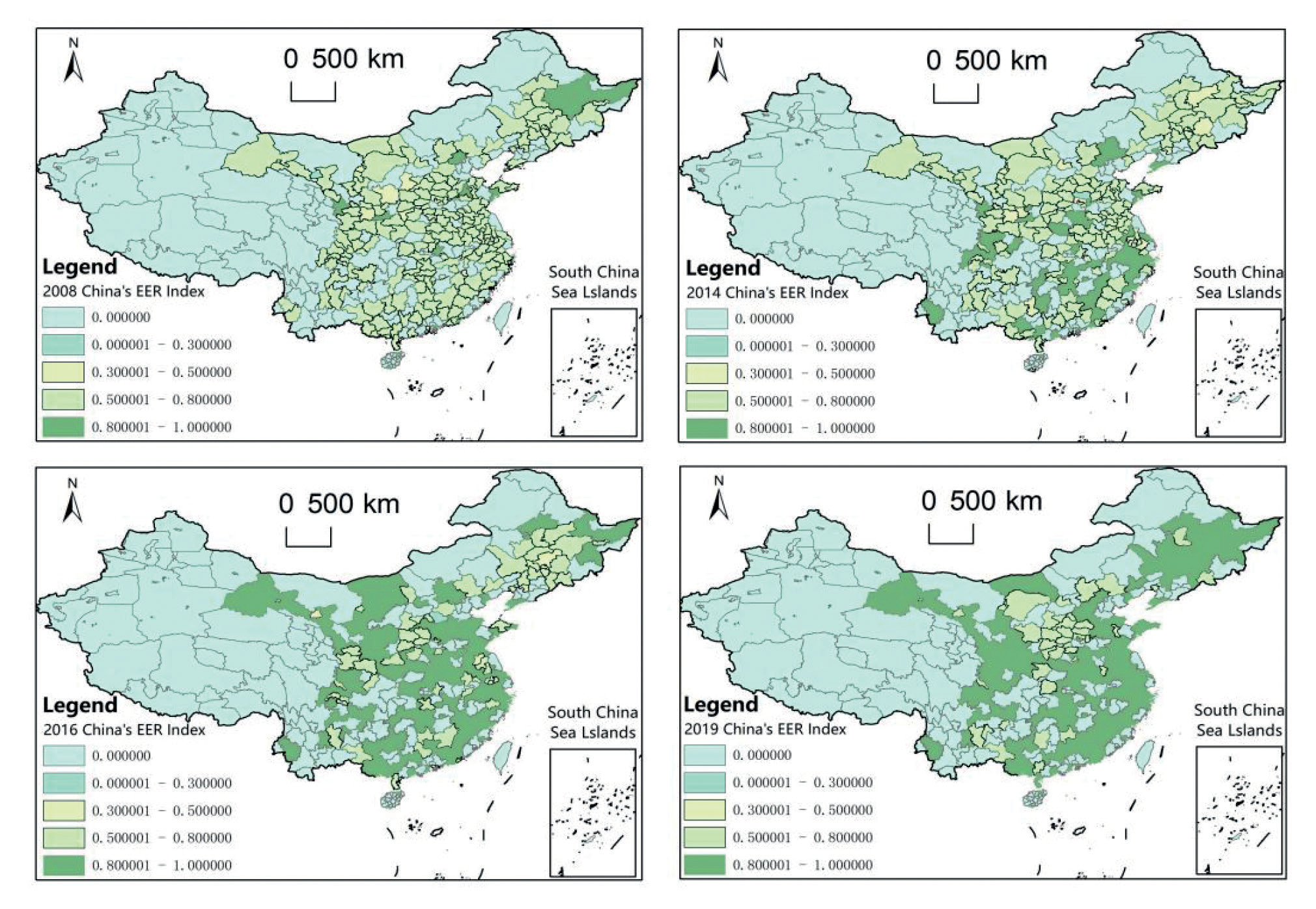
According to the spatial spillover effect (see Table 9) results [38], the article selected three models to analyze the spatial spillover effect, in which the results of the SAR model show the optimal. In the adjacency matrix, the DID results of the three models are significant and the coefficients are significantly positive, which indicates that there is a significant spatial spillover effect under the influence of the ecological civilization advance demonstration zone. where the spatial spillover and direct effect coefficients show positive, indicating that the policy has a significant contribution to EER. This may be due to the fact that, on the one hand, the enterprises and governments in the pilot areas have shifted to green production and development, forcing competitors and governments in neighboring cities to follow suit and further promote the transformation of the industrial structure in order to improve their own competitiveness; at the same time, the cooperation between the pilot areas and the neighboring cities has strengthened the dissemination of environmental protection concepts and the sharing of low-carbon technologies. Meanwhile, according to Fig. 3, it can be seen that the pilot area has shown a positive feedback effect under the influence of policies.
Table 9.
Results of spatial spillover effects.
Conclusions and Recommendations
In view of the above findings, the following three strategies will be proposed to enhance EER under the EDC to further enable China to realize green economic development. It will also make a positive contribution to global climate governance.
Firstly, the positive facilitating effect of the policy is affirmed. The empirical results of the study show that EDC significantly improves the coupled coordination of environmental efficiency and economic development, indicating the incentive effect of the mechanism. As of 2019, only 100 prefecture-level cities were established as EDCs, accounting for 34.1%. However, due to the differences in ecological foundations between cities, it is recommended that policies be implemented according to local conditions to strengthen the radiation of ecological civilization and advance demonstration zones. This will further enable intermediary mechanisms to play a role in enhancing industrial upgrading, increasing energy use efficiency, and promoting sustainable development.
Second, it focuses on the mediating and regulating mechanisms of policies. Research shows that green innovation, industrial upgrading, and industrial structure advantages are the intermediary and regulating mechanisms of EDC affecting EER. Therefore, it is necessary to increase green innovation, shift to the upgrading and transformation of digital informationization, focus on the enhancement of industrial structure, gradually reduce the proportion of resource-based industries, and promote the development of industries in the direction of high-end and greening, as well as the upgrading and transformation of digital informationization. We advocate for enterprises to realize the green cycle production mode [39–41]; increase scientific and technological investment, enhance regional green innovation capacity, improve the efficiency of ecological governance, make every effort to maintain the integrity of natural ecosystems such as wetlands, forests, grasslands, etc., and actively carry out ecological restoration and reforestation, so as to reduce energy consumption and pollution emissions [42–44].
In tertiary education, the EDC should be implemented in different ways to face different situations. The implementation of the policy should be promoted at different levels, and the widespread application of EDC should be accelerated gradually within a certain range. The focus should be on different levels, depending on the ecological foundation of the central region, and the eastern and western regions, so as to maximize the potential of the policy, accurately classify the categories of cities, benchmark specific measures in accordance with the specific situation, and give full play to the advantages of each type of city in order to further promote synergies and efficiency in EDC.
Finally, it will strengthen exchanges and collaboration among cities in close proximity to each other in terms of spatial distance, make full use of the spatial spillover effect, promote win-win cooperation and technology sharing, strengthen the effect of spatial radiation, accelerate the formation of a green situation of ecological civilization construction with “common efficiency and common growth”, enhance the sustainable development status and the degree of equilibrium of the economic-environmental interactions and interdependence within the pilot region, and promote the further enhancement of the EER.
Due to the limitations of space, research methodology, and data, the study still has shortcomings: (1) EDC has been deepening and expanding over time, and the study takes prefecture-level cities as the main research object without focusing on the micro-level policy effects of county-level regions. Meanwhile, the study mainly takes 2019 as the dividing line for the establishment of pilot regions, focusing on the policy effects brought by EDC to the first two batches of pilot cities, but the impact of the latest batch of pilot cities on the impact of EDC remains to be explored. (2) The study analyzes the mechanism path of EDC’s impact on EER policy from three perspectives: green innovation, industrial structure, and governance inputs. The EDC covers a wide area and the ecological construction impact mechanism is diverse, so the impact mechanism is still to be further explored.

