

Introduction
Viruses, as non-cellular organisms, exclusively possess either DNA or RNA. They depend on parasitizing and multiplying within a host cell to execute processes such as replication, transcription, and translation [1]. Viruses including the Middle East Respiratory Syndrome (MERS) virus, COVID-19 [2, 3], and emerging waterborne enteroviruses, noroviruses, hepatitis A viruses, and adenoviruses, pose a significant threat to human health [4]. Although viruses cannot undergo reproduction in the environment, they can disseminate globally through various environmental pathways, utilizing mutational adaptation, host infection, and environmental adaptation. Human enteropathogenic viruses have the potential to infiltrate the aquatic environment via the release of waste from infected individuals. Enteroviruses, in particular, exhibit a high degree of transmissibility in aquatic settings and can be readily assimilated by aquatic organisms through adsorption in the water’s sediment [5]. Through fecal-oral transmission, viruses can re-enter the body, leading to disease outbreaks. The transmission of a virus is contingent not solely upon its interaction with the host organism, but also upon its interaction with the host’s external environment. The interplay between viruses and environmental media is intricate, as both serve as crucial agents for virus transmission and major receptors of secondary environmental hazards and ecological harm that stem from outbreak management and environmental factors; virus inactivation is achieved through the direct or indirect impact of environmental factors on specific components of the virus structure, such as the genome, capsid, or envelope [6]. Numerous studies have been conducted by researchers regarding the impact of environmental parameters such as temperature, humidity, sunlight/radiation, and environmental pollution on the viability of airborne and waterborne infectious organisms, including viruses, bacteria, and fungi [7-9].
In recent decades, scholars have conducted extensive research on viruses in the environmental field. Noorimotlagh et al. [10] reviewed studies on the airborne transmission of SARS-CoV-2 in the air environment. Corpuz et al. [11] conducted a comprehensive review of methodologies used for detection and quantification of viruses in wastewater treatment systems including transmission electron microscopy (TEM), nucleic acid staining with fluorescent dyes, flow cytometry (FCM), in situ fluorescence, immunofluorescence assay (IFA), enzyme-linked immunosorbent assay (ELISA), pulsed-field gel electrophoresis (PFGE), polymerase chian reaction (PCR), and sequencing. Zhang et al. [12] reviewed the mechanism and research progress of disinfection performance of TiO2-based, metal-containing (in addition to TiO2), and metal-free photocatalysts. Verbyla and Mihelcic [13] reviewed the efficiency of different wastewater treatment processes for the removal of viruses from wastewater and the mechanism of virus removal in wastewater treatment tank processes. The increasing body of literature on virus research in the environmental field and the growing public concern for environmental hygiene and health have prompted the use of bibliometric techniques to provide a comprehensive and unbiased overview of the current state and progress of research in this field. Bibliometrics is a multidisciplinary field that draws upon the disciplines of bibliography, information science, mathematics, and statistics [14]. Bibliometrics is a quantitative statistical analysis method employed to determine the geographical distribution of publications, researchers, and research institutions. This method provides researchers with a comprehensive overview of the development of the discipline and potential trends [15]. It is increasingly regarded as a vital tool for predicting trends in various disciplines and has been widely used in many disciplines or fields such as microplastics [16], biochar [17], and e-waste [18].
This study systematically conducted a systematic bibliometric analysis of the literature pertaining to virus research in the environmental field from January 1990 and December 2022, extracted from the Web of Science Core Collection database (WOSCC). Key metrics, such as the annual number of publications, journals, authors, research institutions, countries, highly cited literature, and keywords were evaluated quantitatively and qualitatively using Bibliometrix. Furthermore, co-occurrence and burst analysis of keywords were performed using VOSviewer and CiteSpace. The primary objective of this investigation is to offer insights into the developmental trajectory and current status of virus research in the environmental field, including its historical progression, current status, and anticipated future trends. Moreover, this study aims to identify research hotspots, thereby providing a scientific foundation for researchers to comprehend the evolving landscape and future directions of virus research in the environmental field.
Data and Methods
Data Collection
The process of collecting and analyzing data is depicted in Fig. 1. In this study, the Web of Science Core Collection database published by Thomson Reuters was used as the data source. The search parameters were set to include documents with the topic of “virus” or “virome” and document type of “Article” within the subject categories of “Engineering, Environmental”, “Environmental Sciences”, “Environmental Studies”, “Water Resources”, “Soil Science”, and “Meteorology & Atmospheric Sciences”. The search was conducted for the period of January 1990 to December 2022, and a total of 12,806 documents were initially retrieved. Duplicate documents were removed, and the remaining search results were screened to exclude irrelevant information such as keywords, authors, countries, and institutions. In the end, 3,805 documents related to virus research in the environmental field were obtained.
Data Analysis
The analysis utilized the Bibliometrix, VOSviewer, and CiteSpace software. Additionally, an econometric evaluation was conducted to assess various factors including the number of publications, countries (regions), institutions, journals, author groups, highly cited papers, and keywords. Bibliometrix is an R toolkit for comprehensive scientific cartographic analysis. It enables bibliometric statistical analysis and prediction of future research directions [19]; VOSviewer visual analytics software is a free visual analysis software tool developed by Leiden University in the Netherlands to perform cluster co-occurrence visual analysis of important literature, high-yield authors, keywords, and institutions [20]; CiteSpace is visualization and analysis software that swiftly identifies research hotspots and the evolution of the literature in a subject area [21]. To ensure clarity and concision, keywords or phrases with similar meanings were combined into one keyword, for example, “virus” for “viruses” and so on, while “waste water” represented variations such as “waste waters”, “waste-water”, “wastewater”, etc. Similarly, “drinking water” included forms like “drinking-water”, etc. Lastly, “norovirus” was used for related terms like “noroviruses”, “norowalk virus”, “norwalk virus”, etc.
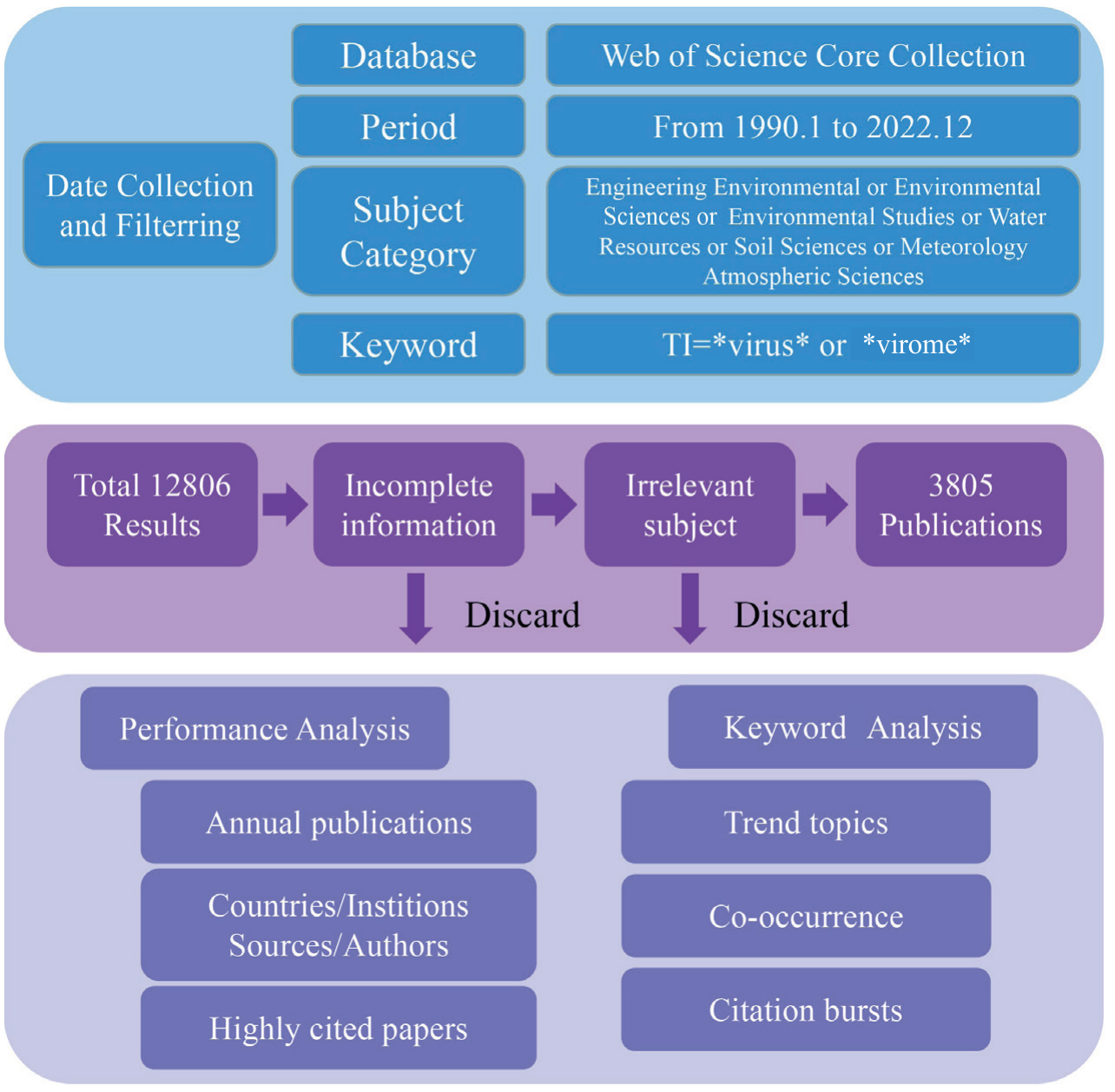
Table 1.
Top 10 productive countries for virus research in the environmental field during 1990–2022.
Results and Discussion
Publication Trends
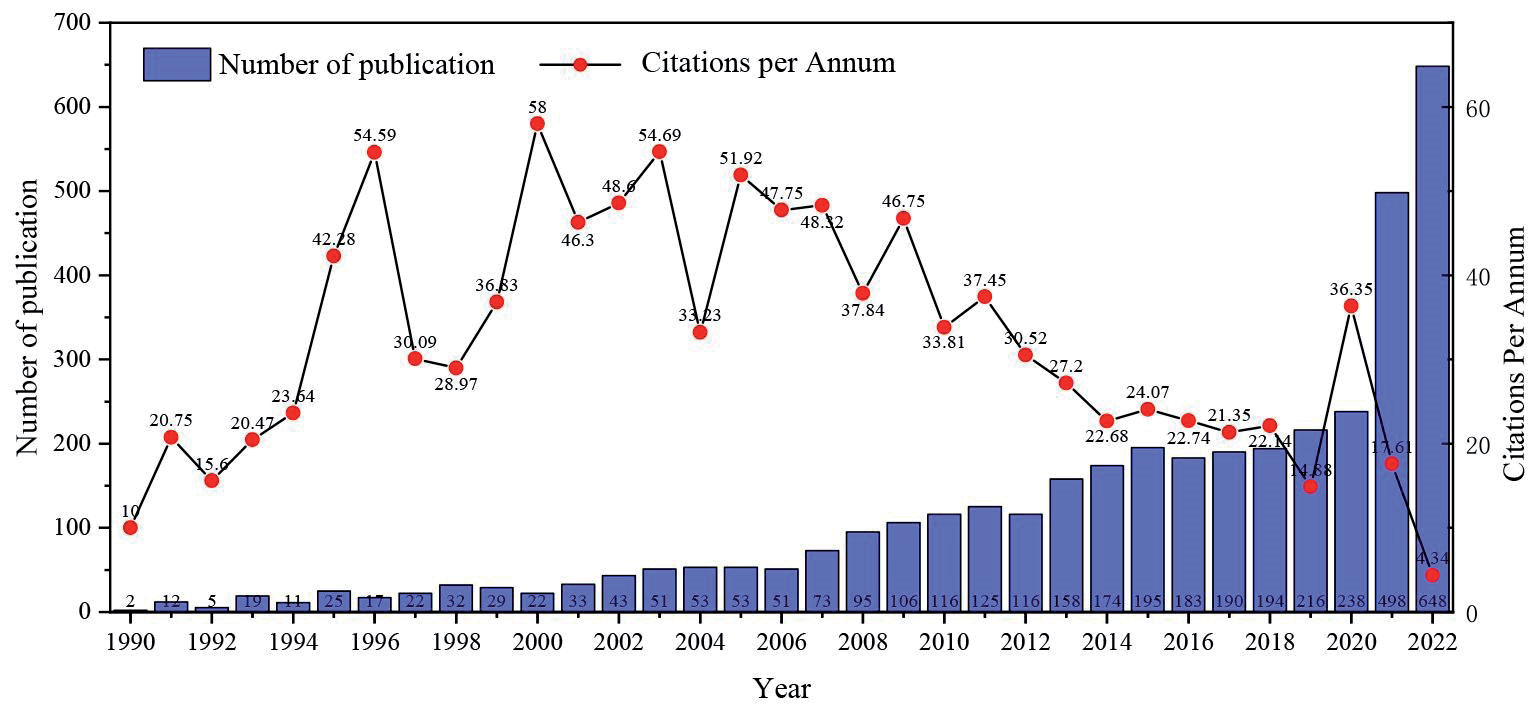
The quantity of published articles serves as a direct metric for gauging engagement in virus research in the environmental field. As shown in Fig. 2, the number of publications in virus-related research journals in the field of the environment has exhibited a consistent upward trend in the past 33 years. There were only 2 in 1990 and 22 in 2000, while the number of publications escalated to 116 in 2010, and 238 in 2020. Over the last 33 years, a conspicuous surge has been evident in recent years, with 498 publications in 2021 and a subsequent rise to 648 in 2022, reflecting respective increases of 260 and 150 from the previous year. The increase in publication numbers for 2021 and 2022 surpasses the increase observed in 2020, linked to the healthcare response to SARS-CoV-2. The emergence of SARS-CoV-2 occurred in late 2019. The outbreak has stimulated advancements in virus research in the environmental field, prompting scholars to place greater emphasis on the transmissibility of viruses through aerosols, water, and other media, as well as their capacity to endure in the environment. Since the emergence of SARS-CoV-2, scholars have identified the novel coronavirus in various environmental matrices, including but not limited to fecal matter, aerosols, and wastewater.
Table 2.
Top 10 productive institutions for virus research in the environmental field during 1990–2022.
Publication by Countries
During the period spanning 1990 to 2022, research papers pertaining to viruses in the environmental field from the WOSCC database were published in 79 countries/regions. The foremost contributors to scholarly articles during this timeframe were the USA, China, Japan, Australia, Italy, Brazil, Spain, the UK, Korea, and France, with the USA exhibiting the highest volume of publications at 881. The USA has the most international collaboration publications (ICP), despite having the lowest ICP ratio. Conversely, Australia held the highest ICP ratio, succeeded by the UK and Spain. As delineated in Table 1, nearly fifty percent of Australia was from international collaboration. Moreover, the three countries with the highest average citation were Australia, the USA, and France, underscoring their significant impact within the field.
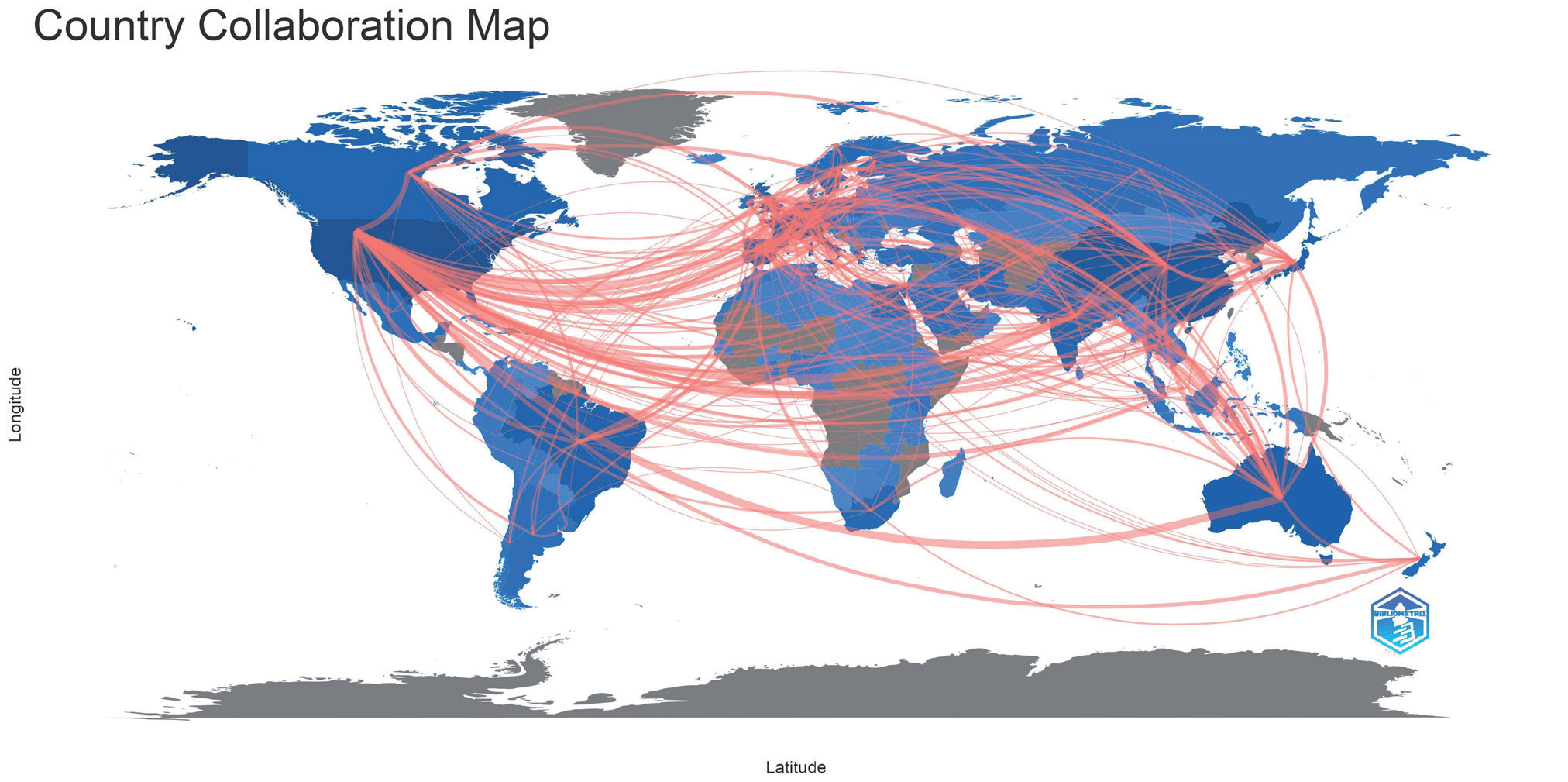
In Fig. 3, the Bibliometrix package (version 3.1.4) is used to visually demonstrate the countries/regional network of virus research in the environmental field. The intensity of color corresponds to the volume of documents originating from each country or region. The pink lines connecting different countries or regions signify the extent of collaboration; a greater number of lines indicate closer cooperation. As Fig. 3 shows, there is close cooperation between various countries/regions working together for virus research in the environmental field. The USA has much cooperation with Europe, China, and Australia.
Publication by Institutions
The analysis of publications by institutions provided valuable and detailed information. There were 1,038 institutions involved in virus research in the environmental field. Table 2 presents the top 10 institutions in terms of publication, including the University of Arizona, Chinese Academy of Sciences, University of Barcelona, University of Tokyo, US EPA, University of North Carolina, Hokkaido University, Tsinghua University, Istituto Superiore di Sanità, and CSIRO Land and Water. Among these institutions, three (University of Arizona, US EPA, and University of North Carolina) are located in the USA, two (Chinese Academy of Sciences and Tsinghua University) are in China, two (University of Tokyo and Hokkaido University) are in Japan, and one each are in Spain, Italy, and Australia. Seven of these institutions are universities. The University of Arizona from the USA ranks first in the number of citations, followed by CSIRO Land and Water from Australia in second place, and Hokkaido University from Japan in third place. When considering the average citations per paper, CSIRO Land and Water from Australia (63.57) places first, followed by Hokkaido University from Japan (55.31) and the US EPA from the USA (42.69). In addition, the average number of citations for the top 3 productive institutions, namely the University of Arizona from the USA (33.29), the Chinese Academy of Sciences from China (18.45), and the University of Barcelona from Spain (37.43), is relatively low, which may be the result of their relatively high volume of publications.
Publication by Journals
These publications on virus research in the environmental field were published in 284 journals. Table 3 provides a list of the top 10 productive journals during 1990-2022. Water Research was the most productive journal with 502 publications (13.19% of 3,805), followed by Science of the Total Environment with 378 publications (9.93%), and then Food and Environmental Virology with 345 publications (9.07%). The impact factor is a significant indicator that reflects the academic influence of a journal in recent years. The average impact factor of these 10 journals was 8.1 in 2022. The highest impact factor among these journals was 15.1 for the Chemical Engineering Journal, while the lowest was 2.3 for the Journal of Water and Health. Citation frequency assesses the academic value and professional influence of a publication. According to Table 3, Water Research had the highest average number of citations per paper (48.75), as well as the highest total number of publications. Science of the Total Environment, which had the second-highest total number of publications, had an average number of citations per paper of 32.32.
Table 3.
Top 10 productive journals for virus research in the environmental field during 1990–2022.
Publications by Author
In terms of publications by author from 1990 to 2022, we focused on the total number of publications and the number of citations (Table 4). CP Ger had the highest number of publications, with 74 articles, which was more than twice the number published by the second most productive author, W Ahmed. Throughout this period, W Ahmed published a total of 36 articles, while C Gantzer, who ranked tenth, had only eight articles, a significant difference from W Ahmed. M Kitajima's publications received the highest number of citations. His 28 publications were cited a total of 2,701 times, resulting in an average of 96.46 citations per paper.
Analysis of Highly Cited Papers
The quantification of a publication’s citations is a crucial metric in evaluating the scholarly impact of research in a specific field. This study presents a compilation of the most frequently cited papers on virus research in the environmental field between 1990 and 2022, as documented in Table 5. The publications have been ranked based on their citation count, and the top 10 papers have been identified. Six out of the ten articles included in the study explicitly mention SARS-CoV-2 in their titles. These articles were published in 2020, primarily in response to the outbreak of SARS-CoV-2 in 2019. The most highly cited article, authored by Ahmed in 2020, is titled “First confirmed detection of SARS-CoV-2 in untreated wastewater in Australia: A proof of concept for the wastewater surveillance of COVID-19 in the community”. This article, published in the journal Science of the Total Environment, has received a global citation of 853. This study established the initial verification of SARS-CoV-2 identification in raw wastewater in Australia, serving as a demonstration of the feasibility of utilizing wastewater monitoring as a means of detecting COVID-19 within the general population. In 2020, E Haramoto published two highly cited publications with global citations of 380. The present study was the first to document the environmental monitoring of SARS-CoV-2 RNA in wastewater and river water in Japan. Both of the aforementioned works demonstrate the potential of utilizing wastewater-based epidemiology as a means of monitoring infectious diseases. Notably, six out of the ten highly cited articles were published in Science of the Total Environment, an interdisciplinary journal renowned for its innovative, hypothesis-driven, and influential research encompassing various aspects of the environment.
Table 4.
Top 10 productive authors for virus research in the environmental field during 1990–2022.
Table 5.
Top 10 highly cited review papers.
Keyword Analysis
Keyword Frequency Analysis
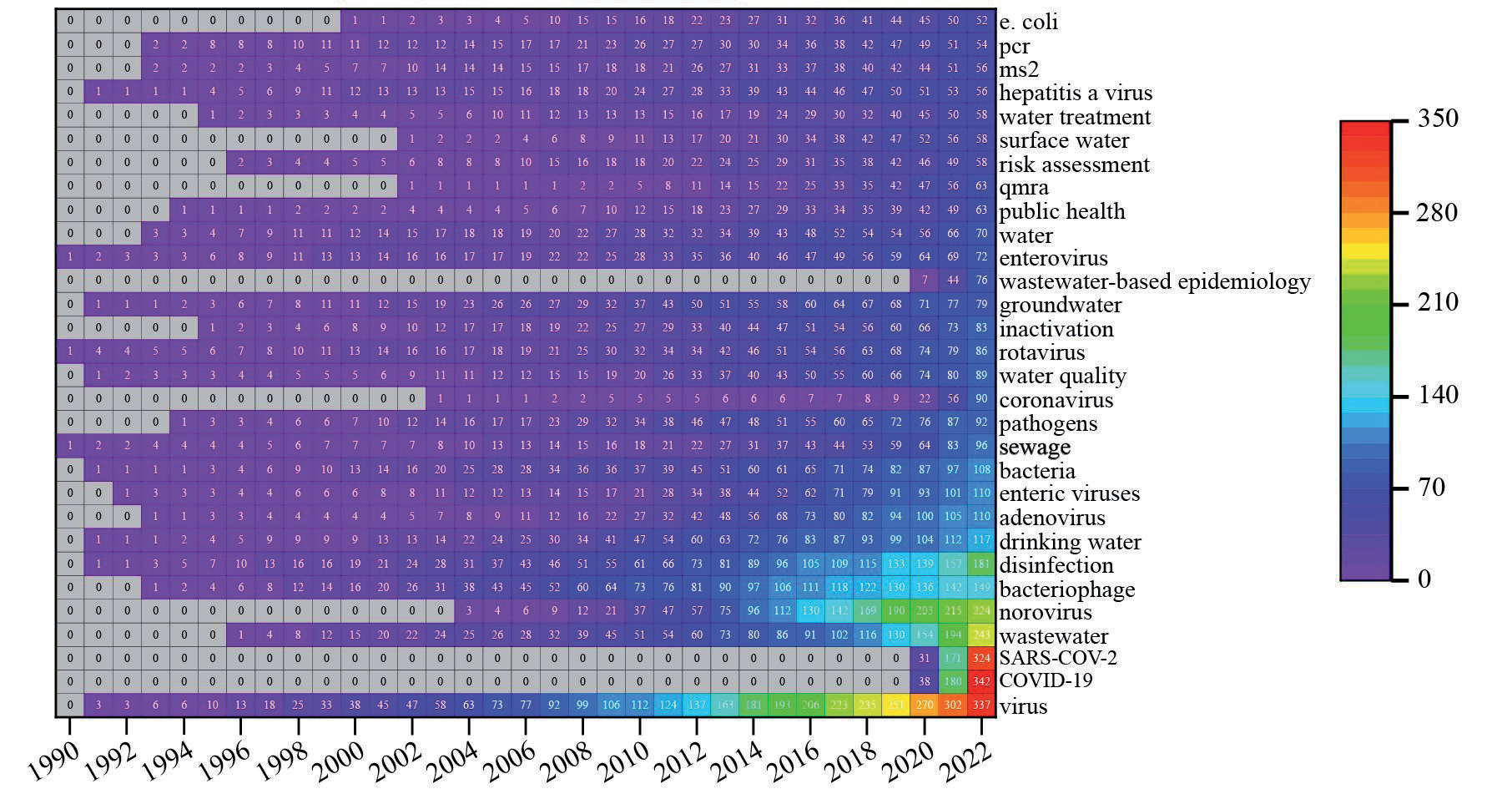
Keywords are crucial for indicating the main research content and fundamental concepts of publications. The frequency of their occurrence can serve as an indicator of the research direction and content within a specific area of study [22]. Fig. 4 demonstrates that virus research in the environmental field has primarily focused on the water environment, including surface water, groundwater, drinking water, and wastewater. The main viruses investigated in this area include COVID-19, noroviruses, enteric viruses, hepatitis viruses, and others. The waterborne transmission of various viruses such as hepatitis viruses, enteroviruses, rotaviruses, enteric viruses, and noroviruses is well-documented. Apart from the aforementioned pathogens, there exist other viral agents such as coronaviruses, SARS-COV-2, and COVID-19, which are disseminated through aerosol transmission. The keyword “coronavirus” first gained prominence in 2003 during the global outbreak of Severe Acute Respiratory Syndrome Coronavirus (SARS-CoV). The emergence of SARS-COV-2 and COVID-19 was first observed in the year 2020, aligning with the nascent development of wastewater-based epidemiology during the same period. The global detection of SARS-CoV-2 RNA in aquatic environments has provided evidence that waste or wastewater containing the coronavirus can enter water systems, posing a risk to public health. The present analysis focuses on the state of virus research in the environmental field, wherein the existence of bacterial strains, such as E. coli, has been detected. Additionally, high-frequency keywords included “disinfection”, “water treatment”, “inactivation”, and “risk assessment”. The analysis of keywords reveals that the primary areas of interest in virus research in the environmental field pertain to the identification, deactivation, elimination, and evaluation of the potential hazards associated with viruses present in environmental media, with a particular emphasis on the aquatic environment.
Keyword Co-occurrence Analysis
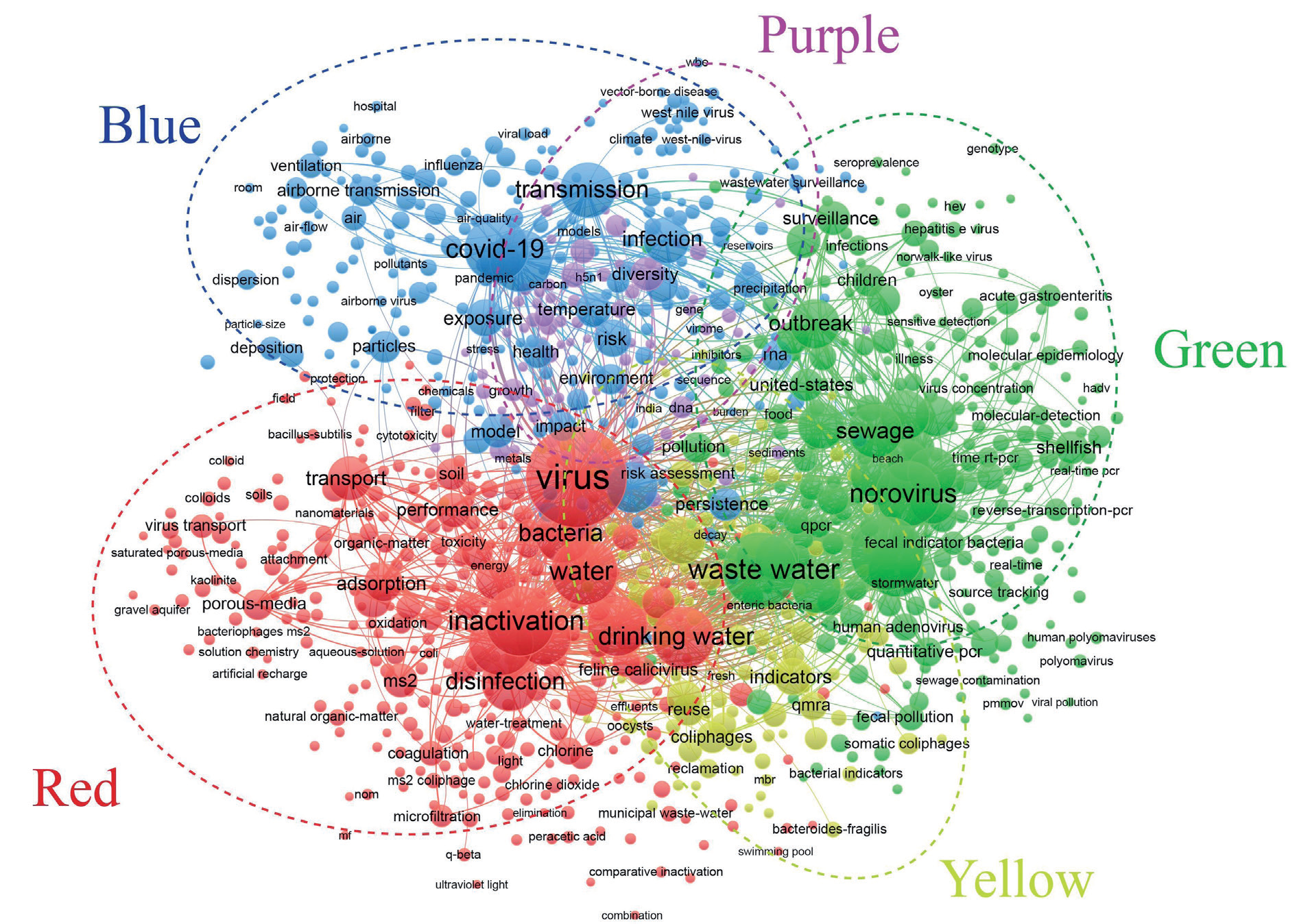
The analysis of the co-occurrence of keywords enables us to comprehend the developmental trajectory and gain a comprehensive understanding of the current research status in a specific field. The distribution of virus research hotspots in the environmental field from 1990 to 2022 was illustrated using a color scheme consisting of five distinct colors, namely red, blue, green, yellow, and purple, as depicted in Fig. 5.
The blue cluster primarily focuses on the study of coronaviruses in the environment. The main keywords are “COVID-19”, “aerosol”, “transmission”, and “temperature”. The SARS-CoV-2 outbreak in December 2019 rapidly spread worldwide, presenting a global public health emergency. SARS-CoV-2 is primarily transmitted through aerosols, droplets, or contacts, with aerosol transmission identified as the dominant mode of transmission. Numerous reports proved that many environmental factors can influence the survival of SARS-CoV-2 in the environment, such as chronic exposure to air pollution, temperature, and relative humidity, ultimately impacting SARS-CoV-2 transmission. For example, the half-life of SARS-CoV-2 infectivity is 1.7-2.7 days at 20ºC, which is reduced to a few hours at 40ºC [23]. Compared with storage at 4ºC, SARS-CoV-2 is more stable and infectious when stored at −20ºC [24]. Studies have found no reduction in SARS-CoV-2 titers or its ability to survive for 3 weeks in meat stored at −20ºC [25].
The red cluster pertains to the study of virus inactivation in the environment, with the main keywords being “drinking water”, “inactivation”, and “disinfection”. Ensuring the safety of drinking water and protecting public health heavily relies on the disinfection and inactivation of viruses in the environment, especially during drinking water disinfection processes. Wastewater is frequently used as a raw water source for various purposes, including potable water production, landscaping, irrigation, and aquifer recharge. Despite the application of wastewater treatment measures, some viruses might persist in treated wastewater, posing potential risks to human health. According to scholarly research, it has been documented that SARS-CoV-2 can enter the sewage system through human waste. Introducing SARS-CoV-2 with elevated initial titers during the sowing process results in the persistence of infectiousness in wastewater for 7 days [26]. The current research provides evidence that the RNA of SARS-CoV-2 can still be detected even after hospital wastewater undergoes disinfection. Sewage systems have the potential to serve as a source of virus transmission for an extended duration, particularly in environments characterized by low temperatures [27]. The potential presence of the coronavirus in drainage systems and the use of effluent virus nucleic acid fragment detection as a means of early outbreak warning has garnered significant attention in recent years. The mechanisms of virus inactivation employed in disinfection measures and the environmental risks associated with disinfection by-products are currently significant areas of research focus in virus research in the environmental field.
The yellow cluster primarily focuses on risk assessment studies of viruses in the environment with the keywords “indicators”, “quantitative microbial risk assessment (QMRA)”, “risk assessment”, and “health risk”. Researchers have discovered more than 700 waterborne viruses in sewage, with over 150 of them identified as enteric viruses. Waterborne viruses, including adenoviruses, enteroviruses, hepatitis viruses, noroviruses, and rotaviruses, are known to be transmitted through water. These viruses have been frequently detected in various water sources, including surface water, groundwater, and treated drinking water, posing a significant risk to human health. Furthermore, waterborne viruses can lead to various illnesses, including fever, cardiovascular disease, hepatitis, meningitis, paralysis, and respiratory infections [28]. Phage MS2, crAssphage, and pepper mottle virus (PMMoV) have been employed as prevalent viral indicators. Due to their ease of detection, non-pathogenicity to humans, and similarity to human enteroviruses, these viruses exhibit considerable potential for evaluating viral contamination in wastewater, attenuating viruses, and studying virus transmission in wastewater. Treated wastewater is widely used as a fundamental water source for the generation of potable water, as well as for landscaping, irrigation, and aquifer recharge purposes. Furthermore, the sludge obtained in the process of treating wastewater is repurposed for agricultural purposes, serving as a means of enhancing soil quality or providing nutrients as a fertilizer. The current wastewater treatment methods are insufficient in completely deactivating all viruses present in the wastewater. As a result, detectable levels of viruses can still be found in the treated effluent. The aeration process used in wastewater treatment generates bioaerosols that can disseminate chemicals and viruses, posing potential health hazards to humans. QMRA has been utilized to assess the potential hazards associated with viruses found in water and aerosols, including emerging coronaviruses and noroviruses.
This method involves applying dose-response models for specific reference pathogens and employing a range of exposure scenarios.
The green cluster focuses on the analysis of viruses in wastewater, with primary keywords including “sewage”, “waste water”, “source tracking”, “surveillance”, and related terms. Viruses found in wastewater mainly consist of enteroviruses, adenoviruses, rotaviruses, and noroviruses, among others. These viruses primarily originate from human and animal fecal matter. The distribution of virus content in the influent water ranges from 3.14 × 10² to 1.93 × 10⁵ copies/mL. The viruses are capable of surviving in the water column for a duration exceeding 1 month while retaining a high level of infectivity [29]. The sludge generated during the process of treating wastewater is reused to enrich the soil as a soil conditioner or fertilizer. Additionally, the aeration process in wastewater treatment leads to the release and spread of bioaerosols that may contain chemicals and viruses. Consequently, the removal of viruses from wastewater holds significant importance in the context of wastewater reclamation and subsequent reuse. As a barrier to the spread of viruses in wastewater to the aqueous environment, water treatment plants use different processes such as retention, adsorption, filtration, chemical oxidation, and biological competition to eliminate viruses [30, 31].
The purple cluster mainly focuses on the study of virus migration behaviors in the environment, emphasizing keywords such as “adhesion”, “adsorption”, “transport”, and “movement”. The intricate mechanism of virus adsorption and migration in environmental media is influenced by numerous factors, such as virus particle size, soil type, pH, ionic strength, multivalent cations, and organic matter [32]. Researchers have predominantly studied the impact of soil properties on virus migration and elimination using the soil column steady-state flow method. The studies conducted by Chu et al. (2001), Jin et al. (2000), and Ryan et al. (2002) present the simulation of virus adsorption and inactivation in sand columns under varying conditions. The studies aimed to explore the viability and potential transmission of viruses in natural environments. However, soil is a complex environmental medium. Further studies are needed to investigate the mechanism of virus adsorption and extinction by soil during migration, as well as the impact of physicochemical properties on the natural migration and fate of viruses. The COVID-19 pandemic has garnered significant attention from various sectors, including the government, society, and the scientific and technological community, due to its potential impact on public health. The investigation of viruses’ migration attributes, mechanisms, and disappearance routes in diverse environmental media can furnish crucial information for safeguarding human health and the environment. This can be achieved by revealing the transmission patterns of viruses in various environmental media.
Keyword Burst Detection Analysis
Analysis of keywords with a high burst can accurately identify research hotspots, reflect research frontiers, and highlight current trends [33]. Fig. 6 demonstrates the division of keywords into three time periods (1990-2009, 2010-2019, and 2020-present) for burst detection analysis:
Fig. 6.
Top 20 keywords with the strongest citation bursts for virus research in the environmental field from 1990 to 2022.
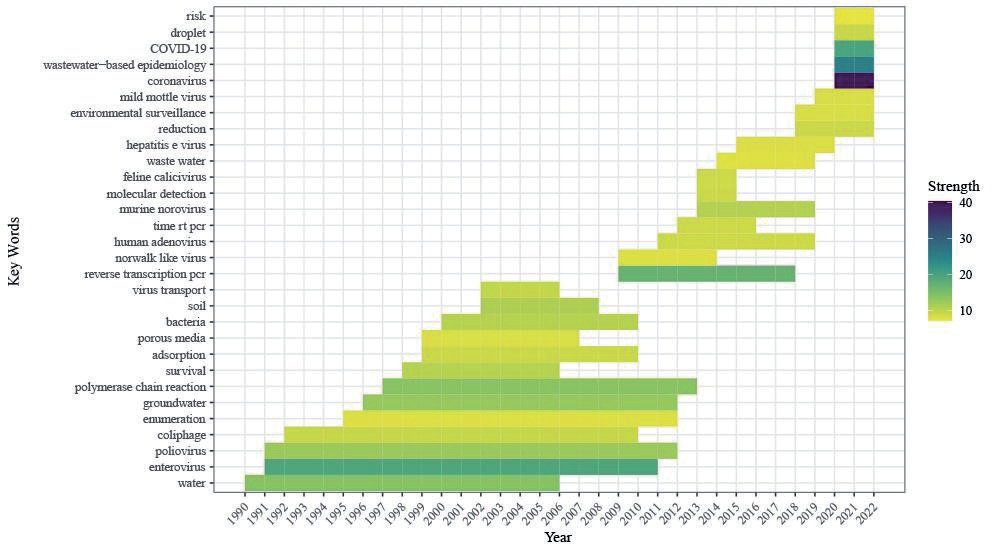
a. During the period from 1990 to 2009, virus research primarily revolved around topics such as enteroviruses, survival, adsorption, groundwater, soil, and porous media. The research conducted during this period primarily delved into the topics of virus adsorption, migration, and survival in porous media, such as soil groundwater. Viruses are frequently used as bioindicators to reflect the movement of colloids in porous media. The migration of viruses in porous media is subject to various influencing factors, including the characteristics of the colloid and the medium, as well as hydrodynamic, hydrochemical, and environmental factors.
b. From 2010 to 2019, the keywords “reverse transcription PCR” and “time RT PCR” were frequently mentioned. The existence of viruses in the environment poses a potential risk of infection to susceptible individuals through respiratory and fecal-oral transmission pathways. Consequently, the detection and monitoring of viruses in the environment, particularly in water environments, have gained paramount importance. The application of high-throughput sequencing has effectively addressed the challenge of limited viral genetic material concentrations in vast environments. This approach has led to a significant increase in the abundance of genomic information and has greatly facilitated the advancement of the molecular ecology of viruses in environmental samples. In 2002, scholars used shotgun sequencing to explore the genomic constitution of viruses present in the coastal waters of California, USA, thereby initiating the investigation of macrogenomics of environmental viruses in aquatic ecosystems [34]. Nanopore sequencing technologies have emerged in recent years, allowing real-time detection of long DNA/RNA fragments on portable devices [35]. The MinION nanopore sequencing technology is characterized by several advantageous features, including extended read length, rapid sequencing velocity, live tracking of sequencing data, and convenient portability of the device [36], which can rapidly identify pathogens within 6 hours [37], enabling rapid detection of unknown viruses in environmental samples. The search for and development of techniques for enhancing, isolating, and accurately detecting viruses in diverse environmental media, including water, gas, soil, solid waste, and sludge, alongside novel approaches for detecting their viability, is poised to be a focal point on virus research in the environmental field.
c. Since 2020, there has been a notable increase in the occurrence of keywords such as “COVID-19” and “wastewater-based epidemiology (WBE)”, mainly due to the global outbreak of the COVID-19 pandemic. WBE, an effective and cost-efficient technique, is employed for analyzing viral infections in communities. The rapid advancement of WBE has been greatly accelerated by the global emergence of COVID-19 [38]. By utilizing the detection results from WBE, it is possible to delineate the dynamics and trends of virus transmission, gauge the proportion of infected cohorts, deduce the initial infection status in the community via mathematical modeling, and implement efficacious measures such as isolation, observation, and medical examination of community residents to effectively curb the widespread dissemination of the epidemic [39]. SARS-CoV-2 was detected in sewage samples by Xu et al. [40] through the application of WBE, a mere 2 days before the initial case was identified. Surveillance systems incorporating WBE have shown effectiveness in predicting virus outbreaks and issuing timely alerts, making them an essential component in disease management. The optimization of surveillance methods and processes is crucial for effectively integrating clinical and epidemiological data in the fight against epidemics.
Conclusions
In this study, a bibliometric analysis was performed on virus research in the environmental field from 1990 to 2022. The analysis was conducted using the WOSCC database and the R package Bibliometrix, VOSviewer, and Citespace bibliometric analysis software. The analysis focused on identifying the top 10 countries/ regions of publication, important research institutions, source journals, high-producing authors, highly cited articles, and hotspots of research directions. Based on the findings of our analysis, it has been observed that there is a growing global interest in virus research in the environmental field. Over the past 33 years, a comprehensive total of 3,805 articles pertaining to virus research in the environmental field have been published. The majority of these articles originated from the USA, China, and Japan. The University of Arizona, the Chinese Academy of Sciences, and the University of Barcelona are the three most prominent research institutions in this field. CP Gerba, W Ahmed, and H Katayama are the authors with the highest number of publications. The bibliometric analysis conducted in this study provides valuable insights into the present state of virus research in the environmental field, including the prevailing research trends, disciplinary dynamics, areas of active investigation, and scientific frontiers.
The present research in the environmental field focuses on studying viruses in terms of their detection, migration behavior, survivability, decay patterns, removal inactivation, and health risk assessment in environmental media. Currently, extensive research has been conducted on the effects of environmental factors, such as temperature and pH, on the survival, transmission, transfer, and transformation of viruses in various environmental media. Nonetheless, there is limited understanding of the processes and mechanisms through which viruses interact with contaminants in environmental media. Viruses play a crucial role as catalysts in global biogeochemical cycling processes. Although researchers have made progress in understanding the functions of viruses in ecosystem nutrient cycling, food chains, and elemental transformations, there is still a considerable knowledge gap regarding the role of viruses in biogeochemical cycling. Further comprehensive research is necessary.

